The ascent of Chulu Peak is an exceptional mountaineering expedition located in Nepal’s Annapurna region, offering climbers the opportunity to scale one of the Himalayas’ most renowned “trekking peaks.” This mountain range comprises four distinct summits—Chulu West (6,419m), Chulu East (6,584m), Chulu Central, and Chulu Far East—among which Chulu West stands out as the most popular choice due to its blend of accessibility and challenge.
According to Namas Adventure, this expedition is typically incorporated into the Annapurna Circuit; it begins with a trek through the lush Marsyangdi Valley, eventually leading into the high-desert terrain of Manang. While technically straightforward, the climb is physically demanding, requiring the use of crampons, ice axes, and fixed ropes to ascend steep, snowy slopes and reach the summit. From the peak, climbers are treated to a breathtaking 360-degree panoramic vista, encompassing the entire Annapurna massif, Dhaulagiri, Manaslu, and the distant peaks of Tibet.
Chulu Peak is generally regarded as a safe and attainable objective for adventure enthusiasts, provided one is well-prepared and accompanied by a professional guide. Classified as a “trekking peak,” it poses significantly fewer risks and presents fewer technical difficulties compared to the colossal 8,000-meter giants; for this very reason, it serves as an excellent stepping stone for those embarking on their first high-altitude mountaineering expeditions.
Most Famous And Attractive Tourist Places In Chulu Peak Climbing :
1. Manang Village (The Acclimatisation Hub)

Manang Village is a beautiful, stone-built town located at 3,540 metres (11,614 feet) and is the most important place to rest during the Chulu Peak climb. It is called the “Acclimatisation Hub” because the air starts to get very thin here, so trekkers stay for at least two nights to let their bodies get used to the altitude. The village feels like stepping back in time with its traditional houses and ancient monasteries, but it also has modern comforts like bakeries and small movie halls. Most people use their rest days here to take short “practice hikes” to nearby lakes or viewpoints, which helps prevent altitude sickness before heading up to the much higher Chulu Base Camp.
2. Thorong La Pass (The Ultimate High Pass)
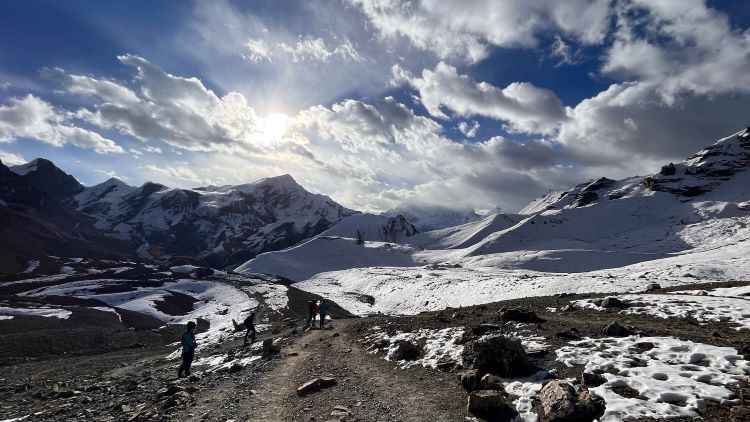
Thorong La Pass, sitting at a staggering 5,416 metres (17,769 feet), is the ultimate high-altitude crossing and the absolute pinnacle of the Annapurna Circuit Trek. It is widely recognized as one of the world’s highest trekking passes and serves as a vital bridge between the alpine valleys of Manang to the east and the arid, desert-like landscapes of Mustang to the west. Because of its immense elevation—which is higher than even Everest Base Camp—crossing the pass is a rite of passage that demands careful preparation, slow pacing, and an early morning start to avoid the fierce afternoon winds that regularly sweep across the saddle. Reaching the top reveals a dramatic 360-degree panorama of the Annapurna range, Dhaulagiri, and the Damodar Himal, offering a feeling of triumph that many trekkers describe as a life-changing experience.
3. Muktinath Temple (The Sacred Sanctuary)
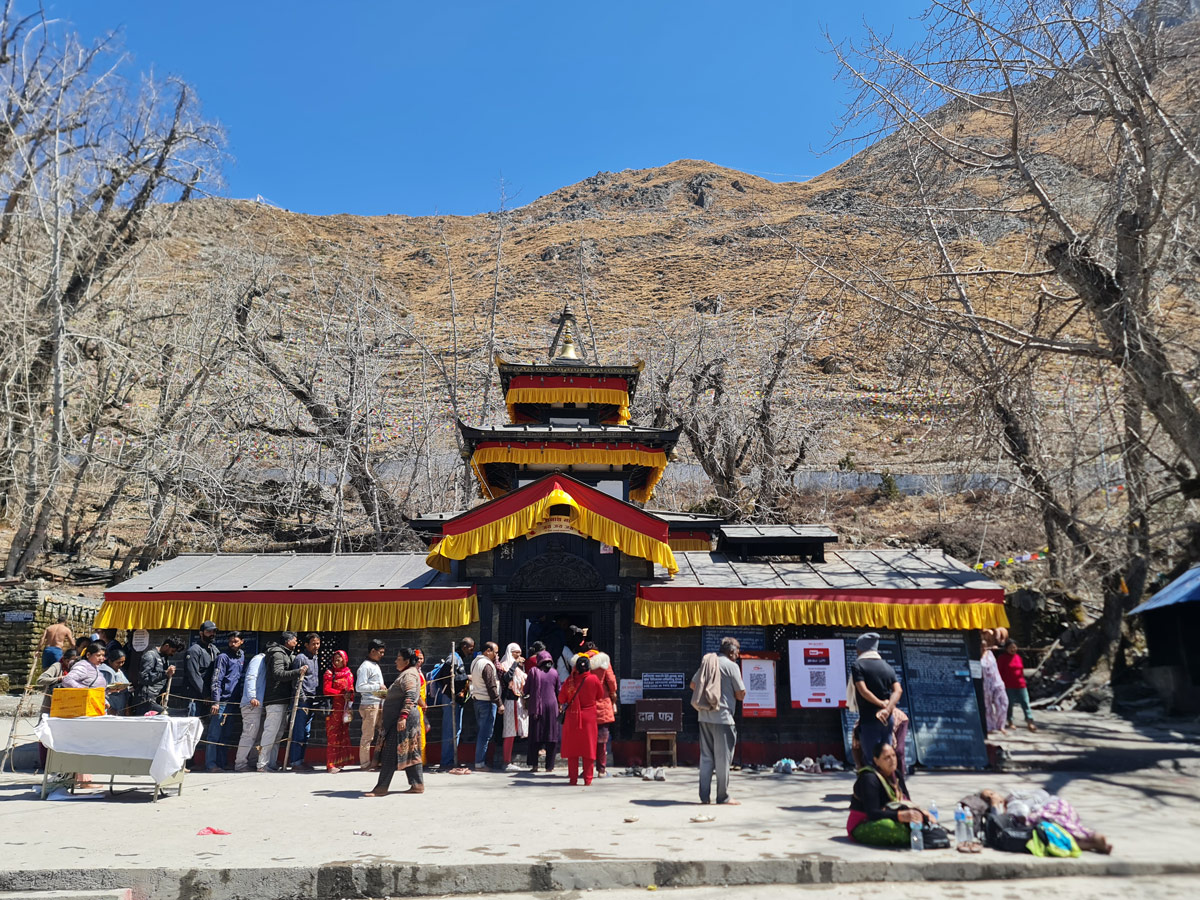
Muktinath Temple, standing at 3,760 metres (12,335 feet), is a very special and holy place for both Hindus and Buddhists. It is known as the “Sacred Sanctuary” because people believe visiting it brings “Mukti,” which means freedom or salvation. The temple is famous for having 108 brass water sprouts shaped like cows’ heads, where pilgrims take quick, icy baths to wash away their sins. There is also a natural gas flame that burns on top of water, showing a magical mix of earth, fire, and water. For climbers coming down from Chulu Peak or the Thorong La Pass, Muktinath is the first place where they can truly relax and enjoy the peaceful, spiritual energy of the mountains.
4. Upper Pisang (The Gateway to the Peaks)
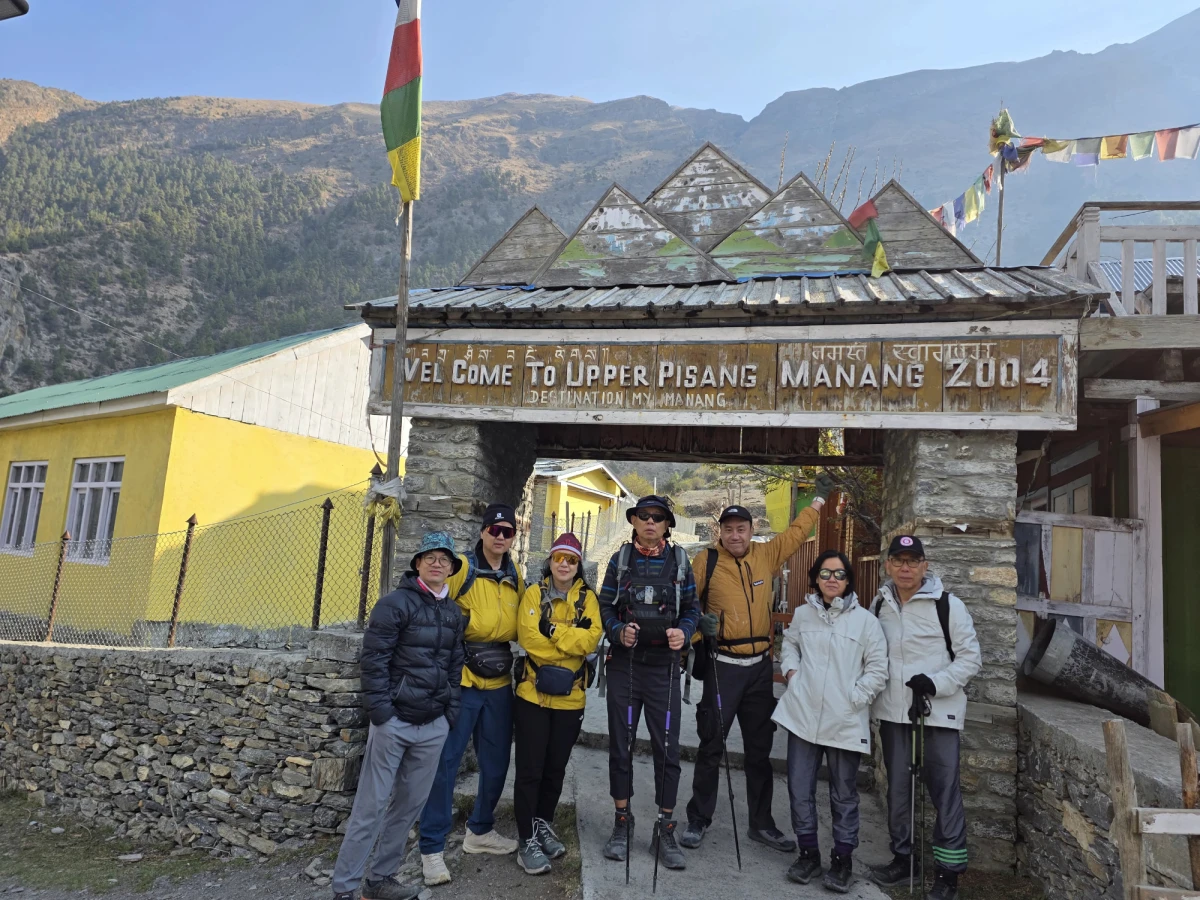
Upper Pisang, perched at an elevation of 3,300 metres (10,826 feet), is a traditional stone-built village that serves as the essential “Gateway to the Peaks” for those climbing Chulu or Pisang Peak. Unlike the lower, more modern part of the village, Upper Pisang maintains an ancient Tibetan-style atmosphere with narrow alleys and houses stacked closely together. It is a critical stop for acclimatisation, as staying here helps your body adjust to higher altitudes before moving toward the Manang Valley. The village is most famous for its stunning, close-up views of the massive Annapurna II and the shark-fin shape of Pisang Peak. Visiting the beautifully decorated monastery at the top of the village offers a peaceful spiritual experience and one of the best panoramic photography spots in the entire Annapurna region.
5. Ngawal Village (The Scenic Viewpoint)

Ngawal Village, situated at 3,657 metres (11,998 feet), is widely considered the most scenic viewpoint on the upper trekking route of the Annapurna Circuit. Unlike the main trail on the valley floor, the path through Ngawal offers an elevated, “birds-eye” perspective of the towering Annapurna massif, providing an unobstructed 360-degree panorama of Annapurna II, III, and IV. The village itself is a beautifully preserved example of traditional Himalayan architecture, with white-washed stone houses and narrow, winding paths that feel untouched by time. For climbers heading toward Chulu Peak, Ngawal is a vital part of active acclimatisation; the extra effort required to hike to this higher elevation helps the body produce more red blood cells, making the transition to the 6,000-metre peaks much smoother. A large, golden Buddha statue sits at the edge of the village, overlooking the vast Marsyangdi River valley and adding a deep sense of peace to the dramatic landscape.
Overview
Travel is the movement of people between relatively distant geographical locations, and can involve travel by foot, bicycle, automobile, train, boat, bus, airplane, or other means, with or without luggage, and can be one way or round trip. Travel can also include relatively short stays between successive movements.
The origin of the word “travel” is most likely lost to history. The term “travel” may originate from the Old French word travail, which means ‘work’. According to the Merriam Webster dictionary, the first known use of the word travel was in the 14th century.
It also states that the word comes from Middle English travailen, travelen (which means to torment, labor, strive, journey) and earlier from Old French travailler (which means to work strenuously, toil). In English we still occasionally use the words “travail”, which means struggle. According to Simon Winchester in his book The Best Travelers’ Tales (2004), the words “travel” and “travail” both share an even more ancient root: a Roman instrument of torture called the tripalium (in Latin it means “three stakes”, as in to impale).