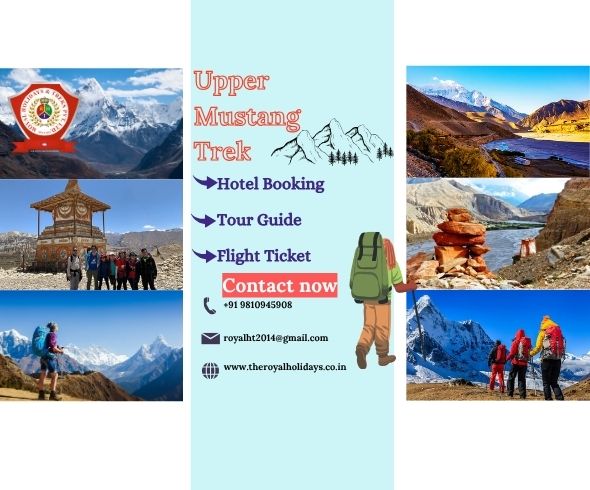
The Upper Mustang Trek is a deeply cultural and physically demanding journey into the “Last Forbidden Kingdom” of ‘Lo’—a region that remained completely cut off from the outside world until 1992. Situated in the ‘rain shadow’ of the Annapurna and Dhaulagiri mountain ranges, this trek is unique for its high-altitude desert landscape. This landscape is characterized by vast, windswept plateaus, towering red cliffs, and mysterious ancient ‘sky caves’ carved into sheer rock faces.
The trail follows the ancient ‘salt caravan route’ running alongside the Kali Gandaki River, eventually leading to the medieval, walled capital of ‘Lo Manthang.’ Here, centuries-old Tibetan Buddhist monasteries, whitewashed villages, and the former King’s palace stand as living testaments to the region’s exceptionally well-preserved heritage. Since this is a ‘Restricted Area,’ it is mandatory for trekkers to travel with a licensed guide and to obtain a special permit costing $500 USD for the first 10 days. This policy helps preserve the region’s pristine environment and unique atmosphere. Unlike other treks in Nepal, Upper Mustang is an excellent destination to visit during the monsoon season, as the towering mountains here block the rain-bearing clouds; consequently, the trails remain dry and the weather stays clear (albeit windy) even during the summer months.
The Upper Mustang Trek is considered a very safe and secure adventure journey. The primary reason for this is that it is a ‘Restricted Area,’ where it is mandatory for all foreign trekkers to be accompanied by a licensed professional guide. This government regulation ensures that you are accompanied by an expert capable of handling navigation, communicating with locals, and monitoring your health throughout the entire journey. Unlike more arduous routes such as Everest Base Camp, the altitude in Upper Mustang is relatively moderate—reaching a maximum of approximately 3,950 meters—which significantly reduces the risk of Acute Mountain Sickness (AMS) or severe altitude-related illnesses. The terrain here consists primarily of wide, flat plateau trails rather than steep, slippery rocky paths, making the trek quite easy and comfortable even for individuals with only basic physical fitness.
Furthermore, the region is renowned for its peaceful and deeply religious community, and it enjoys a high degree of political stability; this means that solo travelers (joining a group) as well as families can all feel completely safe and at ease here. Although you should be mentally prepared for strong afternoon winds and an extremely arid climate, the presence of well-established “tea houses” (lodges) and the mandatory requirement of a professional guide make this one of the safest “remote” trekking destinations in the Himalayan region.
Most Famous And Attractive Tourist Places In Upper Mustang Trek :
1. Lo Manthang (The Walled City)

Lo Manthang, situated at an elevation of 3,840 metres, is the historic capital of the former Kingdom of Lo and serves as the ultimate cultural highlight of the Upper Mustang Trek. This medieval walled city is unique for its massive 6-metre-high mud-brick walls and defensive towers that have protected the inhabitants for centuries. Inside the walls, you’ll find a maze of narrow stone-paved alleys, whitewashed houses, and some of the most significant Tibetan Buddhist monasteries in existence, such as Thubchen Gompa and Jampa Lhakhang, which house priceless 15th-century murals and massive copper statues. The city remains a living heritage site where the local population, including the descendants of the former royal family, continues to practice ancient traditions, festivals, and a lifestyle that has changed very little over hundreds of years. Walking through its gates feels like stepping back in time, offering a profound sense of isolation and peace that is rarely found in the modern world.
2. Kagbeni (The Gateway)
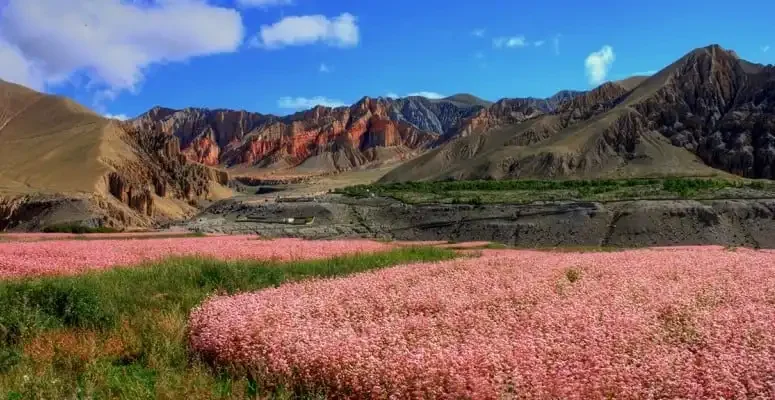
Kagbeni is a fascinating, medieval village situated at an altitude of 2,810 metres that serves as the official entry point into the restricted Upper Mustang region. Located at the confluence of the Kali Gandaki and Jhong rivers, it is one of the oldest villages in the Himalayas and features a unique architectural style consisting of mud-brick houses and dark, narrow alleyways designed to protect residents from the valley’s fierce afternoon winds. The village is home to the striking Kag Chode Thupten Samphel Ling Monastery, a red-walled Buddhist landmark founded in 1429 that houses rare bronze icons and ancient scrolls. Beyond its religious significance, Kagbeni is famous for its “ghost eater” statues (Kheni) that guard the village entrances and for being a historic hub on the ancient salt trade route between Tibet and India. For trekkers, it represents the final transition from the modern world into the “Forbidden Kingdom,” as your Restricted Area Permit is officially checked here before you can proceed further north into the arid desert landscape.
3. Sky Caves of Chhoser (Jhong Cave)
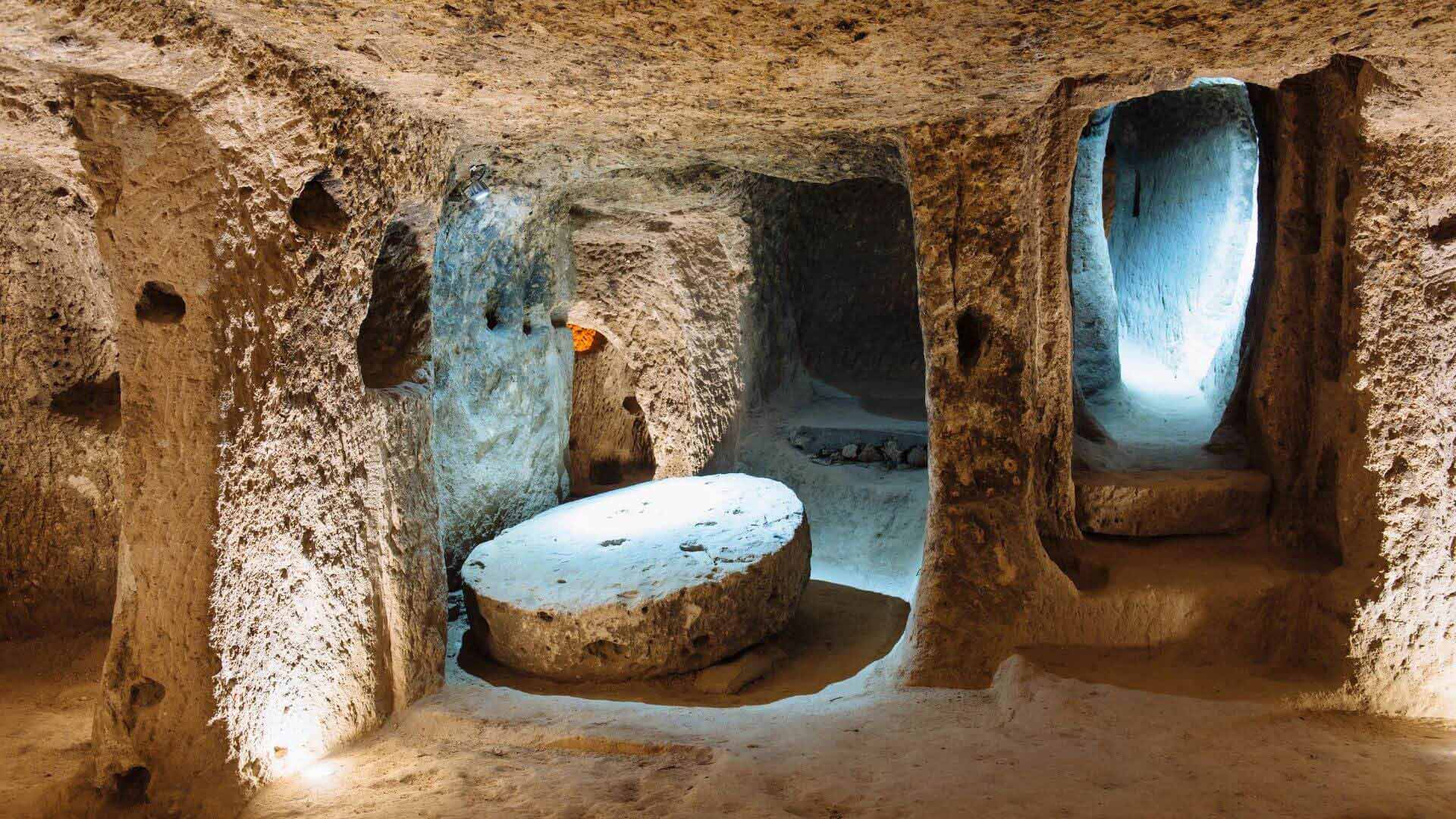
The Sky Caves of Chhoser, most famously represented by the Jhong Cave, are a spectacular archaeological wonder consisting of thousands of man-made holes carved into the sheer, sandy-coloured cliffs of Upper Mustang. These ancient structures are essentially five-story apartment complexes built into the rock face, featuring over 40 interconnected rooms, storage bins, and meditation cells reachable by wooden ladders and narrow tunnels. While their exact origin remains a mystery, archaeologists believe they were used nearly 2,000 to 3,000 years ago as burial chambers, defensive shelters during tribal wars, or even permanent living quarters for people escaping the harsh winds of the plateau. Today, exploring the interior of the Jhong Cave offers a surreal experience where you can look out from the high “windows” at the vast, arid landscape below, gaining a profound appreciation for the ingenuity and survival skills of the ancient Himalayan inhabitants.
4. Dhakmar (The Red Cliffs)

Dhakmar is home to some of the most visually stunning and dramatic landscapes in the entire Upper Mustang region, characterized by its towering, vibrant red cliffs that seem to glow against the clear blue sky. Local legend deeply intertwines with this landscape; it is said that the great 8th-century saint Guru Rinpoche killed a powerful demon here, and its blood stained the cliffs this permanent, deep crimson colour. The cliffs are riddled with ancient meditation caves and formations that look like organ pipes, creating a backdrop that is both eerie and beautiful. Below these massive red walls, the village of Dhakmar provides a sharp, colorful contrast with its lush green irrigated fields and traditional whitewashed houses. For trekkers, the walk into Dhakmar is often a highlight, especially in the late afternoon when the setting sun hits the rock faces, making the “Blood-Red Cliffs” appear even more intense and otherworldly.
5. Muktinath Temple

Muktinath Temple, perched at an altitude of 3,710 metres at the base of the Thorong La pass, is a world-renowned pilgrimage site that serves as a profound symbol of religious harmony between Hindus and Buddhists. For Hindus, it is known as Mukti Kshetra, or the “place of salvation,” and is one of the most sacred temples dedicated to Lord Vishnu, where devotees believe a visit can cleanse them of all sins. The complex is most famous for its 108 brass water spouts arranged in a semicircle, through which ice-cold mountain water flows; pilgrims traditionally run under these spouts to achieve spiritual purification. Additionally, the site houses the Jwala Mai Temple, where an eternal flame burns naturally from a gas seep beneath a stream of water, representing the miraculous union of earth, fire, and water. Set against the backdrop of the towering Dhaulagiri range, the temple’s serene atmosphere and historical importance make it a spiritual highlight for both trekkers on the Annapurna Circuit and devoted pilgrims from across the globe.
Overview
Travel is the movement of people between relatively distant geographical locations, and can involve travel by foot, bicycle, automobile, train, boat, bus, airplane, or other means, with or without luggage, and can be one way or round trip. Travel can also include relatively short stays between successive movements.
The origin of the word “travel” is most likely lost to history. The term “travel” may originate from the Old French word travail, which means ‘work’. According to the Merriam Webster dictionary, the first known use of the word travel was in the 14th century.
It also states that the word comes from Middle English travailen, travelen (which means to torment, labor, strive, journey) and earlier from Old French travailler (which means to work strenuously, toil). In English we still occasionally use the words “travail”, which means struggle. According to Simon Winchester in his book The Best Travelers’ Tales (2004), the words “travel” and “travail” both share an even more ancient root: a Roman instrument of torture called the tripalium (in Latin it means “three stakes”, as in to impale).