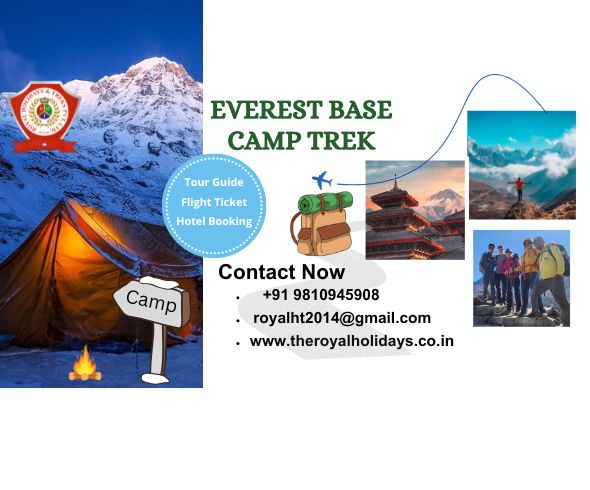

The Everest Base Camp (EBC) Trek is one of the world’s most renowned and spectacular high-altitude adventures. It leads hikers through the heart of Nepal’s Khumbu region, right up to the foot of the world’s highest peak, Mount Everest (8,848m). This journey typically begins with a thrilling flight to the mountain airstrip at Lukla. Following this, the route involves a gradual ascent through Sagarmatha National Park. This park is a UNESCO World Heritage Site, characterized by dense rhododendron forests, deep valleys, and suspension bridges.
Along the way, trekkers experience the rich cultural heritage of the Sherpa people; they stay in local teahouses and visit ancient spiritual sites such as the Tengboche Monastery. As the trail rises above the tree line and transitions into a rugged alpine desert, hikers reach key landmarks such as Namche Bazaar (the vibrant capital of the Sherpa people) and Gorak Shep (the final human settlement). The trek culminates at Base Camp (5,364m), situated atop the Khumbu Glacier. The itinerary often includes a sunrise ascent of Kala Patthar (5,545m), which offers the most magnificent and unobstructed panoramic view of the Everest summit.
The Everest Base Camp Trek is generally very safe for most people, as it is a walking journey along established trails rather than a hazardous technical climb requiring the use of ropes or ladders. Every year, thousands of ordinary hikers safely complete this journey, staying in local teahouses where they are provided with hot meals and a bed to sleep in each night. The most important safety rule is to proceed slowly and be sure to take a few extra “rest days” to allow your body to acclimatize to the high-altitude air.
Most Famous And Attractive Tourist Places In Everest Base Camp Trek :
1. Everest Base Camp & Khumbu Icefall

Everest Base Camp (EBC) and the Khumbu Icefall are two of the most critical landmarks on the southern climbing route to the summit of Mount Everest in Nepal. Everest Base Camp, situated at an elevation of approximately 5,364 metres (17,598 feet) on the Khumbu Glacier, serves as the primary hub for mountaineers and a popular destination for trekkers. It is the starting point for summit expeditions, where climbers spend weeks acclimatising and preparing for the ascent. Directly above EBC lies the Khumbu Icefall, a terrifyingly steep and ever-changing “river of ice” that marks the first major technical challenge of the climb. Formed as the Khumbu Glacier flows rapidly down from the Western Cwm, the icefall is a shifting labyrinth of deep crevasses and towering ice blocks called seracs, which can be as large as houses and are prone to sudden collapse. Because the glacier moves about one metre per day, the route through it is extremely unstable and requires specialized Sherpas, known as Icefall Doctors, to constantly install and maintain a system of ropes and ladders. To minimize the risk of avalanches or ice collapses triggered by the daytime sun, climbers typically attempt to traverse this hazardous section in the freezing darkness of the early morning.
2. Kala Patthar (The Ultimate Viewpoint)

Kala Patthar, meaning “Black Rock” in Nepali, is widely celebrated as the ultimate viewpoint for witnessing Mount Everest in its full glory. While Everest Base Camp (EBC) brings you close to the mountain’s base, the actual summit of Everest is largely hidden from EBC by the towering ridge of Nuptse. Standing at an elevation of approximately 5,644 metres (18,519 feet) on the south ridge of Pumori, Kala Patthar provides an unobstructed, panoramic 360-degree view of the Everest massif, Lhotse, and the sprawling Khumbu Glacier below. It is the highest point most trekkers will reach without a technical climbing permit, making it the emotional climax of the Everest Base Camp Trek. Visitors typically hike from the nearby settlement of Gorak Shep—often in the pre-dawn darkness—to catch a legendary sunrise where the first rays of light turn Everest’s summit into a brilliant golden peak.
3. Gorak Shep (The Final Frontier)
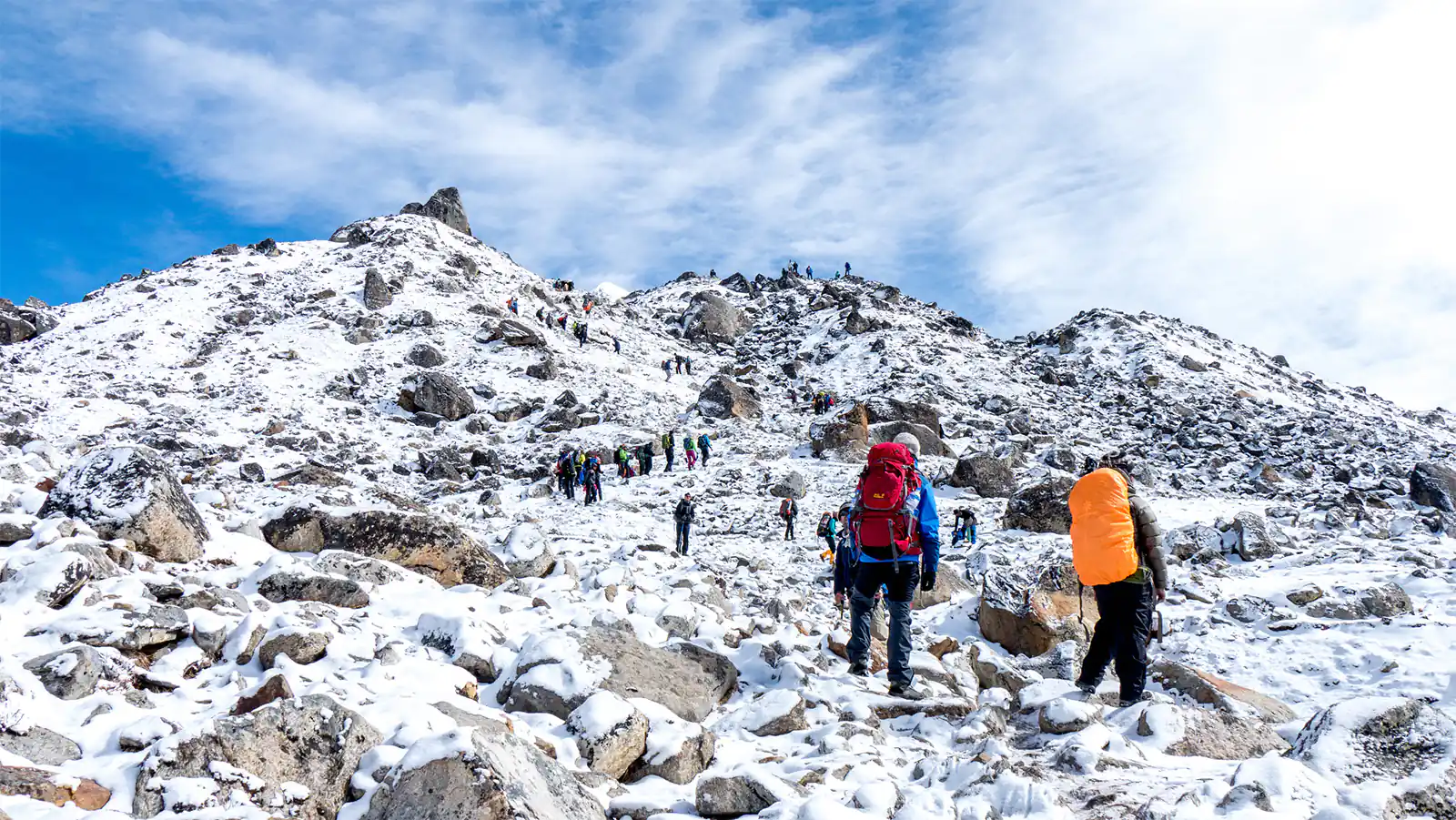
Gorak Shep, often called “The Final Frontier,” is a small, remote settlement that serves as the last inhabited outpost before reaching Everest Base Camp. Situated at a staggering elevation of 5,164 metres (16,942 feet) on the edge of a frozen, sand-covered lakebed, it is one of the highest places in the world where humans stay overnight. Its name translates to “dead ravens” in Sherpa, a nod to the harsh, barren landscape where almost no life can survive. Historically, Gorak Shep was the original Everest Base Camp used by early expeditions, including the 1952 Swiss attempt, before the site was moved closer to the Khumbu Icefall. Today, it functions as the critical strategic launchpad for trekkers; from its handful of basic stone teahouses, adventurers make their final two-to-three-hour push to Base Camp or ascend the iconic viewpoint of Kala Patthar. Life here is rudimentary, with thin air and freezing temperatures making it a true test of endurance for anyone seeking to stand at the foot of the world’s tallest peak.
4. Dingboche (The Summer Settlement)
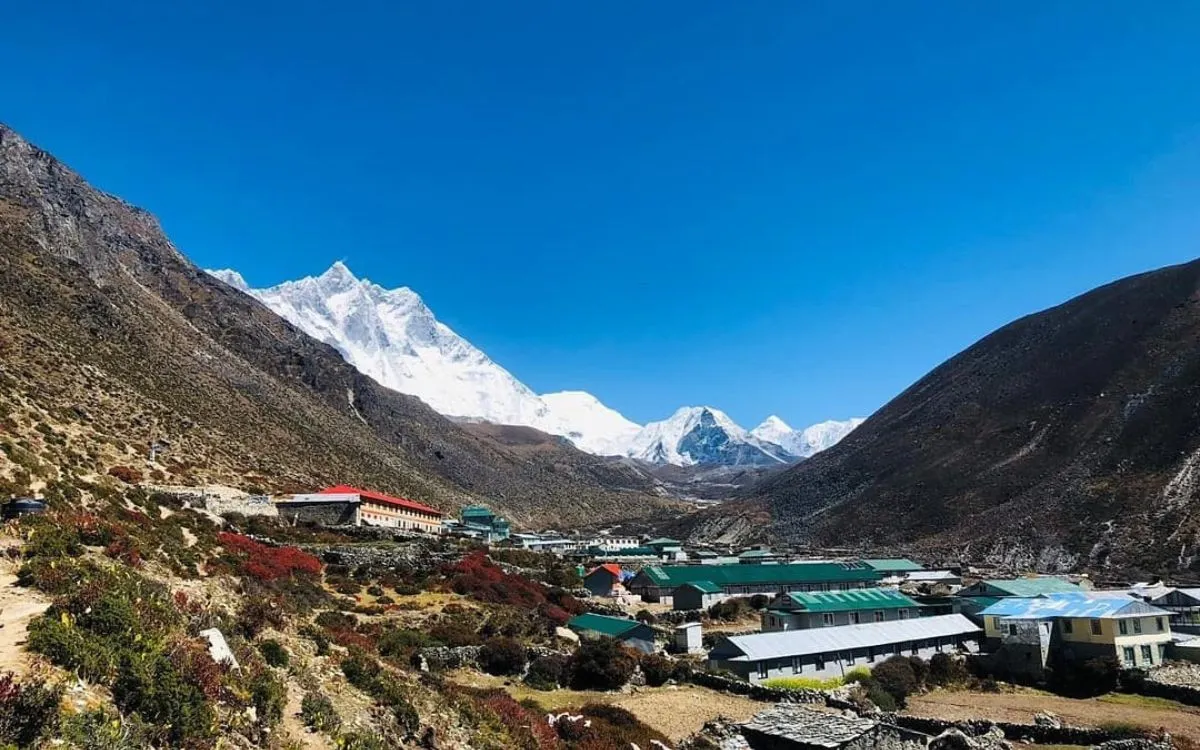
Dingboche, frequently referred to as the “Summer Valley” or “Summer Settlement,” is a picturesque Sherpa village situated at an elevation of 4,410 metres (14,469 feet) in the Imja Valley. It earned this moniker historically because its relatively sheltered position and reliable sunshine allowed it to serve as a vital seasonal farming ground for crops like potatoes and barley during the warmer months, while heavy winter snows often made it uninhabitable. Today, according to WeRamblers, it is the last major Sherpa settlement in the Khumbu region and a critical acclimatisation hub for trekkers. Most itineraries include a two-night stay here, allowing hikers to adapt to the thin air by taking day trips to nearby heights like Nagarjun Hill. Surrounded by spectacular stone-walled fields that protect crops from icy Himalayan winds, the village offers some of the most striking views in the region, including the iconic peak of Ama Dablam, Lhotse, and Island Peak.
5. Tengboche Monastery (The Spiritual Hub)
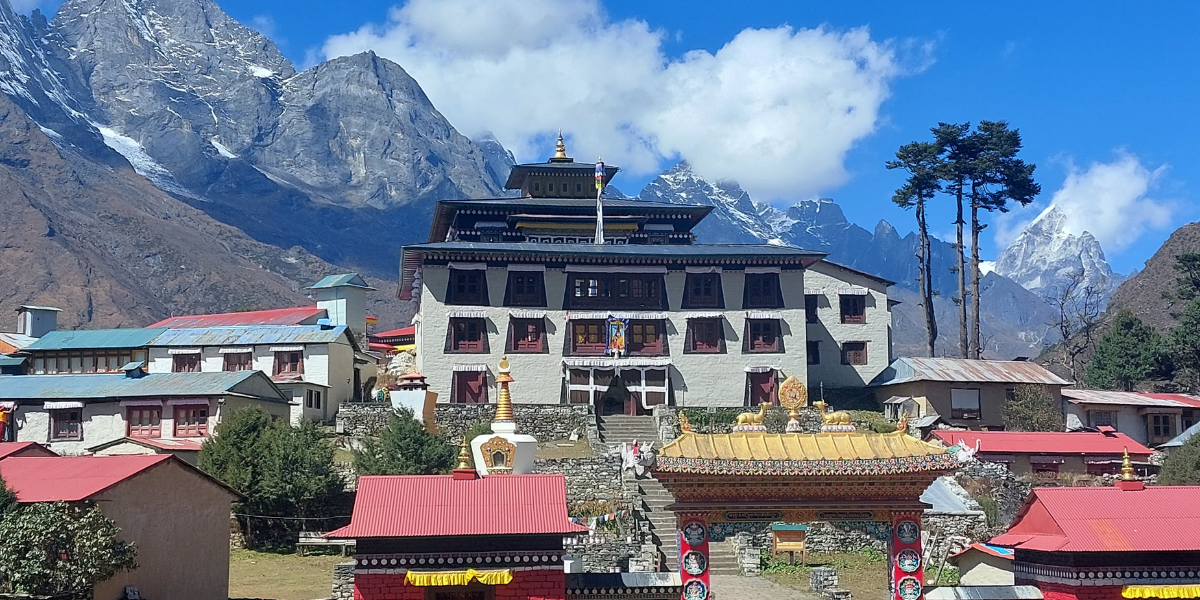
Tengboche Monastery, also known as Dawa Choling Gompa, is the largest and most significant Buddhist monastery in the Khumbu region, standing at an altitude of 3,867 metres (12,687 feet). It is widely regarded as the spiritual hub for the Sherpa community and a critical landmark for trekkers on the way to Everest Base Camp. Founded in 1916 by Lama Gulu, the monastery has survived both a major earthquake in 1934 and a devastating fire in 1989, being rebuilt each time as a testament to its cultural resilience. Set against a dramatic backdrop of Everest, Lhotse, and Ama Dablam, it offers a serene place for climbers and trekkers to seek blessings for a safe journey. The monastery is most famous for hosting the Mani Rimdu Festival every autumn, a vibrant 19-day celebration featuring sacred masked dances and rituals that attract both locals and international visitors.
Overview
Travel is the movement of people between relatively distant geographical locations, and can involve travel by foot, bicycle, automobile, train, boat, bus, airplane, or other means, with or without luggage, and can be one way or round trip. Travel can also include relatively short stays between successive movements.
The origin of the word “travel” is most likely lost to history. The term “travel” may originate from the Old French word travail, which means ‘work’. According to the Merriam Webster dictionary, the first known use of the word travel was in the 14th century.
It also states that the word comes from Middle English travailen, travelen (which means to torment, labor, strive, journey) and earlier from Old French travailler (which means to work strenuously, toil). In English we still occasionally use the words “travail”, which means struggle. According to Simon Winchester in his book The Best Travelers’ Tales (2004), the words “travel” and “travail” both share an even more ancient root: a Roman instrument of torture called the tripalium (in Latin it means “three stakes”, as in to impale).