
The Annapurna Base Camp (ABC) Trek is a world-class journey situated in the heart of the Himalayas, leading trekkers into a magnificent, high-altitude glacial basin known as the Annapurna Sanctuary. Located at an elevation of 4,130 meters (13,550 feet), this base camp resembles a natural amphitheater, encircled by a series of colossal peaks; these include the massive Annapurna I (8,091 meters), Annapurna South, and the sacred, hitherto unclimbed Machhapuchhre (Fishtail). This trek is renowned for its incredible “vertical” diversity; you begin in lush, subtropical valleys—featuring terraced paddy fields and rhododendron forests—and then ascend into a high-alpine realm of rock and ice. Along the way, trekkers experience the rich culture of the Gurung and Magar people in villages such as Ghandruk and Chomrong. With a combination of moderate difficulty, well-established tea houses, and the rare opportunity to stand at the foot of an 8,000-meter peak within just a few days, it remains one of Nepal’s most rewarding and accessible trekking adventures.
The Annapurna Base Camp Trek is a very safe and favorable option for hikers, even if you have no prior experience in mountain climbing. It is one of Nepal’s most popular routes because it is well-marked and dotted with “tea houses”—small guesthouses—along its path, where you can find hot meals and a bed to sleep in every few hours. You do not need to be a professional athlete; You simply require a basic level of fitness to navigate the stone steps and uphill trails. To stay safe, the cardinal rule is to walk slowly and drink plenty of water, allowing your body to acclimatize to the thin mountain air. The government has made it mandatory for everyone to hire a licensed guide; this adds a significant layer of safety, as guides are familiar with weather patterns and can identify the best routes to avoid any slippery spots. If you travel during the peak seasons of spring or autumn, it proves to be a safe and incredibly rewarding journey.
Most Famous And Attractive Tourist Places In Annapurna Base Camp Trek :
1. Tadapani (The Forest Viewpoint)
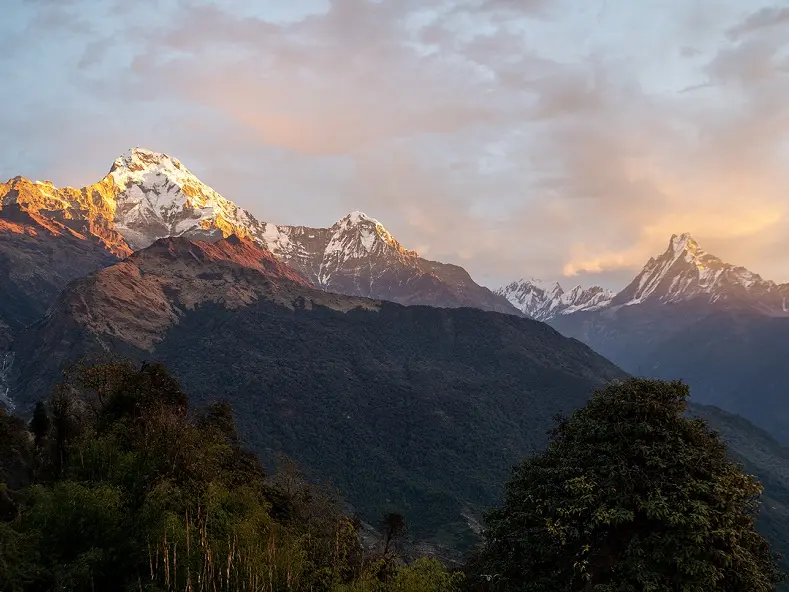
Tadapani, which translates to “Far Water,” is a popular trekking stop situated at an elevation of 2,630 metres (8,628 feet) and is renowned as one of the best forest viewpoints in the Annapurna region. It sits at a major junction where trails from Ghorepani, Ghandruk, and Annapurna Base Camp meet, making it a bustling hub for trekkers. The village is famously surrounded by ancient, moss-covered rhododendron and oak forests, which erupt in vibrant shades of red and pink during the spring. Because of its elevated position on a ridge, Tadapani offers an exceptionally clear and “front-row” view of Annapurna South, Hiunchuli, and Machhapuchhre (Fishtail). Many photographers prefer Tadapani for sunrise shots because the mountains appear incredibly close, and the surrounding deep green forest provides a stunning, natural frame for the snow-capped peaks.
2. Chhomrong (The Strategic Junction)
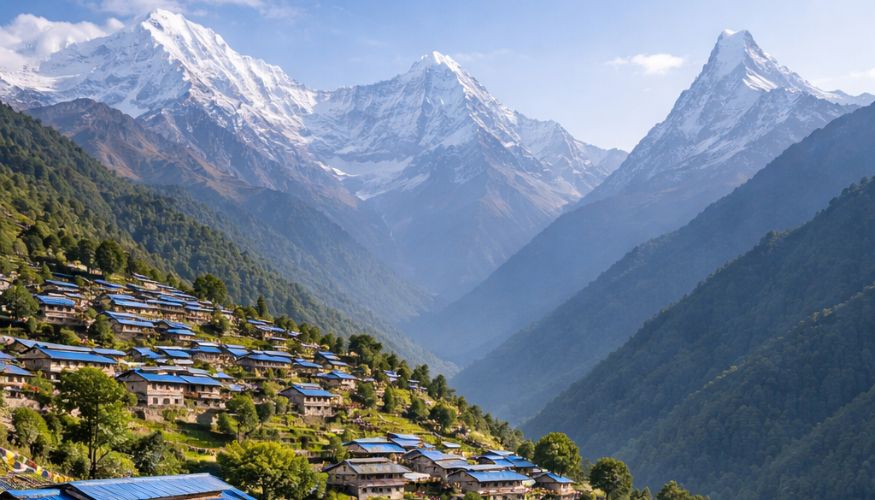
Chhomrong is a large, vibrant village perched on a high ridge at 2,170 metres (7,119 feet) and serves as the most important strategic junction for everyone trekking into the Annapurna Sanctuary. It is the last major permanent settlement on the route, meaning it offers the final chance for trekkers to enjoy modern comforts like Wi-Fi, diverse bakeries, and well-stocked shops before entering the more remote high-altitude zones. The village is famously characterized by its 2,500+ stone steps, which trekkers must descend to cross the Chhomrong Khola river and then painfully re-ascend on their way back—a physical challenge often called the “Chhomrong Stairway.” Despite the steep climb, the village provides a breathtaking, straight-on view of the massive Annapurna South and the sacred Machhapuchhre (Fishtail), making it a spectacular place to rest and refuel before the final push toward Base Camp.
3. Ghandruk (The Cultural Heart)

Ghandruk, situated at an elevation of 1,940 metres (6,365 feet), is widely celebrated as the cultural heart of the Annapurna region and one of the most beautiful Gurung villages in Nepal. Known for its meticulously preserved stone-paved alleys and traditional houses with slate roofs, the village offers an immersive experience into the life of the Gurung people, famous for their history as brave Gorkha soldiers. It serves as a living museum where visitors can visit the Old Gurung Museum to see ancient artifacts, try on traditional ethnic costumes, and experience authentic Himalayan hospitality. Beyond its cultural richness, Ghandruk provides a stunning “front-row” panorama of Annapurna South, Hiunchuli, and Machhapuchhre (Fishtail), which appear to tower directly over the village rooftops. Its combination of easy accessibility, rich heritage, and spectacular mountain views makes it a mandatory stop for anyone seeking the soul of the Annapurna range.
4. Jhinu Danda (The Natural Hot Springs)

Jhinu Danda, located at an elevation of 1,780 metres (5,840 feet), is a cherished stop on the Annapurna Base Camp trek, world-famous for its natural geothermal hot springs. Situated on a steep ridge, the village itself offers lovely views, but the true highlight is a 20-to-30-minute descent to the banks of the rushing Modi Khola River, where several cement-lined pools collect the therapeutic, mineral-rich warm water. For trekkers on their return journey, these springs serve as a “natural spa,” providing much-needed relief for sore muscles and joints after days of intense hiking and thousands of stone steps. The experience of soaking in the steaming water while listening to the roar of the icy glacial river just metres away is often cited as one of the most relaxing and memorable moments of the entire expedition. In recent years, the addition of a massive suspension bridge nearby has made the village even more accessible, further cementing its status as the ultimate recovery destination in the Himalayas.
5. Machhapuchhre Base Camp (The Sacred Gateway)
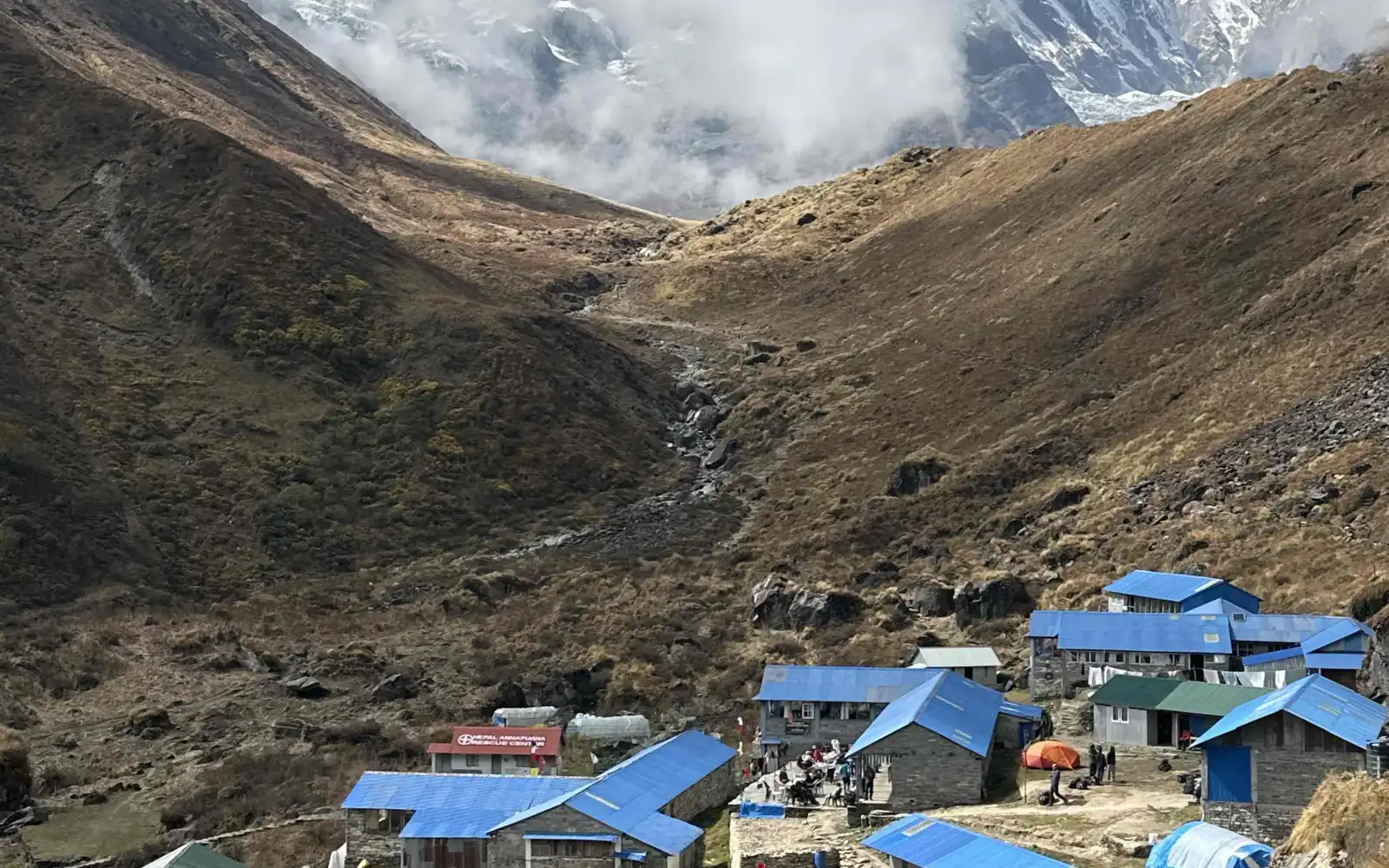
Machhapuchhre Base Camp (MBC), situated at an elevation of 3,700 metres (12,139 feet), serves as the majestic “Sacred Gateway” to the inner Annapurna Sanctuary. It is the final major resting point before reaching Annapurna Base Camp and offers the most intimate, up-close views of the iconic Machhapuchhre (Fishtail Mountain). This peak is considered sacred to the local people and is associated with the Hindu god Shiva; as a result, it remains officially unclimbed, preserving its pristine and vertical beauty. Unlike other base camps that serve as climbing hubs, MBC is primarily a sanctuary for trekkers to acclimatise and witness the mountain’s unique double-peak silhouette, which dominates the sky. Staying here provides a dramatic high-altitude experience where you are surrounded by a wall of giant peaks, including Annapurna III and Gangapurna, creating a sense of being truly enclosed within the heart of the Himalayas.
Overview
Travel is the movement of people between relatively distant geographical locations, and can involve travel by foot, bicycle, automobile, train, boat, bus, airplane, or other means, with or without luggage, and can be one way or round trip. Travel can also include relatively short stays between successive movements.
The origin of the word “travel” is most likely lost to history. The term “travel” may originate from the Old French word travail, which means ‘work’. According to the Merriam Webster dictionary, the first known use of the word travel was in the 14th century.
It also states that the word comes from Middle English travailen, travelen (which means to torment, labor, strive, journey) and earlier from Old French travailler (which means to work strenuously, toil). In English we still occasionally use the words “travail”, which means struggle. According to Simon Winchester in his book The Best Travelers’ Tales (2004), the words “travel” and “travail” both share an even more ancient root: a Roman instrument of torture called the tripalium (in Latin it means “three stakes”, as in to impale).