Tower Bridge is a world-renowned marvel of Victorian engineering and arguably London’s most famous landmark, situated on the River Thames adjacent to the Tower of London. Completed in 1894, this bridge represents a unique fusion of a suspension bridge at the flanks and a bascule bridge at the center. It features two massive Neo-Gothic towers, which house the machinery used to raise the roadway for passing ships. Although it is often mistaken for the ordinary London Bridge, Tower Bridge stands out distinctly thanks to its magnificent architecture and vibrant blue accents.
Today, visitors can experience the Tower Bridge Exhibition, which includes walking across a high-level glass floor situated 42 meters above the water and touring the authentic Victorian Engine Rooms. These rooms still meticulously preserve the original coal-fired steam engines that once powered the bridge’s lifting mechanism. It remains a vital transportation link and a magnificent symbol of London’s maritime history, continuing to raise its “bascules” (the opening sections of the bridge) approximately 800 times a year.
Tower Bridge is a very safe destination to visit; as a major landmark, it is well-staffed and equipped with numerous security cameras throughout the vicinity. Given its popularity, the site is consistently bustling with other tourists and families, creating a welcoming and lively atmosphere even during the evening hours.
Most Famous And Attractive Tourist Places In Tower Bridge, London :
1. The Shard (The Tallest View)
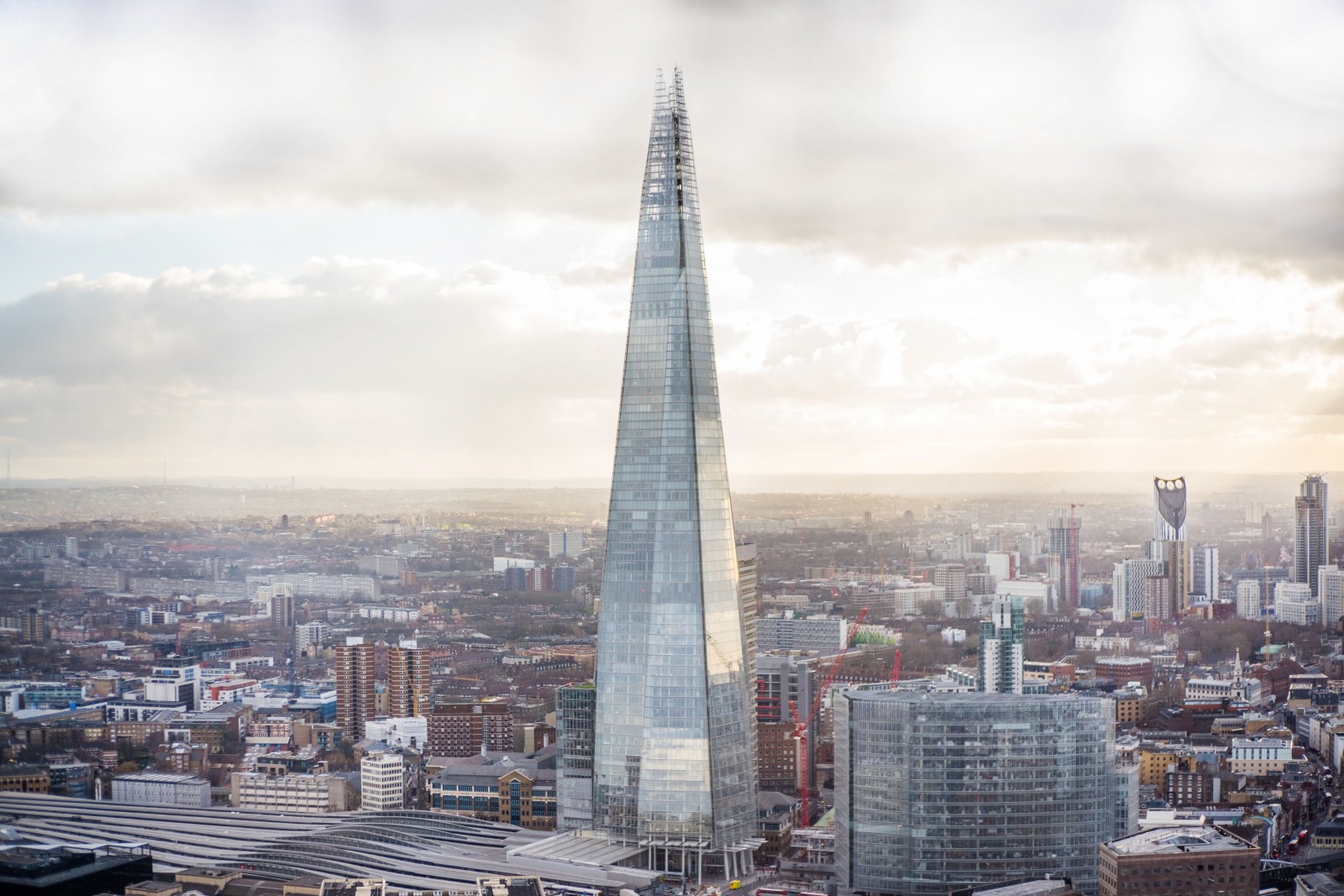
The Shard, also known as the Shard of Glass, is a 72-story skyscraper in Southwark, London, that stands at a height of 309.6 metres (1,016 feet), making it the tallest building in Western Europe. Designed by the renowned Italian architect Renzo Piano, its distinctive pyramid shape is covered in 11,000 glass panels that reflect the sky and change appearance depending on the weather and season. The building’s premier attraction, “The View from The Shard,” features observation decks on floors 68, 69, and 72, offering an unparalleled 360-degree panoramic view of London that stretches up to 40 miles on a clear day. Beyond its observation levels, The Shard is a “vertical city” housing high-end offices, award-winning restaurants like Aqua Shard and Hutong, and the luxurious Shangri-La Hotel, making it a landmark of modern engineering and a centerpiece of the London skyline.
2. HMS Belfast (The Floating Museum)

HMS Belfast is a historic Royal Navy light cruiser permanently moored on the River Thames, serving as a powerful reminder of Britain’s naval heritage. Commissioned in 1939, the ship played a vital role in some of the most significant events of the 20th century, including the D-Day landings and the Arctic Convoys during World War II, as well as the Korean War. Now a branch of the Imperial War Museum, it is a “floating museum” where visitors can explore nine different decks to experience what life was like for the crew of 950 men. From the cramped living quarters and the galley to the massive engine rooms and the interactive Operations Room, the ship provides a deeply immersive look at the technical and personal challenges of life at sea. Its iconic silhouette between London Bridge and Tower Bridge makes it one of the most recognizable landmarks on the Thames.
3. Borough Market (The Foodie Heaven)

Borough Market is London’s most renowned food market, boasting a rich history that spans over 1,000 years on its site near the southern end of London Bridge. Often called a “Foodie Heaven,” it is a bustling hub where artisanal producers, farmers, and gourmet chefs gather to sell high-quality local and international delicacies. The market is visually striking with its green Victorian wrought-iron roof and cobblestone alleys, filled with stalls offering everything from rare truffles and hand-pressed ciders to freshly caught seafood and aged cheeses. Beyond being a place to shop for ingredients, it has become a premier destination for street food, where visitors can enjoy famous dishes like the legendary hot salt beef sandwiches, oysters, and authentic international cuisines. Because of its commitment to sustainable and high-quality food, Borough Market remains a vibrant social center and a must-visit for anyone looking to experience the true flavors of London.
4. Sky Garden (The Garden in the Clouds)

The Sky Garden, located at the top of the “Walkie Talkie” building at 20 Fenchurch Street, is London’s highest public garden, sitting 160 metres above the city. Often called the “Garden in the Clouds,” this unique three-story space is enclosed by massive glass walls and features a lush landscape of Mediterranean and South African plants, such as Bird of Paradise and African Lilies. The venue offers spectacular 360-degree views of the London skyline, allowing visitors to see the Shard, the Gherkin, and St. Paul’s Cathedral from an open-air terrace and indoor observation decks. While it houses high-end bars and restaurants like Fenchurch and Darwin Brasserie, the main garden area is free to the public, making it one of the most sought-after spots in the city for a panoramic view without the typical ticket price.
5. St. Katharine Docks (The Hidden Marina)

St. Katharine Docks is a premier waterside destination in London, tucked away just a short walk from the Tower of London and Tower Bridge. Originally opened in 1828 as a busy commercial dock for luxury goods like spices, silk, and ivory, it has been beautifully transformed into a peaceful marina and residential complex. The area is known as a “hidden gem” because its quiet, sheltered basins offer a calm retreat from the city’s surrounding hustle and bustle. The docks are surrounded by a mix of historic Victorian warehouses and modern architecture, now housing various boutique shops, cafes, and restaurants, including the famous timber-framed Dickens Inn. It is a popular spot for visitors to admire luxury yachts and historic sailing barges while enjoying a meal by the water, offering one of the most picturesque and relaxing atmospheres in central London.
Overview
Travel is the movement of people between relatively distant geographical locations, and can involve travel by foot, bicycle, automobile, train, boat, bus, airplane, or other means, with or without luggage, and can be one way or round trip. Travel can also include relatively short stays between successive movements.
The origin of the word “travel” is most likely lost to history. The term “travel” may originate from the Old French word travail, which means ‘work’. According to the Merriam Webster dictionary, the first known use of the word travel was in the 14th century.
It also states that the word comes from Middle English travailen, travelen (which means to torment, labor, strive, journey) and earlier from Old French travailler (which means to work strenuously, toil). In English we still occasionally use the words “travail”, which means struggle. According to Simon Winchester in his book The Best Travelers’ Tales (2004), the words “travel” and “travail” both share an even more ancient root: a Roman instrument of torture called the tripalium (in Latin it means “three stakes”, as in to impale).