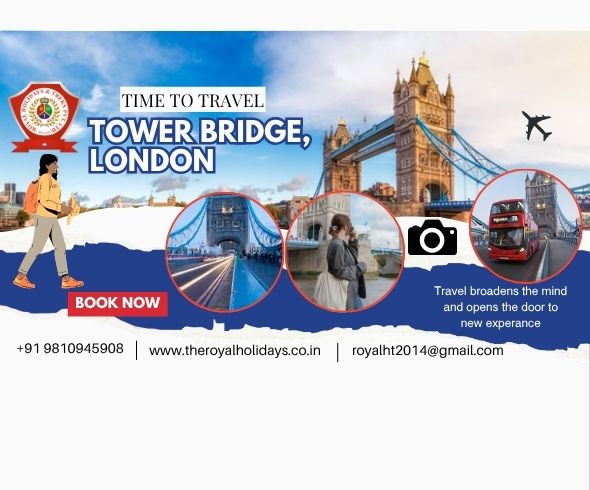
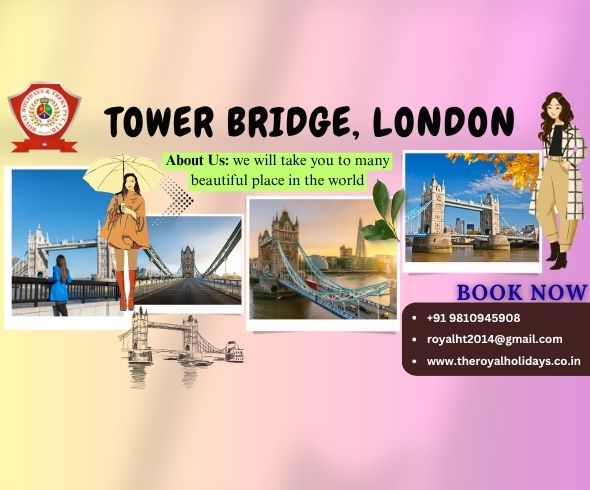
Tower Bridge is an iconic bridge located on River Thames that has become symbolic to London. During the earlier times, it was also called “Tower of London” due to a royal prison that was located inside this tower. This bridge has been built with a unique combination of bascule and suspension elements. It took eight years to construct this bridge, and it is exemplary to great engineering and design. Check out Europe tour package for the best deals and experiences!
The bridge was opened for public on 30th June 1894 by the Princess of wales. It is 240 meters in length, and its twin towers rise 61 meters above the River Thames. The rising bascule and the grand towers of London Bridge make it one of the most recognized bridges in the entire world. The most striking feature of Tower Bridge is it’s two magnanimous towers that are connected through two parallel walkways.
The high-level walkways offer you a chance to have a panoramic view of the city life of London, and its Victorian Gothic design takes you into the era of Victorian London. The spectacular glass floors across the walkways give you a chance to gush over the pedestrians whizzing across the Bridge.
It operates through a computer control system and can be lowered down and raised remotely. The bascules are raised three times a day during which the ships need the notice to pass through the river on which this bridge has been built. It does not just serve as a medium of easy passage but has transformed into the historical and cultural landmark of London.
Overview
Travel is the movement of people between relatively distant geographical locations, and can involve travel by foot, bicycle, automobile, train, boat, bus, airplane, or other means, with or without luggage, and can be one way or round trip. Travel can also include relatively short stays between successive movements.
The origin of the word “travel” is most likely lost to history. The term “travel” may originate from the Old French word travail, which means ‘work’. According to the Merriam Webster dictionary, the first known use of the word travel was in the 14th century.
It also states that the word comes from Middle English travailen, travelen (which means to torment, labor, strive, journey) and earlier from Old French travailler (which means to work strenuously, toil). In English we still occasionally use the words “travail”, which means struggle. According to Simon Winchester in his book The Best Travelers’ Tales (2004), the words “travel” and “travail” both share an even more ancient root: a Roman instrument of torture called the tripalium (in Latin it means “three stakes”, as in to impale).