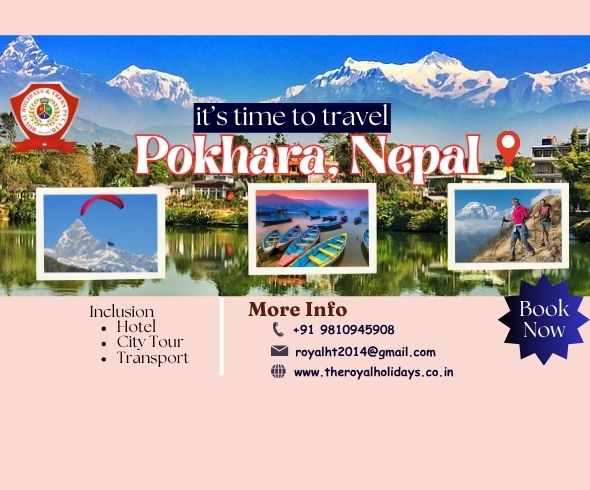
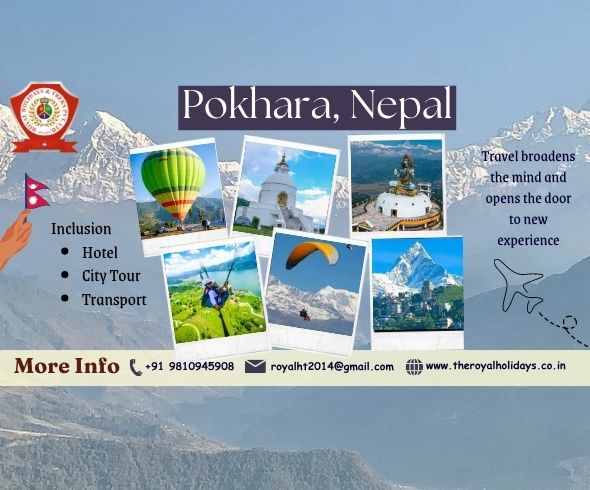
Pokhara is globally recognized as one of the premier destinations for paragliding. Here, stable air currents (thermals), convenient launch and landing sites, and mountain vistas so magnificent they defy imagination—all combine to create an almost-perfect experience. This thrilling journey typically begins with a scenic drive up to Sarangkot Hill. Situated at an altitude of approximately 1,600 meters, this hill serves as the primary launch site for paragliding. From here, pilots and passengers take a short run down a grassy slope to catch the rising warm air currents, instantly lifting off into the sky above the valley. As you float through the air, you are treated to an unparalleled 360-degree panoramic view: on one side, the colossal, snow-capped peaks of the Annapurna range and the iconic ‘Fishtail’ summit of Machhapuchhre appear so close that you feel as though you could reach out and touch them; on the other, the shimmering, emerald-green expanse of Phewa Lake and the sprawling city of Pokhara lie spread out directly beneath you.
Most visitors opt for a ‘tandem flight.’ In this setup, an experienced and certified pilot handles all the technical aspects of the flight, allowing the passenger to sit back comfortably, soak in the scenery, take photographs, and—if feeling a bit adventurous—even experience aerial maneuvers such as ‘wingovers’ and ‘spirals.’ The duration of the flight typically ranges from 20 to 30 minutes, although longer ‘cross-country’ flights are also available for enthusiasts. The experience concludes with a gentle, scenic glide down toward the designated landing zone located by the lakeside. During this descent, you will often spot vultures and eagles soaring right alongside you at your own altitude. Beyond the sheer thrill, paragliding in Pokhara is renowned for its safety standards and for offering a unique perspective on Nepal’s diverse landscapes—ranging from lush subtropical forests to the towering peaks of the Himalayas. For this very reason, it is an absolute must-add to the bucket list of any traveler visiting the region.
Pokhara is regarded as one of the safest and most welcoming destinations for travelers, particularly for those looking to try their hand at paragliding. Given the sport’s global popularity, the paragliding industry here operates with a high degree of professionalism; tandem flights are conducted under the supervision of certified pilots who utilize high-quality equipment and take to the skies only when weather conditions are entirely favorable.
Most Famous and Attractive Tourist Places in Pokhara, Nepal:
1. Sarangkot
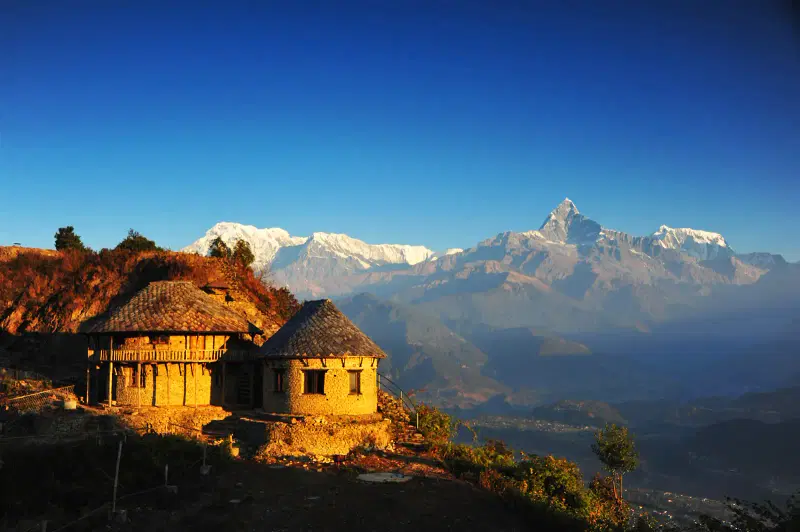
Sarangkot is a premier hilltop destination situated at an altitude of approximately 1,600 metres, offering one of the most iconic panoramic views in the world. Located just a short drive or hike from the lakeside area of Pokhara, it serves as the ultimate vantage point for witnessing the sunrise over the Annapurna and Dhaulagiri mountain ranges. As the first light of day hits the peaks, the mountains, including the distinctively shaped Machhapuchhre (Fishtail), transform from deep blues to brilliant oranges and golds. Beyond its scenic beauty, Sarangkot is globally renowned as a top-tier site for paragliding, where adventurers take flight alongside eagles, soaring over the valley with Phewa Lake shimmering below. The ridge is dotted with charming teahouses and local homestays, providing a peaceful escape from the city and a chance to experience rural Nepali hospitality amidst breathtaking Himalayan scenery.
2. Phewa Lake & Tal Barahi Temple

Phewa Lake (or Fewa Tal) is the second-largest lake in Nepal and the crown jewel of Pokhara, renowned for its semi-natural beauty and the mirror-like reflection of the Annapurna and Machhapuchhre mountains on its surface. Situated at an altitude of 742 metres, the lake is a hub for recreational activities like boating, kayaking, and relaxing at the vibrant “Lakeside” area, which is lined with cafes and shops. At the very heart of the lake lies the Tal Barahi Temple, a sacred two-story pagoda dedicated to the Hindu goddess Barahi, an incarnation of Durga. Accessible only by a short, scenic boat ride, this “Lake Temple” is Pokhara’s most important religious monument and a major pilgrimage site, particularly during festivals like Dashain. According to local legend, the temple was built by King Kulmandhan Shah following a divine dream. Together, the lake and temple offer a unique blend of spiritual serenity and natural splendor, making them a must-visit for anyone looking to experience the tranquil soul of Nepal.
3. Devi’s Fall (Davis Fall

Devi’s Fall, locally known as Patale Chhango (which translates to “Hell’s Falls” or “Underworld’s Waterfall”), is a unique geological phenomenon in Pokhara where the Pardi Khola stream vanishes into a deep, dark underground tunnel. Unlike typical waterfalls that flow into an open river, this cascade plunges into a gorge about 100 feet deep and travels through a mysterious 500-foot-long subterranean passage. The fall earned its modern name from a tragic accident on July 31, 1961, when a Swiss tourist named Mrs. Davis (or Davi) was swept away by a sudden overflow from the Phewa Lake dam while swimming; her father later requested the falls be named in her memory. During the monsoon season, the site is particularly spectacular as the roaring water creates a thunderous sound and a heavy mist that rises from the depths. Interestingly, the water that disappears here eventually re-emerges through the Gupteshwor Mahadev Cave, which is located just across the street and houses a sacred shrine.
4. World Peace Pagoda (Shanti Stupa)

The World Peace Pagoda, or Shanti Stupa, is a stunning white Buddhist monument perched atop Anadu Hill, overlooking the Pokhara Valley and the turquoise Phewa Lake. Built by Buddhist monks from the Japanese Nipponzan-Myōhōji organisation shortly after World War II, it was designed to be a symbol of global harmony and a beacon of peace for people of all races and creeds. Standing at a height of 115 feet, the stupa features two tiers and is adorned with four statues of the Buddha—each representing a significant event in his life and gifted by different Buddhist nations like Japan, Sri Lanka, and Thailand. Reaching the pagoda is an adventure in itself, often involving a scenic boat ride across the lake followed by a lush, uphill hike through forested trails, though it is also accessible by road. Once at the top, visitors are rewarded with what many consider the finest panoramic view in Nepal, where the entire city of Pokhara is laid out below against a backdrop of the towering, snow-capped Annapurna massif.
5. Gupteshwar Mahadev Cave
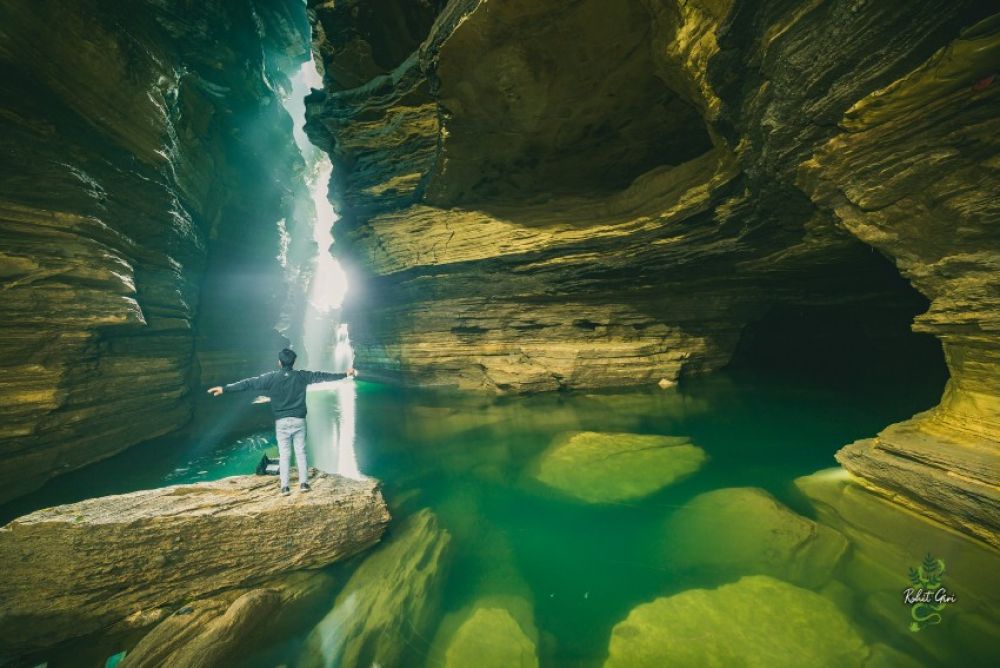
Gupteshwor Mahadev Cave, situated directly across from Devi’s Fall, is considered one of the longest and most sacred caves in South Asia. This limestone cave is divided into two main sections: the first part contains a naturally formed Shiva Lingam, which was reportedly discovered in the 16th century and serves as a major site for Hindu pilgrims. The second, deeper section of the cave leads to a spectacular hidden view of the base of Devi’s Fall, where the thundering water plunges into the dark underground canyon. As you descend the spiral staircases, the air becomes cool and damp, and you can see intricate stalactite and stalagmite formations along the walls. The cave is particularly vibrant during the festival of Mahashivaratri, when thousands of devotees gather to offer prayers. Because the cave can become slippery and the water levels rise significantly during the rainy season, it offers a thrilling mix of spiritual reverence and raw, subterranean adventure.
Overview
Travel is the movement of people between relatively distant geographical locations, and can involve travel by foot, bicycle, automobile, train, boat, bus, airplane, or other means, with or without luggage, and can be one way or round trip. Travel can also include relatively short stays between successive movements.
The origin of the word “travel” is most likely lost to history. The term “travel” may originate from the Old French word travail, which means ‘work’. According to the Merriam Webster dictionary, the first known use of the word travel was in the 14th century.
It also states that the word comes from Middle English travailen, travelen (which means to torment, labor, strive, journey) and earlier from Old French travailler (which means to work strenuously, toil). In English we still occasionally use the words “travail”, which means struggle. According to Simon Winchester in his book The Best Travelers’ Tales (2004), the words “travel” and “travail” both share an even more ancient root: a Roman instrument of torture called the tripalium (in Latin it means “three stakes”, as in to impale).