

Vietnam is a vibrant, long, and narrow country located in Southeast Asia. It is bordered by China to the north, Laos and Cambodia to the west, and the South China Sea to the east and south. Historically, this nation has possessed a remarkably strong identity, forged through nearly a thousand years of Chinese rule followed by an era of independent feudal dynasties. In the 19th century, it became a French colony, a development that sparked decades of anti-colonial struggle. This struggle culminated in the Vietnam War (or the American War) in the mid-20th century, which divided the country into a communist North and a Western-backed South. This division persisted until the country was reunified in 1976 as the ‘Socialist Republic of Vietnam.’ Today, Vietnam is a one-party socialist state that, through its ‘Đổi Mới’ (Renovation) reforms initiated in 1986, has transformed itself from a war-torn, agrarian society into one of the world’s fastest-growing market-based economies. Its culture is a rich tapestry woven from 54 distinct ethnic groups, deeply influenced by Confucian values.
Vietnam’s economy is primarily bolstered by its status as a global manufacturing hub. This position has been reinforced by substantial foreign investment and the “China Plus One” policy. The electronics sector serves as the cornerstone of this economic growth; giants such as Samsung and Apple have relocated their major operations to the country, generating a significant portion of the nation’s export revenue. Beyond the technology sector, the economy is further supported by an extensive network of Free Trade Agreements (FTAs), such as the CPTPP and the EVFTA. These agreements grant Vietnamese products preferential access to markets across Europe, North America, and Asia.
Vietnam is widely regarded as an excellent travel destination, offering a unique blend of natural beauty, rich history, diverse cuisine, and exceptional affordability. Whether you are seeking bustling urban energy, serene mountain trekking, or picturesque coastal relaxation, the country boasts a well-developed tourism infrastructure that makes it accessible to a wide variety of travelers.
According to international benchmarks—such as the ‘Global Peace Index’—Vietnam ranks quite high on this list due to its political stability and an extremely low rate of violent crime against foreigners.
Most Famous And Attractive Tourist Places In Vietnam :
1. Da Nang
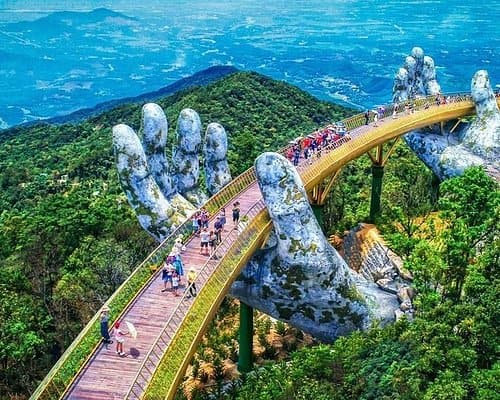
Da Nang is a vibrant coastal city in Central Vietnam, celebrated for its unique blend of modern urban energy, rich history, and stunning natural landscapes. Known as the “city of bridges,” it is famously bisected by the Han River and features iconic structures like the Dragon Bridge, which famously “breathes” fire and water on weekend nights. Geographically, the city is a paradise for nature lovers, boasting the Son Tra Peninsula with its towering Lady Buddha statue, the limestone peaks of the Marble Mountains filled with ancient pagodas and caves, and My Khe Beach, frequently ranked among the most beautiful beaches in the world. As a major transportation hub, it serves as the perfect base for exploring nearby UNESCO World Heritage Sites like the Hoi An Ancient Town, the Imperial City of Hue, and the My Son Sanctuary. Visitors also flock to the Ba Na Hills to walk across the famous Golden Bridge held by giant stone hands. Beyond its sights, Da Nang is renowned for its affordable and diverse culinary scene, featuring local specialties like Mi Quang noodles and Banh Xeo (savoury crepes) found in bustling markets and high-end beachfront resorts.
2. Ha Giang Loop
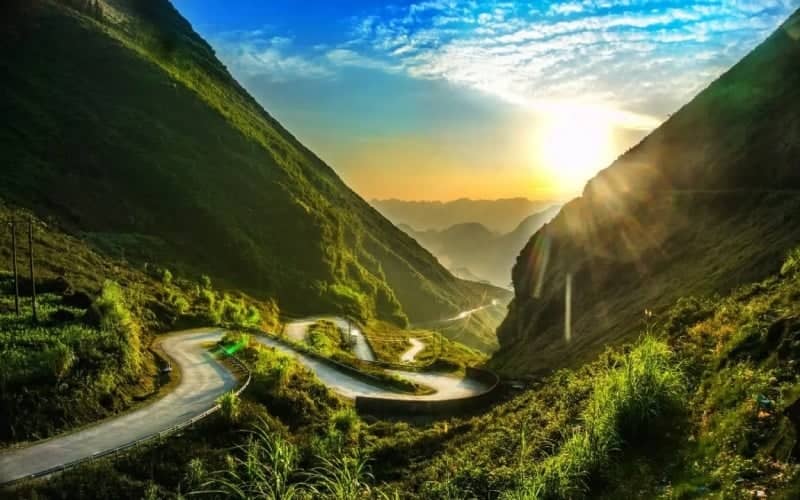
The Ha Giang Loop is a world-renowned 300–350 km motorbike circuit that winds through the dramatic, high-altitude landscapes of Vietnam’s northernmost province, bordering China. This legendary journey typically takes 3 to 5 days and traverses the Dong Van Karst Plateau Geopark, a UNESCO-recognized region featuring 400-million-year-old limestone peaks, deep river gorges, and terraced rice fields. The route is nicknamed “Happiness Road” and is famous for its harrowing hairpin turns and stunning viewpoints, most notably the Ma Pi Leng Pass—often called the “King of Passes”—which towers over the emerald-green Nho Que River. Beyond the adrenaline of the ride, the loop offers deep cultural immersion, as travelers stay in traditional homestays and interact with diverse ethnic minority groups like the Hmong, Tay, and Lolo. While experienced riders may self-drive, many choose the “Easy Rider” option—hiring a local driver to navigate the dangerous roads—or joining small group tours to experience the nightly “happy water” (local rice wine) and camaraderie that have made the loop a rite of passage for adventurers.
3. Bai Tu Long Bay
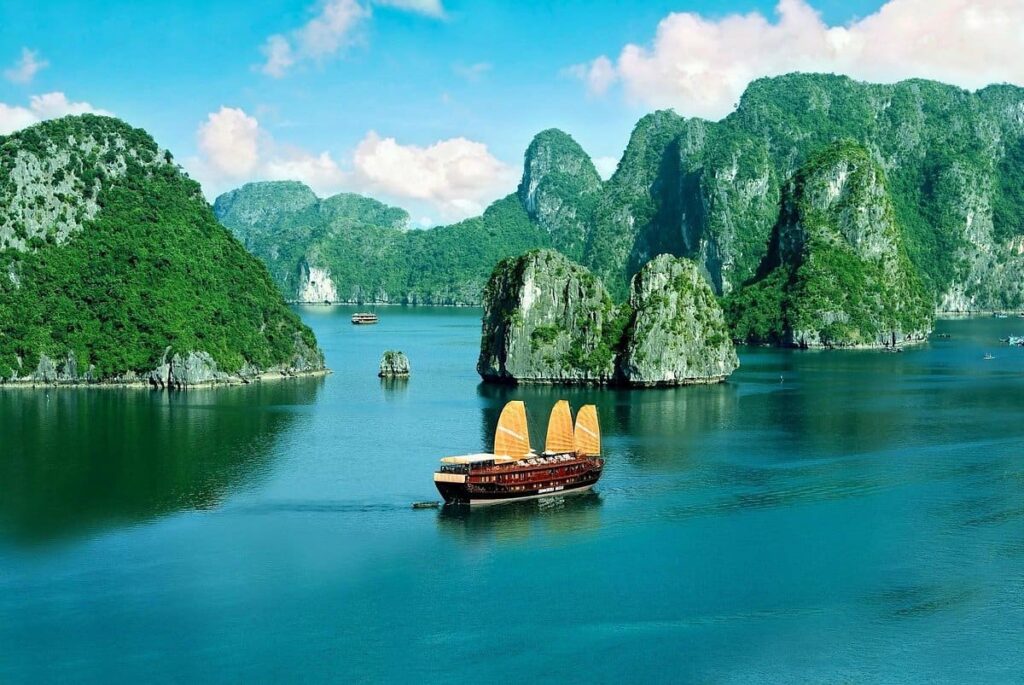
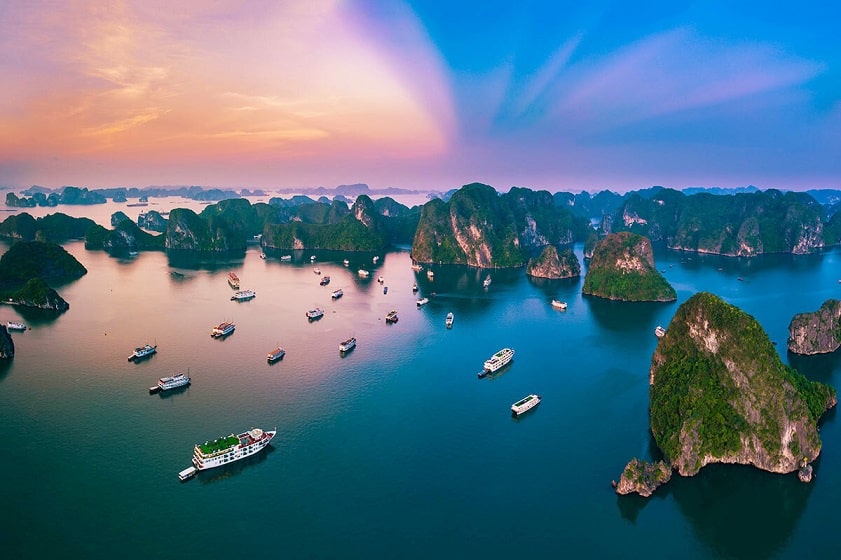
Bai Tu Long Bay is a majestic yet serene extension of the UNESCO-listed Ha Long Bay, stretching northeast toward the Chinese border. While it shares the same breathtaking emerald waters and thousands of limestone karsts as its famous neighbor, it remains far less crowded and more pristine due to its relative inaccessibility. According to local legend, “Bai Tu Long” translates to “the place where the dragon children descended,” referring to the mythical offspring of the Mother Dragon who created the islands to protect Vietnam from invaders. The bay is home to the Bai Tu Long National Park, a rich biosphere reserve featuring rare plants and animals across over 80 islands. Visitors seeking an authentic, slow-paced experience can explore the Vung Vieng Fishing Village, kayak through hidden lagoons in the Cong Do area, or visit the mystical Thien Canh Son Cave. Most travelers reach the bay via overnight boutique cruises that emphasize quietude and luxury, making it the ideal choice for those looking to escape the bustle of mass tourism.
4. Tam Coc
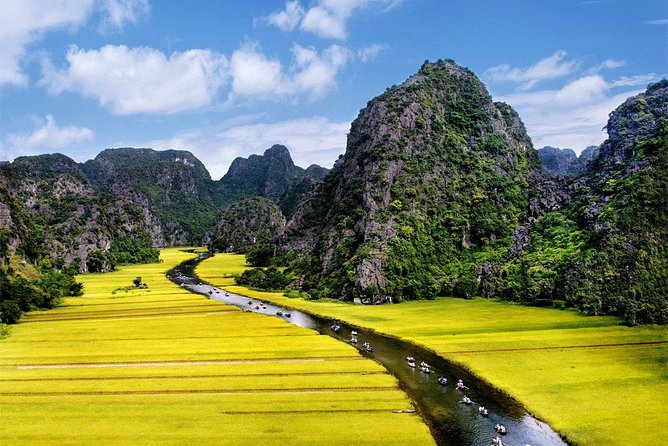
Tam Coc, often hailed as “Ha Long Bay on land,” is a breathtaking natural landscape located in Ninh Binh province, approximately 100 km south of Hanoi. As a key part of the UNESCO World Heritage-listed Trang An Landscape Complex, the area is world-famous for its serene sampan boat tours along the winding Ngo Dong River, which glides through vibrant rice paddies and between towering limestone karsts. The name “Tam Coc” literally translates to “three caves,” referring to the natural grottoes—Hang Ca, Hang Hai, and Hang Ba—that the river has carved through the mountains over millions of years. A unique highlight of the experience is watching the local rowers, many of whom skillfully paddle the boats with their feet to navigate the 1.5 to 2-hour journey. Beyond the waterways, the region is dotted with cultural treasures like the Bich Dong Pagoda, a series of ancient temples built into a mountainside, and the nearby Mua Cave, which offers panoramic views of the entire valley from its 500-step summit.
5. Mui Né
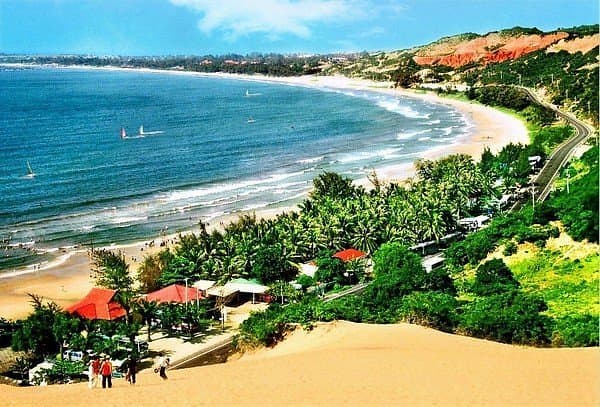
Mui Ne is a unique coastal resort town in southern Vietnam, famed for its surreal desert-like landscapes and its status as the kitesurfing capital of Southeast Asia. Located in Binh Thuan Province, it is best known for the massive White and Red Sand Dunes, where visitors can experience sunrise jeep tours or sandboarding down orange slopes. Another magical highlight is the Fairy Stream, a shallow, ankle-deep creek that winds through dramatic red and white limestone formations and lush greenery. The town maintains a strong cultural identity at the Mui Ne Fishing Village, where hundreds of colorful traditional round boats gather each morning to sell the day’s fresh catch. Historically a quiet fishing ward, Mui Ne has transformed into a major resort hub known for its consistent winds and dry micro-climate, making it a year-round destination for adrenaline seekers and those looking for a laid-back beach escape.
6. Dalat
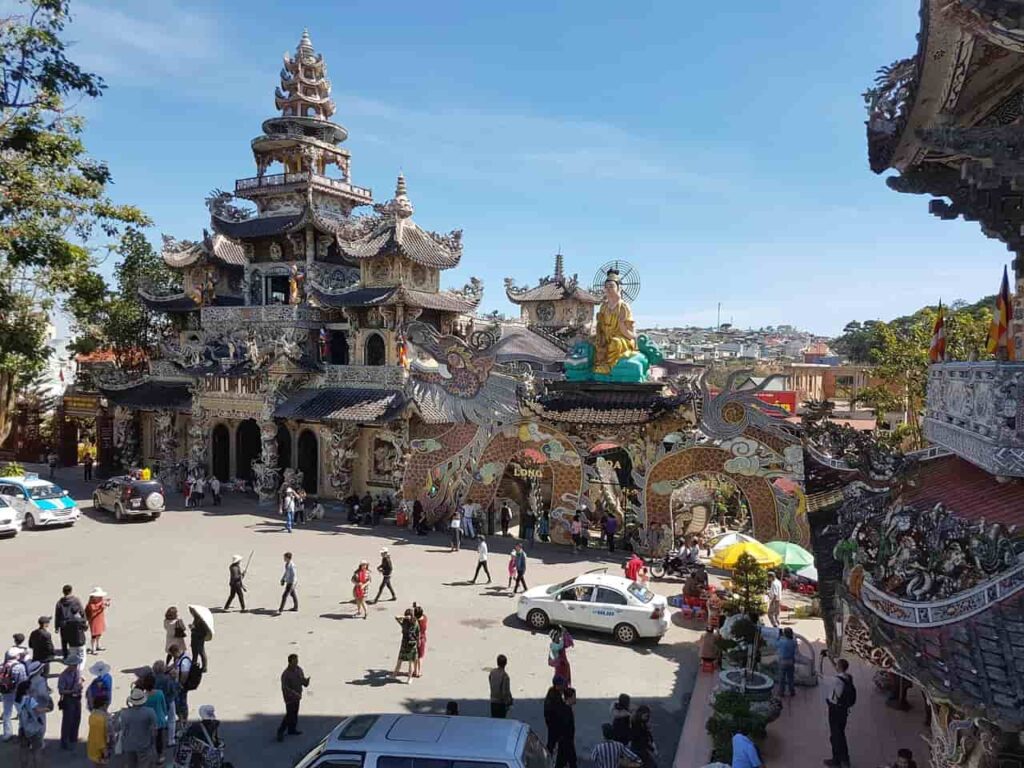
Da Lat, nestled on the Lam Vien Plateau at 1,500 metres above sea level, is a refreshing highland retreat in South Central Vietnam, widely known as the “City of Eternal Spring.” Originally developed as a French hill station in the early 20th century, the city is characterized by its temperate climate, pine-covered hills, and charming French colonial architecture, earning it the nickname “Little Paris.” The city’s heart centers around the man-made Xuan Huong Lake, where visitors enjoy swan paddle boats and romantic strolls. Da Lat is famous for its agricultural abundance, serving as Vietnam’s “vegetable garden” and a major producer of flowers, strawberries, and Arabica coffee. Adventurous travelers flock to Datanla Waterfalls for its alpine coaster, while others explore unique landmarks like the surreal Crazy House or the historic Da Lat Railway Station. With its misty mornings and four-seasons-in-a-day weather, it remains one of the most romantic destinations in the country for domestic and international tourists alike.
7. My Son
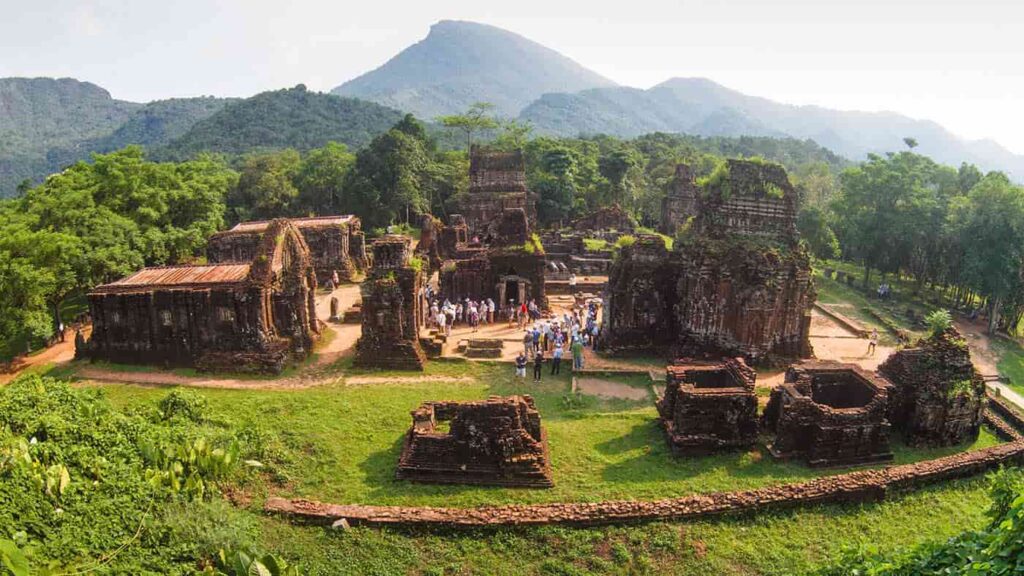
My Son Sanctuary is an extraordinary archaeological site and a UNESCO World Heritage Site located in a lush valley in Central Vietnam, approximately 40 km from Hoi An. Between the 4th and 13th centuries, it served as the religious and political capital of the Champa Kingdom, a powerful civilization heavily influenced by Indian Hinduism. The sanctuary originally consisted of over 70 red-brick temples and towers dedicated to the god Shiva, built with a unique technique where bricks were bound together without visible mortar—a process that still puzzles modern architects. While a large portion of the complex was destroyed by US bombing during the Vietnam War, about 20 structures remain, showcasing intricate sandstone carvings of deities, mythical animals, and floral patterns. Today, visitors can wander through the atmospheric ruins, visit the on-site museum, and watch traditional Apsara dance performances that bring the ancient spirit of the Cham people to life.
8. Phu Quoc
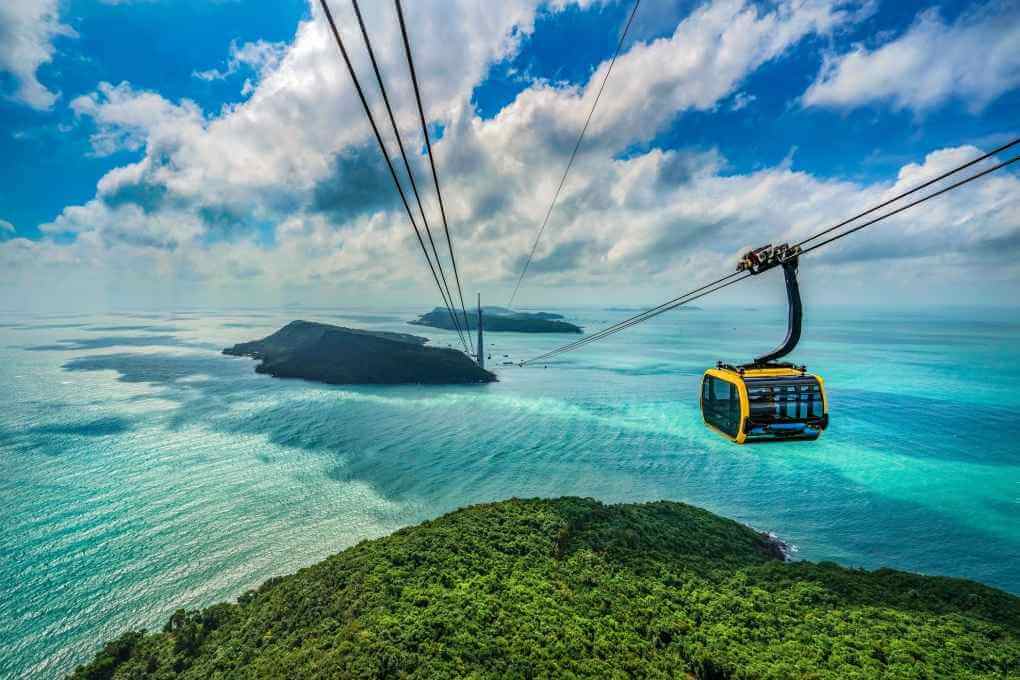
Phu Quoc, affectionately known as the “Pearl Island,” is Vietnam’s largest island, located in the Gulf of Thailand off the southwestern coast. Renowned for its tropical climate and pristine white-sand beaches like Sao Beach and the 20-km long Long Beach, the island has transformed into a premier world-class destination. Beyond its sun-drenched shores, Phu Quoc is a UNESCO Biosphere Reserve, with over half of its landmass protected as a national park featuring dense evergreen forests and scenic waterfalls like Suoi Tranh. The island is world-famous for its traditional industries, specifically its high-quality fish sauce, aromatic black pepper, and cultivated pearls. Modern attractions add an adventurous layer, including the Hon Thom Cable Car—the world’s longest sea-crossing cable car—and the massive VinWonders theme park. For a touch of history and culture, visitors can explore the somber Phu Quoc Prison Museum or the iconic Dinh Cau Temple perched on a rocky outcrop.
9. Phong Nha-Ke Bang National Park
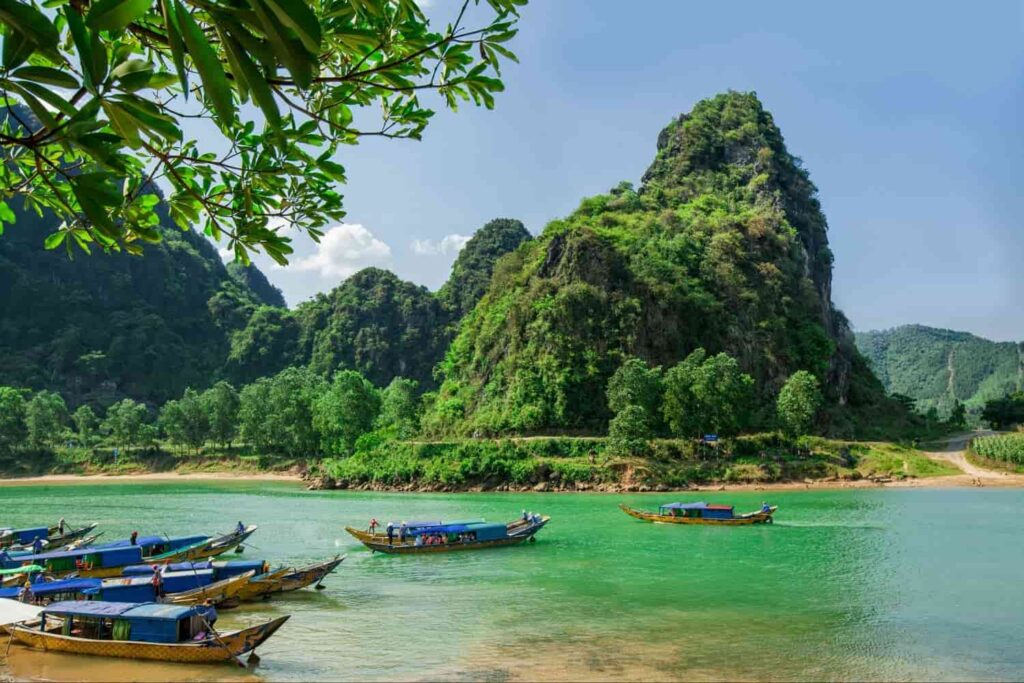
Phong Nha-Ke Bang National Park, a UNESCO World Heritage Site in central Vietnam, is often called the “Kingdom of Caves” and is home to the oldest karst mountains in Asia, dating back over 400 million years. This massive protected area contains over 300 caves, most notably the colossal Son Doong Cave, which is recognized as the largest natural cave in the world by volume—large enough to fit a 40-story skyscraper inside its main chamber. For more accessible wonders, visitors flock to Paradise Cave (Hang Thien Duong), the longest dry cave in Asia, known for its cathedral-like chambers filled with shimmering stalactites. Another highlight is the namesake Phong Nha Cave, where traditional dragon boats glide along an emerald underground river through 14 mystical grottos. Beyond caving, the park is a premier destination for adventure tourism, offering jungle trekking, kayaking in Mooc Stream, and thrilling ziplines into the Dark Cave for a unique mud bath experience. The park also serves as a critical biodiversity hotspot, sheltering rare species such as the red-shanked douc langur and the critically endangered saola.
10. Ho Chi Minh City
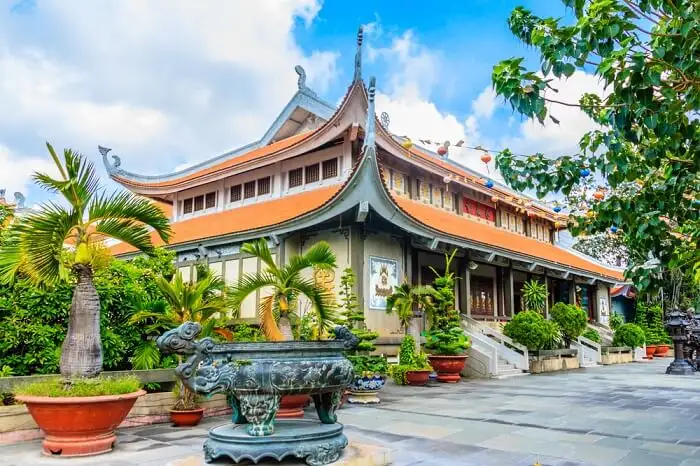
Ho Chi Minh City, still affectionately known by many as Saigon, is Vietnam’s largest metropolis and its undisputed economic and financial powerhouse, contributing roughly one-quarter of the national GDP. This high-octane city is a captivating blend of history and modernity, where French colonial landmarks like the Notre Dame Cathedral and the Central Post Office sit alongside sleek skyscrapers such as Landmark 81, the tallest building in Vietnam. The city’s complex past is visible at the War Remnants Museum and the Independence Palace, while its future-forward energy pulses through its legendary nightlife on Bui Vien Street and its thriving startup scene. Renowned for its chaotic yet mesmerizing traffic—with millions of motorbikes flowing like an urban river—the city is also a world-class culinary destination where travelers can enjoy vibrant street food at Ben Thanh Market or refined dining in hidden colonial villas. Whether you’re exploring the narrow alleys of the Cholon (Chinatown) district or taking a river cruise along the Saigon River, the city offers an infectious vitality that defines the “new” Vietnam.
11. Mekong Delta
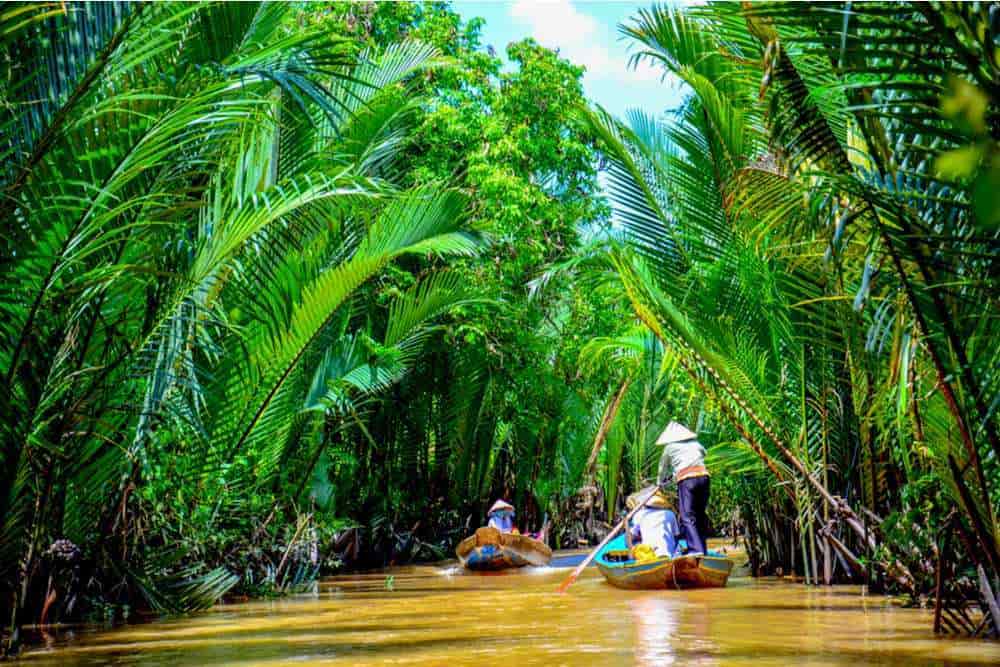
The Mekong Delta, often referred to as the “Rice Bowl of Vietnam,” is a vast and fertile maze of rivers, swamps, and islands in southwestern Vietnam where the mighty Mekong River approaches and empties into the sea. This sprawling region produces more than half of Vietnam’s rice and nearly 90% of its rice exports, characterized by an endless patchwork of verdant rice paddies and fruit-laden orchards. Life here revolves entirely around the water, most famously showcased at the Cai Rang Floating Market near Can Tho, where hundreds of boats gather at dawn to trade wholesale produce, identified by samples hung from tall bamboo poles called “cay beo”. Beyond commerce, the Delta is a cultural tapestry of Vietnamese, Khmer, and Cham traditions, featuring ornate pagodas like Vinh Trang and stilt-house villages. Travelers can explore the “Land of Coconuts” in Ben Tre, navigate the flooded Tra Su Cajuput Forest, or take a slow sampan ride through narrow, palm-shaded canals, experiencing the warm hospitality and rustic “river civilization” that defines this essential Vietnamese landscape.
12. Nha Trang
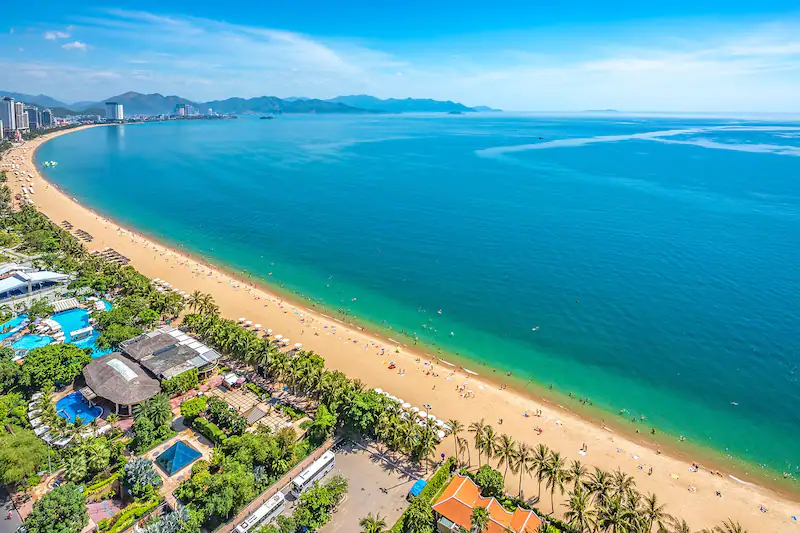
Nha Trang, often referred to as the “Riviera of the South China Sea,” is Vietnam’s premier high-energy beach destination and the capital of Khanh Hoa Province. The city is famous for its spectacular 7 km golden-sand coastline along Tran Phu Beach and a turquoise bay dotted with 19 tropical islands, widely considered among the most beautiful in the world. Historically a quiet fishing port, it now blends modern luxury resorts and vibrant nightlife with deep cultural heritage, notably the 8th-century Po Nagar Cham Towers and the serene Long Son Pagoda with its iconic white Buddha statue. Nha Trang is also a marine science hub, home to the National Oceanographic Museum and world-class diving at the Hon Mun marine protected area. For leisure, visitors flock to the VinWonders theme park via a record-breaking sea-crossing cable car or indulge in the city’s famous therapeutic mud baths at Thap Ba Hot Springs. As the “seafood capital of Vietnam,” it offers an unparalleled culinary scene featuring just-caught shellfish and local delicacies like Bánh Canh Chả Cá (fish cake noodle soup).
13. Sapa
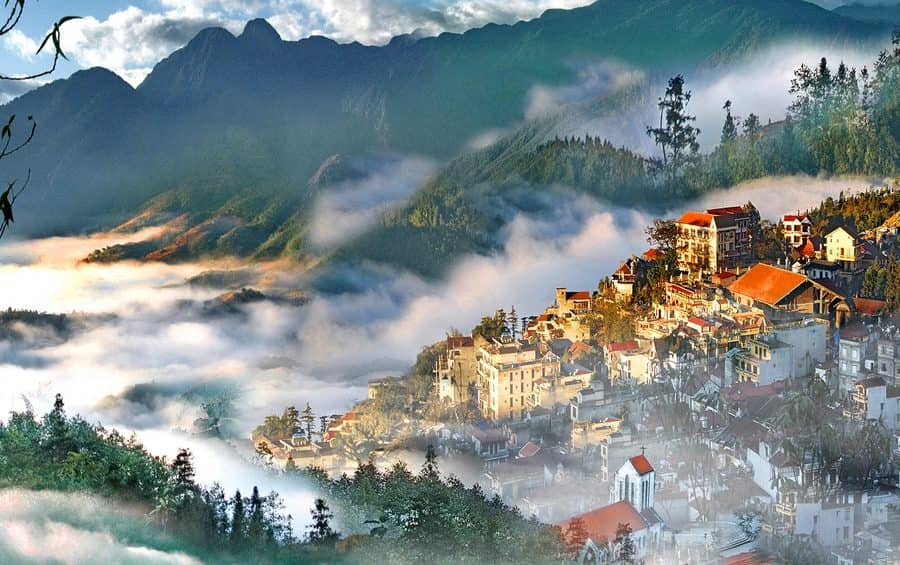
Sa Pa (often written as Sapa) is a misty, high-altitude town in the Hoàng Liên Sơn Mountains of northwestern Vietnam, approximately 315 km from Hanoi. Nestled at an elevation of roughly 1,500 to 1,600 metres, it is renowned for its dramatic landscape of cascading terraced rice fields and its proximity to Fansipan, the highest peak in Indochina at 3,143 metres. The town’s history is a blend of indigenous heritage and French colonial influence; originally inhabited by ethnic minority groups for centuries, it was “discovered” by a French geography expedition in 1903 and subsequently developed as a climatic health resort and sanatorium. Today, Sapa serves as a vibrant cultural crossroads, home to five main ethnic minority groups—the Hmong, Red Dao, Tay, Giay, and Xa Pho—each maintaining distinct traditions, vibrant hand-woven attire, and unique dialects. Visitors are drawn to the region for its world-class trekking through the Muong Hoa Valley, its bustling local markets (such as the Saturday night “Love Market”), and the mix of modern luxury hotels with authentic village homestays. While the town has undergone significant tourism development since the 1990s, it remains a premier destination for those seeking adventure, cool mountain air, and deep cultural immersion in Vietnam’s rugged highlands.
14. Hue
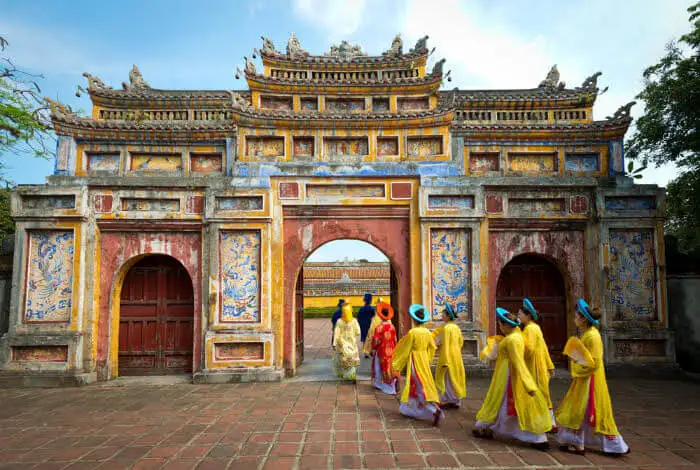
Hue, the ancient imperial capital of Vietnam, is a city steeped in royal history and poetic beauty, serving as the political, cultural, and religious center under the Nguyen Dynasty from 1802 to 1945. Nestled along the banks of the Perfume River, the city is most famous for the Complex of Hue Monuments, a UNESCO World Heritage site that includes the massive Imperial City (Citadel), featuring the Forbidden Purple City where emperors once lived. Beyond the citadel walls, the city’s landscape is dotted with iconic landmarks such as the seven-story Thien Mu Pagoda and the elaborate royal tombs of past emperors like Minh Mang and Khai Dinh, which blend grand architecture with serene natural settings. Hue is also celebrated as the culinary heart of Vietnam, known for its sophisticated “royal cuisine” and signature local dishes like Bun Bo Hue (spicy beef noodle soup) and Banh Beo (savory steamed rice cakes). With its unhurried pace, moss-covered pagodas, and elegant French colonial influence, Hue remains an essential destination for those seeking to connect with Vietnam’s dynastic past and refined traditions.
15. Hoi An
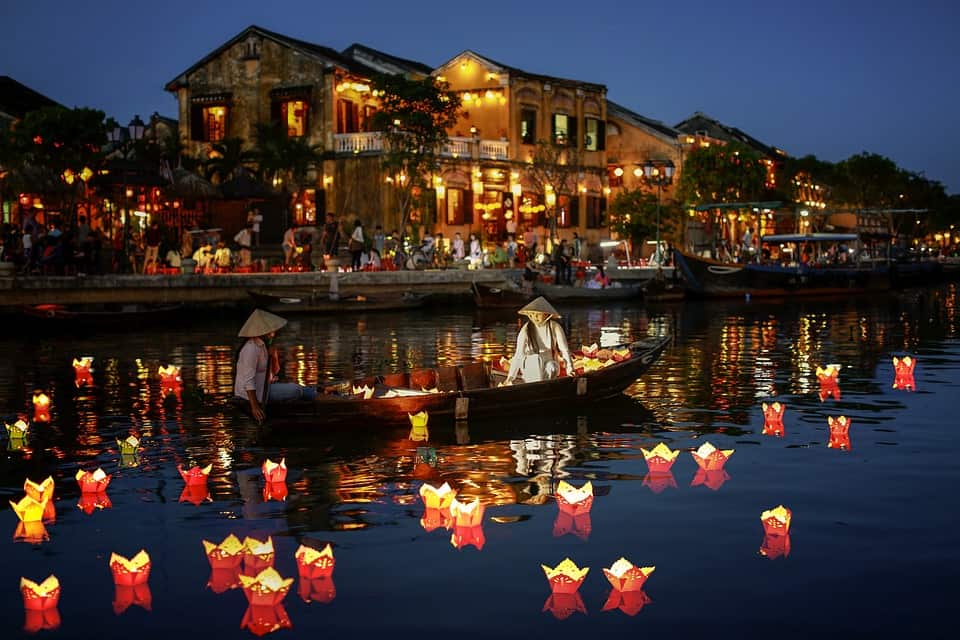
Hoi An Ancient Town is an exceptionally well-preserved UNESCO World Heritage Site located in central Vietnam’s Quang Nam Province. Once a thriving international trading port from the 15th to the 19th centuries, the town is a captivating “living museum” that showcases a unique architectural fusion of Vietnamese, Chinese, Japanese, and European influences. Its iconic narrow streets are lined with mustard-yellow shophouses, centuries-old merchant houses like Tan Ky, and the 16th-century Japanese Covered Bridge. The town is globally famous for its lantern-lit evenings, particularly during the monthly Full Moon Lantern Festival, when electric lights are switched off and thousands of silk lanterns illuminate the Thu Bon River. Beyond its visual charm, Hoi An is a culinary hotspot known for signature dishes like Cao Lau—noodles made with water from ancient Cham wells—and its world-renowned bespoke tailoring industry, where visitors can have custom-made clothing finished in just 24 hours.
16. Hanoi
Hanoi, the thousand-year-old capital of Vietnam, is a city where ancient tradition and rapid modernization coexist in a beautiful, high-energy sensory overload. Located in the Red River Delta, the city’s heart is the Old Quarter, a labyrinth of 36 guild streets where narrow “tube houses” and bustling motorbikes create a vibrant atmosphere of local commerce. Nearby, the Hoan Kiem Lake offers a peaceful escape, home to the iconic Ngoc Son Temple and the legend of the restored sword. The city transitions into the elegant French Quarter, characterized by wide, tree-lined boulevards and colonial architectural marvels like the Hanoi Opera House and St. Joseph’s Cathedral. As a major cultural hub, Hanoi preserves its political and scholarly heritage at the Ho Chi Minh Mausoleum, the UNESCO-listed Imperial Citadel of Thang Long, and the Temple of Literature, the nation’s first university. Renowned for its world-class street food culture, visitors can indulge in authentic Pho, Bun Cha, and the famous Hanoi egg coffee in hidden alleyways or at Train Street, where trains pass mere inches from cafe tables.
17. Ha Long Bay
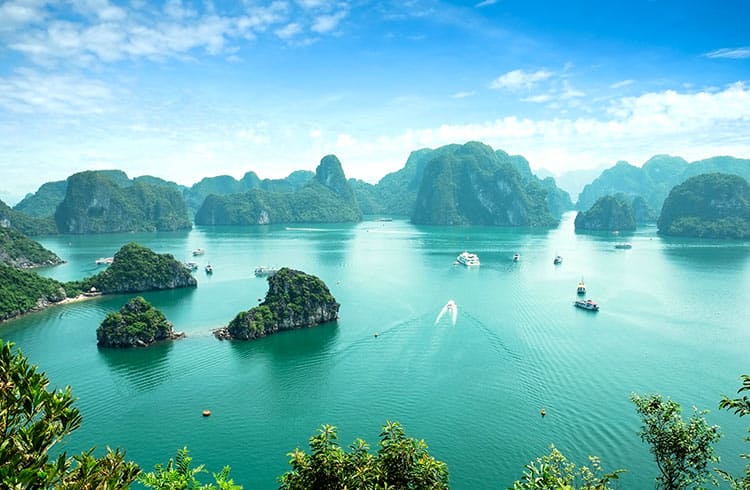
Ha Long Bay, which literally translates to “Descending Dragon,” is Vietnam’s most iconic natural wonder and a double UNESCO World Heritage Site recognized for both its spectacular scenery and its complex geological history. Located in the Gulf of Tonkin, the bay is a labyrinthine seascape of nearly 2,000 limestone karsts and islets that have been sculpted over 500 million years of tectonic activity and erosion. According to local legend, the bay was created when a family of celestial dragons spat jewels and jade into the sea to form a defensive wall against invaders, which subsequently turned into the islands seen today. Visitors typically explore the bay via overnight cruises that offer activities like kayaking through the emerald waters of Luon Cave, trekking to the panoramic peak of Titop Island, and discovering the massive chambers of Sung Sot (Surprise) Cave. Beyond the rocks, the bay supports a unique way of life in floating fishing villages such as Cua Van, where communities have lived on the water for generations, preserving a culture deeply tied to the rhythms of the sea.
18. Ban Gioc Waterfall (Cao Bang)
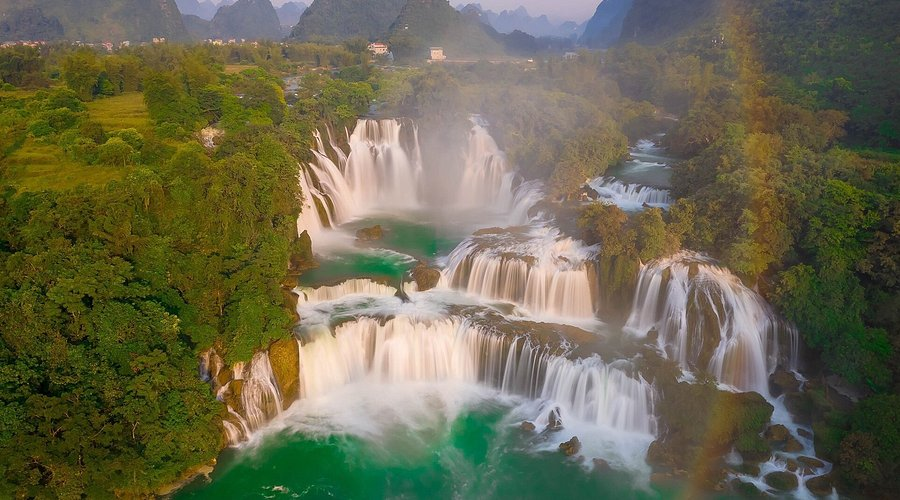
Ban Gioc Waterfall, located in Cao Bang Province, is one of Vietnam’s most awe-inspiring natural wonders and the fourth-largest transnational waterfall in the world, shared with China (where it is known as Detian Falls). Straddling the Quay Son River, the waterfall spans roughly 300 metres in width and drops 30 metres over three majestic limestone tiers, creating a thunderous roar and a constant, refreshing mist. The landscape is a masterpiece of nature, with emerald waters framed by lush forests, golden rice paddies, and dramatic karst mountains. Visitors can take a bamboo raft ride for about 50,000 VND to get close to the base of the falls, or hike up to the Phat Tich Truc Lam Ban Gioc Pagoda for a breathtaking panoramic view. Nearby, the Nguom Ngao Cave (Tiger Cave) offers over 2 km of spectacular stalactite formations. Though it is a 7- to 8-hour drive from Hanoi, Ban Gioc remains a relatively off-the-beaten-path destination, rewarding travelers with a serene atmosphere and authentic encounters with the local Tay and Nung ethnic communities.
19. Con Dao Islands
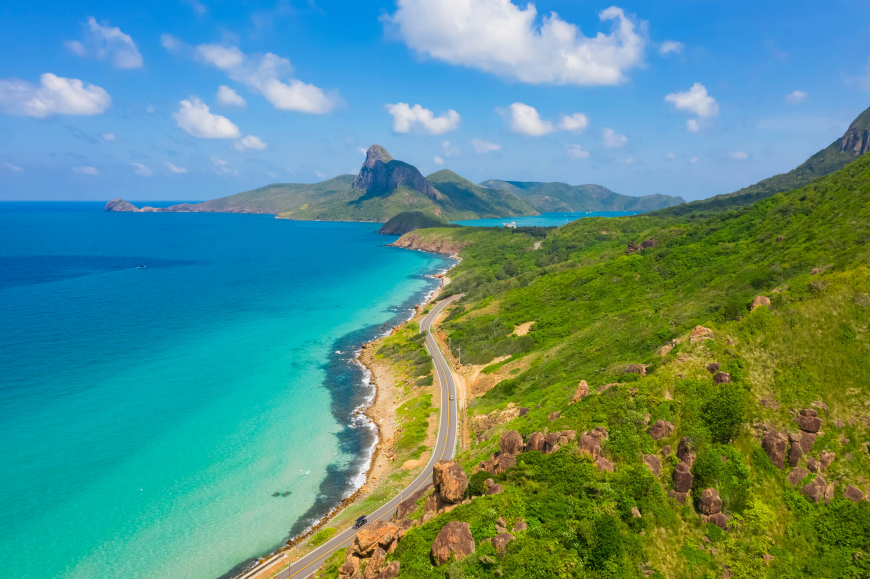
The Con Dao Islands are a remote archipelago of 16 pristine islands off Vietnam’s southern coast, celebrated for their unique intersection of untamed natural beauty and profound historical gravity. Once a notorious penal colony known as “Hell on Earth” during the French and American wars, the main island of Con Son now serves as a poignant site of pilgrimage, where visitors explore the somber Con Dao Prison and its infamous “tiger cages.” Beyond its dark past, the archipelago is an ecological treasure; roughly 80% of its area is protected within Con Dao National Park, which shelters lush rainforests, vibrant coral reefs, and the rare dugong. It is arguably the best place in Vietnam for eco-tourism, particularly for watching endangered green turtles nest on Bay Canh Island from May to October. For leisure, travelers enjoy world-class beaches like Dam Trau, famous for planes flying low overhead during landings, and high-end retreats like the Six Senses Con Dao. The islands offer a tranquil, slow-paced atmosphere far removed from Vietnam’s more commercialized tourist hubs, making it a “hidden gem” for those seeking both reflection and adventure.
20. Pu Luong Nature Reserve
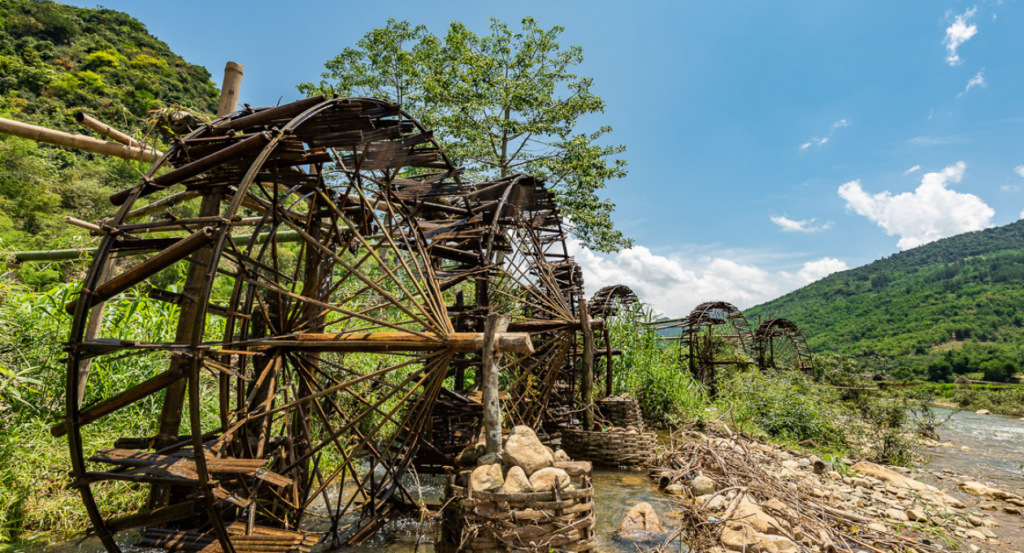
Pu Luong Nature Reserve is a secluded “hidden gem” in northwestern Vietnam, often described as a more peaceful and authentic alternative to Sapa. Spanning over 17,600 hectares, the reserve is a dramatic landscape of limestone mountain ranges, lush tropical jungles, and cascading rice terraces that turn a brilliant golden yellow during the two harvest seasons in late May and October. It is the ancestral home of the Thai and Muong ethnic groups, whose traditional stilt houses dot the valleys and whose ancient agricultural techniques are still visible in the iconic bamboo water wheels used for irrigation. Visitors can trek through the mist-shrouded hills to the secluded Kho Muong Village and its massive Bat Cave, swim in the turquoise pools of Hieu Waterfall, or enjoy a tranquil bamboo raft ride along the Cham River. With a strict limit on tall buildings, the area maintains a rustic charm, offering a range of accommodations from authentic village homestays to high-end eco-resorts with infinity pools overlooking the emerald valleys.