
Vaishno Devi is one of India’s most renowned and sacred sites, situated amidst the lofty peaks of the Trikuta Mountains in Jammu and Kashmir. Devotees from across the globe flock here to seek the blessings of the Goddess Vaishno Devi; it is widely believed that she fulfills the wishes of her devotees. A unique feature of this temple is the absence of idols; instead, the Goddess is worshipped in the form of three sacred rock formations—known as ‘Pindis’—located within a natural cave. These three Pindis symbolize Power (Mahakali), Wealth (Mahalakshmi), and Knowledge (Mahasaraswati).
To reach the temple, the journey typically begins in a small town called ‘Katra.’ From there, one must undertake an uphill trek of approximately 12 to 13 kilometers. While most devotees cover the entire distance on foot—chanting “Jai Mata Di” along the way—those who find walking challenging may opt for alternative modes of transport, such as horses, palanquins (small carriages), or helicopters. During the ascent, pilgrims pass through breathtaking mountain landscapes and make stops at significant landmarks, such as the ‘Ardhkuwari Cave.’ Tradition dictates that the pilgrimage is considered complete only after paying homage at the ‘Bhairav Nath Temple,’ which is situated at a slightly higher elevation than the main shrine. The entire route is extremely safe, offering ample facilities for food, water, and rest, thereby ensuring a wonderful spiritual experience for everyone.
The economy of Katra—and the surrounding Jammu region—relies almost entirely on the Vaishno Devi pilgrimage. Given that millions of devotees visit the shrine annually, the town has evolved into a major hub for commerce. Thousands of local families earn their livelihood through hotels, restaurants, and shops selling items such as dry fruits, woolen garments, and religious artifacts. The transportation sector also serves as a major contributor, providing employment to taxi drivers, horse owners (porters), and helicopter operators.
The ‘Shri Mata Vaishno Devi Shrine Board’ utilizes donations received from devotees to provide even greater support to the local community. They construct hospitals, schools, and universities, thereby generating sustainable employment opportunities for local youth. They also maintain roads and a modern railway station, which facilitates the growth of other businesses. Vaishno Devi is regarded as one of India’s safest and most well-organized pilgrimage sites.
Places to visit in Vaishno Devi :
1. Vaishno Devi Mandir – Best Religious Tourist Attractions in Vaishno Devi

Vaishno Devi Mandir, located at an altitude of 5,200 feet in the Trikuta Mountains of Jammu and Kashmir, is one of India’s most revered Hindu pilgrimage sites, attracting millions of devotees annually. Dedicated to Mata Vaishno Devi, a manifestation of the Hindu Mother Goddess Durga, the shrine is uniquely situated inside a holy cave where the deity is worshipped in the form of three natural rock formations known as Pindies. These Pindies represent the three divine energies: Maha Kali (strength), Maha Lakshmi (prosperity), and Maha Saraswati (wisdom), and notably, there are no idols or statues within the sanctum sanctorum.
The pilgrimage, or Yatra, typically begins at the base camp in Katra, involving a 12 to 13 km trek that many pilgrims undertake on foot, though services like ponies, palanquins, and helicopters are also available. Historically, the temple is considered one of the 108 Shakti Peethas, with legends suggesting it was discovered by a priest named Pandit Shridhar and has associations dating back to the Mahabharata. Managed by the Shri Mata Vaishno Devi Shrine Board (SMVDSB), the temple area, known as Bhawan, offers comprehensive facilities including accommodation and medical aid to support the massive influx of visitors year-round.
2. Devi Pindi Mata Mandir
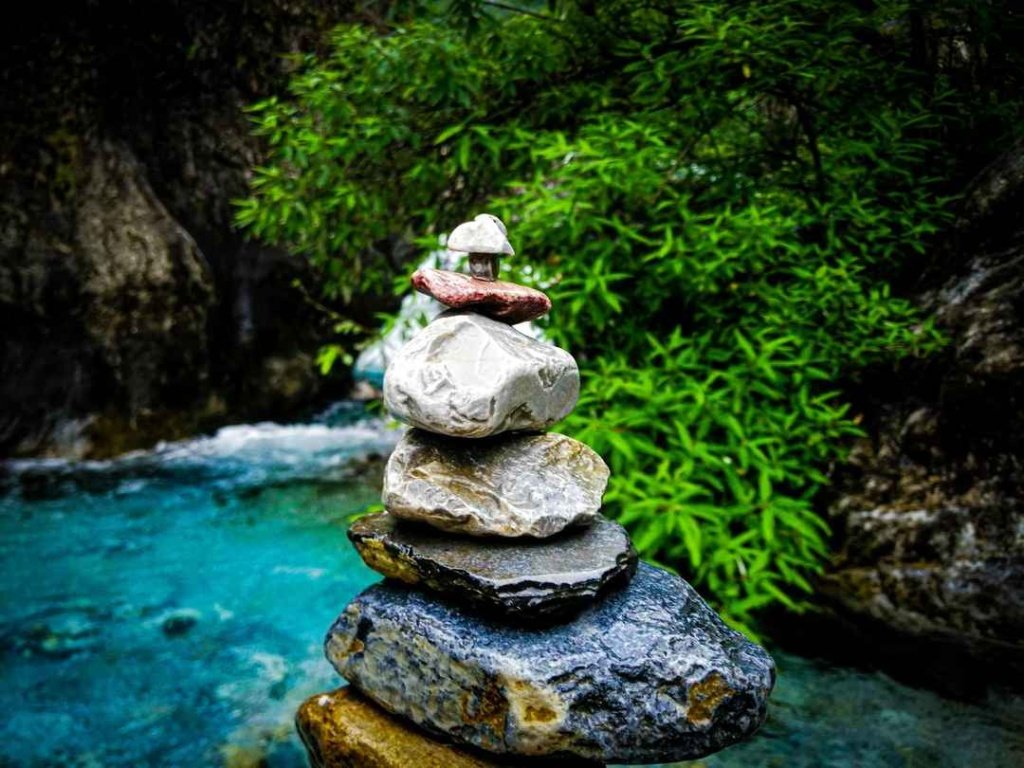
Devi Pindi Mata Mandir, an ancient and relatively untouched temple, is considered a hidden spiritual gem located in the Reasi hills of Jammu and Kashmir, approximately 8 to 15 km from the base camp at Katra. According to local belief, this sacred site is closely linked to Mata Vaishno Devi, who is said to spend much of the year meditating here in seclusion from the large crowds at the main shrine. The temple features three natural rock formations or Pindis that symbolize the divine energies of Maha Kali, Maha Lakshmi, and Maha Saraswati, mirroring those found in the holy cave of the main Vaishno Devi temple. To reach the mandir, pilgrims typically embark on a moderate 3 to 5 km trek starting from the village of Panthal, winding through lush forests, pristine mountain streams, and scenic waterfalls with crystal-clear water. Because it is off the beaten path, the site offers a peaceful atmosphere for meditation and a more intimate connection with nature compared to the bustling main pilgrimage route.
3. Shopping at Katra Main Bazaar
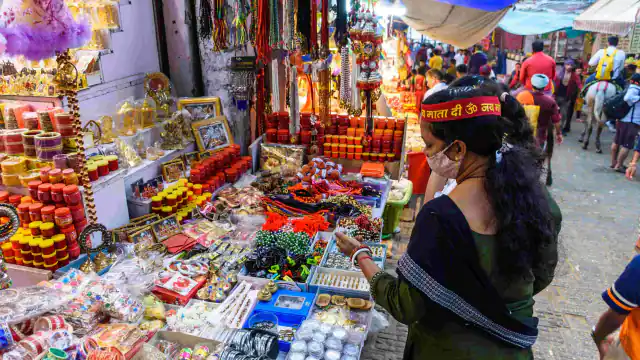
Katra Main Bazaar is the vibrant commercial heart of the town, serving as a one-stop destination for pilgrims to purchase everything from spiritual mementos to authentic Kashmiri goods. The market is most famous for its high-quality dry fruits, with rows of shops offering fresh walnuts, almonds (including premium Kashmiri Mamra), dried apples, and saffron. Beyond food, it is a treasure trove for textiles and handicrafts, where shoppers can find intricate Pashmina shawls, woolen stoles with traditional Kashmiri motifs, and unique items like walnut wood carvings or Papier-mâché decor. The bazaar’s atmosphere is particularly lively in the evenings, filled with the aroma of local Dogra snacks like Kaladi cheese and Patisa sweets. For those seeking religious souvenirs, the market offers a vast selection of brass idols, Mata Rani chunris, prayer beads, and holy water bottles. While bargaining is common for non-MRP items like clothing and handicrafts, shoppers are advised to look for GI-tagged products to ensure authenticity, especially when buying expensive items like pure saffron or Pashmina.
4. Salal Dam
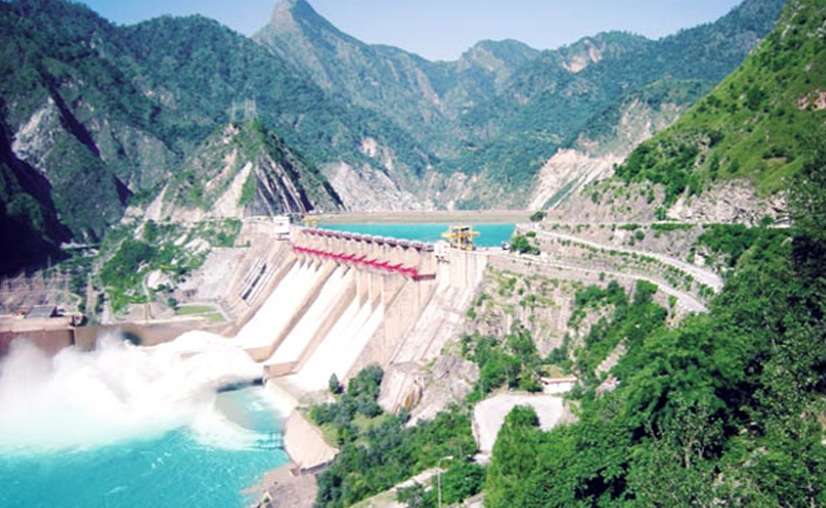
The Salal Dam, also known as the Salal Hydroelectric Power Station, is a massive run-of-the-river hydropower project built across the mighty Chenab River in the Reasi district of Jammu and Kashmir. Located about 23 km from Reasi and approximately 35 km from Katra, it is a significant engineering marvel and a major tourist attraction for those visiting the Vaishno Devi region. With an installed capacity of 690 MW, it was the first hydroelectric project constructed by India under the Indus Waters Treaty and provides electricity to several northern Indian states, including Punjab, Haryana, and Delhi. For visitors, the dam offers breathtaking panoramic views of the water reservoir set against the backdrop of the rugged Himalayan mountains. The site is particularly popular as a picnic spot where tourists can appreciate the sheer scale of the 113-metre-high structure and its expansive lake. Historically, the project was first conceived in 1920, though construction officially began in 1970, with its final stages completed by 1995. While its primary purpose is power generation and flood control, the scenic beauty and the serene atmosphere of the reservoir make it a “scenic marvel” for travelers exploring the areas surrounding Reasi.
5. Ropeway of Vaishno Devi
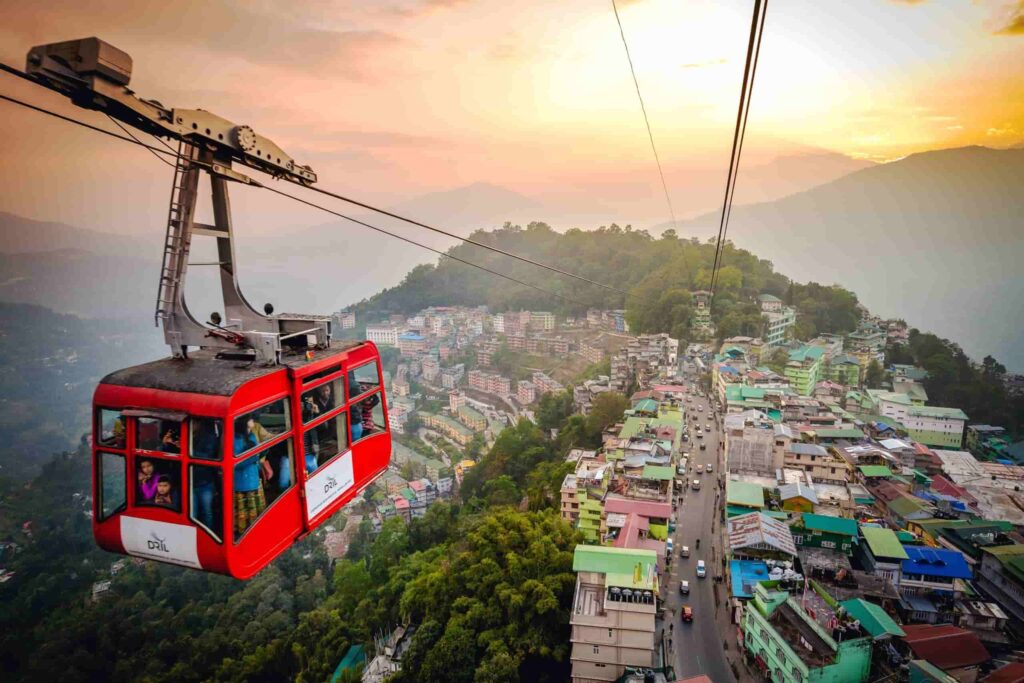
The Vaishno Devi Ropeway, connecting the Bhawan (Main Shrine) to Bhairon Ghati, is a vital facility that makes the pilgrimage complete for many devotees. According to religious belief, the Yatra is considered incomplete without visiting the Bhairon Nath Temple after the main darshan; however, the steep 1.5–2 km uphill trek can be physically demanding, especially for the elderly or specially-abled. The ropeway significantly eases this journey, reducing a grueling 1 to 2-hour climb into a scenic 3 to 5-minute ride. Each air-conditioned cable car can carry approximately 40–45 passengers at a time, offering breathtaking aerial views of the surrounding Trikuta mountains and the valley below.
6. Katra
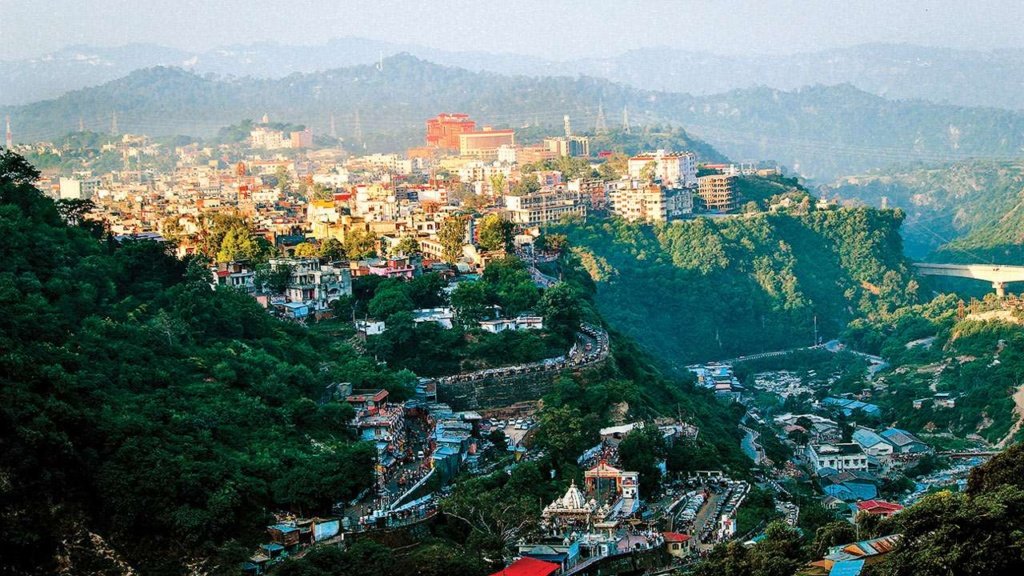
Katra, situated at the foothills of the Trikuta Mountains in the Reasi district of Jammu and Kashmir, is globally renowned as the essential base camp for the Shri Mata Vaishno Devi pilgrimage. Located approximately 42 km from Jammu city, this bustling town serves as the gateway where millions of devotees register for their journey and begin the 12–13 km uphill trek to the holy cave. Over the decades, Katra has transformed from a small settlement into a well-developed tourist hub, offering a vast array of accommodations ranging from budget guesthouses to luxury resorts, along with pure vegetarian restaurants that strictly adhere to the town’s religious sanctity. Beyond its role as a transit point, the town is a major center for local commerce, particularly famous for its Main Bazaar, where visitors shop for premium dry fruits, Kashmiri Pashmina shawls, and religious artifacts. The town is exceptionally well-connected, featuring its own modern railway station (Shri Mata Vaishno Devi Katra Station) and serving as the primary hub for helicopter services to the shrine.
7. Bagh-E-Bahu
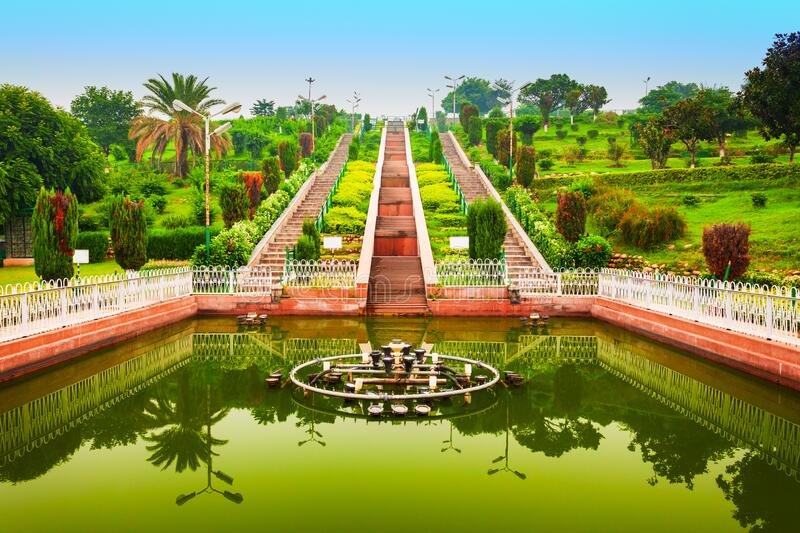
Bagh-E-Bahu, situated on the left bank of the Tawi River in Jammu, is a magnificent Mughal-style terraced garden that surrounds the historic Bahu Fort, making it a premier destination for history and nature lovers. Developed to enhance the beauty of the 3,000-year-old fort, the garden features lush green lawns, symmetrical stone pathways, and vibrant flowerbeds that come alive during the spring. A major highlight of the complex is the Bagh-e-Bahu Aquarium, which is the largest underground aquarium in India, shaped like a giant fish and housing over 400 species of marine and freshwater fish. Visitors can enjoy a serene atmosphere with numerous fountains and a man-made lake, all while taking in panoramic views of the entire Jammu city from its elevated terraces. The site also holds deep spiritual significance due to the ancient Bawe Wali Mata Temple (dedicated to Goddess Kali) located inside the fort, which attracts large crowds of pilgrims, especially during the Bahu Mela festival.
8. Ardhkuwari
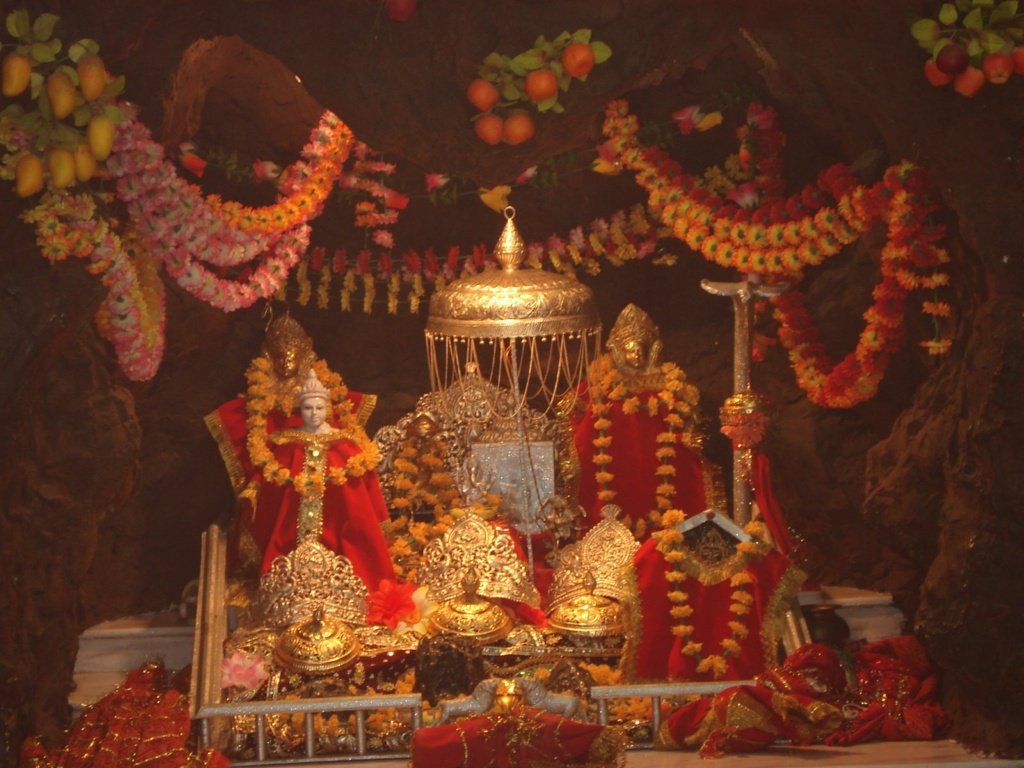
Ardhkuwari, also known as the Garbh Joon Cave, is the most significant spiritual midpoint of the 12 km trek from Katra to the Vaishno Devi Bhawan. Located approximately 6 km into the journey, it is believed to be the spot where Mata Vaishno Devi meditated and hid for nine months while escaping the demon Bhairon Nath, much like a child stays in a mother’s womb—hence the name “Garbh Joon.” The cave itself is incredibly narrow; pilgrims must crawl through it one by one to reach the other side, a process believed to cleanse one of past sins and bless them with a new beginning. Because of its immense religious importance, Ardhkuwari often has a long waiting period for entry, sometimes stretching from 12 to 24 hours. To manage the crowds, the Shrine Board issues computerized group numbers, allowing devotees to rest at the surrounding complex, which is well-equipped with medical centers, eateries, and blankets. Many pilgrims choose to stay here overnight to break their journey before completing the final leg of the trek.
9. Vaishno Devi Yatra
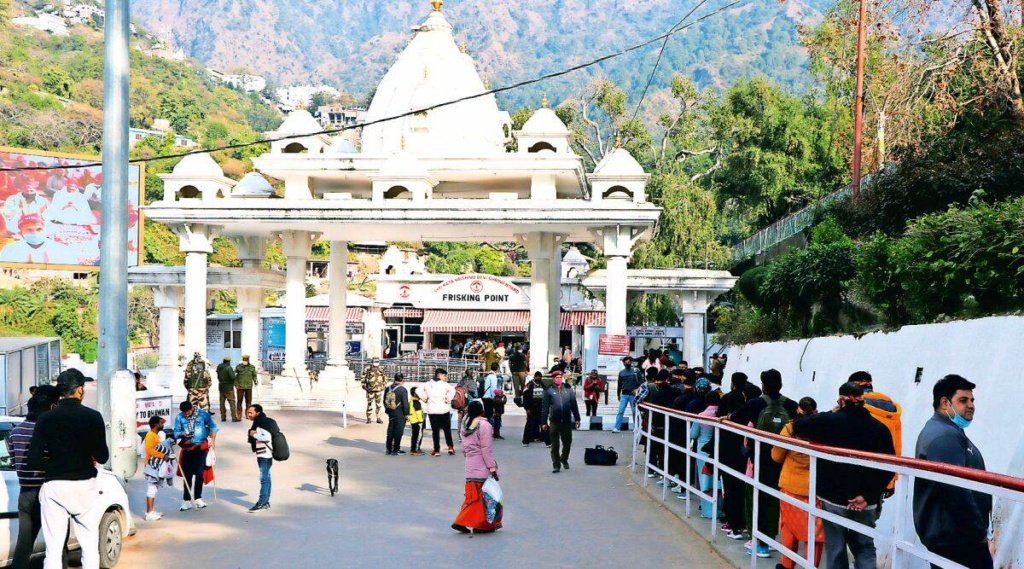
The Vaishno Devi Yatra is one of the most significant Hindu pilgrimages in the world, undertaken by millions of devotees who journey to the holy cave in the Trikuta Mountains to seek the blessings of Mata Vaishno Devi. The pilgrimage officially begins at the base camp in Katra, where every pilgrim must obtain a mandatory, free RFID Yatra Registration Card (Yatra Parchi) before starting the 12 km to 13 km trek. The path is well-maintained and provides various options for completion, including walking on foot, hiring ponies or palanquins (palkis), or using the helicopter service that flies from Katra to Sanjichhat. Along the route, pilgrims pass through key spiritual landmarks like Banganga, Charan Paduka, and the midpoint at Ardhkuwari, before reaching the Bhawan (Main Shrine). The Yatra is considered complete only after visiting the Bhairon Nath Temple, accessible via a steep trek or a quick ropeway ride from the Bhawan. Open 24/7 throughout the year, the journey is supported by extensive facilities including oxygen bars, medical aid, clean drinking water, and Shri Mata Vaishno Devi Shrine Board-run eateries (Bhojanalyas) that serve pure vegetarian food.
10. Bhairavnath temple
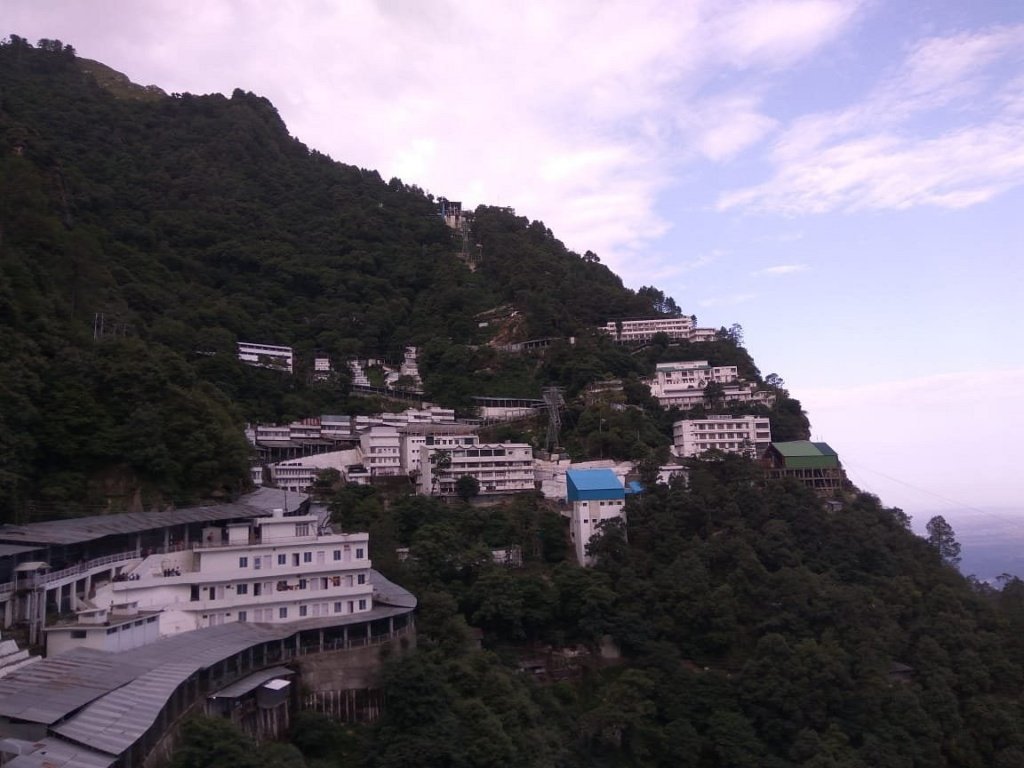
The Bhairavnath Temple, dedicated to Baba Bhairon Nath, is a crucial spiritual destination situated atop the Bhairon Ghati at an altitude of 6,619 feet, approximately 2 km uphill from the main Vaishno Devi Bhawan. According to legend, Bhairon Nath was a powerful tantric who was beheaded by Mata Vaishno Devi at this spot; however, in his final moments, he repented, and the Goddess granted him a boon that no pilgrimage to her shrine would be considered complete without a visit to his temple. Consequently, it is a ritual for every devotee to trek to this site after their darshan at the holy cave. The temple houses a prominent idol of Bhairon Nath and offers some of the most spectacular, panoramic views of the Trikuta Mountains and the surrounding valleys. While the path from the Bhawan is a very steep climb, the journey has been made significantly easier for elderly and tired pilgrims with the introduction of the passenger ropeway, which covers the distance in just 3 minutes.
11. Dera Baba Banda
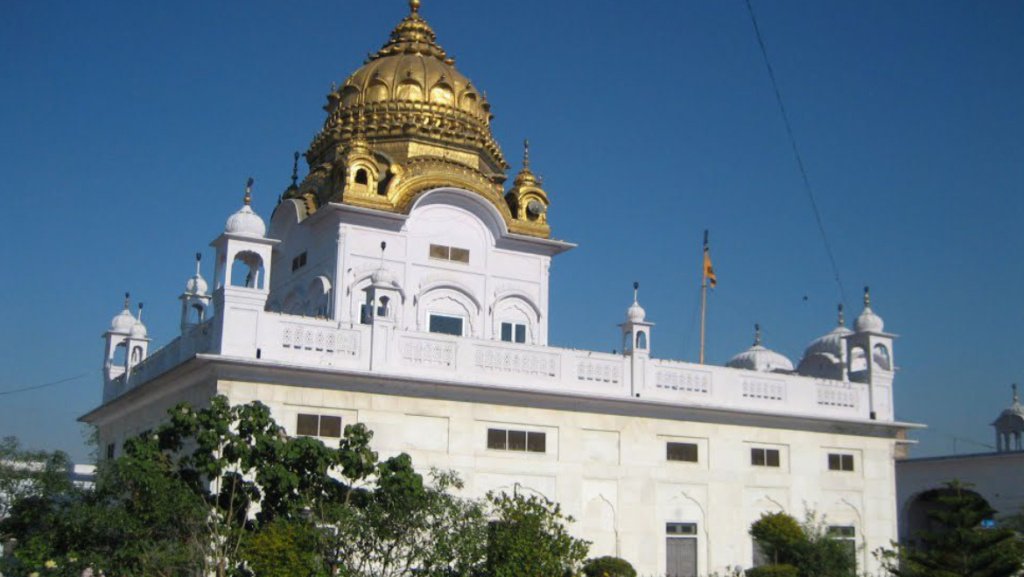
Dera Baba Banda, located about 25–30 km from Katra on the banks of the River Chenab, is a highly revered pilgrimage site for both Sikhs and Hindus. It is dedicated to Baba Banda Singh Bahadur, the legendary warrior and disciple of Guru Gobind Singh, who established this settlement in the early 18th century. The centerpiece of the site is a beautiful Gurdwara that houses the 300-year-old original weapons used by Baba Banda Bahadur in his battles against the Mughals, as well as a large sword gifted to him by the tenth Sikh Guru. The architecture of the shrine is known for its serene white marble and intricate carvings, and it serves as the resting place where the saint-warrior spent his final years. Every year during the Vaisakhi festival, a massive three-day mela (fair) is held here, attracting thousands of devotees who come to pay their respects and witness the historical relics.
12. City Center
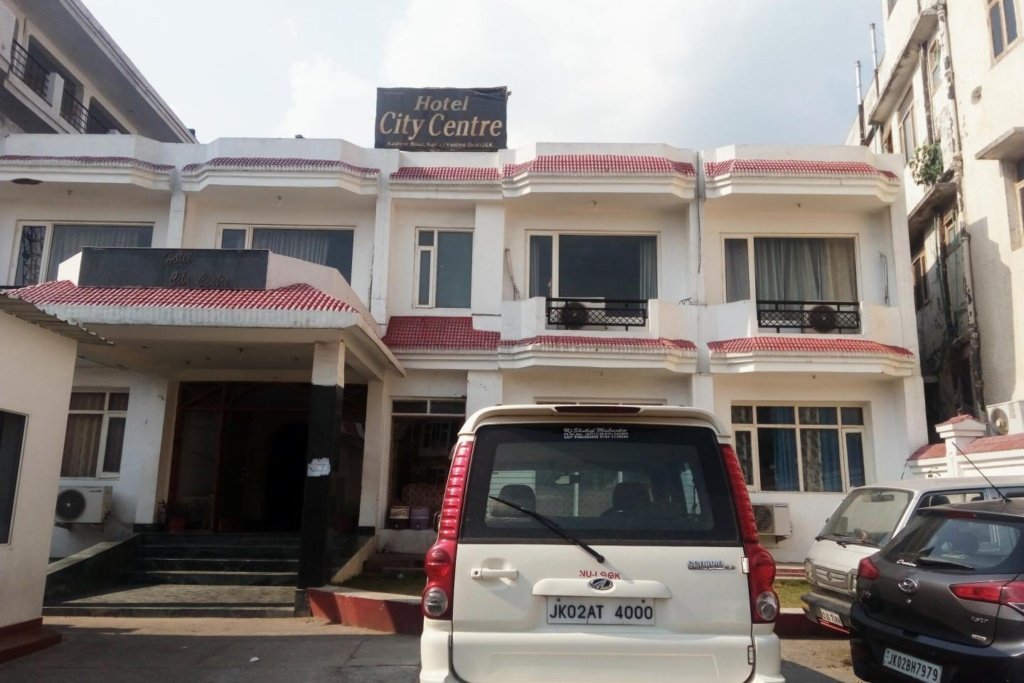
City Center in the context of a Vaishno Devi trip refers to the primary commercial and recreational hub of Jammu City, located about 45–50 km from Katra. Unlike the religious atmosphere of the trekking base, the City Center area—largely centered around Residency Road, Raghunath Bazaar, and the modern Hari Market—is the heartbeat of urban life in the region. It is the best place for tourists to experience the modern side of Jammu, featuring a blend of traditional shopping streets and contemporary amenities. Visitors flock here to explore the iconic Raghunath Temple, which sits at the edge of the market, and to shop for specialized local goods like Kashmiri handicrafts, copperware, and high-quality saffron. The area is also a culinary hotspot where you can find authentic Dogri cuisine alongside popular restaurant chains and branded showrooms. For those staying in Jammu before or after their Yatra, the City Center provides the most convenient access to major transit points, including the Jammu Tawi Railway Station and the airport, making it an ideal spot for a final shopping spree or a comfortable city stay.
13. Sanasar Lake Information
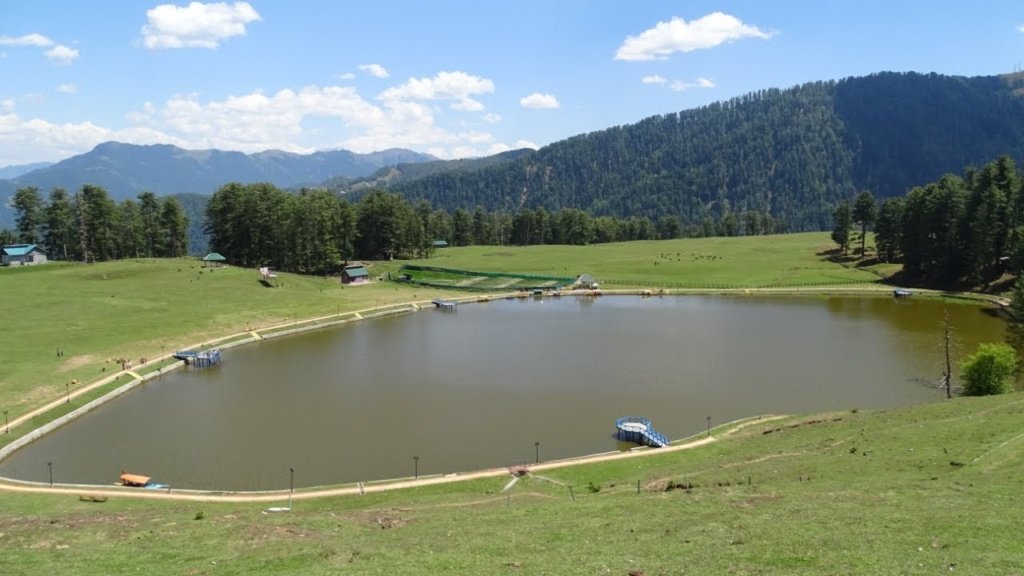
Sanasar Lake, often referred to as the “Mini Gulmarg” of Jammu, is a breathtaking natural retreat located at an altitude of approximately 2,050 metres (6,730 ft) in the Ramban district of Jammu and Kashmir. Situated about 20 km west of Patnitop, the name “Sanasar” is derived from two local villages, Sana and Sar, which are themselves named after small local lakes. This cup-shaped meadow is surrounded by a dense canopy of giant conifers, lush alpine meadows, and towering mountain ranges, including the Brammah Massif. Culturally, the lake holds significance in Hindu mythology; legend suggests it was created by Lord Shiva’s arrow (Saan), and the nearby Nag Temple (dedicated to the snake deity Nag Devta) and the 400-year-old Shank Pal Temple—built without mortar—add a layer of spiritual allure to the area.
14. Ranbireshwar Temple, Katra, Jammu and Kashmir
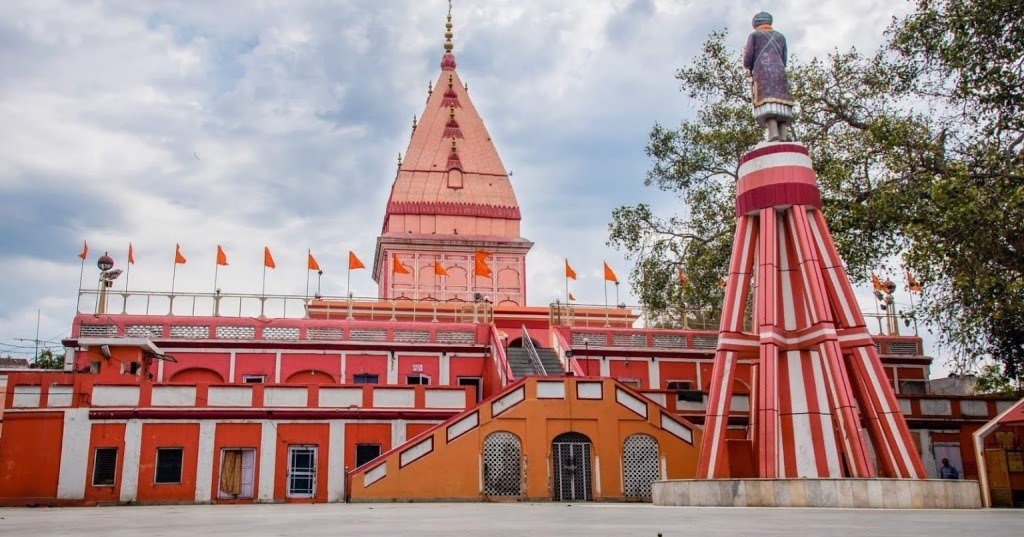
Ranbireshwar Temple, though often associated with the pilgrimage circuit, is actually located in Jammu City (about 45 km from Katra) and stands as the largest temple dedicated to Lord Shiva in Northern India. Built in 1883 by Maharaja Ranbir Singh, this historic shrine is famous for its incredible collection of Shivalingams; the central sanctum houses a massive, 7.5-foot-high main Lingam carved from a single piece of black marble. A unique feature of this temple is the presence of twelve stone Lingams representing the Jyotirlingas, along with 1.25 lakh (125,000) small Shivalingams brought from the Narmada River, which are arranged on stone slabs throughout the galleries. The temple’s grand architecture, featuring white marble floors and a serene courtyard, creates a powerful spiritual atmosphere, especially during the festival of Maha Shivratri when thousands of devotees visit to offer prayers and milk.
15. Mahamaya Temple
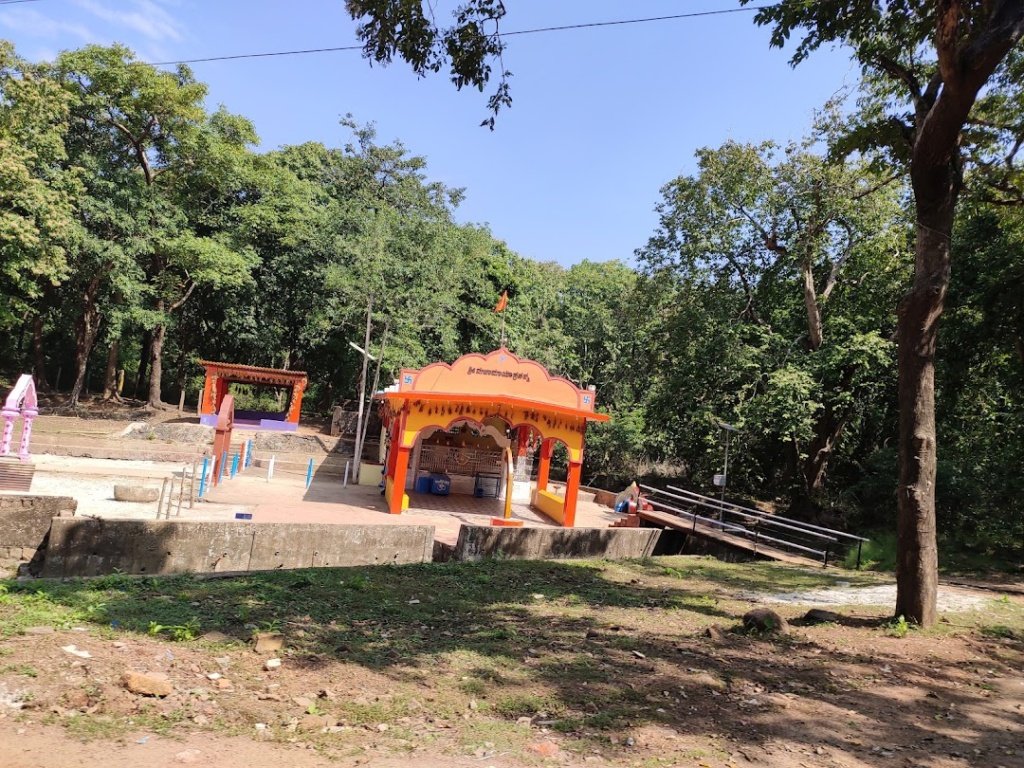
The Mahamaya Temple is a highly revered shrine located on a hilltop behind the historic Bahu Fort in Jammu, offering a stunning panoramic view of the Tawi River and the city skyline. Unlike many other temples dedicated to ancient deities, this temple is unique as it honours a local Dogra warrior woman named Mahamaya, who sacrificed her life roughly 1,400 years ago to protect her land from foreign invaders. Instead of a traditional idol, the goddess is worshipped in the form of a natural stone Pindi, representing her eternal presence and bravery. The temple is a key part of the religious circuit in Jammu, often visited by pilgrims after seeking blessings at the Bawe Wali Mata Temple. Its peaceful, forest-like surroundings make it a preferred spot for meditation and nature walks. Access to the temple has become even more convenient and scenic with the Jammu Ropeway, which connects the Mahamaya forest area to the Bahu Fort and Peer Kho cave, providing tourists with a breathtaking aerial view of the entire valley during their visit.
16. Vaishnav Devi Helicopter Yatra
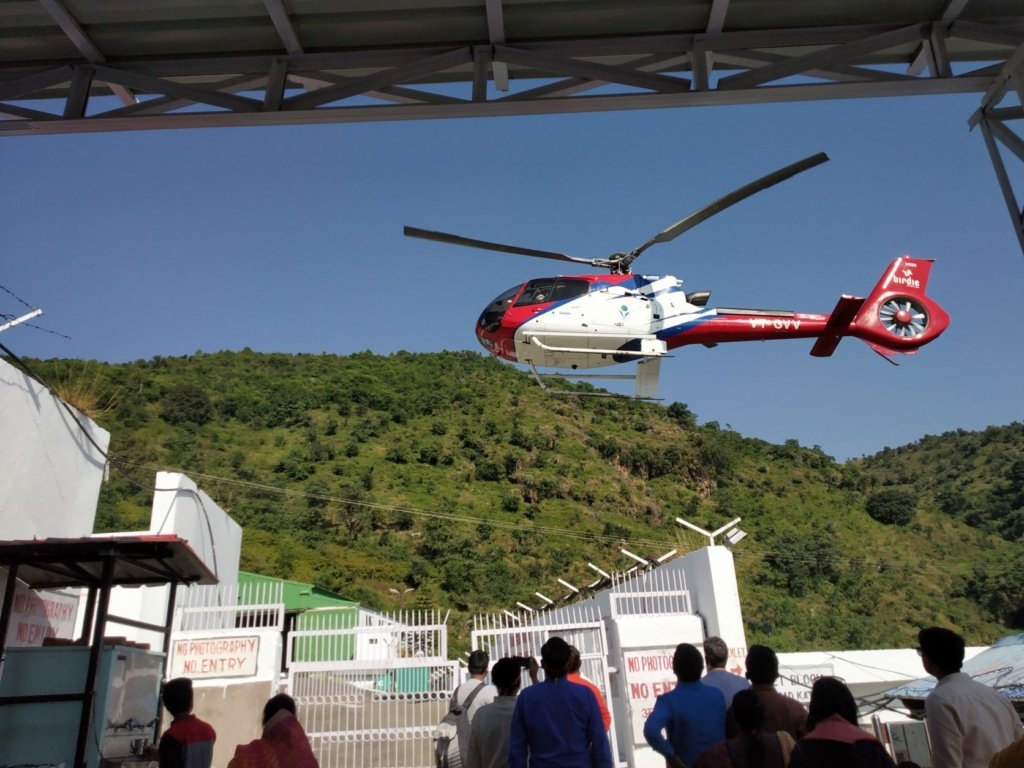
The Vaishno Devi Helicopter Yatra is a premium service designed to make the arduous pilgrimage much faster and more accessible, especially for senior citizens, children, and those with physical limitations. Instead of a 12–13 km uphill trek, the helicopter flight covers the distance from Katra to Sanjichhat in just 5 to 8 minutes. Sanjichhat is the highest point on the yatra route, located approximately 2.5 km away from the Main Bhawan (Shrine). From Sanjichhat, pilgrims can either walk the remaining distance on a relatively flat path or hire a pony/palanquin to reach the temple for darshan.
17. Baba Dhansar
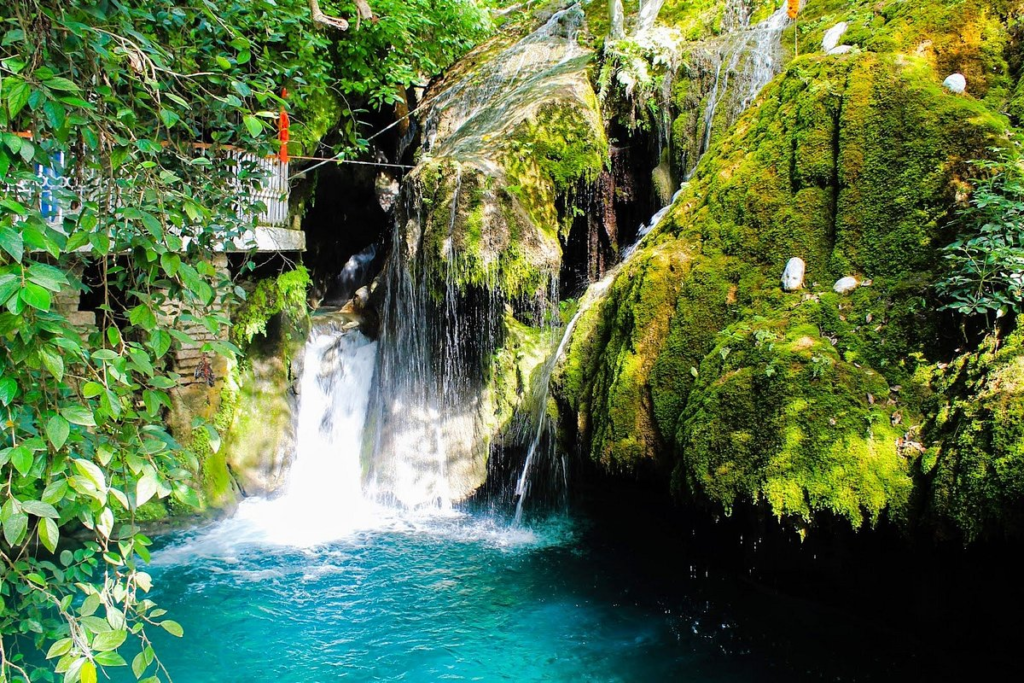
Baba Dhansar is a stunningly beautiful and holy site located about 17 km from Katra in the Reasi district. It is famous for its magical natural waterfall that flows into a crystal-clear, turquoise-colored pond. What makes this place special is that the water seems to emerge out of nowhere from the thick trees and rocks above. Near the pond, there is a naturally formed Lord Shiva cave where water droplets constantly fall on a self-manifested Shivalingam. According to local legends, Baba Dhansar was the son of the serpent king, Vasuki Nag. He was a great devotee of Lord Shiva and helped the local villagers get rid of a cruel demon. Today, people visit not just to pray at the temple, but also to enjoy the peaceful forest scenery. To reach the main area, you have to walk down about 100-150 steps, which are surrounded by lush greenery and the soothing sound of flowing water. It is a perfect spot for a half-day trip to relax after your main Vaishno Devi trek.
18. Nau Devi Cave Temple
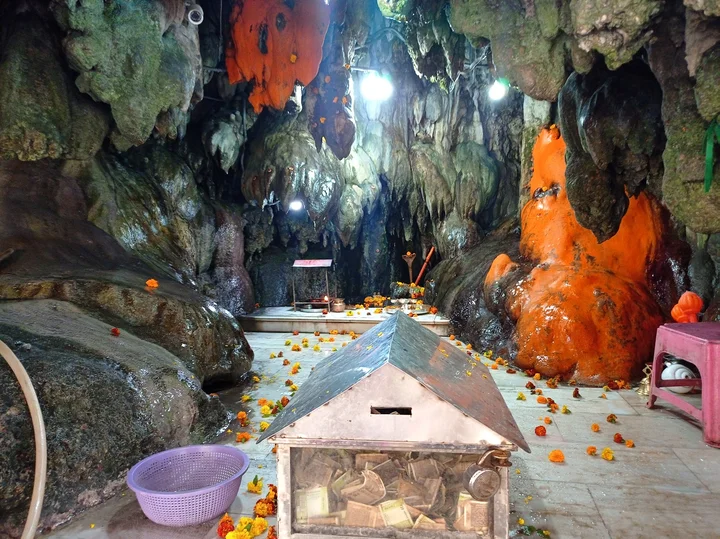
Nau Devi Cave Temple, also known as Nav Devi, is a unique and spiritual site located about 10 km from Katra on the way to Reasi. This temple is special because it is situated inside a naturally formed cave that is over 200 years old. Inside the cave, you will find nine naturally carved rock formations, known as Pindis, which represent the nine different forms of Goddess Durga (Nav Durga). The experience of visiting this temple is quite an adventure; the cave is narrow, and you often have to crawl or bend low to move through it, which creates a sense of mystery and devotion. Unlike the main Vaishno Devi shrine, this temple is usually less crowded, allowing you to sit and pray in peace. Another beautiful feature of the site is the small stream of holy water that flows inside the cave, which devotees consider very sacred. It is a must-visit spot for those who want to see all the forms of the Mother Goddess in one peaceful, natural setting.
19. Himkoti Viewpoint
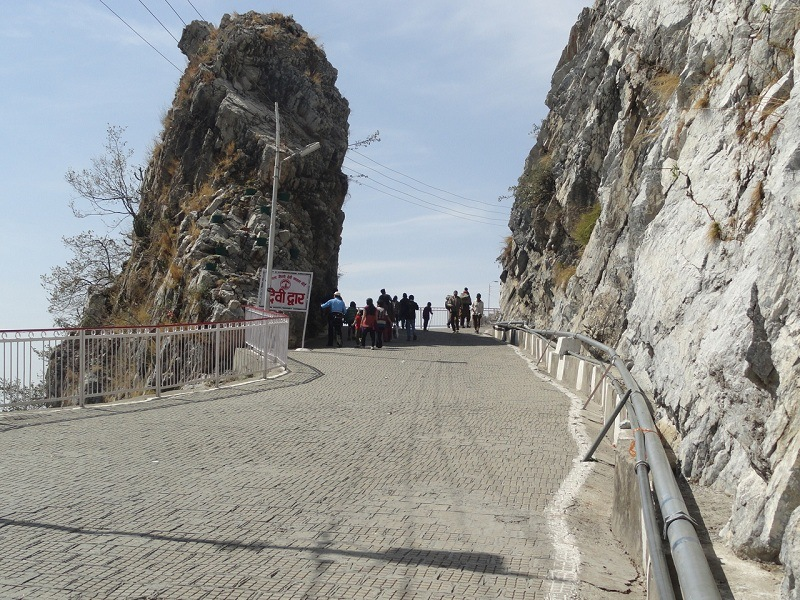
Himkoti Viewpoint is one of the most scenic and relaxing spots located on the new battery car track (Tarakote Marg) between Ardhkuwari and the Main Bhawan. It is situated about 2.5 km away from Adhkunwari and is famous for offering breathtaking, bird’s-eye views of the Trikuta Mountains and the deep, lush green valleys below. Unlike the traditional walking path, this area is much quieter and cleaner, making it a favorite resting point for pilgrims. The viewpoint is well-developed with a beautifully landscaped park, benches for resting, and a large food court that serves clean and delicious vegetarian snacks. There is also a dedicated Oxygen Bar and medical facilities available here for those feeling tired due to the high altitude. It is an ideal place to stop for a break, take photographs of the mountain scenery, and enjoy the cool breeze before completing the final stretch of your journey to the shrine.
20. Shiv Khori
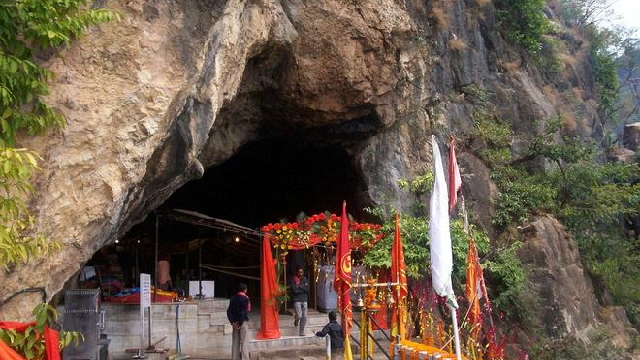
Shiv Khori is a famous holy cave shrine dedicated to Lord Shiva, located in the Reasi district, about 70 to 80 km from Katra. The name “Shiv Khori” literally means “Shiva’s Cave,” and the cave is roughly 200 metres long. Inside, there is a 4-foot-high naturally formed Shivalingam that is constantly bathed in milky lime water dripping from the ceiling. The cave is also filled with natural rock carvings that look like Hindu deities such as Ganesha, Kartikeya, and the goddess Parvati. According to legend, Lord Shiva stayed in this cave to hide from and eventually defeat the demon Bhasmasura. To reach the cave, you have to undertake a 3 to 4 km trek from the base camp at Ransoo. The path is scenic and winds through mountains and along a river. The cave itself is very narrow at the entrance—requiring pilgrims to crawl or walk sideways—but it opens up into a large, grand chamber inside. It is a very popular destination for devotees visiting Vaishno Devi, especially during the Maha Shivratri festival when a huge three-day fair is held, attracting lakhs of pilgrims from all over India.