
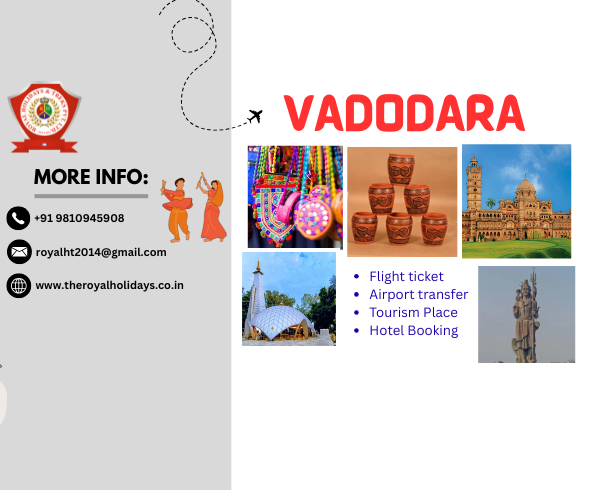
Vadodara, formerly known as Baroda, is the third-largest city in Gujarat and is widely acclaimed as the state’s “Cultural Capital” (Sanskari Nagari). Situated on the banks of the Vishwamitri River, the city’s identity is deeply rooted in the legacy of the Gaekwad dynasty—particularly under the progressive reign of Maharaja Sayajirao Gaekwad III, who transformed it into a hub for education, industry, and the arts. Beyond its royal heritage, Vadodara serves as a major industrial hub for petrochemicals, engineering, and pharmaceuticals; furthermore, due to its proximity to the world’s tallest statue (the Statue of Unity), it is often referred to as the “Gateway to the Statue of Unity.” During the festival of Navratri, the city transforms into a global destination for Garba, hosting some of the world’s most traditional and large-scale dance celebrations. With its blend of historic palaces, lush green gardens like Sayaji Baug, and a vibrant cosmopolitan culture, Vadodara remains one of India’s most balanced and livable cities.
Vadodara’s economy stands as a powerhouse within Gujarat’s industrial landscape, driven by its status as a central hub within the “Golden Corridor” and a major center for chemicals, pharmaceuticals, and engineering. The city is home to over 35% of India’s manufacturers of power transmission and distribution equipment, supported by approximately 800 ancillary units that provide momentum to large-scale engineering projects.
Vadodara is widely regarded as one of the safest cities in India, consistently ranking high for its safety, civic discipline, and communal harmony. As the “Cultural Capital” of Gujarat, it maintains a peaceful environment, making it an excellent destination for solo female travelers, families, and senior citizens.
Most Famous And Attractive Tourist Places In Vadodara :
- Laxmi Vilas Palace
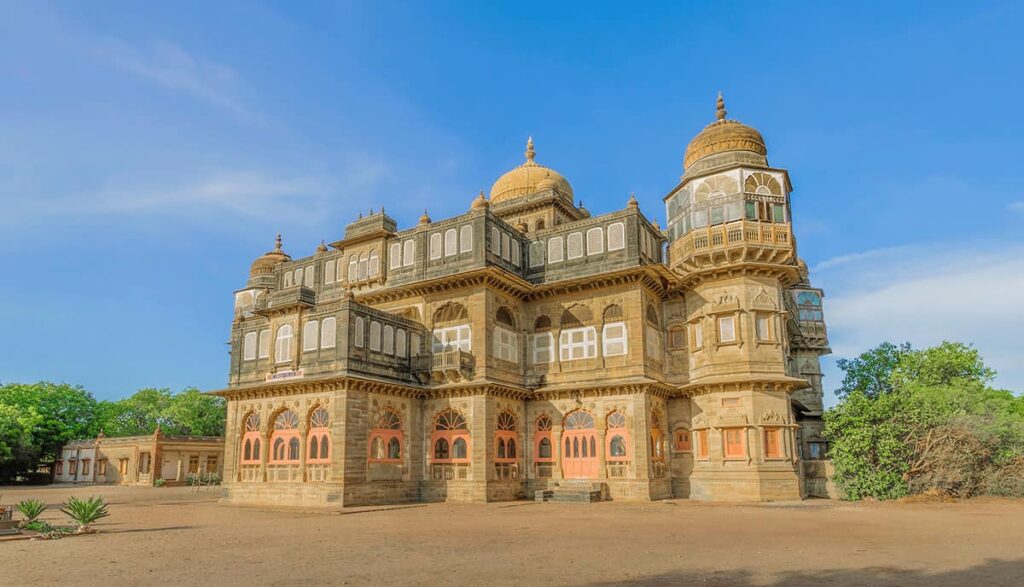
Laxmi Vilas Palace is a magnificent architectural marvel in Vadodara and remains the private residence of the royal family of Baroda, the Gaekwads. Built in 1890 by Maharaja Sayajirao Gaekwad III, it is reputed to be four times the size of Buckingham Palace and is considered one of the largest private dwellings in the world. The palace was designed in the Indo-Saracenic style, which seamlessly blends Hindu, Islamic, and Gothic architectural elements, featuring ornate domes, minarets, and arches. Its interior is equally opulent, boasting a collection of rare artworks, including sculptures and original paintings by Raja Ravi Varma, as well as the famous Darbar Hall, which features a Venetian mosaic floor and walls adorned with intricate stone carvings. Set within 500 acres of lush greenery, the estate also includes a private golf course, a cricket ground, and the Moti Baug Palace, making it the crowning jewel of Vadodara’s royal heritage.
2. Sayaji Garden
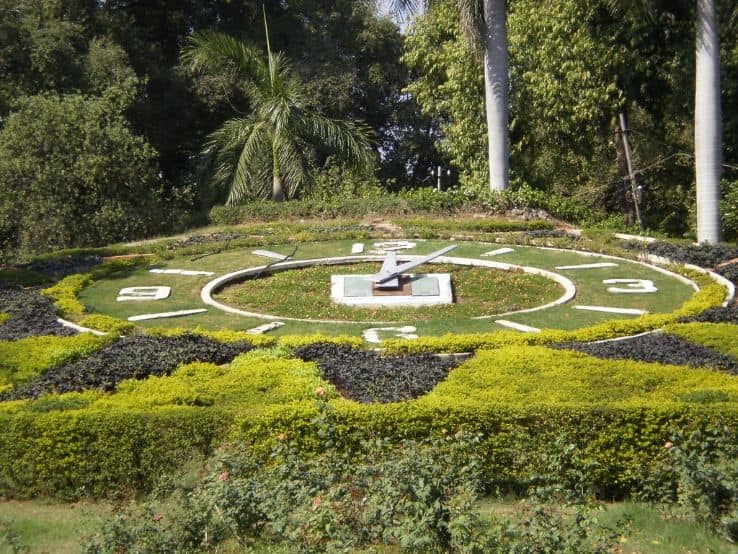
Sayaji Baug, popularly known as Kamati Baug, is the largest public garden in Western India, sprawling over 113 acres in the heart of Vadodara. Dedicated to the citizens by Maharaja Sayajirao Gaekwad III in 1879, this lush green expanse serves as the city’s primary recreational hub and a center for botanical diversity with over 98 species of trees. The garden is unique because it integrates nature with education and culture, housing three major institutions: the Baroda Museum & Picture Gallery, the Sardar Patel Planetarium, and the Sayaji Baug Zoo One of its most famous attractions is the functional Floral Clock, which was the first of its kind in India, featuring a machinery-driven clock face made entirely of seasonal plants. Families and tourists also flock here for the “Sankalp Express” toy train, which takes visitors on a scenic 3.5 km ride through the park, crossing several small bridges and offering views of the various sculptures and fountains that dot the landscape.
3. Baroda Museum And Picture Gallery
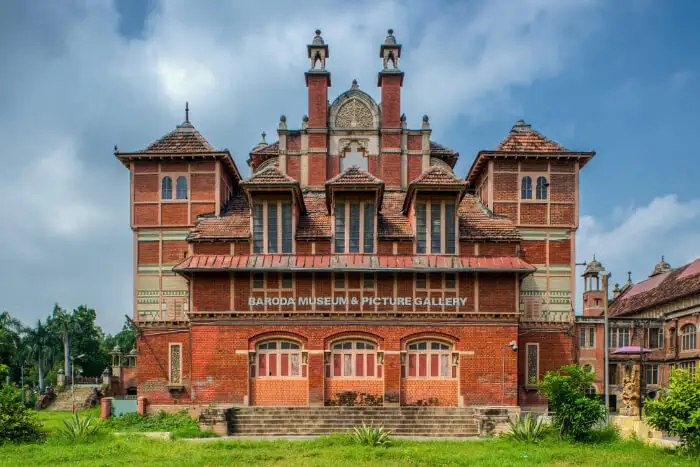
The Baroda Museum and Picture Gallery, located within the lush Sayaji Baug, is one of the most distinguished museums in India, established in 1894 by Maharaja Sayajirao Gaekwad III. The architecture of the building is a stunning blend of Indo-Saracenic and Victorian styles, designed by British architects to resemble the Victoria and Albert Museum in London. It houses an incredibly diverse and vast collection that spans archaeology, geology, and natural history, with its most famous exhibit being a massive 72-foot-long skeleton of a Blue Whale found in the mouth of the Mahi River. The museum is also renowned for its Egyptian gallery, which features a genuine 3,000-year-old mummy, and its extensive collection of Akota bronzes and Mughal miniatures. The adjacent Picture Gallery is a paradise for art lovers, containing a rich collection of European masterpieces by legends like Veronese and Rubens, alongside an invaluable gallery of original works by the famous Indian artist Raja Ravi Varma, making it a vital pillar of Vadodara’s cultural identity.
4. Ajwa Nimeta Dam Garden
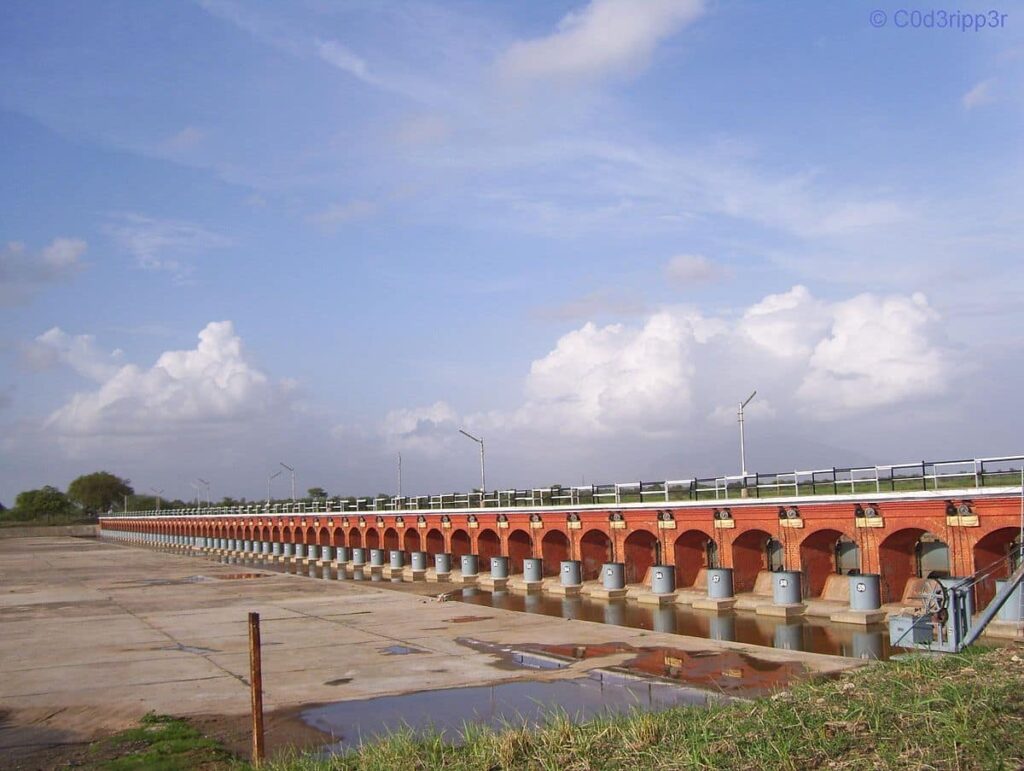
Ajwa and Nimeta Gardens, located about 15–20 kilometres from Vadodara, are popular weekend retreats built around the Sayaji Sarovar (Ajwa Dam). The Ajwa Garden, officially known as the Sayaji Baug of Ajwa, was modeled after the famous Brindavan Gardens of Mysore and is renowned for its beautifully manicured lawns and a spectacular Musical Fountain show. This light and sound show, where fountains “dance” to synchronized music and multi-coloured lights, is the main attraction, typically held in the evenings on weekends and public holidays. Just a few kilometres away lies the Nimeta Garden, which offers a more tranquil environment with lush greenery, stone sculptures, and a well-maintained nursery, making it a favorite spot for family picnics. Together, these gardens provide a refreshing escape from the city, offering panoramic views of the massive dam that serves as the primary water source for Vadodara.
5. Maharaja Fateh Singh Museum
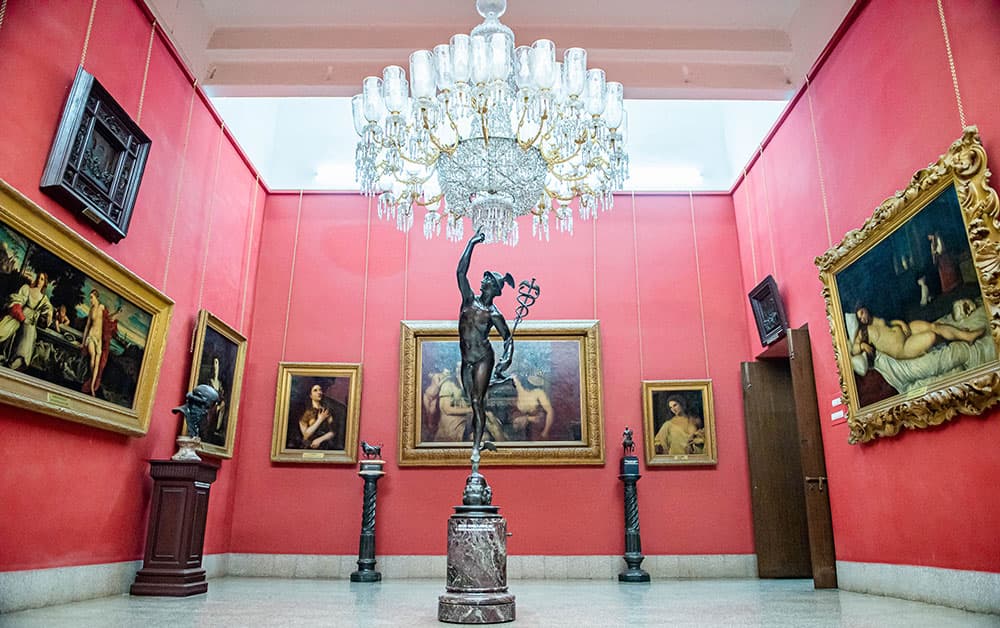
The Maharaja Fateh Singh Museum, located within the sprawling 500-acre grounds of the Laxmi Vilas Palace estate, is a premier art institution housed in a building originally designed as a school for the royal children. Established in 1961, the museum showcases the personal and extraordinarily eclectic art collection of the Gaekwad royal family, curated primarily by Maharaja Sayajirao III during his extensive world travels. It is most famous for housing one of the world’s most significant collections of original oil paintings by Raja Ravi Varma, the legendary artist who was commissioned by the Maharaja to paint portraits of the royal family and scenes from Hindu mythology. Beyond these masterpieces, the museum features an impressive array of European art, including works by masters like Raphael and Titian, alongside rare marble sculptures from Italy, intricate Chinese and Japanese porcelain, and a specialized gallery of royal portraits. A unique highlight of the museum is the fully functional miniature toy train displayed outside, which was originally gifted to the young Prince Ranjitsinhji to transport him from the palace to his school on the estate.
6. Sur Sagar Lake
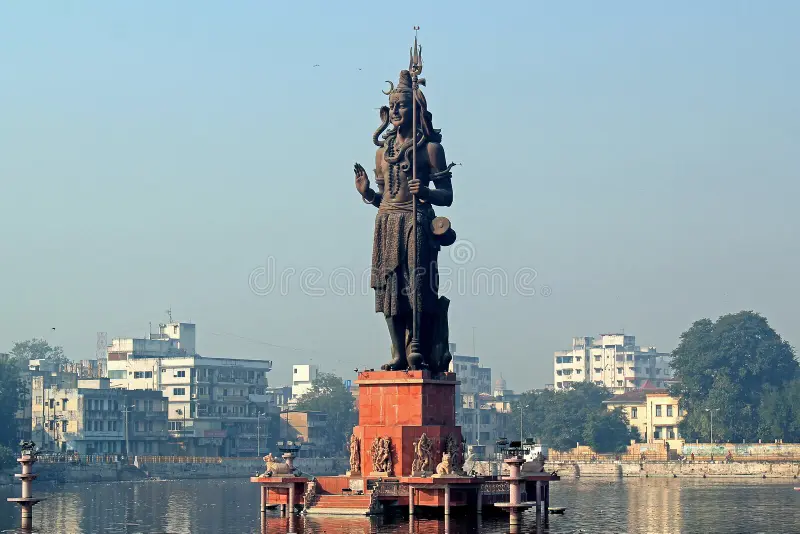
Sursagar Lake, also known as Chand Talao, is a magnificent landmark located in the heart of Vadodara city that serves as both a scenic retreat and a spiritual focal point. Built in the 18th century, this perennial lake is most famous for the majestic 120-foot-tall statue of Lord Shiva (Sarveshwar Mahadev) that stands tall in its center, which was recently gilded with over 17 kg of gold to enhance its brilliance. The lake is uniquely designed with special underground gates that manage water levels during the monsoon to prevent flooding, discharging excess water into the Vishwamitri River. The surrounding promenade is a popular spot for locals to enjoy evening walks, and during the festivals of Maha Shivratri and Ganesh Visarjan, the lake becomes the center of grand celebrations and light displays. At night, the illuminated Shiva statue reflects beautifully on the water’s surface, creating a peaceful and iconic silhouette that defines the Vadodara skyline.
7. Kirti Mandir
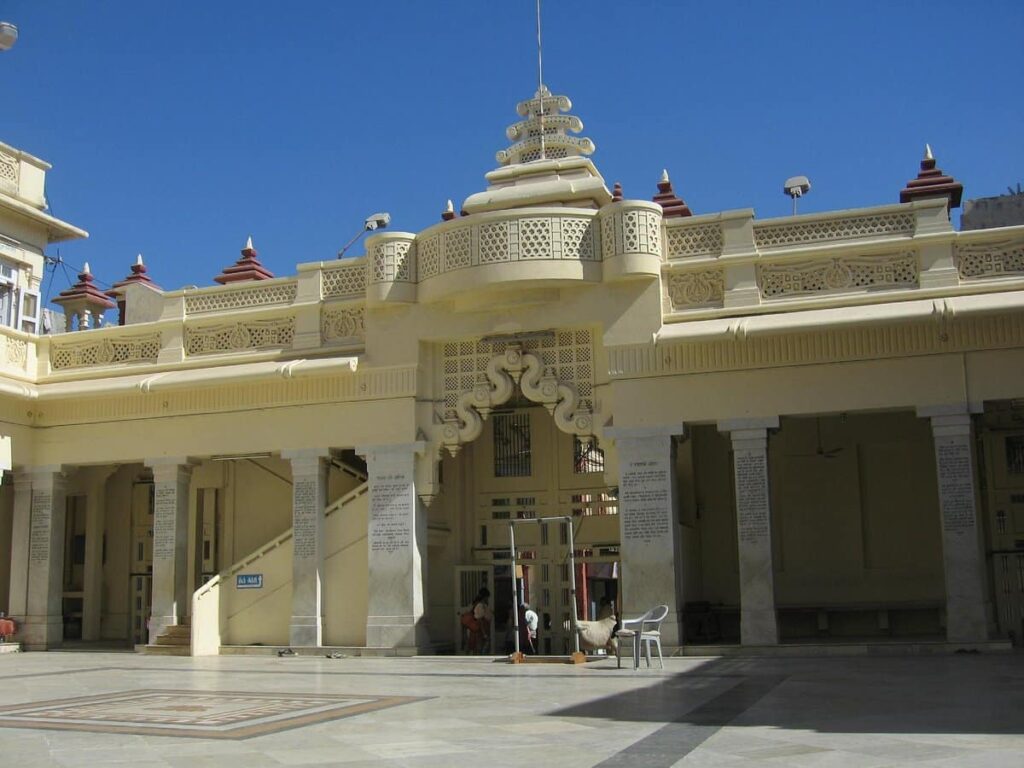
Kirti Mandir, located near the Vishwamitri River in Vadodara, is a majestic cenotaph (memorial) built in 1936 by Maharaja Sayajirao Gaekwad III to commemorate the departed members of the royal Gaekwad dynasty. The name “Kirti Mandir” translates to the “Temple of Fame,” and the structure is renowned for its stunning E-shaped architecture, featuring impressive domes, terraces, and intricate stone carvings in the Indo-Saracenic style. The central spire is decorated with the sun, moon, and stars alongside a map of undivided India, symbolising the eternal fame of the rulers. Inside, the walls are adorned with world-famous murals painted by the renowned Indian artist Nandlal Bose, depicting scenes from the Mahabharata, the life of Mirabai, and the desertion of Prince Siddhartha, which are considered masterpieces of modern Indian art.
8. Baps Shri Swaminarayan Mandir
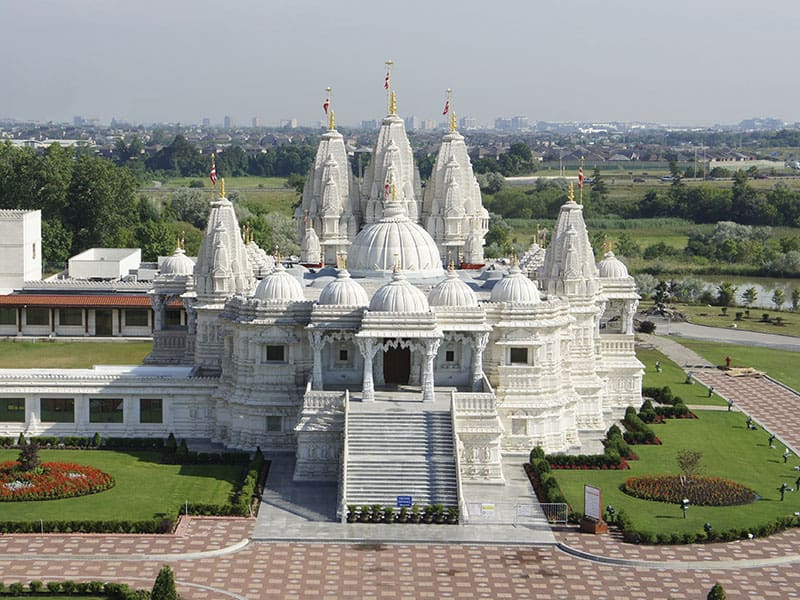
The BAPS Shri Swaminarayan Mandir in Vadodara is a magnificent spiritual and architectural landmark dedicated to Lord Swaminarayan. Built according to the ancient Hindu Shilpa Shastra, the temple is constructed entirely from pink sandstone and features intricate carvings of deities, motifs, and floral patterns that showcase extraordinary craftsmanship. It serves as a major hub for the BAPS Swaminarayan Sanstha, promoting Vedic values, culture, and social service. The complex is known for its serene and meticulously clean environment, featuring a grand assembly hall, beautifully landscaped gardens, and a dedicated exhibition wing that uses multimedia to explain Hindu philosophy and the life of Bhagwan Swaminarayan. At night, the temple is spectacularly illuminated, and the rhythmic Aarti (prayer ceremony) draws hundreds of devotees and tourists who come to experience its peaceful and vibrating spiritual energy.
9. Sardar Patel Planetarium
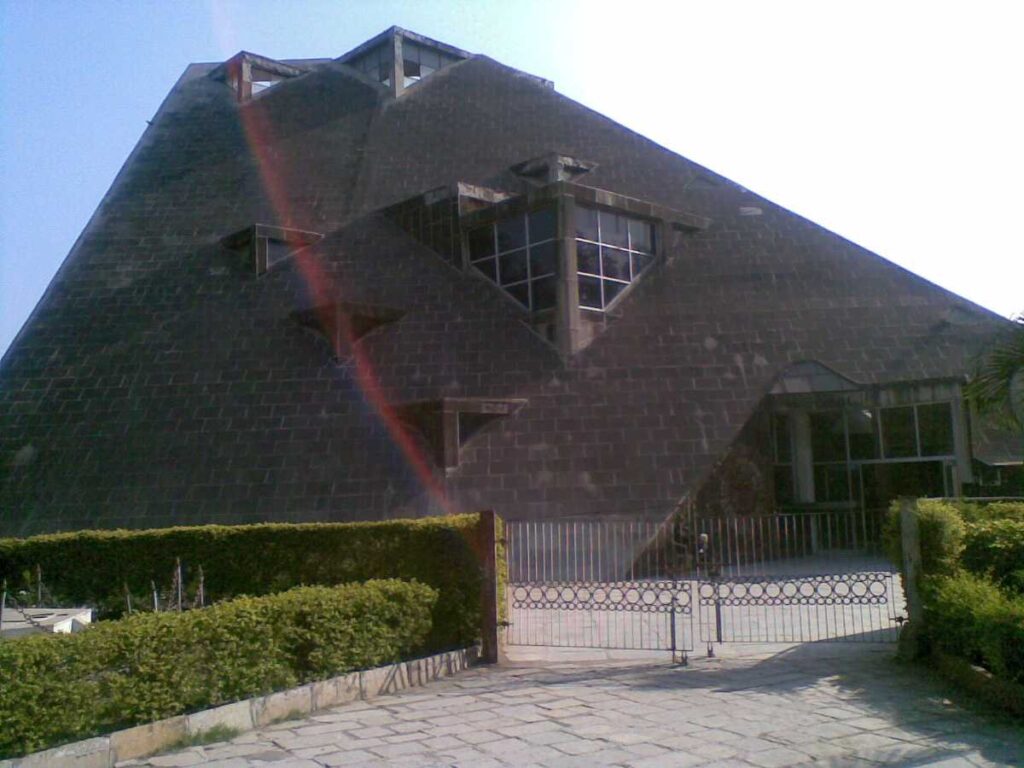
The Sardar Patel Planetarium, located within the lush surroundings of Sayaji Baug (Kamati Baug), is one of the premier astronomical education centres in Gujarat. Equipped with a sophisticated digital projection system and a large hemispherical dome, it offers visitors an immersive “space travel” experience, projecting high-definition simulations of the night sky, planetary movements, and distant galaxies. The planetarium is a major attraction for students and space enthusiasts, as it simplifies complex astronomical concepts through engaging audio-visual shows. Surrounding the main theatre, there are also various astronomical models and educational exhibits that provide insights into the history of space exploration and the solar system.
10. Gaekwad Baroda Golf Club
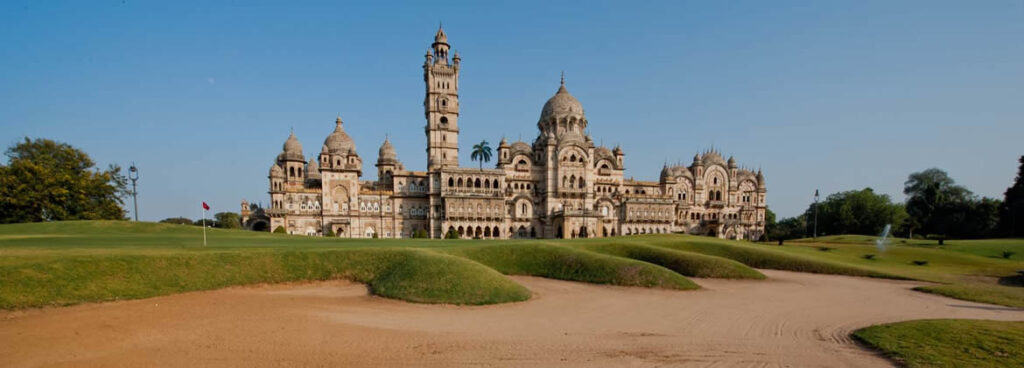
The Gaekwad Baroda Golf Club (GBGC) is a premier sporting and social institution in Vadodara, uniquely set within the private 500-acre estate of the Laxmi Vilas Palace. Established in the 1930s by Maharaja Pratap Singh Gaekwad for his personal use and later opened as a club in the 1990s, it is the only golf course in India wrapped around a magnificent royal palace. The 10-hole course (played as 18) offers a singular experience where golfers play through fairways that provide stunning views of the palace’s domes and minarets at every turn. The course is also a natural sanctuary, home to a large population of peacocks and various migratory birds, adding a serene, wildlife-rich backdrop to the game.