


Tamil Nadu is a beautiful and culturally rich state in South India, renowned for its ancient history, magnificent temples, and stunning natural beauty. It is often referred to as the “Land of Temples,” as it is home to thousands of spectacular structures featuring colorful, towering gateways (gopurams)—such as those found in Madurai, Thanjavur, and Kanchipuram. The state boasts an extensive coastline, featuring famous destinations like Marina Beach in Chennai (one of the longest beaches in the world) and Kanyakumari, where visitors can witness both the sunrise and sunset over the confluence of three different seas. For nature enthusiasts, Tamil Nadu offers cool, mist-shrouded hill stations like Ooty and Kodaikanal, lush with verdant tea plantations and cascading waterfalls. The state is also globally acclaimed for its delectable cuisine—including dishes like Idli, Dosa, and Sambar—and for its traditional art forms, such as the Bharatanatyam dance. Whether you seek spiritual tranquility, adventure in the mountains, or a journey through ancient history, Tamil Nadu remains an accessible and welcoming destination for travelers.
Tamil Nadu stands as one of India’s most economically powerful states, boasting the second-largest economy in the country. Its success is anchored in a diversified “three-pillar” model encompassing manufacturing, services, and agriculture. Often dubbed “the Detroit of Asia,” the state serves as a massive hub for the automotive industry, manufacturing a significant portion of India’s cars, trucks, and vehicle components.
Tamil Nadu is widely recognized as one of the safest and most welcoming states in India for travelers, consistently ranking high on national safety indices. A deep-rooted sense of hospitality and respect is woven into the fabric of the state’s culture, making it an ideal destination for solo travelers, families, and women alike. Major cities like Chennai and Coimbatore are known for their low crime rates and well-lit public spaces, while rural and temple towns maintain a peaceful and community-centric atmosphere.
Places to Visit in Tamil Nadu :
1.COONOOR
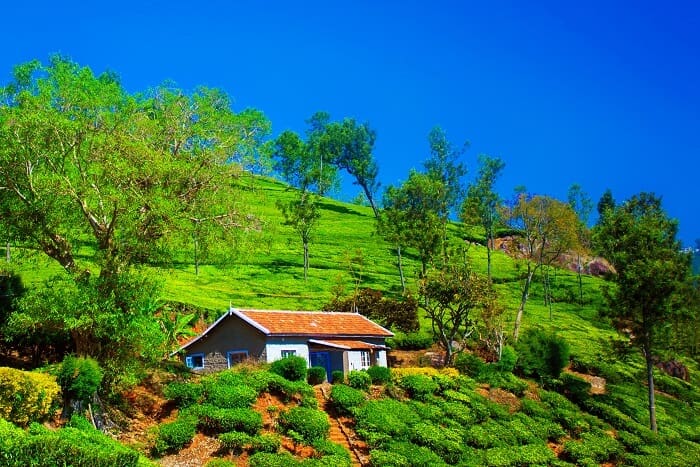
Coonoor is a tranquil hill station nestled in the Nilgiri Hills of Tamil Nadu at an elevation of 1,850 metres, serving as a quieter, laid-back alternative to its popular neighbour, Ooty. Renowned for its sprawling, velvety tea estates and the production of world-famous Nilgiri tea, the town is characterized by its misty valleys, rolling green hills, and cool, crisp mountain air. A major highlight of any visit is a ride on the UNESCO World Heritage Nilgiri Mountain Railway (the “Toy Train”), which traverses steep inclines, deep ravines, and numerous bridges and tunnels. Key attractions include the century-old Sim’s Park, a botanical garden home to over 1,000 plant species, and spectacular viewpoints like Dolphin’s Nose and Lamb’s Rock, which offer panoramic views of the Coimbatore plains and cascading waterfalls like Catherine Falls. The town also preserves a strong colonial heritage, evident in its Victorian Gothic architecture, such as St. George’s Church and All Saints Church, as well as the historic Wellington Cantonment. For adventure seekers, Coonoor offers numerous trekking trails to spots like Droog Fort and Hidden Valley, while food lovers can enjoy local delicacies like homemade chocolates, fresh organic honey, and aromatic brews directly from factories like Highfield Tea Factory.
2.KOTAGIRI
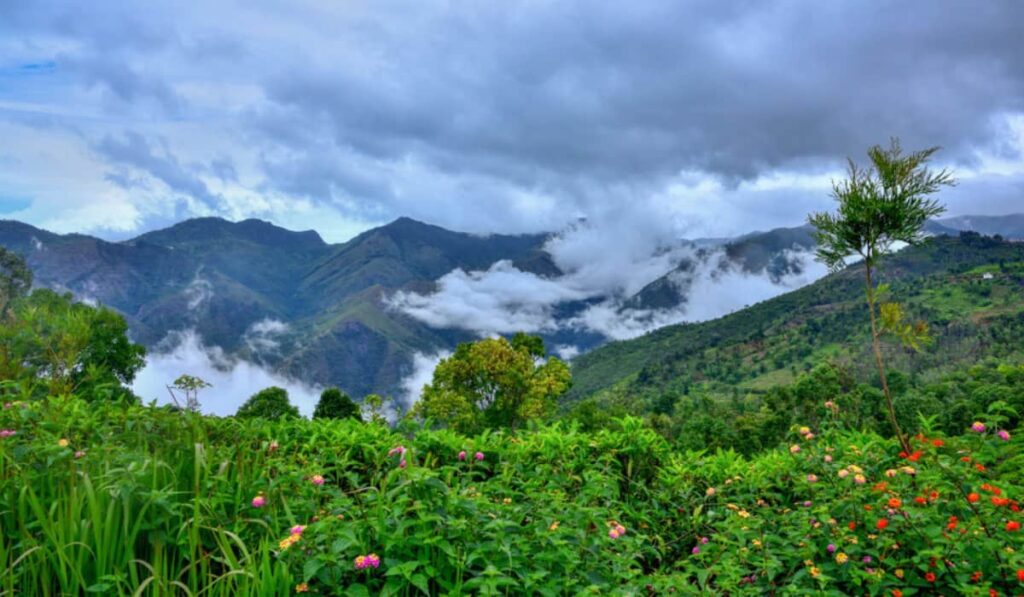
Kotagiri is a serene and unspoiled hill station in the Nilgiri Hills, situated at an altitude of approximately 1,793 metres. Often described as “what Ooty was before the tourist boom,” it is the oldest and third-largest hill station in the region, offering a quieter alternative with a climate frequently cited as one of the best in the world. The town’s name, meaning “Mountains of the Kotas,” pays homage to the indigenous Kota tribe who historically inhabited the area. Known for its expansive tea plantations and emerald-green landscapes, Kotagiri is a paradise for trekkers and nature lovers, featuring popular trails such as the one leading to the double-cascaded Catherine Falls and the lush Longwood Shola forest reserve. Other prominent landmarks include the Kodanad View Point, which provides panoramic views of the Eastern Ghats and the Moyar River, and the John Sullivan Memorial, dedicated to the British collector who established the first European settlement here in 1819. Its relatively untouched beauty, tranquil atmosphere, and “open-terrace” massif geography make it an ideal retreat for those looking to escape the crowds of more commercialized mountain resorts.
3. AUROVILLE
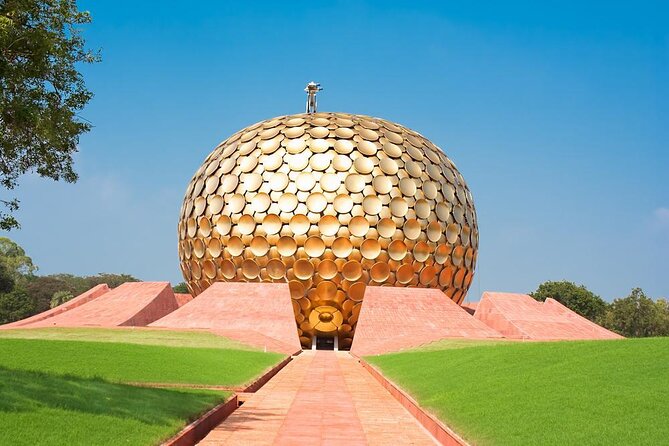
Auroville is an international experimental township founded in 1968 by Mirra Alfassa (known as “The Mother”) with the vision of creating a universal city where people from all over the world can live in peace and progressive harmony, above all creeds, politics, and nationalities. Located primarily in the state of Tamil Nadu near Pondicherry, the city is designed by French architect Roger Anger in a unique “Galaxy” layout that spirals outward from its central soul, the Matrimandir. This iconic structure, a massive flattened sphere clad in 1,415 gold-leaf discs, serves as a place for silent individual concentration and contains a majestic inner chamber with the world’s largest optically perfect glass globe, which is illuminated by a single ray of sunlight. Beyond the spiritual center, Auroville is divided into four functional zones—industrial, residential, international, and cultural—surrounded by a protective “Green Belt” dedicated to reforestation and sustainable agriculture. Visitors can explore the Visitors Centre for an introduction to the town’s philosophy, browse boutiques selling locally made handicrafts and handmade paper, or visit the SVARAM Sound Garden and numerous organic cafes like Auroville Bakery. As a living laboratory for sustainable living, the community researches alternative energy, ecological farming, and holistic education, welcoming those interested in spiritual evolution and human unity.
4.THENI
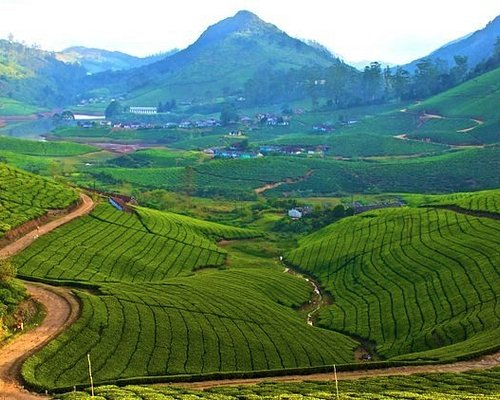
Théne is a picturesque district nestled in the foothills of the Western Ghats, often referred to as the “Earth’s Hidden Paradise” due to its lush green landscapes and abundant water sources. Known as a major agricultural hub, it is famous for its vast plantations of cardamom, coffee, and grapes, earning it the title of the “Grapes City of South India.” The region is defined by its dramatic geography, featuring the serene Vaigai Dam, which offers beautiful parks and views, and the majestic Suruli Falls, a two-stage cascading waterfall known for its medicinal properties and religious significance during the Adi Perukku festival. For nature enthusiasts and spiritual seekers, the Meghamalai Wildlife Sanctuary (often called “Highwavys”) provides a misty escape with tea estates and a chance to spot elephants and leopards, while the Kuchanur Saneeswaran Temple stands as a rare shrine dedicated entirely to Lord Shani. The district’s vibrant local markets and its proximity to the Munnar hills make it a vital gateway for travellers exploring the border between Tamil Nadu and Kerala.
5.DHARMAPURA
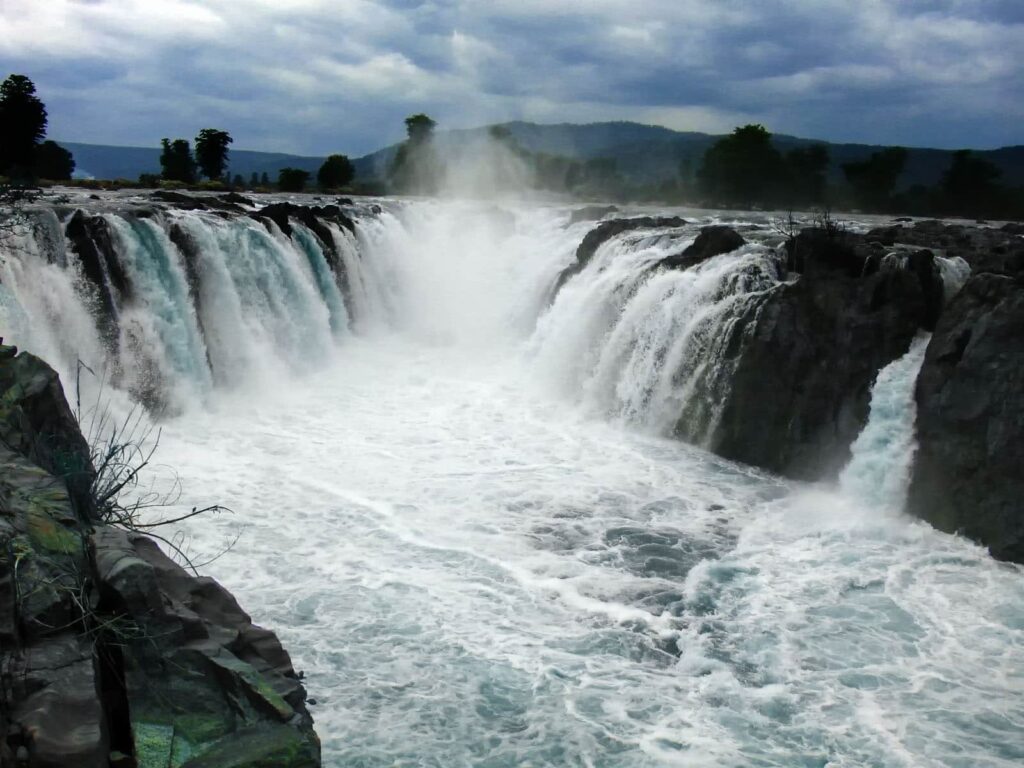
Dharmapuri is a peaceful and scenic district in northwestern Tamil Nadu, often called the “Mango Capital of India” because it is a major producer of high-quality mangoes. Its most famous attraction is Hogenakkal Falls, known as the “Niagara Falls of India,” where the Cauvery River crashes down in beautiful white cascades. Visitors here love taking coracle rides (small, round bamboo boats) through the rocky river gorges and enjoying relaxing herbal oil massages by the water. Historically, the area was known as “Thagadur” and was the capital of the brave King Adhiyaman, whose memory is preserved today at the Adhiyaman Kottam memorial and the ancient Fort Temple (Kottai Kovil), famous for its unique hanging pillars. The district is also home to many sacred sites, such as the hilltop Theerthamalai Temple and the rare Kala Bairavar Temple. With its mix of vast green forests, historic ruins, and the roaring Cauvery River, Dharmapuri is an easy-to-visit destination for anyone looking to enjoy nature and history away from the busy city crowds.
6. Kanchipuram
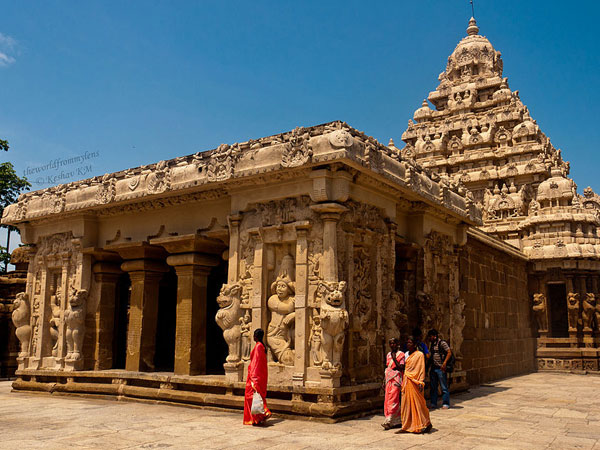
Kanchipuram, located about 72 km from Chennai, is one of India’s oldest and most sacred cities, famously known as the “City of a Thousand Temples”. As one of the seven holy cities (Sapta Puri) in Hinduism, it is believed to be a gateway to spiritual liberation. Historically, it served as the glorious capital of the Pallava and Chola dynasties, which is reflected in its magnificent Dravidian architecture featuring towering gopurams and intricate stone carvings. Major landmarks include the Kailasanathar Temple, the city’s oldest structural temple dedicated to Lord Shiva, and the Ekambareswarar Temple, which houses a 3,500-year-old mango tree. The city is equally world-renowned for its Kanchipuram Silk Sarees (Kanjivaram), handwoven by thousands of expert weavers using pure mulberry silk and gold zari. These sarees are prized for their durability and contrast borders featuring motifs inspired by temple walls, such as peacocks, parrots, and lotus flowers. Whether you are visiting for a spiritual pilgrimage, to marvel at ancient heritage, or to shop for heirloom silks, Kanchipuram remains the cultural soul of Tamil Nadu.
7. SAYALGUDI
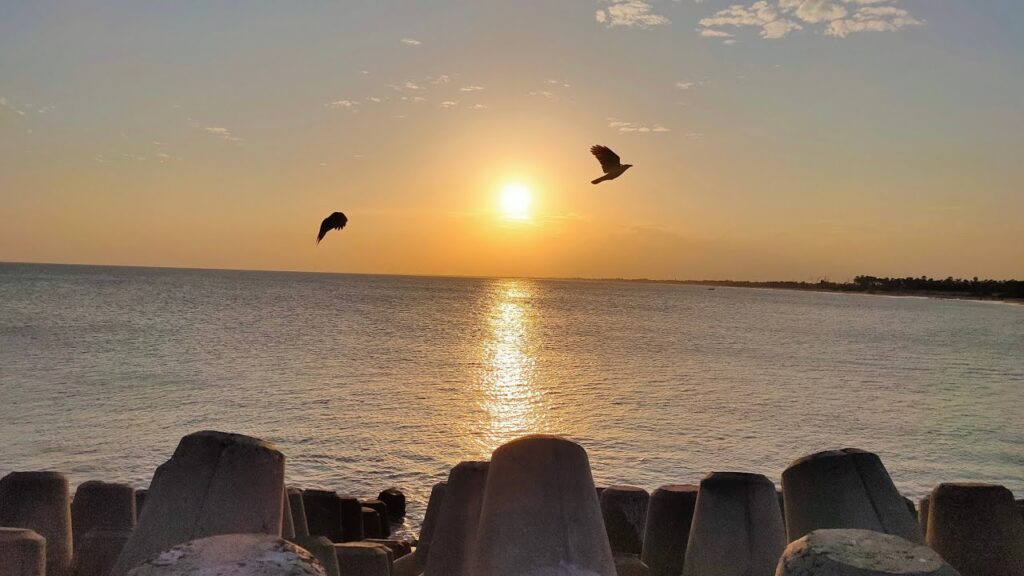
Sayalgudi is a tranquil coastal town panchayat in the Ramanathapuram district of Tamil Nadu, located along the East Coast Road between Thoothukudi and Kanyakumari. Its name is derived from the Tamil words sal (salt) and kudi (settlement), which literally means “the place where salt is produced,” reflecting the town’s long historical connection to its vast salt pans. Beyond salt production, the local economy is supported by agriculture, specifically the cultivation of paddy, coconuts, groundnuts, and red chilies, which thrive in the region’s alluvial and red soil. The town is home to several religious landmarks, most notably the Sri Koppulingeswarar Temple, dedicated to Lord Shiva and featuring traditional Dravidian architecture with intricate carvings, and the Sri Amman Temple. Nature lovers can visit the pristine and relatively untouched Sayalgudi Beach, or explore nearby attractions like the Narippaiyur Beach and the historic VVS Annasamy Pandian Palace. Its peaceful, rural charm and strategic location as a marketplace for surrounding villages make it a unique stop for travellers exploring the coastal heritage of southern India.
8. VALPARAI
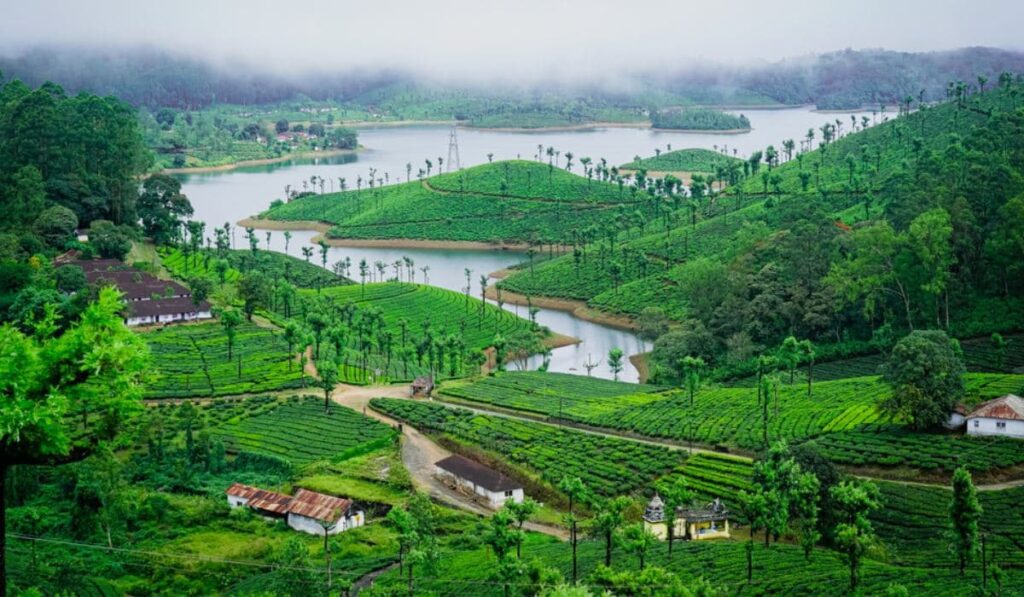
Valparai is a breathtaking hill station located in the Anamalai Hills of the Western Ghats, standing at an elevation of about 3,500 feet. Unlike other mountain resorts, Valparai is unique because it is largely composed of private tea and coffee estates surrounded by dense, evergreen forests and protected wildlife sanctuaries. The journey to the top is an adventure in itself, featuring 40 hairpin bends that offer spectacular views of the Aliyar Dam and the plains below. Known for its rich biodiversity, it is a haven for nature lovers and birdwatchers, being one of the best places to spot the endangered Lion-tailed Macaque, Nilgiri Tahr, and Great Hornbills. Key attractions include the serene Sholayar Dam (one of the highest dams in Asia), the misty Nirar Dam, and stunning viewpoints like Loam’s View Point and Number Parai. With its cool climate, cascading waterfalls like Monkey Falls, and a peaceful atmosphere free from heavy commercial crowds, Valparai is often called the “Eleventh Heaven” and provides a perfect retreat for those seeking a quiet connection with nature.
9. TIRUCHIRAPPALLI
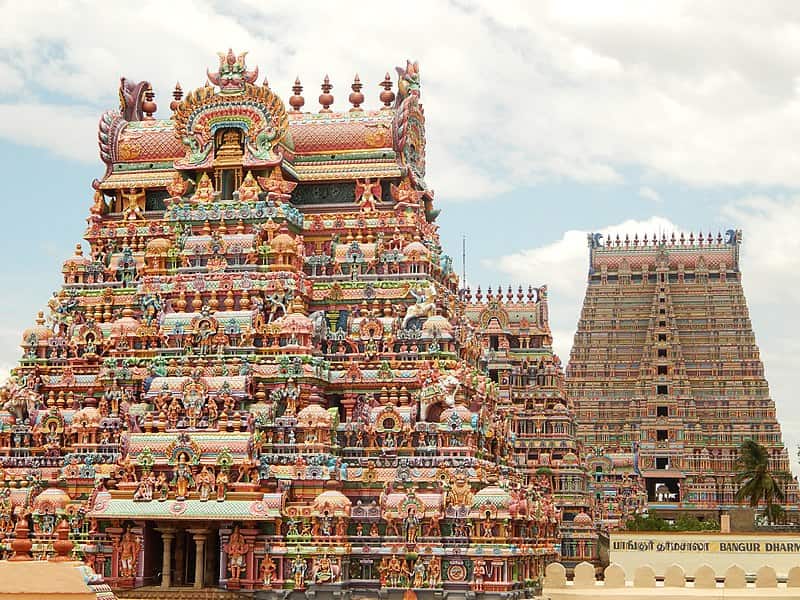
Tiruchirappalli, popularly known as Trichy, is a vibrant city located on the banks of the Cauvery River and is considered the geographical center of Tamil Nadu. It is a major hub of history, religion, and industry, famous for its ancient monuments that date back to the Chola, Pandya, and Pallava dynasties. The city’s most iconic landmark is the Rockfort Temple, a massive 83-metre-high rock outcrop that houses the Ucchi Pillayar Temple at its peak, offering breathtaking 360-degree views of the city. Just a few kilometres away lies the Srirangam Ranganathaswamy Temple, the largest functioning Hindu temple in the world, renowned for its 21 magnificent gopurams and intricate carvings. Trichy is also home to the Jambukeswarar Temple, which represents the element of water, and the historic St. Lourdes Church, an example of stunning Gothic architecture. Beyond its spiritual side, the city is an educational and industrial powerhouse, housing institutions like NIT Trichy and the BHEL factory. Whether you are exploring the ancient Kallanai Dam (Grand Anicut), built by King Karikala Cholan nearly 2,000 years ago, or shopping for brassware and textiles in the bustling Chinna Kadai Street, Trichy offers a perfect blend of tradition and modernity.
10. DHANUSHKODI
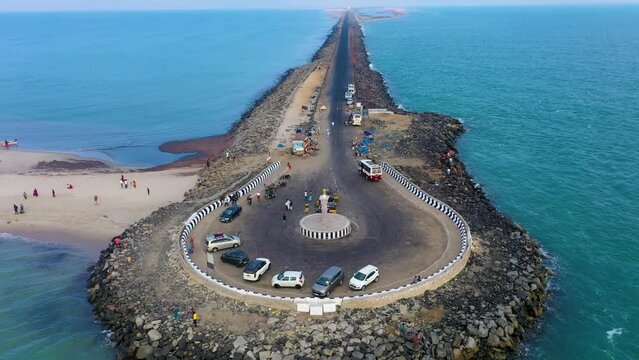
Dhanushkodi is a hauntingly beautiful, abandoned town located at the southeastern tip of Pamban Island, where the Bay of Bengal and the Indian Ocean meet. Often called the “Ghost Town,” it was a flourishing commercial port and pilgrimage site until it was tragically destroyed by a massive cyclone in 1964, leaving behind evocative ruins of a church, a railway station, and a post office that still stand today. The town holds deep religious significance as it is believed to be the place where Lord Rama pointed his bow (Dhanush) to mark the spot for building Ram Setu (Adam’s Bridge) to reach Lanka. Visitors are drawn to its unique geography—a narrow strip of land surrounded by turquoise waters—where you can witness the contrasting calm of the “female” sea (Bay of Bengal) and the rough waves of the “male” sea (Indian Ocean). Accessible via a scenic road from Rameswaram, Dhanushkodi offers a surreal experience of isolation, stunning white sand beaches, and a powerful sense of history, making it a must-visit for those seeking spiritual peace and natural wonder.
11.HOGENAKKAL FALLS
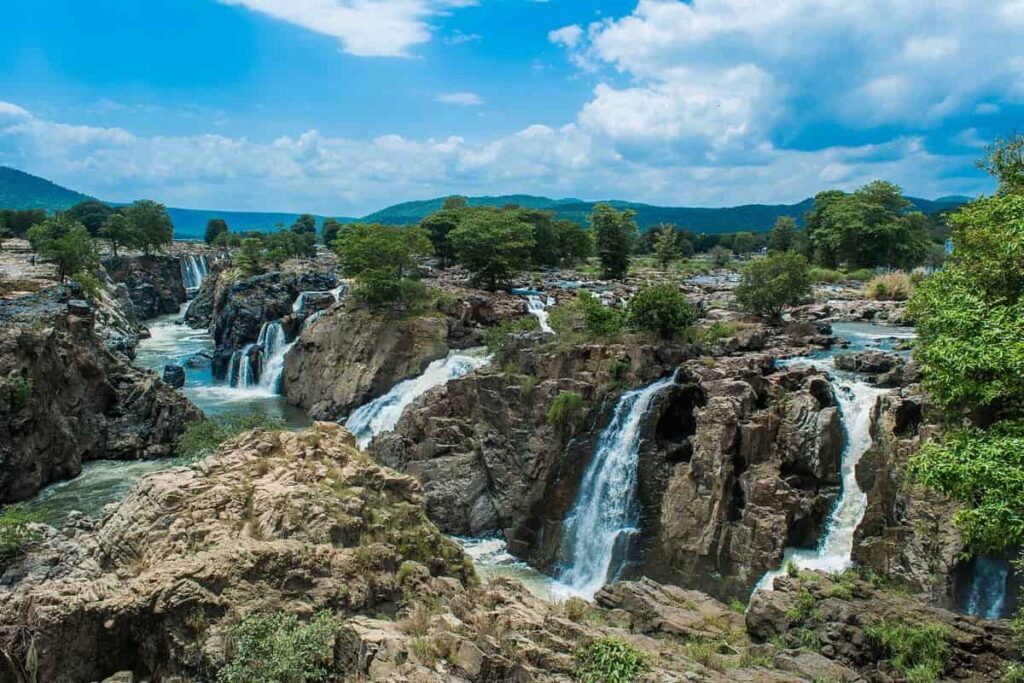
Hogenakkal Falls, often called the “Niagara of India,” is a breathtaking waterfall located on the Cauvery River in the Dharmapuri district. The name “Hogenakkal” is derived from the Kannada words hoge (smoke) and kal (rock), because the water hitting the rocks creates a mist that looks like white smoke. The falls are unique because the river flows through ancient, jagged carbonatite rocks, creating a series of powerful cascades rather than a single drop. One of the most famous activities here is riding in a coracle—a traditional, circular bamboo boat—which takes you right to the base of the roaring falls and through narrow rocky gorges. The water at Hogenakkal is also believed to have medicinal properties because the river passes through thick herbal forests before reaching the falls. Visitors can enjoy relaxing oil massages from local experts and feast on freshly caught, spicy fried fish sold along the riverbanks. With its combination of natural power, adventurous boat rides, and scenic beauty, Hogenakkal is one of the most popular nature getaways in Tamil Nadu.
12 CHETTINAD
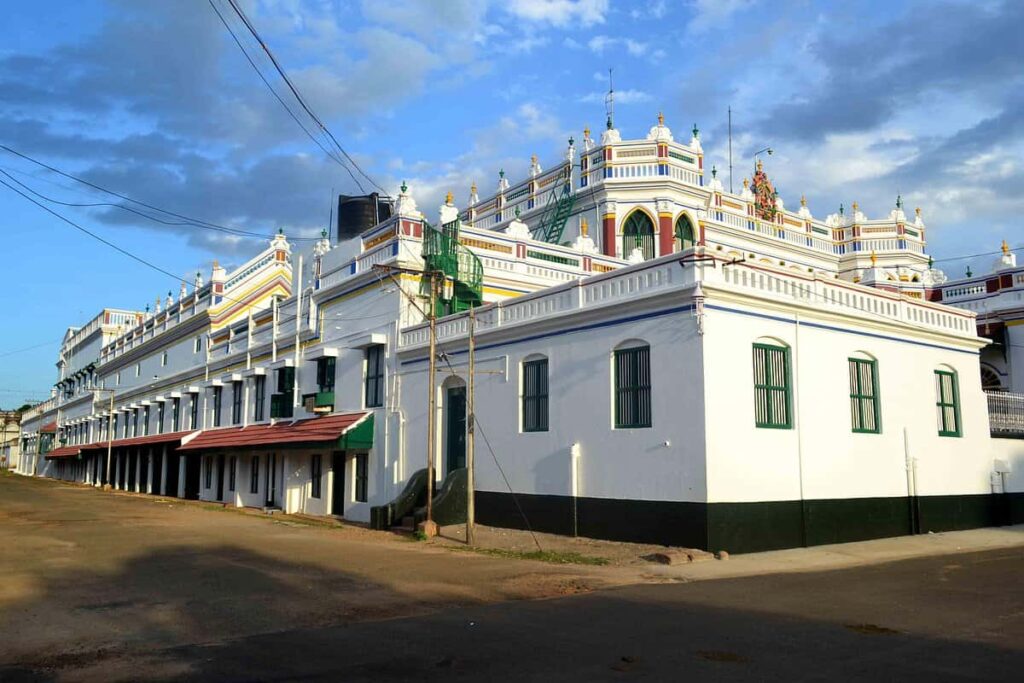
Chettinad is a culturally rich region in the Sivaganga district, world-famous for its palatial mansions, unique cuisine, and vibrant heritage. Historically home to the Nattukottai Chettiars, a prosperous banking and business community, the area is dotted with thousands of massive ancestral homes built using high-quality materials imported from around the world, such as Burma teak, Italian marble, and Belgian glass. These mansions are architectural marvels, featuring large open courtyards, intricate woodwork, and walls polished with a unique lime plaster that shines like white marble. Beyond its architecture, the region is a food lover’s paradise, renowned for Chettinad Cuisine, which is one of the most aromatic and spiciest in India, using sun-dried meats and hand-ground masalas. Visitors can also explore traditional industries like the handmade Athangudi tiles, known for their colorful geometric patterns, and the famous Kandangi silk sarees. With its quiet rural charm and preserved history, Chettinad offers a deep dive into the opulent lifestyle and artistic traditions of a bygone era.
13. KOLLI HILLS
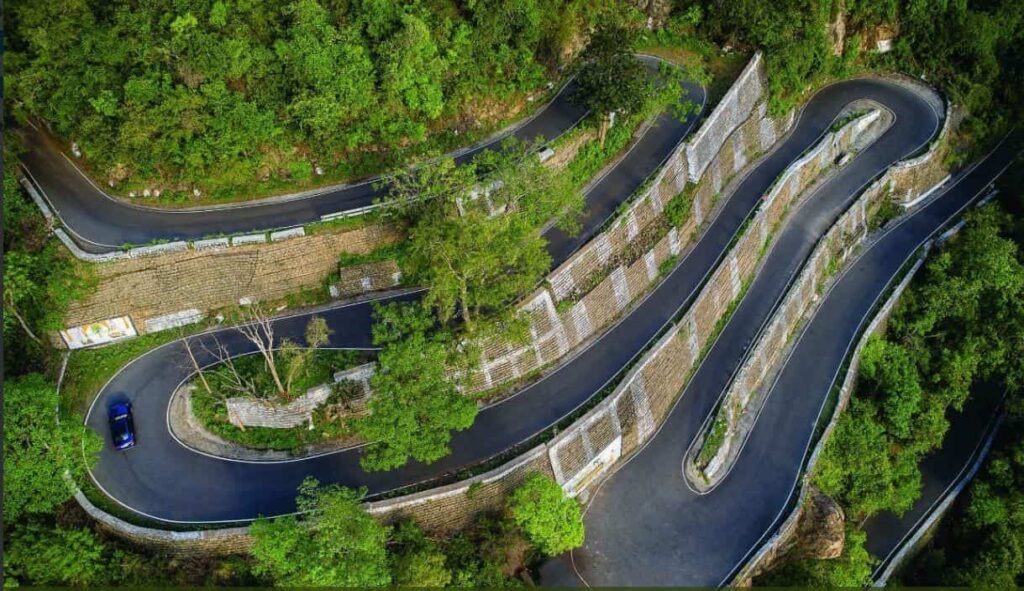
Kolli Hills, or Kolli Malai, is a stunning mountain range in the Namakkal district of Tamil Nadu, standing at an elevation of about 1,300 metres. Known as the “Mountains of Death” (named after the guardian deity Kolli Pavai), the range is famous for its thrilling road trip featuring 70 continuous hairpin bends that challenge even the most experienced drivers. Unlike other touristy hill stations, Kolli Hills remains relatively untouched and is a paradise for nature lovers and trekkers. The most iconic attraction is the Agaya Gangai Falls, a spectacular 300-foot waterfall reachable by climbing down over 1,000 stone steps. The hills are also home to the ancient Arappaleeswarar Temple, which dates back to the 1st century and is steeped in local legends. Known for its lush forests, medicinal plants, and spice plantations growing pepper and coffee, the region offers a cool, misty climate year-round. It is the perfect destination for those looking for peace, adventure, and a break from the commercial crowds of popular hill resorts.
14. MAHABALIPURAM
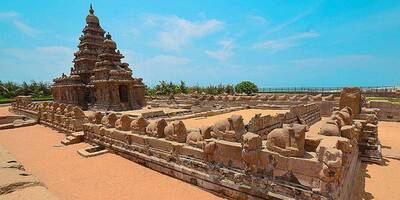
Mahabalipuram, also known as Mamallapuram, is a world-renowned UNESCO World Heritage site located along the Coromandel Coast of the Bay of Bengal, about 58 km from Chennai. Once a thriving seaport of the Pallava dynasty between the 7th and 8th centuries, the town is a treasure trove of ancient rock-cut architecture and structural stone temples. Its most iconic landmark is the Shore Temple, one of the oldest structural stone temples in South India, which stands elegantly against the sea and features shrines dedicated to both Lord Shiva and Lord Vishnu. Other breathtaking monuments include the Pancha Rathas (Five Chariots), which are monolithic structures each carved from a single piece of granite, and the Descent of the Ganges, one of the world’s largest open-air bas-reliefs depicting mythical scenes with incredible detail. Visitors are also drawn to curious natural formations like Krishna’s Butterball, a massive boulder precariously balanced on a hillside, and the various rock-cut cave sanctuaries (Mandapas) adorned with intricate sculptures. Today, the town remains a vibrant centre for stone carving, where you can still see artisans using traditional hammers and chisels to create beautiful sculptures, making it a perfect blend of living history, spirituality, and coastal beauty.
15. MUDUMALAI
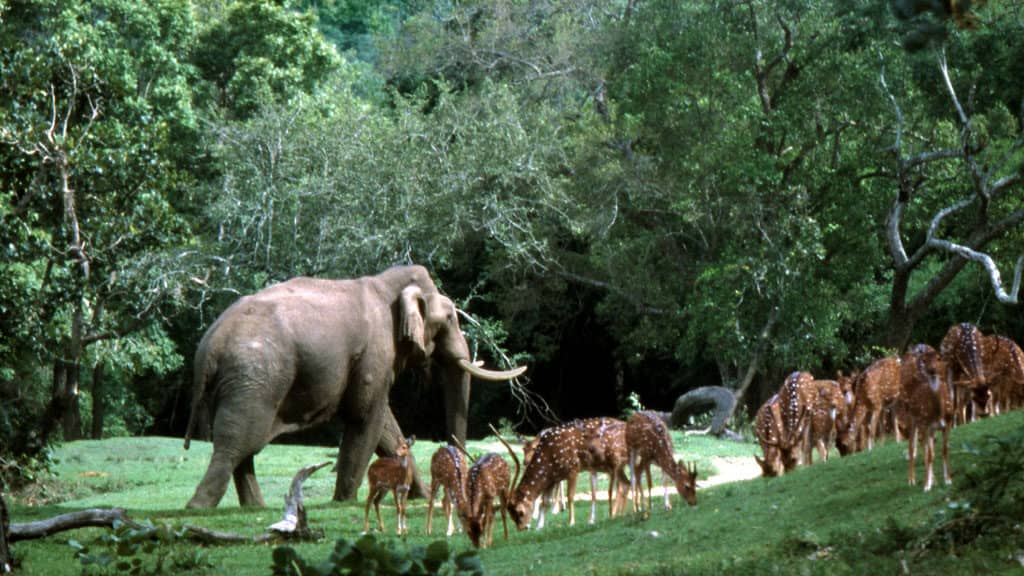
Mudumalai is a breathtaking National Park and Wildlife Sanctuary located at the junction of the Western Ghats and the Nilgiri Hills, serving as a vital link in the Nilgiri Biosphere Reserve. It shares borders with Kerala and Karnataka, forming a massive protected area that is home to one of the highest densities of Bengal tigers in India. The park is characterized by a diverse landscape of tropical evergreen forests, moist deciduous woodlands, and open grasslands, making it a paradise for birdwatchers and wildlife photographers. Visitors can spot a wide variety of animals, including Indian elephants, leopards, gaur (Indian bison), and the endangered Indian white-rumped vulture. A major highlight is the Theppakadu Elephant Camp, one of the oldest elephant camps in Asia, where you can watch elephants being fed and bathed. For those seeking adventure, the forest department offers jungle safaris in vans or jeeps, providing a chance to see animals in their natural habitat against the backdrop of the misty mountains. With its rich biodiversity and cool, forest-scented air, Mudumalai offers an immersive wilderness experience that highlights the raw beauty of Tamil Nadu’s natural heritage.