


Situated at Prabhas Patan on the western coast of Gujarat, Somnath is one of India’s most sacred pilgrimage sites, renowned primarily for the Somnath Jyotirlinga Temple. It stands as a symbol of incredible resilience, having been destroyed and rebuilt seven times following various invasions during the medieval period. Beyond its spiritual significance, Somnath is also deeply intertwined with mythology; it is the very place where the Moon God (Soma) was liberated from a curse by Lord Shiva.
It is situated at the sacred Triveni Sangam, the confluence where the Hiran, Kapila, and Saraswati rivers merge into the Arabian Sea. Today, Somnath attracts millions of visitors annually who come to admire its magnificent Chalukya-style architecture, attend the captivating evening ‘Light and Sound Show,’ and experience the profound spiritual energy of a site that has stood the test of time for thousands of years. Somnath’s economy relies almost entirely on religious tourism, which serves as the primary source of income for thousands of local families.
As the temple ranks among India’s most sacred sites, it draws millions of pilgrims each year, thereby generating immense demand for hotels, guesthouses, and dharamshalas (pilgrim rest houses). Somnath is widely regarded as one of India’s safest and most tourist-friendly destinations. Given its status as a high-profile religious site, the local administration and the ‘Shree Somnath Trust’ maintain stringent security measures—including CCTV surveillance and police patrols—to ensure a peaceful and secure environment for both families and solo travelers.
Best Places To Visit In Somnath :
1. Somnath temple
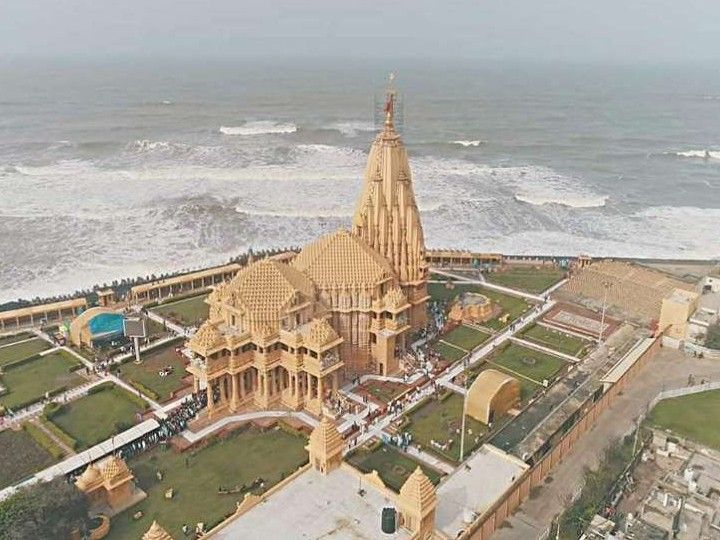
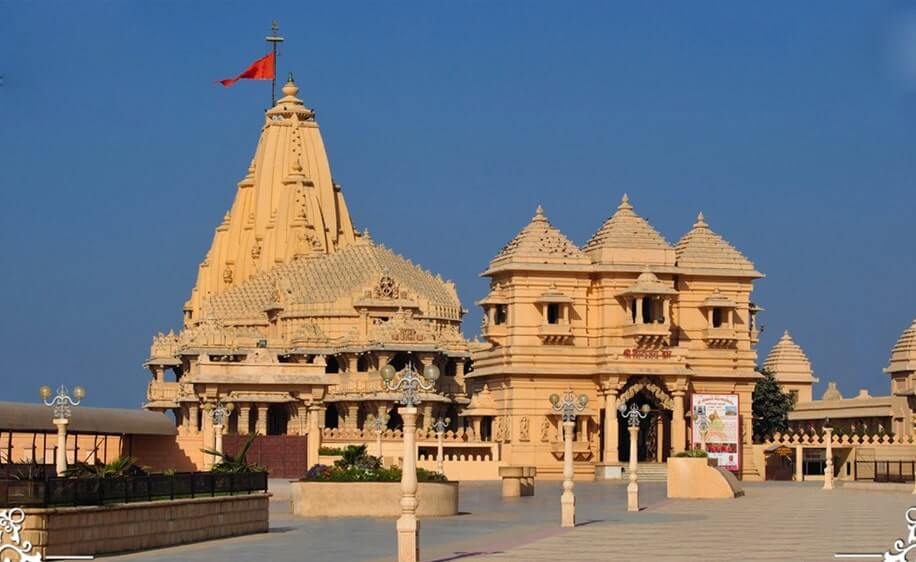
The Somnath Temple, situated on the shores of the Arabian Sea in Prabhas Patan near Veraval, Gujarat, is revered as the first of the twelve Jyotirlinga shrines dedicated to Lord Shiva. Known as the “Eternal Shrine,” it stands as a powerful symbol of Indian resilience, having been destroyed and rebuilt seven times following repeated invasions by various rulers, most notably by Mahmud of Ghazni in 1025 AD. According to Hindu mythology, the original temple was built of gold by the Moon God (Soma) to express his gratitude to Lord Shiva for curing him of a curse; it was subsequently rebuilt in silver by Ravana, in wood by Lord Krishna, and finally in stone by Bhimdev. The current magnificent structure was completed in 1951 in the Māru-Gurjara (Chaulukya) style, a project initiated by Sardar Vallabhbhai Patel and completed under the leadership of K.M. Munshi. Architecturally, the temple features a towering 155-foot Shikhara (spire) and the famous Baan Stambh (Arrow Pillar), which indicates a straight path to the South Pole over the ocean without any landmass in between. Located at the holy Triveni Sangam—the confluence of the Hiran, Kapila, and Saraswati rivers—the temple remains a premier pilgrimage site where millions gather to seek spiritual liberation and witness the nightly sound and light show that chronicles its historic survival.
2. Prabhas patan museum
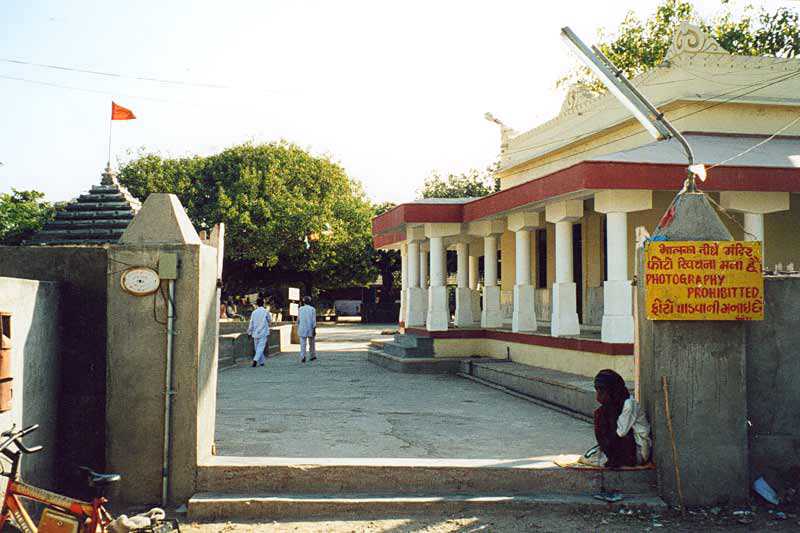
The Prabhas Patan Museum, established in 1951 and located just a short walk (about 300 meters) from the main Shree Somnath Temple, serves as a vital repository of the region’s spiritual and architectural history. Housed within a building designed with a central courtyard, it contains nearly 3,500 exhibits that chronicle the various eras of the Somnath Temple’s destruction and reconstruction. The museum is most famous for its collection of intricately carved stone fragments, pillars, and inscriptions from previous iterations of the temple, many of which are displayed in the open courtyard. A major highlight for visitors is the reconstructed 12th-century shrine from the original temple, featuring delicately carved ceilings that showcase the artistic brilliance of the Chaulukya era. Beyond architectural remains, the museum houses a diverse range of artifacts including 11th-century statues of deities like Lord Agni, Lord Vishnu, and Natra Bhairava, as well as ancient pottery shards, coins, and a unique collection of sacred waters from international rivers such as the Nile and the Danube.
3. Veneshwar Mahadev Temple

The Veneshwar Mahadev Temple, an ancient 12th-century structure located directly opposite the Somnath Trust Dharamshala Gate in Prabhas Patan, is famous for a miraculous legend tied to the 1025 AD invasion by Mahmud of Ghazni. According to local history, the temple is named after Princess Veni, a devout worshiper who visited the shrine daily. During Ghazni’s attack, when soldiers attempted to abduct her, Veni prayed to Lord Shiva for protection; in response, the Shiva Linga miraculously split open, swallowed the princess to save her, and then closed back together. Even today, the deity is worshiped as Veneshwar because a small strand of the princess’s hair (known as a “Veni”) was left visible on the Linga, and the physical crack from the split remains apparent to visitors. This east-facing temple, though smaller and more tranquil than the main Somnath shrine, features an unusual spire and is highly regarded by locals for its spiritual peace and its testimony to the power of devotion during historical adversity.
4. Laxmi Narayan Temple
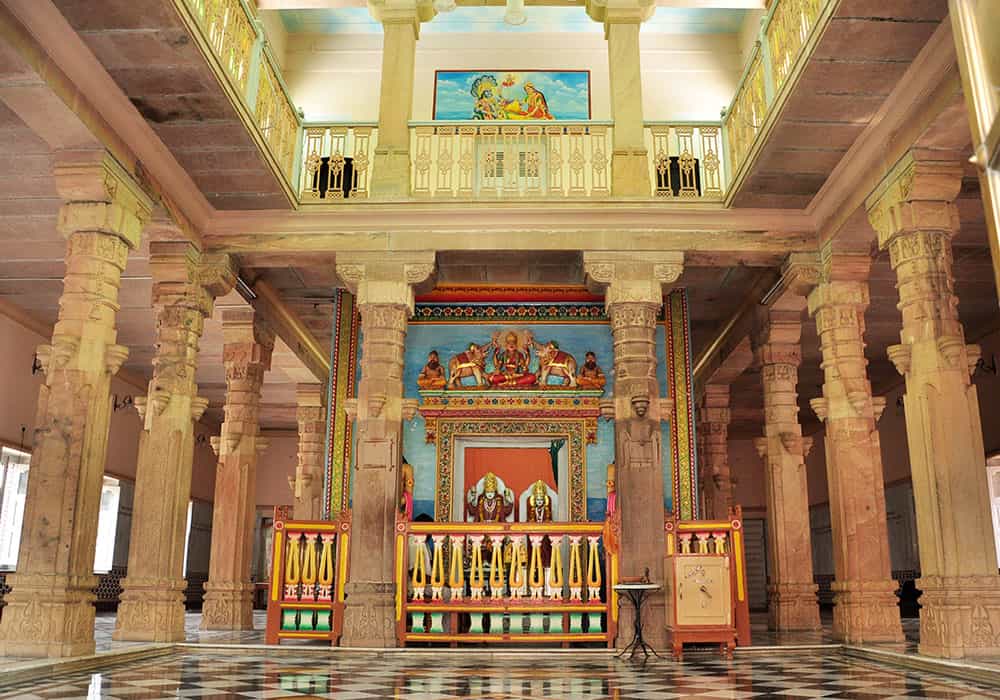
The Laxmi Narayan Temple in Somnath, situated in the Golokdham Teerth complex near the banks of the Triveni Sangam, is a prominent Vaishnava shrine dedicated to Lord Vishnu and his consort, Goddess Lakshmi. Often noted as a beautiful replica of the Laxmi Narayan Temple in Badrinath, the structure is built in a modern Indian architectural style using glossy white marble and features a distinctive yellow-tiered gopuram (entrance tower). The temple is particularly famous for its 18 marble pillars, which are intricately carved with the sacred messages of the Bhagavad Gita, and its walls, which depict the 24 avatars of Lord Vishnu alongside various episodes from the Hindu Puranas. Located along the serene Somnath shore, it offers a peaceful atmosphere for meditation and is a significant stop for devotees visiting the nearby Gita Mandir and the Dehotsarg Tirth, the site where Lord Krishna is believed to have left his mortal body.
5. Surya Mandir
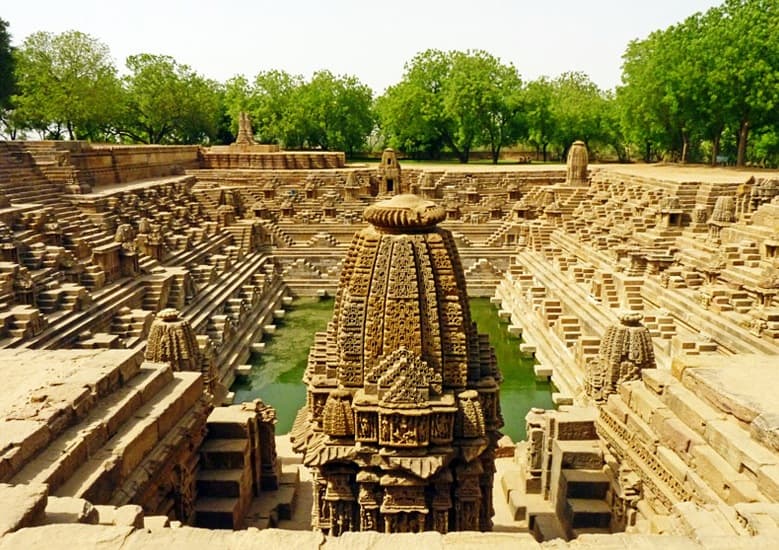
The Surya Mandir (also known as the Suraj Mandir) in Somnath is an ancient, 14th-century or earlier shrine dedicated to the Sun God, located near the Triveni Sangam and the Pandav Gufa. As a rare survivor of the historical invasions that devastated much of Prabhas Patan, it serves as a testament to the region’s enduring architectural heritage. The temple is renowned for its intricate stone carvings of animals—including lions, elephants, and birds—as well as deities like Lakshmi Narayana. A defining architectural feature is the image of Surya Dev riding a seven-horse chariot situated directly above the main entrance. Within the temple premises lies the Surya Kund, a small, ancient stepwell-style water body that adds to its spiritual and historical charm.
6. Gita Temple
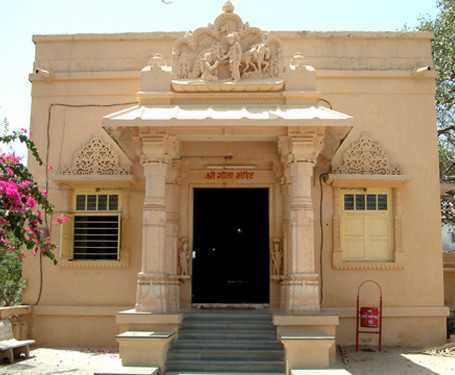
The Gita Mandir, also known as Birla Mandir, is a significant pilgrimage site in Somnath’s Golokdham Teerth complex, built in 1970 by the Birla Group. It is situated at the holy Triveni Sangam—the confluence of the Hiran, Kapila, and Saraswati rivers—on the spot where Lord Krishna is believed to have rested and delivered his final teachings before leaving his mortal body for his heavenly abode (Neej Dham). The temple’s most striking architectural feature is its 18 white marble pillars, which are intricately inscribed with the 700 verses of the 18 chapters of the Bhagavad Gita. Designed as an acoustic marvel, the temple’s marble structure is said to echo one’s voice, symbolising the omnipresence of the divine word. Inside the sanctum, the primary idol of Lord Krishna is flanked by deities of Lord Lakshmi-Narayan and Lord Sita-Ram, while the interior walls are adorned with vivid paintings depicting various episodes from Lord Krishna’s life.
7. Bhalka Tirth
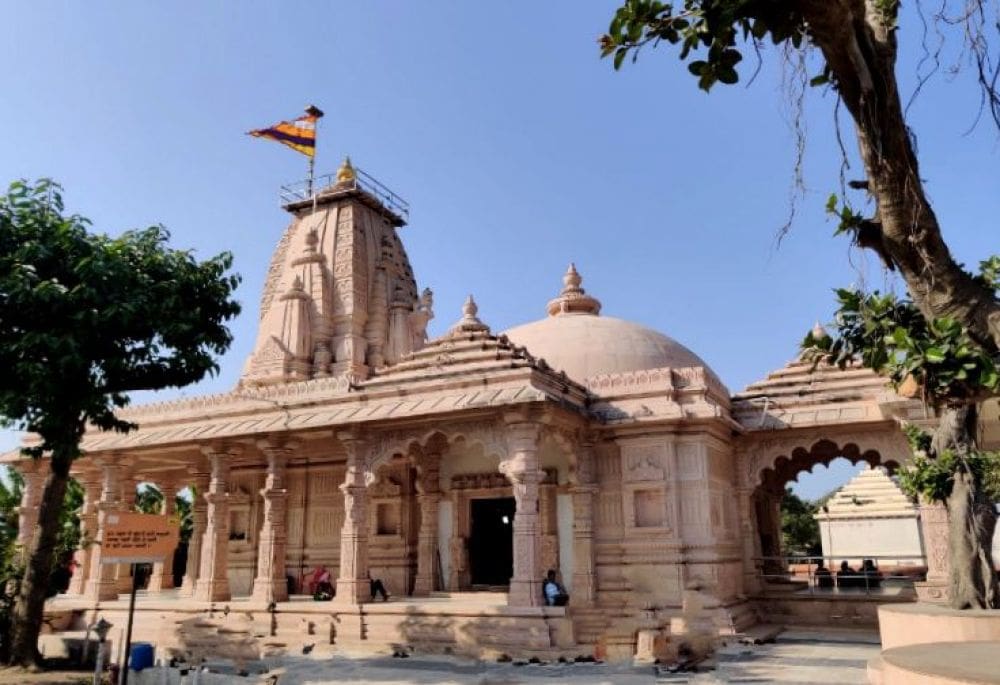
Bhalka Tirth, located in Veraval about 4–5 km from the main Somnath Temple, is one of the most sacred Hindu pilgrimage sites, marking the spot where Lord Krishna concluded his earthly journey. According to the Puranas, while the Lord was meditating or resting under a Peepal tree, a hunter named Jara mistakenly shot an arrow at his foot, perceiving it to be the eye of a deer. Despite being fatally wounded, Lord Krishna divinely forgave the hunter, an act that signifies the end of the Dwapara Yuga and the beginning of the Kali Yuga. The site features a beautiful sandstone temple housing a rare semi-reclining idol of Krishna, along with a statue of the hunter Jara kneeling in apology. A sacred Peepal tree stands within the complex as a living memorial to this event, known as Shri Krishna Nijdham Prasthan Leela.
8. Shree Parshuram Temple
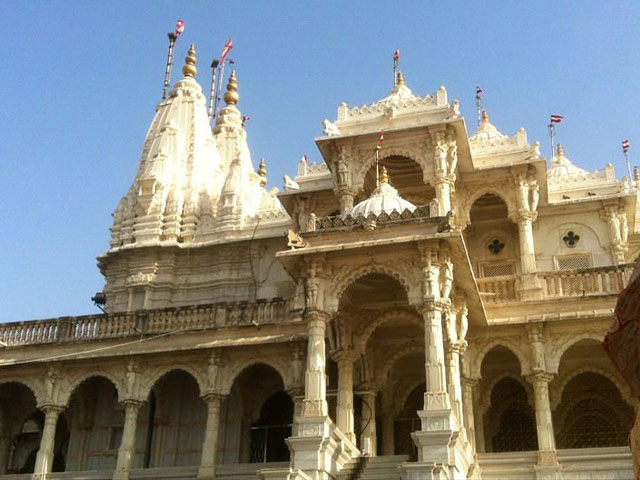
The Shree Parshuram Temple, located on the scenic banks of the Triveni Sangam in Somnath, is a rare and ancient shrine dedicated to Lord Parshuram, the sixth avatar of Lord Vishnu and the “Eternal Warrior-Sage.” According to Hindu scripture, this is the sacred spot where Parshuram performed intense penance (tapasya) to appease Lord Shiva to rid himself of the karmic burden of slaying the Kshatriyas 21 times. Impressed by his devotion, Lord Shiva appeared here and blessed him, freeing him from his curse. The temple complex is architecturally significant, featuring a traditional North Indian style with three primary structures: the main sanctum for Parshuram and two smaller shrines dedicated to Lord Hanuman and Lord Ganesh. The temple’s peaceful location near the confluence of the Hiran, Kapila, and Saraswati rivers makes it a major spiritual stop for pilgrims completing the “Somnath Panch-Koshi Yatra.”
9. Chorwad Beach
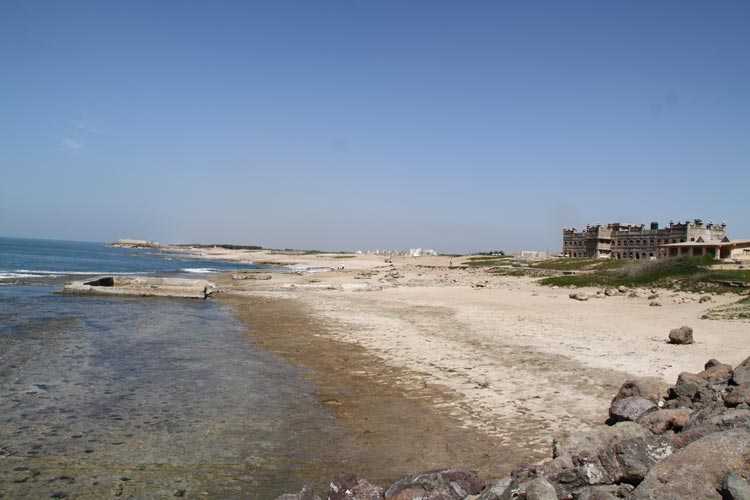
Chorwad Beach, located approximately 37 km from Somnath in the Junagadh district, is a serene and historically rich coastal destination on the Arabian Sea. Once a premier summer retreat for the Nawabs of Junagadh, the beach is famous for the Chorwad Palace (also known as Daria Mahal), a 1930s architectural marvel that reflects a blend of Italian, Muslim, and colonial styles. While the palace now stands largely in ruins or functions as a private resort, the beach remains a popular spot for its “feather-white” sands and breathtaking sunset views. In modern history, Chorwad is globally recognized as the birthplace of Dhirubhai Ambani, the founder of Reliance Industries; his ancestral home has been converted into the Dhirubhai Ambani Memorial House, which visitors can tour for a nominal fee to see his humble beginnings.
10. Bhidbhanjan Mahadev Temple
The Bhidbhanjan Mahadev Temple, located approximately 4 km from the main Somnath Temple along the Somnath-Una Highway in Veraval, is a deeply revered ancient shrine dedicated to Lord Shiva in his form as the “Destroyer of Troubles” (Bhidbhanjan). The temple is historically and mythologically significant as it is believed to be the exact spot from which the hunter Jara aimed his arrow at Lord Krishna, marking the beginning of the end of Krishna’s earthly journey. Built by the Somnath Poojacharya Shri Bhav Brihaspati, the temple complex also houses a rare and beautiful idol of Lord Ganesha known as Bhidbhanjan Ganapati and a shrine for Harshit Mata. Its location near the seashore offers a tranquil atmosphere for spiritual seekers, and during low tide, visitors can see two large Shiva Lingas in the sea nearby, known as Baan Ganga.