

Sikkim is a beautiful hilly state in Northeast India, renowned for being the world’s first 100% organic state. Nestled in the lap of the Himalayas between Nepal, Bhutan, and China, this state is home to the Earth’s third-highest peak—Mount Kanchenjunga. The state is celebrated for its pristine air, lush green valleys, and tranquil atmosphere. Historically, prior to its accession to India in 1975, it existed as a kingdom ruled by monarchs known as “Chogyals.”
The people of Sikkim represent a harmonious blend of three main ethnic groups—the Lepchas, Bhutias, and Nepalis—who coexist peacefully and celebrate various colorful festivals featuring traditional mask dances. Due to its high elevation, the state abounds with spectacular sights, including frozen lakes, ancient Buddhist monasteries, and thousands of floral varieties—particularly orchids. Its capital, Gangtok, is a modern and exceptionally clean hill station that serves as a primary hub for tourists. Whether you wish to witness snow in the north or explore history in the west, Sikkim is an ideal destination for nature enthusiasts and those seeking tranquility.
Sikkim’s economy is one of the fastest-growing in India, driven primarily by its thriving pharmaceutical industry, eco-tourism, and organic farming. As a major hub for pharmaceutical manufacturing, the state hosts numerous factories that contribute significantly to its high per capita income. Its status as the world’s first 100% organic state enables it to command premium prices for valuable crops such as large cardamom and ginger, while its breathtaking Himalayan landscapes attract millions of tourists, thereby boosting local hotels and businesses. Sikkim is considered one of India’s safest and most tourist-friendly states, renowned for its low crime rate and the warm hospitality of its people. The local culture here is deeply rooted in Buddhist and ethnic traditions, emphasizing peace, integrity, and respect for guests—qualities that make it an excellent destination for solo travelers and women.
Most Famous And Attractive Tourist Places In Sikkim :
1. Tsomgo Lake
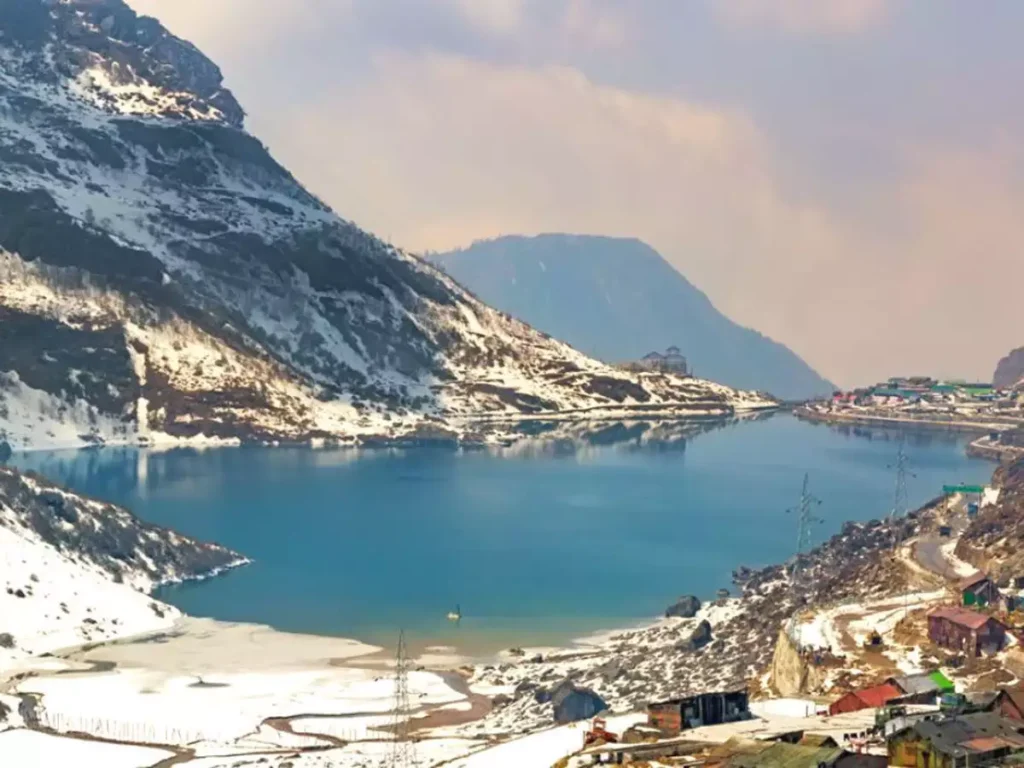
Tsomgo Lake, popularly known as Changu Lake, is a mesmerising glacial lake located in East Sikkim at a staggering altitude of 12,313 feet (3,753 metres). Situated approximately 40 kilometres from Gangtok on the road to the Nathu La Pass, this oval-shaped water body is roughly 1 kilometre long and 15 metres deep, fed primarily by melting snow from the surrounding Himalayan peaks. The lake is deeply revered by the local Sikkimese people as sacred; ancient legends tell of Buddhist monks who would divine the future by observing its changing water colours—where a dark, gloomy tint was believed to foreshadow unrest in the region. Another local folktale suggests the lake was formed after an old woman, warned in a dream, fled a village that was subsequently submerged.
Visiting Tsomgo Lake offers a dynamic experience that shifts with the seasons: it remains completely frozen from January to March, creating a stark white landscape perfect for yak rides on the snow, while the late spring months (April to May) bring vibrant blooms of rhododendrons, primulas, and poppies. Visitors can also enjoy a panoramic view from the Tsomgo Passenger Ropeway, which ascends to 14,500 feet, or visit the small Shiva temple on the lakeshore. Due to its sensitive location near the Indo-China border, a Protected Area Permit (PAP) is mandatory for all visitors, which must be arranged through a registered tour operator in Gangtok at least one day in advance.
2. Nathula Pass
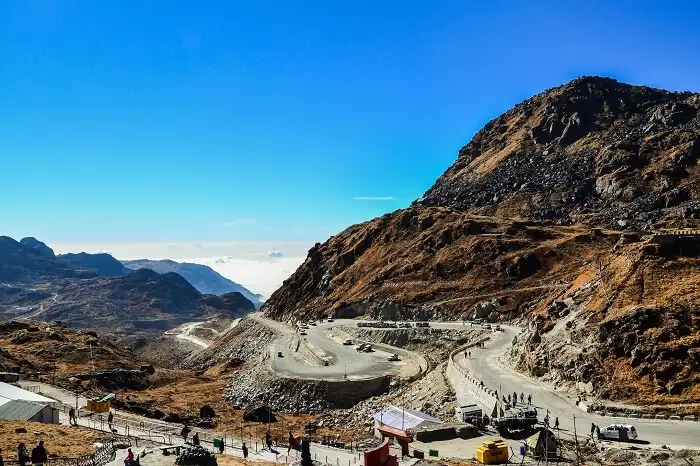
Nathula Pass, situated at a breath-taking altitude of 14,140 feet (4,310 metres) in East Sikkim, is a high-altitude mountain pass that historically served as a vital branch of the Ancient Silk Road connecting India to Tibet. Reopened in 2006 for border trade after being sealed for over four decades following the 1962 Sino-Indian War, it remains one of the most strategically significant locations on the Indo-China border. Visitors can witness the border gates, guarded by both Indian and Chinese soldiers, and experience the stirring sight of the two countries’ flags flying just metres apart. The pass offers panoramic views of the Chomolhari peaks of Bhutan and the rugged, snow-covered Himalayan terrain.
A visit to Nathula Pass is strictly restricted to Indian citizens only, and entry is prohibited for foreign nationals due to its sensitive military nature. A Protected Area Permit (PAP) must be obtained at least one day in advance through a registered tour operator in Gangtok; notably, several authorities state that Aadhaar cards are not accepted for this permit, so you must carry your original Voter ID card or Passport and passport-sized photographs. The pass is generally accessible from Wednesday to Sunday (closed on Mondays and Tuesdays), with the best visiting window being from May to June or October to November to avoid the heavy monsoon landslides and extreme winter closures. Because of the thin air and rapid ascent from Gangtok, travellers are advised to carry camphor to aid breathing and ensure they are well-acclimatised to prevent altitude sickness.
3. Kanchenjunga Base Camp

Kanchenjunga Base Camp in Sikkim is the ultimate destination for high-altitude trekkers, offering an up-close encounter with the world’s third-highest peak, Mt. Kanchenjunga (8,586 m). Unlike the more accessible spots in Sikkim, reaching the base camp—often identified with the vantage points of Goecha La or Chaurikhang—requires a strenuous multi-day trek that typically begins from the historic village of Yuksom. The trail winds through the Khangchendzonga National Park, a UNESCO World Heritage site, passing through dense rhododendron forests, alpine meadows at Dzongri, and the icy Rathong Glacier. The trek reaches its pinnacle at altitudes exceeding 16,000 feet, where adventurers are rewarded with staggering panoramic views of the “Five Treasures of Snow” and neighbouring peaks like Kabru and Pandim. Due to the extreme terrain and proximity to international borders, trekkers must be part of an organised group (minimum two people), hire a local guide, and secure a Protected Area Permit (PAP) through a registered agency in Gangtok.
4. Yumthang Valley of Flowers

Yumthang Valley, famously known as the “Sikkim Valley of Flowers Sanctuary,” is a breathtaking alpine meadow located in North Sikkim at an elevation of 11,800 feet (3,597 metres). Situated approximately 150 km from Gangtok, this picturesque valley is cradled by the snow-capped Himalayan peaks and is bisected by the shimmering Teesta River. It is home to the Shingba Rhododendron Sanctuary, which boasts over 24 species of rhododendrons that bloom in a riot of colours—ranging from deep reds to pale pinks—between late February and mid-June. During the summer, the valley floor is covered in a carpet of tiny alpine flowers, primulas, and poppies, while the winter months transform the entire landscape into a pristine white snowfield.
Beyond its floral beauty, the valley is renowned for its natural hot springs, which are rich in sulphur and believed to have medicinal healing properties. Most travelers use the scenic village of Lachung as a base, staying there overnight before heading to the valley in the early morning to catch the best views. For those seeking even more adventure, a further drive of about 25 km leads to Zero Point (Yumesamdong), where the motorable road ends and snow is present almost year-round. To visit Yumthang, you must obtain a Protected Area Permit (PAP), which is typically arranged by tour operators in Gangtok as part of a 2-day or 3-day North Sikkim package.
5. Gurudongmar Lake
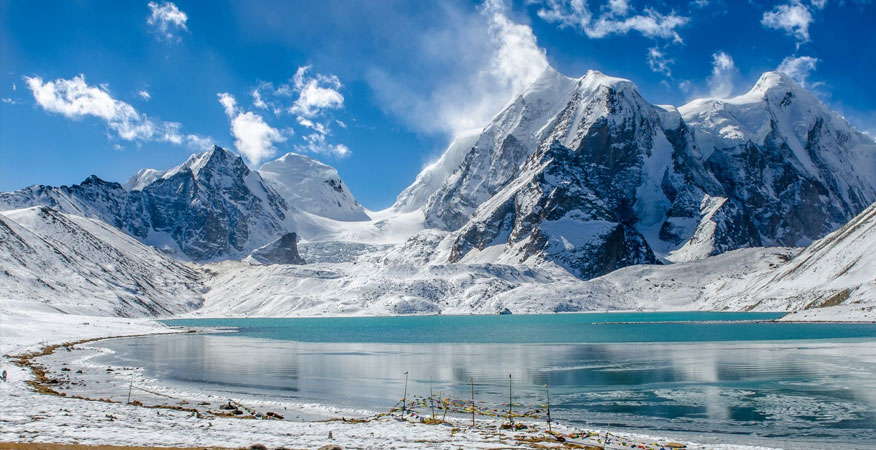
Gurudongmar Lake, perched at a staggering altitude of 17,800 feet (5,430 metres) in North Sikkim, is one of the highest and most sacred glacial lakes in the world. Located about 190 km from Gangtok and just 5 km from the Indo-China border, this vast turquoise water body is surrounded by the snow-clad peaks of the Khangchengyao range. The lake holds deep spiritual significance for Buddhists, Sikhs, and Hindus alike. According to a popular 8th-century legend, Guru Padmasambhava (Guru Rinpoche) blessed the lake to provide water for the locals; he touched a small portion of the water that, miraculously, never freezes even when temperatures drop to -20°C in winter. Similarly, Sikh tradition believes Guru Nanak Dev Ji visited and blessed the lake in the 15th century. Due to its extreme height, oxygen levels are roughly 50% of those at sea level, so visitors are advised not to stay for more than 30–45 minutes and to acclimatise overnight in Lachen before ascending.
6. Goechala
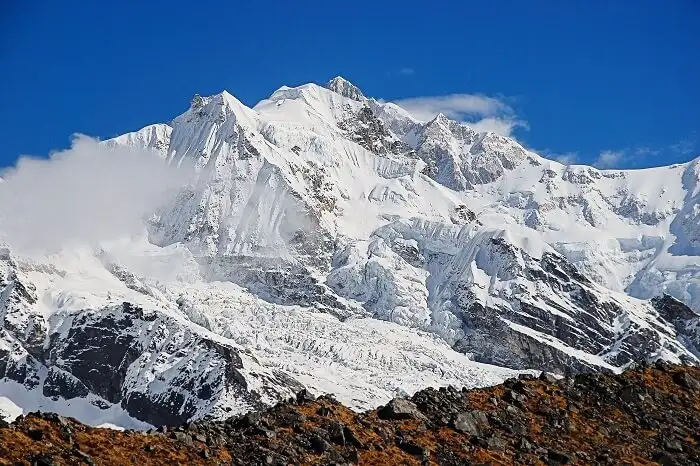
Goecha La is a high-altitude mountain pass in West Sikkim, situated at an elevation of approximately 15,100 feet (4,600 metres), and is widely considered the premier trekking destination in the Indian Himalayas. The trek serves as the closest a civilian can get to the majestic Mt. Kanchenjunga, providing a face-to-face view of its massive southeast face along with 14 other big peaks like Pandim, Kabru, and Simvo. The journey begins from the historic village of Yuksom and traverses through the heart of the Khangchendzonga National Park, a UNESCO World Heritage site. Along the way, trekkers pass through ancient rhododendron forests, the tranquil Samiti Lake, and the high-altitude meadows of Dzongri, which offers one of the most famous sunrise views in the world.
The trek is typically completed in 10 to 11 days and is categorized as moderate to strenuous due to the steep inclines and the challenge of high-altitude acclimatisation. The trail is most spectacular during two windows: April to May, when the rhododendron and magnolia forests are in full bloom, and October to November, when the monsoon rains have washed the atmosphere, leaving behind crystal-clear views of the snow-capped giants. Because the route lies within a protected area, trekkers must obtain a Protected Area Permit (PAP) and are required to be accompanied by a local guide and support staff. It is not just a physical challenge but a spiritual journey through some of the most pristine and diverse ecosystems in the world.
7. Singalila
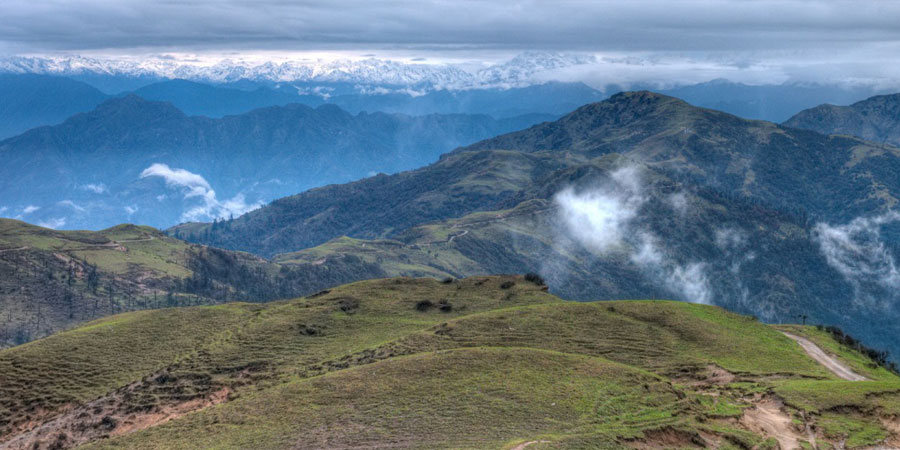
The Singalila Ridge is a majestic high-altitude ridge that forms the natural border between Sikkim, West Bengal, and Nepal, famous for offering the “Trekkers’ Wonderland” experience. While the famous Singalila Ridge Trek primarily starts from Manebhanjan in West Bengal, the ridge extends into West Sikkim, providing one of the few places on Earth where you can see four of the world’s five highest peaks in a single panoramic sweep: Mount Everest, Kanchenjunga, Lhotse, and Makalu. In Sikkim, the trek often overlaps with the route to Phoktey Dara, a hidden gem that offers a stunning 360-degree view of the Himalayas. The landscape is a diverse mix of thick rhododendron forests, bamboo groves, and high alpine meadows, which are home to the rare and elusive Red Panda, as well as numerous species of exotic birds and Himalayan flowers.
The trek is generally considered moderate and is best visited during two specific windows: Spring (March to May) for the blooming of giant magnolias and rhododendrons, and Autumn (October to November) for the clearest, sharpest mountain views after the monsoon. Because the ridge meanders along the international border, the trail often hops between India and Nepal, offering a unique cultural blend of mountain life. To explore the Sikkim side of the ridge, travelers must obtain a Permit and usually start their journey from small villages like Hee-Bermiok or Uttarey in West Sikkim. It is an ideal destination for those who want a quieter, more wilderness-focused experience compared to the busier Goecha La trail.
8. Green Lake
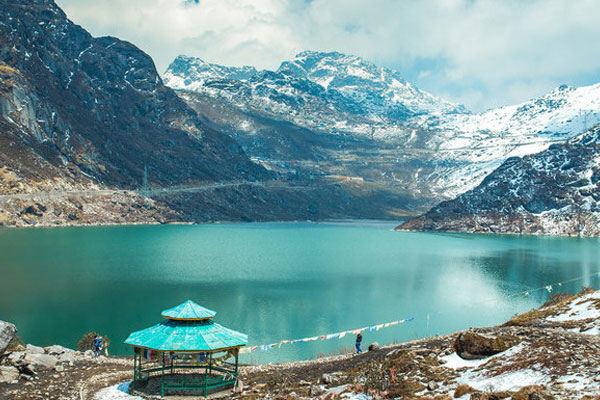
Green Lake is a hidden gem and a high-altitude trekking destination located in North Sikkim at an elevation of approximately 16,190 feet (4,935 metres). Situated at the base of the Zemu Glacier, it serves as the original base camp for expeditions to Mt. Kanchenjunga from the Sikkim side. Unlike the popular Goecha La trek, the Green Lake trek is considered one of the most secluded and challenging trails in the Himalayas, offering a true wilderness experience. The route starts from Lachen and passes through the dense, biodiversity-rich forests of the Khangchendzonga National Park, where trekkers can witness a stunning variety of alpine flora, including rare orchids and vast meadows of rhododendrons, before reaching the rugged, debris-covered moraines of the glacier.
The “lake” itself has largely diminished over the years due to glacial shifts and is now more of a small pond or a flat, grassy basin, but the primary draw remains the staggering, close-up views of the Kanchenjunga massif, along with peaks like Simvo and Siniolchu. Because of its proximity to the international border and its ecologically sensitive status, the trek requires a Protected Area Permit (PAP) and special clearances from the Home Department and the Indian Army. This trek is strictly for seasoned adventurers due to the extreme altitude and unpredictable weather. The best time to embark on this journey is during April to May for floral beauty or October to November for clear, stable mountain views.
9. Lachung
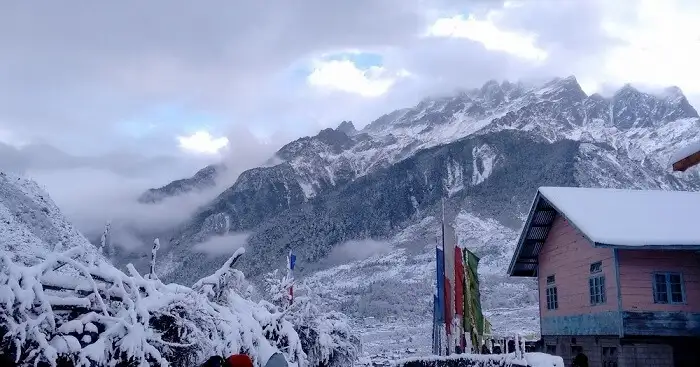
Lachung is a scenic mountain village and a popular tourist hub located in North Sikkim at an elevation of approximately 8,600 feet (2,622 metres). Situated at the confluence of the Lachen and Lachung rivers (tributaries of the Teesta), it serves as the essential gateway to the famous Yumthang Valley and Zero Point. Once described by British explorer Joseph Dalton Hooker as the “most picturesque village in Sikkim,” Lachung is known for its sprawling apple orchards, sparkling waterfalls like Bhim Nala, and traditional wooden houses that offer a glimpse into the local Lachungpa culture. The village is home to the 19th-century Lachung Monastery, which is perched amidst ancient fruit trees and offers a serene atmosphere for visitors.
Most travellers use Lachung as a mandatory overnight halt to acclimatise before heading to the higher altitudes of the North. The village provides a range of homestays and hotels that offer warm hospitality and local Sikkimese cuisine. Because it is located in a restricted zone near the Tibetan border, a Protected Area Permit (PAP) is required for all visitors, which must be arranged through a registered travel agent in Gangtok. The best time to visit is from March to June to see the blossoms or October to December for snow-dusted landscapes and clear views of the surrounding Himalayan peaks.
10. Pelling
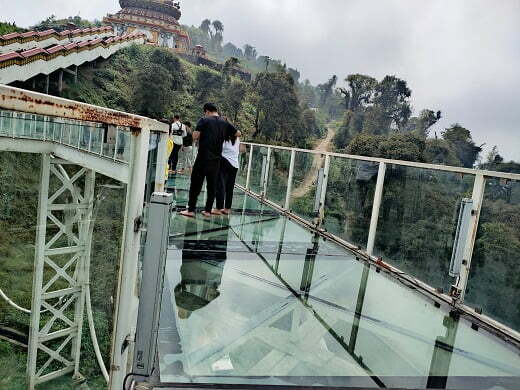
Pelling is a beautiful hill town in West Sikkim that is famous for having the best views of Mount Kanchenjunga, the third-highest mountain in the world. It sits at a height of about 7,200 feet, making the weather cool and pleasant for most of the year. People love visiting Pelling because it perfectly mixes nature with history. You can explore the Pemayangtse Monastery, which is over 300 years old, or walk through the Rabdentse Ruins to see where the kings of Sikkim used to live. One of the newest and most exciting things to do there is walking on the Pelling Skywalk, a bridge made of glass that looks out over a massive golden statue and the deep green valleys below. There are also stunning waterfalls nearby, like the Kanchenjunga Falls, and the Singshore Bridge, which is one of the highest hanging bridges in Asia. Because it is easy to reach from Gangtok and has many nice hotels, Pelling is the perfect spot for families and nature lovers to relax and enjoy the mountains.
11. Ravangla
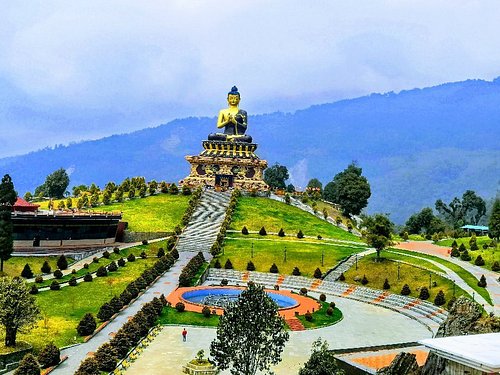
Ravangla is a peaceful and scenic town in South Sikkim, famous for its incredible views of the snow-capped Himalayas. The most popular place to visit here is the Buddha Park, also known as Tathagata Tsal, which features a massive, 130-foot tall golden statue of Lord Buddha that shines beautifully against the mountain backdrop. The town is much quieter than Gangtok, making it a perfect spot for people who want to relax and enjoy nature. Apart from the Buddha Park, you can visit the Bon Monastery to learn about ancient Tibetan culture or take a short trip to the Temi Tea Garden, which is the only tea estate in Sikkim and looks like a beautiful green carpet on the hills. If you enjoy trekking, Ravangla is also the starting point for the hike to Maenam Hill, which offers a bird’s-eye view of the entire region. It is a great place to visit between September and May when the skies are clear and the air is fresh.
12. Rumtek Monastery
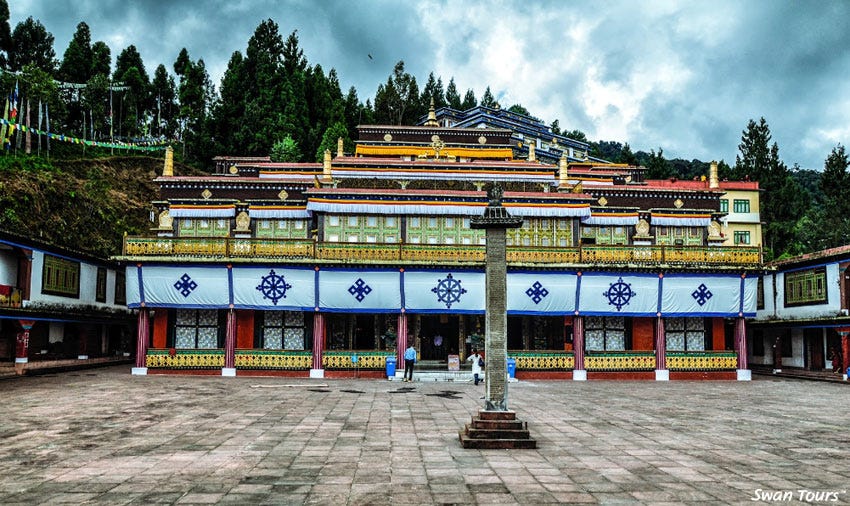
Rumtek Monastery is the largest and most famous monastery in Sikkim, located about 24 kilometres away from the capital, Gangtok. It is a very sacred place for Buddhists because it is the main seat of the Karmapa, one of the most important leaders in Tibetan Buddhism. The monastery is famous for its stunning architecture, featuring bright colours, beautiful wall paintings (murals), and a magnificent Golden Stupa that holds precious religious relics. When you visit, you will often see young monks studying and hear the peaceful sound of their chanting during prayers. The monastery is built on a hill, so it also offers a great view of the green valleys and the city of Gangtok in the distance. It is a very quiet and spiritual place, perfect for anyone who wants to learn about Sikkimese culture or find some peace. Just remember to carry a photo ID card, as there is security at the entrance.
13. Teesta River

The Teesta River is known as the “lifeline of Sikkim,” flowing through the entire length of the state and carving out deep, emerald-green valleys. It originates high in the Himalayas from the Tso Lhamo Lake and the Teesta Khangse glacier at an altitude of over 17,000 feet. As it rushes down towards the plains of West Bengal and eventually Bangladesh, the river creates a dramatic landscape of white-sand banks and rocky gorges. The river is most famous for its sparkling turquoise-blue waters, which are fed by melting snow and glacial lakes throughout the year. For adventure seekers, the Teesta is the top destination for white-water river rafting, especially at the confluence of the Teesta and Rangeet rivers in a place called Melli. The river’s path is also home to diverse wildlife and rare birds, making the drive alongside it—from the plains of Siliguri up to Gangtok—one of the most scenic road trips in India. Besides its beauty and adventure, the river is vital for the region’s economy, providing water for irrigation and powering several hydroelectric projects.
14. Yume Samdong
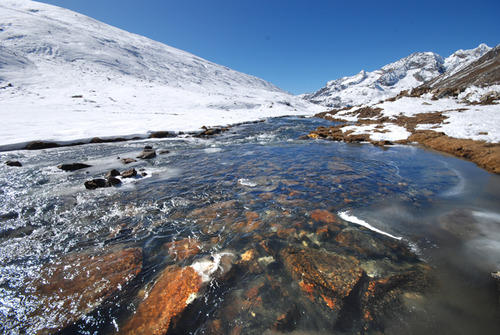
Yume Samdong, popularly known as Zero Point, is a spectacular high-altitude destination in North Sikkim, situated at an elevation of about 15,300 feet (4,663 metres). It is called Zero Point because it is the last motorable spot on the road; beyond this point, the civilian road ends, and the rugged, snow-covered mountains of the Indo-China border begin. Located about 25 km further ahead of Yumthang Valley, the landscape here is stark and majestic, often described as a “white desert” because it remains covered in snow for most of the year. Even in the peak of summer, you can usually find patches of snow here, making it a favourite spot for tourists who want to experience a high-altitude winter wonderland. The air at Yume Samdong is very thin due to the extreme height, so the stay is usually kept short. The area is famous for its natural hot springs and the unique sight of the Donkia La Pass nearby. Because of its proximity to the international border, the area is heavily guarded by the Indian Army, and a Protected Area Permit (PAP) is strictly required to visit. It is usually visited as an extension of the Yumthang Valley trip, and travelers are advised to go early in the morning to avoid the harsh winds and thick fog that often roll in by the afternoon.
15. Tso Lhamo Lake
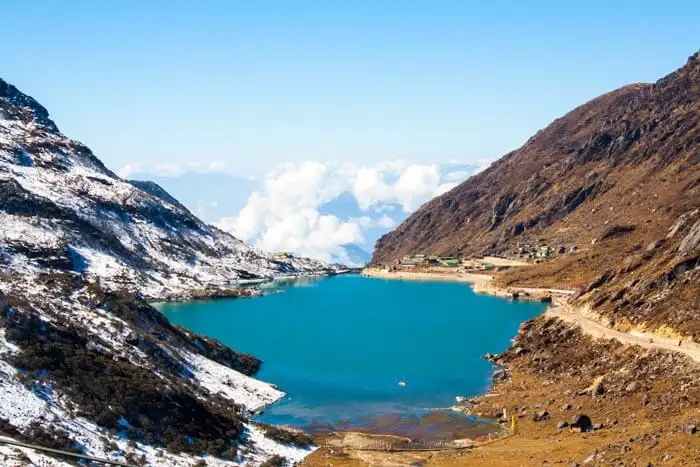
Tso Lhamo Lake, also known as Cholamu Lake, is the highest lake in India and one of the highest in the world, perched at a breathtaking altitude of approximately 17,490 feet (5,330 metres) in North Sikkim. This stunning glacial lake is the primary source of the Teesta River and is located just a few kilometres from the Indo-China border. The lake is surrounded by the snow-capped peaks of the Great Himalayas, which reflect in its crystal-clear, turquoise-blue waters, creating a landscape that feels untouched and otherworldly. Because it is located in an extremely high-altitude cold desert, the area is often covered in snow, and the lake remains frozen for a large part of the year.
Visiting Tso Lhamo is a significant challenge because it is located in a highly sensitive military zone. Unlike other tourist spots, it is very difficult to get a permit to visit; usually, only Indian citizens with special permission from the Indian Army and the Sikkim government are allowed to go beyond Gurudongmar Lake to reach here. Due to the extreme lack of oxygen and the harsh, freezing winds, tourists are only permitted to stay for a very short time. It is a place of raw natural beauty and deep spiritual silence, reserved for the most adventurous travellers who are physically fit enough to handle the extreme elevation.
16. Thangu
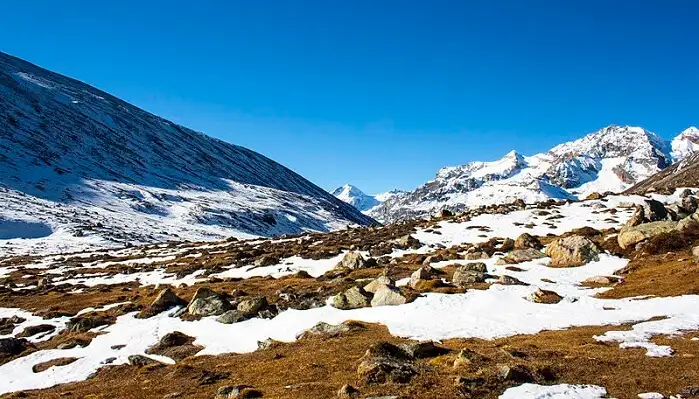
Thangu Valley is a quiet and beautiful high-altitude village located in North Sikkim at an elevation of about 13,500 feet. It serves as a vital stopping point for travellers heading toward the famous Gurudongmar Lake, as it helps the body adjust to the high altitude. The village is surrounded by alpine meadows, sparkling wooden houses, and the Teesta River flowing nearby. Because of its height, Thangu remains covered in snow for most of the year, while in the summer months (May to June), the valley comes alive with colourful alpine flowers. The lifestyle in Thangu is very simple and traditional, primarily inhabited by the local nomadic tribes. Most tourists stop here early in the morning for a warm breakfast and tea before continuing their journey to the border areas. It is also a great spot for nature lovers who enjoy short walks through the peaceful, rugged terrain. Because it is close to the international border, you need a Protected Area Permit (PAP) to visit, and it is usually part of a North Sikkim tour package starting from Gangtok.
17. Khangchendzonga National Park
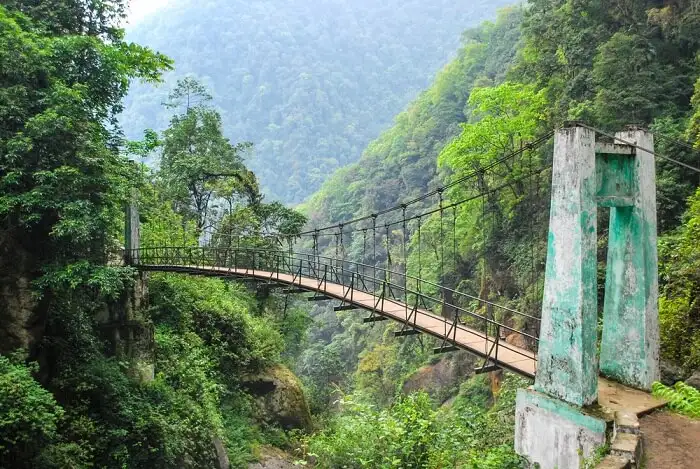
Khangchendzonga National Park (KNP) is a magnificent high-altitude sanctuary in Sikkim and the only site in India to be designated a UNESCO Mixed World Heritage Site for its both natural and cultural importance. Covering over 25% of the state, it is home to the world’s third-highest peak, Mt. Kanchenjunga, and features a breathtaking range of landscapes from ancient sub-tropical forests to massive glaciers like the Zemu Glacier. The park is a global biodiversity hotspot, providing a safe habitat for rare and endangered wildlife such as the Snow Leopard, Red Panda, and Himalayan Blue Sheep, as well as hundreds of species of exotic birds and medicinal plants.
Culturally, the park is deeply sacred to the local people, who believe the mountains are the dwelling places of protective deities, with many hidden “Beyuls” (sacred valleys) and monasteries nestled within its boundaries. Because it shares international borders with Nepal and Tibet, it offers some of the most famous trekking routes in the world, including the Goecha La and Green Lake treks. To enter the park, all visitors must obtain a special permit from the Wildlife Department, and trekking is strictly allowed only through registered agencies to protect the fragile environment.
18. Zemu Glacier
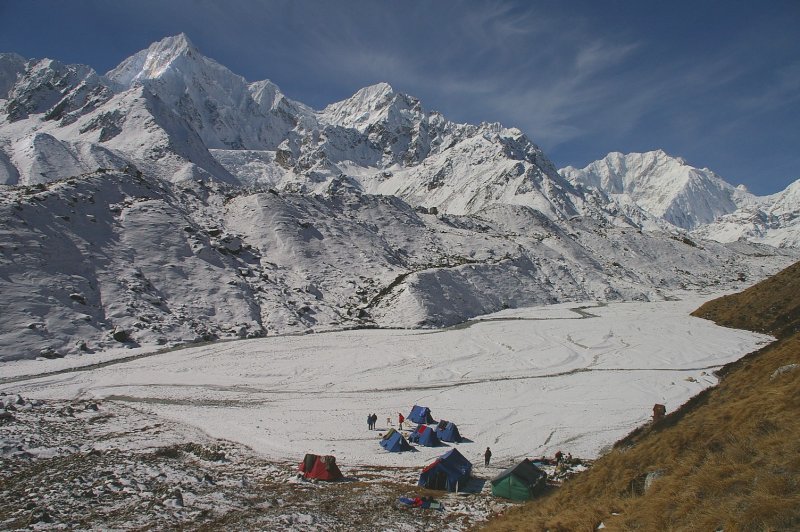
Zemu Glacier is the largest and most famous glacier in the Eastern Himalayas, located at the base of Mount Kanchenjunga in North Sikkim. It is like a massive “river of ice” that is about 26 kilometres long. This glacier is very important because it is the main source of water for the Teesta River, which is the lifeline of the entire state of Sikkim. The glacier is surrounded by incredibly tall, snow-capped mountains and is part of the Khangchendzonga National Park. To see it, you have to go on a long and difficult hike called the Green Lake Trek, which starts from a village named Lachen. Because it is so high up and near the border, the air is very thin and cold, and the ground is covered with rocks and ice. It is a place of raw natural beauty, but only experienced trekkers usually go there.
19. Jawaharlal Nehru Botanical Garden

Jawaharlal Nehru Botanical Garden is a beautiful and peaceful park located very close to the Rumtek Monastery, about 22 km from Gangtok. It is a fantastic place for nature lovers because it is filled with a huge variety of Himalayan plants, tall oak trees, and colourful flowers. One of the best parts of the garden is the big glass greenhouse, where you can see many rare and exotic orchids that grow in the mountains. The garden is designed with pretty walking paths and plenty of green space, making it a perfect spot for a quiet stroll or a family picnic. There is even a small play area for children, so it is a very family-friendly destination. It is best to visit during the spring months (March to May) when all the flowers are blooming and the park looks like a colourful carpet. It’s a great place to relax and enjoy the fresh mountain air before or after visiting the nearby monastery.
20. Sikkim Himalayan Zoological Park
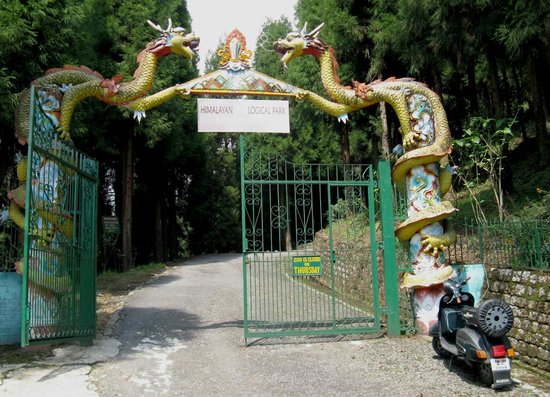
The Sikkim Himalayan Zoological Park, also known as the Gangtok Zoo, is a unique wildlife park located in Bulbuley, approximately 3 km to 6 km from Gangtok city centre. Unlike traditional zoos, it is spread across a massive 205 to 230 hectares of mountainous forest terrain where animals live in large, open enclosures that closely mimic their natural habitats. The park is particularly famous for housing rare and endangered high-altitude species, including the elusive Snow Leopard, the Himalayan Black Bear, and the Red Panda (which is the state animal of Sikkim). Visitors can also spot other native fauna such as the Himalayan Palm Civet, Goral, Barking Deer, and vibrant birds like the Himalayan Monal. The park is situated at an altitude of roughly 1,780 metres (5,840 feet) and offers spectacular panoramic views of Mount Kanchenjunga from various vantage points and a dedicated watchtower. A 2.5 km road runs through the park, and while you can walk to explore the different enclosures, many visitors prefer to hire a taxi for at least part of the journey because of the steep climbs and large distances between animal sightings.
21. Singalila National Park

Singalila National Park is a breathtaking high-altitude park located at the border of Sikkim and West Bengal, situated on the famous Singalila Ridge. It is one of the highest national parks in the region, sitting at an elevation of over 7,000 to 12,000 feet, and is world-renowned for providing a stunning “four-peak” view of Mount Everest, Kanchenjunga, Lhotse, and Makalu. The park is a paradise for wildlife lovers as it is one of the best places to spot the rare and adorable Red Panda in the wild, along with other animals like the Himalayan Black Bear, clouded leopards, and over 300 species of birds. The park is most famous for the Singalila Ridge Trek, which takes adventurers through thick forests of bamboo, oak, and vibrant rhododendrons that bloom in shades of red and pink during the spring. In the winter, the entire park is often covered in a thick blanket of snow, turning it into a white wonderland. To enter the park from the Sikkim side (usually via the village of Uttarey), visitors need to obtain a permit and are required to be accompanied by a certified guide. It is a perfect destination for those who love trekking, photography, and experiencing the raw beauty of the Himalayas.
22. Do Drul Chorten
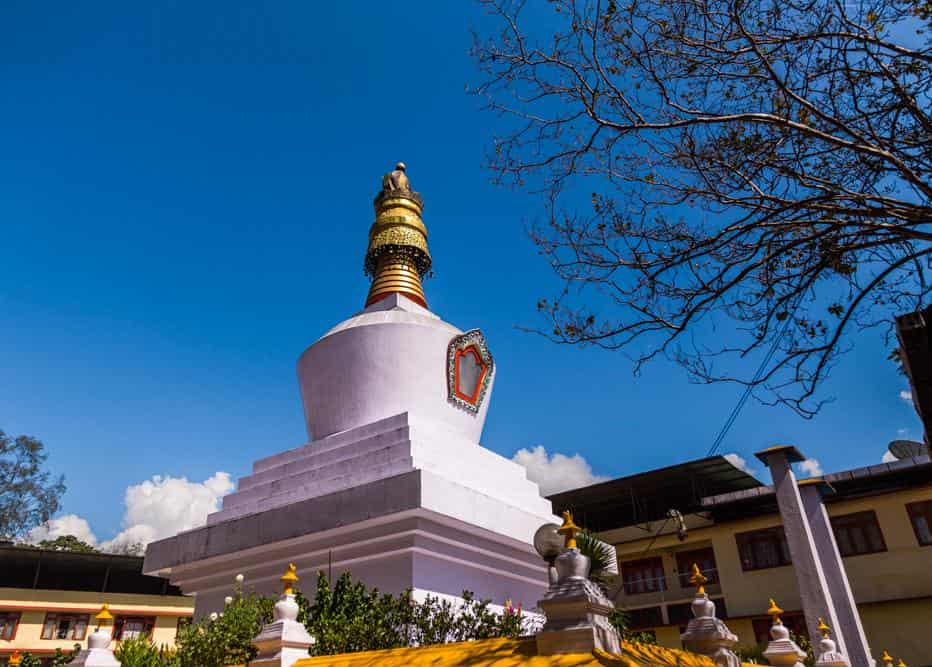
Do Drul Chorten is one of the most important and beautiful stupas (shrines) in Sikkim, located in the capital city of Gangtok. Built in 1945 by a high Tibetan lama, it was created to drive away evil spirits that people believed haunted the area. The stupa is famous for its large, golden top that can be seen from far away and is surrounded by 108 prayer wheels. You will often see local people and monks walking around the shrine in a clockwise direction, spinning these wheels while chanting peaceful prayers. Inside the stupa, there are sacred religious books, statues, and other holy objects used in Buddhist worship. Right next to it is a school for young monks where they learn ancient teachings. It is a very calm and spiritual place, perfect for anyone who wants to experience the peaceful side of Sikkimese culture. It is located very close to the Namgyal Institute of Tibetology, so most people visit both places together.
23. Bakthang Waterfall
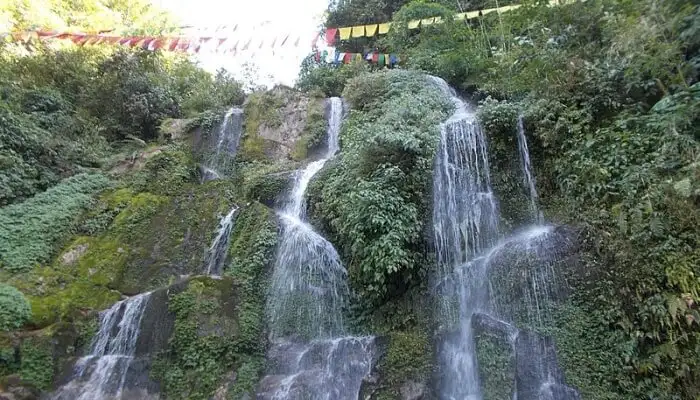
Bakthang Waterfall is a lovely and easy-to-visit spot located just a 15-minute drive (about 3 km) from the main town of Gangtok. It is a broad, splashing waterfall that flows down from the green hills and falls onto the rocks below, creating a beautiful and refreshing sight. Because it is located right next to the main highway, it is a very popular stop for tourists to stretch their legs and take pictures. What makes this waterfall extra fun is that there are small rope-sliding activities for adventure seekers and local stalls nearby where you can enjoy a hot bowl of Maggi or tea. Many people visit this spot on their way to North Sikkim or as part of a local Gangtok sightseeing tour. It is a perfect place to feel the cool mountain mist and enjoy the natural greenery without having to go on a long hike.
24. Ridge Park
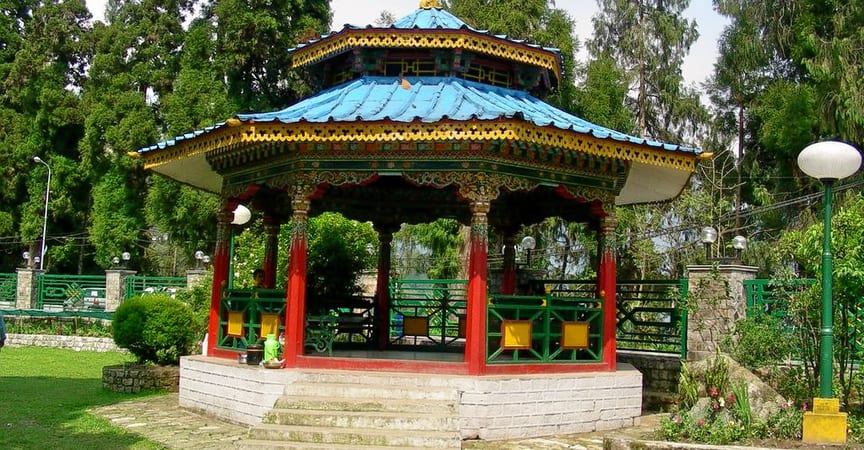
Ridge Park is a serene, flat stretch of road and landscaped garden situated just above the main town of Gangtok, offering a peaceful escape approximately a 20-minute walk from the bustling MG Marg. The park is renowned for its lush lawns, ornate flowering plants, and shrubs, with a paved pathway leading visitors past a central fountain and a traditional Sikkimese-style gazebo where one can sit and enjoy the mountain air. Historically significant, the area is flanked by the White Memorial Hall, built in 1932 to honour Sikkim’s first political officer, and the official residence of the Chief Minister, Mintokgang. At one end of the park lies the aesthetically designed Palace Gate, while the lower section houses the Flower Exhibition Centre, a tropical greenhouse that hosts annual orchid shows between March and June when the flora is in full bloom. While entry to Ridge Park itself is free, the nearby exhibition centre and the newly opened Orchidarium (a high-tech sustainable glasshouse) may charge nominal entry fees for visitors looking to explore Sikkim’s vast biodiversity.
25. Casino Mahjong
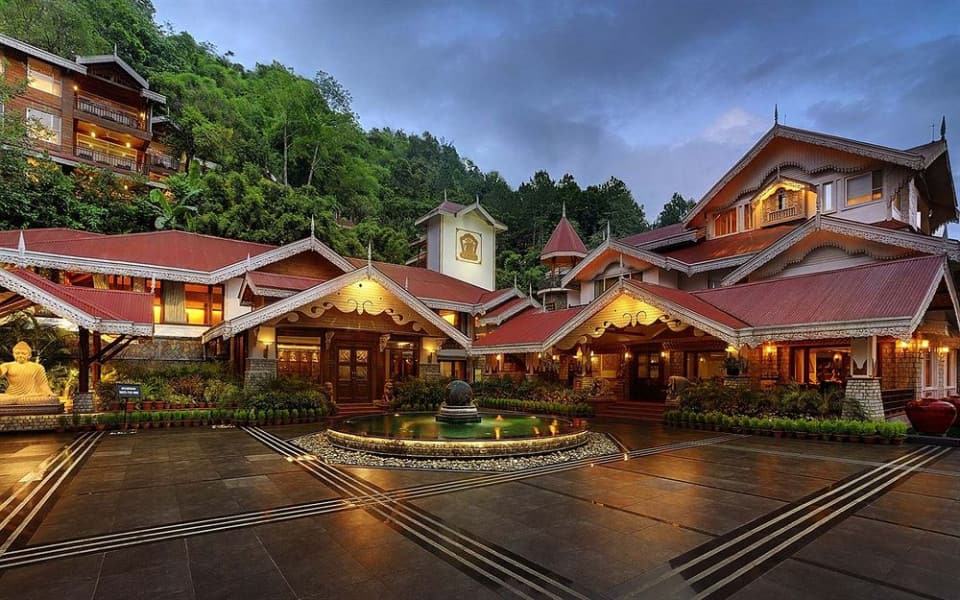
Casino Mahjong is a premier, land-based gaming destination located within the 5-star Mayfair Spa Resort & Casino in Ranipool, about 10 kilometers from Gangtok. As one of India’s few legally sanctioned on-shore casinos, it offers a sophisticated “Vegas-style” atmosphere spread across approximately 7,000 square feet of luxury space. The casino operates 24 hours a day and provides a wide array of gaming options, including classic table games like Roulette, Blackjack, Baccarat, and Money Wheel, alongside dedicated rooms for Texas Hold’em Poker and regional favorites like Kitty (Russian Flush). To visit, guests typically pay an entry fee (starting around ₹3,000 for non-residents and ₹1,500 for hotel guests), which usually covers a lavish buffet dinner, unlimited snacks, and selected drinks. The experience is elevated by nightly live entertainment, featuring Bollywood-style dance performances and musical bands. Visitors must be at least 18 years old, provide a valid photo ID with address proof, and adhere to a smart-casual dress code (trousers and closed shoes for men).
26. Banjhakri Falls and Energy Park
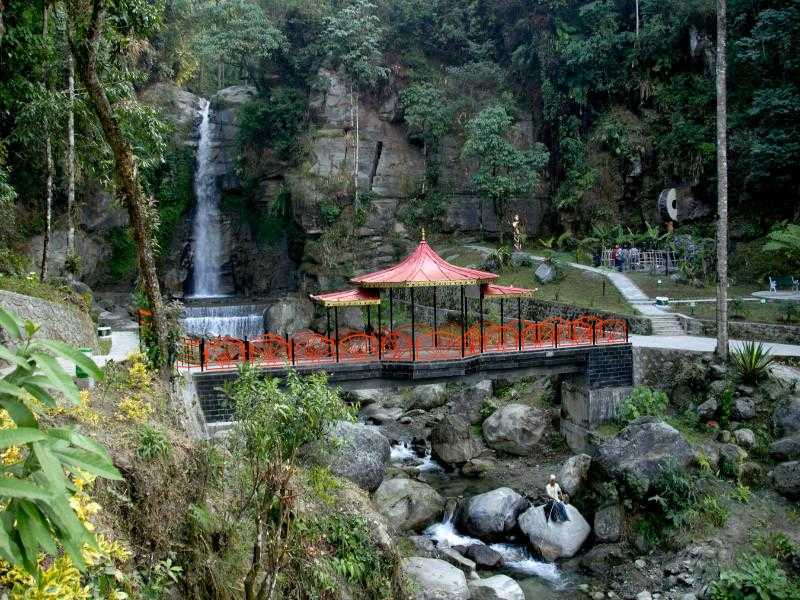
Banjhakri Falls and Energy Park is a popular 2-acre themed attraction located about 7 km from Gangtok, known for its stunning 100-foot natural waterfall and its focus on local shamanic culture. The park’s name comes from “Ban Jhakri,” a mythical forest healer in Sikkimese folklore who is said to live in caves and protect the jungle. Throughout the beautifully landscaped gardens, you will find traditional ethnic sculptures and figurines depicting shamanic rituals and ancient healing traditions. As an “Energy Park,” it also serves an educational purpose by showcasing renewable energy sources like solar and hydroelectric power. Visitors can enjoy paved walking paths, a man-made lake with a central dragon statue for paddle boating, and a dedicated children’s play area. It is a perfect spot for families and nature lovers to relax, take photos in traditional Sikkimese attire (available for rent), and learn about the local heritage in a serene, green environment.
27. Tashiding Monastery
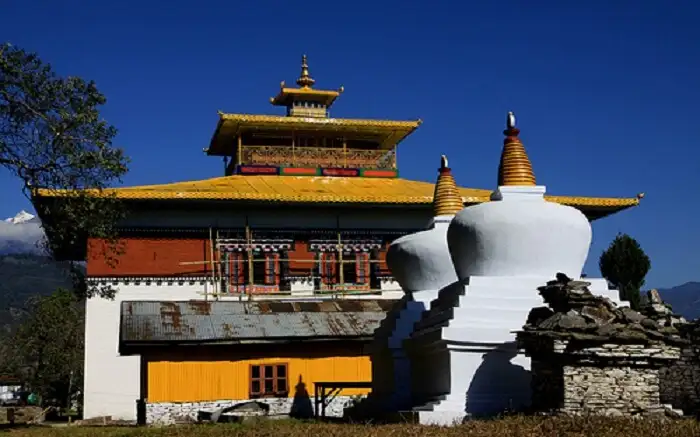
Tashiding Monastery is one of the most sacred and oldest Buddhist monasteries in Sikkim, perched on a hilltop between the Rathong and Rangit rivers in West Sikkim. Built in 1717, it belongs to the Nyingma sect of Tibetan Buddhism and is famous for its extreme spiritual importance; locals believe that even a glimpse of the monastery can cleanse a person of all their sins. The complex is beautifully decorated with colorful murals and ancient “Mani” stones—flat stones carved with sacred Buddhist mantras. It is also the site of the famous Bhumchu Festival, a sacred water ceremony where lamas open a holy pot of water to predict the future of the state for the coming year. Surrounded by orange orchards and offering a breathtaking view of Mt. Kanchenjunga, it is a peaceful pilgrimage site known for its deep silence and spiritual energy.
28. Singshore Bridge
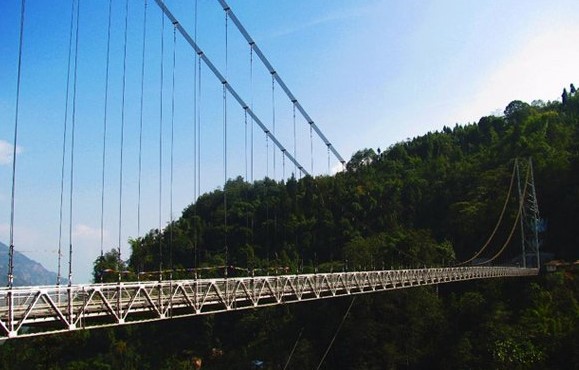
Singshore Bridge, located near Pelling in West Sikkim, is a spectacular engineering marvel known for being one of the highest suspension bridges in Asia. Spanning across a deep, lush green gorge, the bridge hangs at a height of over 100 metres (about 328 feet) and stretches for 198 metres in length. It was built to connect two hills, significantly reducing travel time for locals, but it has since become a major tourist attraction due to the breathtaking views of the surrounding mountains, waterfalls, and dense forests. Walking across the bridge is a thrilling experience as you can feel a slight sway in the wind while looking down into the massive valley below. It is a perfect spot for photography and nature lovers, and there is a small restaurant nearby where visitors can enjoy snacks while taking in the alpine scenery.
29. Kanchenjunga Falls
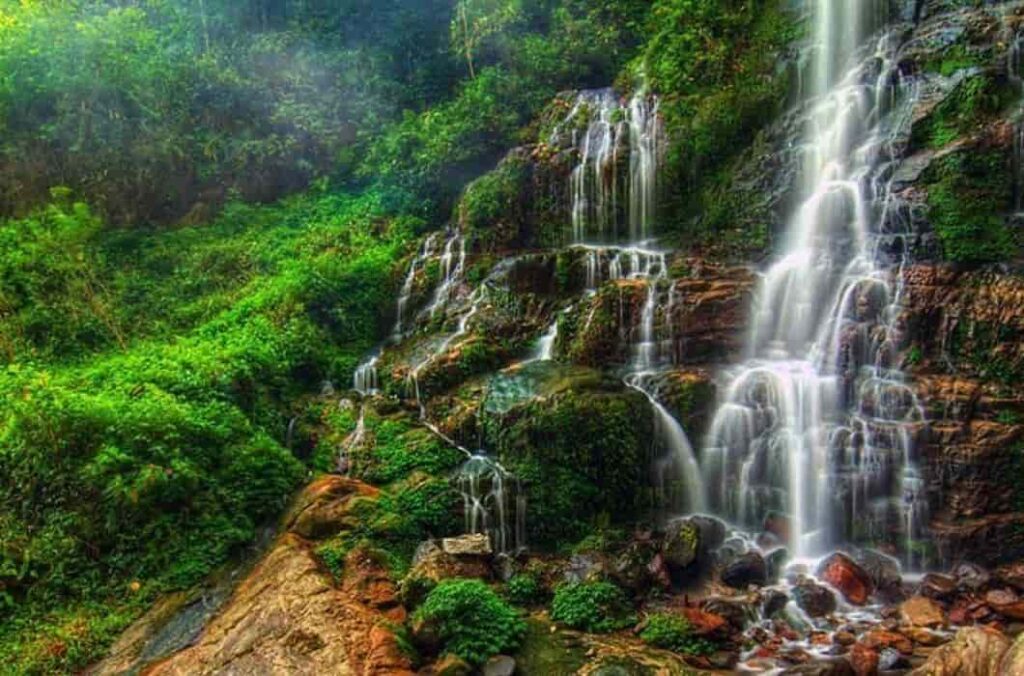
Kanchenjunga Falls is a majestic, perennial waterfall located about an hour’s drive from Pelling in West Sikkim. It is one of the largest and most spectacular waterfalls in the state, believed to originate from the high glaciers of Mount Kanchenjunga itself. What makes this spot unique is that the waterfall was hidden from the public eye for a long time until it was “discovered” by a local guide in the 1990s. The water cascades down a series of rugged green cliffs into a large, clear pool, creating a powerful roar and a refreshing mist that cools the surrounding air. To reach the main view, visitors take a short climb up a few stone steps, where you can get a close-up look at the gushing white water. The area is perfect for nature lovers and photographers, offering a raw, untouched beauty. For a bit of fun, there are often zip-lining facilities set up across the stream, and several small stalls near the entrance serve hot local snacks like Maggi and tea, making it a great place to stop and relax during a day of sightseeing.
30. Tashi View Point

Tashi View Point is one of the most famous tourist attractions in Gangtok, situated approximately 8 km from the main town along the North Sikkim Highway. Built by the late King of Sikkim, Tashi Namgyal, this vantage point is specifically designed to offer an unobstructed, 360-degree panoramic view of the majestic Mount Kanchenjunga and Mount Siniolchu. On a clear day, visitors can also spot the distant Phodong and Labrang monasteries nestled in the lush green hills of North Sikkim. The site is a favorite for photographers and nature enthusiasts, especially during the early morning hours (between 5:00 AM and 8:00 AM) when the rising sun paints the snow-capped peaks in breathtaking shades of gold, orange, and pink.