


Nagpur—popularly known as the “Orange City” due to its world-renowned production of citrus fruits, and as “India’s Tiger Capital” owing to its proximity to numerous tiger reserves—is the third-largest city in Maharashtra and serves as the state’s winter capital. Geographically, it is situated at the exact center of the country, a location marked by the historic ‘Zero Mile Stone’ monument. The city was founded in 1702 by the Gond King Bakht Buland Shah and subsequently evolved into a major center of power under the Bhonsle Marathas and the British Raj.
Today, Nagpur is a rapidly growing urban hub, distinguished by its clean, wide roads and significant landmarks such as Deekshabhoomi—home to the world’s largest hollow Buddhist stupa. It serves as a crucial junction within India’s transportation network, housing the ‘Multi-modal International Cargo Hub and Airport at Nagpur’ (MIHAN). With its blend of rich history, vibrant culture, and modern infrastructure—such as the Nagpur Metro—the city offers a high quality of life and acts as a primary gateway to the wildlife and industrial zones of Central India.
Nagpur’s economy is bolstered by large industrial zones such as Butibori; this constitutes one of Asia’s largest industrial estates, hosting textile, pharmaceutical, and FMCG companies—including Haldiram’s and Raymond. The region is also rich in natural resources and serves as the headquarters for major public-sector mining enterprises, such as ‘Western Coalfields’ (WCL) and ‘MOIL’. Nagpur is widely recognized by tourists as a peaceful and safe destination, offering a more relaxed atmosphere compared to India’s larger metropolitan cities. It consistently ranks among the safest cities in India for women; recent reports from 2024–2025 have highlighted its lower crime rates when compared to cities like Mumbai and Pune.
Most Famous And Attractive Tourist Places In Nagpur :
1. Deeksha Bhoomi
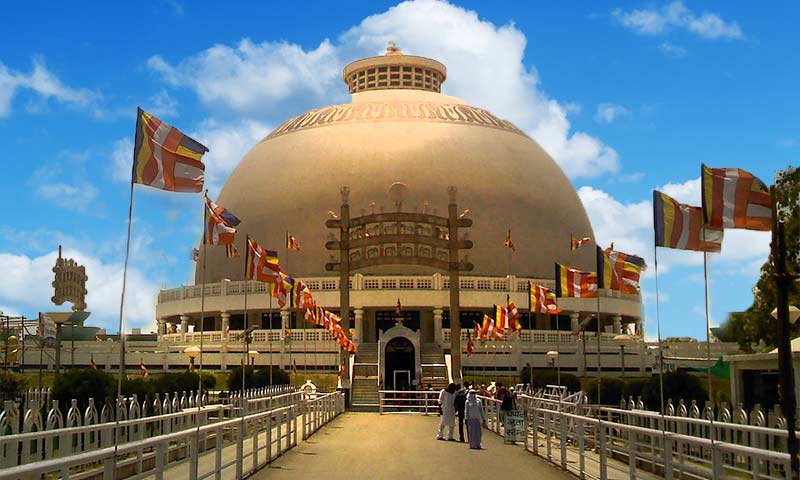
Deekshabhoomi is a sacred Buddhist monument in Nagpur, Maharashtra, and a major pilgrimage site where Dr. B.R. Ambedkar, along with approximately 600,000 followers, converted to Buddhism on October 14, 1956. This historic mass conversion, known as “Dhamma Chakra Pravartan Din,” marked a significant revival of Buddhism in India and served as a powerful social revolution against caste discrimination and inequality. The name literally translates to “ordainment ground”. The site features a massive, two-storied stupa designed by architect Sheo Dan Mal, which is a modern, hollow replica of the famous Sanchi Stupa and the largest hollow stupa in the world. Dedicated in 2001, the 120-foot-tall structure houses a prayer hall, a Buddha idol gifted by Thai students, and the mortal remains of Dr. Ambedkar. The grounds also contain a sacred Bodhi tree grown from saplings of the original tree in Anuradhapura, Sri Lanka. Every year, millions of pilgrims visit the site, particularly on Ashoka Vijaya Dashami, to pay homage to the “Architect of the Indian Constitution” and the enduring legacy of his social justice movement.
2. Ambazari Lake & Garden
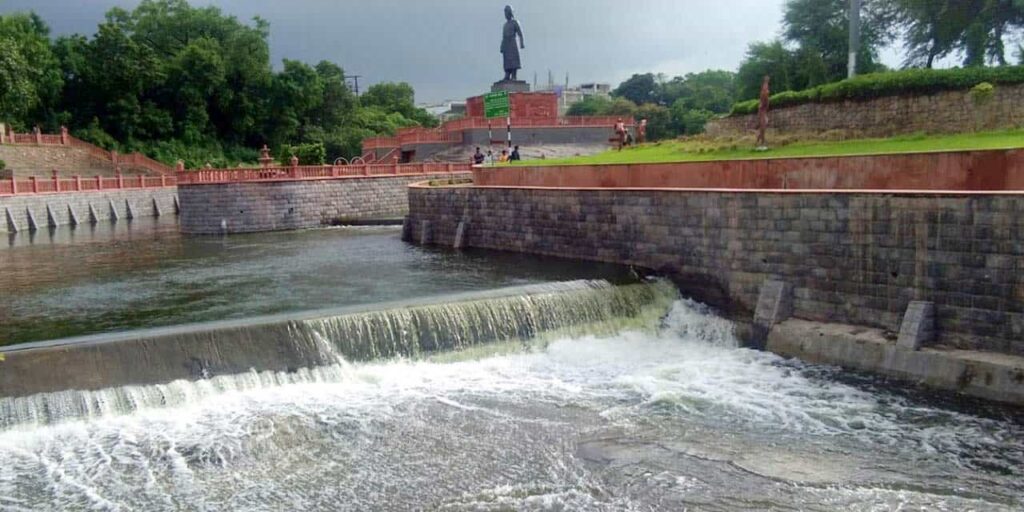
Ambazari Lake and Garden is a prominent recreational and historic landmark situated on the southwest border of Nagpur, Maharashtra. As the largest of Nagpur’s 11 lakes, it serves as the origin point of the Nag River, which gives the city its name. The lake was originally constructed in 1870 by the Bhonsle rulers to supply water to the city via clay pipes. Its name is derived from the Marathi word “Amba” (mango), referencing the abundant mango trees that once surrounded the area. Adjacent to the reservoir is the Aadya Krantiguru Lahuji Salve Garden (commonly known as Ambazari Garden), an 18-acre multi-level park established in 1958. It offers a variety of attractions, including a musical fountain, walking trails, and a children’s play area featuring a mini train and large animal models like a dinosaur. Visitors can enjoy paddle or row boating on the lake, particularly during sunset, when the views are most picturesque. Managed by the Nagpur Municipal Corporation (NMC), the site is a popular retreat for locals and tourists alike, though recent years have seen efforts to manage pollution and invasive water hyacinth to preserve its ecological health.
3. Futala Lake
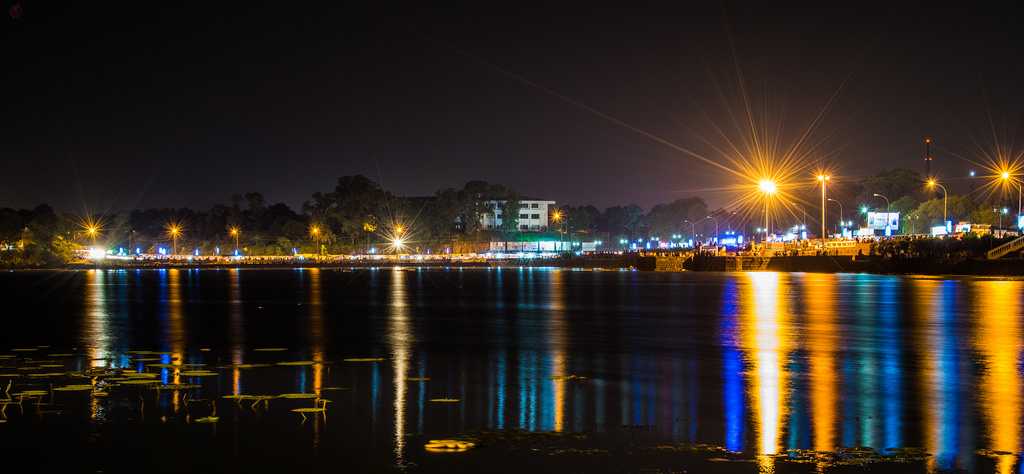
Futala Lake, also known as Telankhedi Lake, is a historic 60-acre man-made reservoir in western Nagpur built over 200 years ago by the Bhonsle kings. Surrounded by lush forests on three sides and a vibrant landscaped promenade (Chowpatty) on the fourth, it is one of the city’s most beloved evening hangouts. The lake is famous for its musical fountain and light show, which features synchronized water jets, laser projections, and a narration of Nagpur’s history. A massive redevelopment project recently added a 180-degree viewing gallery and world-class floating fountains, though some features have faced operational delays due to environmental and legal reviews. Visitors flock here for the stunning sunset views, horse-drawn carriage rides (tangas), and a wide array of local street food at the nearby stalls.
4. Gorewada Lake

Gorewada Lake is a vital 110-year-old reservoir situated in the northwest corner of Nagpur, Maharashtra. Developed in 1912 by the Waterworks Department, it was originally designed as the primary drinking water source for the city’s then-population of roughly 100,000. Today, it remains a critical water supply hub, processed through the nearby Gorewada Water Treatment Plant. The lake is surrounded by a massive, 1,914-hectare dense forest that serves as a rich biodiversity hub and a protected habitat for diverse wildlife, including leopards, deer, and over 200 species of resident and migratory birds. In recent years, the area has gained international prominence with the development of the Balasaheb Thackeray Gorewada International Zoological Park, which features dedicated safaris for tigers, leopards, and sloth bears. For nature enthusiasts, the site offers a serene 2.5 km Bio Park nature trail along the shoreline, making it a popular destination for birdwatching, cycling, and morning walks away from urban noise.
5. Nagzira Wildlife Sanctuary
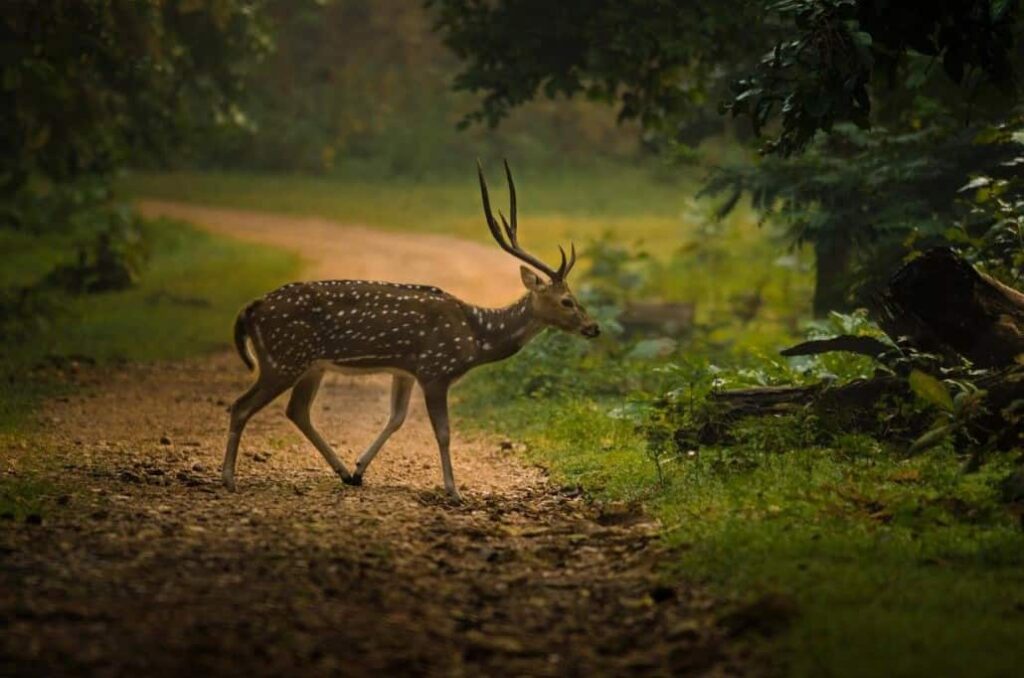
Nagzira Wildlife Sanctuary, often called the “Green Oasis” of Vidarbha, is a remarkably well-preserved biodiversity hotspot located between the Bhandara and Gondia districts of Maharashtra. Established in 1970 and later integrated into the Navegaon-Nagzira Tiger Reserve in 2012, the sanctuary covers approximately 152 sq km of Southern Tropical Dry Deciduous Forest. Its name is derived from a historic “Nag” (snake) temple at its core and the Marathi word “zira” (zara), meaning a perennial water spring. The landscape is a picturesque mix of rolling hills, deep valleys, and scenic water bodies like the Nagzira and Thadezari tanks. It is home to a rich array of wildlife, including Bengal tigers, leopards, sloth bears, Indian gaur (bison), and dholes, and is particularly famous as a birdwatcher’s paradise with over 166 species, including the migratory bar-headed goose. The sanctuary also features an interpretation center and small museum to educate visitors on its unique ecosystem.
6. Krazy Castle Aqua Park
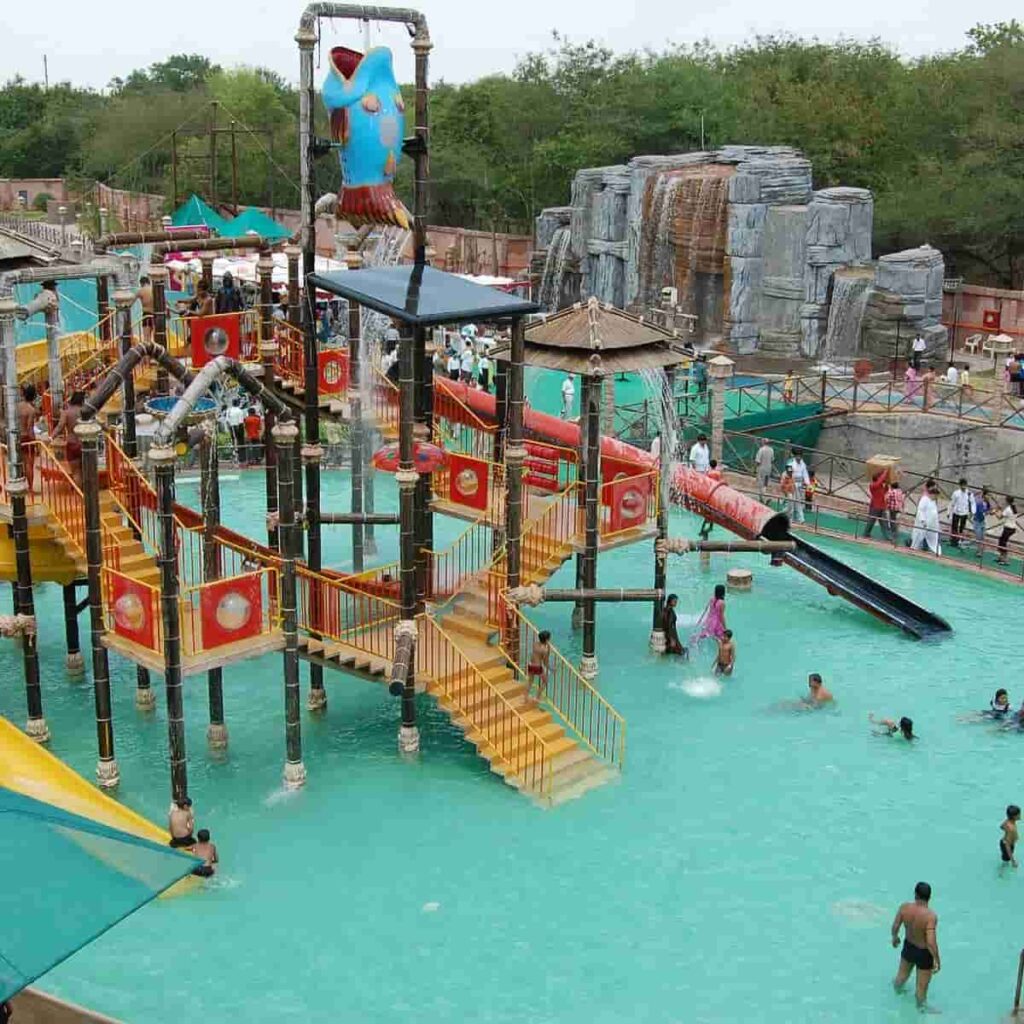
Krazy Castle Aqua Park is a famous recreation destination located in the Ambazari area of Nagpur, originally established by the Haldiram Group. Designed with a medieval castle theme, it was long considered the city’s premier water and amusement park, offering a wide array of attractions including gigantic water slides, a wave pool, a lazy river, and a popular rain dance deck. The park was notably split into two sections: a water park featuring rides like the “Crazy Cruise” and “Twister,” and an amusement park with dry rides such as the Sky Copter and Bull Ride. Beyond its role as a playground for families and thrill-seekers, the site became a renowned wedding and event venue, frequently hosting large receptions and corporate gatherings in its landscaped lawns. The park’s history took a significant turn when it was closed for several years due to land acquisition for the Nagpur Metro project and subsequent legal and environmental hurdles. However, after a reimagined ₹20–₹58 crore redevelopment by MahaMetro, the park is set to reopen in 2026. The revamped facility will feature “Wonders of the World” replicas and international-standard modern rides, aiming to restore its status as a top regional attraction.
7. Umred Karhandla Wildlife Sanctuary
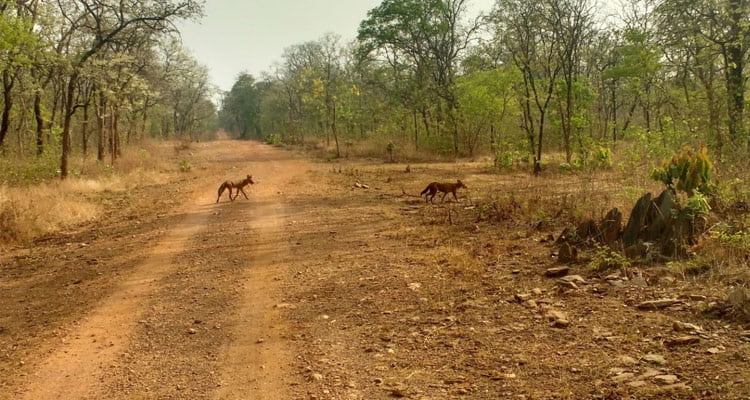
Umred-Pauni-Karhandla Wildlife Sanctuary is a vital 189 sq. km nature reserve situated about 58 km from Nagpur, spread across the Bhandara and Nagpur districts. Established in 2013, it has quickly gained fame as a “Grand Central Station” for tigers, serving as a critical wildlife corridor that connects major reserves like Tadoba-Andhari, Pench, and Nagzira. The sanctuary is famously known as the home of the legendary tiger Jai, whose presence transformed the area into a premier destination for tiger sightings. Its diverse landscape, bounded by the Wainganga River and Gose Khurd Dam, consists of southern tropical dry deciduous forests where teak, bamboo, and mahua trees thrive. Beyond its robust tiger population, the sanctuary supports a rich array of fauna, including leopards, sloth bears, Indian gaur (bison), wild dogs, and rare species like honey badgers and pangolins. Bird enthusiasts can also spot over 180 species, such as the crested serpent eagle and racquet-tailed drongos.
8. Vidarbha Cricket Association Ground

The Vidarbha Cricket Association (VCA) maintains two distinct venues in Nagpur: the historic Civil Lines Ground and the modern Jamtha Stadium. The VCA Civil Lines Stadium, established in 1929, served as Nagpur’s primary international venue for decades, hosting its first Test in 1965. It is celebrated for major milestones, including Sunil Gavaskar’s only ODI century during the 1987 World Cup and Sachin Tendulkar’s successful return from a major elbow injury in 2005. In 2008, it was replaced as the city’s main international hub by the VCA Jamtha Stadium, a world-class facility with a 45,000-seat capacity and one of the largest playing areas in India. Praised by the ICC for its state-of-the-art infrastructure, Jamtha has hosted high-profile events like the 2011 Cricket World Cup and most recently an ODI against England in February 2025. While Jamtha is now the designated home for international and T20 matches, the Civil Lines ground remains active for domestic cricket and specialized coaching.
9. Lata Mangeshkar Musical Garden
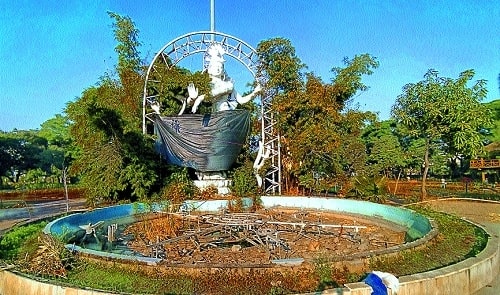
The Lata Mangeshkar Musical Garden is a beautifully landscaped thematic park located in the Surya Nagar area of East Nagpur, dedicated to the legendary “Nightingale of India,” Lata Mangeshkar. Spread over a sprawling area, the garden’s primary attraction is its spectacular musical fountain, where water jets dance in synchronization with classical melodies and the iconic songs of Mangeshkar. The park also features a massive open-air amphitheatre with a seating capacity for 2,500 people, which serves as a major cultural hub for concerts, musical festivals, and performing arts. In addition to its melodic themes, the garden houses an attractive aquarium with rare fish species and lush green lawns popular for morning walks and yoga. Recently, the park has been set for a significant transformation, with plans to introduce adventure park elements and a toy train to further enhance its appeal to families and tourists.
10. Waki Woods
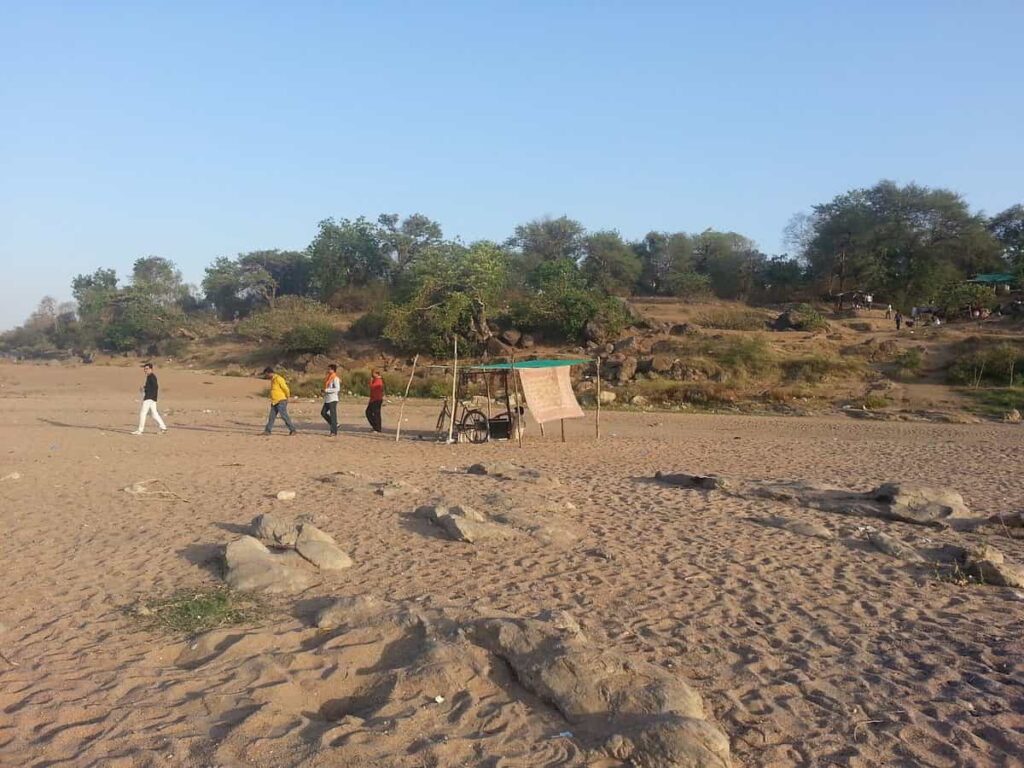
Waki Woods is a popular eco-tourism and adventure destination located approximately 30 km north of Nagpur on Saoner Road. Situated near the Waki Dargah (the shrine of Hazrat Tajuddin Baba), the area offers a unique blend of spiritual significance and natural beauty along the banks of the Kanhan River. The landscape features a rustic forest vibe with scenic river views, making it a favorite spot for one-day picnics, photography, and nature walks. Visitors can engage in a variety of outdoor activities such as archery, trekking, and birdwatching, with sightings of peacocks, kingfishers, and parakeets common in the early morning. The Waki Woods Resort on-site provides modern camping facilities, including fully furnished tents equipped with electricity, as well as a dhaba serving local Maharashtrian delicacies.
11. Akshardham Temple
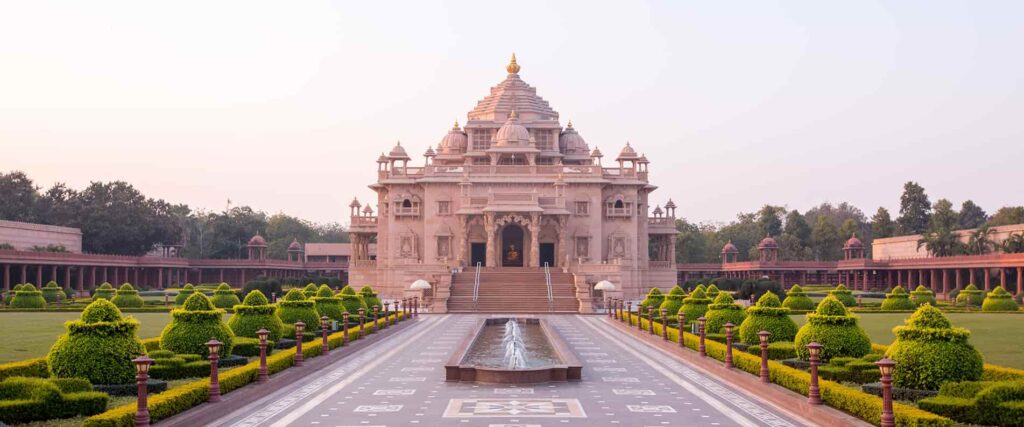
The Swaminarayan Akshardham Temple in Nagpur is a magnificent spiritual and cultural landmark located on the Outer Ring Road in Wathoda. Inaugurated in 2013 by the BAPS organization, the temple is an architectural marvel constructed primarily from pink sandstone and white marble, showcasing intricate carvings of Hindu deities, floral motifs, and geometric patterns. The temple’s design follows ancient Indian architectural Shastras and features several large domes and a grand central sanctum housing the idols of Bhagwan Swaminarayan, Gunatitanand Swami, and other revered deities. Beyond its spiritual significance, the temple complex is known for its sprawling, well-maintained gardens, a vegetarian cafeteria (Premvati), and a dedicated kids’ play area. At night, the temple is beautifully illuminated, making it a peaceful retreat for both devotees and tourists seeking serene surroundings and stunning craftsmanship.
12. Raman Science Centre
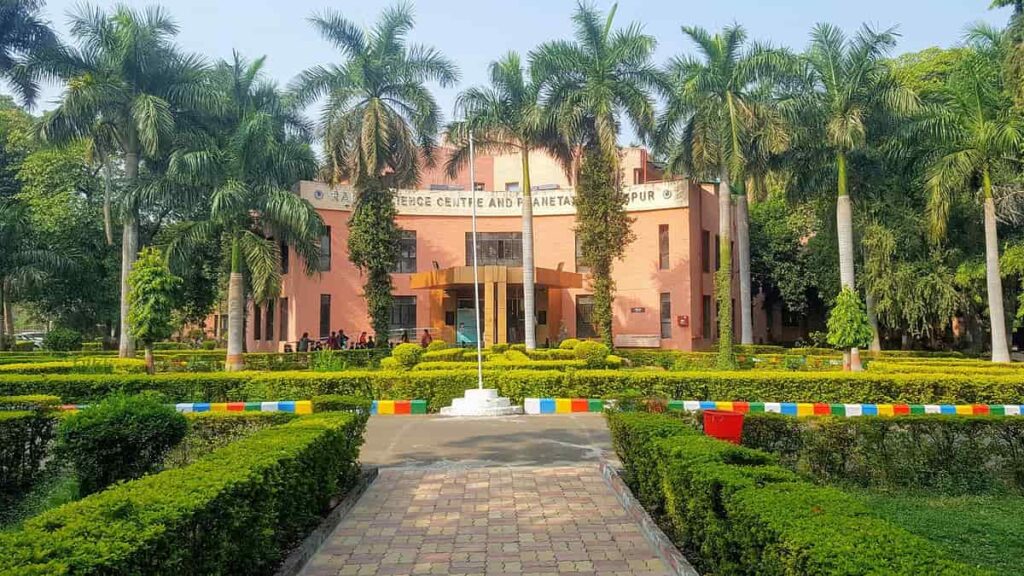
The Raman Science Centre & Planetarium, named after the Nobel Prize-winning physicist Sir C.V. Raman, is an interactive science museum in Nagpur dedicated to promoting scientific temper among students and the public. Affiliated with Mumbai’s Nehru Science Centre, it features a wide range of hands-on exhibits covering topics like mechanics, light, and sound, alongside a popular Prehistoric Animal Park featuring life-sized, moving models of dinosaurs. One of its primary highlights is the state-of-the-art Digital Planetarium, which hosts immersive shows about the universe and space exploration. The centre also houses a Science Odyssey large-format film theatre, a 3D science show, and a “Science on a Sphere” exhibit that projects real-time planetary data onto a massive globe. It is a hub for educational activities, frequently organizing telescope sky-watching sessions, science fairs, and workshops for children.
13 .Bhimbetka
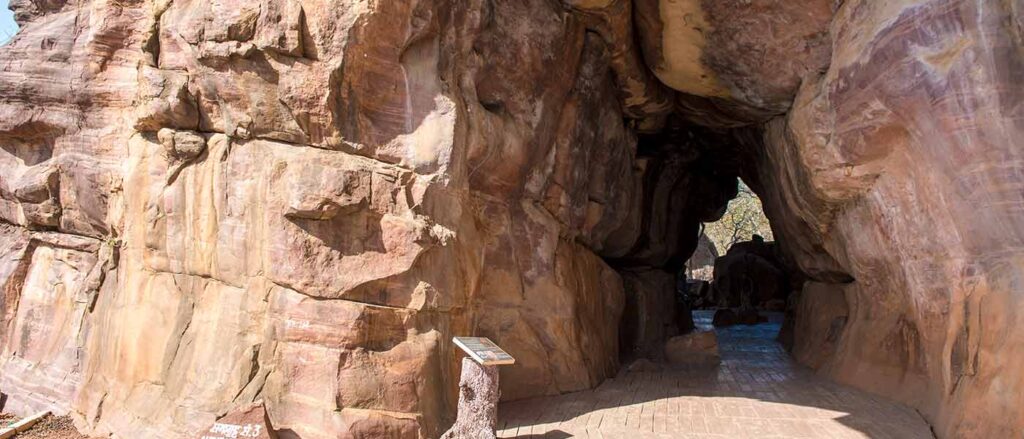
The Bhimbetka rock shelters are a renowned archaeological site and UNESCO World Heritage Site located in the Raisen district of Madhya Pradesh, approximately 45 km southeast of Bhopal. Nestled within the foothills of the Vindhyan Mountains, this sprawling complex consists of over 750 natural rock shelters spread across seven hills. Discovered in 1957 by Dr. V.S. Wakankar, the site provides a continuous record of human habitation from the Paleolithic and Mesolithic periods through the historical era, with some shelters inhabited more than 100,000 years ago. The shelters are globally famous for their extraordinary rock paintings, the oldest of which date back roughly 30,000 years. These vibrant murals, created using natural pigments like red ochre and white, vividly depict prehistoric daily life, including scenes of hunting, dancing, community rituals, and animals such as bison, elephants, and tigers. The name “Bhimbetka” is derived from local legends as the “sitting place of Bhima,” the powerful brother from the Mahabharata.
14. Pench National Park

Pench National Park, spanning the border of Maharashtra and Madhya Pradesh, is famously known as the setting that inspired Rudyard Kipling’s classic, The Jungle Book. Named after the Pench River that meanders through it, the park covers a core area of about 257 sq. km and is a premier Tiger Reserve in India. Its landscape is characterized by open canopy mixed forests, predominantly teak and bamboo, interspersed with grassy meadows (maidans) that provide excellent visibility for wildlife sightings. The park is home to a high density of prey like cheetal, sambar, and gaur, which in turn supports a healthy population of Bengal tigers, leopards, and wild dogs (dholes). Beyond its mammalian residents, Pench is a birdwatcher’s delight, housing over 285 species including the malabar pied hornbill and several types of vultures. The Kamthikhairy Dam (Pench Reservoir) serves as a major water source and attracts large numbers of migratory waterfowl during the winter months.
15. Maharajbagh Zoo & Garden
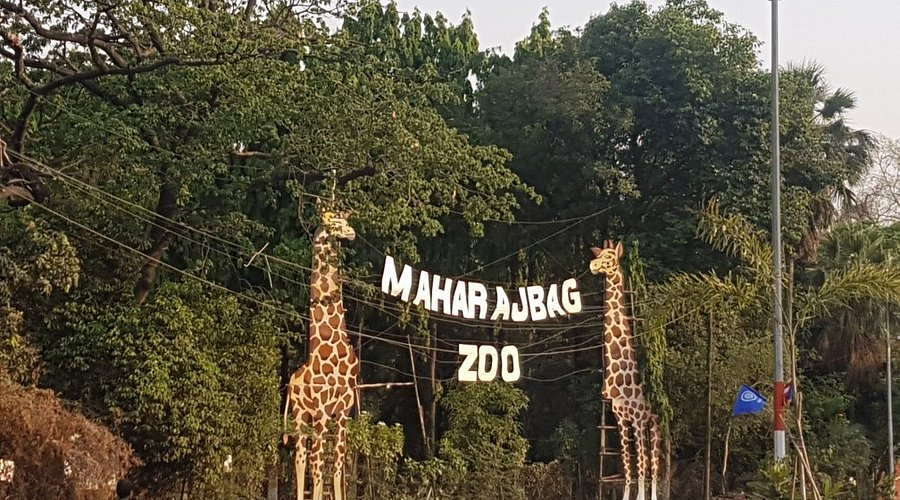
Maharajbagh Zoo and Garden is a historic botanical garden and zoo located in the heart of Nagpur, Maharashtra. Built by the Bhonsle kings in the 19th century, it was later converted into a botanical garden and a central zoo, currently managed by the Panjabrao Deshmukh Krishi Vidyapeeth (Agricultural University). The site is famous for its rich collection of diverse flora and fauna, housing animals such as tigers, leopards, lions, bears, and various species of deer and monkeys. Beyond the wildlife, the lush greenery and well-maintained lawns make it a popular spot for morning walkers, students, and families. The garden also features a dedicated herbal garden and a nursery that showcases rare medicinal plants, serving as an important educational hub for agricultural students and nature lovers alike.