Mathura is one of India’s most ancient and sacred cities. Revered with immense devotion as the birthplace of Lord Krishna, it is situated on the banks of the holy Yamuna River in the state of Uttar Pradesh. Often referred to as “Braj Bhumi,” it serves as the spiritual epicenter of the region, where every nook and cranny resonates with tales of Krishna’s childhood and his divine miracles. It once served as a major capital of the Kushan Empire and evolved into a world-renowned hub for Buddhist and Jain art; a significant portion of this artistic heritage is still preserved today at the local Government Museum. Today, Mathura presents a vibrant tapestry of narrow, bustling lanes, historic ghats—such as Vishram Ghat—and magnificent temples. It attracts millions of pilgrims annually who flock here to experience its unique culture, savor its famous delicacies—such as Mathura ke Pede—and partake in spirited festivals like Holi and Janmashtami.
Mathura’s economy rests upon a robust blend of religious tourism, heavy industries, and traditional handicrafts. As the birthplace of Lord Krishna, the city functions as a massive spiritual hub, drawing millions of pilgrims each year. This “temple-based economy” provides livelihoods to thousands of people across the hospitality, transportation, and retail sectors. Industrially, the city is home to the ‘Mathura Refinery’—one of Asia’s largest oil refineries—which serves as a major source of revenue and employment. Furthermore, Mathura holds a global leadership position in certain niche cottage industries, particularly in the manufacturing of silver jewelry, sanitary fittings (such as faucets), and religious paraphernalia—specifically garments (poshak) for deities. Its strategic location on the Delhi-Agra Highway, coupled with its role as a major dairy hub for North India—renowned for its famous Pede—further solidifies its standing as a vital engine within the economy of Uttar Pradesh.
Mathura is generally considered a very safe and welcoming tourist destination for travelers. It is characterized by its deeply spiritual atmosphere and a community accustomed to hosting millions of pilgrims every year. Violent crimes against tourists are extremely rare here.
Famous Places To Visit In Mathura :
1. Radha Kund

Radha Kund is widely revered as the most sacred pilgrimage site in the entire universe by devotees, particularly within the Gaudiya Vaishnava tradition. Located approximately 3 kilometres northeast of Govardhan Hill in the Mathura district, it is one of two twin lakes—the other being Shyam Kund—that represent the “eyes” of Govardhan. According to legendary accounts, these lakes were manifested after Lord Krishna defeated the bull demon, Aristasura; when Radha playfully suggested he atone for killing a bull by bathing in all holy rivers, Krishna struck the ground with his heel (or flute) to summon those rivers, forming Shyam Kund. In response, Radha and her companions dug another pond nearby with their bangles, which Krishna then filled with sacred water to create Radha Kund. Devotees believe that these waters are non-different from the divine couple themselves and that bathing here, especially at midnight on the auspicious day of Bahulashtami, grants one the highest form of spiritual love (Prema-Bhakti). Today, the site remains a serene center for meditation and worship, surrounded by ancient ghats and temples that reflect the eternal bond of Radha and Krishna.
2. Government Museum Mathura
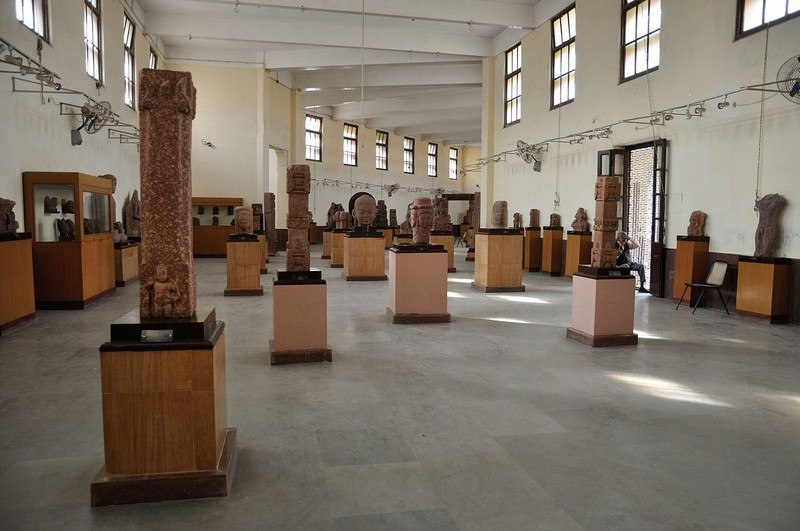
The Government Museum in Mathura, also known as the Mathura Museum, is a world-renowned archaeological museum founded in 1874 by Sir F. S. Growse, the then-collector of the Mathura district. Housed in a beautiful octagonal red sandstone building at Dampier Nagar, it is famous for its extensive collection of artifacts from the Mathura School of Art, which flourished between the 3rd century BCE and the 12th century CE. The museum is particularly celebrated for housing some of the earliest and most iconic representations of Lord Buddha, as well as significant Jain and Hindu sculptures from the Kushan and Gupta periods. Notable exhibits include the famous headless statue of Emperor Kanishka, rare terracotta figurines, ancient gold and silver coins, and 3,000-year-old anthropomorphic copper figures. Beyond its galleries, the museum serves as a vital research center for scholars studying ancient Indian history and iconography, offering a deep chronological journey into the region’s artistic and spiritual heritage.
3. Kans Qila
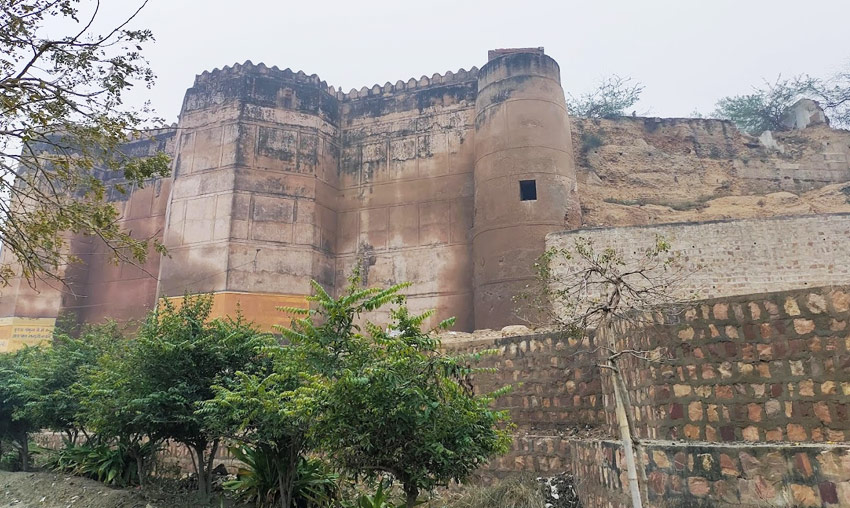
Kans Qila, also known as the Kans Fort, is a historic fortification situated on the northern banks of the Yamuna River in Mathura. Named after King Kansa, the maternal uncle of Lord Krishna, the site is deeply rooted in Hindu mythology as the legendary palace from which the tyrant ruler once reigned. While the original structure is believed to date back to the Mahabharata era, the current ruins primarily reflect a late 16th-century renovation by Raja Man Singh I of Amber, a general in Emperor Akbar’s court. The fort’s architecture is a distinct blend of Hindu and Mughal styles, characterized by red sandstone pillars and high walls that historically served as a critical barrier against the river’s floods. Although much of the fort, including an 18th-century observatory added by Maharaja Sawai Jai Singh, has crumbled or been demolished over time, it remains a significant landmark offering panoramic views of the river near Vishram Ghat.
4. Rangji Temple
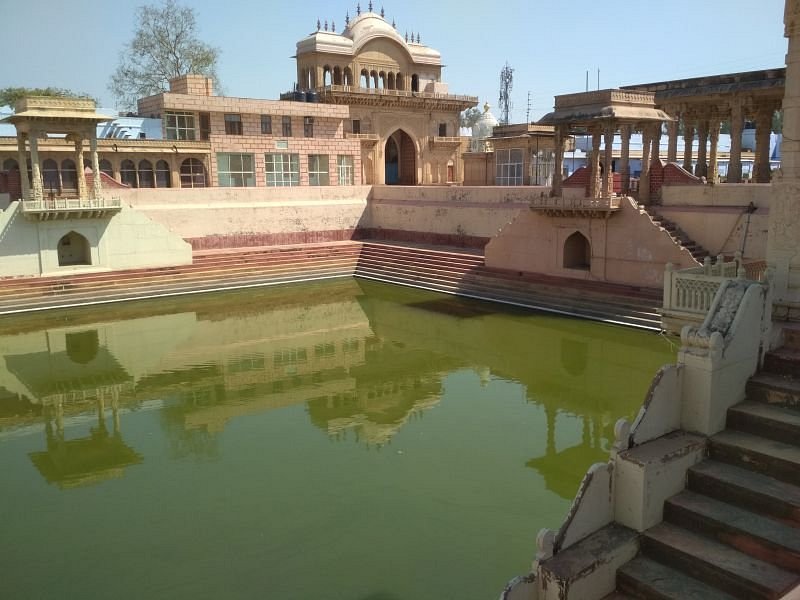
The Rangji Temple (also known as Sri Ranganatha Temple) in Vrindavan is a massive 19th-century shrine that serves as a stunning bridge between South and North Indian cultures. Built in 1851 by the wealthy Seth brothers (Govind Das and Radha Krishna) under the guidance of Sri Rangadeshik Swami, the temple is dedicated to Lord Ranganatha, a reclining form of Lord Vishnu. Its architecture is uniquely Dravidian, featuring a towering seven-story Gopuram (gateway) and a 50-foot-high gold-plated Dhwaja Stambha (flagpole), which is rare in North India. The temple honors the legend of the 8th-century saint Andal, who composed hymns of love for Lord Krishna and whose marriage to the Lord is celebrated here. Spanning over a vast area with five concentric rectangular enclosures, a sacred Pushkarni pond, and a serene garden, it remains one of the largest and most spiritually vibrant complexes in the Brij region.
5. Kokilavan

Kokilavan, located near Kosi Kalan in the Mathura district, is a sacred forest and pilgrimage site famously home to the Shani Dev Temple (Kokilavan Dham). The site is uniquely significant because it is divinely connected to both Lord Krishna and Shani Dev. According to legendary accounts, Shani Dev performed severe penance in this forest to receive the darshan (divine vision) of infant Krishna after being denied entry to Nandgaon due to concerns over his malefic gaze. Pleased by his devotion, Krishna appeared before him in the form of a cuckoo bird (Kokila), giving the forest its name. Krishna also granted Shani Dev a boon, declaring that anyone who visits this temple and performs the 3-kilometre parikrama (circumambulation) of the forest will be freed from all troubles and planetary afflictions, including the effects of Shani Sadesati. Today, the 20-acre complex features shrines dedicated to Kokilavan Bihari (Krishna), Giriraj, and Guru Barkhandi Baba, attracting thousands of devotees every Saturday who offer mustard oil to the deity and bathe in the sacred Surya Kund.
6. Bhuteshwar Mahadev Mandir
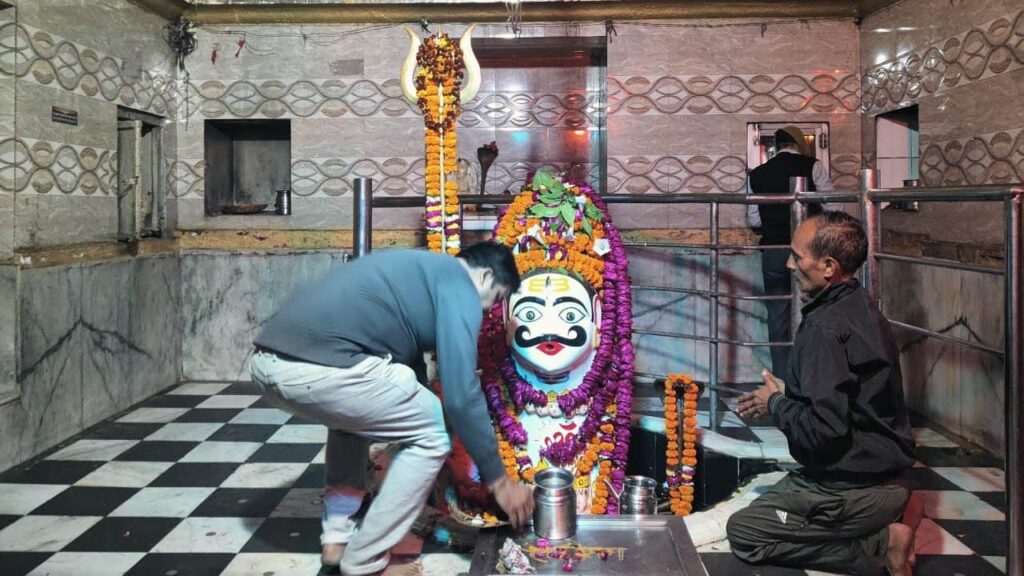
The Bhuteshwar Mahadev Mandir in Mathura is one of the oldest and most significant temples in the Brij region, uniquely dedicated to Lord Shiva in a city primarily known for Lord Krishna. It is revered as the guardian deity (Kshetrapal) of Mathura, believed to protect the city and its residents from evil forces. According to Hindu mythology, the temple’s origins trace back to the Treta Yuga, established by Shatrughna (the younger brother of Lord Rama) after he vanquished the demon Lavanasura and founded the city. Beyond its role as a protector, the temple is recognized as a Shakti Peetha, as it is believed to be the spot where a ringlet of Mata Sati’s hair fell. A fascinating feature within the temple complex is the Patal Devi Cave, a subterranean shrine where the goddess once worshipped by the tyrant King Kansa is still revered today.
7. Vaishno Devi Dham
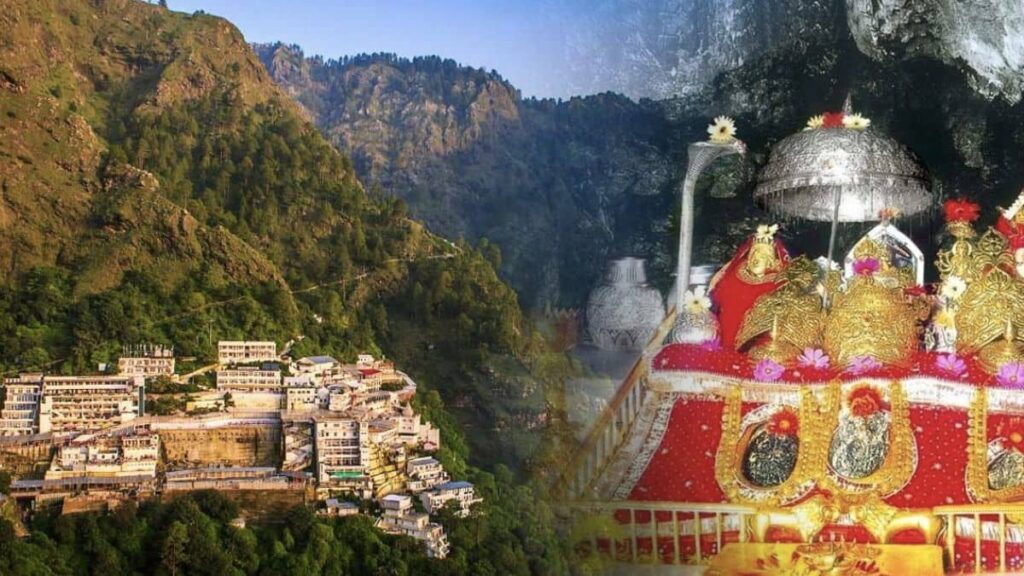
Vaishno Devi Dham in Vrindavan is a grand spiritual landmark famous for housing one of the tallest statues of a deity in India. Founded by Shri J.C. Chaudhry and inaugurated in 2010, the temple features a magnificent 141-foot-tall statue of Maa Vaishno Devi seated on a lion, accompanied by a large figure of Lord Hanuman. Spanning over 11 acres, the complex is designed to replicate the experience of the original shrine in Jammu, complete with man-made caves and hills. Inside these caves, devotees walk through a long passage with water flowing beneath their feet, witnessing idols of all nine forms of Goddess Durga. The Dham serves as a significant retreat for those unable to travel to Katra, offering facilities like a meditation hall, a yoga hall, and a free dispensary to serve the underprivileged.
8. Jai Gurudev Mandir
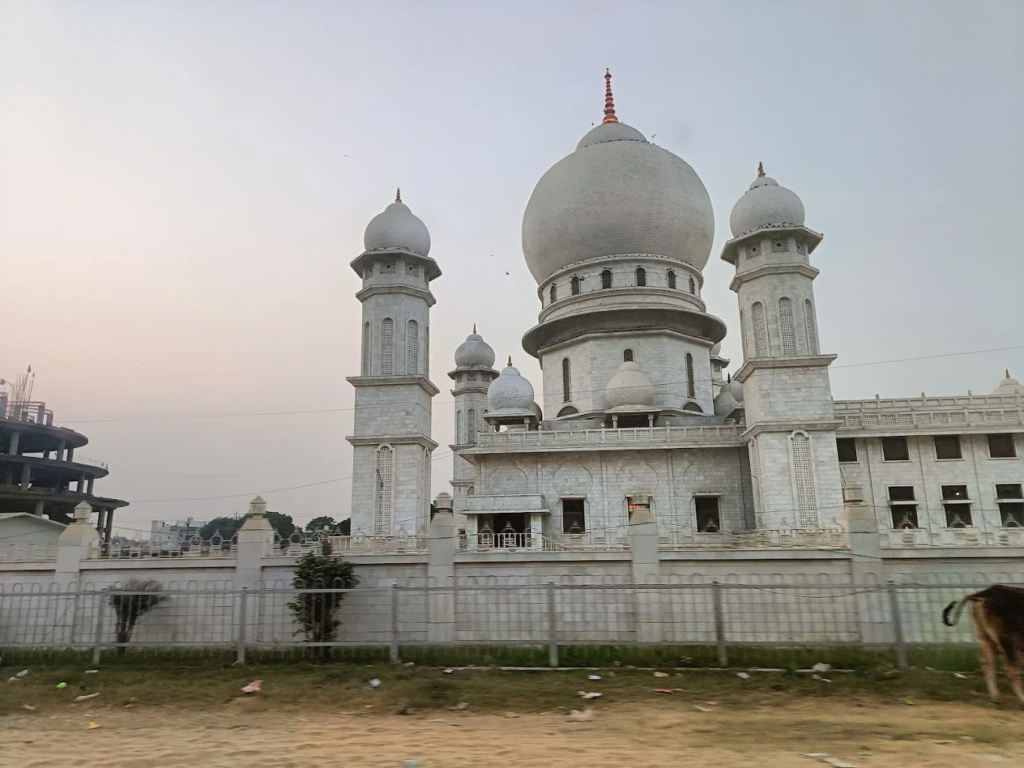
The Jai Gurudev Mandir, also known as the Naam Yog Sadhna Mandir, is a striking white marble temple located on the Delhi-Agra Highway in Mathura. Founded by the spiritual leader Baba Jai Gurudev in the 1970s, the temple is renowned for its unique architecture that beautifully blends Hindu temple elements with Mughal styles, resembling a cross between the Taj Mahal and a traditional temple. The entire structure was built using the voluntary labor and donations of devotees, symbolizing their dedication to the “Satya Dharm” (True Religion). A key feature of the temple is its focus on vegetarianism and spiritual discipline; in fact, the temple management famously prohibits anyone who has consumed non-vegetarian food or alcohol from entering the main sanctum. The vast complex also houses a school, a charitable hospital, and a massive kitchen that serves free meals to thousands of visitors.
9. Chamunda Devi Temple
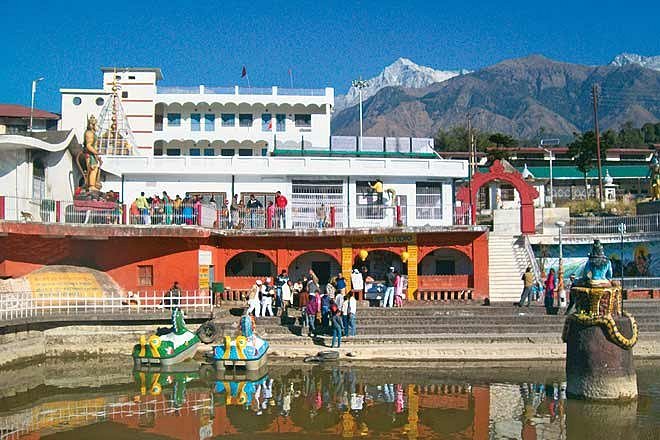
The Chamunda Devi Temple in Mathura is a highly significant spiritual landmark, revered as one of the 51 Shakti Peethas of India. According to Hindu mythology, this is the sacred spot where a lock of hair from Goddess Sati fell after her body was dismembered by Lord Vishnu’s Sudarshan Chakra. The temple also holds a deep connection to the life of Lord Krishna; it is believed that his family visited this shrine to seek blessings after his elder brother Balarama’s mundan (hair-cutting ceremony), and legend says Krishna once rescued a trapped python at this very site. Architecturally, the temple is unique because the main sanctum does not house a traditional idol; instead, the Goddess is worshipped in a symbolic form, representing her eternal presence. Located on the Chhatikara Road near Raja Tal, the temple complex offers a tranquil atmosphere for meditation and is marked by a large, prominent statue of Lord Hanuman at the entrance. It becomes a major hub of devotion during the Navratri festival, when thousands of pilgrims gather to participate in special rituals and prayers.
10. Potara Kund
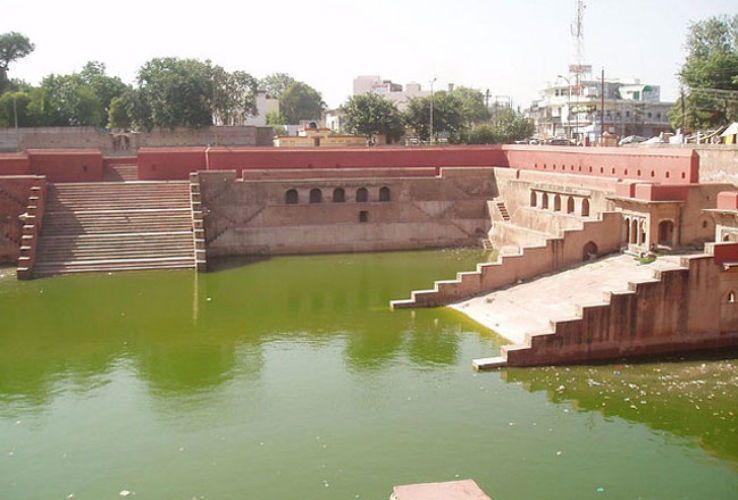
Potara Kund is one of the most significant and ancient water tanks in Mathura, located just a few hundred metres from the Shri Krishna Janmabhoomi temple complex. The name “Potara” is derived from the Hindi word for baby clothes or linen; according to Hindu mythology, this is the exact spot where Mata Devaki used to wash the clothes of her infant son, Lord Krishna, while she and Vasudeva were held captive in King Kansa’s prison. Constructed using beautiful red sandstone, the kund features large steps (ghats) on all four sides that lead down to the water, reflecting the traditional architectural style of the Brij region. It is believed that the water of this kund remains holy and is spiritually connected to the birth of Krishna. Today, it serves as a peaceful historical landmark where pilgrims often stop to pray and reflect on the childhood pastimes of Krishna before visiting the main temple.
11. Dauji Mandir

Dauji Mandir, also known as the Shri Dauji Maharaj Temple, is one of the most prominent and oldest shrines in the Brij region, located in the town of Baldeo, about 21 kilometres southeast of Mathura. The temple is dedicated to Lord Balarama, the elder brother of Lord Krishna, whom locals affectionately call “Dauji”. It is home to a majestic, seven-foot-tall black stone idol of Balarama, which is considered the largest deity in the entire Vraja Mandala. The deity is depicted with two hands—the right raised in a protective gesture and the left holding a cup of Varuni—and is accompanied by a life-sized statue of his consort, Revati Devi. Legend states that the idol was originally installed by Krishna’s great-grandson, Vajranabh, and was later rediscovered in the nearby Kshirsagar (or Balbhadra Kund) by Gokul Nath Goswami. The temple is world-famous for its unique Huranga celebration, a vibrant and playful form of Holi held a day after the main festival, attracting thousands of devotees who splash colors in the temple courtyard.
12. Iskcon Temple
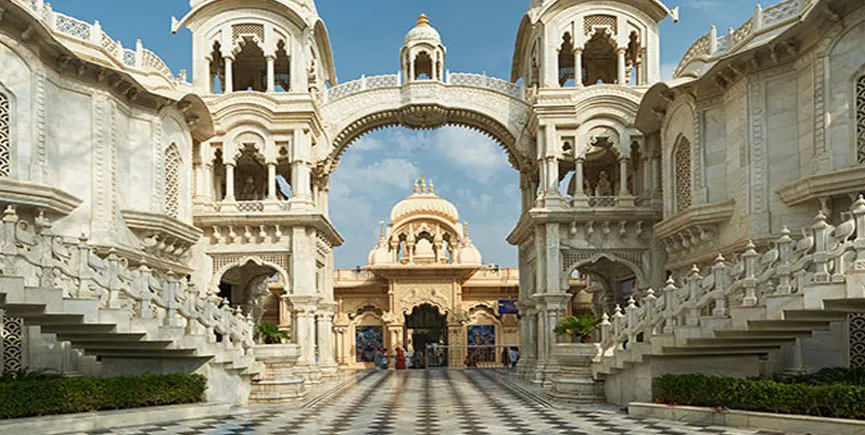
The ISKCON Temple in Vrindavan, also known as Sri Sri Krishna Balaram Mandir, is one of the most popular and spiritually vibrant temples in India. Built in 1975 by the founder of the Hare Krishna movement, A.C. Bhaktivedanta Swami Prabhupada, the temple is a masterpiece of white marble architecture that draws thousands of international and local devotees daily. The temple is dedicated to the divine brothers Krishna and Balaram, who are worshipped on the central altar, along with altars for Radha-Shyamasundara and Gaura-Nitai. A major highlight of the complex is the Samadhi Mandir of Srila Prabhupada, a magnificent marble monument where his physical body was laid to rest. The atmosphere is famous for its continuous, ecstatic 24-hour Kirtan, where devotees dance and chant the “Hare Krishna” mahamantra. The complex also includes a vegetarian restaurant (Govinda’s), a guesthouse, a library, and a museum, making it a complete spiritual center for visitors from all over the world.
13. Govardhan Hill
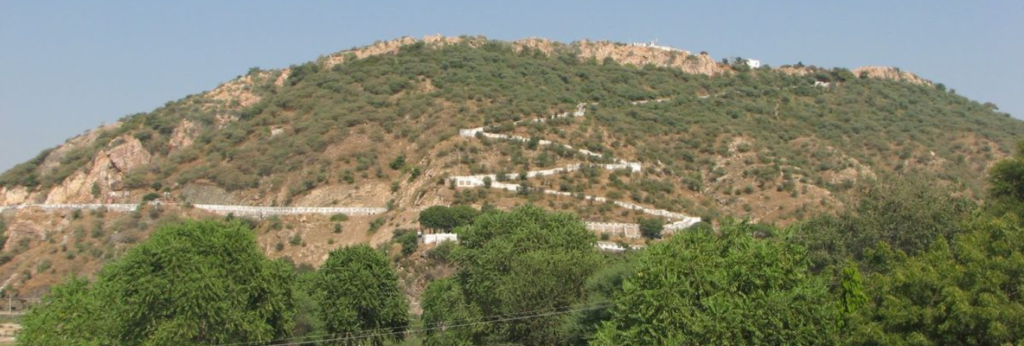
Govardhan Hill, also known as Giriraj, is a sacred mountain located near Mathura that is considered a natural form of Lord Krishna himself. According to the famous story, Lord Krishna lifted this entire hill on his little finger for seven days to protect the people of Braj from a massive storm sent by Lord Indra. Today, the hill is about 8 kilometres long, and millions of devotees visit it to perform Parikrama, which is a 21-kilometre walk around the mountain to show their respect. Along the way, there are many beautiful temples, gardens, and holy ponds like Radha Kund. People believe that the hill is slowly shrinking in size over time because of a spiritual curse, but it remains one of the most important places of worship for those who love Krishna.
14. Krishna Janmasthan Temple
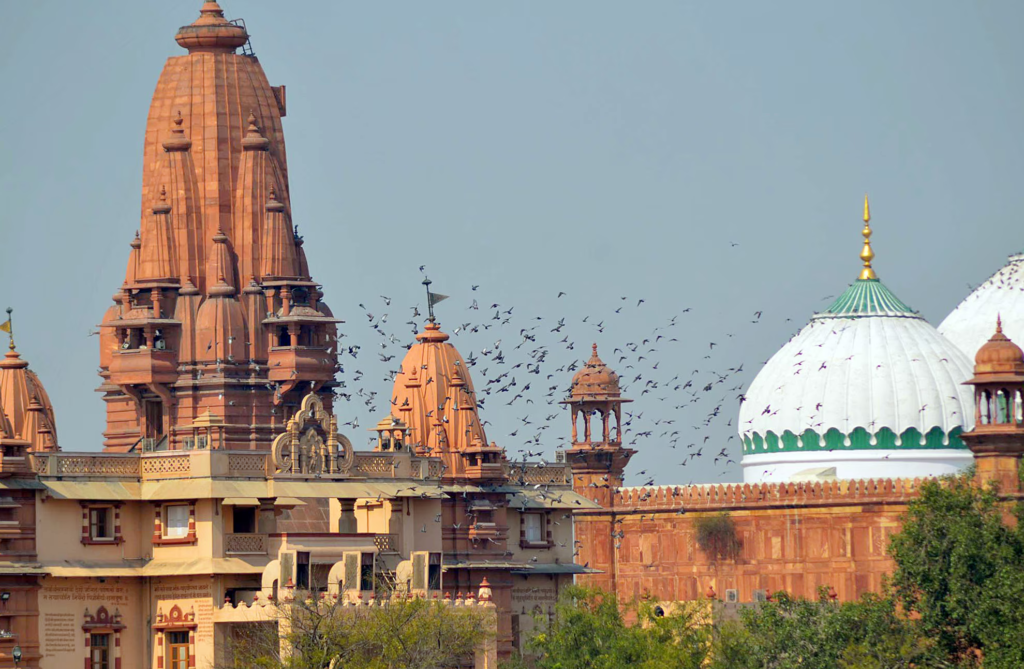
The Shri Krishna Janmasthan Temple in Mathura is one of the most sacred places in India, as it is built directly over the spot where Lord Krishna is believed to have been born about 5,000 years ago. The temple complex is centered around the Garbha Griha, a small, cave-like prison cell where Krishna’s parents, Devaki and Vasudeva, were held captive by the tyrant King Kansa. The current magnificent structure, which has been rebuilt several times throughout history after being destroyed by various invaders, is a masterpiece of Hindu architecture featuring the towering Keshavdeva Temple and the beautiful Bhagavat Bhavan. Inside, the walls are adorned with stunning paintings and carvings depicting the life of Krishna, and the atmosphere is filled with deep devotion, especially during Janmashtami, when lakhs of pilgrims gather to celebrate his birth. Adjacent to the main shrine is the Potara Kund, where Krishna’s first clothes were washed, making the entire complex a vital pilgrimage site for understanding the origins of the divine.
15. Radha Vallabh Mandir
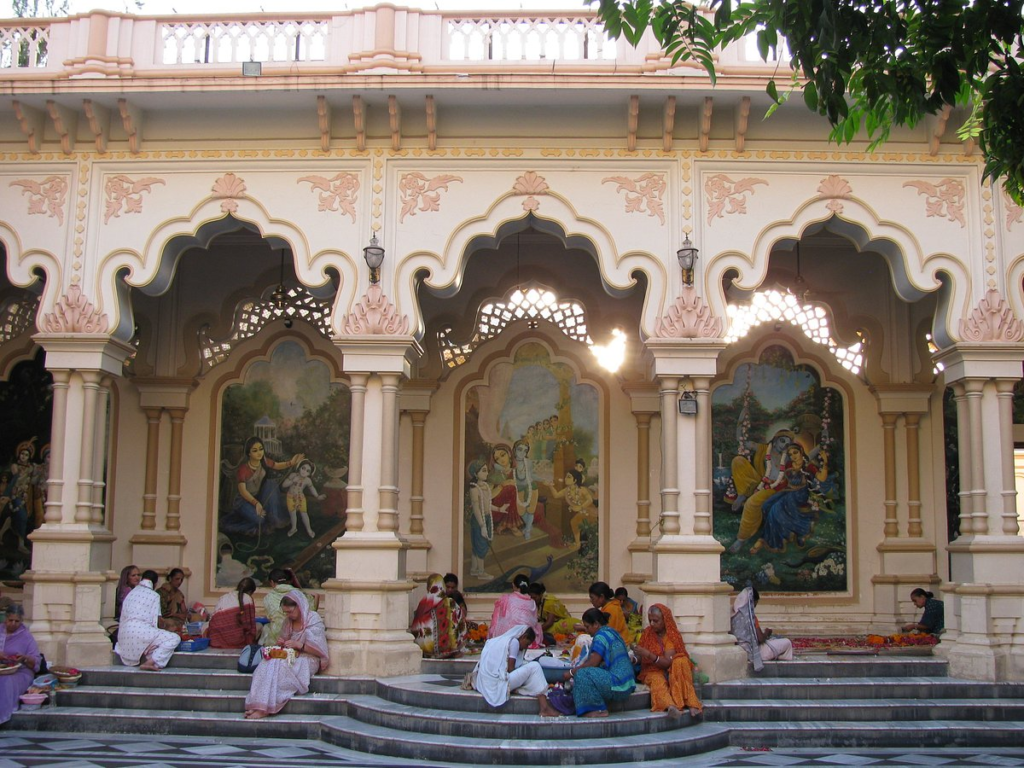
The Radha Vallabh Mandir in Vrindavan is one of the most prestigious and ancient temples in the Brij region, founded in the 16th century by Shri Hith Harivansh Mahaprabhu. The temple is unique because it follows the Radha Vallabh Sampradaya, which emphasizes the supreme devotion to Radharani as the primary deity. A fascinating feature of this temple is that there is no idol of Radha next to Lord Krishna; instead, a crown is placed beside the deity of Shri Radha Vallabh to represent her presence, signifying that she and Krishna are one. The temple is world-renowned for its exquisite “Seva” (service), particularly its beautiful floral decorations, soulful music, and the Khichadi Mahotsav festival. Architecturally, the old structure (built during the reign of Emperor Akbar) is a masterpiece of red sandstone that blends Hindu and Islamic styles, while the current active temple remains a vibrant hub for devotees seeking the “Ras” or the sweet nectar of divine love.
16. Vishram Ghat
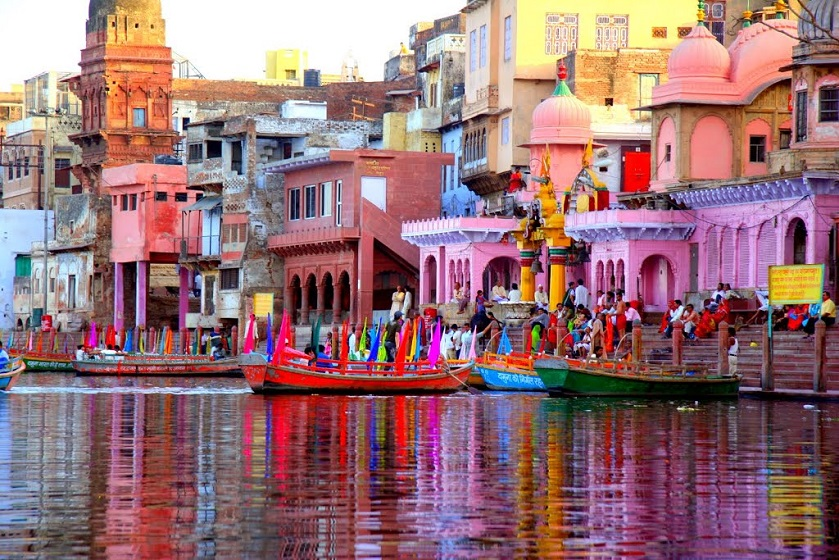
Vishram Ghat is the most important and sacred bathing ghat among the 25 ghats in Mathura, located on the banks of the holy River Yamuna. The word “Vishram” means rest, and according to Hindu mythology, this is the exact spot where Lord Krishna rested after killing the tyrant King Kansa. It serves as the central point for the traditional Brij Parikrama (circumambulation of the holy region), which both begins and ends here. The ghat is lined with beautiful marble steps and surrounded by several ancient temples, including shrines dedicated to Yamuna Devi and Lord Krishna. The most breathtaking experience at the ghat is the Sandhya Aarti (evening prayer), where hundreds of small oil lamps (diyas) are floated on the river, creating a glowing reflection on the water. It is a place of deep peace and spiritual significance where pilgrims gather to take a holy dip and offer prayers to the river goddess.
17. Kusum Sarovar
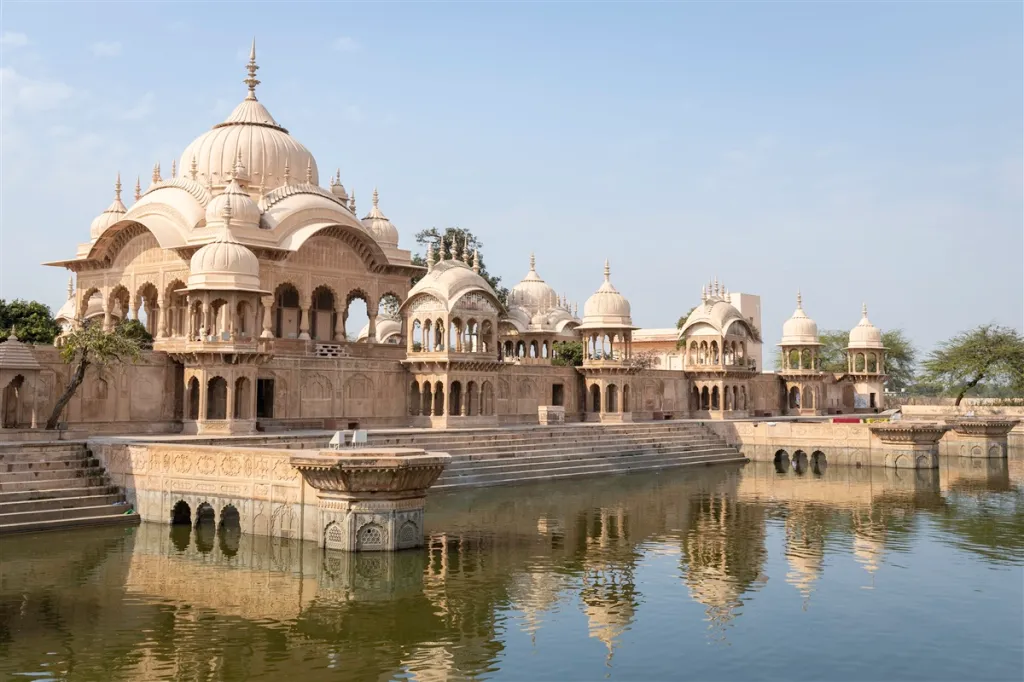
Kusum Sarovar is a stunning historical sandstone monument and a sacred lake located on the holy Parikrama path of Govardhan Hill. The name “Kusum” means flower, and according to legend, this was the beautiful garden where Radharani and her friends would pick flowers to meet Lord Krishna. The current magnificent structure, featuring grand tiered steps and ornate chhatris (cenotaphs), was built in the 18th century by Jawahar Singh, the King of Bharatpur, in memory of his father, Raja Suraj Mal. The architecture is a breathtaking example of the Rajasthani style, with the main building housing a symbolic footprint of Lord Krishna and beautiful wall paintings depicting his life. Surrounded by Kadamba trees and filled with cool, calm water, it is considered one of the most peaceful and photogenic spots in the Brij region, perfect for reflection and photography.
18. Nand Gaon
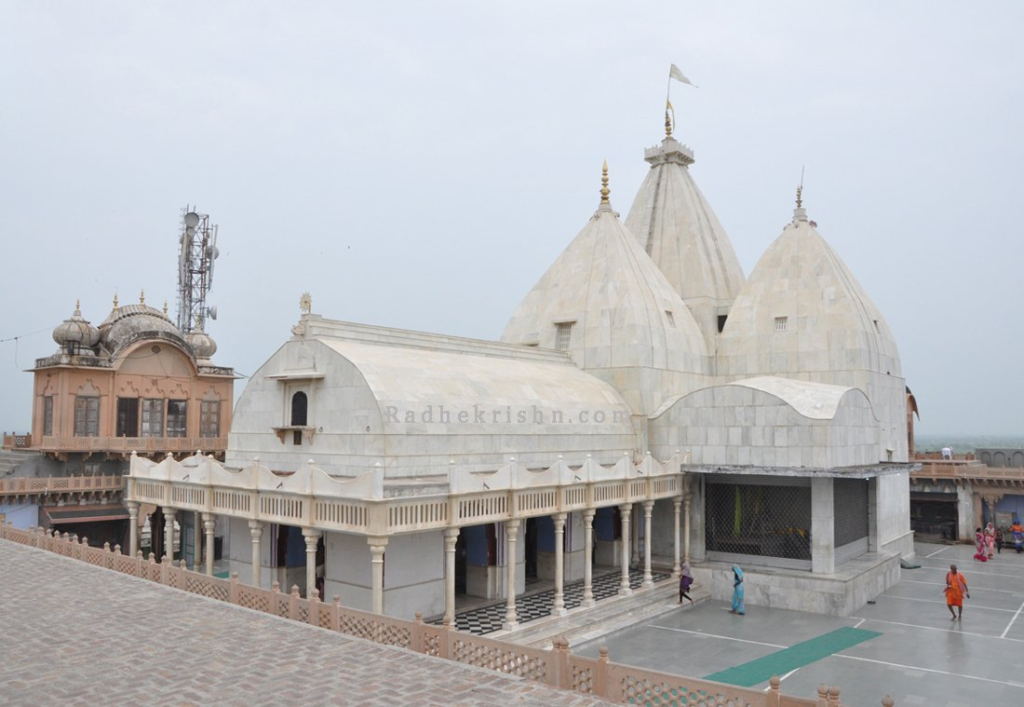
Nandgaon is a historic hill town located about 50 kilometres from Mathura, famously known as the home of Nanda Baba, the foster father of Lord Krishna. According to sacred texts, when Krishna was about seven years old, he moved here from Gokul to escape the repeated attacks of demons sent by King Kansa. The town is situated on the Nandisvara Hill, which is believed to be an expansion of Lord Shiva, who took the form of a hill to witness Krishna’s childhood pastimes. The main attraction is the Nand Bhavan Temple (also known as Nand Gram Temple), perched at the top of the hill, offering a panoramic view of the surrounding Brij countryside. Nandgaon is also world-famous for its unique Lathmar Holi celebrations, where the men from Krishna’s village (Nandgaon) visit Radha’s village (Barsana) to playfully recreate the ancient traditions of the divine couple.
19. Dolphin Water World
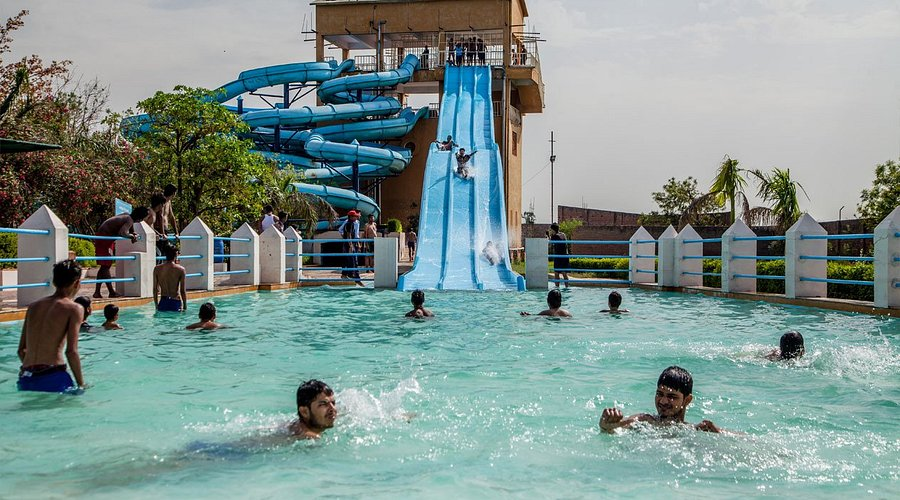
Dolphin Water World is a popular amusement and water park located on the Agra-Delhi Highway, offering a fun-filled escape for families and tourists visiting the Mathura-Agra region. Spread over 14 acres, it opened in 2002 and has since become a major recreational hub featuring a wide variety of high-speed water slides, a large wave pool, and a dedicated kids’ section known as the “Rain Dance” area. Beyond the water attractions, the park also houses an amusement park with rides like the carousel and a mini-train, making it a complete entertainment package for all age groups. It is particularly well-known for its clean facilities, green surroundings, and its convenient location near major historical sites, providing a refreshing break from temple tours.
20. Birla Mandir
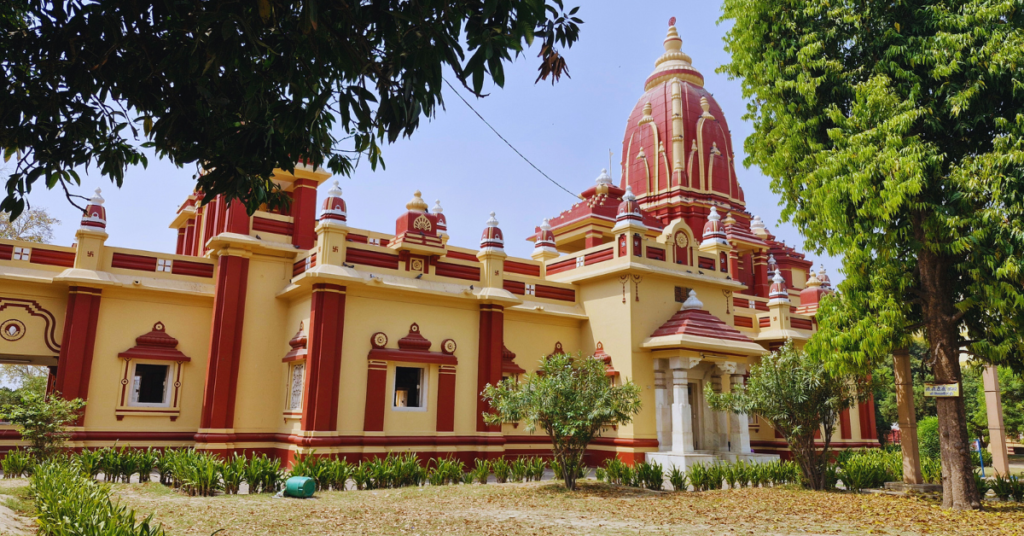
The Birla Mandir in Mathura, also popularly known as the Gita Mandir, is a prominent religious landmark situated on the Mathura-Vrindavan Road. Built in 1946 by the industrialist Jugal Kishore Birla in memory of his parents, the temple is a magnificent fusion of traditional Hindu architecture and modern craftsmanship. Its most defining and unique feature is the Gita Stambh (Victory Tower), a towering red sandstone pillar inscribed with all 700 verses of the Bhagavad Gita. The temple is primarily dedicated to Lord Lakshmi Narayan, but the central sanctum houses a beautiful white marble idol of Lord Krishna, alongside shrines for Radha-Krishna, Ram-Sita, and Lord Hanuman. Surrounded by serene, lush gardens, the complex offers a peaceful atmosphere for meditation and is famously decorated with lights and flowers during festivals like Janmashtami and Holi.
21. Jama Masjid Mathura
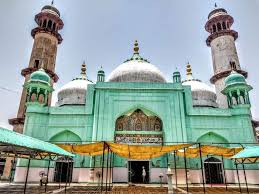
The Jama Masjid in Mathura is a prominent 17th-century congregational mosque that stands at the highest point of the city, near the Chowk Bazar. Commissioned in 1660-1661 by Abd-un-Nabi Khan, the governor (faujdar) of Mathura during the reign of Mughal Emperor Aurangzeb, it is an architectural landmark known for its blend of Hindu and Islamic design elements. The structure is built on an elevated plinth with red sandstone and features four massive 40-metre-high minarets adorned with vibrant mosaic plasterwork and intricate carvings. Its main facade was historically inscribed with the 99 names of Allah in Persian script, and the complex includes three bulbous domes, a large central courtyard, and an ablution pool. Located adjacent to the Shri Krishna Janmabhoomi temple complex, the mosque serves as a testament to the region’s diverse cultural history and remains an active place of worship for the local Muslim community.
22. Dwarkadhish Temple
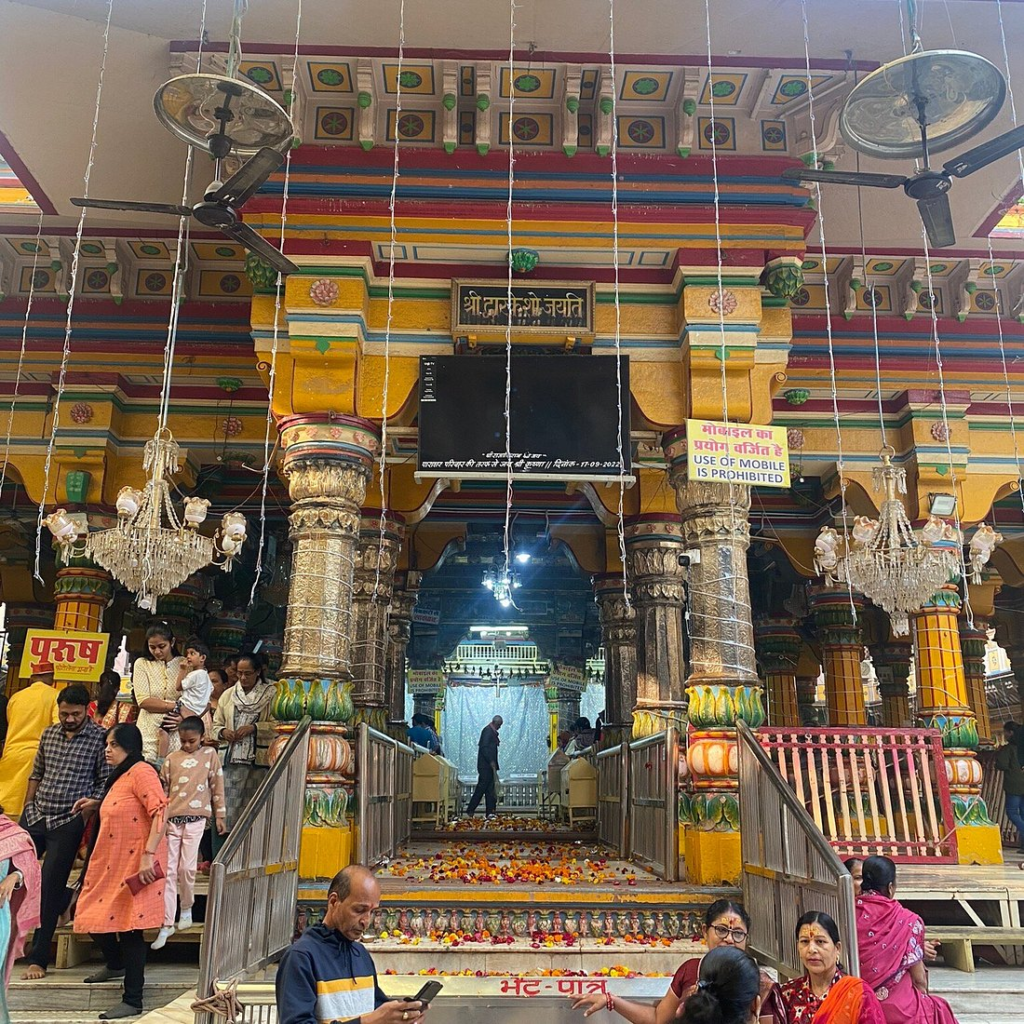
The Dwarkadhish Temple is one of the largest and most visited temples in Mathura, located near the banks of the Yamuna River. Built in 1814 by Seth Gokul Das Parikh, a treasurer of the Gwalior State, the temple is dedicated to Lord Krishna in his role as the “King of Dwarka.” It is famous for its stunning Rajasthani architecture, featuring intricate carvings, a grand entrance, and a beautiful central courtyard supported by carved pillars. The main sanctum houses a black marble idol of Lord Dwarkadhish alongside a white marble idol of his consort, Radharani. The temple is the heartbeat of Mathura’s cultural life, especially during the Holi and Janmashtami festivals, when it is decorated with vibrant colors and flowers. Every evening, the temple comes alive with the sound of bhajans and the Sandhya Aarti, which draws hundreds of devotees into its peaceful and spiritual atmosphere.
23. Nidhivan
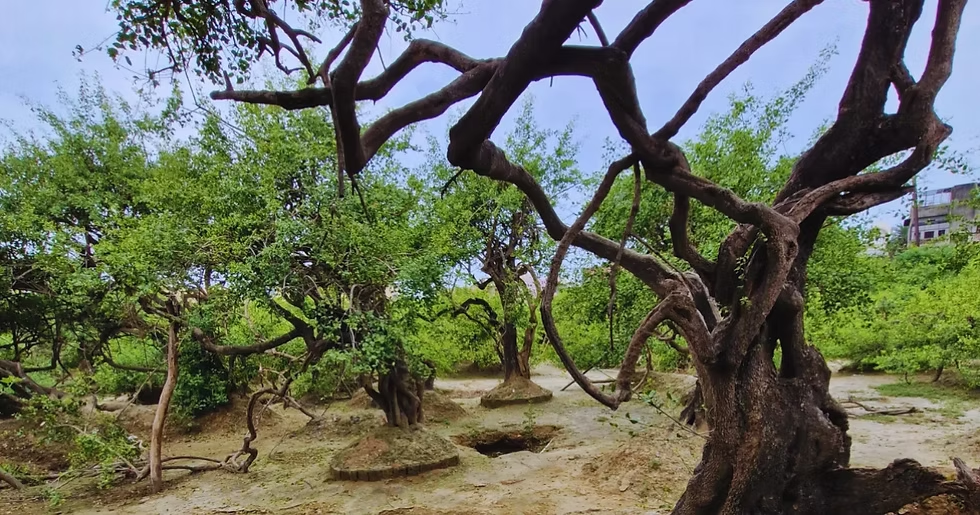
Nidhivan is one of the most mysterious and sacred sites in Vrindavan, believed to be the place where Radha and Krishna perform their divine dance, the Raas Leela, every single night. The temple is surrounded by a dense forest of unique Tulsi (Holy Basil) trees that have twisted, intertwined branches curving toward the ground; local legend says these trees transform into gopis (cowherd girls) at night to join the divine dance. Due to this strong spiritual belief, the gates of Nidhivan are locked at dusk, and everyone—including devotees, priests, and even monkeys—must leave the premises. It is said that anyone who tries to hide inside to witness the night’s events loses their sight, speech, or mental balance. Inside the main shrine, known as Rang Mahal, priests leave a bed, a jar of water, and some sweets every evening, which are reportedly found disturbed or partially consumed the next morning, as if used by the divine couple.
24. Banke Bihari Temple
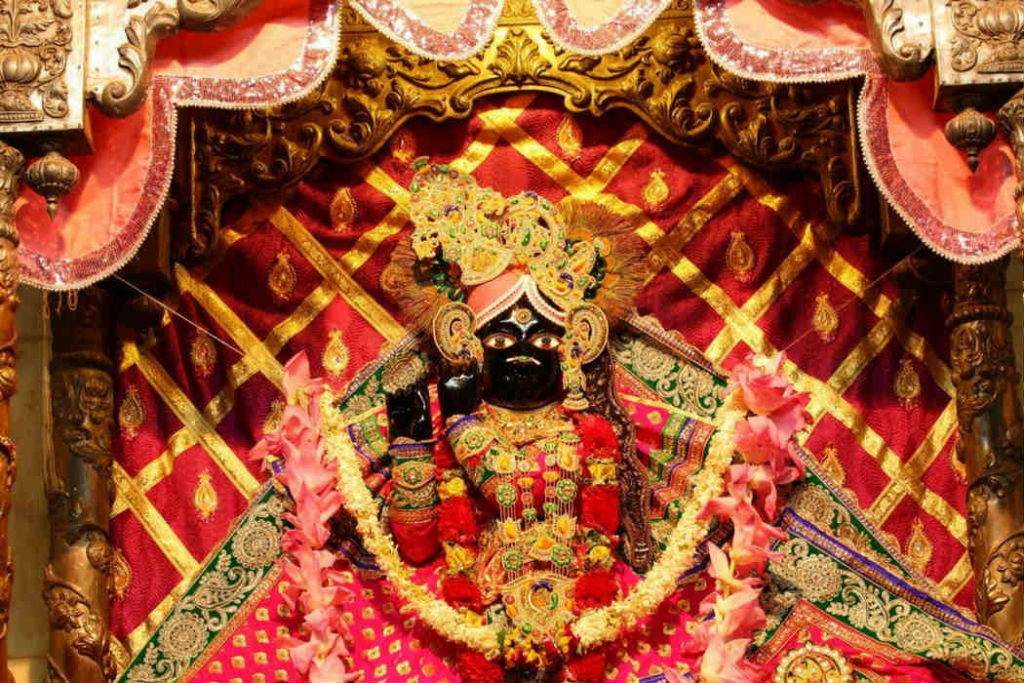
The Banke Bihari Temple in Vrindavan is one of India’s most revered shrines, dedicated to a unique form of Lord Krishna that represents the combined form of Radha and Krishna. Established in 1864 by the famous saint and musician Swami Haridas, the temple houses a self-manifested black marble idol that reportedly appeared before Haridas in the sacred grove of Nidhivan. The name “Banke” refers to the deity’s “three-fold bent” or Tribhanga posture, while “Bihari” means “supreme enjoyer”. A distinctive feature of the temple is that its curtains are drawn frequently—every few minutes—because it is believed that the intense, loving gaze of the deity could cause a devotee to lose self-consciousness or that the Lord might follow a devotee home. Additionally, in keeping with the tradition of treating the deity as a child, there are no bells or conches in the temple, as the loud sounds are thought to disturb the Lord’s peace.
25. Garud Govind Temple
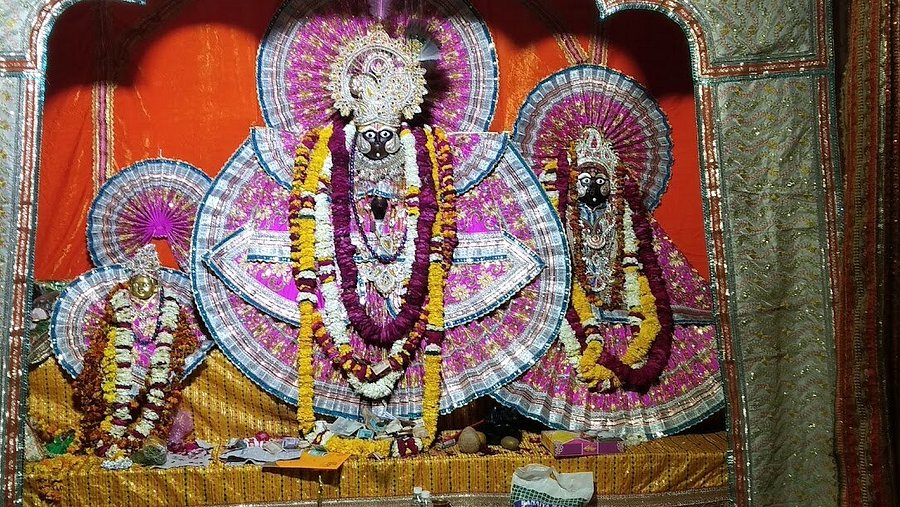
The Garud Govind Temple, located in Chhatikara near Vrindavan, is an ancient and spiritually powerful shrine believed to be over 5,000 years old. Established by King Vajranabha, the great-grandson of Lord Krishna, it marks the sacred spot where Krishna playfully acted out the role of Lord Vishnu by mounting his friend Sridama, who pretended to be the divine eagle, Garuda. The temple is world-renowned for its rare idol of Lord Govind (Narayana) depicted with twelve arms while seated on Garuda, accompanied by Goddess Lakshmi, Satyabhama, and Rukmini. It is a major center for devotees seeking relief from astrological afflictions, specifically globally famous for conducting rituals like the Kaal Sarp Dosh Nivaran Puja. According to legend, Garuda himself performed penance here to clear his doubts about Lord Rama’s divinity, eventually receiving a special darshan from Krishna that confirmed their oneness.