
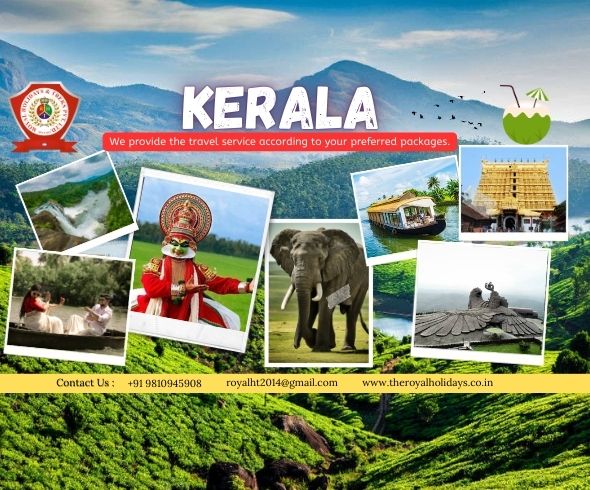
Kerala is a beautiful state in South India, often referred to as “God’s Own Country” due to its breathtaking natural beauty. It is renowned for its extensive coastline and sandy beaches—such as Kovalam—but it is perhaps even more famous for its ‘backwaters.’ These backwaters form a tranquil network of lagoons and canals, offering visitors the unique experience of staying in traditional houseboats. The state is also home to the lush green mountains known as the ‘Western Ghats,’ where one can discover cool hill stations like Munnar, replete with tea and spice plantations. Kerala is a truly unique destination, distinguished by its high literacy rate, its delicious and spicy cuisine traditionally served on banana leaves, and its vibrant festivals such as Onam and Thrissur Pooram. Whether you wish to spot wild elephants in the forest, enjoy a performance of the traditional Kathakali dance, or simply relax beneath a coconut tree—Kerala offers a serene and rejuvenating experience for everyone.
Tourism serves as another major pillar of its economy; people from across the globe flock to visit its backwaters, beaches, and hill stations, thereby generating employment opportunities within the hospitality and transportation sectors. In the realm of agriculture, Kerala stands as a leading producer of valuable crops such as rubber, black pepper, cardamom, and coconuts. The state also places significant emphasis on the service sector—encompassing IT hubs like Technopark as well as healthcare services—while simultaneously exporting high-quality seafood and spices. Overall, Kerala’s economy remains robust due to the excellent balance it maintains between traditional agriculture and modern technology, coupled with its global connectivity.
Kerala is generally regarded as one of the safest states in India—particularly for solo female travelers and families. This reputation is grounded in the state’s high literacy rate, its professional and well-organized tourism industry, and the respectful and helpful nature inherent in the local culture. It is based on this foundation. A special ‘Tourist Police Force’ is deployed at the state’s major tourism hubs—such as Kochi and Munnar—to assist visitors, and the rate of crimes against tourists here is extremely low. Furthermore, Kerala is also a leading state in the field of ‘Women-Friendly Tourism.
BEST PLACES TO VISIT IN KERALA :
1. Wayanad – The Land Of Heavenly Trails
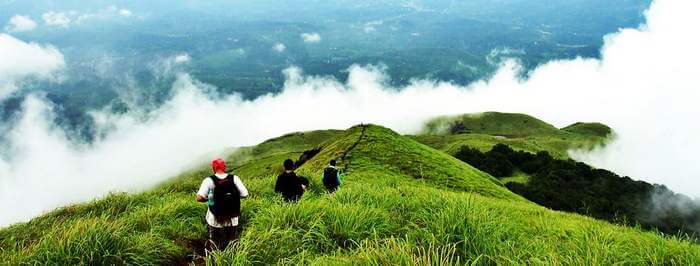
Wayanad is a lush, high-altitude plateau nestled in the Western Ghats of Kerala, often celebrated as a paradise for nature lovers and trekkers. Its “heavenly trails” wind through dense evergreen forests, sprawling tea and coffee plantations, and mist-covered peaks like Chembra, where hikers are rewarded with views of a natural heart-shaped lake. Beyond its physical beauty, Wayanad is steeped in ancient history; the Edakkal Caves house Neolithic rock carvings that date back over 6,000 years, offering a rare glimpse into prehistoric civilization. The region’s biodiversity is equally impressive, with the Wayanad Wildlife Sanctuary serving as a critical habitat for elephants, tigers, and leopards. Between its dramatic waterfalls like Meenmutty and its rich tribal heritage, Wayanad offers a rugged, misty escape that feels worlds away from the coastal heat.
2. Thekkady – For The Love Of Wildlife
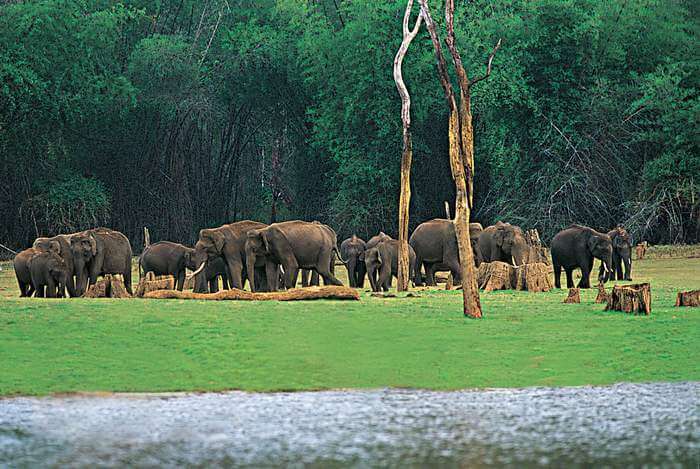
Thekkady is the ultimate destination for wildlife enthusiasts in Kerala, centered around the renowned Periyar National Park and Wildlife Sanctuary. Set high in the Cardamom Hills, this protected area is unique because its core is a vast, man-made lake where visitors can observe animals from the safety of a boat. It is one of India’s most significant elephant and tiger reserves, offering a rare chance to see herds of wild elephants, sambar deer, and even the elusive Nilgiri langur coming down to the water’s edge. Beyond the lake, the region is a sensory delight of spice scented air, with endless plantations of black pepper, cardamom, and cinnamon. Adventure seekers can engage in bamboo rafting, night treks through the jungle, or watch traditional Kalaripayattu martial arts performances, making it a place where rugged wilderness and deep-rooted culture perfectly converge.
3. Vagamon – Solitude Guaranteed
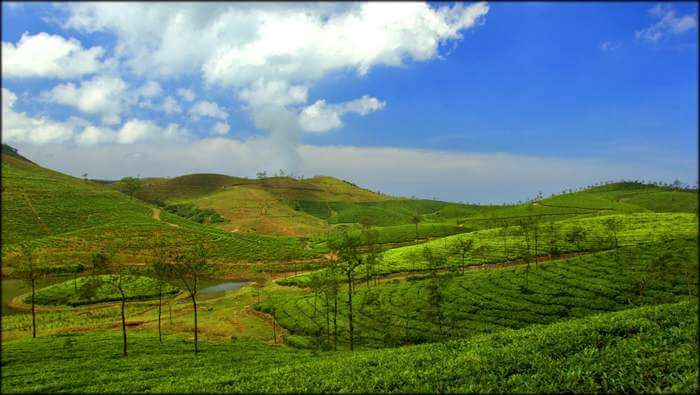
Vagamon is a hidden gem tucked away in the Idukki district, offering a serene escape that truly lives up to its promise of guaranteed solitude. Unlike the more bustling tourist hubs, this quiet hill station is defined by its rolling pine forests, emerald-green meadows, and mist-clad valleys that create a tranquil, otherworldly atmosphere. The landscape is a unique blend of three hills—Thangal, Murugan, and Kurisumala—representing a harmonious mix of different faiths, each offering breathtaking viewpoints and a sense of spiritual calm. Visitors can wander through the vast Pine Valley, explore the Kurisumala ashram, or simply enjoy the cool mountain breeze while watching paragliders drift over the meadows. With its lack of commercial noise, winding roads lined with tea estates, and hidden waterfalls, Vagamon remains the perfect sanctuary for those looking to disconnect from the modern world and find peace in nature’s lap.
4. Bekal – Nothing Less Than Heaven On Earth!
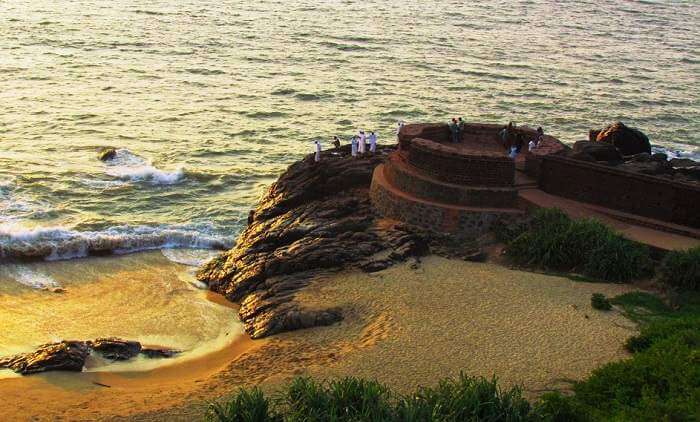
Bekal is often described as “heaven on earth” due to its stunning blend of historical grandeur and untouched coastal beauty. At the heart of this destination is the majestic Bekal Fort, the largest and best-preserved fort in Kerala, which rises dramatically from the Arabian Sea in a unique keyhole shape. Built primarily for defense by the Keladi Nayakas in the mid-17th century, the fort features massive laterite walls, mysterious underground tunnels, and a central observation tower that offers a breathtaking 360-degree view of the turquoise waters and the palm-fringed shoreline. Adjacent to the fort is the serene Bekal Beach, known for its vast stretches of golden sand, gentle waves, and a beautifully landscaped park that becomes ethereal during sunset. The region is a haven for those seeking a peaceful escape, away from commercial crowds, where the only sounds are the crashing waves and the rustling of Casuarina trees. Beyond the beach, the tranquil Valiyaparamba backwaters offer a rustic charm with private houseboat cruises through lily-covered waterways. With its rich spiritual heritage, including the nearby Ananthapura Lake Temple—the only one of its kind in Kerala—Bekal provides a soulful experience where history and nature remain in perfect, quiet harmony.
5. Varkala – One Of Kerala’s Most Scenic Seasides
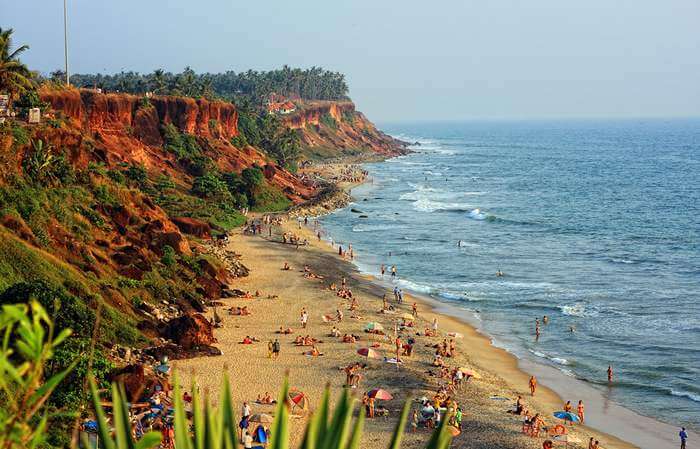
Varkala is a breathtaking coastal town in southern Kerala, uniquely famous for its stunning red laterite cliffs that stand in sharp contrast against the blue expanse of the Arabian Sea. This geological marvel, known as the Varkala Formation, is the only place in southern Kerala where cliffs are found adjacent to the sea, providing spectacular viewpoints for sunsets that are often considered the best in India. Along the cliff’s edge, a bustling paved walkway is lined with bohemian cafes, seafood shacks, and handicraft boutiques, creating a vibrant, laid-back atmosphere. Below the cliffs lies the pristine Papanasam Beach, whose waters are believed to be sacred; locals and pilgrims often immerse themselves here to wash away their sins. Beyond the shoreline, Varkala is a spiritual and cultural hub, home to the 2,000-year-old Janardhana Swami Temple and the Sivagiri Mutt, which draws those seeking peace and enlightenment. Whether you are looking for world-class surfing, authentic Ayurvedic treatments, or simply a quiet spot on the sand, Varkala offers a perfect blend of natural drama and spiritual serenity.
6. Kuttanad – Rice Bowl Of Kerala
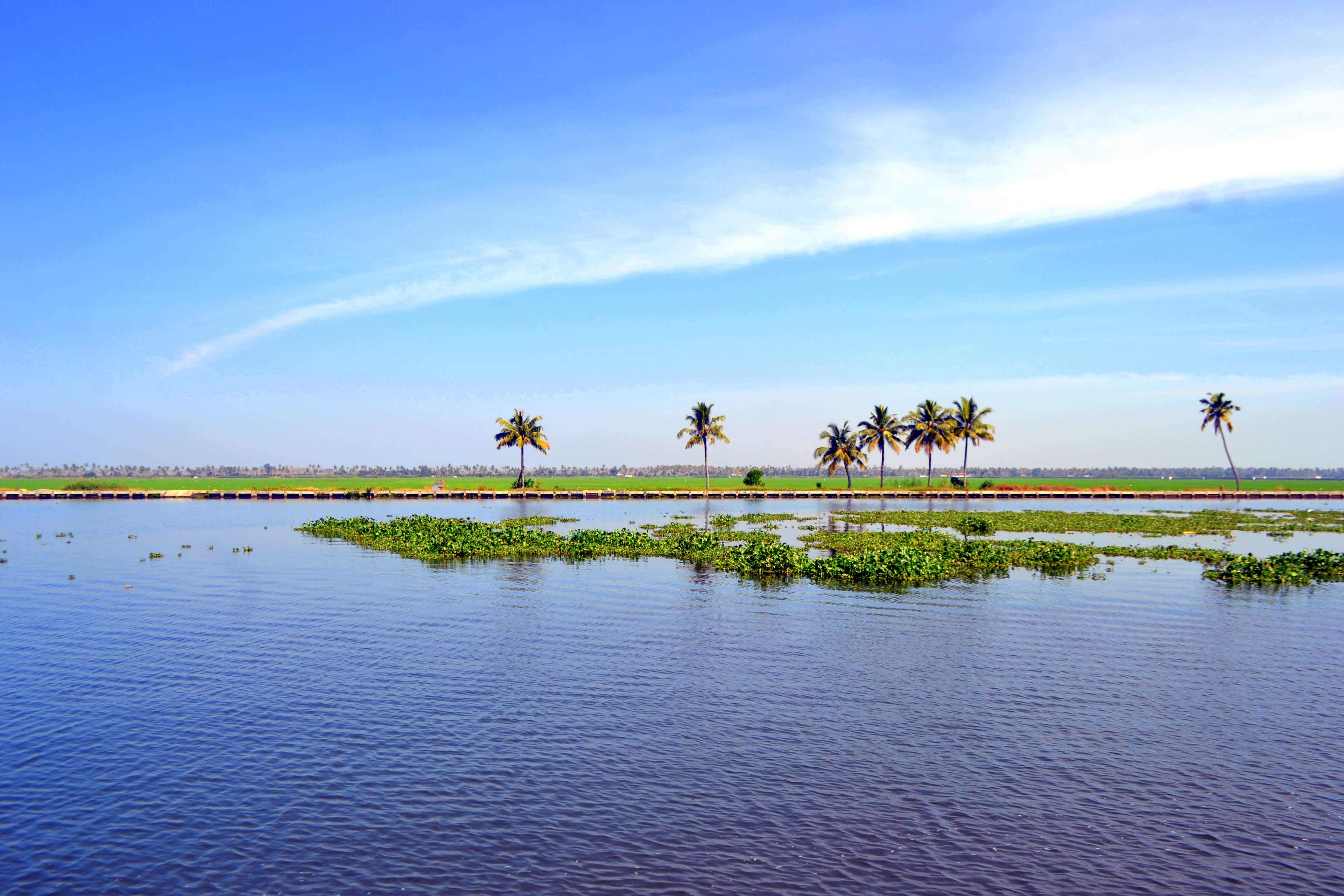
Kuttanad is famously known as the “Rice Bowl of Kerala” because it is the heart of the state’s vast paddy cultivation, uniquely situated in the Alappuzha and Kottayam districts. It is one of the few places in the world where farming is practiced below sea level, with massive reclaimed land areas called “Paadasekharams” protected by dikes. This low-lying region is a breathtaking maze of four major rivers—the Pamba, Meenachil, Achankovil, and Manimala—that flow into the massive Vembanad Lake, creating a vibrant ecosystem of shimmering waterways and endless green fields. Life in Kuttanad is inextricably linked to the water; locals travel by small boats, and the area is synonymous with the iconic houseboats (Kettuvalams) that glide past coconut groves and rural villages. During the harvest season, the landscape transforms into a sea of golden grain, while the monsoon season brings the adrenaline of the Nehru Trophy Boat Race, making Kuttanad a spectacular showcase of Kerala’s agricultural heritage and backwater charm.
7. Thrissur – Experience Rich Cultural Heritage
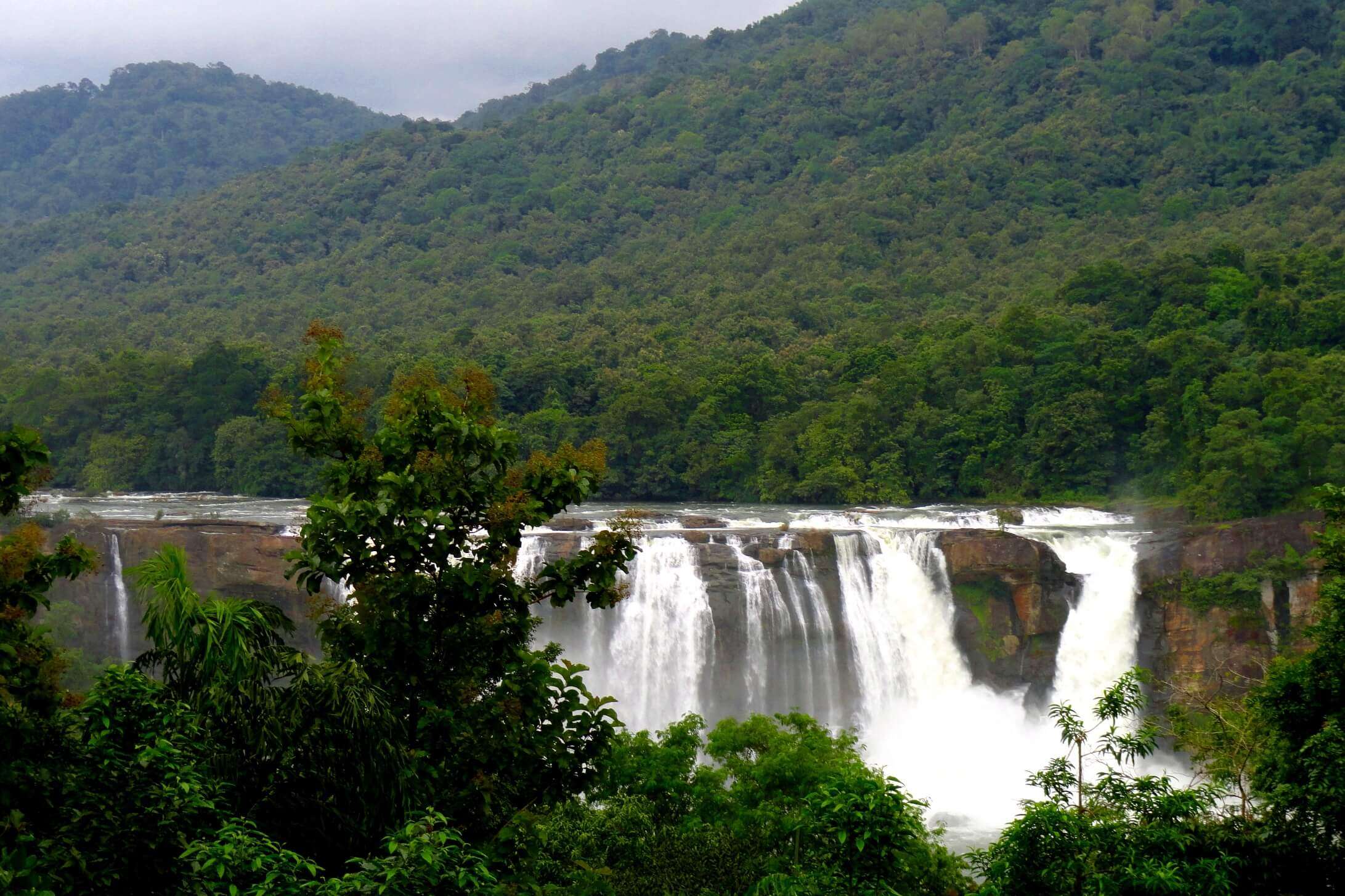
Thrissur is widely recognized as the “Cultural Capital of Kerala,” a title it earns through its deep-rooted traditions, ancient architecture, and spectacular festivals. The city is built around a massive 65-acre hillock topped by the majestic Vadakkunnathan Temple, a classic example of Kerala’s traditional wooden architecture and mural art. Thrissur is most famous for the world-renowned Thrissur Pooram, an annual festival that transforms the city into a sea of people gathered to witness a magnificent procession of caparisoned elephants, thunderous percussion ensembles (Panchavadyam), and an extraordinary display of fireworks. Beyond the festivals, the city is a hub for learning and performing arts, housing the Kerala Kalamandalam, where the ancient traditions of Kathakali, Mohiniyattam, and Koodiyattam are preserved. With its vibrant gold markets, historical museums, and close proximity to the Athirappilly Waterfalls, Thrissur offers a dense, immersive experience into the soul of Malayali heritage and spirituality.
8. Palakkad – A Nature’s Delight
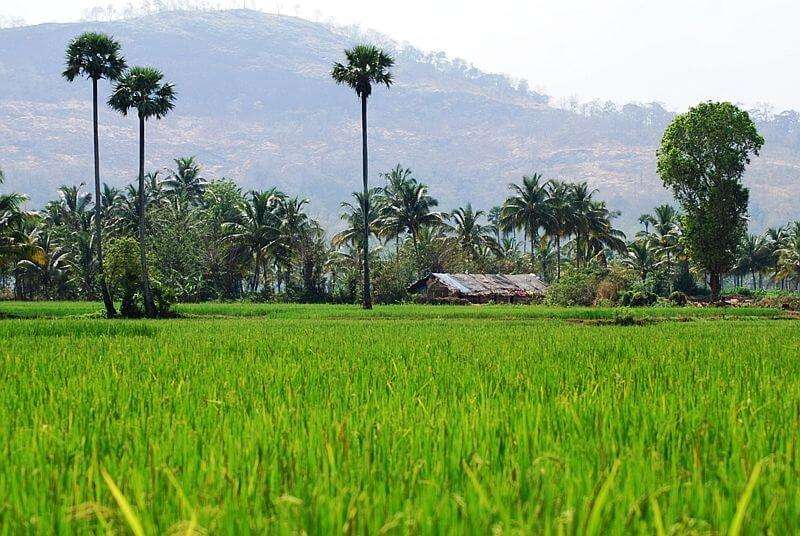
Palakkad, often called the “Gateway to Kerala,” is a breathtaking expanse of lush plains and mountain passes nestled at the foot of the Western Ghats. It is most famous for the Palakkad Gap, a natural 30-kilometer break in the mountain range that allows the cool breezes and cultures of the neighboring plains to merge with Kerala’s tropical landscape. The region is a true nature’s delight, home to the Silent Valley National Park, one of the last undisturbed tracts of South Indian tropical rainforest, sheltering rare species like the Lion-tailed Macaque. The landscape is dotted with vast golden paddy fields—earning it the nickname “the granary of Kerala”—and massive dams like Malampuzha, which features beautiful gardens and a massive rock sculpture. History buffs can explore the remarkably well-preserved Palakkad Fort, built by Hyder Ali in 1766, which sits in the heart of the town. With its unique mix of Tamil and Malayali cultures, rhythmic percussion traditions, and misty mountain backdrops like Nelliyampathy, Palakkad offers a raw, authentic connection to the natural world.
9. Malappuram – Vedic Learning And Islamic Philosophy Centre
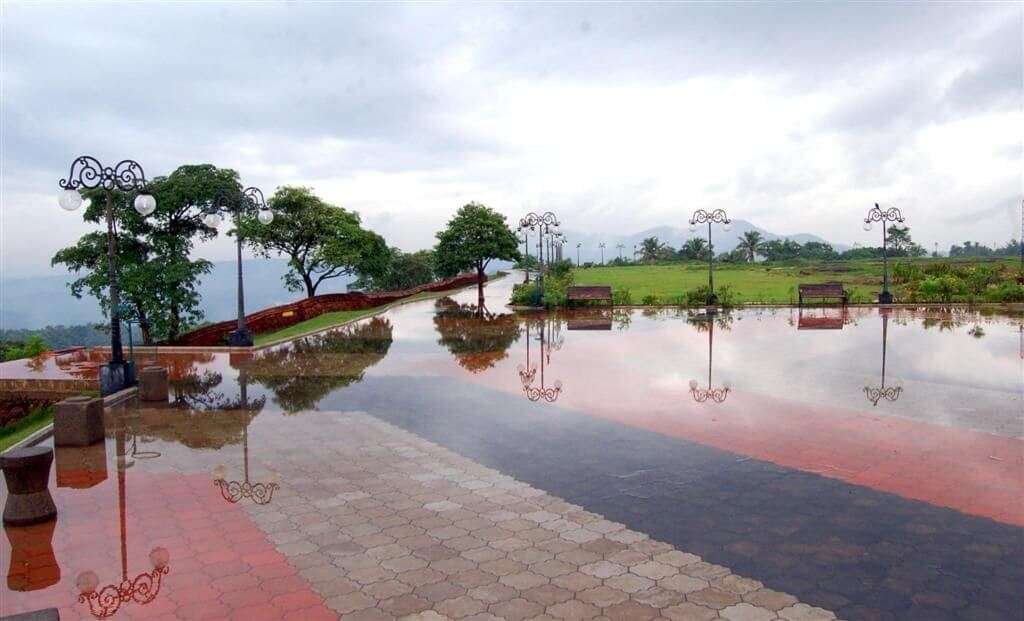
Malappuram is a unique cultural melting pot, historically revered as a major seat of both Vedic learning and Islamic philosophy in Kerala. The district’s rich intellectual heritage is anchored in places like Thirunavaya, situated on the banks of the Bharathapuzha river, which was an ancient center for Vedic education and the traditional venue for the historic Mamankam festival. Simultaneously, Malappuram has been a cradle of Islamic scholarship for centuries; the town of Ponnani was once known as the “Small Makkah” of South India due to its numerous mosques and traditional religious schools (Madrasas) that attracted students from across the globe. This spiritual depth is complemented by a history of resistance and bravery, notably seen at the Malappuram Juma Masjid and various monuments dedicated to the Mappila Rebellion. Beyond its philosophical roots, the district is naturally gifted with the lush Nilambur teak forests, home to the world’s oldest teak plantation and the unique Teak Museum. Today, Malappuram remains a vibrant center where diverse religious traditions and classical arts coexist against a backdrop of rolling hills and serene river valleys.
10. Ponmudi – The Golden Peak
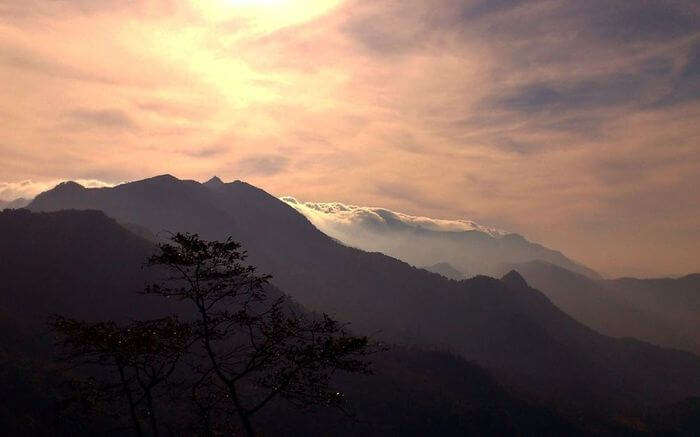
Ponmudi, which translates to “The Golden Peak,” is a breathtaking hill station nestled in the Western Ghats near Thiruvananthapuram. It is renowned for its mist-laden landscapes and a thrilling journey that involves navigating 22 hairpin curves, offering spectacular views of the verdant valleys below. Unlike many other hill stations, Ponmudi is characterized by its unique shola forests and vast, rolling grasslands that turn a brilliant shade of green during the monsoon and catch the golden hue of the sun during dawn and dusk. The region is a haven for trekkers and birdwatchers, with trails leading to the majestic Agasthyarkoodam, one of the highest peaks in the Sahyadri range. Along with its cool, refreshing climate, visitors are drawn to the nearby Peppara Wildlife Sanctuary and the shimmering Meenmutty waterfalls. Whether you are walking through the spice and tea plantations or standing atop the breezy cliffs at the Echo Point, Ponmudi offers a tranquil, golden-hued escape from the humid coastal plains.
11. Ashtamudi – Impeccable Beauty
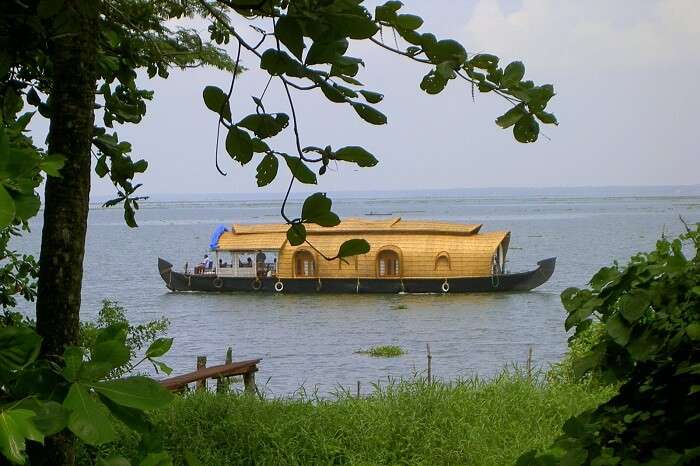
Ashtamudi is widely considered the gateway to the backwaters of Kerala, centered around the magnificent Ashtamudi Lake, whose name translates to “eight hills” or “eight braids,” referring to the lake’s unique branching topography. As the second-largest lake in Kerala, it offers an impeccable beauty defined by vast stretches of shimmering blue water, lush coconut groves, and a network of intricate canals that feed into the Arabian Sea. This destination is famous for its luxurious houseboat cruises, providing a more secluded and tranquil alternative to the busier routes of Alappuzha. The region is also home to the historic port town of Kollam, where visitors can see the Chinese fishing nets silhouetted against the sunset and explore the vibrant coir-making industry. Beyond its scenic charm, Ashtamudi is a vital wetland ecosystem, supporting diverse birdlife and traditional fishing villages, making it a perfect spot for those seeking a slow, immersive experience in the heart of Kerala’s watery wilderness.
12. Marari – Gorgeous Beach Location
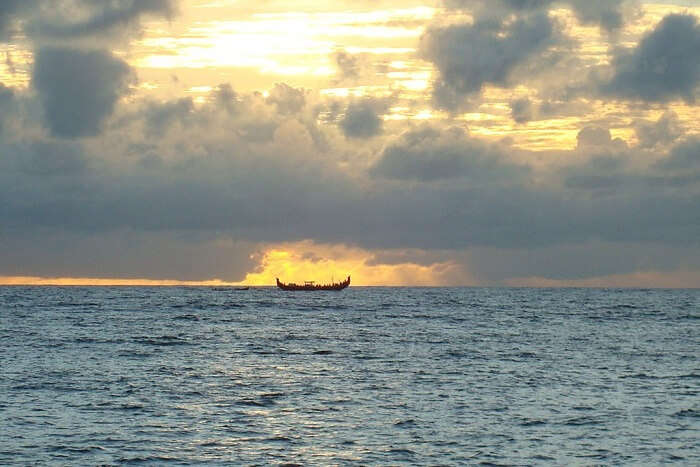
Marari is a hidden coastal paradise that offers a “gorgeous beach location” defined by its pristine, white sands and a tranquil, slow-paced atmosphere. Located in the Alappuzha district, Marari Beach is not a typical bustling tourist spot; instead, it is a traditional fishing village where the rhythm of life is dictated by the tides and the daily catch. The shoreline is framed by towering coconut groves and remains largely undeveloped, providing a sense of untouched natural beauty that is rare to find. Visitors can spend their days lounging in hammocks, watching local fishermen launch their colorful wooden boats, or exploring the quiet village lanes on bicycles. The area is also renowned for its high-end eco-friendly resorts that specialize in authentic Ayurvedic treatments and yoga, making it a premier destination for wellness and rejuvenation. With its spectacular sunsets over the Arabian Sea and its proximity to the backwaters, Marari is the ultimate escape for those seeking “sun and sand” without the crowds.
13. Cochin – Major Port City
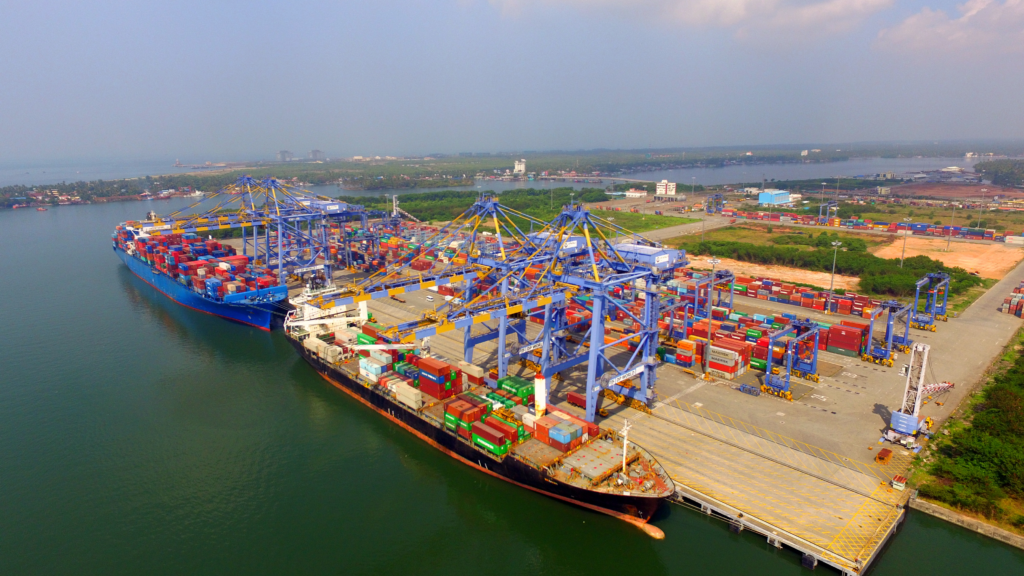
Cochin, now officially known as Kochi, is a vibrant “Major Port City” that has served as a gateway to India for over 600 years, earning the nickname “Queen of the Arabian Sea.” Its unique character is a seamless blend of historical layers, where the iconic Chinese Fishing Nets at Fort Kochi stand alongside medieval Portuguese churches, Dutch palaces, and an ancient Jewish synagogue in Jew Town. This history as a global spice trading hub has evolved into a modern metropolis that houses the world’s first fully solar-powered airport and a massive international container transshipment terminal. Beyond its commercial might, Kochi is the cultural heart of Kerala, offering world-class art galleries, the Kochi-Muziris Biennale, and traditional Kathakali performances. With its serene backwaters, the futuristic Kochi Metro, and bustling spice markets, the city remains a captivating destination where colonial charm meets a rapidly growing urban future.
14. Thiruvananthapuram – Economic Capital Of Kerala
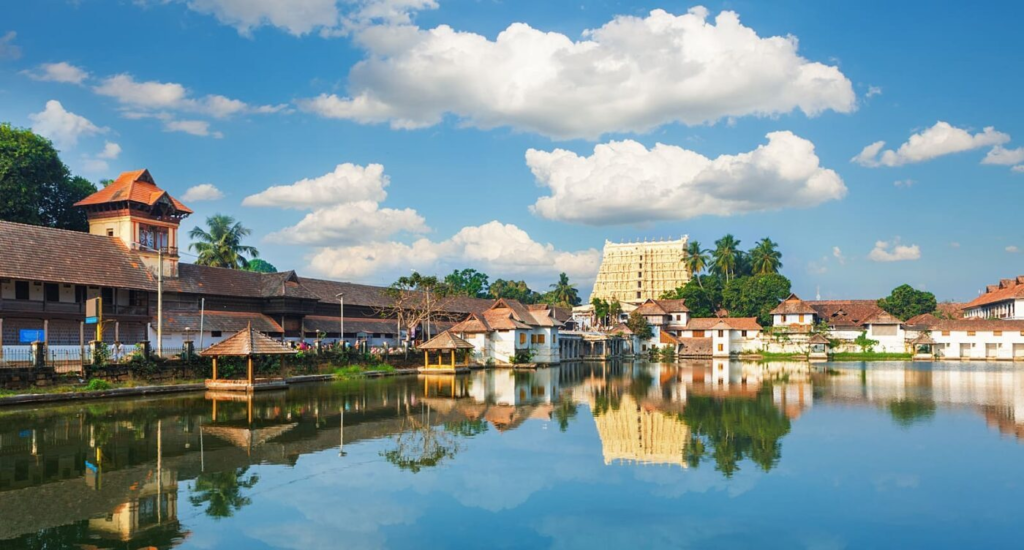
Thiruvananthapuram, the capital city of Kerala, is a distinguished urban centre that serves as the state’s administrative and economic powerhouse. Often referred to by its colonial name, Trivandrum, it is built across seven hills and seamlessly blends its rich regal history with a fast-growing modern economy. The city is home to Technopark, one of India’s largest and earliest IT parks, which hosts hundreds of global tech companies and forms the backbone of the state’s software exports. Beyond IT, the city is a strategic hub for space research, being the headquarters of the Vikram Sarabhai Space Centre (VSSC). Despite its economic might, the city retains a soulful, traditional charm centered around the magnificent Sree Padmanabhaswamy Temple, renowned as one of the wealthiest temples in the world. As the seat of the Kerala Government, it houses important landmarks like the Secretariat and the Napier Museum, alongside premier educational and medical institutions. With its wide, clean avenues, lush greenery, and proximity to the famous Kovalam and Varkala beaches, Thiruvananthapuram offers a high quality of life, balancing its role as a commercial leader with its identity as a centre for arts, science, and heritage.
15. Kollam – Treasure Trove Of Natural Marvels
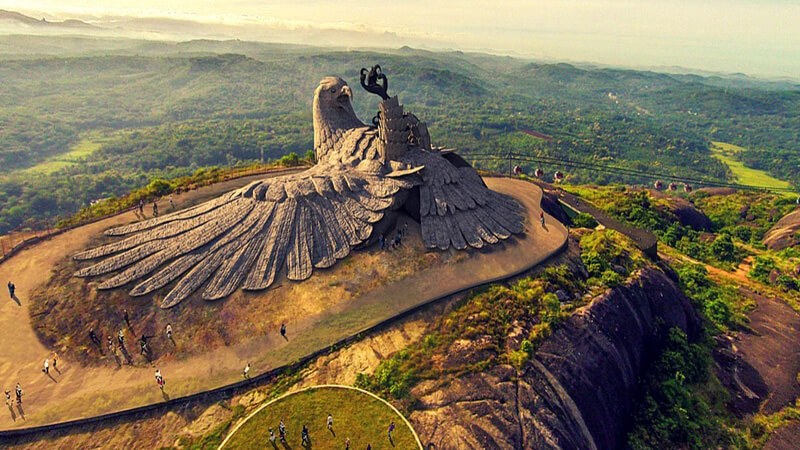
Kollam is truly a “Treasure Trove of Natural Marvels,” serving as the southern gateway to Kerala’s famed backwaters and home to the spectacular Ashtamudi Lake. Known for its unique octopus-shaped topography, the lake’s eight branches create a shimmering labyrinth of canals and lagoons lined with lush coconut groves and traditional Chinese fishing nets. Nature enthusiasts are often drawn to the tranquil Munroe Island, a cluster of eight tiny islets where the Kallada River meets the lake, offering a serene glimpse into rustic village life and mangrove ecosystems through quiet canoe tours. To the east, the landscape rises into the Western Ghats, housing the Shenduruny Wildlife Sanctuary and the Thenmala Ecotourism Centre—India’s first planned eco-tourism destination—where dense evergreen forests and refreshing waterfalls like Palaruvi, meaning “Stream of Milk,” provide a cool mountain retreat. Along the coast, the region boasts a dozen sandy beaches, including the historic Thangasseri with its iconic lighthouse and the secluded Thirumullavaram, famous for its crystal-clear waters and geological formations like the “Sunday Rock”. From the majestic rock sculptures of Jatayu Earth’s Center to the sprawling cashew and rubber plantations, Kollam offers a diverse palette of natural wonders that blend historical grandeur with raw, untouched beauty.
16. Thalassery – The Most Beautiful Coastal Town
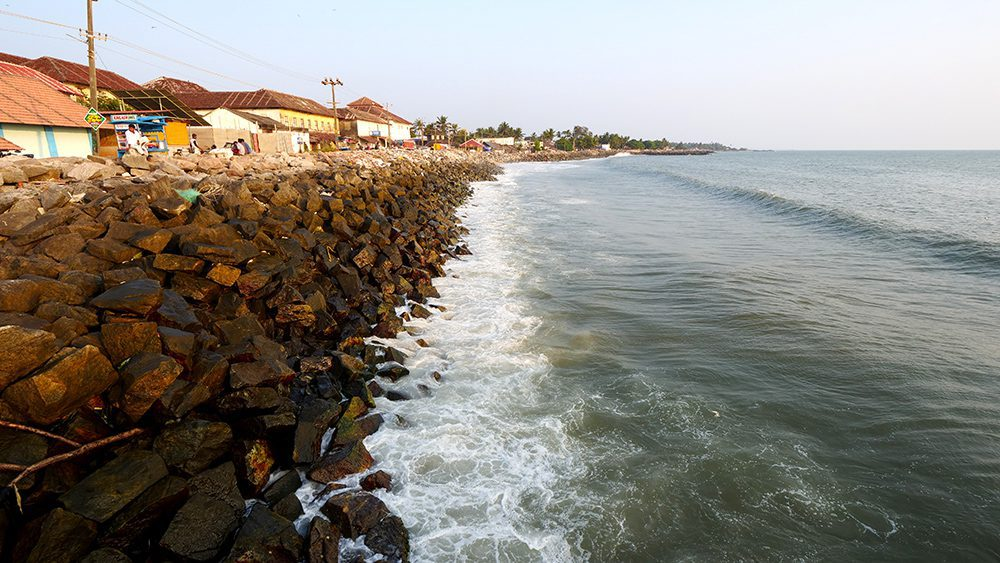
Thalassery, often hailed as the “City of Three Cs”—Cake, Cricket, and Circus—is arguably the most beautiful and culturally vibrant coastal town in northern Kerala. Its charm lies in its unique blend of colonial history and scenic maritime beauty, anchored by the imposing Thalassery Fort, which stands atop a rocky cliff overlooking the Arabian Sea. The town’s shoreline is exceptionally picturesque, featuring the Overbury’s Folly, a seaside park that offers panoramic views of the water, and the nearby Dharmadam Island, a secluded emerald islet that can be reached by wading through the sea during low tide. Beyond its natural beauty, Thalassery is a culinary landmark, famous for its distinct Thalassery Biryani and its history as the birthplace of the modern bakery in Kerala. The town’s architecture reflects a rich tapestry of influences, from British colonial structures to ancient mosques and temples, all set against a backdrop of swaying palms and crashing waves. Whether it is the spectacle of Theyyam performances in local shrines or the sight of traditional wooden boats at the old pier, Thalassery offers a nostalgic, breezy atmosphere that captures the true essence of the Malabar Coast.
17. Nilambur – The Land Of Teak Plantations
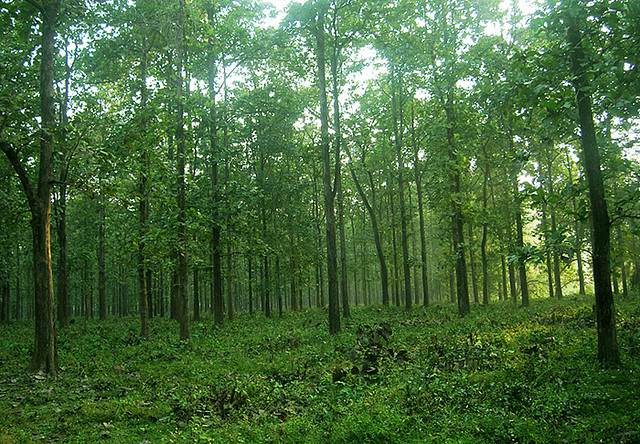
Nilambur is widely celebrated as the “Land of Teak Plantations,” home to some of the world’s oldest and most magnificent teak forests. The town made history in the 1840s when the British established the Conolly’s Plot, the world’s first man-made teak plantation, where giant trees still stand as a testament to the region’s fertile soil and silviculture heritage. This legacy is preserved at the Nilambur Teak Museum, a unique two-story institution that provides an in-depth look at the biology, history, and craftsmanship associated with this “king of timber.” Beyond the plantations, Nilambur is a gateway to the wilderness of the Western Ghats, featuring the lush Nedumkayam rainforests and the breathtaking Adyanpara Waterfalls, which cascade down through dense greenery. The area is also famous for its traditional Kovilakoms (palatial residences) of the Nilambur Royal Family, which showcase exquisite wooden architecture and intricate carvings. With its blend of colonial forestry, tribal culture, and serene riverbanks, Nilambur offers a verdant retreat that celebrates the enduring beauty of nature and timber alike.
18. Kalpetta – That Quaint, Little Town
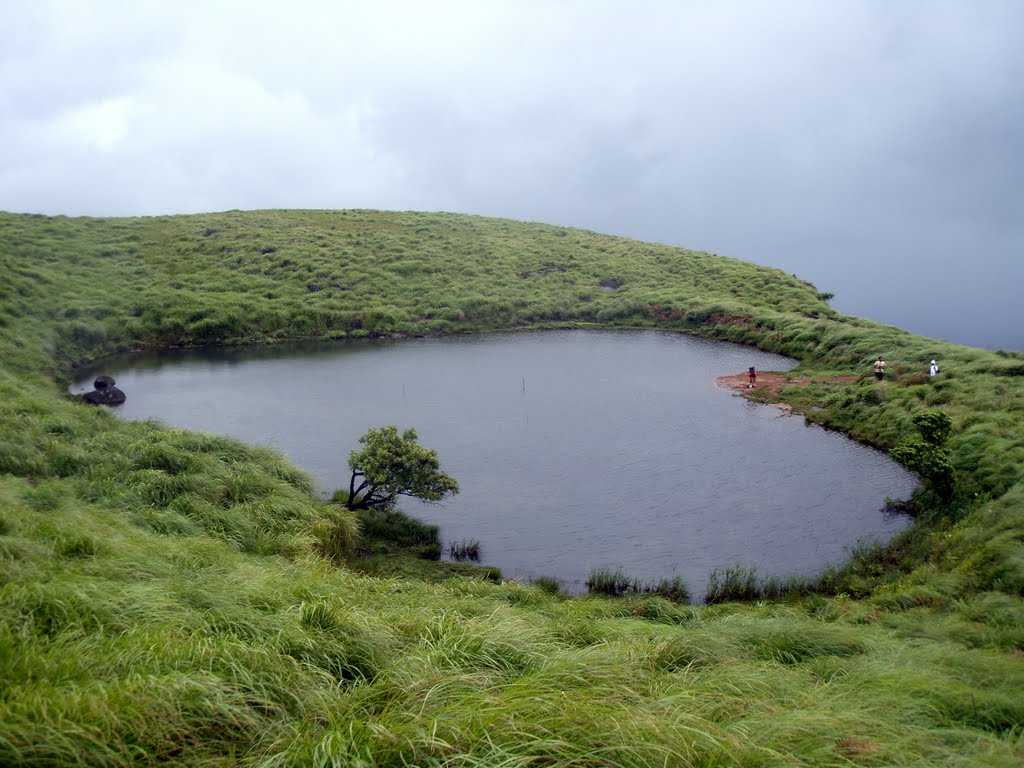
Kalpetta is a charming, “quaint little town” that serves as the bustling headquarters of the Wayanad district, uniquely positioned as a central hub surrounded by coffee-scented mountains. Despite being an administrative centre, it retains a cozy, highland atmosphere where the air is consistently cool and the streets are often draped in mountain mist. The town is the perfect base for exploring North Kerala’s wilderness, with the towering Chembra Peak—the highest in the region—looming in the distance, inviting trekkers to discover its heart-shaped lake. Just a short drive from the town center, you can find the stunning Meenmutty and Soochipara waterfalls, as well as ancient Jain temples that reflect the town’s deep historical and religious roots. Kalpetta is especially loved by travelers for its local spice markets and small cafes that serve authentic Malabar cuisine, offering a warm, welcoming vibe that makes it feel like a home away from home. Its combination of urban convenience and immediate access to verdant tea estates and bamboo forests makes it a quintessential stop for anyone seeking the quiet beauty of the Western Ghats.
19. Mannarkkad – Doorway To Silent Valley
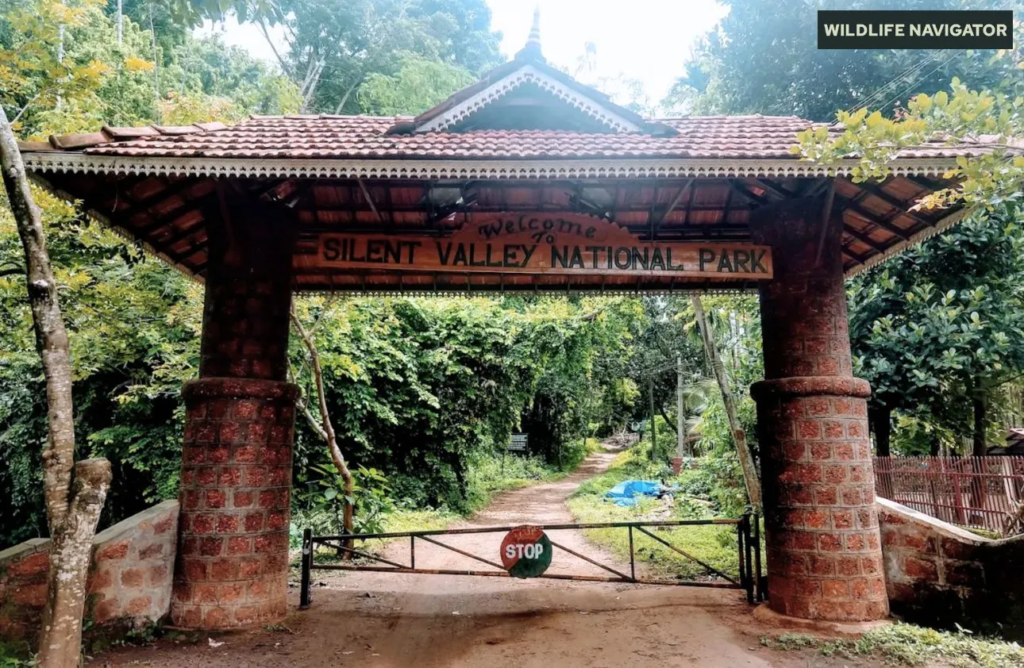
Mannarkkad is a tranquil town in the Palakkad district that serves as the essential “Doorway to Silent Valley,” offering the primary access point to one of India’s last remaining tracts of undisturbed tropical evergreen rainforest. Nestled at the foothills of the Western Ghats, the town acts as a vital transition zone where the bustling plains meet the mystical, ancient wilderness of the Silent Valley National Park. The journey from Mannarkkad toward the park is a scenic ascent through dense canopy and winding mountain roads, leading to a sanctuary home to the rare, endangered Lion-tailed Macaque and the crystal-clear waters of the Kunthi River. Beyond its role as a gateway, Mannarkkad is surrounded by its own natural charms, including the Siruvani Dam area and numerous rubber and spice plantations that carpet the landscape in deep green. The town itself reflects a slow-paced, rustic lifestyle where the local culture is deeply intertwined with the rhythms of the forest and the mountains. For nature lovers and researchers alike, Mannarkkad is more than just a stopover; it is the starting point for a journey into a silent, prehistoric world where the only sounds are the rustling of leaves and the calls of exotic birds.
20. Thenmala – The Planned Ecotourism Land
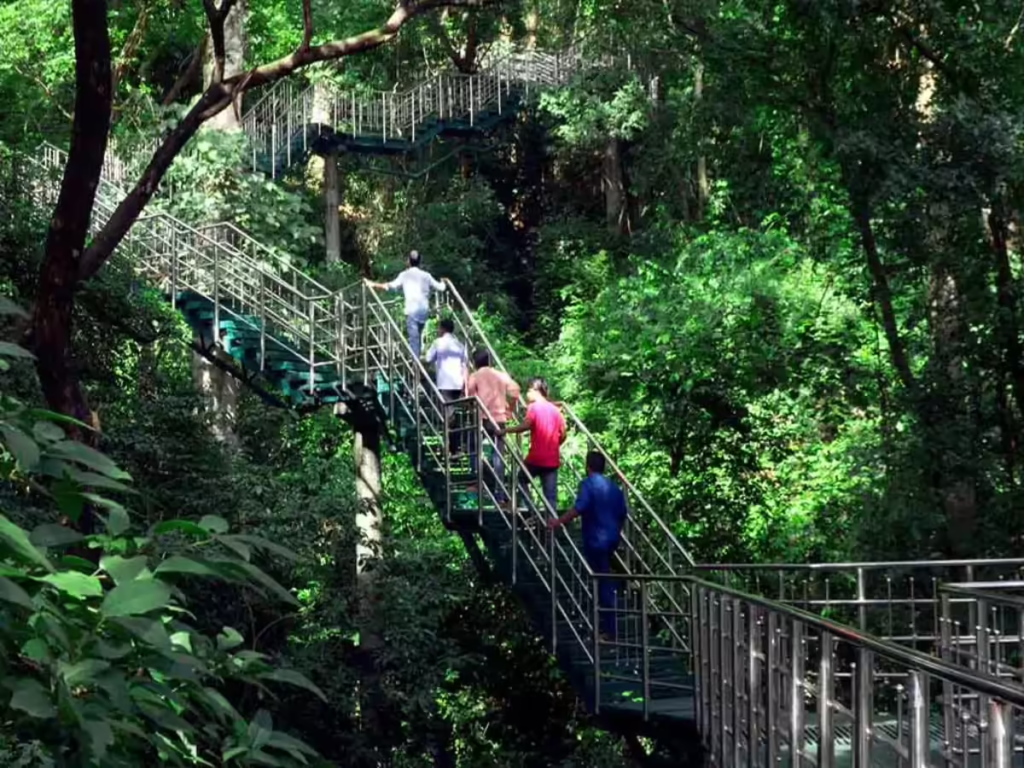
Thenmala is a beautiful destination in the Kollam district, famous for being India’s first planned ecotourism spot. The name “Thenmala” means “Honey Hill,” because the honey collected from these forests is believed to have high medicinal value. The area is divided into different zones to give visitors a mix of adventure and relaxation. You can enjoy a peaceful boat ride in the reservoir, walk across a thrilling suspension bridge, or explore the Culture Zone which features a musical dancing fountain. For nature lovers, there is a Deer Rehabilitation Centre where you can see spotted deer and sambar in a natural forest setting. The landscape is covered in thick green trees and is home to the Shenduruny Wildlife Sanctuary, making it a great place for trekking and birdwatching. Whether you want to go butterfly safari, try mountain biking, or just enjoy the cool mountain air, Thenmala is designed to let you experience the wilderness without harming the environment.