
Kargil is a prominent district and town within the Indian Union Territory of Ladakh, renowned for the significance of its soldiers, its historical trading importance, and its towering mountainous terrain. The Kargil War of 1999 was a conflict fought between India and Pakistan amidst the high mountains of Ladakh. It began when, during the winter months, Pakistan covertly infiltrated its troops across the ‘Line of Control’ (LoC) into Indian outposts.
To dislodge the intruders, India launched ‘Operation Vijay,’ resulting in fierce and decisive battles fought at locations such as Tololing and Tiger Hill. Ultimately, India emerged victorious on July 26, 1999, following which the ‘Dras War Memorial’ was established; it was inaugurated by the then Prime Minister, Atal Bihari Vajpayee, on July 26, 2000. Situated in Ladakh, this region is also celebrated for its magnificent and pristine landscapes—including the ‘Suru Valley.’
It offers excellent opportunities for trekking and adventure tourism, alongside fruit orchards and a rich, unique culture that features Buddhist monasteries such as ‘Mulbekh.’ Kargil is regarded as a safe and hospitable tourist destination, characterized by a pleasant atmosphere and offering a culturally enriching experience. Located within the Union Territory of Ladakh, this destination is completely safe for travelers—including women and solo travelers. The best time to visit is during the summer season.
Here Are The Top Attractions & Experiences In Kargil :
1. Kargil Gompa & Buddhist Monastery
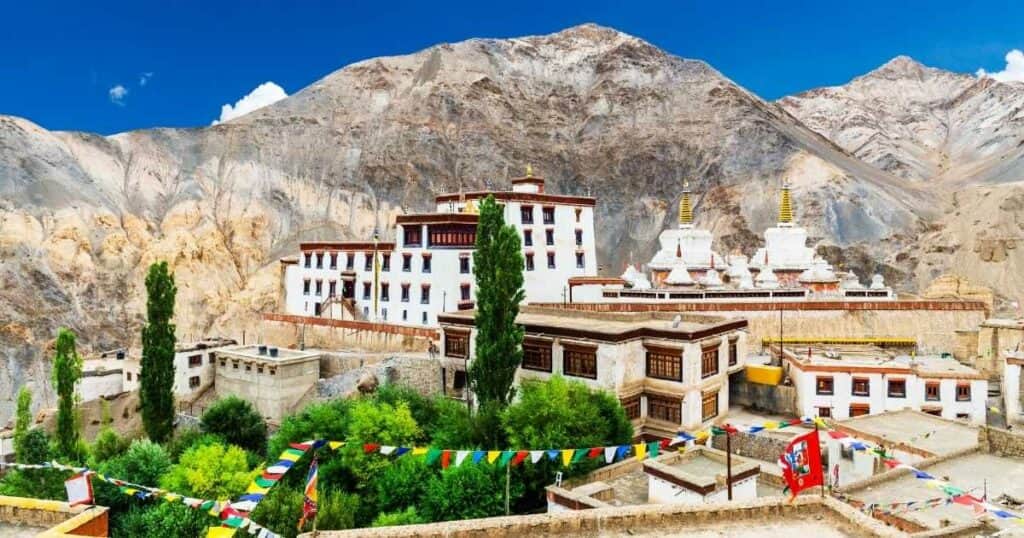
The Kargil Gompa, often referred to as the Mulbekh Monastery, is a prominent Buddhist site located about 45 km from Kargil town. It is most famous for the Chamba Statue, a massive 9-metre (30-foot) tall figure of the Maitreya Buddha carved directly into a limestone rock face. Perched on a steep cliff overlooking the Srinagar-Leh Highway, the monastery consists of two separate gompas Serdung and Rgaldan-se belonging to the Drukpa and Gelugpa schools of Buddhism.
This spiritual landmark dates back roughly 800 years and serves as a symbolic cultural gateway, marking the transition from the Muslim-majority areas of Kargil to the Buddhist heartland of Ladakh. Inside, visitors can find ancient inscriptions in the Kharosthi script, vibrant frescoes, and sacred relics. It remains a peaceful “living museum” where active monastic life continues against the backdrop of the rugged Himalayan terrain.
2. The Lamayuru Monastery
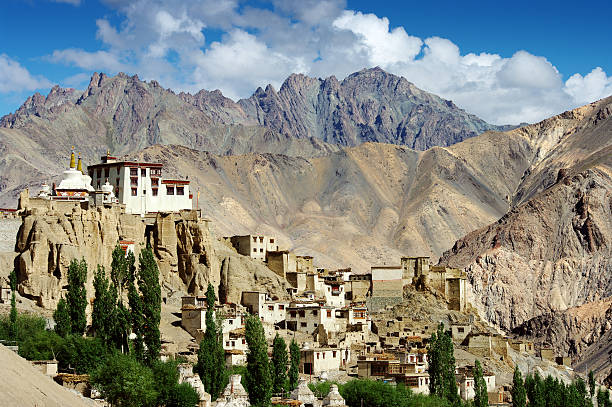
The Lamayuru Monastery, also known as Yuru Gompa, is one of the oldest and largest Buddhist monasteries in Ladakh, located about 127 km from Leh. It is perched atop a steep hill overlooking a landscape famously called “Moonland” because its unique, yellowish-grey rock formations and craters closely resemble the surface of the moon.
Legend says the valley was once a giant lake that dried up when the scholar Naropa meditated there in the 11th century, making it a sacred “place of freedom” . Today, it houses around 150 monks and is a central hub for the vibrant Yuru Kabgyat festival, where monks perform spiritual dances in colorful masks and costumes.
3. Kargil War Memorial
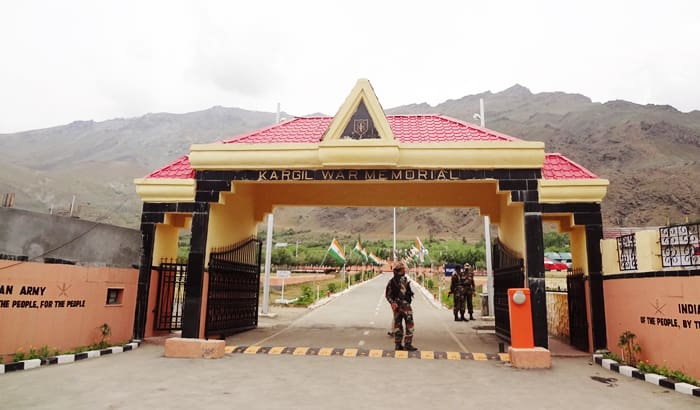
The Kargil War Memorial, also known as the Dras War Memorial, is a powerful monument built by the Indian Army in Dras, the second coldest inhabited place in the world. It commemorates the soldiers who fought and sacrificed their lives during the 1999 Kargil War (Operation Vijay) against Pakistan.
Located directly on the Srinagar-Leh National Highway 1D, the memorial sits at the foothills of the very mountains, like Tiger Hill and Tololing, where some of the fiercest high-altitude battles took place. Its central feature is a pink sandstone Wall of Heroes, which has the names of 527 martyrs etched on brass plates. An eternal flame (Amar Jawan Jyoti) burns 24/7 to honour their undying spirit. The Kargil War Memorial is widely considered a must-visit destination in Ladakh because it serves as an “emotional pilgrimage” rather than just a tourist stop.
4. Thiksey Monastery
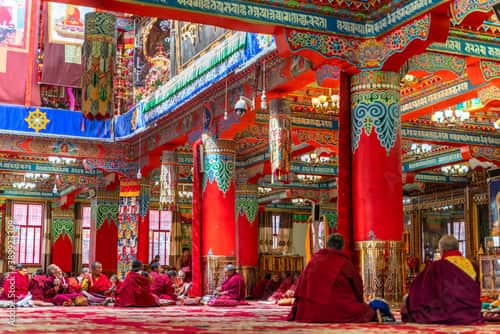
Thiksey Monastery is a stunning 12-storey Buddhist complex in Ladakh that looks like a miniature version of the famous Potala Palace in Tibet. Perched on a hill about 19 kilometres from Leh, it is famous for its beautiful white and red buildings that stacked on top of each other. The biggest highlight inside is the Maitreya Buddha, a giant, colourful statue that stands two storeys tall and is decorated with gold and copper. When you visit, you can walk through various temples filled with ancient paintings and statues, and if you arrive early in the morning, you can hear the peaceful sound of monks chanting and blowing traditional long horns. From the top of the monastery, you get a spectacular 360-degree view of the green Indus Valley and the snow-capped Himalayan mountains.
5. Suru Valley
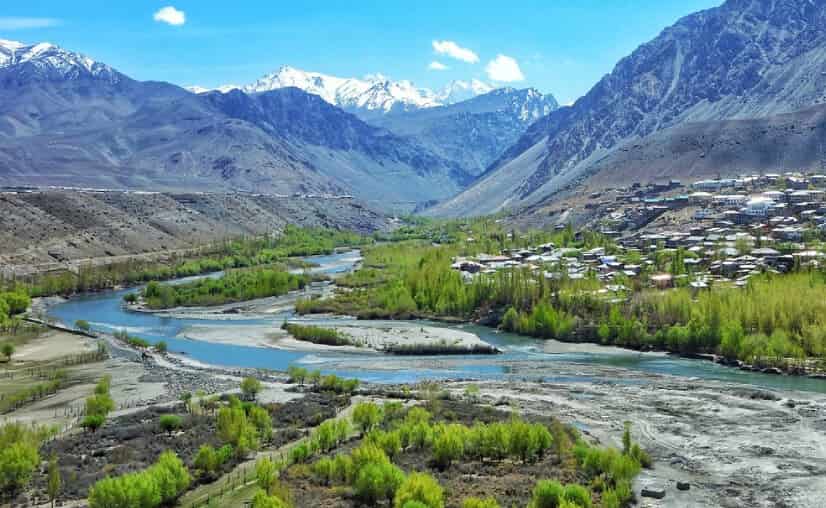
Suru Valley is a beautiful and lush green “hidden gem” in the Kargil district of Ladakh, standing out because it is much greener than the usual dry, brown desert landscapes of the region. The valley is famous for the Nun-Kun peaks, which are the highest mountains in the Indian Himalayas and offer spectacular views, especially from the village of Panikhar. Along the Suru River, you will find pretty villages like Sankoo, known as the “green bowl of Ladakh,” and historical sites like Kartse Khar, where a giant 7th-century Buddha is carved into a rock. The valley is also a great place for adventure, offering activities like trekking, river rafting, and camping amidst wildflower meadows. As you travel deeper toward Rangdum, the landscape becomes more rugged and dramatic, eventually leading to the Pensi La Pass and the gateway to the Zanskar Valley.
6. Nubra Valley
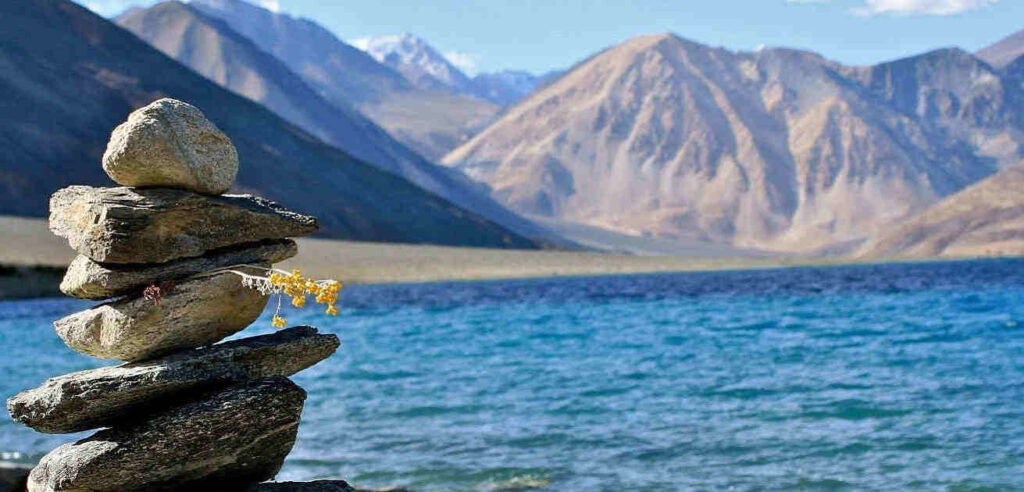
Nubra Valley is a stunning high-altitude desert located about 150 kilometres north of Leh, famous for its unique landscape of white sand dunes surrounded by massive purple mountains. To get there, you have to drive across Khardung La, which is one of the highest motorable roads in the world. The valley is most famous for the Hunder sand dunes, where you can ride rare, two-humped Bactrian camels that are found nowhere else in India. Another major highlight is the giant, 33-metre tall golden statue of Maitreya Buddha at Diskit Monastery, which overlooks the entire valley. Whether you are exploring the peaceful riverside villages, soaking in the natural hot springs at Panamik, or visiting the remote border village of Turtuk, Nubra Valley offers a magical mix of desert adventure and mountain beauty.
7. Khardung La
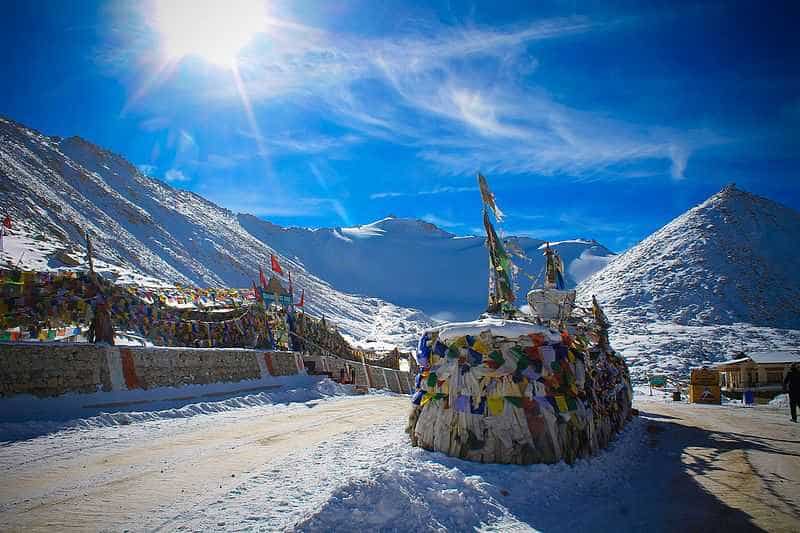
Khardung La is a world-famous mountain pass in Ladakh that stands at a staggering height of about 17,582 feet. It is legendary because it serves as the gateway to the Nubra and Shyok Valleys and is widely known as one of the highest motorable roads on the planet. When you reach the top, you are surrounded by prayer flags fluttering in the wind and a magnificent view of snow-covered Himalayan peaks stretching as far as the eye can see. Because the air is very thin at such a high altitude, travelers usually stop only for a few minutes to take photos with the iconic yellow signboard before heading back down. It is a thrilling destination for bikers and adventure seekers who want the “top of the world” experience while driving through dramatic turns and icy paths.
8. Magnetic Hill
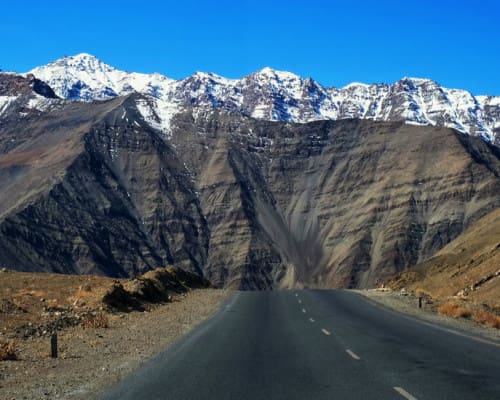
Magnetic Hill is a fascinating “gravity hill” located on the Leh-Kargil highway, about 30 kilometres from Leh. It is famous because of a strange phenomenon where cars seem to roll uphill on their own, even when the engine is turned off and the gear is in neutral. There is a specific spot on the road marked with a yellow box where you can park your vehicle to test this out for yourself. While it looks like magic or a powerful magnetic force pulling the car upward, scientists explain that it is actually an optical illusion caused by the surrounding landscape, which makes a slight downhill slope look like it’s going uphill. It is a must-visit spot for travelers who want to experience this mind-boggling trick of nature while enjoying the beautiful desert scenery.
9. Sani Monastery
Sani Monastery is one of the oldest and most sacred sites in the Zanskar region of Ladakh, located right next to the Stod River. Unlike most monasteries in Ladakh that are built high up on hills, Sani is unique because it sits on flat ground in the middle of a village. It is famous for the Kanika Stupa, a holy structure believed to have been built nearly 2,000 years ago by the famous King Kanishka. Inside, you can see beautiful ancient wall paintings, statues, and a special room filled with “Terma” (hidden treasures). The monastery is also home to a very old cremation ground that is considered highly spiritual. Every year in the summer, the monastery comes alive with the Sani Nasjal festival, where monks perform colorful masked dances to celebrate their long history.
10. Gurudwara Pathar Sahib
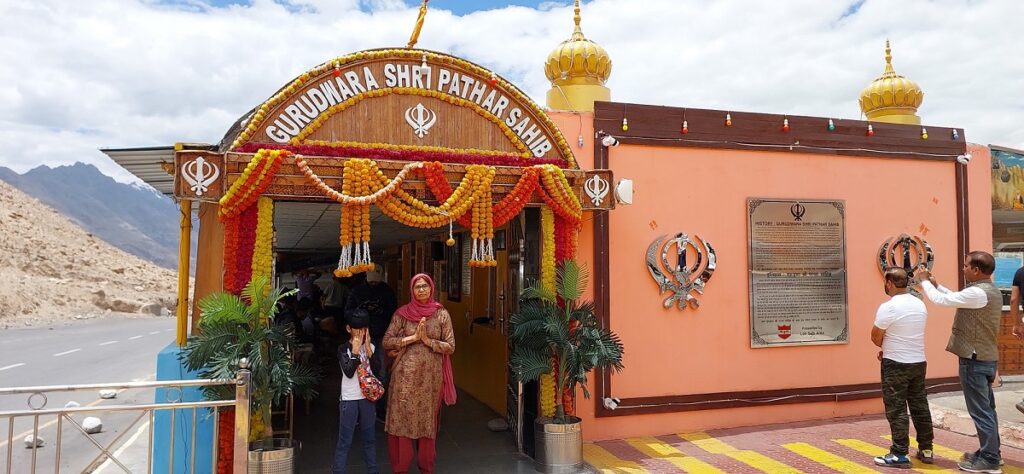
Gurudwara Pathar Sahib is a beautiful and highly respected Sikh shrine located about 25 kilometres from Leh on the road to Kargil. It was built in 1517 to honour Guru Nanak Dev Ji, the founder of Sikhism, who stopped here while travelling back from Tibet. The Gurudwara is famous for a massive rock (pathar) that has a clear imprint of Guru Nanak’s back and shoulders. According to the legend, a demon tried to kill Guru Nanak by throwing this giant rock at him, but the rock turned soft as wax upon touching him, leaving an impression of his body while the demon’s foot also got stuck in it. Today, the Gurudwara is lovingly maintained by the Indian Army, and every traveller—regardless of their religion—is welcomed with a warm cup of tea and delicious langar (free meal) in the peaceful, snowy mountain setting.