

China is a vast country in East Asia, home to a population exceeding 1.4 billion people. It is one of the world’s most ancient lands; its history spans thousands of years, dating back to the era of the kings and emperors who commissioned the construction of the famous ‘Great Wall of China.’ The country’s landscape is incredibly diverse—featuring the world’s highest mountains, known as the Himalayas, alongside long winding rivers and bustling metropolises such as Beijing and Shanghai. Today, China stands as a global leader in the manufacturing of goods ranging from mobile phones to automobiles; furthermore, it is the only place on Earth where one can observe giant pandas in their natural habitat—the wild forests.
China is widely regarded as an ‘economic superpower,’ serving as the world’s largest manufacturing nation and holding the position of the second-largest economy globally in terms of nominal GDP—a figure projected to exceed $20 trillion by 2026. It is frequently dubbed the “Factory of the World,” as it produces a massive share of the global supply of electronics, steel, and electric vehicles—often at significantly lower costs compared to other nations. The primary catalyst for this growth was a series of major reforms that opened the country up to foreign investment; equally instrumental was its vast and industrious workforce, which migrated from rural farms and villages to settle in modern urban centers. Today, China leads the world in cutting-edge technologies such as 5G and renewable energy; moreover, its burgeoning middle class—comprising over 500 million people—has emerged as the largest consumer market for numerous global brands.
In terms of physical safety, China is considered one of the safest countries in the world; it boasts an exceptionally low rate of violent crime, and public order is enforced with great strictness. Many travelers have reported that, owing to the heavy police presence in major cities and ubiquitous surveillance systems, they feel completely safe walking alone—even late at night. Among international travelers visiting China, South Koreans constitute the largest group, followed by travelers from Thailand, Singapore, Malaysia, and Japan, who arrive in significant numbers. When including the Greater China regions, the majority of visitors—accounting for approximately 80% of total inbound travel—come from Hong Kong, Macau, and Taiwan.
Most Famous And Attractive Tourist Places In China :
1. Beach Exploration
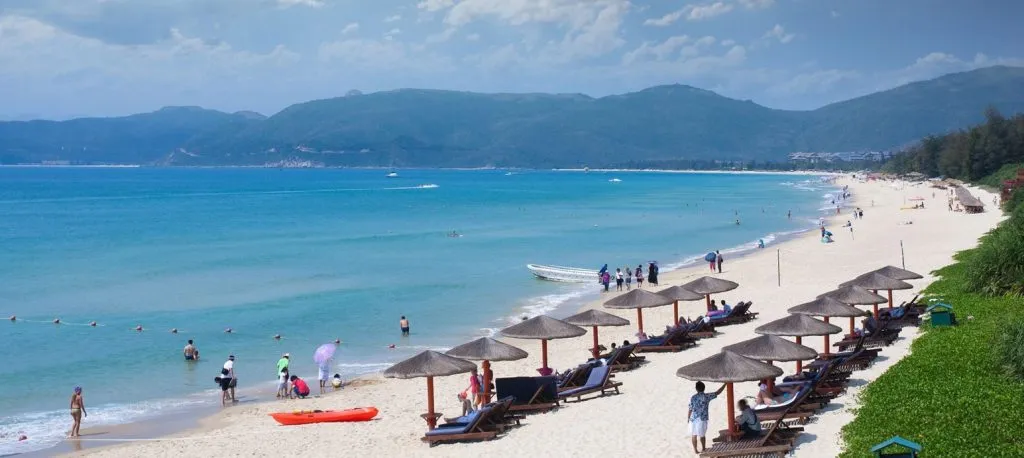
Beach exploration is a multisensory journey that begins at the intertidal zone, the dynamic boundary between land and sea where ecosystems shift with the daily ebb and flow of tides. On the shore, explorers can walk across soft, golden or white sand—often a mixture of finely ground rock and calcium carbonate from seashells—while observing the distinct vegetation of dune systems, such as salt-tolerant grasses and maritime forests that protect the inland from erosion. Probing deeper into the environment often reveals a wealth of marine life, from seagulls and pelicans soaring overhead to small crabs, snails, and starfish inhabiting tide pools or scurrying through the wet sand. For those seeking active engagement, the beach offers a wide spectrum of recreational activities, including swimming and snorkeling in crystal-clear waters to view underwater reefs, or land-based pursuits like building intricate sandcastles, playing beach volleyball, and collecting unique shells and sea glass. As the day transitions, the visual landscape is transformed by the sunset’s kaleidoscope of colours, providing a peaceful atmosphere for reflection, beach bonfires, or simply listening to the rhythmic, soothing music of waves hitting the shore.
2. Watching Symphony Of Lights
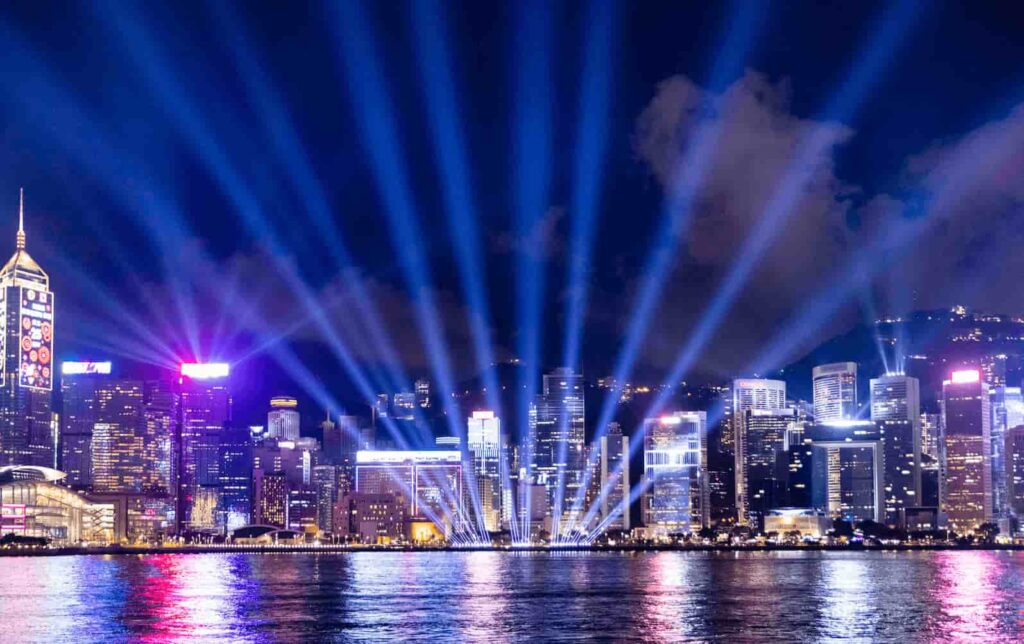
Watching “A Symphony of Lights” is a captivating experience where Hong Kong’s skyline transforms into a 14-minute multimedia spectacle, recognized as the world’s largest permanent light and sound show. Staged nightly at 8:00 p.m., the performance synchronizes searchlights, lasers, and LED screens from over 40 iconic buildings on both sides of Victoria Harbour to an inspiring orchestral score recorded by the Hong Kong Philharmonic Orchestra. The show is divided into five thematic scenes—Awakening, Energy, Heritage, Partnership, and Celebration—symbolizing the city’s dynamic spirit and cultural fusion. While the show is free for public enjoyment, the best vantage points are from the Avenue of Stars in Tsim Sha Tsui, the Golden Bauhinia Square in Wan Chai, or aboard a sightseeing harbor cruise like the historic Star Ferry or Aqua Luna. To fully appreciate the experience, spectators are encouraged to download the official mobile app to listen to the synchronized music and narration, as local speakers may be crowded or quiet depending on your exact location.
3. Nightlife
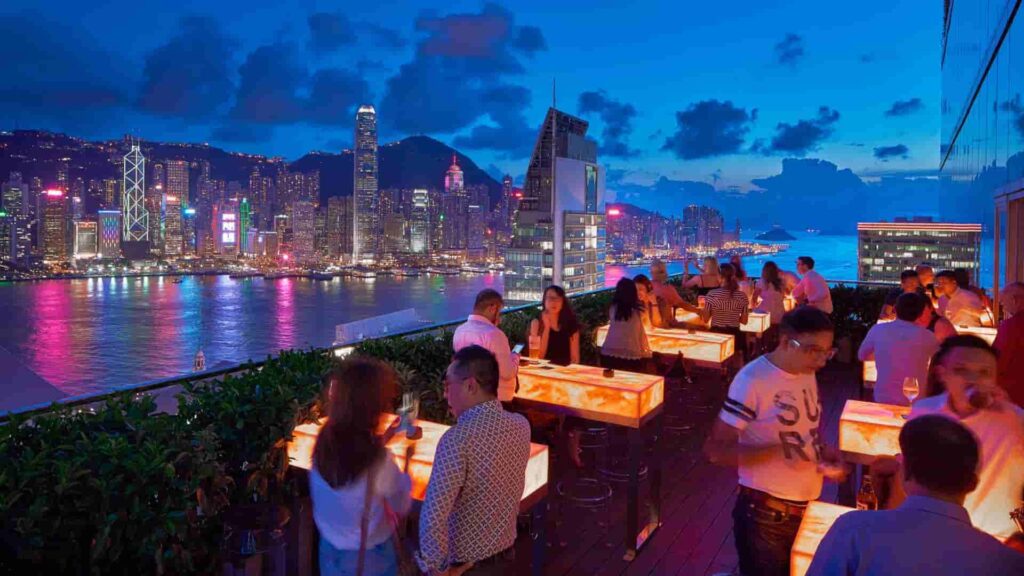
Nightlife is a broad term for entertainment and social activities that become more popular and vibrant from late evening into the early morning hours, often serving as the “urban pulse” of a city after dark. It encompasses a wide range of venues, from high-energy nightclubs and dance festivals to relaxed pubs, jazz lounges, and late-night eateries or street food markets like Delhi’s Matia Mahal. Beyond just recreation, a city’s nightlife is a significant economic driver, creating jobs for DJs, security, and hospitality workers, while also fostering cultural movements and social connections that exist outside the standard 9-to-5 routine. While global hotspots like Las Vegas, Ibiza, and Amsterdam are renowned for their legendary party scenes, nightlife can also be a more low-key experience, such as attending a theatre, a cabaret show, or simply walking through illuminated public plazas. Ultimately, a vibrant nightlife culture transforms a “sleepy” city into a 24-hour metropolis, improving urban safety through “eyes on the street” and providing dedicated spaces for self-expression and community bonding.
4. Shopping
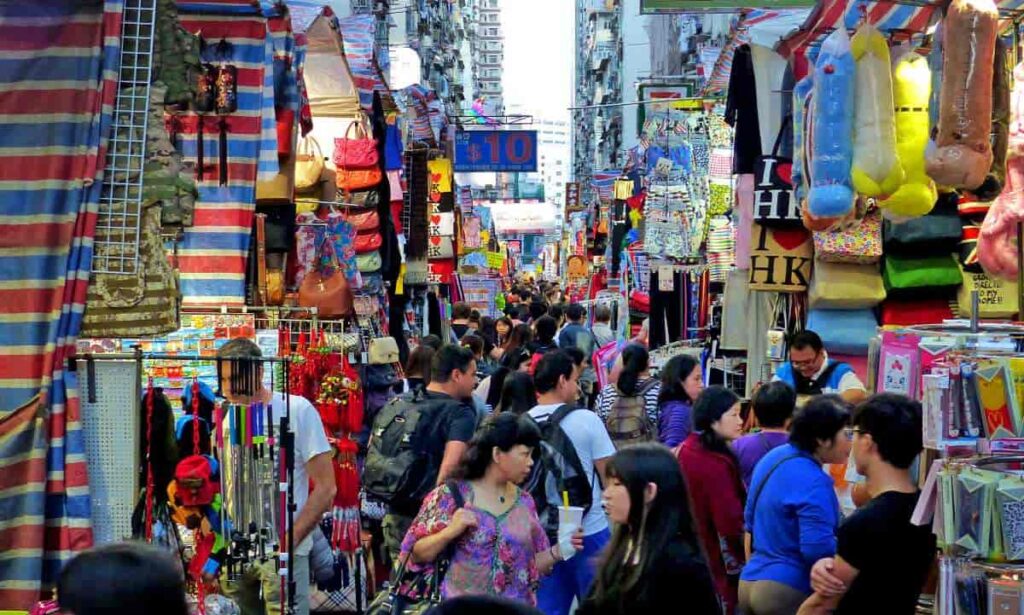
Shopping is a multifaceted activity that goes beyond mere transactions to serve as a vital driver of economic growth and a primary means of fulfilling essential human needs like food, clothing, and shelter. It has evolved into a popular leisure pursuit that offers emotional satisfaction, relaxation, and opportunities for social interaction when done with friends or family. Today, consumers can choose between offline shopping—which provides instant gratification and the tactile experience of trying products in-store—and the convenience of online shopping, which allows for easy price comparisons and home delivery. Modern shopping malls have further expanded this experience by integrating dining, entertainment, and interactive technologies like augmented reality to create immersive environments. While it supports local businesses and generates significant tax revenue for public services, responsible shopping involves careful budgeting and planning to avoid impulsive spending and minimize environmental impacts.
5. Junk Boat Ride
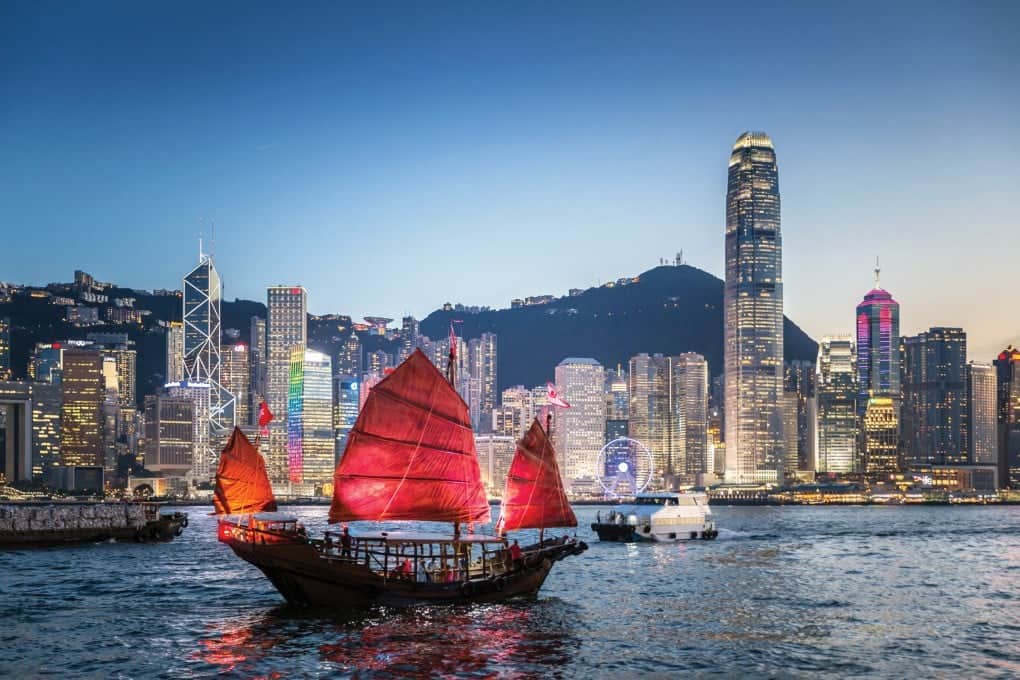
A junk boat ride is a quintessential maritime experience that offers a nostalgic journey through Asia’s heritage, particularly in Hong Kong’s Victoria Harbour and Vietnam’s Ha Long Bay. These traditional Chinese sailing ships are easily identified by their iconic battened sails, which are reinforced with bamboo spines to allow for easy adjustment from the deck. While originally used for trade and fishing, modern junk boat rides have been adapted for tourism, featuring comfortable lounges, air-conditioned cabins, and sometimes even full dining experiences.
6. Star Ferry Ride
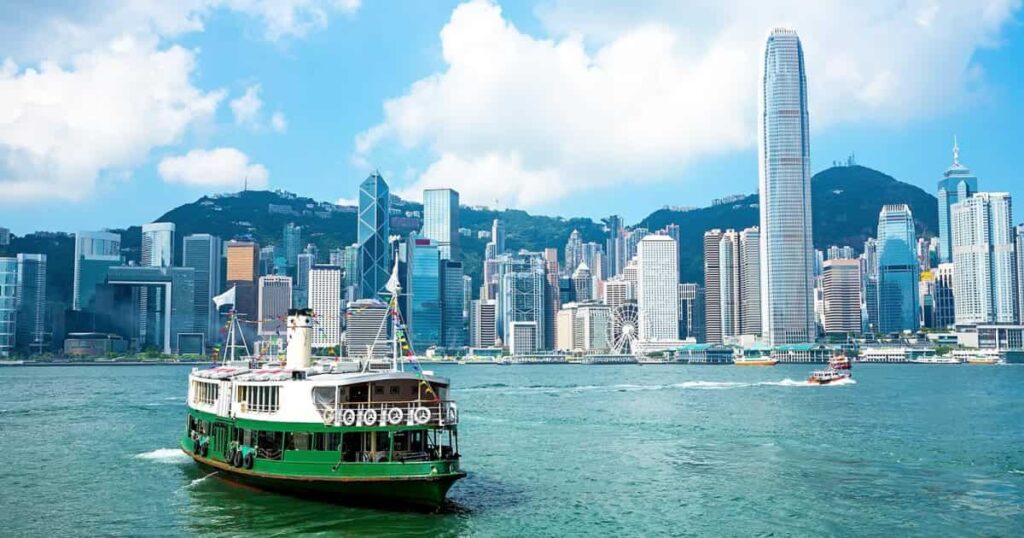
A Star Ferry ride is an iconic and budget-friendly maritime experience that has been a staple of Hong Kong’s public transport since 1888, offering one of the most scenic short-haul journeys in the world. Crossing the vibrant Victoria Harbour between Tsim Sha Tsui and Central (or Wan Chai), the ride takes about 10 minutes, providing passengers with unobstructed, close-up views of the city’s towering skyscrapers and lush green mountains. The fleet consists of charming, double-decker green and white vessels that retain a nostalgic, retro atmosphere with wooden benches and open-air decks that allow for a refreshing sea breeze. While it remains a vital link for daily commuters, it is equally popular with tourists who seek the perfect vantage point for photography, especially during sunset or the nightly Symphony of Lights. With fares costing only a few dollars, it is widely considered one of the best value-for-money activities in global travel, seamlessly blending historical charm with the pulse of a modern metropolis.
7. Ocean Park And Disneyland
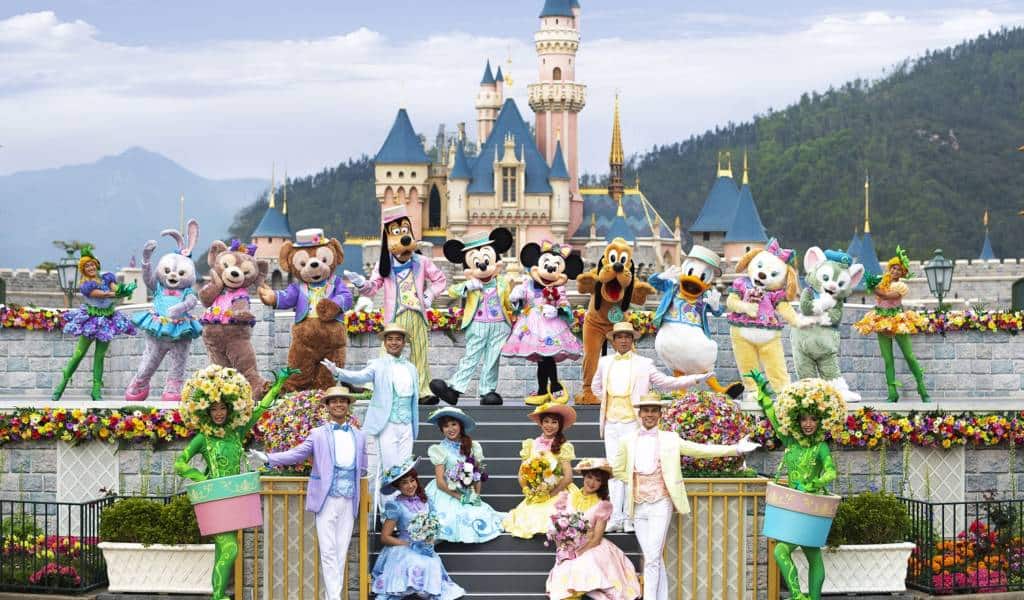
Ocean Park and Hong Kong Disneyland are the city’s two premier theme parks, each offering a distinct atmosphere and set of attractions tailored to different interests. Ocean Park Hong Kong, the city’s home-grown original theme park, is a massive 91.5-hectare marine-themed facility built on a seaside mountain, featuring a world-class aquarium, a panda habitat, and thrill rides like the floor-less Hair Raiser rollercoaster. It is physically larger than Disneyland and provides spectacular views of the South China Sea, particularly from its iconic cable car that connects the park’s lowland Waterfront with its mountain-top Summit. In contrast, Hong Kong Disneyland on Lantau Island is designed around the “magic” of Disney characters and storytelling, offering a more compact and whimsical experience. Its highlights include the unique Mystic Manor (a culturally adapted version of the Haunted Mansion), the interactive Ant-Man and The Wasp: Nano Battle!, and the newly opened World of Frozen. While Ocean Park is generally more affordable and appeals to animal lovers and thrill-seekers, Disneyland is a favorite for younger children and fans of the brand’s legendary character meet-and-greets and nightly fireworks. Both parks are easily accessible via their own dedicated MTR subway stations, making them convenient day-trip options for visitors.
8. Happy Valle
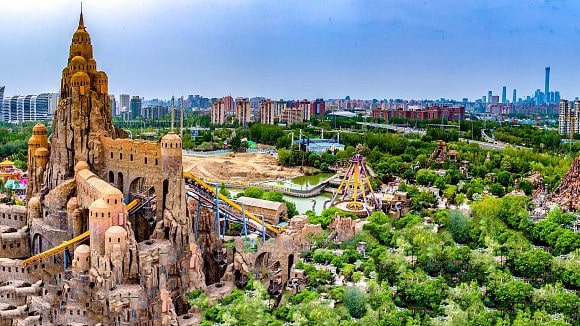
Happy Valley is a unique and upscale residential district on Hong Kong Island, famously known for its harmonious blend of quiet colonial charm and the electric energy of world-class sports. At its heart lies the Happy Valley Racecourse, a historic venue built in 1845 on former swampland that now serves as the city’s premier destination for night-time horse racing. Every Wednesday, the track hosts “Happy Wednesday,” a vibrant mid-week carnival featuring live music, beer gardens, and international food stalls that transform the arena into a massive al-fresco party for locals and tourists alike. Beyond the excitement of the races, the neighborhood is a “city oasis” housing the Hong Kong Racing Museum, several historic cemeteries representing various faiths, and refined architecture like the Gothic-style St. Margaret’s Church. Accessible by a nostalgic tram ride from Causeway Bay, Happy Valley offers a rare experience where you can witness the thrill of the Winning Post against a backdrop of glowing skyscrapers before retreating into the district’s peaceful, leafy streets.
9. Touring
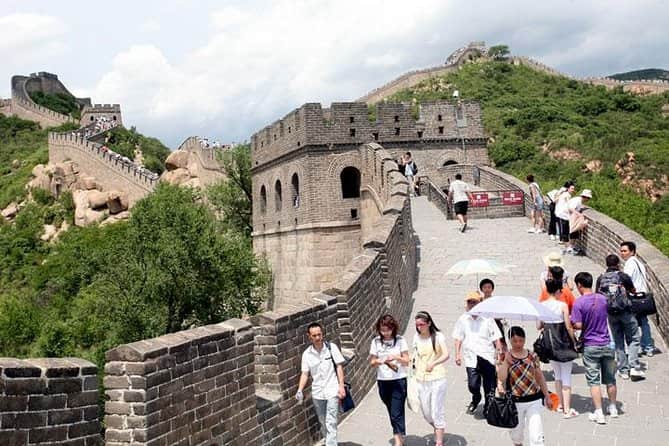
Touring is a comprehensive form of travel that involves visiting multiple destinations in a structured sequence, often following a pre-planned itinerary for leisure, education, or professional purposes. Unlike a simple trip to a single location, touring allows travelers to explore the diverse landscapes, cultures, and historical landmarks of an entire region or country, such as a multi-city tour of Italy or a trekking expedition in the Himalayas. It serves as a powerful educational tool, transforming abstract textbook knowledge into tangible experiences by connecting individuals with real-world history and traditions. Beyond personal growth, touring is a major economic driver that supports local businesses, creates jobs in the hospitality and transport sectors, and encourages the preservation of cultural heritage. Whether it is a high-energy adventure tour, a spiritual pilgrimage, or a relaxing cruise, the essence of touring lies in the journey itself, fostering global connections and providing a much-needed mental reset from daily routines.
10. Chinese New Year
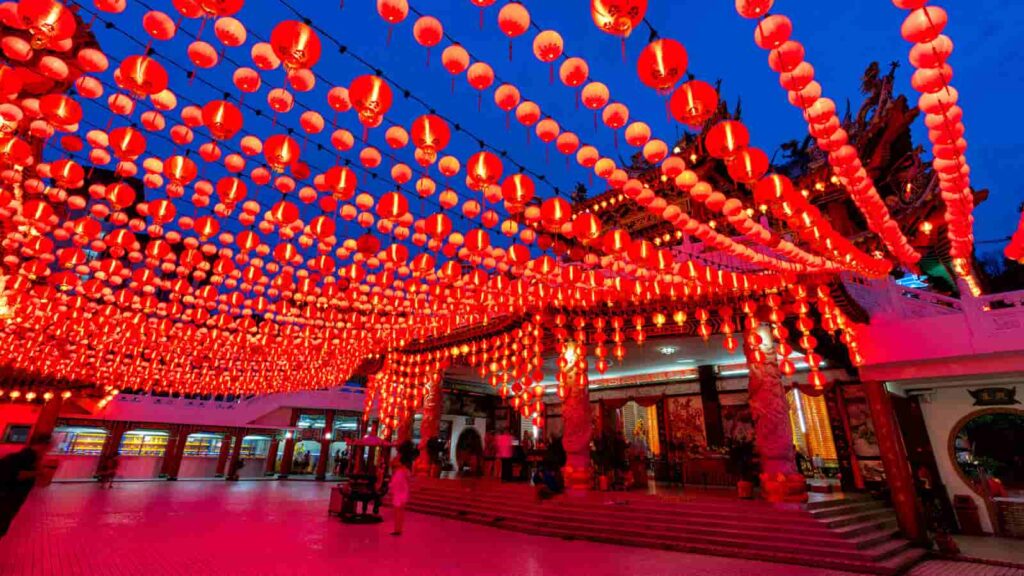
Chinese New Year, also known as the Spring Festival or Lunar New Year, is the most significant holiday in Chinese culture, marking the start of a new year on the traditional lunisolar calendar. The festival typically begins on the second new moon after the winter solstice—falling between January 21 and February 20—and lasts for 15 days, culminating in the Lantern Festival. Rooted in ancient agricultural traditions and legends, such as the story of scaring away the monster Nian with loud noises and the colour red, the holiday is a time for family reunions and honoring ancestors. Homes are thoroughly cleaned to “sweep away bad luck” before being adorned with red lanterns, couplets, and paper-cuts symbolizing good fortune. Festive celebrations include elaborate reunion dinners featuring symbolic foods like dumplings for wealth and fish for abundance, along with vibrant lion and dragon dances and the exchange of red envelopes (hongbao) containing “lucky money.” Each year is also associated with one of 12 zodiac animals—such as the Horse in 2026—which is believed to influence the character and fortune of that year.
11. Tamar Park Picnic
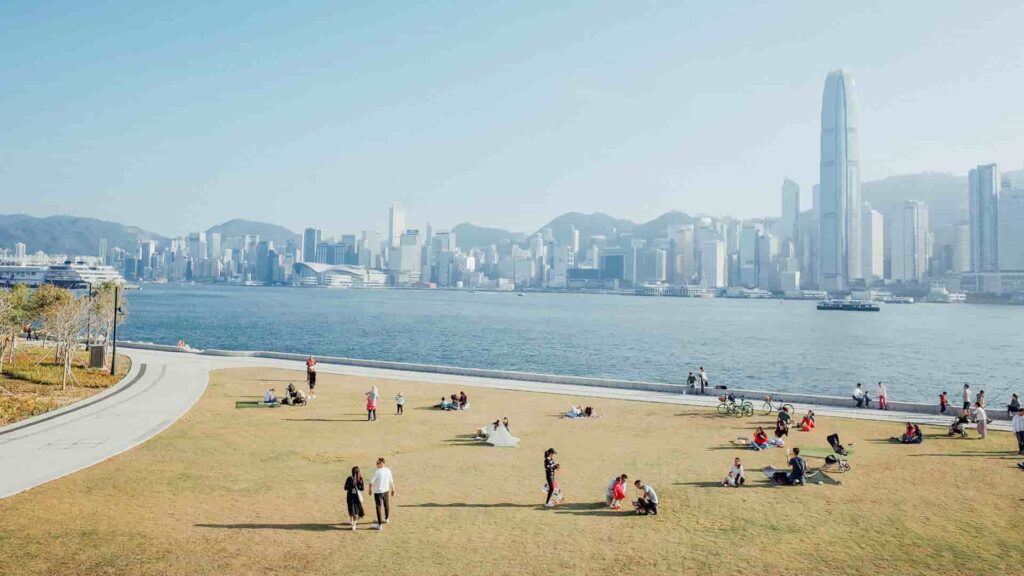
A Tamar Park picnic offers a serene escape in the heart of Hong Kong’s financial district, combining spacious green lawns with spectacular panoramic views of Victoria Harbour. Known for its “Land Always Green” design concept, the park features wide “green carpets” perfect for spreading out a picnic mat, relaxing with snacks, or enjoying outdoor activities like kicking a ball. Located conveniently next to Admiralty MTR Station (Exit A), it is a highly accessible urban oasis surrounded by architectural landmarks like the “Open Door” shaped Central Government Offices. Visitors can complement their picnic with a stroll along the adjoining Central Waterfront Promenade or enjoy public art installations frequently hosted on the grounds. While the park is a peaceful retreat during weekdays, it can become quite vibrant and crowded on weekends and during special events like fireworks displays or music festivals. For added convenience, the nearby iBakery Gallery Café—a social enterprise—and shops at Pacific Place provide easy options for grabbing fresh food and drinks before settling onto the grass.
12. Explore Tai Kwun Center
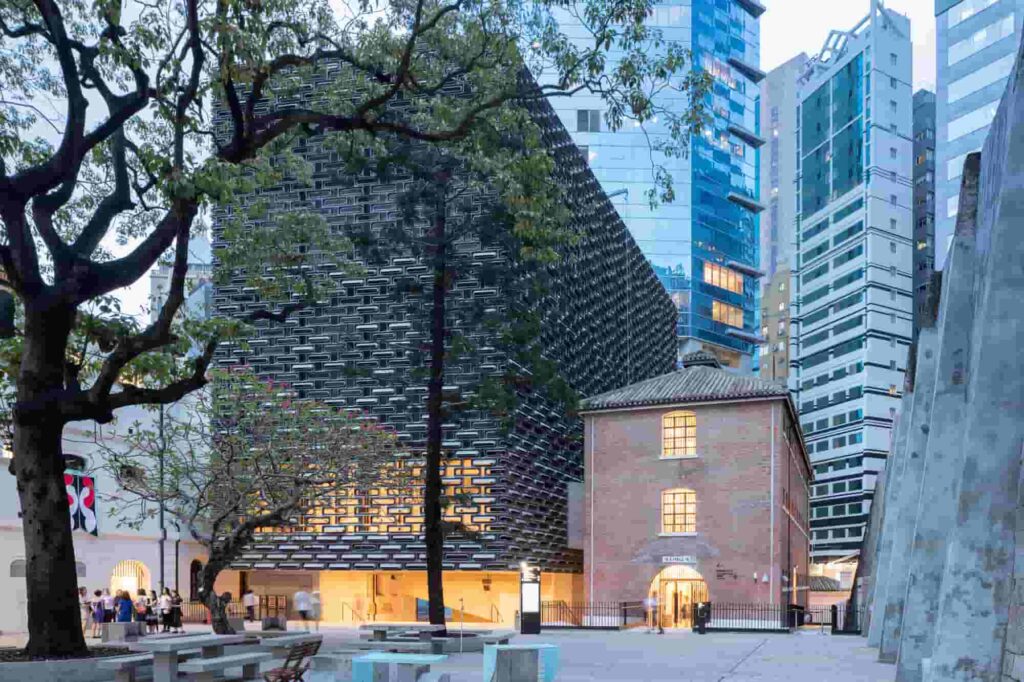
Exploring Tai Kwun – Centre for Heritage and Arts is a journey through Hong Kong’s judicial and colonial history, as this revitalised 3.3-acre compound was once the city’s most secure law enforcement complex. Located in the heart of Central, the site comprises 16 restored heritage buildings—including the former Central Police Station, Central Magistracy, and Victoria Prison—alongside two striking modern additions designed by Herzog & de Meuron. Visitors can wander through the Parade Ground, now a public plaza for events and dining, or step into the somber prison cells where Ho Chi Minh was once held to experience the site’s penal past. Today, the compound is a vibrant cultural hub featuring world-class art galleries like JC Contemporary, unique lifestyle boutiques, and exceptional bars and restaurants often set within historic barrack rooms. Accessible via a dedicated footbridge from the Mid-Levels Escalator, Tai Kwun offers free admission and frequently hosts guided heritage tours, making it a must-visit destination for anyone seeking a blend of colonial architecture and contemporary art.
13. Australia Dairy Company
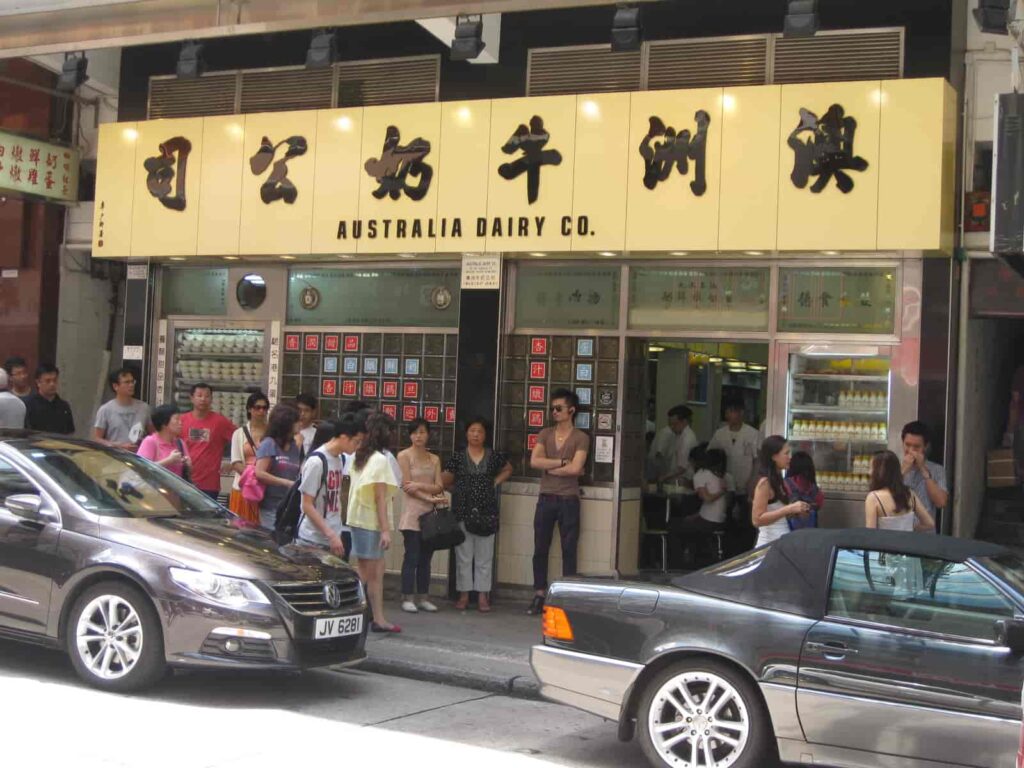
The Australia Dairy Company is a legendary cha chaan teng (Hong Kong-style diner) located in Jordan, renowned for providing one of the city’s most authentic and high-speed dining experiences. Founded in 1970, the restaurant was named as an homage to its founder’s history of working on an Australian dairy farm in the 1940s. It is globally famous for its scrambled eggs, which are celebrated for being exceptionally fluffy, moist, and creamy, typically served alongside thick-cut buttered toast as part of a classic breakfast set that includes ham macaroni soup and Hong Kong-style milk tea. Another signature must-try is their steamed milk pudding, a silky and comforting dessert that comes in both hot and cold varieties. The establishment is equally famous for its “lightning-fast” service and frenetic atmosphere, where diners are expected to order immediately, eat quickly, and share small tables with strangers. Despite the often brusque, no-nonsense attitude of the waitstaff and the nearly constant long queues outside, it remains a beloved institution that perfectly encapsulates the efficiency and grit of Hong Kong’s local food culture.
14. Visit the Wong Tai Sin Temple in Kowloon
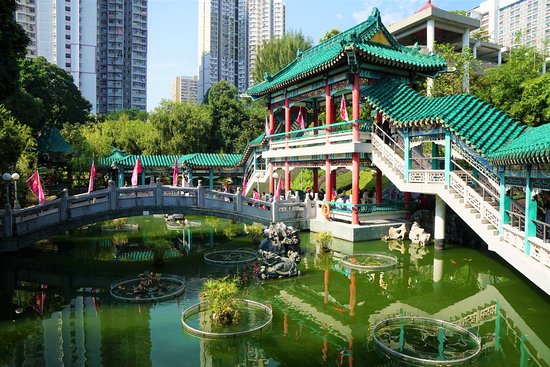
Visiting the Wong Tai Sin Temple in Kowloon is a profound immersion into Hong Kong’s spiritual heart, as it is the only temple in the city authorized to host Taoist weddings and issue marriage certificates. Dedicated to the “Great Immortal Wong,” the 18,000-square-meter complex is a rare syncretic site that honors Taoism, Buddhism, and Confucianism under one roof. Its architecture is a vibrant display of traditional Chinese design, featuring grand red pillars, yellow latticework, and a gold roof that follows strict feng shui principles representing the five elements: metal, wood, water, fire, and earth. The temple is globally famous for the kau cim (fortune stick) ritual, where worshippers shake a bamboo cylinder until a numbered stick falls out, which is then interpreted by soothsayers in a dedicated arcade. Beyond the bustling main altar, visitors can find tranquility in the Good Wish Garden, which features a miniature replica of Beijing’s Summer Palace, or pray for romance at the statue of Yue Lao, the God of Marriage. Accessible directly via Wong Tai Sin MTR Station (Exit B3), the temple is particularly spectacular during Chinese New Year’s Eve, when thousands of devotees compete to offer the “first incense” for a year of good luck.
15. Spend some time at the Po Lin Monastery on Lantau Island
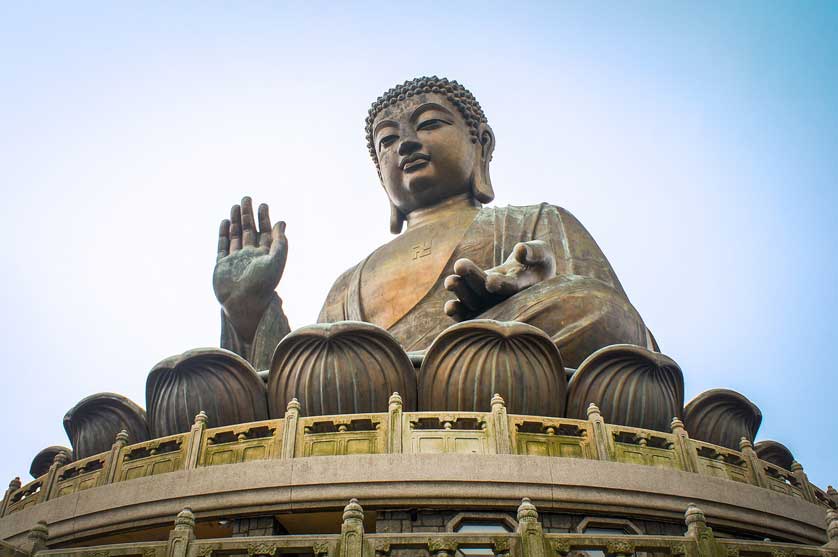
Spending time at the Po Lin Monastery on Lantau Island is a deeply spiritual experience that transports you from the fast-paced city to a “Buddhist Kingdom in the South”. Founded in 1906 by three monks and originally known as “The Big Hut,” this sprawling complex is now the most important Buddhist centre in Hong Kong. Visitors enter through the white San Men (Mountain Gate) to explore architectural wonders like the Main Shrine Hall of Buddha, which houses three bronze statues representing the Buddha’s past, present, and future lives. A modern highlight is the Grand Hall of Ten Thousand Buddhas, a five-story gilded sanctuary filled with thousands of gold-clad Buddha statues and intricate murals. The monastery is famously adjacent to the Tian Tan Buddha (Big Buddha), a 34-metre bronze giant that you can reach by climbing 268 steps for breathtaking views of the surrounding mountains and sea. For a complete experience, travelers often walk the nearby Wisdom Path, an arrangement of 38 wooden pillars inscribed with the Heart Sutra, and dine at the Po Lin Monastery Vegetarian Restaurant, which serves seasonal, mindful meals and famous silken bean curd dessert.
16. Man Mo Temple
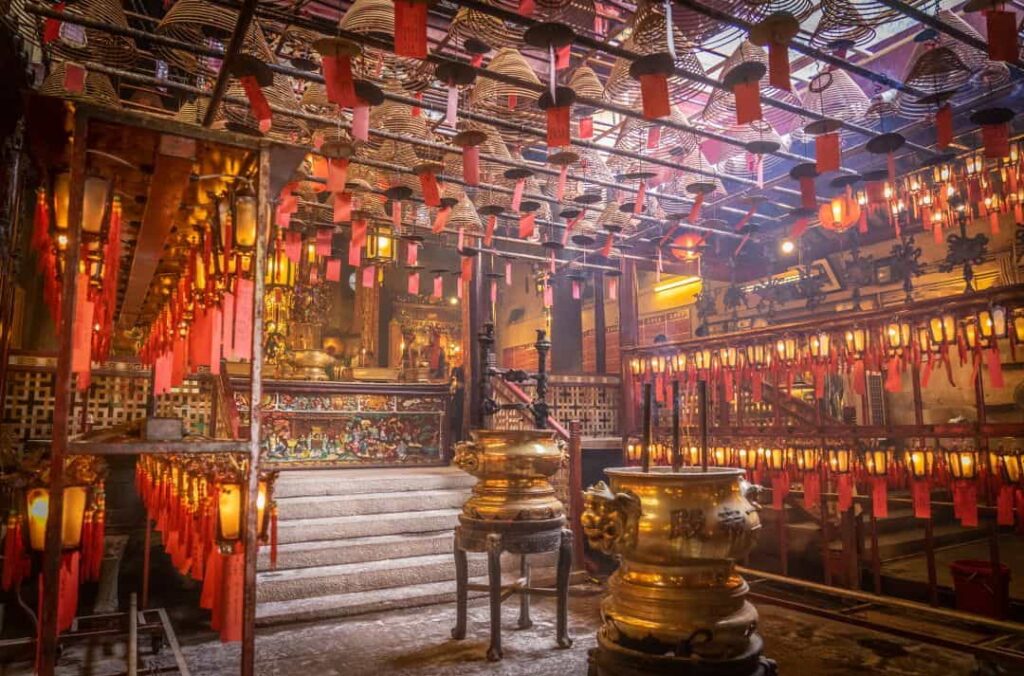
The Man Mo Temple on Hollywood Road is one of Hong Kong’s oldest and most revered Taoist shrines, built in 1847 to honor two distinct deities: Man, the God of Literature, and Mo, the God of Martial Arts. Historically patronized by scholars seeking academic success and officials praying for career advancement, the temple is famous for its hanging incense coils that spiral from the ceiling, creating a dense, aromatic atmosphere and a mystical play of light through the smoke. The complex consists of three blocks: the main temple for worship, Lit Shing Kung for all heavenly gods, and Kung Sor, which historically served as a community hall for resolving disputes that could not be settled by colonial law. This declared monument is a masterpiece of traditional Chinese craftsmanship, featuring green tiled roofs, intricate wood carvings, and a stunning collection of Qing Dynasty artifacts like bronze bells and ornate sedan chairs. Located in the vibrant district of Sheung Wan, it remains a peaceful sanctuary where visitors can observe local rituals or participate in kau cim (fortune-telling) just a short walk from the modern skyscrapers of Central.
17. Bun Festival
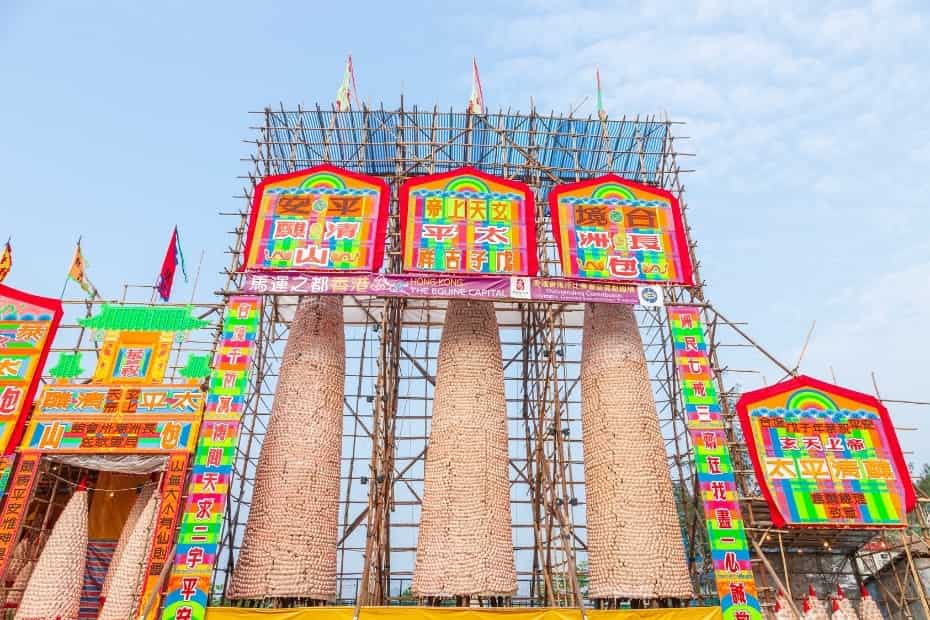
The Cheung Chau Bun Festival, or Da Jiu Festival, is one of Hong Kong’s most vibrant and unique cultural celebrations, held annually on the eighth day of the fourth lunar month (typically in May) to coincide with Buddha’s Birthday. Originating in the 18th century as a ritual to ward off a devastating plague and pirates, the festival is a 150-year-old tradition recognized as a national intangible cultural heritage. During the festivities, the entire island observes a three-day vegetarian diet—so strict that even the local McDonald’s serves only veggie burgers—to purify the community. The two main highlights are the Piu Sik (Floating Colours) Parade, where children dressed as deities or modern heroes are suspended on hidden poles to appear as if they are floating through the air, and the Bun Scrambling Competition at midnight. In this climactic event, 12 finalists race up a 14-metre steel tower covered in thousands of plastic “lucky buns” to grab those at the top, which are worth the most points and symbolize the best fortune. Visitors also flock to the island to buy Ping On Bao (Peace Buns), traditional steamed buns filled with lotus seed or sesame paste and stamped with red characters for “peace” and “safety,” believed to bring health and luck to those who eat them.
18. Ten Thousand Buddhas Monastery
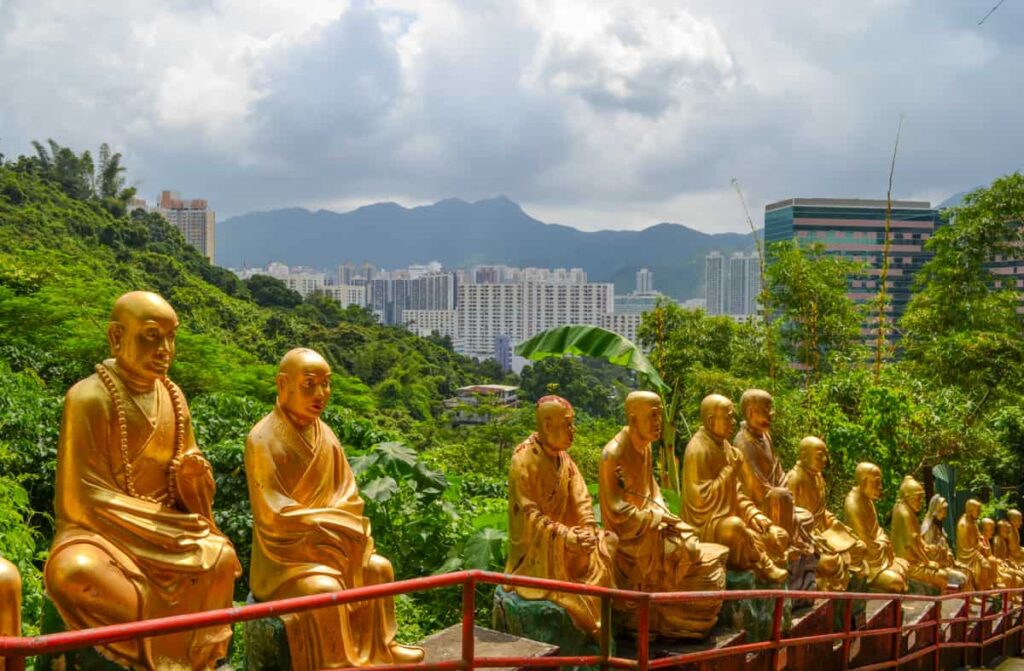
The Ten Thousand Buddhas Monastery (Man Fat Tsz) is an expansive, mid-20th-century Buddhist complex situated on the lush hillside of Sha Tin, Hong Kong. Spanning approximately 8 hectares, the site is actually a misnomer as it is not a residence for monks but is maintained by laypeople. To reach the complex, visitors must navigate a steep, 20-minute ascent of over 430 steps. This path is famously lined on both sides with roughly 500 unique, life-sized golden Arhat statues, each featuring a distinct facial expression and pose—ranging from comedic to meditative—making the climb a visual attraction in itself.
19. Kowloon Walled City Park
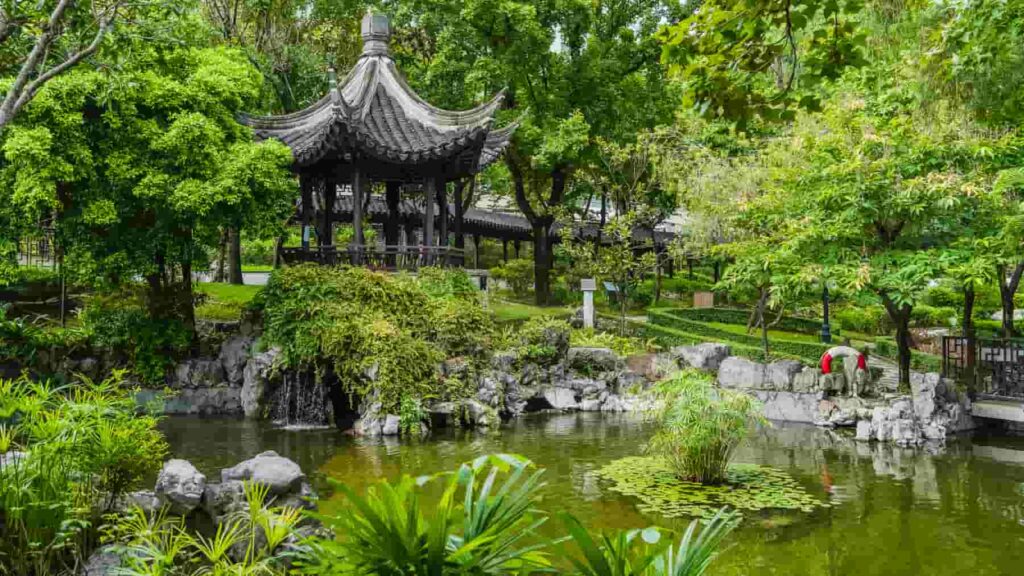
Kowloon Walled City Park is a 31,000-square-metre historical landmark in Kowloon City, Hong Kong, that stands on the site of what was once the most densely populated place on Earth. Formerly a Chinese military fort that evolved into a lawless, high-rise slum known as the “City of Darkness,” the area was demolished in 1994 and transformed into a serene Jiangnan-style garden that opened in 1995. The park’s design is inspired by the early Qing Dynasty and features traditional Chinese pavilions, stone bridges, and tranquil ponds, offering a stark contrast to its gritty past.
20 – Hong Kong Park – A beautiful outdoor place to visit in Hong Kong.
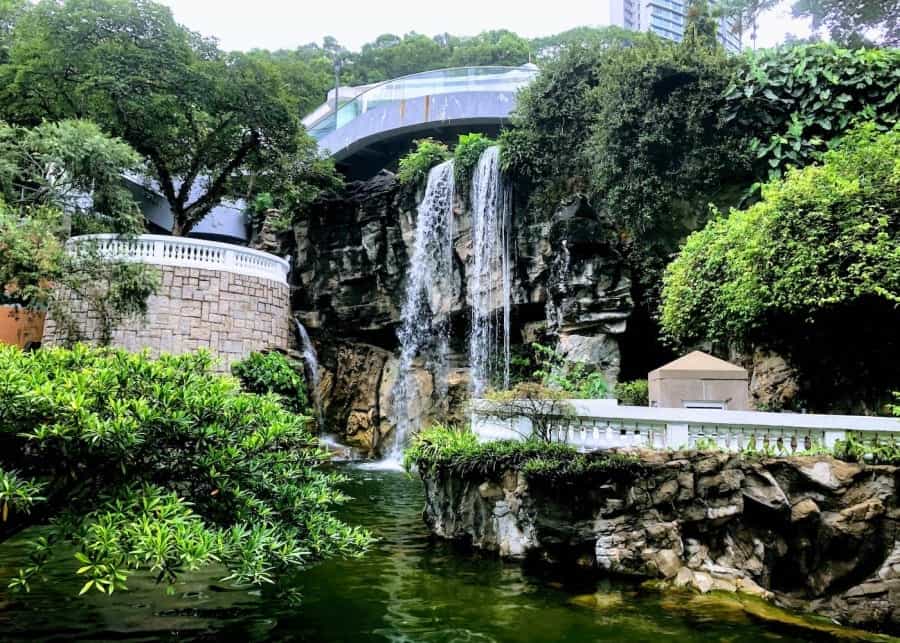
Hong Kong Park is an 8-hectare urban oasis located in Central, Hong Kong, designed to provide a serene escape from the surrounding skyscraper-dense financial district. Opened in 1991, the park is celebrated for its award-winning modern design that integrates natural hilly terrain with man-made features. Its most iconic attraction is the Edward Youde Aviary, one of the largest walk-in aviaries in the world, which features a raised walkway through a tropical rainforest canopy home to over 70 bird species. Adjacent to the aviary is the Forsgate Conservatory, a massive greenhouse complex consisting of the Display Plant House, Dry Plant House, and Humid Plant House, showcasing various climate-controlled botanical environments.