

Situated at the crossroads of Europe, Asia, and Africa, Greece is widely regarded as the cradle of Western civilization and the birthplace of democracy, Western philosophy, and the Olympic Games. Located at the southern tip of the Balkan Peninsula, the country is characterized by its diverse topography, comprising a rugged, mountainous mainland and over 2,000 islands scattered across the Aegean, Ionian, and Mediterranean Seas. It is renowned for its UNESCO World Heritage sites—such as the Acropolis and Delphi—its iconic blue-and-white Cycladic architecture, and its Mediterranean lifestyle, which centers on healthy eating, a vibrant outdoor culture, and philoxenia (the ancient tradition of hospitality).
Greece is primarily celebrated as the cradle of Western civilization, having left a profound impact on world history through the invention of democracy, philosophy, and the Olympic Games. Greece’s economy is currently being described as a “remarkable comeback story”; it has emerged from its status as Europe’s “Achilles’ heel” (weak link) to become one of the continent’s top-performing economies. The economy is projected to grow by approximately 2.4%. This growth is expected to consistently outpace the Eurozone average, a success attributed to record-breaking tourism (which accounts for roughly 20% of GDP) and significant foreign investment in technology and renewable energy.
Greece is considered one of the world’s safest travel destinations heading into 2026; it consistently receives the lowest—Level 1—security rating from the U.S. Department of State. Violent crimes against tourists are extremely rare, making the country an excellent choice for families, solo female travelers, and the LGBTQ+ community. Greece is widely regarded as one of the world’s premier travel destinations, offering something to appeal to every type of traveler. It seamlessly blends ancient history—which you can touch and feel, like the Parthenon in Athens—with some of the planet’s most beautiful beaches and turquoise waters. Traveling there is remarkably easy because the country is extremely safe, the locals are renowned for their hospitality (known as “filoxenia”), and almost everyone in tourist areas speaks English.
Most Famous And Attractive Tourist Places In Greece :
1. Athens
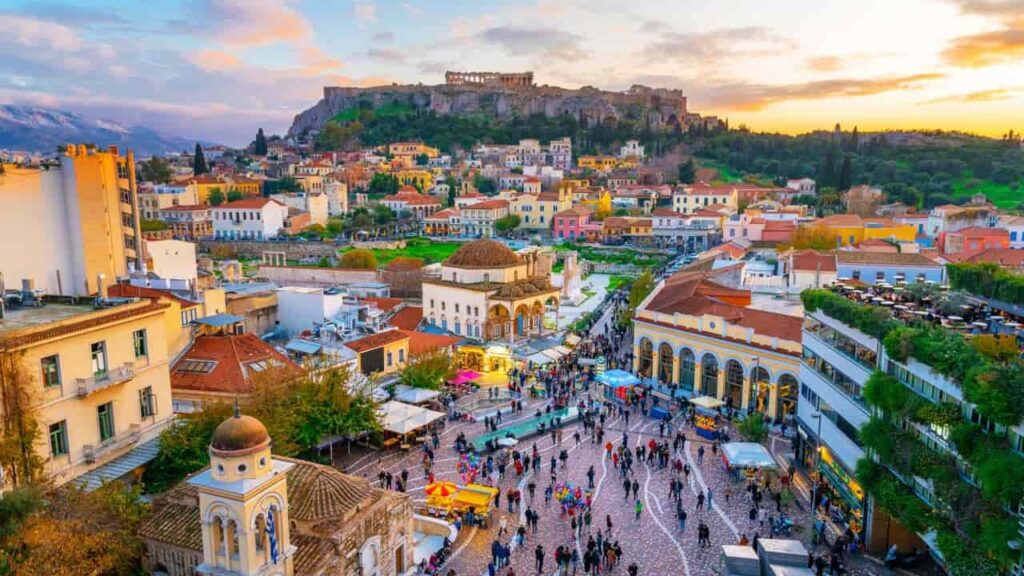
Athens, the capital of Greece, is one of the world’s oldest cities and is widely celebrated as the cradle of Western civilization and the birthplace of democracy. Its identity is defined by a stunning blend of ancient history and modern urban life, centered around the iconic Acropolis, a rocky hilltop crowned by the Parthenon temple which has overlooked the city for over 2,500 years. Beyond its archaeological treasures like the Ancient Agora and the Temple of Olympian Zeus, Athens is a vibrant metropolis known for its “live for the moment” atmosphere, found in the narrow, winding streets of the Plaka district and the bustling markets of Monastiraki. The city’s geography is a mix of dense urban sprawl and natural beauty, framed by four large mountains and the sparkling waters of the Saronic Gulf at the port of Piraeus. Today, Athens serves as the economic, financial, and cultural heart of Greece, offering world-class museums, a Mediterranean climate, and a legendary food scene that transitions from traditional tavernas to trendy rooftop bars with views of the illuminated ruins.
2. Santorini
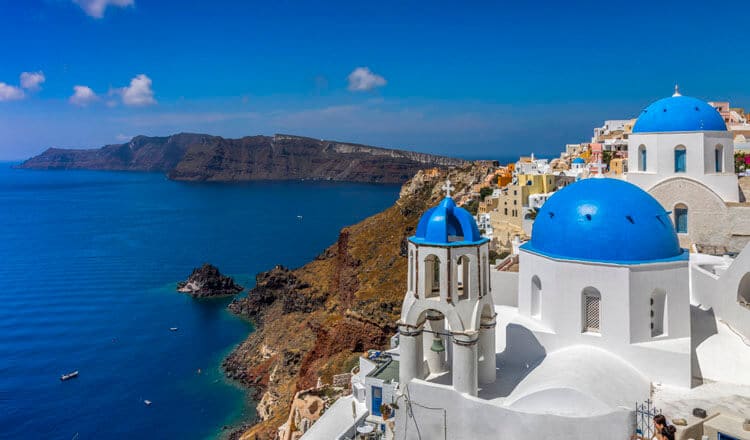
Santorini is a world-famous Greek island in the southern Aegean Sea, renowned for its dramatic volcanic landscape and iconic architecture. Formed by one of the largest volcanic eruptions in history, the island features a massive, water-filled caldera (crater) surrounded by steep cliffs that rise hundreds of feet above the sea. Perched along these cliffs are the picturesque villages of Oia and Fira, characterized by their dazzling white-washed buildings, bright blue-domed churches, and narrow cobblestone paths. Beyond its stunning views and legendary sunsets, Santorini is known for its unique geology, which includes distinctive Red, Black, and White sand beaches and fertile volcanic soil that produces world-class wines, particularly the crisp Assyrtiko. As a top global travel destination, it offers a blend of luxury resorts, ancient history at the Akrotiri archaeological site, and a vibrant Mediterranean culture, making it a centerpiece of the Cyclades island group.
3. Mykonos
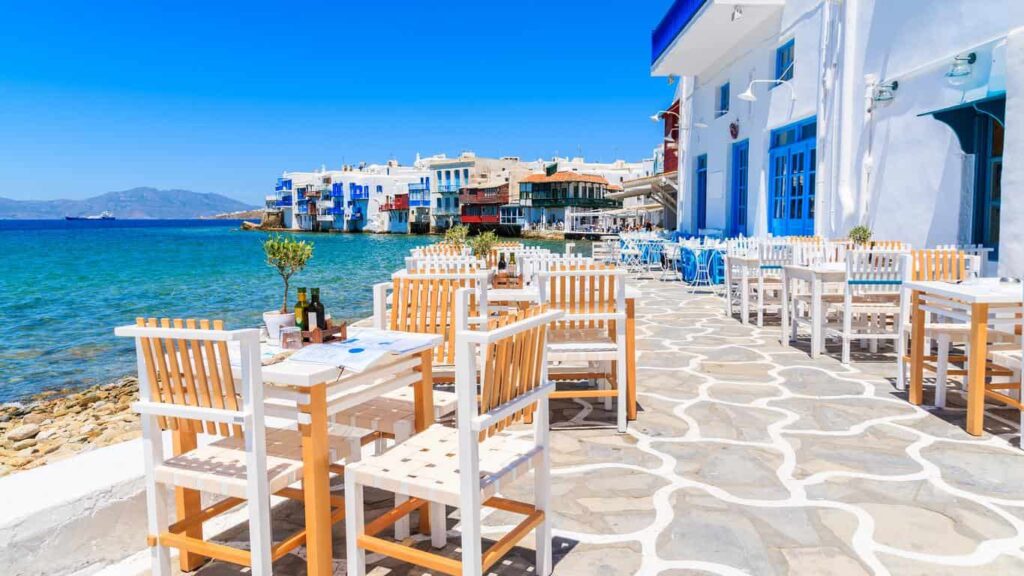
Mykonos is a vibrant Greek island in the Cyclades group, internationally famous for its glamorous cosmopolitan atmosphere and high-energy nightlife. Often called the “Island of the Winds,” it is instantly recognizable by its 16th-century whitewashed windmills and the picturesque Little Venice district, where colorful houses are built right at the water’s edge. The island’s heart is Chora (Mykonos Town), a maze of narrow, marble-paved alleys lined with high-end boutiques, art galleries, and vibrant bougainvillea. While it attracts celebrities and party-goers to world-renowned beach clubs at Paradise and Super Paradise, Mykonos also maintains its traditional Cycladic charm through its sun-drenched landscape and stunning beaches like Psarou and Elia. Beyond the party scene, it serves as the gateway to the nearby sacred island of Delos, one of Greece’s most important mythological and archaeological sites.
4. Nafplio
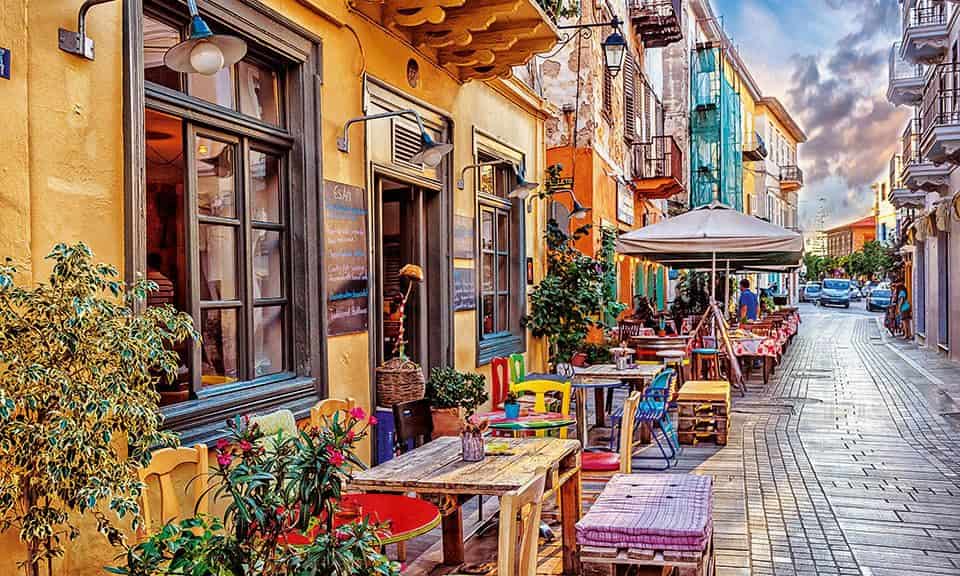
Nafplio is one of Greece’s most romantic and beautiful coastal cities, serving as the first capital of the modern Greek state after the War of Independence. Located in the Argolis region of the Peloponnese, the city is a stunning tapestry of Venetian, Ottoman, and Greek history, visible in its elegant neoclassical mansions and narrow, flower-lined streets. The skyline is dominated by the massive Palamidi Fortress, which sits atop a 216-meter hill and offers breathtaking views of the Argolic Gulf, while the iconic Bourtzi Castle floats on a tiny islet in the middle of the harbour. Nafplio’s Old Town is a pedestrian-friendly maze of marble-paved squares, artisanal boutiques, and seaside cafes, making it a favorite year-round destination for both locals and international travelers. Beyond its own charm, the city acts as a perfect gateway to world-renowned ancient sites like the Theatre of Epidaurus and the citadel of Mycenae, blending deep historical significance with a relaxed, Mediterranean seaside atmosphere.
5. Crete

Crete is the largest and most diverse of the Greek islands, located at the southern edge of the Aegean Sea and acting as a bridge between Europe, Africa, and Asia. It is historically significant as the center of the Minoan civilization, Europe’s oldest advanced society, with the sprawling Palace of Knossos serving as its most famous archaeological landmark. The island’s landscape is incredibly varied, ranging from the snow-capped White Mountains and deep limestone gorges, like the famous Samaria Gorge, to some of the world’s most beautiful beaches, including the pink sands of Elafonisi and the turquoise lagoon of Balos. Crete is also celebrated for its distinct culture and “Cretan Diet,” which is world-renowned for its health benefits, focusing on local olive oil, wild herbs, and mountain cheeses. From the vibrant, Venetian-influenced harbors of Chania and Rethymno to the rugged mountain villages where traditional music and customs remain a way of life, Crete offers a complete Mediterranean experience that feels like a country of its own.
6. Naxos
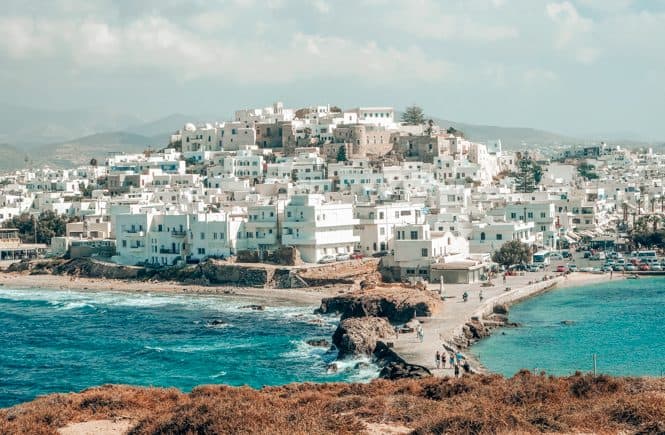
Naxos is the largest and most fertile island in the Cyclades, offering a unique blend of ancient history, lush green valleys, and some of the best beaches in Greece. Its most famous landmark is the Portara, a massive 2,500-year-old marble gate that stands on an islet overlooking the main harbor, serving as the entrance to an unfinished temple to Apollo. The main town, Chora, is topped by an impressive Venetian Kastro (castle), where narrow, winding alleys feel like a medieval labyrinth filled with small shops and traditional houses. Unlike many other dry Greek islands, Naxos has a high mountain, Mount Zeus, which provides enough water to support a thriving agricultural scene famous for its potatoes, olives, and Kitron liqueur. Visitors love the island for its long, golden stretches of sand like Agios Prokopios and its traditional mountain villages like Apeiranthos, which is built almost entirely of marble.
7. Chania Town
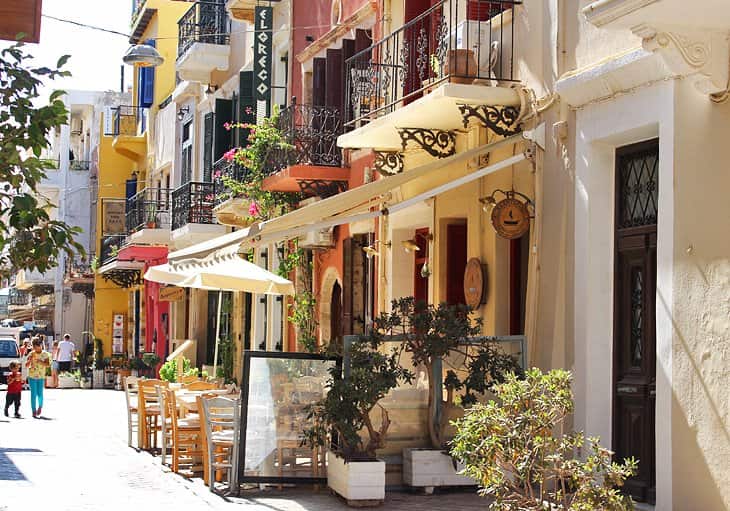
Chania, the capital of the Chania regional unit on the northwest coast of Crete, is a city defined by its deep, multi-layered history that blends Minoan, Byzantine, Venetian, and Ottoman influences. Often called the “Venice of the East,” the city is built on the ruins of ancient Kydonia, one of the most important cities of ancient Crete, with excavations at the Kastelli hill revealing settlements dating back to the Neolithic period. The town is split into the Old Town, centered around the iconic 14th-century Venetian Harbor with its distinct Egyptian Lighthouse and fortified walls, and the more sprawling Modern City. Visitors can explore the maze-like alleys of the Topanas and Splantzia districts, which feature preserved mansions, traditional leather-working shops on Skridlof Street (“Stivanadika”), and unique monuments like the Agios Nikolaos Church, which notably sports both a bell tower and a minaret. As a cultural and culinary hub, Chania is famous for its vibrant Cretan cuisine served in harbor-side tavernas, the cross-shaped Agora (Municipal Market), and its proximity to world-renowned natural wonders like the Samaria Gorge and the pink-sanded Elafonisi Beach.
8. Hersonissos
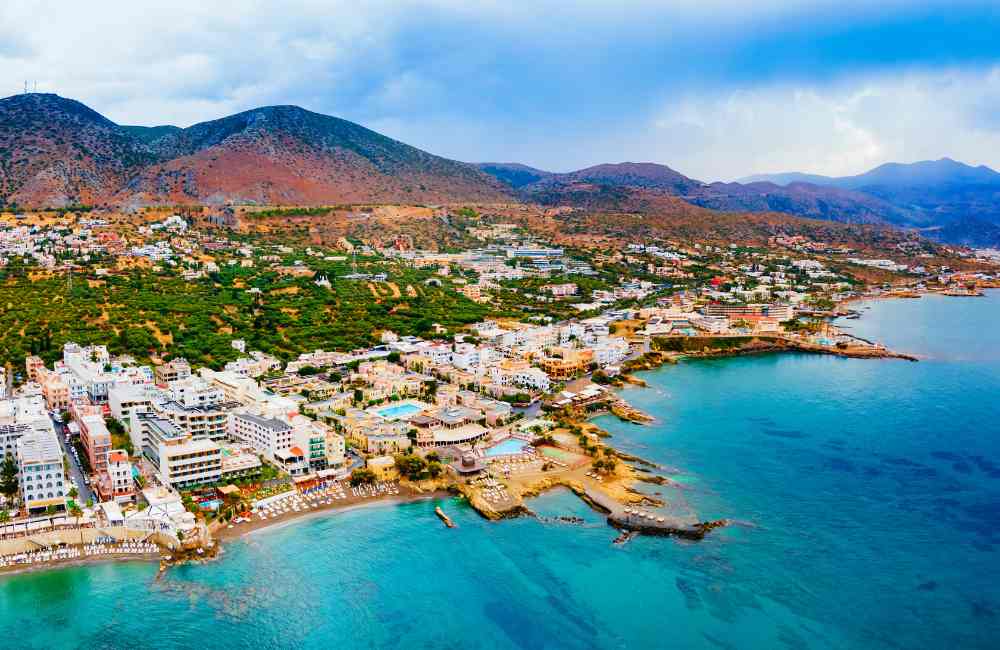
Hersonissos, situated on the north coast of Crete between Heraklion and Agios Nikolaos, is one of the island’s most popular and developed tourist destinations, known for its dual identity as a high-energy seaside resort and a window into traditional Cretan life. Officially called Limenas Chersonissou (the Port of Hersonissos), the coastal area is a hub for nightlife, featuring a waterfront promenade packed with bars, clubs, and international restaurants that stay active until dawn. Historically, it sits on the site of the ancient Roman port of Chersonesos, with remnants such as a Roman fountain and ruins of an early Christian basilica still visible today. Just a few kilometers inland, the landscape shifts dramatically to the “traditional” villages of Old Hersonissos, Piskopiano, and Koutouloufari, where narrow stone alleys, quiet plazas, and local tavernas offer a more authentic, relaxed atmosphere. The region is a favorite for families and thrill-seekers alike, offering diverse beaches ranging from sandy coves to rocky inlets, alongside major attractions like Star Beach, the Aquaworld Aquarium, and the nearby Cretaquarium.
9. Paros
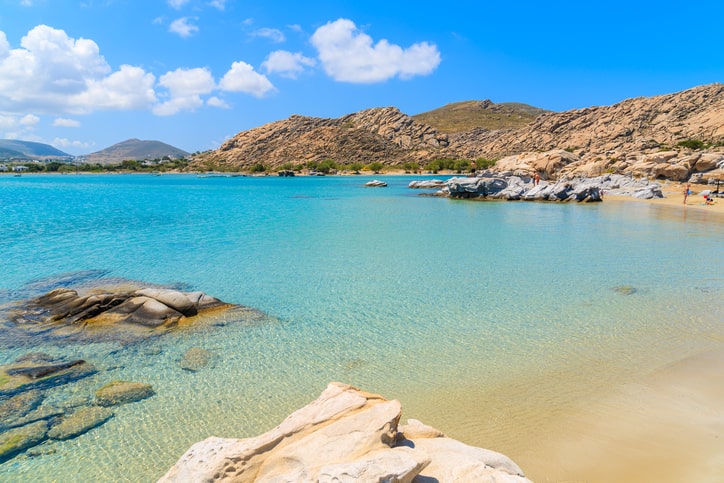
Paros, a central island in the Cyclades archipelago, is celebrated as a quintessential Greek destination that balances cosmopolitan energy with traditional Aegean charm. Historically famous for its high-quality translucent “Parian marble”—used to carve masterpieces like the Venus de Milo—the island’s heart is its capital and main port, Parikia, which features the 4th-century Panagia Ekatontapiliani (the Church of 100 Doors), one of the most important Byzantine monuments in Greece. To the north lies Naoussa, a picturesque fishing village turned upscale hotspot, where whitewashed Venetian-era ruins overlook a harbor filled with colorful boats and chic waterfront dining. The island’s interior is defined by the medieval village of Lefkes, nestled in the mountains and connected to the coast by the “Byzantine Path,” a thousand-year-old marble-paved walkway. Paros is also a world-class destination for water sports, particularly windsurfing and kitesurfing at Golden Beach, while the nearby islet of Antiparos offers a secluded retreat just a short ferry ride away.
10. Thessaloniki
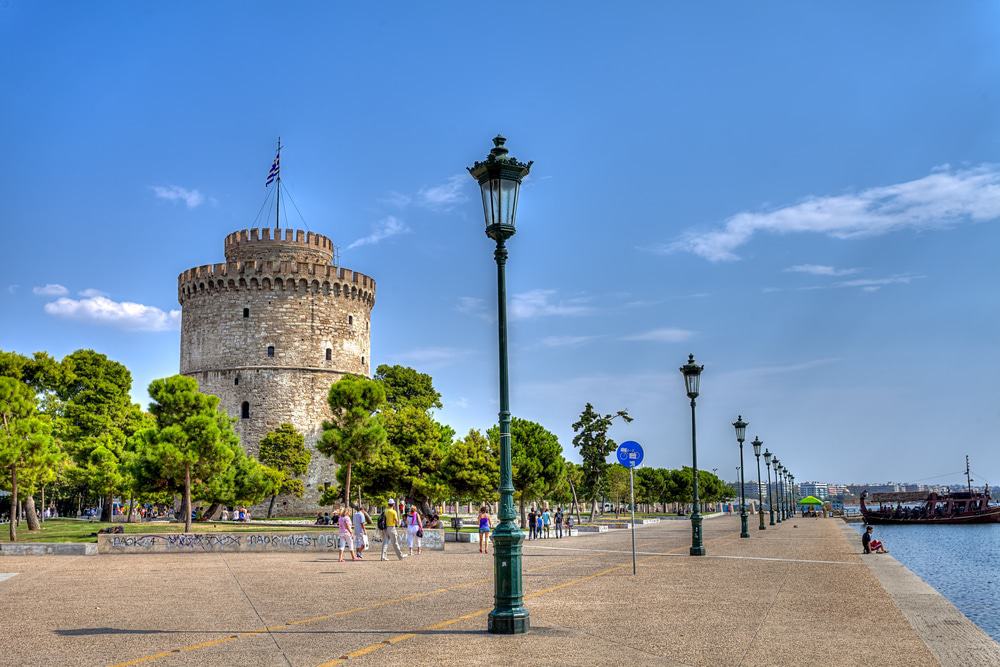
Thessaloniki, Greece’s second-largest city and the “cultural capital” of the north, is a vibrant metropolis that serves as a living museum of Roman, Byzantine, and Ottoman history. Situated on the Thermaic Gulf, the city is anchored by its most famous landmark, the White Tower, which stands on a scenic waterfront promenade that stretches for miles. Thessaloniki is renowned for its UNESCO-listed Paleo-Christian and Byzantine monuments, including the massive Rotunda, the Arch of Galerius, and the Church of Agios Dimitrios, which sits atop the ancient Roman forum. The city’s unique character is defined by the Ano Poli (Upper Town), a historic district that survived the Great Fire of 1917, featuring timber-framed houses and steep winding streets that lead to the Byzantine walls. Beyond its history, Thessaloniki is widely considered the culinary capital of Greece, famous for its Ladadika district—a former oil-market-turned-entertainment-hub—and its bustling central markets like Modiano and Kapani, which offer a sensory explosion of local spices, cheeses, and sweets like bougatsa.
11. Parga

Parga, a picturesque resort town on the northwestern coast of Epirus, is often described as having the soul of an island despite being part of the Greek mainland. Nestled in a secluded bay of the Ionian Sea, the town is built amphitheatrically around a crescent-shaped harbor, characterized by colorful Venetian-style houses that climb the lush green hillside. The skyline is dominated by the formidable Venetian Castle of Parga, which sits on a rocky promontory and provides panoramic views of the turquoise waters and the tiny, nearby Islet of the Virgin Mary. Historically, Parga was a strategic stronghold that remained under Venetian influence while most of Greece was under Ottoman rule, giving it a unique architectural and cultural flair. Today, it is a beloved destination for its stunning beaches like Valtos and Lichnos, its vibrant waterfront lined with olive-wood souvenir shops and cafes, and its role as a gateway to the nearby Ionian islands of Paxi and Antipaxi.
12. Delphi
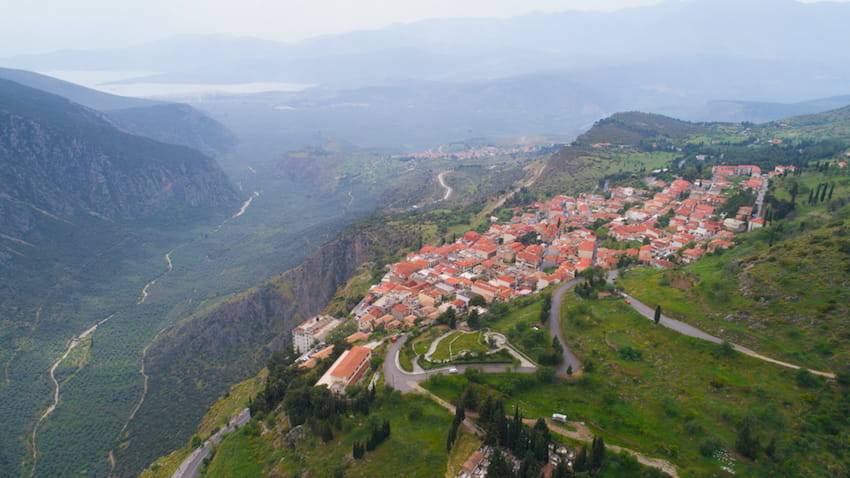
Delphi, located on the slopes of Mount Parnassus in Central Greece, was considered the “Omphalos” or the navel of the world in ancient times. It served as the most important religious sanctuary in the Greek world, home to the Oracle of Delphi and the Temple of Apollo. For centuries, kings and commoners alike traveled here to seek the prophecies of the Pythia, the high priestess who delivered cryptic messages believed to be from the gods. The archaeological site is a UNESCO World Heritage monument, featuring the stunning Sacred Way, the Ancient Theatre, and a well-preserved Stadium where the Pythian Games were held. Below the main sanctuary lies the Tholos of Delphi, a circular building at the Sanctuary of Athena Pronaia that remains one of the most photographed ruins in Greece. Today, the site is complemented by the Delphi Archaeological Museum, which houses masterpieces like the bronze Charioteer of Delphi and the Sphinx of Naxos, making it a profound destination where ancient mysticism meets breathtaking natural beauty.
13. Zakynthos
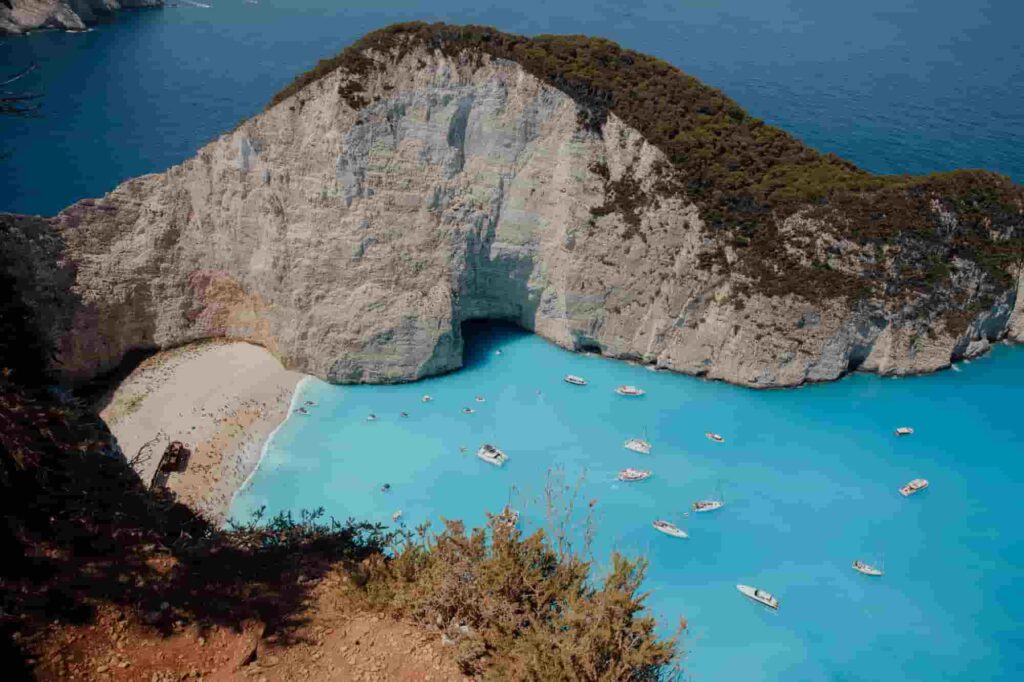
Zakynthos, also known by its Italian name Zante, is a verdant Ionian island famous for its dramatic white cliffs, turquoise waters, and vibrant natural ecosystems. Historically part of the Republic of Venice for centuries, the island possesses a “Levantine” spirit, evident in its music, cantades, and the Italianate architecture of Zakynthos Town, which was meticulously rebuilt following a devastating earthquake in 1953. The island’s global claim to fame is Navagio Beach (Shipwreck Cove), where the rusted hull of the Panagiotis sits on a remote sandy strip accessible only by boat, framed by 200-meter-high limestone precipices. Beyond the rugged west coast, the southern Bay of Laganas serves as the primary nesting ground in the Mediterranean for the endangered Loggerhead sea turtle (Caretta caretta), protected within a National Marine Park. Whether exploring the iridescent Blue Caves, the mountainous traditional villages like Volimes, or the lively nightlife of the southern resorts, Zakynthos offers a diverse landscape that transitions seamlessly from wild, untouched nature to cosmopolitan holiday hubs.
14. Myrtos

Myrtos, located on the northwest coast of Kefalonia, is consistently ranked as one of the most dramatic and beautiful beaches in Greece and the entire Mediterranean. It is famous for its striking semicircular bay, nestled between the feet of two lush mountains, Agia Dynati and Kalos Oros, which plunge vertically into the sea. The beach is composed of brilliant white pebbles and fine sand, which contrast sharply with the vibrant, multi-toned blue of the Ionian Sea—a phenomenon caused by the marble sediment and deep underwater currents. Historically, Myrtos gained international fame after being featured in the film Captain Corelli’s Mandolin, and it has since become the island’s most iconic landmark. While the water deepens quickly and can have strong waves, the beach remains a must-visit for its raw natural beauty and its world-famous sunset, which can be viewed from the hair-raising coastal road high above the bay.
15. Kos
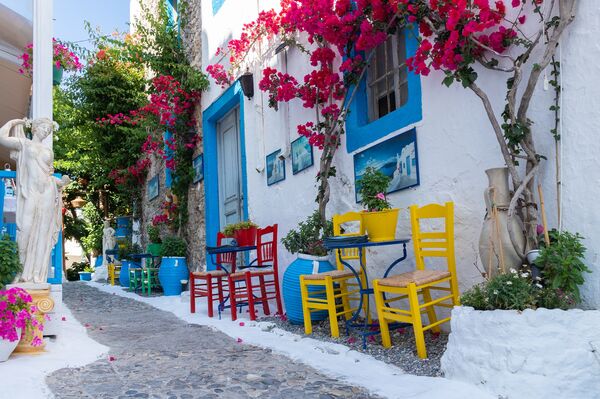
Kos, the third-largest island of the Dodecanese, is a captivating blend of ancient history, lush landscapes, and golden sandy beaches situated just off the coast of Turkey. Known globally as the birthplace of Hippocrates, the “Father of Medicine,” the island’s most significant landmark is the Asklepieion, an ancient healing centre and temple complex that dates back to the 4th century BC. Kos Town, the island’s capital, is a living open-air museum where Hellenistic and Roman ruins, such as the Ancient Agora and the Roman Odeon, sit side-by-side with the medieval Neratzia Castle built by the Knights of Saint John. The town is also famous for the Plane Tree of Hippocrates, under which legend says the physician taught his students. Beyond its archaeological wealth, Kos is a premier holiday destination featuring a diverse coastline—from the wind-swept shores of Mastichari, ideal for windsurfing, to the calm, turquoise waters of Agios Stefanos and Kefalos. With its flat terrain making it the “island of the bicycle” and its vibrant nightlife in the Kardamena district, Kos offers a versatile experience for history buffs and sun-seekers alike.
16. Olympia

Ancient Olympia, located in the lush valley of the Alpheios River in the western Peloponnese, is one of the most significant archaeological sites in the world as the birthplace of the Olympic Games. Dedicated to Zeus, the king of the gods, the sanctuary—known as the Altis—was a pan-Hellenic religious centre where the games were held every four years starting in 776 BC. The site’s centerpiece was the massive Temple of Zeus, which once housed the Statue of Zeus at Olympia, one of the Seven Wonders of the Ancient World. Visitors can still walk through the Kryptē, the arched stone entrance to the Ancient Stadium, where athletes competed for the symbolic olive wreath. Beyond the athletic structures, the site includes the Philippeion, the workshop of the sculptor Phidias, and the Temple of Hera, where the modern Olympic flame is still lit today. The experience is completed by the Archaeological Museum of Olympia, which displays world-class treasures like the Hermes of Praxiteles and the pediments from the Temple of Zeus.
17. Hydra

Hydra, a gem of the Saronic Gulf just a short ferry ride from Athens, is one of Greece’s most atmospheric and unique islands due to its strict preservation laws and total ban on motor vehicles. Built amphitheatrically around a cobblestone harbor, the town is famous for its grand 18th-century stone mansions (archontika) that reflect its history as a powerful naval and merchant power during the Greek War of Independence. Since cars, motorbikes, and even bicycles are prohibited, all transportation is handled by donkeys, mules, or water taxis, creating a serene, timeless environment that has long attracted artists and intellectuals, most famously Leonard Cohen. The island’s rugged coastline is dotted with deep blue swimming spots like Hydronetta and Spilia, while the narrow backstreets are filled with bougainvillea-clad courtyards, artisan boutiques, and hidden churches. Historically, Hydra’s wealthy ship-owning families played a decisive role in the 1821 revolution, a legacy celebrated annually during the Miaoulia Festival and preserved within the Historical Archives Museum at the port.
18. Samaria Gorge
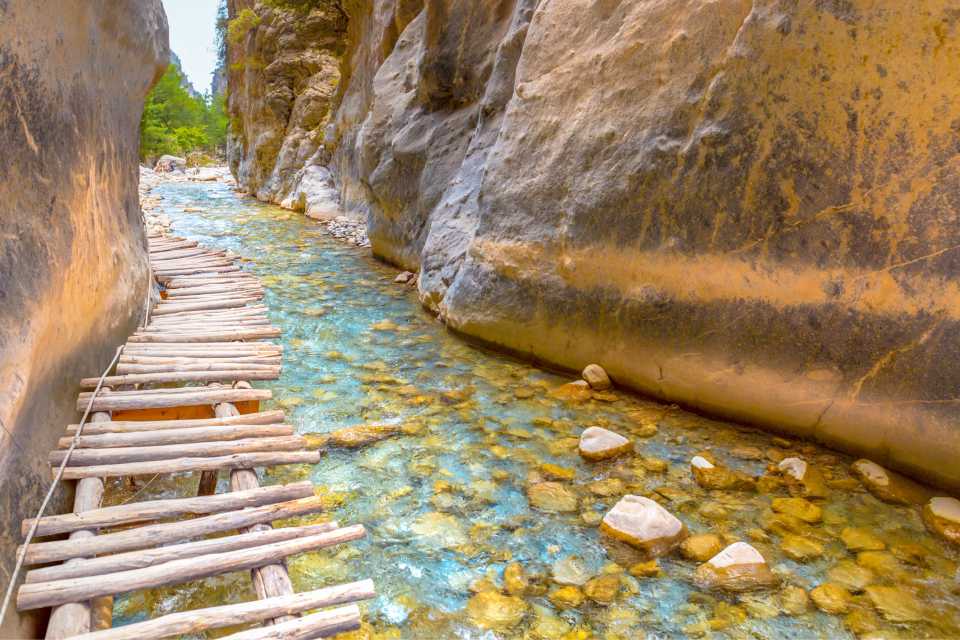
The Samaria Gorge, located in the White Mountains of western Crete, is one of Europe’s longest and most spectacular canyons, stretching approximately 16 kilometers from the Omalos plateau to the Libyan Sea. Designated as a National Park and a UNESCO Biosphere Reserve, the gorge was carved over millennia by a small river flowing between the peaks of Avlimaniko and Volakias. The hike begins at Xyloskalo, a steep wooden staircase at an altitude of 1,200 meters, and descends through dense forests of ancient cypresses and Cretan pines. The most famous point is the “Iron Gates” (Sideroportes), where the canyon walls narrow to a width of just four meters while soaring to heights of 300 meters. Along the route, hikers can explore the abandoned village of Samaria, see the 14th-century church of Osia Maria (which gave the gorge its name), and catch glimpses of the Kri-Kri, the rare and endangered Cretan wild goat. The trek typically ends at the coastal village of Agia Roumeli, which is accessible only by boat or on foot, offering a rewarding swim in the deep blue southern waters.
19. Palace of Knossos

The Palace of Knossos, located just south of Heraklion on the island of Crete, is the largest and most complex of the Minoan palaces, serving as the ceremonial and political heart of Europe’s oldest civilization. Excavated and partially reconstructed by British archaeologist Sir Arthur Evans in the early 20th century, the site is famously linked to the Greek myth of King Minos and the Labyrinth, where the Minotaur was said to be imprisoned. The sprawling complex featured over 1,300 interconnected rooms, including the Throne Room with its original alabaster seat, grand royal apartments, and advanced drainage systems that were centuries ahead of their time. The palace architecture is defined by its unique downward-tapering red columns and vibrant frescoes, such as the Bull-Leaping and the Prince of the Lilies, which offer a glimpse into a sophisticated society focused on trade, art, and nature. As a UNESCO-listed site, Knossos remains the most significant window into the Bronze Age “Palatial” period, illustrating the wealth and power of a maritime empire that dominated the Mediterranean nearly 4,000 years ago.
20. Rhodes
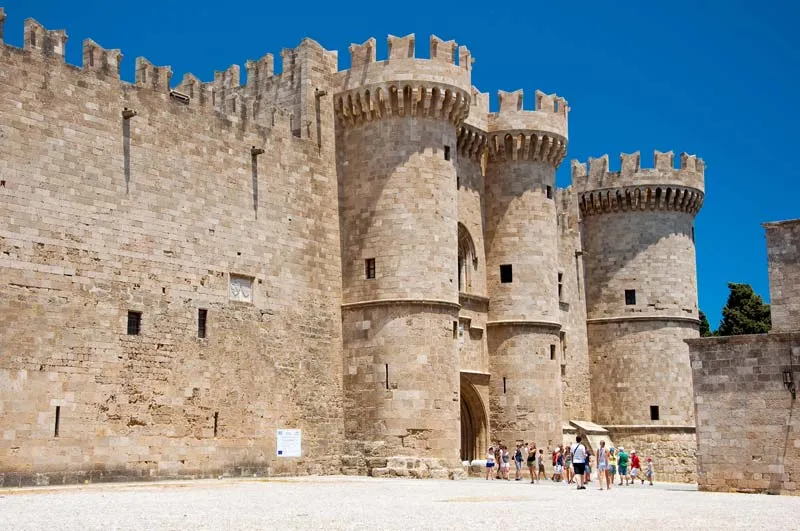
Rhodes, the largest of the Dodecanese islands, is a spectacular blend of medieval heritage, ancient ruins, and modern resort life located in the southeastern Aegean. Its crown jewel is the Old Town of Rhodes, a UNESCO World Heritage site and one of the best-preserved medieval settlements in Europe. Enclosed by massive fortifications built by the Knights of Saint John, the Old Town features the imposing Palace of the Grand Master and the cobblestoned Street of the Knights, which looks virtually unchanged since the 14th century. Historically, the island was famous for the Colossus of Rhodes, one of the Seven Wonders of the Ancient World, which stood at the entrance of Mandraki Harbor. Beyond the capital, the island offers the stunning white-washed village of Lindos, crowned by an ancient Acropolis that overlooks a turquoise bay. With its diverse landscape—ranging from the lush Valley of the Butterflies to the windsurfing paradise of Prasonisi—Rhodes serves as a cultural bridge between the West and the East, offering a unique mix of Byzantine, Ottoman, and Italian architectural influences.
21. Kavala
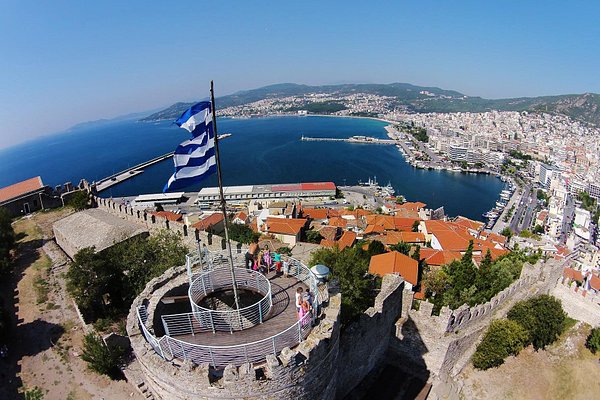
Kavala, often referred to as the “Blue City” or the “Monaco of Greece,” is a stunning coastal city in northern Greece that rises amphitheatrically from the Aegean Sea against the backdrop of Mount Symvolo. Its history is a rich tapestry spanning the Macedonian, Roman, Byzantine, and Ottoman eras, as it served as a vital port and trade link between East and West. The city is dominated by the Old Town (Panagia), a picturesque district of narrow alleys and traditional houses situated on a peninsula, crowned by a formidable Byzantine Castle. One of its most striking landmarks is the Kamares, a massive 16th-century arched aqueduct built by the Ottomans that cuts through the heart of the modern city. Kavala is also the birthplace of Muhammad Ali of Egypt, whose family home and the nearby Imaret—a masterpiece of Islamic architecture—are major cultural attractions. Just a few kilometers away lies the UNESCO World Heritage site of Philippi, one of Greece’s most important archaeological parks and the site where the Apostle Paul established the first Christian church in Europe.
22. Temple of Apollo
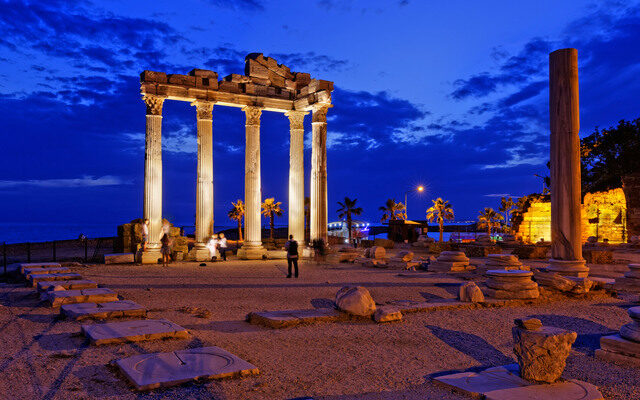
The Temple of Apollo at Delphi, situated on the rugged slopes of Mount Parnassus, was the most sacred site in ancient Greece and the seat of the legendary Pythia, or Oracle. Constructed primarily in the Doric style, the ruins visible today date back to the 4th century BC, though they stand on the foundations of several earlier temples. This sacred precinct was believed to be the center of the world, where the god Apollo spoke through his priestess to offer guidance on matters of war, politics, and personal fate. The temple’s exterior was famously inscribed with maxims like “Know Thyself” and “Nothing in Excess,” serving as a moral compass for pilgrims who traveled from across the Mediterranean. Inside, the Adyton—an inner restricted chamber—was where the Oracle sat upon a tripod, allegedly inhaling volcanic vapors to enter a trance and deliver her cryptic prophecies. Today, its surviving columns and massive limestone terrace remain a powerful symbol of ancient Hellenic spirituality and the pursuit of divine wisdom.
23. Halkidik
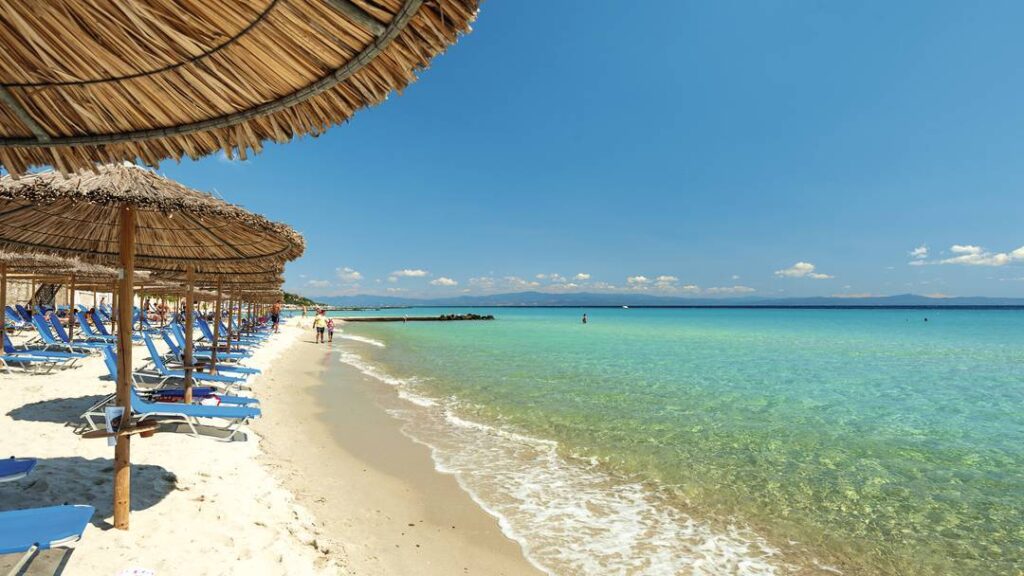
Halkidiki, located in Northern Greece near Thessaloniki, is a unique peninsula famous for its “three-fingered” shape, consisting of three smaller peninsulas: Kassandra, Sithonia, and Mount Athos. It is widely regarded as having some of the best beaches in Greece, defined by thick pine forests that grow right down to the turquoise shoreline. Kassandra, the westernmost leg, is the most developed and cosmopolitan, known for its luxury resorts, vibrant beach bars, and intense nightlife. The middle leg, Sithonia, offers a more rugged and tranquil experience, featuring hidden sandy coves, crystal-clear waters like those at Vourvourou, and traditional villages like Parthenonas. The easternmost leg, Mount Athos, is a semi-autonomous monastic state home to 20 ancient Eastern Orthodox monasteries; while it is a UNESCO World Heritage site, it remains closed to women and requires special permission for men to enter, though its stunning architecture can be viewed from boat cruises along the coast.
24. Symi
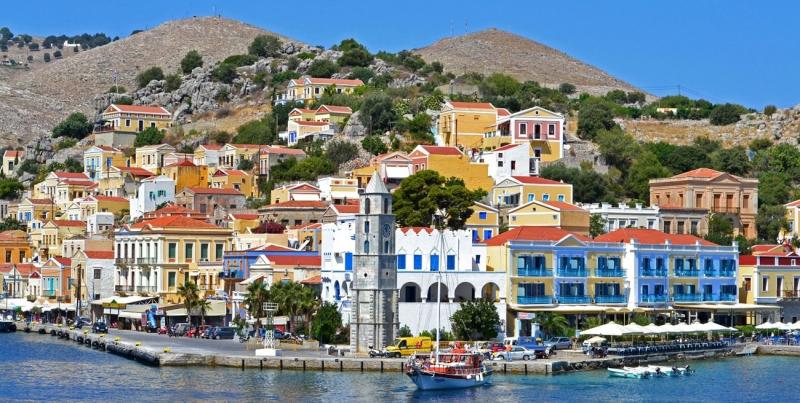
Symi, a small but incredibly striking island in the Dodecanese near the coast of Turkey, is world-renowned for its breathtaking harbor, Gialos, which is often cited as the most beautiful in Greece. Unlike the white-washed buildings typical of the Cyclades, Symi is defined by its neoclassical architecture, featuring tiers of grand, pastel-colored mansions with pediments and balconies that climb the steep hillsides. Historically, the island was a wealthy center for sponge diving and shipbuilding, a legacy visible in the aristocratic scale of its homes. The town is divided into the waterfront Gialos and the historic upper village, Chorio, which are connected by the Kali Strata, a monumental staircase of 500 marble steps. On the southern tip of the island lies the massive Monastery of Archangel Michael Panormitis, a major Greek Orthodox pilgrimage site that houses a famous silver-leaf icon and sits right on the edge of a serene, protected bay.
25. Lindos Beach
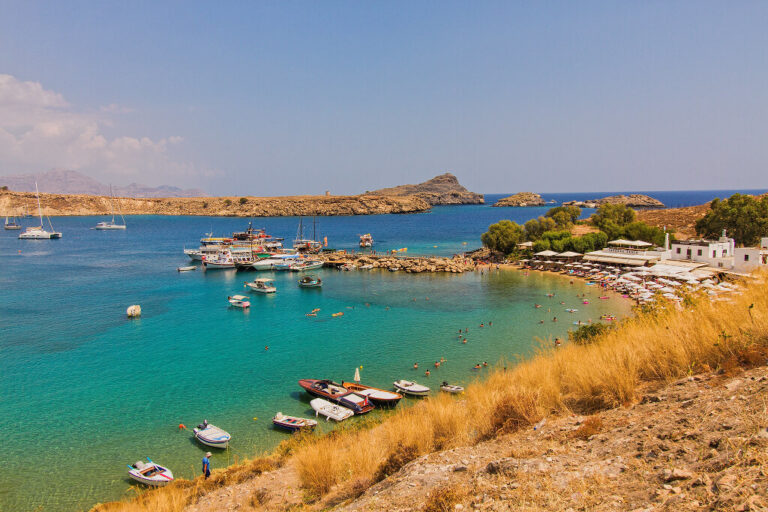
Lindos Beach, nestled at the foot of the ancient Acropolis of Lindos on the eastern coast of Rhodes, is one of the most iconic and visually stunning coastal spots in Greece. Often referred to as Megali Paralia (Main Beach), it features a wide arc of fine golden sand and shallow, crystal-clear turquoise waters that remain calm throughout the day, making it a favorite for families. The beach offers a unique perspective where sunbathers can look up to see the stark white-washed houses of the traditional village clinging to the hillside, topped by the soaring ancient columns of the Temple of Athena Lindia. Just a short walk around the rocky headland lies the smaller, more secluded Pallas Beach, while the legendary St. Paul’s Bay—a heart-shaped natural harbor with emerald waters—is located on the opposite side of the village. Despite its popularity and cosmopolitan atmosphere, Lindos Beach maintains a sense of historical grandeur, providing a rare opportunity to swim in the shadow of a 4th-century BC citadel.