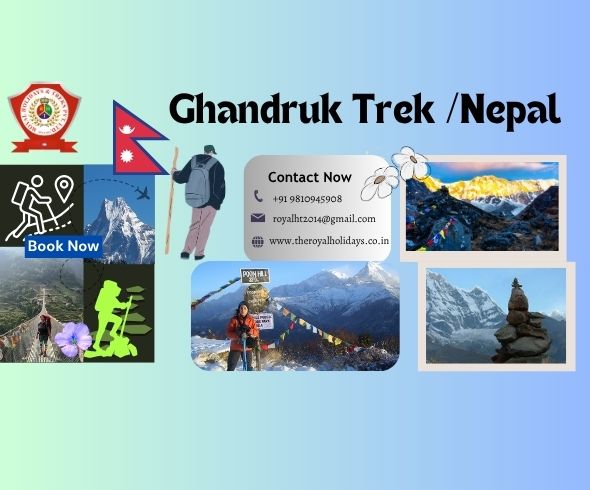
Ghandruk Trek is a short and easy trekking trip in the Annapurna region of Nepal that any traveler can join regardless of their age, interest, and fitness level during any time of the year. Join this trek with Nepal Mountain Trekkers for comfortable short trekking in the Nepal holiday. Simply fill out the Booking form and let us know about your interest. Or you can contact us directly by sending us an email to get more information about this trek.
Ghandruk Trek initiates the next day as you arrive at Kathmandu Valley and drive towards Naudanda via Pokhara. The next day short drive to Nayapul from where we will start our trekking towards the beautiful and culturally rich authentic Gurung village of Ghandruk. Ghandruk offers fabulous views of the Annapurna Himalayan Ranges, especially during sunrise and sunset.
Another notable thing about this trek is that the village still holds the charm of authenticity. The houses built of stone and mud give a feeling of real raw traveling. Then we trek along with another beautiful village of Landruk passing through popular viewpoints of Tolka and Dhampus . At Dhampus, we visit for more spectacular views and villages. Finally, we descend towards Phedi and drive back to Kathmandu.
Overview
Travel is the movement of people between relatively distant geographical locations, and can involve travel by foot, bicycle, automobile, train, boat, bus, airplane, or other means, with or without luggage, and can be one way or round trip. Travel can also include relatively short stays between successive movements.
The origin of the word “travel” is most likely lost to history. The term “travel” may originate from the Old French word travail, which means ‘work’. According to the Merriam Webster dictionary, the first known use of the word travel was in the 14th century.
It also states that the word comes from Middle English travailen, travelen (which means to torment, labor, strive, journey) and earlier from Old French travailler (which means to work strenuously, toil). In English we still occasionally use the words “travail”, which means struggle. According to Simon Winchester in his book The Best Travelers’ Tales (2004), the words “travel” and “travail” both share an even more ancient root: a Roman instrument of torture called the tripalium (in Latin it means “three stakes”, as in to impale).