

Chittorgarh is a renowned city in Rajasthan, known globally for its colossal Chittorgarh Fort. This fort is the largest in India and is recognized as a UNESCO World Heritage Site. Perched atop a 180-meter-high hill, this “Water Fort” once served as the capital of the Mewar Kingdom. Its name is etched in golden letters in the annals of history, immortalized by tales of Rajput valor and the tragic practice of Jauhar. Within its sprawling 700-acre complex, visitors can admire iconic structures such as the Vijay Stambh (Tower of Victory) and the Kirti Stambh (Tower of Fame). In addition to these, the site features magnificent ruins, including the Rana Kumbha Palace and the lakeside Padmini Palace. Beyond its military architecture, the city also serves as a spiritual hub. It is home to the ancient Kalika Mata Temple and the Mira Temple, the latter dedicated to Mira, the celebrated devotee of Lord Krishna. To this day, the city remains a powerful symbol of Indian heritage.
Tourists visiting Chittorgarh delight in its “Light and Sound Show,” explore its 84 ancient water bodies, and experience firsthand the glorious history of its kings and queens. Chittorgarh has a very strong and stable economy because it is a powerhouse for both industry and farming. It is often called the “Cement Hub of India” because it has massive factories that use the local limestone to produce cement for the whole country. The city also hosts one of the world’s largest zinc and lead plants, which brings in a lot of money and jobs.
Chittorgarh is considered a very safe and hospitable destination for tourists, whether you are traveling with your family, friends, or solo. Since the city relies heavily on tourism, the locals are generally helpful and respectful towards visitors. The area surrounding the Chittorgarh Fort is well-secured and closely monitored by the tourist police to ensure that everyone feels comfortable while exploring.
Places to Visit in Chittorgarh :
1. Chittorgarh Fort
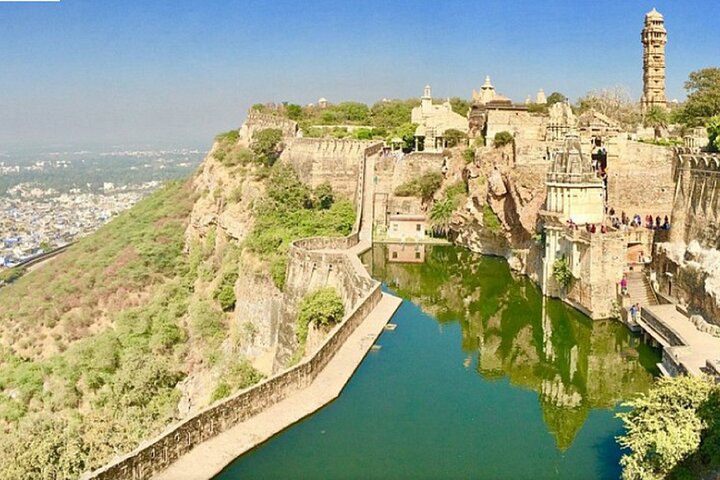
Chittorgarh Fort, a UNESCO World Heritage Site and one of India’s largest fortresses, stands as a monumental symbol of Rajput pride and resilience atop a 180-metre high hill. Originally constructed in the 7th century by Chitrangada Mori of the Maurya dynasty, it later served as the storied capital of the Mewar Kingdom for over 800 years. Spanning roughly 700 acres with a 13-kilometre perimeter, the fort’s architecture is designed for extreme defense, accessible only through seven massive, fortified gates including the main entrance, Ram Pol. It is often called the “Water Fort” because it once housed 84 water bodies—22 of which remain today—enabling it to withstand long sieges. Historically, the fort is famous for its three major sieges: by Alauddin Khilji in 1303, Bahadur Shah in 1535, and Emperor Akbar in 1567, each ending in the legendary practice of Jauhar (self-immolation) by Rajput women and Saka (fighting to the death) by the men. Within its walls lie 65 historic structures, including the iconic 37-metre Vijay Stambha (Victory Tower), the Jain Kirti Stambha (Tower of Fame), and grand palaces like Padmini’s Palace and Rana Kumbha’s Palace, all of which echo the city’s heritage of valour and sacrifice.
2. Rana Kumbha Palace
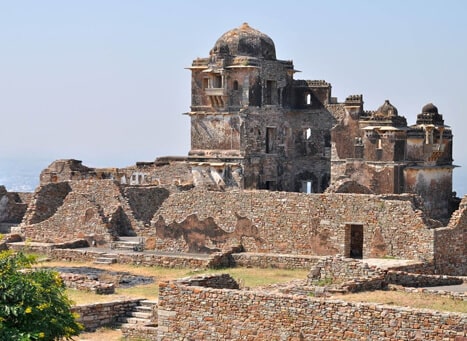
The Rana Kumbha Palace, the oldest and most massive monument within the Chittorgarh Fort complex, stands as a ruined yet magnificent example of 15th-century Rajput civil architecture. Originally believed to have been founded in 734 AD by Bappa Rawal, it was significantly renovated and expanded by Maharana Kumbha during his reign (1433–1468), reflecting the peak of Mewar’s cultural and military power. The palace is architecturally notable for its sprawling courtyards, vaulted chambers, and the grand Tripolia Gate entrance, which leads to sections such as the Zanana Mahal (women’s quarters), horse and elephant stables, and the Nau Lakha Bhandar (royal treasury). Beyond its physical scale, the palace is steeped in tragic and heroic legends; it is cited as the site where Rani Padmini and hundreds of women performed the first Jauhar (self-immolation) in 1303 AD to escape Sultan Alauddin Khilji. It was also the residence of the famous saint-poetess Meerabai, the birthplace of Maharana Udai Singh (founder of Udaipur), and the location where his nurse Panna Dhai made the ultimate sacrifice of her own son to save the infant prince from an assassin.
3. Fateh Prakash Palace
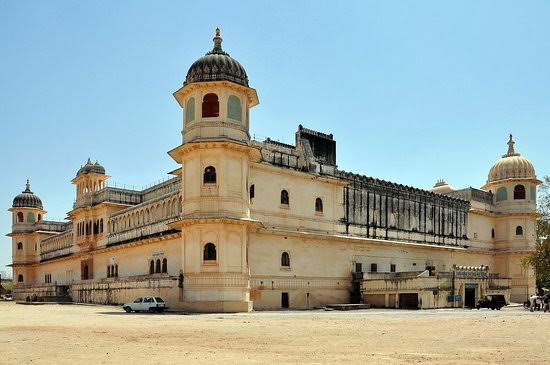
The Fateh Prakash Palace, located within the Chittorgarh Fort, is a grand early 20th-century structure built by Maharana Fateh Singh (1884–1930) that showcases a transition from rugged defensive architecture to a more refined Rajput residential style. Recognised by its distinctive four corner domes and high-ceilinged galleries, the double-storeyed rectangular palace was converted into a Government Museum in 1968 to preserve the rich heritage of the Mewar dynasty. Today, it serves as the fort’s primary interpretive centre, housing a vast collection of 11th-century sculptures, ancient coins, and traditional weapons such as daggers, shields, and helmets. Key highlights include a magnificent 8th-century statue of Lord Ganesh from Pangarh, a life-sized model of a uniformed Rajput soldier, and a dedicated gallery for Bassi village woodcrafts. The palace interiors are also adorned with intricate 17th and 19th-century wall paintings that depict local folklores and epic tales, offering visitors an immersive look into the aristocratic lifestyle of Rajasthan’s former rulers.
4. Padmini Palace
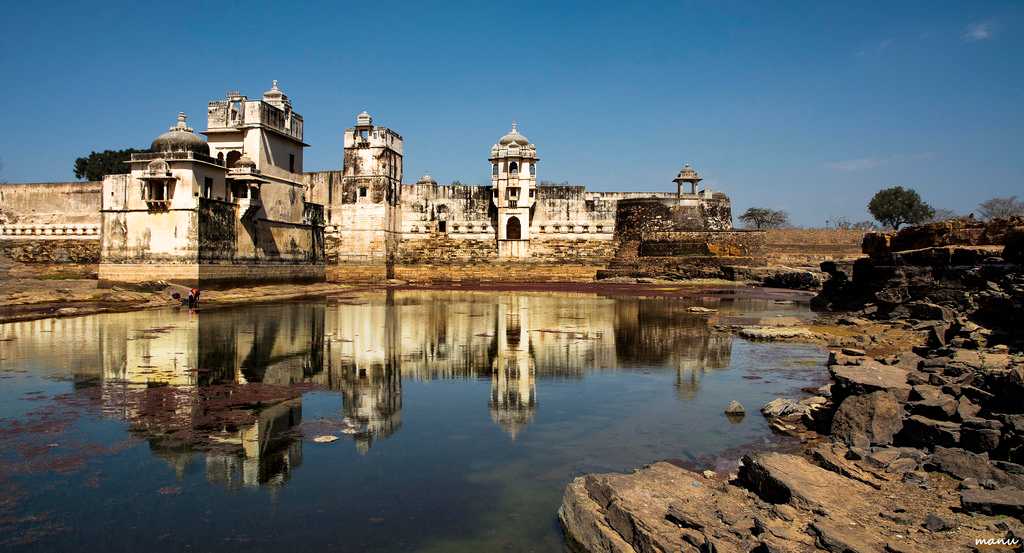
The Padmini Palace, a stunning white three-storey structure located within the southern part of Chittorgarh Fort, is most famous for its association with the legendary Rani Padmini (Padmavati) and the siege of 1303 AD. The palace is unique for its architectural placement, as it stands at the edge of a large lotus pool, with a central “water pavilion” (Jal Mahal) built directly in the middle of the water to keep the rooms cool during the harsh Rajasthan summers. This site is central to the popular legend involving Sultan Alauddin Khilji, who is said to have been permitted to see the Queen’s reflection in a mirror from this palace, a sight so captivating that it triggered his obsession to conquer Chittorgarh. While the current structure was significantly renovated by Maharana Sajjan Singh in the 19th century, it retains its historic charm with arched windows, small domed pavilions (chhatris), and serene views. The palace grounds remain a poignant reminder of the Queen’s beauty and the subsequent Jauhar (self-immolation) performed by her and thousands of women to protect their honour after the fall of the fort.
5. Meera Temple
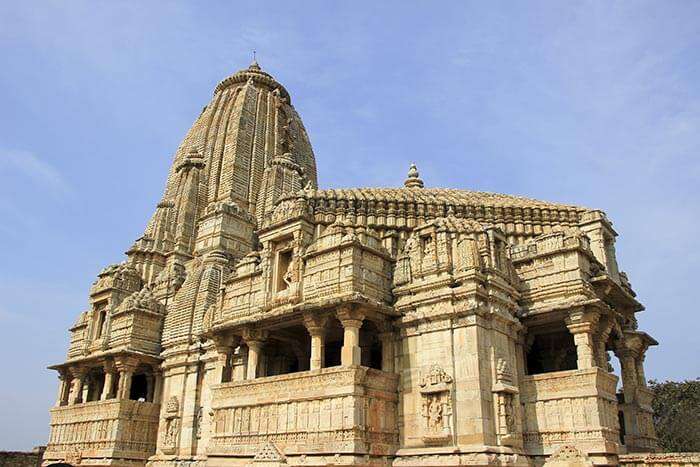
The Meera Temple (or Meera Bai Temple) at Chittorgarh Fort is a profound symbol of the Bhakti movement, dedicated to the 16th-century mystic poet-saint Meera Bai, a devoted disciple of Lord Krishna. Built by Maharana Kumbha in 1449 AD, the temple is constructed in the ornate Indo-Aryan (Nagara) architectural style, featuring an elevated plinth, an open arcade with intricately carved pillars, and a towering conical shikhara (spire). Inside the sanctum, one can find a beautiful idol of Lord Krishna, often accompanied by a smaller figure of Meera Bai herself in a prayerful pose. A unique architectural highlight at the entrance is a sculpture of five human bodies with a single head, which serves as a powerful emblem of universal brotherhood and the unity of all castes—a core tenet of Meera’s inclusive philosophy. Outside the main shrine stands a small chhatri (cenotaph) housing the symbolic footprints of Saint Ravidas, Meera Bai’s spiritual guru, further highlighting the site’s significance as a place of religious equality and deep personal faith.
6. Kali Mata Temple
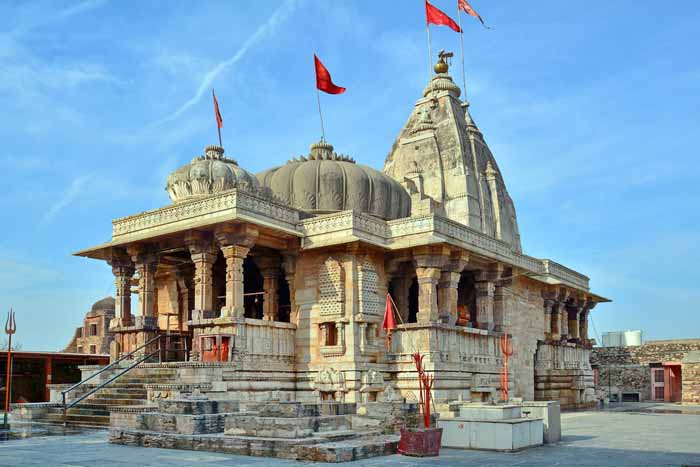
The Kalika Mata Temple, standing on an elevated plinth near Padmini Palace within Chittorgarh Fort, is a magnificent 8th-century architectural marvel originally built as a Sun Temple. Constructed during the Pratihara period, the temple was dedicated to the Sun God (Surya) until it was partially destroyed during the 14th-century siege by Alauddin Khilji, after which it was reconstructed and re-consecrated as a shrine to Goddess Kali, the patron deity of the Mewar clan. Architecturally, it is a masterpiece of the Indo-Aryan style, featuring a grand mandapa (hall), a sanctuary with a towering shikhara (spire), and walls adorned with exquisite carvings of gods, celestial dancers, and intricate floral motifs. The temple’s historical origins are still visible today through the carvings of the Sun God on the entrance lintels and the central image of Surya in the sanctum. As one of the oldest surviving structures in the fort, it remains a vibrant center of worship, especially during the festival of Navratri, when thousands of devotees gather to offer prayers to the goddess in an atmosphere of intense religious devotion.
7. Gaumukh Reservoir
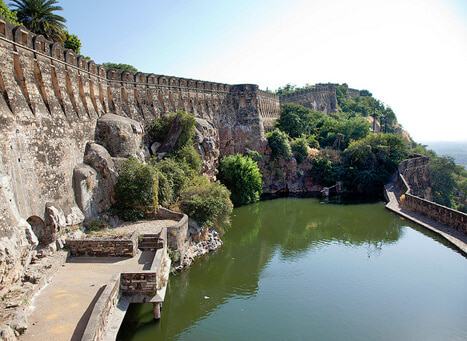
The Gaumukh Reservoir, or Gaumukh Kund, is one of the most sacred and vital water bodies within Chittorgarh Fort, earning the title of ‘Tirth Raj’ (King of Pilgrimages) in the region. Its name, which translates to “cow’s mouth,” is derived from the unique carved stone spout shaped like a cow’s head, through which a perennial natural spring continuously flows into the reservoir. This ancient engineering marvel served as the fort’s primary water source during numerous historic sieges, demonstrating the sophisticated water conservation systems that once allowed the fort to store up to four billion litres of water. The site holds deep spiritual significance; at the point where the spring water falls, there is a small shrine featuring a Shiva Linga and an icon of Goddess Lakshmi, where devotees perform rituals and feed the large schools of fish that inhabit the green-hued waters. Located near the Samadheshwara Temple on the western edge of the fort, the reservoir offers panoramic views of the plains below and is adjacent to the Rani Bindar tunnel, which legends claim leads to the underground chamber where Rani Padmini performed Jauhar.
8. Bassi Wildlife Sanctuary
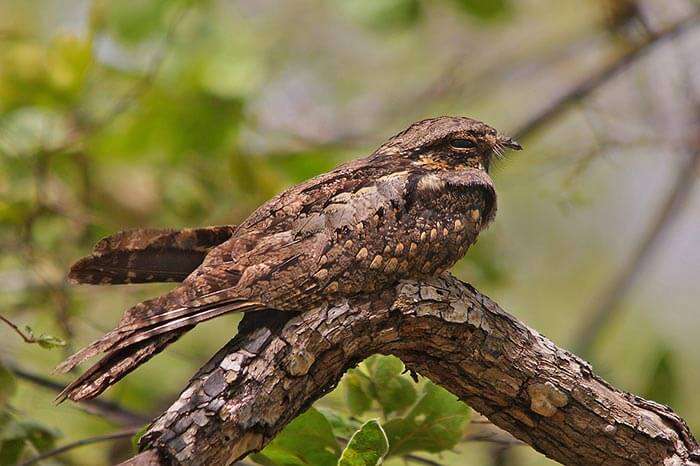
The Bassi Wildlife Sanctuary, established in 1988 and sprawling over approximately 150 square kilometres on the western edge of the Vindhyachal Ranges, is a serene natural reserve located about 25 kilometres from Chittorgarh. This dry deciduous forest, rich in Dhok, Churel, and Butea trees, provides a vital habitat for diverse fauna, including panthers, wild boars, four-horned antelopes (Chousingha), hyenas, and jackals. A key highlight of the sanctuary is the presence of the Bassi and Orai dams, whose reservoirs attract a wide variety of resident and migratory birds such as Saras cranes, pelicans, and storks, as well as providing a home for crocodiles. Historically used as hunting grounds for the Maharanas of Mewar, the area is now a peaceful destination for jeep safaris, nature walks, and birdwatching, especially during the peak winter months from October to February. Visitors can also combine their trip with a visit to the nearby 16th-century Bassi Fort Palace for a complete blend of nature and heritage.
9. Padmavati Palace
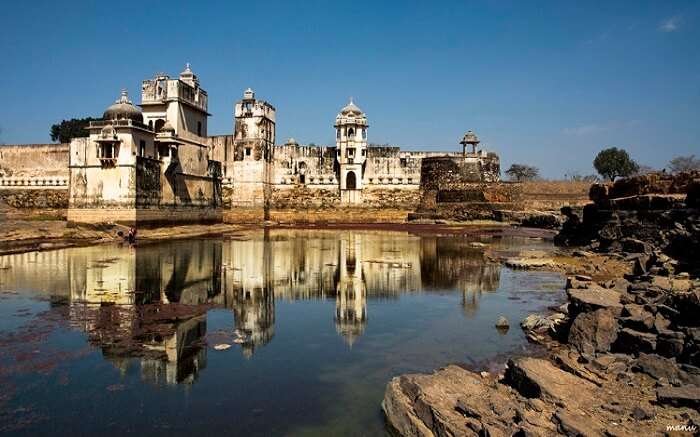
The Padmavati Palace (often referred to interchangeably with Padmini’s Palace) is a historic complex located in the southern part of Chittorgarh Fort, immortalised by the legendary tales of the courageous Queen Padmini. The palace is most famous for its unique water pavilion (Jal Mahal), a three-storeyed white structure that stands gracefully in the middle of a large lotus pool, which was originally designed to provide a natural cooling effect during the hot summer months. It was here, according to legendary accounts, that Sultan Alauddin Khilji was granted a glimpse of the Queen’s reflection in a mirror, an event that allegedly sparked the subsequent siege of the fort in 1303. Architecturally, the surrounding mainland palace features beautiful arched windows, decorative pillars, and a series of courtyards that reflect the refined Rajput style of the 13th century (though significantly renovated in the 19th century by Maharana Sajjan Singh). Today, the palace grounds serve as a poignant memorial to the Queen’s legendary beauty and her ultimate sacrifice through Jauhar (self-immolation) to protect the honour of the Mewar kingdom.
10. Vijay Stambh
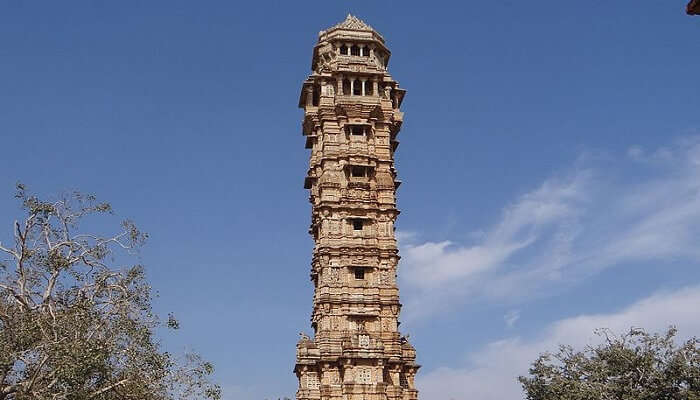
The Vijay Stambh, or the Tower of Victory, is an imposing nine-storeyed structure located within the Chittorgarh Fort that stands as an iconic symbol of Mewar’s military triumph and architectural brilliance. Built between 1440 and 1448 AD by Maharana Kumbha, it commemorates his decisive victory over the combined armies of Malwa and Gujarat led by Mahmud Khilji. Standing at a height of 37.2 metres, the tower is constructed from red sandstone and white marble, featuring a narrow, winding staircase of 157 steps that leads to the top floor, which offers a breathtaking panoramic view of the entire city. It is dedicated to Lord Vishnu, as evidenced by the numerous intricate carvings of Hindu deities, celestial nymphs, and scenes from the Ramayana and Mahabharata that adorn its exterior and interior walls. Often referred to as a “Museum of Hindu Iconography,” each of its nine storeys is meticulously decorated, with the uppermost floor featuring an inscription detailing the genealogy of the rulers of Chittor. The tower is so culturally significant that it serves as the emblem for the Rajasthan Police and the Board of Secondary Education Rajasthan, representing the timeless valour of the Rajput spirit.
11. Sathis Deori Temple

The Sathis Deori Temple (also known as the Satbis Deori Temple) is a remarkable complex of twenty-seven Jain temples located within the Chittorgarh Fort, situated near the Fateh Prakash Palace. The name “Sathis” or “Satbis” is derived from the Hindi words for twenty-seven, representing the number of shrines originally dedicated to the various Jain Tirthankaras. Built primarily in the 11th century AD during the reign of the Paramara dynasty (with significant 15th-century additions by Maharana Kumbha), the temple is an architectural masterpiece of the Maru-Gurjara style, featuring a grand central shrine dedicated to Lord Adinath, the first Tirthankara. The complex is renowned for its labyrinthine layout and extraordinary artistic detail, with intricate miniature carvings, detailed sculptures of celestial beings, and beautiful murals adorning its ceilings and pillars. Despite the passage of centuries and multiple sieges, the main structure remains well-preserved, standing as a serene testament to the historical coexistence and flourishing of the Jain community in the heart of the Mewar kingdom.
12. Kirti Stambh
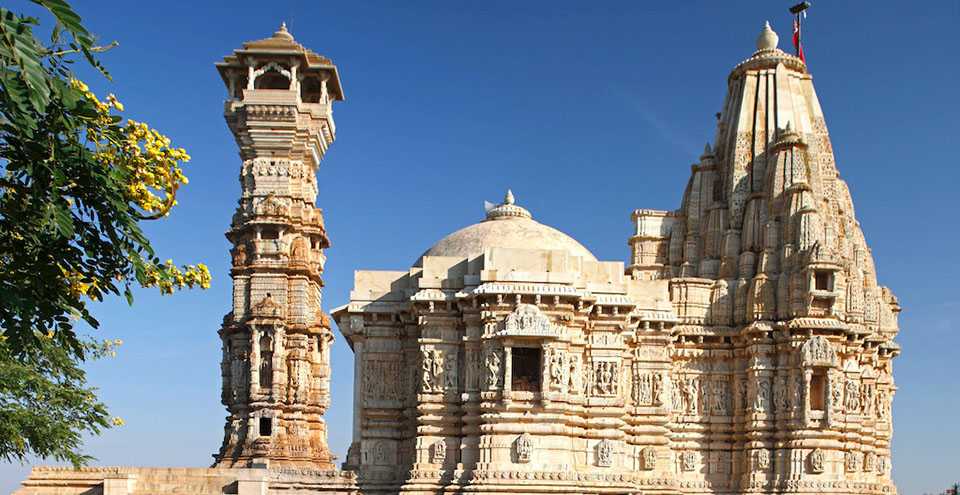
The Kirti Stambh, or the Tower of Fame, is a magnificent seven-storeyed tower located within the Chittorgarh Fort that stands as a masterpiece of 12th-century Jain architecture. Built by a wealthy Digambar Jain merchant named Jijabhai Bagherwal, the tower is dedicated to Adinath, the first Jain Tirthankara. Standing at a height of 22 metres, it is slightly older and smaller than the nearby Vijay Stambh but is more intricately detailed, featuring a narrow interior staircase of 54 steps that leads to the top. The exterior is densely carved with figures from the Jain pantheon, including four large, nude statues of Adinath placed in niches facing the cardinal directions, symbolising the Digambara sect’s principles. Its architecture is characterized by its tapering shape and a crowning chhatri (pavilion) added later in the 15th century. As a significant pilgrimage site, the Kirti Stambh serves as a testament to the cultural and religious diversity of the Mewar region and remains one of the best-preserved examples of Maru-Gurjara sculptural art.
13. Shyama Temple
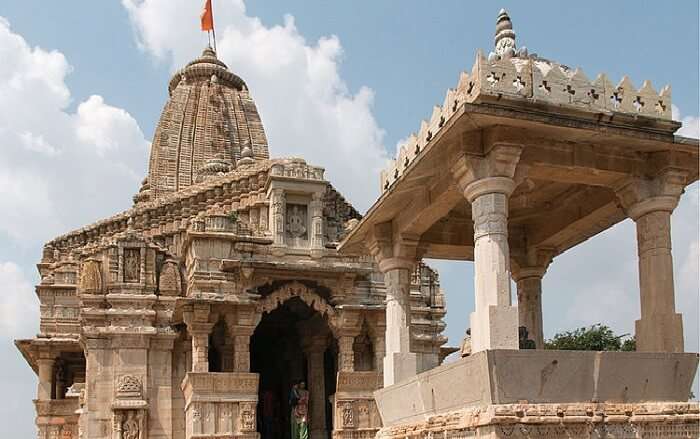
The Shyama Temple, also widely known as the Kumbha Shyam Temple, is an architectural jewel of Chittorgarh Fort dedicated to Lord Vishnu in his Varaha (boar) incarnation. Originally constructed in the 8th century, the temple was significantly renovated and expanded by Maharana Kumbha in 1448 AD, which is why it bears his name. The structure is a classic example of the Indo-Aryan (Nagara) architectural style, featuring an elevated plinth, a grand mandapa (hall) with intricately carved pillars, and a towering pyramidal roof. Its exterior walls are a “stone gallery” of Hindu iconography, densely populated with detailed sculptures of various gods, goddesses, and celestial beings. The temple complex is also historically significant for its shared courtyard with the smaller Meera Temple; it served as the private place of worship for the mystic saint-poetess Meera Bai. Today, it remains a vibrant site of devotion, especially famous for the engraved footprints of Guru Ravidas (Meera’s mentor) housed in a small chhatri (cenotaph) directly opposite the main entrance.
14. Sanwariyaji Temple
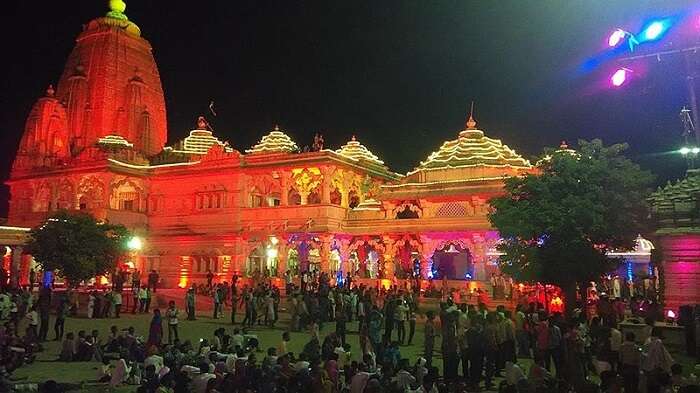
The Sanwariyaji Temple, also known as the Shree Sanwaliya Seth Temple, is a highly revered pilgrimage site dedicated to Lord Krishna (Sanwaliya Seth), located in Mandaphia approximately 40 kilometres from Chittorgarh. According to local legend, the temple’s origin dates back to 1840, when a milkman named Bholaram Gurjar dreamt of three divine idols of Lord Krishna buried underground. Upon excavation in the village of Bhadsoda-Bagund, three identical idols were discovered; the grandest of these was installed at the Mandaphia temple, while the other two are housed in nearby temples at Bhadsoda and the original discovery site. Architecturally, the main temple is a magnificent example of the Nagara style, built with pink sandstone and featuring a 36-foot-high shikhara (spire) and a beautifully decorated mandapa with intricately carved pillars. The temple is uniquely famous as the “Seth of all Seths,” as many businesspeople and traders consider the deity their “business partner” and offer a portion of their first profits to the temple’s treasury. It is considered the second most important pilgrimage for Vaishnavites in Rajasthan after the Shrinathji Temple in Nathdwara and attracts millions of devotees annually, especially during the vibrant Dev-Jhoolni Ekadashi fair.
15. Maha Sati
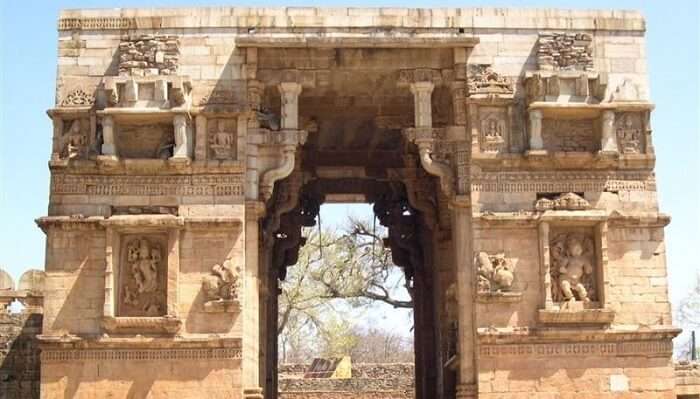
The Maha Sati site, located within Chittorgarh Fort, is a solemn and historically significant area that served as the royal cremation ground for the rulers and warriors of the Mewar dynasty. The term “Maha Sati” translates to “Great Sati,” and the site is tragically renowned as the location where thousands of Rajput women performed the ritual of Jauhar (self-immolation) during the fort’s major sieges—most notably in 1303 against Alauddin Khilji and in 1535 against Bahadur Shah of Gujarat. Architecturally, the site is a vast complex of cenotaphs (chhatris) and memorial stone slabs, each built to honour the valour and sacrifice of kings, queens, and fallen soldiers. A prominent feature of the area is the Gangodbhawa Kund, a natural reservoir believed to be fed by an underground tributary of the Ganges, making its water exceptionally sacred to devotees. Today, the site remains a raw and powerful reminder of the indomitable spirit of the Rajput community, offering a peaceful yet somber atmosphere for visitors to reflect on the fort’s legacy of pride and sacrifice.
16. Ratan Singh Palace
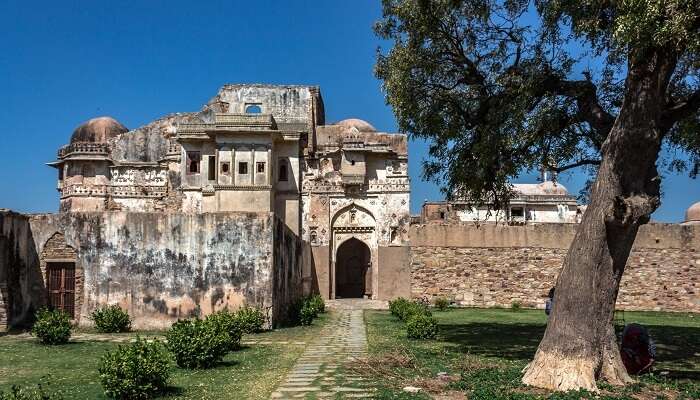
The Ratan Singh Palace, also known as the Rana Ratan Singh Mahal, is a massive winter palace located along the northern banks of the Ratneshwar Talab within the Chittorgarh Fort. Built between 1528 and 1531 AD by Maharana Ratan Singh II, it is a fine example of traditional Rajput architecture, characterized by its rectangular plan, towering defensive walls, and an impressive gateway flanked by arched windows. The palace interior features a series of interconnected courtyards, pillared halls, and small balconies (jharokhas) that offer panoramic views of the adjacent lake and the fort’s greenery. Although parts of the palace are now in ruins, the structure still retains grand elements like the Ratneshwar Mahadev Temple and the remains of private residential chambers once used by the royal family. Historically, the palace served as a hub for cultural gatherings and royal festivities during the winter months, and its location next to the water body reflects the strategic and aesthetic planning common in Mewar’s royal residences.
17. Sitamata Wildlife Sanctuary
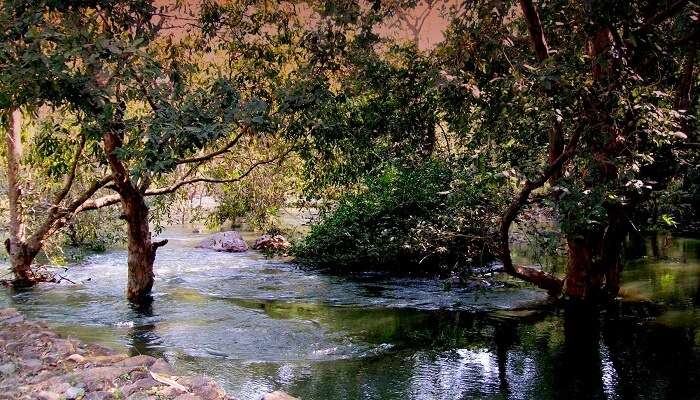
The Sitamata Wildlife Sanctuary, established in 1979 and covering approximately 423 square kilometres, is a unique ecological “hotspot” where the Aravalli and Vindhyachal mountain ranges meet the Malwa Plateau. Located about 60 km from Chittorgarh, it is the only forest in Rajasthan where high-quality teak (Tectona grandis) grows naturally, covering nearly 50% of the forest canopy. The sanctuary is globally famous for the Large Brown Flying Squirrel, a nocturnal mammal that can be seen gliding between Mahua trees around sunset near the Arampura forest area. Beyond its rich biodiversity—which includes leopards, four-horned antelopes (Chousingha), and over 325 bird species—the sanctuary is steeped in Hindu mythology. It is believed to be the site of Sage Valmiki’s ashram, where Goddess Sita took refuge during her exile and gave birth to her sons, Luv and Kush. Visitors can explore the Sita Mata Temple, sacred water tanks (Luv-Kush Kunds), and prehistoric rock carvings at Lakhiya Bhata, making it a profound blend of natural wilderness and spiritual heritage.
18. Menal
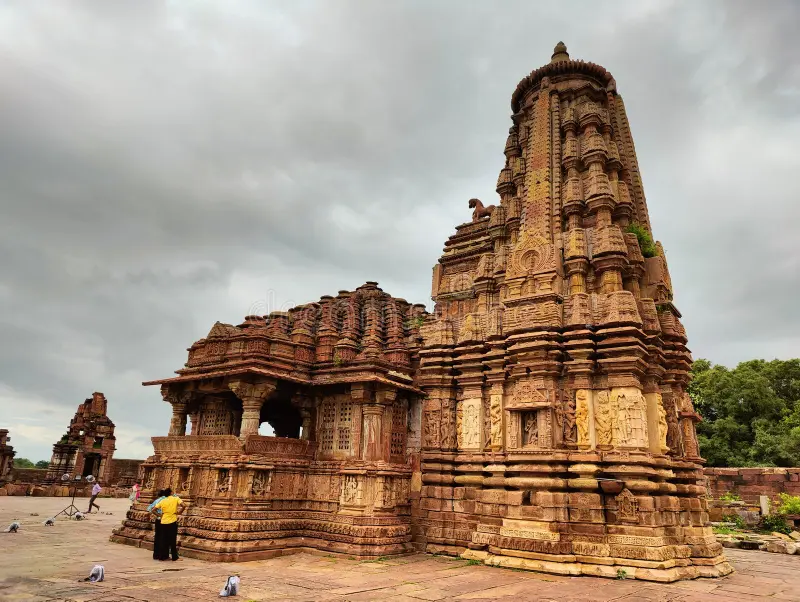
Menal, located approximately 90 kilometres from Chittorgarh, is a stunning historical and natural site often referred to as the “Mini Khajuraho” of Rajasthan. The town’s name is derived from Maha Nal (Great Gorge), a reference to the spectacular 150-foot waterfall that cascades into a deep, lush canyon during the monsoon season. The site is home to the 11th-century Mahanaleshwara Temple complex, a masterpiece of Mahanala architecture built by the Chauhan dynasty, specifically King Someshvara. The main Shiva temple is renowned for its towering shikhara (spire) and exterior walls densely adorned with exquisite stone carvings of Hindu deities, celestial dancers (apsaras), and intricate erotic figures. Historically, Menal served as a mountain retreat for the legendary Prithviraj Chauhan, and the ruins of his palace still stand at the edge of the gorge. Today, the combination of ancient stone craftsmanship, the dramatic landscape, and the surrounding teak forests makes it a premier destination for both history buffs and nature lovers seeking tranquility.
19. Bhainsrorgarh Wildlife Sanctuary
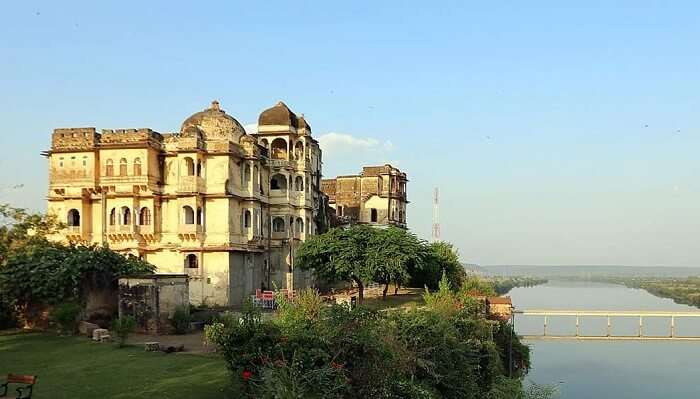
The Bhainsrorgarh Wildlife Sanctuary, established in 1983 and spanning approximately 229 square kilometres in the Chittorgarh district, is a stunning ecological zone located at the picturesque confluence of the Chambal and Brahmani rivers. Nestled within the rugged Aravalli hills, the sanctuary is unique for enclosing the ancient Bhainsrorgarh Fort within its premises, creating a rare blend of historical heritage and raw wilderness. Its diverse landscape—characterized by steep cliffs, deep gorges, and dry deciduous forests—provides a critical habitat for a variety of fauna, including leopards, sloth bears, hyenas, jackals, and wild boars. The sanctuary is particularly famous as a haven for birdwatchers, hosting over 200 species of resident and migratory birds, and as a significant site for spotting mugger crocodiles and turtles along the riverbanks. Its proximity to the Rana Pratap Sagar Dam and the presence of prehistoric rock shelters make it an essential destination for those seeking an authentic, less-traveled eco-tourism experience in Rajasthan.
20. Tulja Bhawani Temple
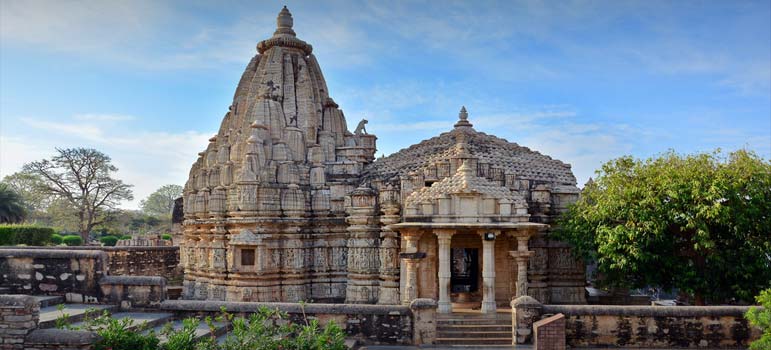
The Tulja Bhawani Temple, located near the main entrance (Ram Pol) of Chittorgarh Fort, is a significant 16th-century shrine dedicated to Goddess Tulja Bhawani, an aspect of Goddess Durga. Built between 1535 and 1540 AD by Banvir, the illegitimate son of Prithviraj (brother of Rana Sanga), the temple is unique because it was funded by Tuladan—the practice of donating gold and silver equivalent to one’s own body weight. Architecturally, the temple is an exquisite example of the Hindu Nagara style, featuring a grand elevated platform, a pillared hall (mandapa), and a towering spire adorned with detailed carvings of deities and celestial figures. The temple holds immense historical and cultural importance as Tulja Bhawani is the patron deity of the Maratha clan, most famously worshipped by Chhatrapati Shivaji Maharaj, which highlights the spiritual link between the Rajput and Maratha warrior traditions. Today, it remains a vibrant center of worship, especially during the Navratri festival, when devotees flock to the temple to seek blessings from the goddess of power and protection.