

Cherrapunji, officially known as Sohra, is a renowned town situated on a high plateau in the East Khasi Hills of Meghalaya, India. Located at an average elevation of 1,484 meters (4,869 feet) above sea level, the town is globally famous for its heavy rainfall; it holds the all-time record for the highest precipitation recorded in both a single month and a single year. The region is characterized by its lush green valleys, ever-present mist, and spectacular waterfalls—such as Nohkalikai and Seven Sisters—which cascade down limestone cliffs overlooking the plains of Bangladesh. Beyond its meteorological fame, Cherrapunji also serves as a cultural hub for the indigenous Khasi people.
These inhabitants are distinguished by their unique matrilineal society and their remarkable artistry in creating “Living Root Bridges”—structures grown and woven from the aerial roots of Ficus elastica trees. Cherrapunji’s economy rests on three fundamental pillars: tourism, agriculture, and nature. Given its renown for heavy rainfall and picturesque waterfalls, many locals earn their livelihood by operating hotels, driving taxis, or working as tour guides for visitors eager to witness the “Living Root Bridges.” Cherrapunji is an exceptionally safe and welcoming destination for all types of travelers, including families and solo female travelers.
The local Khasi community adheres to a matrilineal social system in which women are accorded immense respect. This cultural framework fosters a secure environment and contributes to a very low crime rate within the region.
Most Famous And Attractive Tourist Places In Cherrapunji :
1. Nohkalikai Falls
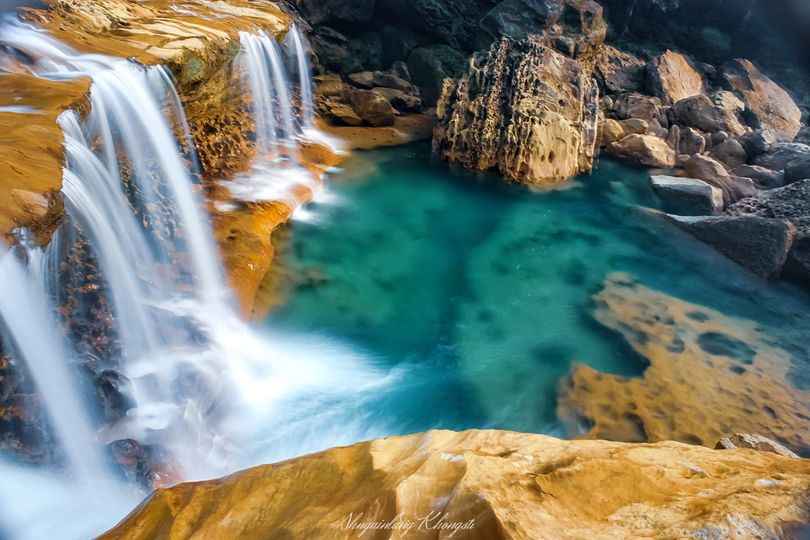
Nohkalikai Falls, located just 5–7 km from Cherrapunji (Sohra) in Meghalaya’s East Khasi Hills, is celebrated as the tallest plunge waterfall in India, with a staggering vertical drop of 340 metres (1,115 feet). Fed by rainwater collected on a small plateau, the falls are a breathtaking sight, especially during the monsoon (June–September) when they transform into a powerful, roaring column of water. A unique feature of the falls is the deep plunge pool at its base, which strikingly changes colour from turquoise-blue to an unusual green depending on the season and sunlight. Beyond its physical grandeur, the name “Nohkalikai” (meaning “Jump of Ka Likai” in the Khasi language) is rooted in a tragic local legend about a grieving mother named Ka Likai, who threw herself off the cliff following the horrific death of her daughter. Today, visitors can enjoy panoramic views of the falls and the lush surrounding valleys from a well-maintained viewing gallery.
2. Dawki
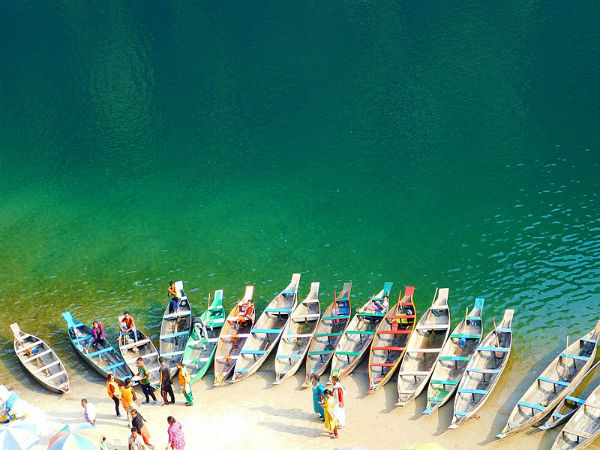
Dawki, a serene border town in the West Jaintia Hills of Meghalaya, is globally renowned for the Umngot River, which is frequently cited as one of the cleanest rivers in Asia. The river’s water is so exceptionally transparent during the winter months (November to February) that it creates a “floating boat” illusion, where traditional wooden canoes appear to glide over a sheet of glass, revealing the colorful pebbles and fish on the riverbed up to 15–20 feet below. Beyond its aquatic beauty, Dawki serves as a vital trade hub at the Tamabil border between India and Bangladesh, marked by the historic British-era Dawki Suspension Bridge built in 1932. While the main town is a bustling transit point, most travelers head 7 km further to Shnongpdeng village for riverside camping, kayaking, snorkeling, and cliff jumping. Visitors should be aware that the river loses its famous clarity during the monsoon (June–September) due to rainwater runoff, making the dry winter and spring months the best time for the full experience.
3. Eco Park
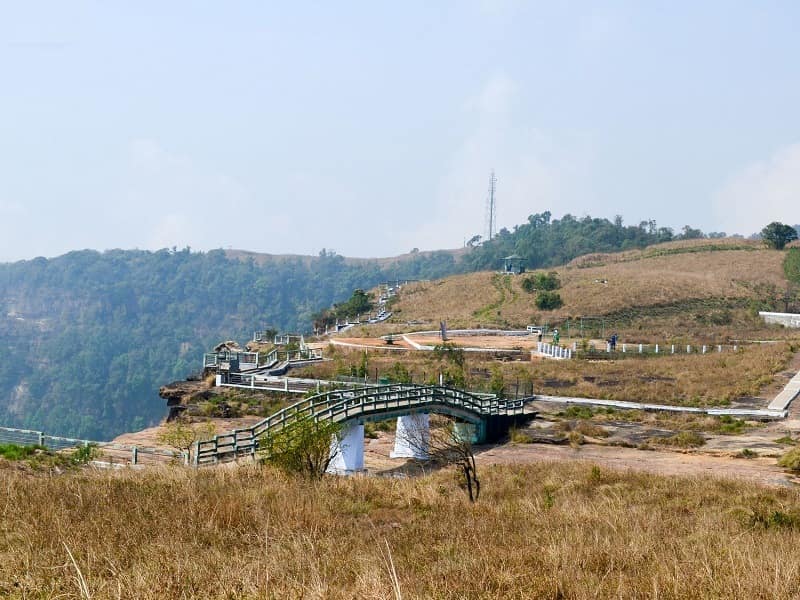
Eco Park, also known as Mawsmai Nongthymmai Eco Park, is a government-maintained recreational space situated on a high plateau in Sohra (Cherrapunji). It is most famous for offering one of the most breathtaking panoramic views of the Green Canyons of Cherrapunji and the vast Sylhet plains of Bangladesh. A major highlight for visitors is the ability to stand at the origin point of the Seven Sisters Falls (Nohsngithiang Falls), where you can watch the water begin its massive plunge over the cliff edge. The park also features a Green House with a rich collection of indigenous and hybrid orchids donated by the Shillong Agri-Horticultural Society, a crystal-clear water stream with a crossover bridge, and designated children’s play areas. While serene and misty throughout the year, the experience is most dramatic during the monsoon when the waterfalls are at their peak and rainbows frequently appear after sudden showers.
4. Krem Mawmluh

Krem Mawmluh, also known as Mawmluh Cave, is a premier adventure destination in Cherrapunji (Sohra) and is recognized as the fourth longest cave in the Indian subcontinent, stretching over 7.2 kilometres. Recently, it gained global prestige as one of the first 100 IUGS Geological Heritage Sites listed by UNESCO for its scientific significance in defining the “Meghalayan Age” of Earth’s geological history. Exploring this maze-like cave is a thrilling experience that involves wading through waist-deep pools, navigating narrow passages that require belly crawling, and crossing massive caverns filled with stunning stalactites and stalagmites. The cave is particularly famous for a pool formed by five distinct underground rivers meeting inside. Because it remains largely in complete darkness and can be physically demanding, it is highly recommended to hire a local professional guide and wear proper safety gear like helmets and boots.
5. Dainthlen Falls
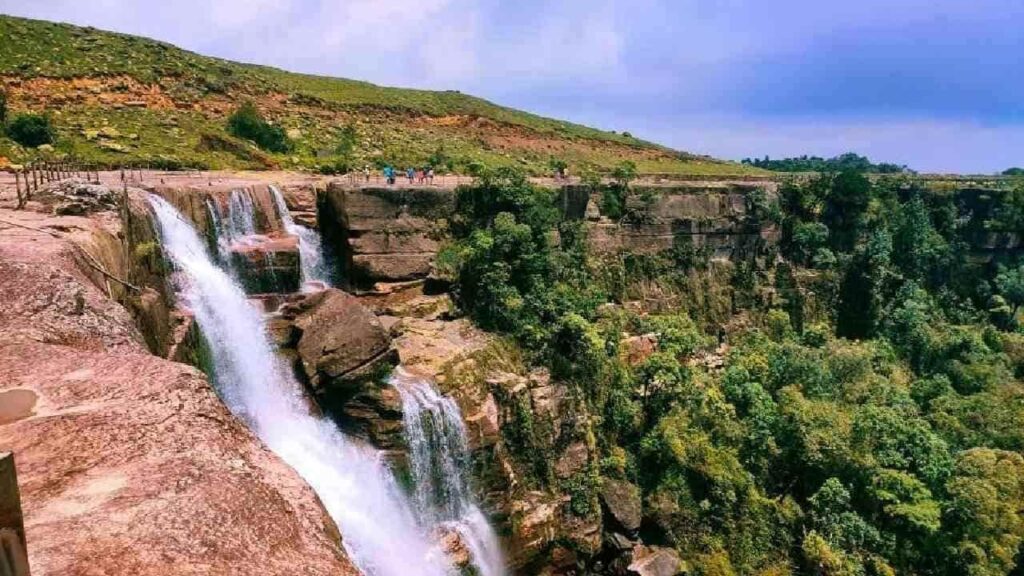
Dainthlen Falls, located just 5 km from the main Cherrapunji town, is one of the most powerful and scenic waterfalls in Meghalaya, distinguished by its unique landscape rather than just its height. Unlike other falls where you view them from a distance, here you can walk right onto the massive, flat rock bed of the river that leads to the drop. The waterfall is steeped in a famous Khasi legend about a giant man-eating serpent named Thlen that once terrorized the local people; according to folklore, the villagers finally captured and killed the snake at this spot, and the natural scars and potholes in the rocks are said to be the marks of that epic battle. During the monsoon, the water thunders down with immense force, but in the drier months, the receding water reveals intricate rock formations and natural pools that are perfect for exploring. Its proximity to the road and the lack of a long trek make it one of the most accessible and popular spots for families and photographers.
6. Mawsmai Cave

Mawsmai Cave, located about 6 km from Cherrapunji, is the most popular and accessible limestone cave in Meghalaya, making it a must-visit for general tourists who want to experience caving without intense physical exertion. Unlike the wilder Krem Mawmluh, Mawsmai is well-lit with internal halogen lamps and features a clearly defined path for visitors to navigate. The cave is renowned for its stunning natural limestone formations, including intricate stalactites and stalagmites that have been carved over thousands of years by dripping water. While the total cave system is quite extensive, only a 150-metre section is open to the public, providing a manageable yet thrilling walk-through experience. Some sections require visitors to squeeze through narrow openings or duck under low ceilings, adding a touch of adventure to the stroll. It is a fossil-rich environment, and observant visitors can often spot prehistoric marine fossils embedded in the cave walls.
7. Thangkharang Park
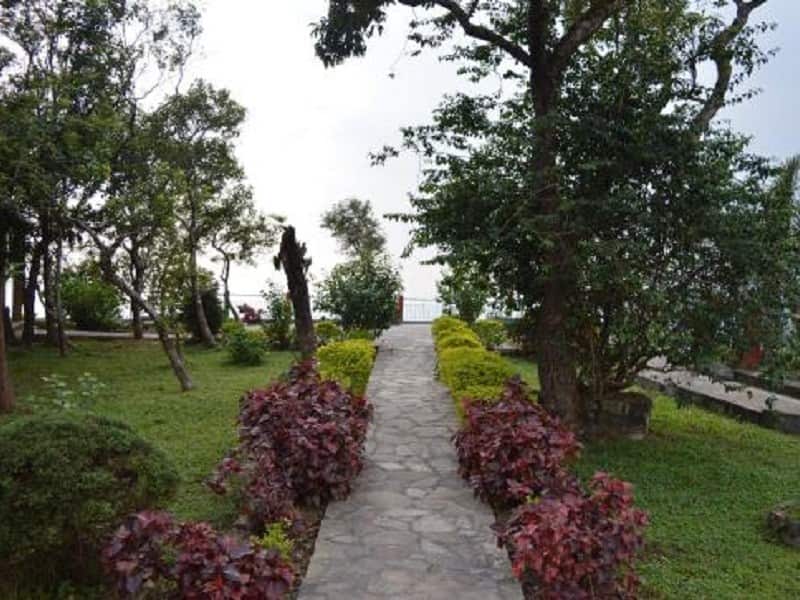
Thangkharang Park, situated approximately 12 km from Cherrapunji, is a beautifully maintained park managed by the State Forest Department that sits on the edge of a sheer cliff. It is most famous for providing a spectacular bird’s-eye view of the Bangladesh plains and the winding Kynshi River flowing below. One of the park’s unique features is the Khoh Ramhah rock, also known as the “Basket of the Giant,” a massive natural rock formation that resembles a giant Khasi conical basket. During the monsoon, two seasonal waterfalls flow right behind this rock, creating a stunning visual. The park is a haven for nature lovers, featuring a diverse range of indigenous plants, a small greenhouse with exotic orchids, and a fossil park section. It also offers a clear, top-down perspective of the Kynrem Falls, which is the highest three-tiered waterfall in Meghalaya. With its well-paved walking trails, resting sheds, and a dedicated children’s play area, it is an ideal spot for families and photographers looking for a quiet retreat with panoramic vistas.
8. Krem Phyllut
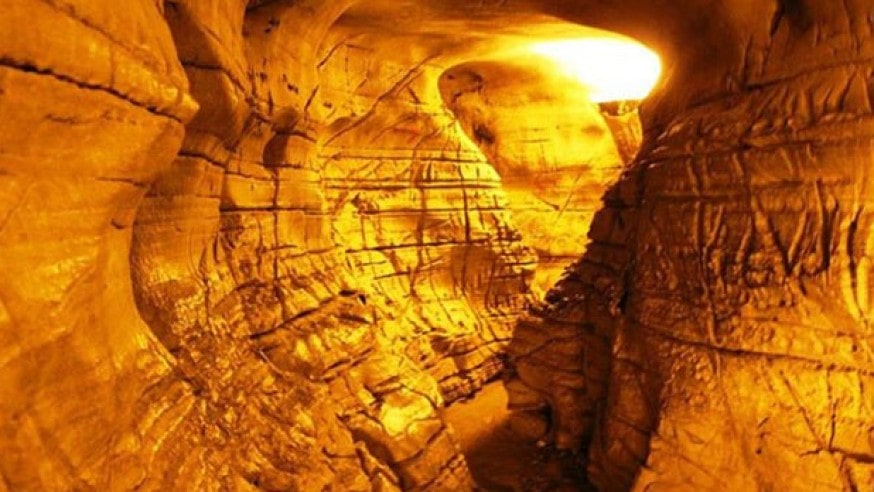
Krem Phyllut, located in Mawsmai village south of Cherrapunji (Sohra), is a significant limestone cave system known for its accessibility and historical fossil passages. Spanning a length of approximately 1,003 metres, the cave features a unique structure with three separate entrances and two distinct stream ways. Inside, visitors can navigate through a series of natural corridors decorated with arches and pillars, as well as spacious chambers filled with staggering stone formations. A notable highlight is the underground river that flows through its heart, which can result in knee-deep water and slippery surfaces, especially during the monsoon. While it is less commercialized than the nearby Mawsmai Cave, it offers a raw spelunking experience with a mix of multi-leveled networks and narrow passageways.
9. Wakaba Fall
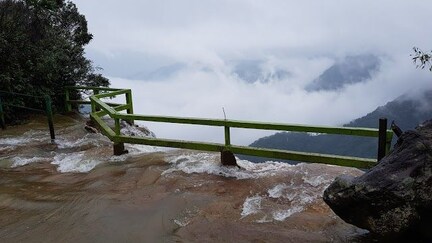
Wah Kaba Falls (often spelled Wakaba) is a breathtaking seasonal waterfall located right on the Shillong-Sohra highway, approximately 8 km before reaching Cherrapunji. It is famous for its dramatic 170–190 metre (around 600 feet) drop from a steep, jagged rock face directly into a deep, lush green gorge. A unique aspect of this fall is its two-tiered structure and the presence of a local legend that claims two fairies reside within its mist. Unlike some falls that can only be seen from a distance, Wah Kaba offers a well-paved trail of about 400 steps that allows visitors to walk all the way to the crest (top edge) of the waterfall. From this vantage point, you can look down into the immense canyon and, on clear days, catch glimpses of the distant plains.
10. Garden Of Caves
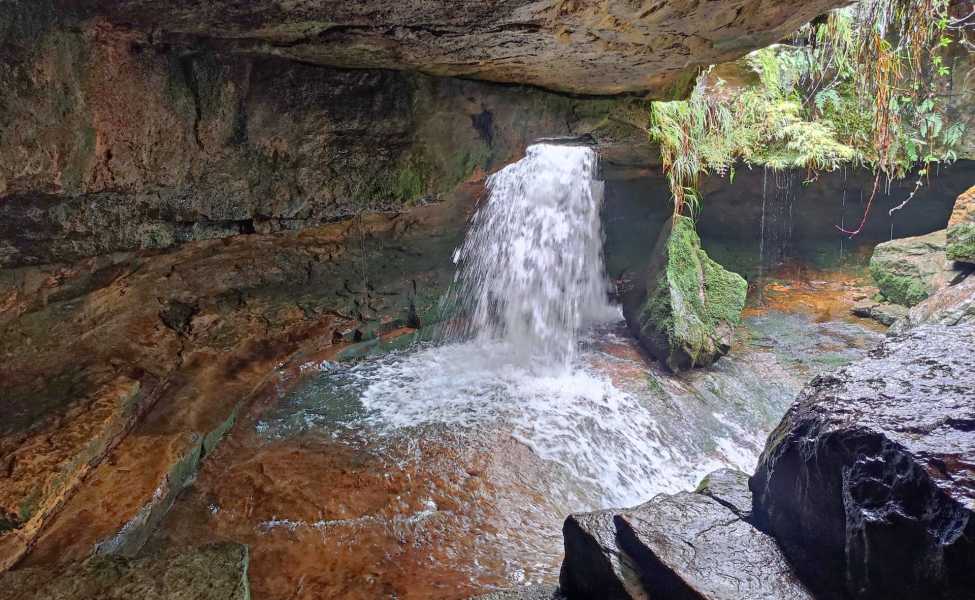
Garden of Caves, locally known as Ka Bri Ki Synrang, is a breathtaking natural park located about 10 km from Laitryngew near Cherrapunji. Unlike the deep, dark limestone caves like Mawsmai, this is an open-air geological park spread across 2.5 hectares of lush greenery. It features a unique combination of seven major spots, including natural rock caves, hidden waterfalls, and crystal-clear turquoise ponds. The most famous highlights are the King’s Cave (a massive rock shelter), the Bamboo Falls, and the Heart-shaped Waterfall, which is a favorite for photographers. The park is beautifully maintained with bamboo bridges and stone pathways that weave through ancient rock formations and over small streams. It was once a seasonal retreat and hiding place for the Khasi tribes during wars, adding a layer of historical significance to its natural beauty.
11. Arwah Cave
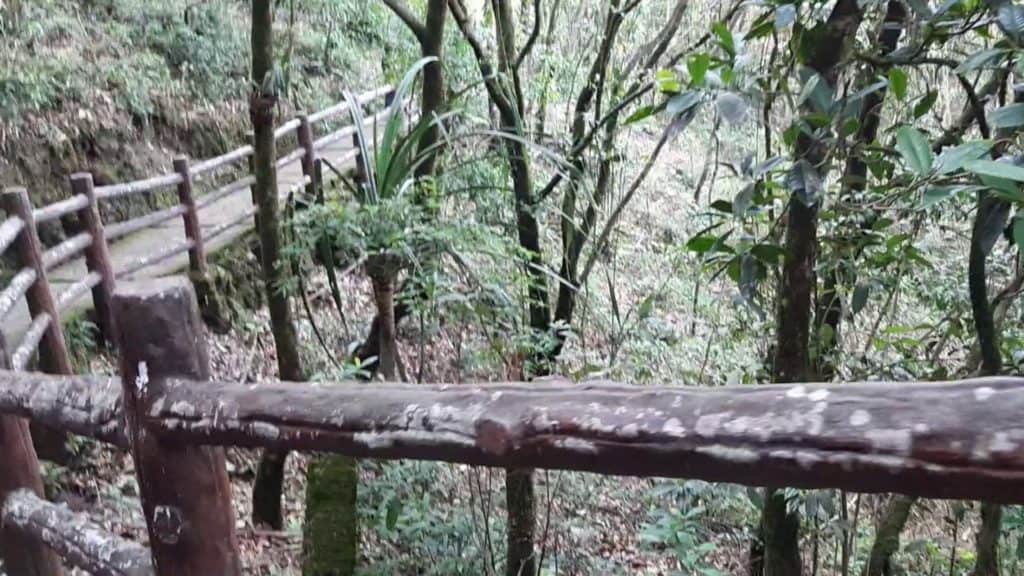
Arwah Cave, located just off the main road near Cherrapunji, is a massive and prehistoric limestone cave system that offers a more rugged and authentic exploration experience than the nearby Mawsmai Cave. It is famous for its abundance of fossils, including gastropod shells and fish bones embedded in the cave walls, dating back millions of years to a time when the region was underwater. The journey begins with a scenic walk along a cliff-side wooden bridge that offers stunning views of the Lawshynna Hill and surrounding waterfalls. Inside, the cave is vast and cavernous, featuring a natural underground stream that flows through its heart. While parts of the cave are lit, many of its deep, narrow passages remain in total darkness, requiring a torch to navigate and revealing hidden chambers filled with spectacular stalactite and stalagmite formations.
12. Khasi Monoliths
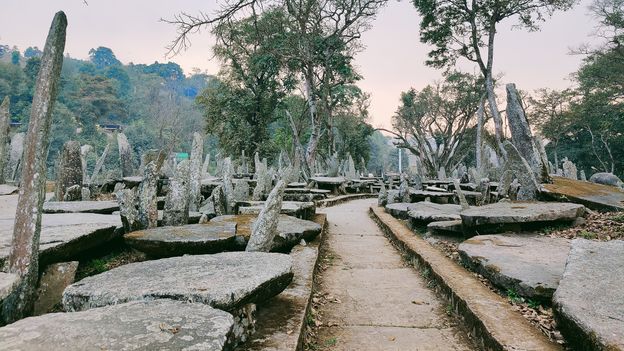
Khasi Monoliths, found scattered across the landscape of Cherrapunji and the surrounding Khasi Hills, are ancient upright stone structures erected as memorials to honor ancestors and commemorate significant historical events. These megalithic stones are classified into two types: the tall, vertical stones called Maw Shynrang (Menhirs), which represent the male members of a clan, and the flat, horizontal stones supported by short pillars called Maw Kynthei (Dolmens), which represent the female ancestors. These structures reflect the matrilineal culture of the Khasi tribe, where the flat “female” stones often serve as resting places for weary travelers, symbolizing the nurturing and supportive role of women in society. Often located near ancient village gateways or markets, these monoliths are not merely historical relics but sacred landmarks that have withstood centuries of weather, serving as a silent testimony to the rich oral traditions and architectural ingenuity of the Khasi people.
13. Ka Khoh Ramhah
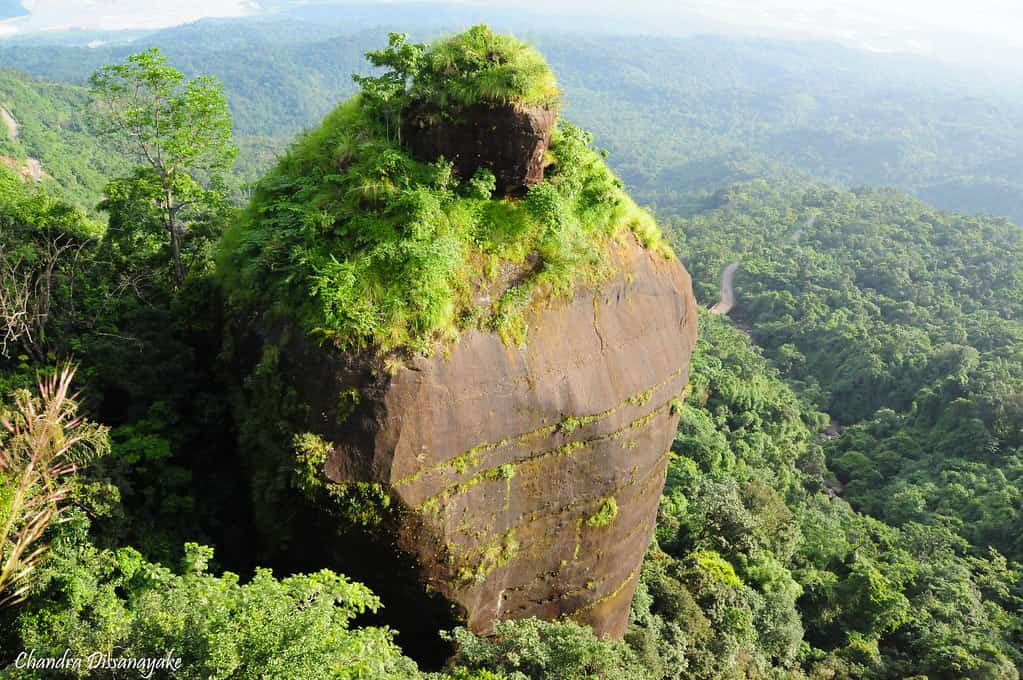
Ka Khoh Ramhah, also popularly known as the “Pillar Rocks” or “Basket of the Giant,” is a massive natural rock formation located about 12 km from Cherrapunji, right next to Thangkharang Park. This unique geological feature consists of a single, towering rock that stands roughly 200 feet high and is shaped remarkably like a Khoh—the traditional conical bamboo basket used by the Khasi people. According to local Khasi folklore, the rock is actually the petrified basket of an evil giant who once terrorized the local villages; he was eventually defeated by the villagers who tricked him into eating food mixed with sharp nails, and his basket turned to stone where he fell. During the monsoon, two seasonal waterfalls cascade right behind the rock, creating a spectacular backdrop that makes it one of the most photographed spots in the region. The viewpoint here offers an unobstructed, breathtaking vista of the Sylhet plains of Bangladesh stretching into the horizon.
14. Nokrek National Park
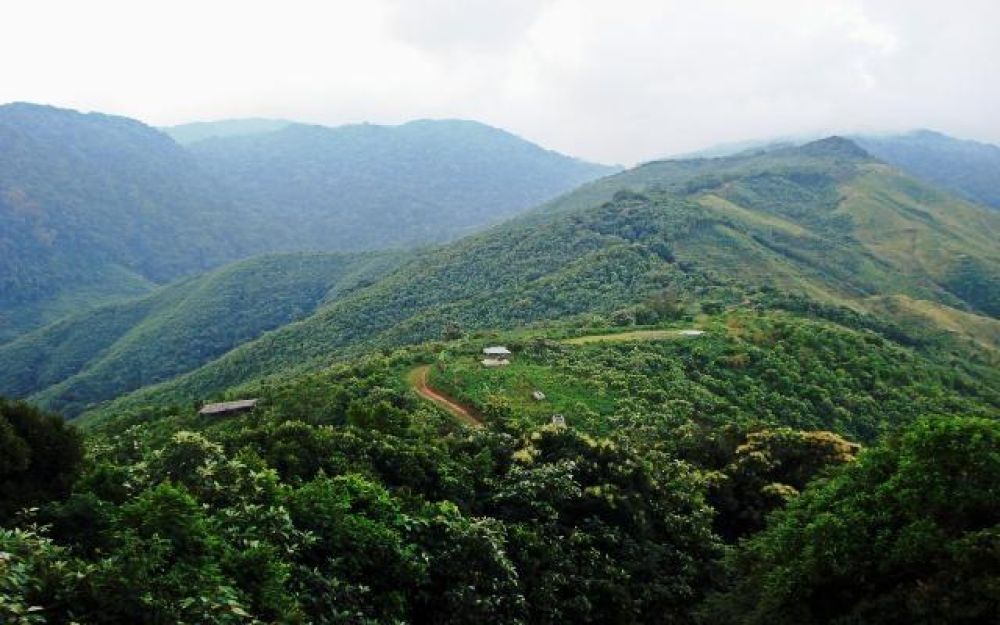
Nokrek National Park, located in the West Garo Hills about 45 km from Tura, is a prestigious UNESCO Biosphere Reserve and the highest point in the Garo Hills range. It is most famous for being a sanctuary for the Red Panda, an extremely rare find in this part of India, and for its significant population of Hoolock Gibbons, the only apes found in the country. The park is also recognized by botanists as the “mother gene pool” for citrus fruits, specifically as the home of the Citrus indica (locally known as Memang Narang), which is believed to be the ancestor of all cultivated citrus species in the world. Dominated by dense, ancient forests and the Nokrek Peak (1,412 metres), the park is the source of several major rivers, including the Simsang. The terrain is a haven for biodiversity, housing elephants, marbled cats, and numerous rare orchids, though its rugged and wild nature makes it a destination best suited for serious nature enthusiasts and trekkers rather than casual sightseers.
15. Prut Falls

Prut Falls, often referred to as a “hidden gem” of the East Khasi Hills, is a breathtaking multi-tiered waterfall located near Laitlyndop Village, about 14 km from the main Cherrapunji plateau. Fed by the Wah Urwan River, the falls drop approximately 40 metres (131 feet) over a wide horizontal limestone cliff into a stunning bluish-green or turquoise plunge pool. What makes Prut Falls truly unique is the rare opportunity for visitors to walk directly behind the cascading curtain of water via a natural, moss-covered ledge, offering an immersive “behind-the-glass” experience and spectacular photographic perspectives. The site is less commercialized than other major falls in the region, providing a tranquil, offbeat escape surrounded by dense subtropical forests and rugged cliffs.