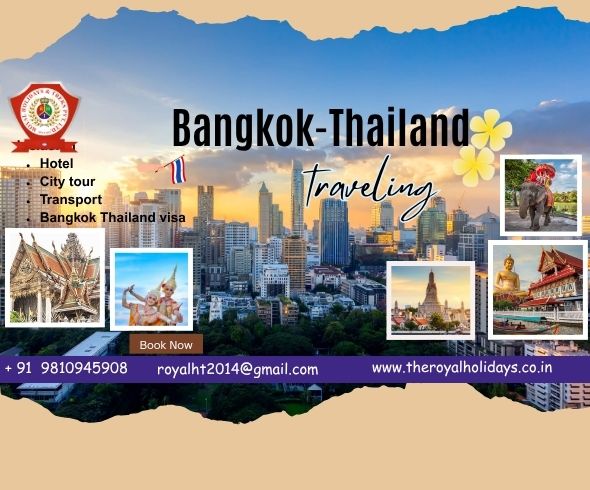
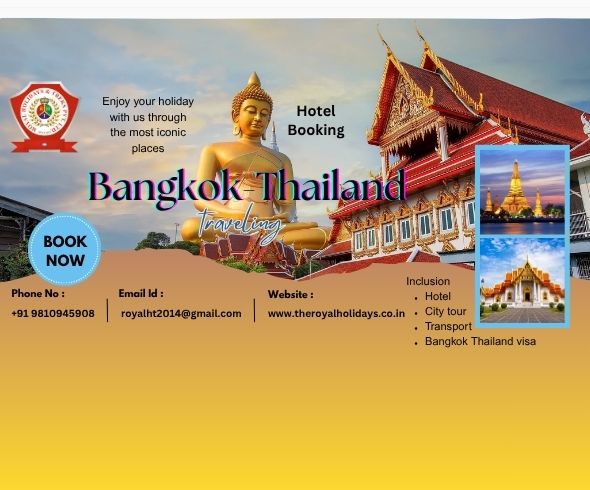
Bangkok, Thailand’s fast-paced capital, is a captivating metropolis where centuries-old traditions meet futuristic urban architecture. Known locally as ‘Krung Thep,’ the city is defined by its heritage as the ‘Venice of the East,’ featuring a vast network of canals (khlongs) and the mighty Chao Phraya River serving as its lifeline. At its spiritual heart lie the Grand Palace and the Temple of the Emerald Buddha, representing the pinnacle of Thai craftsmanship and royal history; meanwhile, just a short distance away, neon-lit skyscrapers and world-class shopping malls—such as Siam Paragon—dominate the city skyline. Bangkok is a global culinary powerhouse, offering everything from the renowned street food stalls of Chinatown to Michelin-starred rooftop dining experiences. Whether you are strolling through the tranquil ‘forest monastery’ of Wat Pathum Wanaram, experiencing the bustling energy of Khao San Road, or feeling the artistic pulse of the Bangkok Art and Culture Centre, the city offers an endless sensory adventure.
It is a place of beautiful contrasts—where orange-robed monks pass by high-tech metro stations—making it one of the world’s most visited and beloved cities. Bangkok serves as the primary hub of the Thai economy, contributing over 30% to the country’s total GDP. The city functions as a global center for manufacturing, finance, and trade. Bangkok is generally a very safe destination for international travelers and is often ranked among the safest cities in Southeast Asia for solo travelers and families alike.
Most Famous And Attractive Tourist Places In Bangkok-Thailand :
1. Bangkok National Museum: Witness The Thai Culture
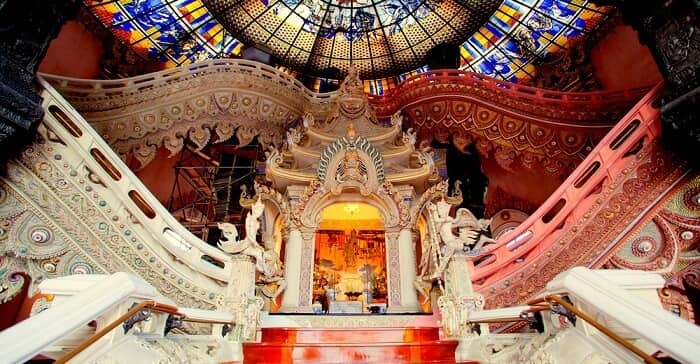
The Bangkok National Museum stands as the largest repository of art and precious artifacts in Southeast Asia, offering a comprehensive journey through the evolution of Thai culture and history. Located on the grounds of the former 18th-century Front Palace, the museum houses an extraordinary collection that spans from the Neolithic era through the glamorous Sukhothai and Ayutthaya periods to the modern Bangkok era. Visitors can witness the intricate craftsmanship of Thai artisans through the Royal Funeral Chariots, ancient bronze Buddha images, and exquisite gold treasures that reflect the nation’s deep spiritual and royal traditions. The museum’s various pavilions are architectural wonders themselves, featuring traditional Thai gables and ornate carvings that provide a serene, scholarly atmosphere. It serves as an essential “cultural classroom” for travelers, providing the necessary context to understand the deep-rooted customs, religious beliefs, and artistic heritage that define Thailand today.
2. Floating Markets: One Of A Kind Market
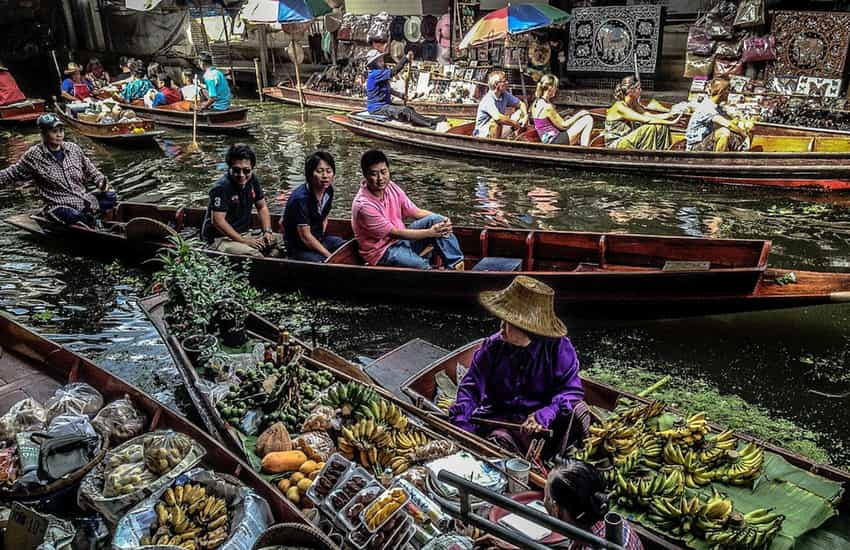
The Floating Markets of Thailand offer a truly one-of-a-kind market experience that serves as a living tribute to the country’s ancient “Venice of the East” heritage. Located primarily on the outskirts of Bangkok, such as at the famous Damnoen Saduak or the more authentic Amphawa, these markets consist of a labyrinth of narrow canals where local vendors paddle small wooden boats laden with fresh tropical fruits, colorful vegetables, and sizzling street food. It is a sensory explosion where you can buy a steaming bowl of Boat Noodles or freshly grilled seafood directly from a vendor’s boat to yours. The vibrant atmosphere is filled with the sounds of friendly bartering and the gentle splashing of oars, providing a glimpse into a traditional way of life that dates back centuries when water was the primary mode of transport. Navigating these waterways offers a unique perspective on Thai commerce and community, making it an essential excursion for anyone wanting to experience the rustic, watery charm of old-world Thailand.
3. Rose Garden: For Thai Cultural Show
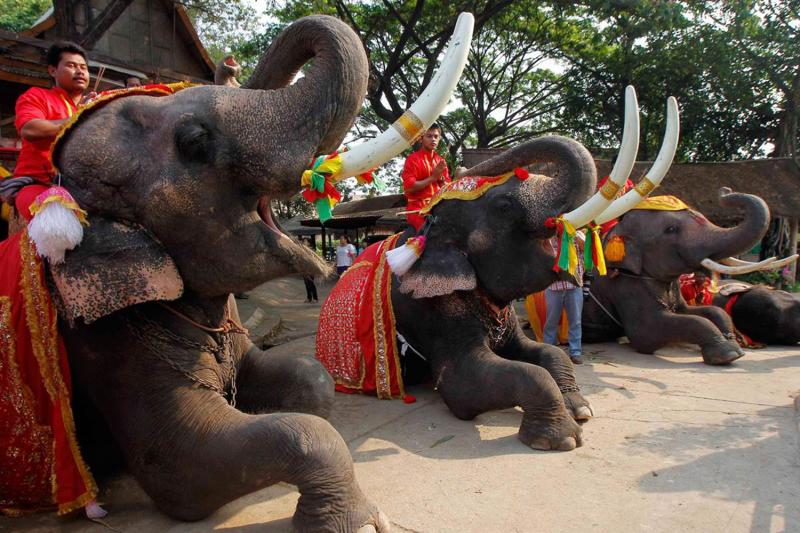
The Rose Garden, now known as Sampran Riverside, is a premier destination for travelers wanting to experience a high-quality and comprehensive Thai Cultural Show in a beautiful natural setting. Located about an hour outside of Bangkok, this sprawling estate is famous for its “Thai Village” performance, which brings the country’s diverse traditions to life through vibrant costumes, traditional music, and skillful storytelling. The show features a captivating variety of segments, including graceful fingernail dances, high-energy Muay Thai boxing demonstrations, ancient sword-fighting rituals, and a colorful re-enactment of a traditional Thai wedding ceremony. Beyond the main stage, the gardens offer an interactive experience where visitors can try their hand at traditional crafts like pottery, silk weaving, and umbrella painting. It is the perfect place for families and culture enthusiasts to see the rich tapestry of Thai heritage condensed into one spectacular afternoon, all while surrounded by perfectly manicured gardens and the peaceful atmosphere of the Ta-Chine River.
4. Wat Hua Lamphong: A Lively Temple
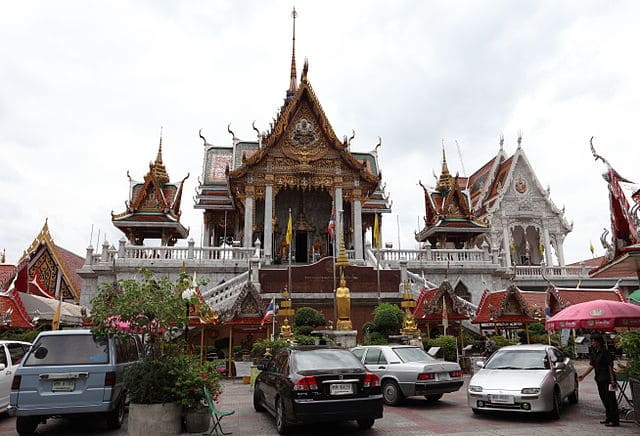
Wat Hua Lamphong is a remarkably lively temple located in the heart of Bangkok’s bustling Bang Rak district, standing as a vibrant contrast to the surrounding modern skyscrapers and the busy Sam Yan intersection. Unlike the quiet, meditative atmosphere of more remote temples, this “Royal Temple of the Third Class” is constantly buzzing with the energy of locals who stop by at all hours of the day and night to make merit and seek blessings. It is particularly famous for its association with the Ruamkatanyu Foundation, located right next door, where people come to donate money for “coffin funds” to provide burials for the underprivileged—a practice believed to bring powerful good luck and longevity. The temple complex is a dazzling display of Thai Buddhist architecture, featuring a magnificent golden-tiered roof and a stunning interior filled with colorful murals and golden Buddha statues. Its proximity to the MRT station and its 24-hour activity make it one of the most accessible and authentic places to witness the daily spiritual life of Bangkok’s urban population, where ancient traditions seamlessly blend with the fast-paced rhythm of the city.
5. Wat Mahathat: Religious Headquarter
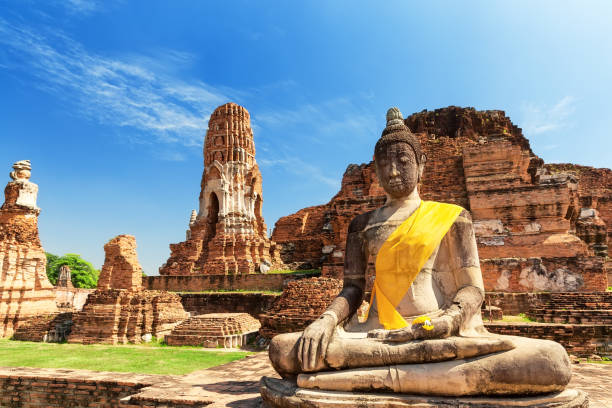
Wat Mahathat Yuwaratrangsarit is one of Bangkok’s ten royal temples and serves as the prestigious religious headquarter for the Mahanikay sect, the largest order of Buddhist monks in Thailand. Located strategically between the Grand Palace and the National Museum, it is a premier centre for higher Buddhist studies and houses the Mahachulalongkornrajavidyalaya University, the oldest Buddhist university in the country. The temple is globally renowned as a sanctuary for Vipassana Meditation, offering international visitors and locals alike the chance to learn ancient mindfulness techniques through English-language classes led by resident monks. Inside the complex, you will find a magnificent assembly hall and a sacred reliquary containing relics of the Buddha, surrounded by a peaceful, studious atmosphere that contrasts sharply with the busy streets outside. Every Sunday, the area around the temple also hosts one of the city’s largest amulet markets, where thousands of tiny sacred charms are traded, further cementing its status as a vital pillar of Thai spiritual and academic life.
6. Bangkok Art & Culture Centre: Cultural Hub
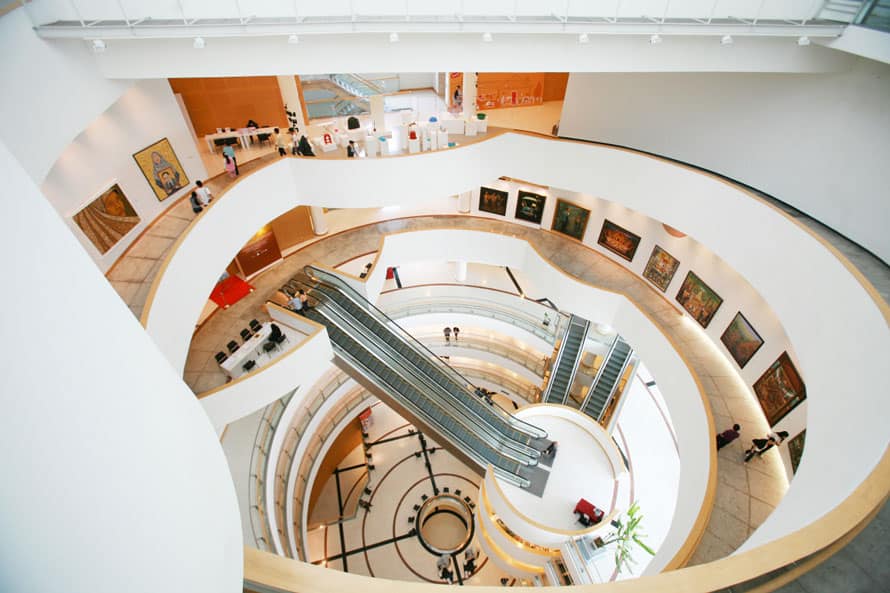
The Bangkok Art & Culture Centre (BACC) serves as the city’s premier cultural hub, acting as a vibrant meeting point for contemporary art, music, theatre, and design. Located at the bustling Pathum Wan intersection, this architectural landmark is instantly recognisable by its sleek, cylindrical white exterior and its massive, sunlit spiral atrium that allows visitors to wander through nine floors of creative discovery. Unlike traditional galleries, the BACC is a dynamic community space that hosts a rotating schedule of international exhibitions, experimental film screenings, and live performances, making it a “must-visit” for anyone wanting to see the modern side of Thai creativity. The lower floors are filled with independent craft boutiques, eco-friendly bookstores, and quiet cafes where artists and students gather to collaborate. It is the heart of Bangkok’s “New Age” art scene, offering a free and accessible platform where local talent and global perspectives collide, providing a sophisticated escape from the surrounding shopping malls.
7. Giant Swing: A Striking Attraction
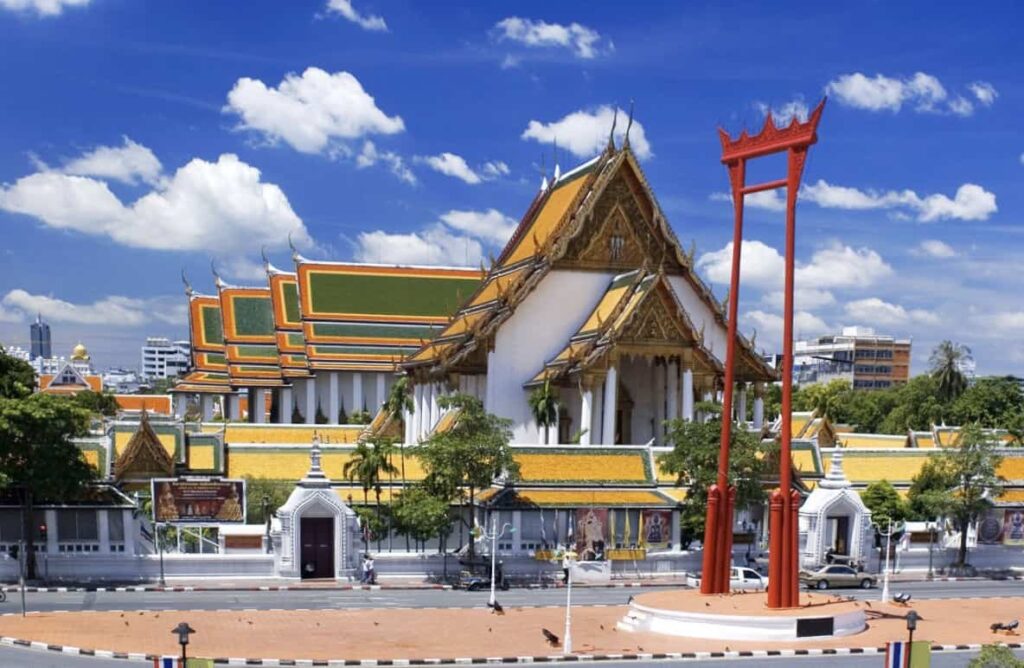
The Giant Swing, or Sao Ching Cha, is a striking attraction and an iconic landmark of Bangkok, located directly in front of the historic Wat Suthat. Standing over 21 metres tall, its massive red teakwood frame and elegant sweeping curves make it one of the city’s most photographed monuments. Historically, this 18th-century structure was used in an ancient Brahmin religious ceremony to celebrate the rice harvest, where brave young men would swing dangerously high to try and catch a bag of gold coins with their teeth. Although the swinging ritual was discontinued in the 1930s for safety reasons, the structure remains a powerful symbol of Bangkok’s Brahmanic heritage and the city’s royal history. At night, the swing is beautifully illuminated, casting a golden glow that reflects its spiritual significance and architectural grandeur, making it a “must-see” stop for anyone exploring the old city district.
8. Wat Saket: The Golden Mount
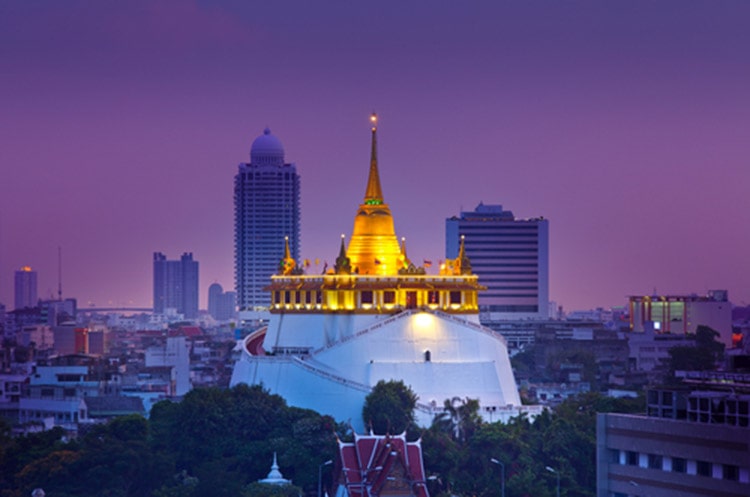
Wat Saket, popularly known as the Golden Mount, is a striking landmark in Bangkok’s old city, famous for the gleaming golden chedi that sits atop an artificial hill. To reach the summit, visitors climb a winding staircase of 344 steps, which is beautifully landscaped with tropical plants, small waterfalls, and rows of bells that pilgrims ring for good luck. Once at the top, you are rewarded with a breathtaking 360-degree panoramic view of Bangkok’s historic district and modern skyline, making it one of the best vantage points in the city. The temple itself is a deeply spiritual site, housing sacred Buddha relics and serving as the focal point for a massive week-long festival every November during the Loy Krathong full moon. The combination of the cool breeze at the summit, the rhythmic sound of prayer bells, and the shimmering gold of the monument creates a serene and elevated atmosphere that feels far removed from the bustling streets below.
9. Vimanmek Mansion: A Grand Museum
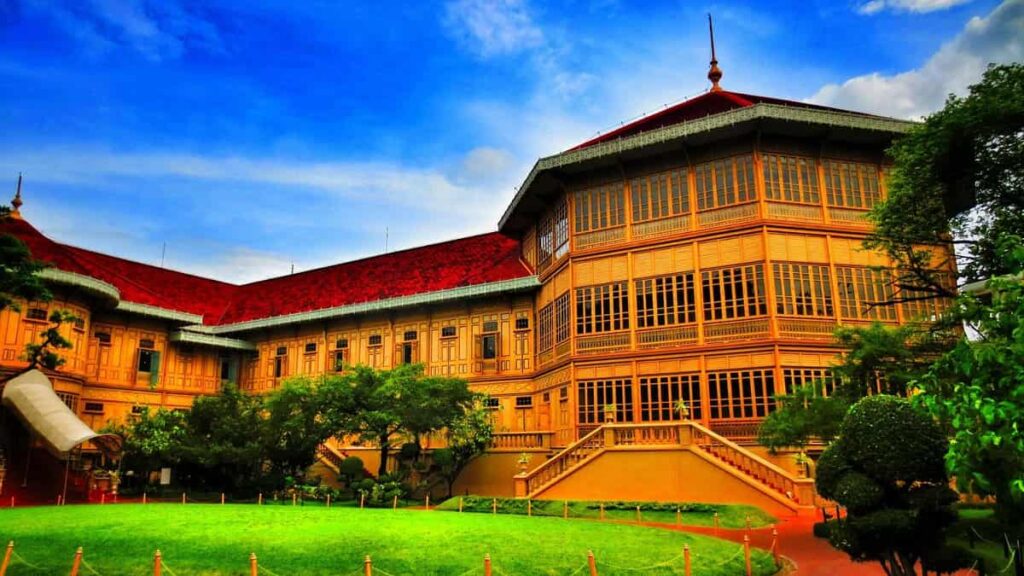
Vimanmek Mansion is a stunning architectural masterpiece located within the Dusit Palace complex, celebrated as the world’s largest golden teakwood building. Originally constructed in 1900 by King Rama V, this three-story grand museum reflects a unique fusion of traditional Thai craftsmanship and Victorian-era European influence, featuring 72 rooms filled with priceless royal treasures. Visitors can wander through elegant halls displaying antique furniture, delicate porcelain, early 20th-century photographs, and personal memorabilia that offer an intimate look into the lives of the Thai royal family. The mansion is surrounded by serene, perfectly manicured gardens and canals, providing a peaceful atmosphere that feels worlds away from the city’s modern bustle. While the interior is often closed for preservation or renovation, its exterior remains a “must-see” for history buffs and architecture lovers who want to witness the grandeur and grace of Thailand’s royal heritage.
10. Suan Pakkad Palace: A Pottery Museum
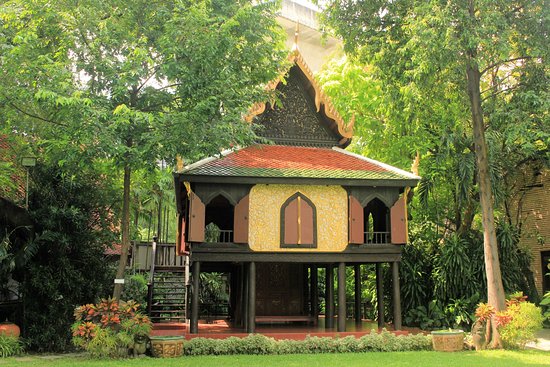
Suan Pakkad Palace is a refined cultural gem located in the heart of Bangkok that serves as a prestigious pottery and antiquities museum, originally the residence of Prince and Princess Chumbhot of Nagara Svarga. The museum is a collection of eight traditional Thai teak houses set amidst a lush, “cabbage patch” garden—the literal meaning of its name—creating a serene oasis in the middle of the city. It is internationally renowned for its Ban Chiang Pavilion, which houses an extraordinary collection of prehistoric pottery and bronze artifacts dating back over 4,000 years, showcasing the advanced artistic skills of ancient Thai civilisations. Beyond the pottery, the palace is home to the stunning Lacquer Pavilion, a masterpiece of Ayutthaya-period architecture featuring intricate gold-on-black lacquer murals that depict the life of Buddha. This museum provides a sophisticated and intimate look at Thailand’s diverse heritage, from its Neolithic roots to its royal artistic traditions, making it an essential stop for history enthusiasts and art lovers alike.
11. Sanam Chandra Palace: A Palace Complex
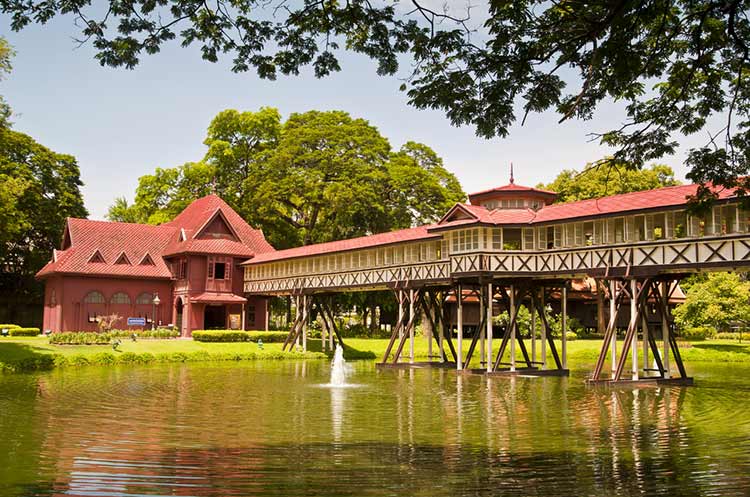
Sanam Chandra Palace is a sprawling and elegant palace complex located in Nakhon Pathom, about an hour west of Bangkok, originally built by King Rama VI in the early 20th century. This unique site is renowned for its diverse architectural styles, which blend traditional Thai design with Western influences, most notably English Tudor and French Renaissance aesthetics. The most striking building within the complex is the Chaleemongkolasana Residence, a fairytale-like yellow castle that looks as if it were plucked from the European countryside, complete with a red-tiled roof and a bridge connecting it to other pavilions. The palace grounds are meticulously landscaped with vast green lawns, quiet ponds, and giant trees, creating a peaceful, park-like atmosphere that was originally intended to be a retreat and a secondary capital in case of a national crisis. Today, it serves as a grand museum and a popular spot for locals to stroll, offering a fascinating glimpse into the artistic tastes and visionary leadership of King Rama VI during a transformative era of Thai history.
12. Wat Pathum Wanaram: A Royal Temple
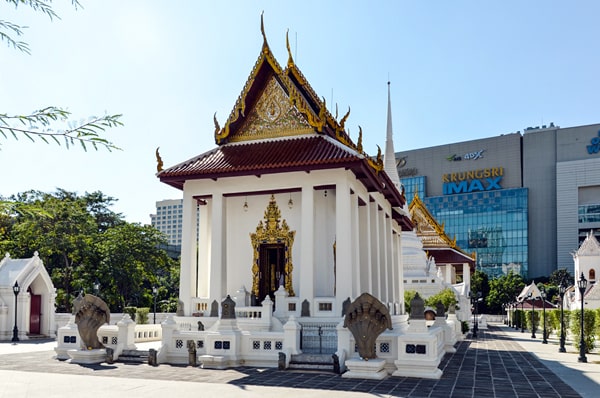
Wat Pathum Wanaram is a prestigious Royal Temple of the Third Class that serves as a tranquil spiritual sanctuary hidden directly between two of Bangkok’s busiest shopping malls, Siam Paragon and CentralWorld. Founded in 1857 by King Rama IV, this temple is a rare example of classic 19th-century Thai architecture, featuring a stunning white ordination hall (ubosot) and a beautiful vihara that houses sacred Buddha images brought from Vientiane, Laos. Despite its central location in the heart of the city’s commercial district, the temple grounds offer a remarkably peaceful “forest monastery” atmosphere, filled with lush trees and quiet meditation areas where locals and shoppers alike go to escape the midday heat and noise. The temple is also historically significant as it contains the Phra Meru Mas, or the royal crematorium remains of members of the Thai Royal Family, further cementing its status as a vital link between Thailand’s royal heritage and its modern urban life. It is the perfect place for travelers to witness authentic Buddhist devotion and exquisite craftsmanship without leaving the main shopping belt of Bangkok.
13. Khao San Road: Backpacker’s Haven
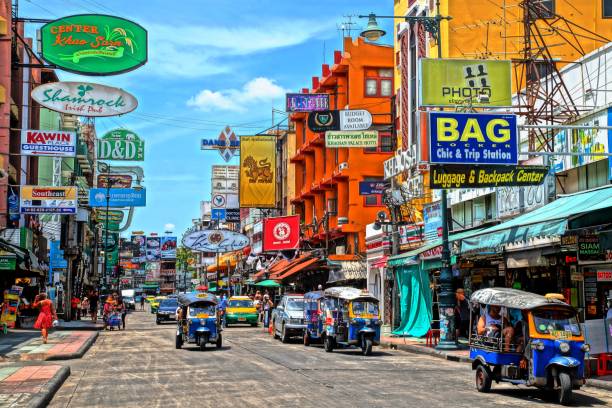
Khao San Road is world-renowned as the ultimate backpacker’s haven, serving as a vibrant, high-energy focal point for budget travelers from every corner of the globe. Located in Bangkok’s Banglamphu district, this short stretch of road is a sensory overload of neon signs, pounding music, and the enticing aromas of street food classics like Pad Thai and spring rolls. By day, it’s a bustling market where you can find everything from handmade jewelry and bohemian clothing to cheap travel deals and international bookstores. As the sun sets, the street transforms into a massive open-air party, with bars spilling out onto the pavement, live bands playing at every corner, and travelers swapping stories over buckets of cold drinks. Its legendary “anything goes” atmosphere, combined with a vast array of affordable hostels and guesthouses, makes it the perfect starting point for any Southeast Asian adventure, offering a raw and unforgettable glimpse into Thailand’s globalised youth culture.
14. Soi Cowboy: For A Unique Culture
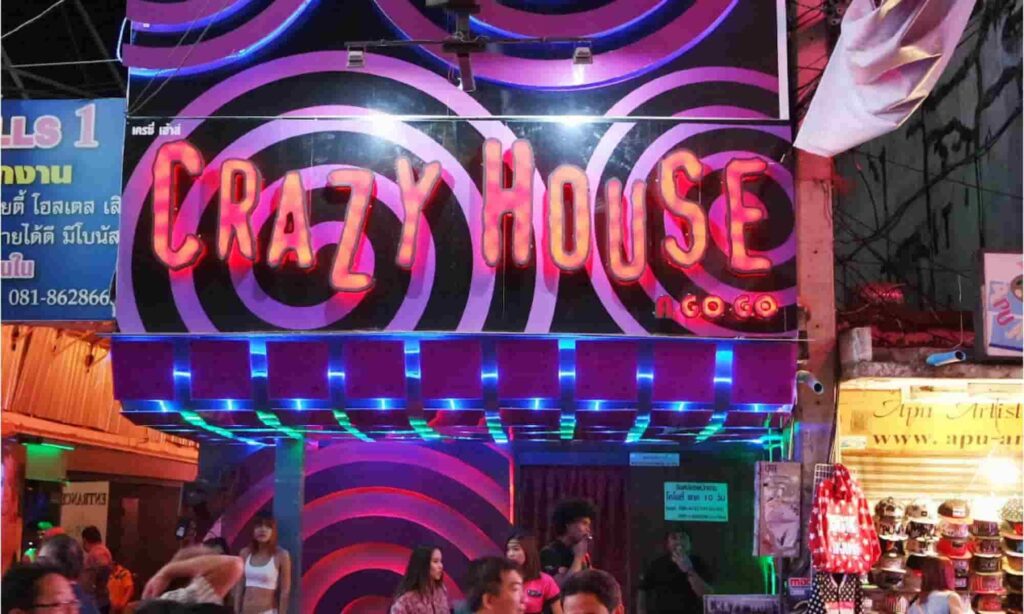
Soi Cowboy is one of Bangkok’s most visually distinct streets, known for its dense concentration of neon lights and its role in the city’s historical nightlife development. Located in the Asoke area, this short alleyway was named after a retired American airman who established the first venue there in the early 1970s. Over the decades, it has evolved into a well-known landmark characterized by a high-energy, “carnival-like” atmosphere. The street’s aesthetic is defined by a canopy of glowing pink and red neon signs, creating a cinematic environment that has served as a filming location for international movies, including The Hangover Part II. Today, it remains a popular destination for visitors and residents who come to observe the vibrant street life and the eclectic mix of people passing through. It stands as a significant example of Bangkok’s late-night urban culture, representing a glitzy and unfiltered facet of the city’s modern tourism landscape.
15. Ancient City: World’s Largest Open Air Museum
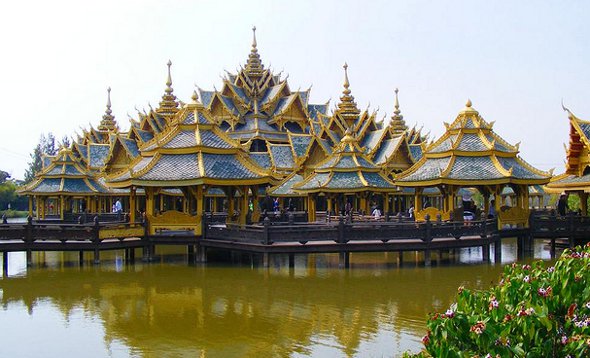
Ancient City (Muang Boran), located just outside Bangkok in Samut Prakan, is celebrated as the world’s largest open-air museum, offering a breathtaking journey through Thailand’s architectural and cultural history. Spread over 200 acres, the park is uniquely shaped like the map of Thailand, with each monument placed in its correct geographical location relative to the real kingdom. It features over 116 meticulously crafted replicas and life-size reconstructions of the country’s most significant temples, palaces, and ruins, including many that have been destroyed or lost to time, such as the magnificent Grand Palace of Ayutthaya. Walking or cycling through the site feels like traveling across the entire nation in a single day, as you pass through floating villages, mountain shrines, and intricate wooden pavilions nestled among beautifully landscaped gardens and canals. It is a monumental tribute to Thai heritage, providing a quiet and majestic escape where visitors can appreciate the sheer scale and diversity of the country’s artistic and spiritual legacy in one immersive experience.
16. Art In Paradise: An Illusion Art Museum
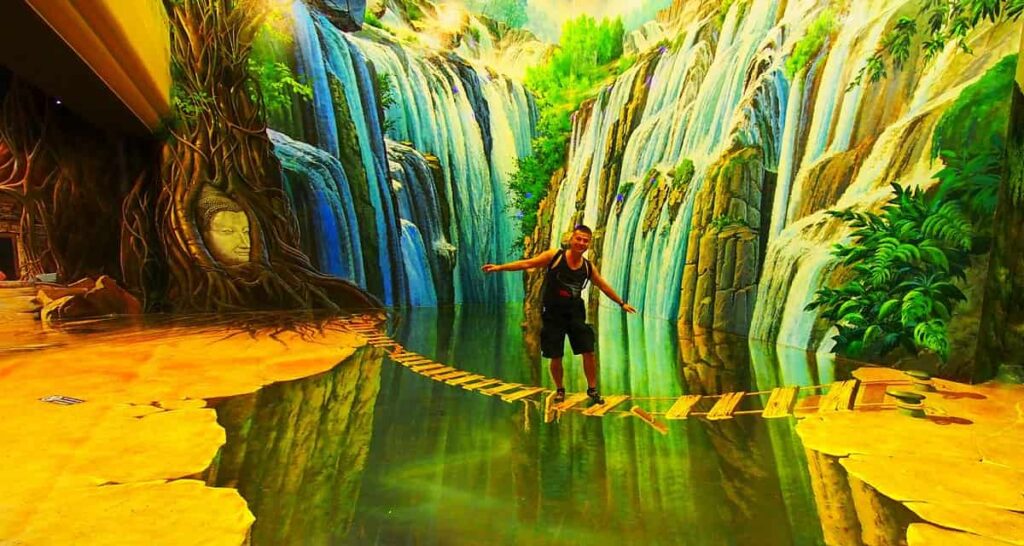
Art in Paradise is a spectacular illusion art museum in Bangkok that offers an interactive and fun-filled experience for visitors of all ages. Unlike traditional galleries where you are forbidden from touching the art, this “trick-eye” museum encourages guests to become part of the masterpieces through the clever use of 3D painting techniques and forced perspective. The museum is divided into several themed zones, including wild safaris, ancient ruins, and underwater worlds, where flat paintings on the walls and floors appear to “pop out” and become three-dimensional when viewed through a camera lens. It is the perfect destination for groups and families looking for a creative indoor excursion, as you can pose to look like you are balancing on a thin bridge over a canyon or escaping the jaws of a giant shark. With its air-conditioned galleries and endless “Instagrammable” moments, Art in Paradise provides a lighthearted and modern twist on the museum experience, making it a favorite for those wanting a break from historical sightseeing.
17. Siam Park City: Thailand’s Largest Theme Park
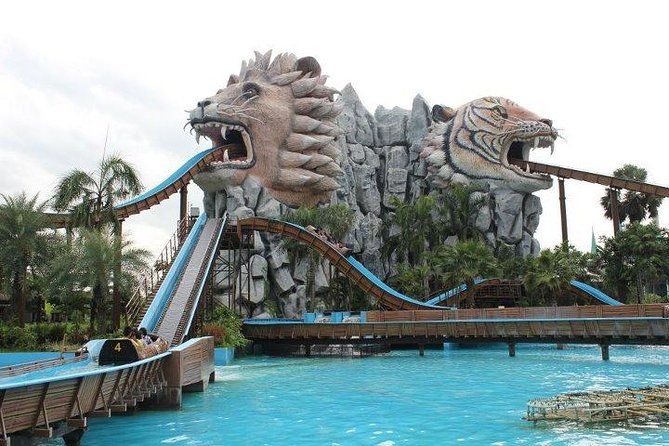
Siam Park City (now known as Siam Amazing Park) is Thailand’s largest theme park and a massive playground that has been a staple of Bangkok’s entertainment scene for over 40 years. Located in the Min Buri district, this sprawling 120-acre complex is divided into five distinct zones, including a world-class water park and a high-energy amusement park with over 30 international-grade rides. It is most famous for its gigantic wave pool, which was officially certified by Guinness World Records as the largest in the world, offering visitors an “ocean in the city” experience complete with sandy beaches and tropical slides. For thrill-seekers, the “X-Zone” features adrenaline-pumping attractions like the Vortex, one of the largest suspended looping coasters in the world, and the Giant Drop, a 75-metre free-fall tower. The park also includes educational zones like “Jurassic Adventure” and “Africa Adventure,” making it a versatile destination for families, teenagers, and school excursions. With its mix of record-breaking water attractions and white-knuckle rides, it remains the ultimate one-stop destination for a full day of excitement and cooling off under the Thai sun.
18. Siam Serpentarium: An Interactive Snake Museum
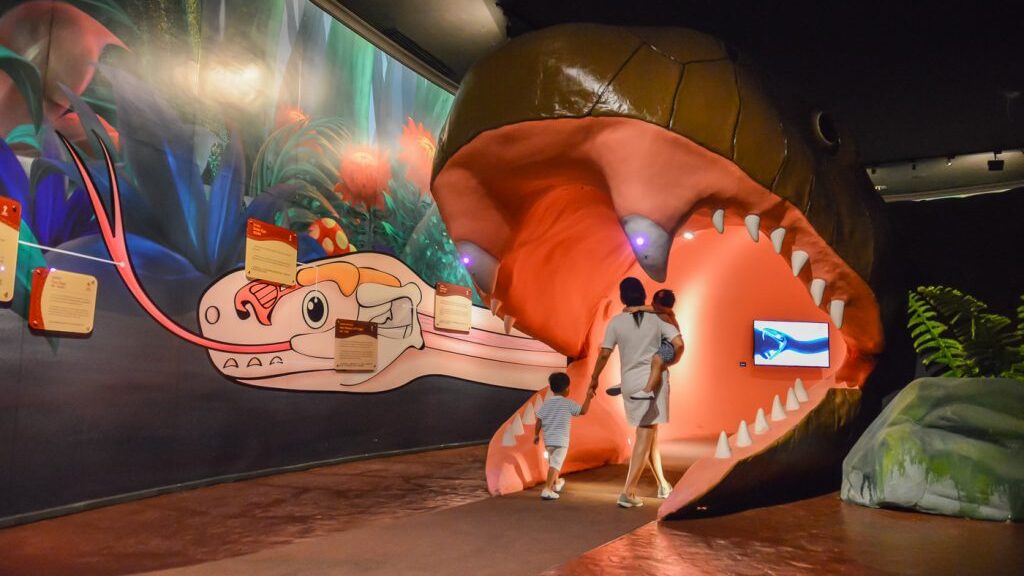
The Siam Serpentarium is a world-class interactive snake museum in Bangkok that offers a thrilling and educational journey into the mysterious world of serpents. Moving away from the traditional “zoo” format, this facility uses immersive audiovisual technology and creative set designs to allow visitors to experience life from a snake’s perspective—even letting you crawl through a simulated forest to “see” and “hear” as they do. The museum is divided into three main areas: the Immersive Experience, where you learn about the snake life cycle; the Snake Planet, a sprawling herpetarium housing over 70 diverse species from around the globe; and the Naka Theatre, which features spectacular live performances showcasing the ancient bond between humans and snakes. It is an ideal destination for families and curious travelers, providing a safe, fascinating, and high-tech environment to replace fear with understanding of these misunderstood reptiles.
19. Wat Mangkon Kamalawat: Largest Chinese Buddhist Temple In Bangkok
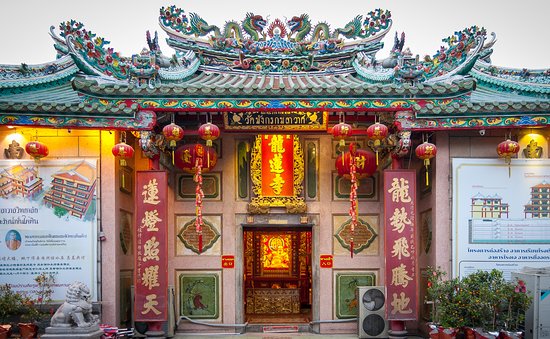
Wat Mangkon Kamalawat, popularly known as Wat Leng Noei Yi, is the largest and most important Chinese Buddhist temple in Bangkok, serving as the spiritual heart of the city’s vibrant Chinatown. Founded in 1871, the temple is a magnificent example of southern Chinese architectural style, featuring sweeping tiled roofs adorned with intricate dragon and floral motifs made of colorful glass and ceramic. The complex is a fascinating “multi-religious” sanctuary where Mahayana Buddhism, Taoism, and Confucianism coexist; visitors will find the main altar dedicated to the Buddha, while side pavilions house a vast array of Taoist deities and guardians, including the popular God of Fortune. During the Lunar New Year and the annual Vegetarian Festival, the temple becomes a focal point of intense activity, filled with the thick scent of incense and thousands of worshippers making offerings for luck and prosperity. Its serene courtyards and ornate, gold-leafed interiors provide a peaceful yet culturally rich escape from the chaotic energy of the surrounding Yaowarat markets, making it an essential stop for anyone wanting to witness the deep-rooted traditions of Thailand’s Thai-Chinese community.
20. The Grand Palace & Emerald Buddha: Spiritual Heart
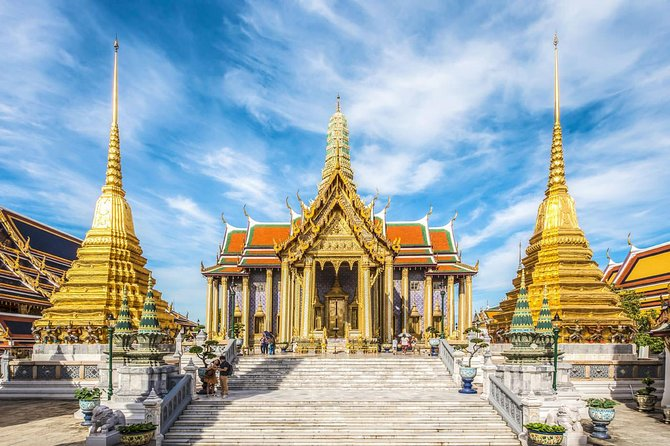
The Grand Palace and the adjacent Wat Phra Kaew (Temple of the Emerald Buddha) together form the undisputed spiritual heart of Thailand and the most sacred site in the kingdom. Established in 1782 by King Rama I, the complex is a dazzling masterpiece of Thai architecture, featuring shimmering gold leaf, intricate mosaics, and towering spires that reflect the grandeur of the Chakri Dynasty. At the center of this spiritual sanctuary sits the Emerald Buddha, a highly revered icon carved from a single block of translucent green jade, which is meticulously dressed in seasonal gold costumes by the King of Thailand himself three times a year. The palace grounds are not only a royal residence and a site for state ceremonies but also a “visual history book” of Thai craftsmanship, adorned with the epic murals of the Ramakien (the Thai Ramayana) along the surrounding galleries. For any visitor, stepping into this majestic complex offers a profound encounter with the soul of Thai identity, where royal majesty and deep-seated Buddhist devotion converge in a breathtaking display of beauty and power.