

The Amarnath Yatra is a renowned annual pilgrimage to a sacred cave situated amidst the snowy heights of the Himalayas in Kashmir. Inside this cave, a natural ice Shivling (a symbol of Lord Shiva) forms every year; this occurs when water drips from the ceiling and freezes on the floor. This column of ice waxes and wanes in tandem with the phases of the moon, and thousands of devotees from across the globe flock here to witness it.
There are two main routes to reach the cave: one begins at Pahalgam—a longer yet more traditional route that takes several days to complete—and the other starts at Baltal—a route featuring a much steeper ascent, but one that can be completed within a single day. Since this pilgrimage involves trekking through high mountains and enduring freezing weather conditions, it is mandatory for pilgrims to obtain a medical certificate attesting to their complete physical fitness for the journey. Along the entire route, the government and local volunteers set up langars and tents to assist the travelers. It is regarded as one of the most spiritually profound and adventurous journeys undertaken by anyone in India.
The Amarnath Yatra provides a significant boost to the Gross State Domestic Product (GSDP) of Jammu and Kashmir; it acts as a short-term “economic engine,” driving the region’s economy for a substantial portion of the year.
Provided you are physically prepared and adhere to the official guidelines, the Amarnath Yatra is a safe undertaking, as the government provides extensive security and medical assistance throughout the pilgrimage.
Places to Visit during Amarnath Yatra :
1.Baltal Valley

Baltal Valley is a stunningly beautiful meadow located in the Ganderbal district of Jammu and Kashmir, sitting at high altitude along the banks of the Sindh River. It is most famous for serving as the primary base camp for the Amarnath Yatra pilgrimage, offering the shortest—though very steep—trekking route to the holy cave. Surrounded by dramatic snow-capped peaks and located right at the foot of the Zojila Pass, the valley stays covered in snow for most of the year and only becomes accessible during the summer months. While it turns into a bustling tent city during the pilgrimage season with community kitchens and medical camps, the rest of the time it is a quiet, pristine paradise for trekkers and nature lovers who come to enjoy its lush greenery and alpine views.
2.Sheshnag Lake

Sheshnag Lake is a stunning, emerald-green lake tucked high in the mountains of Kashmir, about 27 kilometres from the famous hill station of Pahalgam. It sits at a very high altitude, surrounded by jagged, snow-capped peaks that often resemble the heads of a mythical serpent, which is where it gets its name. According to local legends, the lake was created by Lord Sheshnag, the King of Snakes, and many believe he still lives in its deep, clear waters. The lake is a very important stop for pilgrims on the Amarnath Yatra, as they often camp by its shores to rest and enjoy the peaceful atmosphere. The water is freezing cold and comes from melting glaciers, making it look incredibly bright and blue under the sun. To reach this beautiful spot, you have to trek or ride a pony through steep mountain paths starting from Chandanwari. Because it is so high up, the lake remains frozen and covered in thick snow for most of the year, only opening up for visitors during the short summer months from June to September.
3.Zoji La Pass

Zoji La Pass is a high mountain pass in the Himalayas that acts as the vital “Gateway to Ladakh,” connecting the Kashmir Valley with the cold desert of Leh. Situated at an altitude of about 11,575 feet (3,528 metres), it is one of the most dangerous and thrilling roads in the world. The pass is famous for its narrow, winding paths carved into steep mountainsides with deep drops and no railings, often earning it the nickname “Pass of Blizzards” due to the extreme winds and heavy snow it receives. Beyond its natural beauty, Zoji La holds great historical and strategic importance. It was the site of a legendary battle in 1948 where the Indian Army successfully used tanks at a high altitude for the first time. Because the pass is usually closed for six months during winter due to massive snowdrifts, a massive project called the Zoji La Tunnel is currently being built. Once finished, this will be Asia’s longest bi-directional tunnel, allowing people to travel safely between Srinagar and Leh all year round, regardless of the weather.
4.Pahalgam

Pahalgam, famously known as the “Valley of Shepherds,” is one of the most beautiful and popular hill stations in Jammu and Kashmir. Located on the banks of the rushing Lidder River, it is surrounded by thick pine forests, lush green meadows, and glowing snow-capped mountains. It is a place of incredible natural beauty, often used as a backdrop for famous Bollywood movies. For many, it serves as the traditional starting point for the Amarnath Yatra pilgrimage, giving the town great spiritual importance. The town is a perfect mix of relaxation and adventure. You can visit stunning nearby spots like Betaab Valley, Aru Valley, and the high-altitude Baisaran Meadow, which is often called “Mini Switzerland” because of its pine-fringed fields. If you enjoy being active, Pahalgam offers fun activities like white-water rafting, trout fishing, and pony rides through the forest. Whether you are walking through its quiet woods or shopping for local walnuts and saffron in the market, Pahalgam provides a peaceful and refreshing escape from the heat and noise of the plains.
5. Baltal to Amarnath Caves
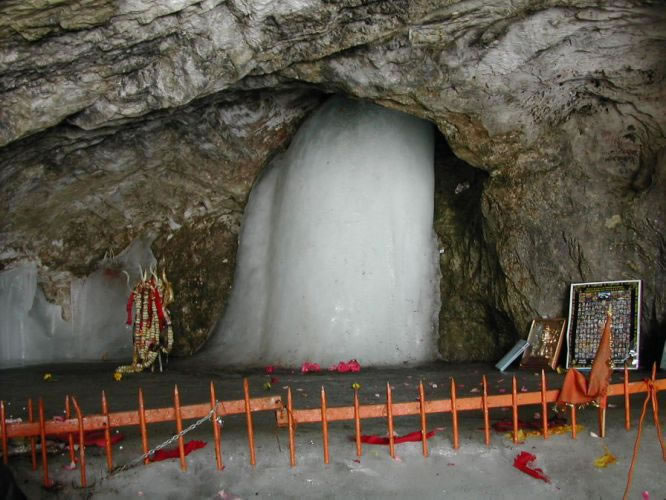
The trek from Baltal to the Amarnath Cave is known as the “shorter but steeper” route to the sacred shrine. Spanning approximately 14 kilometres one-way, this path allows physically fit pilgrims to complete the entire journey to the cave and back to the base camp in just a single day. Starting very early in the morning from the Baltal base camp, trekkers pass through key checkpoints like Domail, Barari, and Sangam (where the Pahalgam route meets the Baltal route). While the distance is much shorter than the traditional 48 km Pahalgam route, the trail is narrow and involves a rigorous, continuous ascent through rugged cliffs and glaciers that requires significant stamina. For those who cannot trek, options like ponies, palkis (palanquins), and dandies are available for hire, though the path’s narrowness makes it more challenging for these services compared to other routes. Additionally, many pilgrims opt for the helicopter service, which flies from Neelgrath (near Baltal) to Panchtarni, leaving only a final 6 km stretch to reach the cave. Along the way, numerous langars (community kitchens) provide free hot meals and tea to keep devotees energised. Despite being a test of endurance, the route offers breathtaking views of the Himalayas and the Amravati River, culminating in the spiritual experience of the holy ice lingam.
6. River Rafting
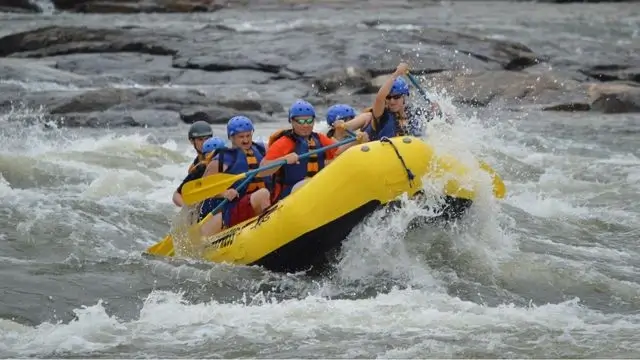
River rafting in Jammu and Kashmir is a thrilling adventure that draws enthusiasts to the region’s icy, glacier-fed rivers. The most popular spots for this activity are the Lidder River in Pahalgam and the Sindh River in Sonamarg. These rivers offer different “grades” of rapids, ranging from Grade I (basic) to Grade IV (advanced), making it accessible for both first-timers and experienced professionals. As you paddle through the gushing white water, you are surrounded by spectacular views of pine forests, steep mountains, and rocky banks, providing a unique perspective of the Himalayan landscape that you can’t get from the road. Safety is a top priority for rafting in the valley, with professional guides leading every trip and providing essential gear like life jackets, helmets, and paddles. Most rafting sessions last between 30 minutes to an hour, covering stretches of 3 km to 8 km depending on the chosen package. The best time to experience this is from May to September, when the snow has melted and the river levels are high enough to create exciting rapids. Whether you are looking for a gentle float with your family or a heart-pumping ride through crashing waves, river rafting is one of the most memorable ways to experience the raw energy of Kashmir’s nature.
7. Golfing in AMARNATH

It is important to note that there is no golf course at the Amarnath Cave itself, as the area is a high-altitude holy shrine located in a rugged glacial environment. However, world-class golfing is a major attraction in Pahalgam, which is the primary base camp for the Amarnath pilgrimage. The Pahalgam Golf Course is one of the most stunning 18-hole courses in the world, sitting at an altitude of about 7,250 feet. Surrounded by majestic pine trees and snow-capped peaks, the course offers a unique experience where the thin mountain air actually helps the golf ball travel further than it would at sea level. Often called one of the highest and most scenic courses in India, it provides a “bowl-shaped” landscape that makes for a challenging and peaceful game. The course is open to tourists and pilgrims alike from April to November, and you can easily rent equipment and hire local caddies on-site. Even if you aren’t a professional golfer, walking through the lush green fairways with the Lidder River flowing nearby is a highlight of any trip to the region. It is the perfect place for visitors to relax and enjoy the “Mini Switzerland” atmosphere before or after their spiritual journey to the cave.
8. Shopping in Pahalgam
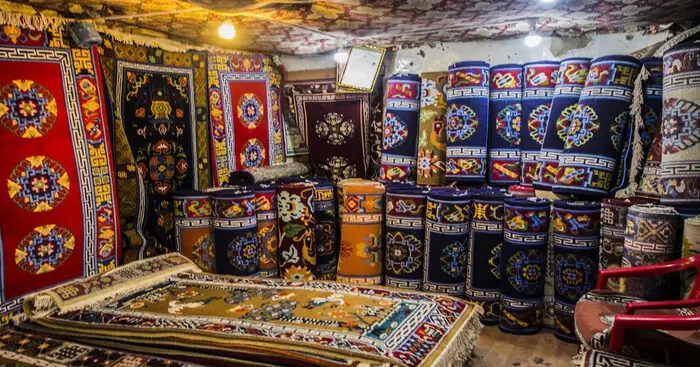
Shopping in Pahalgam is a delightful experience that focuses on authentic Kashmiri craftsmanship and high-quality local produce. The main market area is filled with shops offering exquisite Pashmina shawls, stoles, and traditional Pherans (Kashmiri cloaks) adorned with intricate hand-embroidery known as Aari or Sozni work. Because Pahalgam is the “Valley of Shepherds,” you can find superior quality woollen carpets and blankets that are both beautiful and warm. It is also one of the best places to buy fresh dry fruits, particularly walnuts, almonds, and cashews, along with world-famous Kashmiri saffron and locally harvested honey. Beyond textiles and food, the markets are famous for unique willow work items like cricket bats and baskets, as well as beautifully carved walnut wood furniture and souvenirs. You will also find “Papier-mâché” boxes and ornaments that are vibrantly painted with floral patterns, perfect for gifts. While wandering through the market, you can enjoy the rustic charm of the town and even pick up traditional copperware (Kandkari) used for serving tea. Whether you are looking for a luxury silk rug or a simple bag of crunchy walnuts, shopping in Pahalgam allows you to take a piece of Kashmiri culture home with you.
9. Srinagar
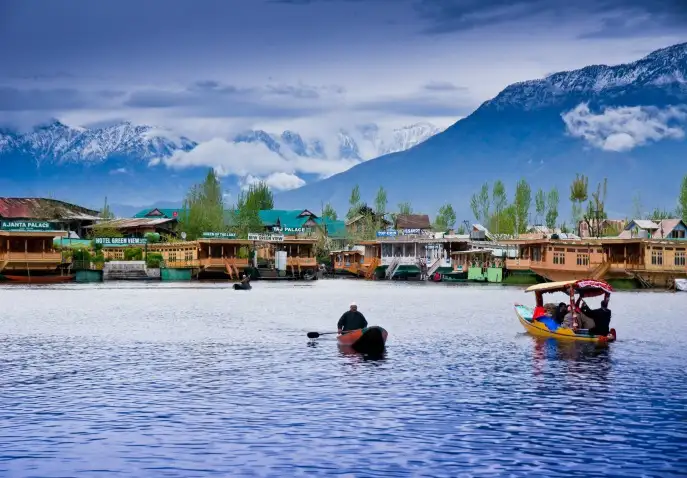
Srinagar, the summer capital of Jammu and Kashmir, is often called the “Venice of the East” because of its stunning lakes, winding waterways, and historic charm. Situated on the banks of the Jhelum River, the city’s crown jewel is Dal Lake, where life moves at a peaceful pace on beautifully carved wooden houseboats and colourful Shikaras (traditional boats). A ride on a Shikara at sunset, passing through floating vegetable markets and lotus gardens, is one of the most iconic experiences in India. The city is also world-famous for its magnificent Mughal Gardens, such as Shalimar Bagh and Nishat Bagh, which feature terraced lawns, cascading fountains, and ancient Chinar trees that turn golden in the autumn. Beyond its natural beauty, Srinagar is a hub of rich culture and ancient history. The Old City is a maze of bustling bazaars where you can hear the sounds of coppersmiths at work and smell fresh Kashmiri bread (Kandur) baking in clay ovens. High above the city sits the Shankaracharya Temple, offering panoramic views of the entire valley, while the Hazratbal Shrine stands as a symbol of deep spiritual faith. Whether you are shopping for intricate hand-knotted silk carpets, tasting a traditional Wazwan feast, or walking through the vibrant Tulip Garden in spring, Srinagar offers a magical blend of heritage and scenery that stays with you long after you leave.
10.Weather in Amarnath
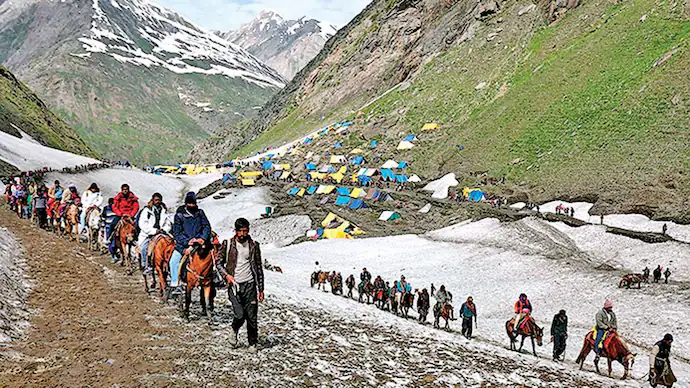
The weather in Amarnath is very cold and can change in just a few minutes, making it quite unpredictable. Even during the summer months of July and August when people visit, it never really feels “hot.” During the day, the sun can be bright, but the air stays chilly. As soon as the sun goes down or it starts to rain, the temperature can drop very fast, sometimes reaching freezing levels. It is very common to have sudden rain, thick fog, or even light snowfall, which can make the mountain paths slippery and cold. Because the cave is so high up in the mountains, the air is thin and the winds can be very strong. This means you always need to be prepared for “winter-like” conditions, even if it is summer in the rest of India. If you are visiting, you must carry heavy woollens, a raincoat, and waterproof shoes to stay dry and warm. The weather is the main reason why the pilgrimage only happens for a few weeks a year—most of the time, the entire area is buried under deep snow and is impossible to reach.