
Dolpo Trekking is an extraordinary journey into one of Nepal’s most remote, rugged, and culturally preserved regions, often referred to as the “Hidden Land.” Located in the rain-shadow of the Himalayas, this trek offers a starkly beautiful landscape that mirrors the high-altitude deserts of the Tibetan Plateau, characterized by deep turquoise lakes, jagged peaks, and massive, treeless valleys. The region is famously home to Shey Phoksundo National Park, where trekkers can witness the breathtaking Phoksundo Lake and the spiritual sanctuary of Shey Gompa at the base of the sacred Crystal Mountain.
Beyond the natural wonders, the trek is a deep dive into antiquity, as it is one of the last places on earth where the ancient, pre-Buddhist Bon religion is still practiced in its purest form. Crossing high-altitude passes like Kang La (5,360m) and visiting the world’s highest settlements in the Dho Tarap valley, adventurers experience a world of yak caravans and centuries-old traditions that remain almost entirely untouched by modern influence.
Most Famous And Attractive Tourist Places In Dolpo Trekking :
1. Phoksundo lake

Phoksundo Lake, located in the heart of the Dolpo region, is widely considered one of the most stunning and serene natural wonders in the world, famous for its mesmerizing, ever-shifting turquoise colour. Sitting at an altitude of approximately 3,611m, it is the deepest lake in Nepal, yet it is uniquely characterized by a total absence of aquatic life, which contributes to the hauntingly clear and still quality of its waters. The lake is framed by steep, rugged cliffs and the snow-capped peaks of the Kanjirowa Himal, creating a dramatic contrast between the arid, desert-like landscape of Upper Dolpo and the deep blue of the water. Because the lake is sacred to both Buddhists and followers of the Bon religion, the surrounding shores are dotted with ancient chortens and the traditional village of Ringmo, where the culture remains untouched by the modern world. For many trekkers, reaching the shores of Phoksundo is a spiritual experience, as the absolute silence and the raw beauty of the “Hidden Land” make it feel like a place where time has stood still.
2. Shey Gompa
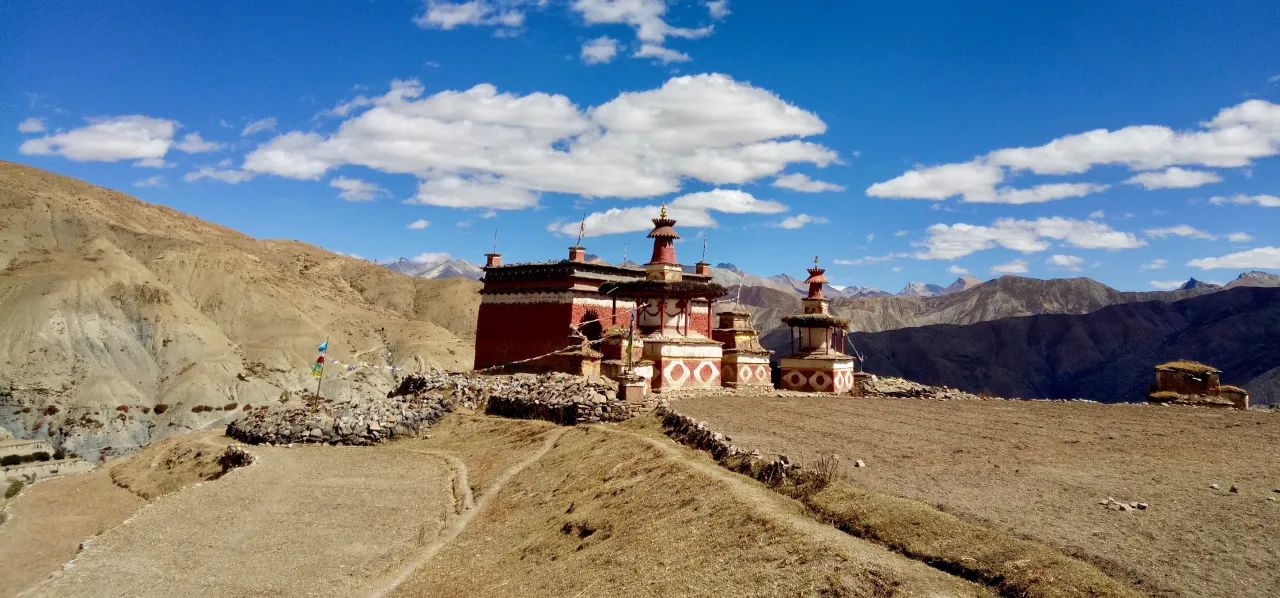
Shey Gompa is an 800-year-old monastery that serves as the spiritual heart of Upper Dolpo, sitting at the base of the sacred Crystal Mountain (Shey Shelri) at an elevation of about 4,343m. Often referred to as the “Kailash of Dolpo,” this ancient monastery belongs to the Chaiba community and is a major pilgrimage site for both Buddhists and followers of the Bon religion. The gompa is famous for its massive copper-gilt statue of Shakyamuni Buddha and its collection of rare Tibetan scrolls, thangkas, and ancient religious artifacts that have been preserved for centuries in this isolated “Hidden Land.” For trekkers, reaching Shey Gompa is a deeply symbolic achievement, as it requires crossing high Himalayan passes like the Kang La; once there, the stark, desert-like beauty of the surroundings and the rhythmic chanting of the monks create an atmosphere of profound peace and timelessness. The site gained international fame through Peter Matthiessen’s classic book The Snow Leopard, and it remains one of the most remote and culturally significant sanctuaries in the entire Himalayan range.
3. Shey Phoksundo National Park

Shey Phoksundo National Park is Nepal’s largest and only trans-Himalayan national park, covering a vast 3,555 square kilometres across the Dolpa and Mugu districts. Established in 1984, it is a land of extreme topographical diversity, ranging from lush green forests of blue pine and spruce in the south to the arid, high-altitude desert plateaus that mirror the Tibetan landscape in the north. The park is a critical sanctuary for endangered wildlife, most notably the elusive snow leopard, as well as the blue sheep (bharal), Himalayan tahr, and the Tibetan wolf. Beyond its natural wonders—including the majestic Phoksundo Lake and Nepal’s highest waterfall—the park is a vital cultural corridor, home to ancient villages where the Bon and Buddhist religions have been practiced for over a thousand years. Its remote location and strictly regulated access have helped preserve an ecosystem and a way of life that remain among the most pristine and untouched in the entire world.
4. Bon religion

The Bon religion is the ancient, pre-Buddhist spiritual tradition of Tibet and the Himalayas, and it remains the dominant cultural force in the remote villages of Upper Dolpo. Often described as a form of “Himalayan animism,” Bon focuses on the harmony between humans and the spirit world, believing that every mountain, river, and forest is inhabited by powerful deities and spirits. While it shares many external similarities with Tibetan Buddhism—such as the use of prayer flags, monasteries (gompas), and chanting—a key distinguishing feature is that Bon followers perform ritual circumambulations (walking around sacred sites) in a counter-clockwise direction. The religion is deeply tied to the land, featuring unique rituals involving nature worship and the preservation of ancient scrolls that pre-date the arrival of Buddhism in the region. In places like Ringmo and the Dho Tarap valley, the Bon faith has been preserved in its purest form for centuries, offering a rare glimpse into the primal, mystical beliefs that shaped the high-altitude cultures of the “Hidden Land” long before modern influence.
5. Dho Tarap valley
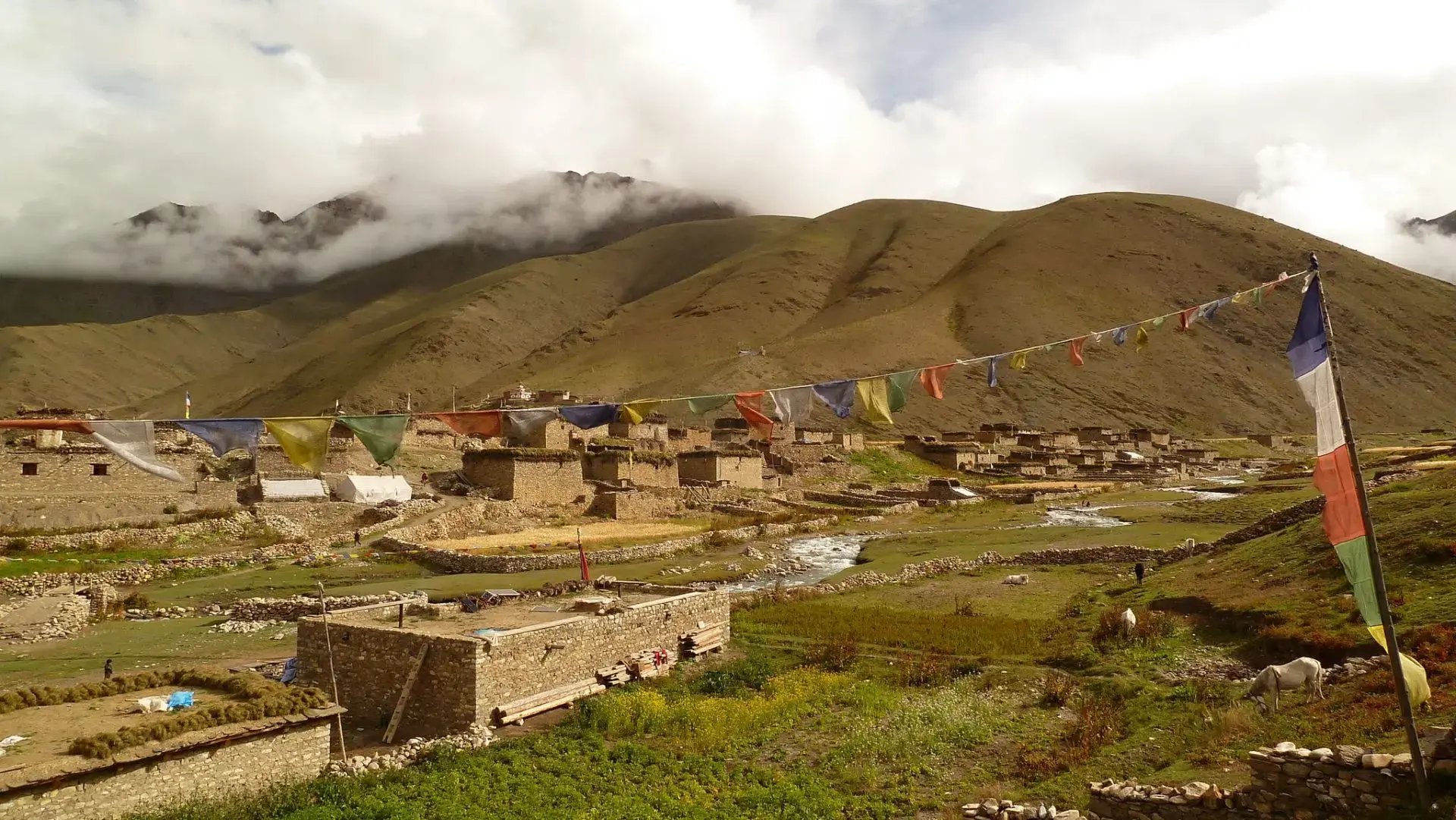
Dho Tarap is a remarkably high-altitude valley situated at approximately 4,080 metres, famously known as one of the highest human settlements on Earth. The valley is home to the Magar and Tibetan-style Dolpa people, who live in compact, flat-roofed stone houses designed to withstand the brutal Himalayan winters. Historically, Dho Tarap served as a vital trading hub between the salt mines of Tibet and the lower valleys of Nepal, a legacy that is still visible in the rugged caravans of yaks that traverse its mountain passes. The landscape is a stark, treeless “rain-shadow” desert, yet it is surprisingly fertile enough for locals to cultivate barley and potatoes during the short summer months.
6. Suligad waterfall
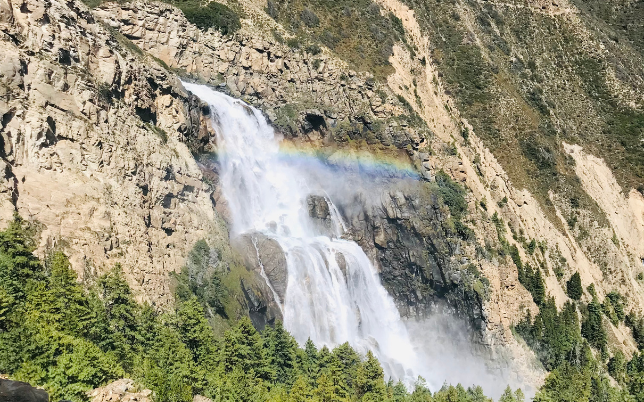
Suligad Waterfall, also known as the Phoksundo Waterfall, is the highest waterfall in Nepal, standing at a magnificent height of approximately 167 metres. Located within the Shey Phoksundo National Park, it serves as the dramatic outlet for the turquoise waters of Phoksundo Lake, which plummet over a massive limestone cliff into the Suligad River below. The sight of the powerful white spray crashing against the rugged, desert-like cliffs of the Dolpo region creates a spectacular contrast against the deep green pine forests and the arid brown mountains. For trekkers, the waterfall is a major landmark usually encountered on the ascent toward Ringmo village; the roar of the falling water can be heard from miles away, and the mist rising from the gorge provides a refreshing break in the high-altitude air. It is not just a natural wonder but a vital geographical feature that drains the high Himalayan plateau, marking the transition from the lush lower valleys to the mysterious “Hidden Land” of Upper Dolpo.
7. Crystal Mountain (Shey Shelri)

Crystal Mountain, known locally as Shey Shelri, is a deeply sacred peak in Upper Dolpo that holds a spiritual status similar to Mount Kailash in Tibet. Standing near Shey Gompa, the mountain earns its name from the unique veins of quartz and marine fossils embedded in its slopes, which cause the peak to shimmer brilliantly under the Himalayan sun. It is a site of immense religious importance for both Buddhists and followers of the Bon religion, who believe the mountain was “opened” by a high lama who flew there on a snow leopard to spread the teachings of enlightenment. Every year, pilgrims and locals perform a rigorous “Kora” (circumambulation), circling the base of the mountain as an act of devotion and purification. Geologically and spiritually, Crystal Mountain represents the heart of the “Hidden Land,” standing as a silent, glittering sentinel over a landscape that has remained unchanged for centuries.
8. Kang La Pass (5,360m)

Kang La Pass, standing at a formidable altitude of 5,360 metres, is the high-altitude gateway that connects the turquoise shores of Phoksundo Lake to the sacred sanctuary of Shey Gompa. Crossing this pass is widely considered the most physically demanding yet rewarding challenge of the Upper Dolpo Trek. The ascent is notoriously steep, often involving a scramble over loose scree and slate, where the thin air tests the endurance of even the most experienced trekkers. However, upon reaching the prayer-flag-strewn summit, you are met with an incomparable 360-degree panorama that captures the raw essence of the “Hidden Land.” Looking north, you see the vast, rolling brown hills of the Tibetan Plateau stretching into the horizon, while to the south, the jagged, snow-capped peaks of the Kanjirowa Himal dominate the sky. The pass marks a dramatic transition in the trek, moving you from the deep river valleys into the high-altitude, mystical desert landscape where the ancient Bon and Buddhist traditions truly begin to unfold.
9. Kanjirowa Himal (6,883m)
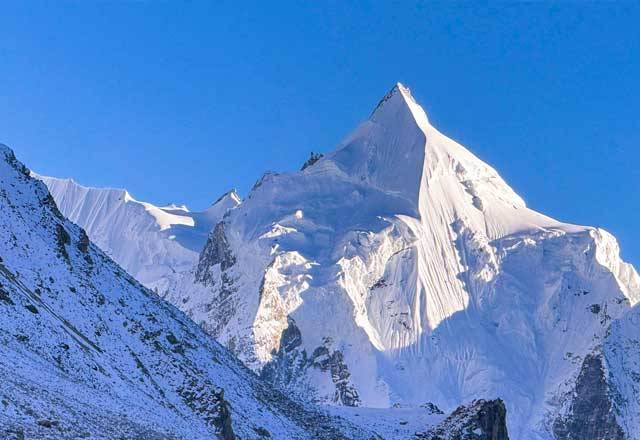
Kanjirowa Himal, standing at an impressive 6,883 metres, is the dominant mountain massif of the Dolpo region and serves as the majestic frozen guardian of Shey Phoksundo National Park. Unlike the more famous peaks in the Everest or Annapurna regions, Kanjirowa remains incredibly remote and rarely climbed, preserving a sense of untouched wilderness. The mountain is technically complex and massive, with its sprawling glaciers providing the primary water source that feeds the stunning turquoise depths of Phoksundo Lake. For trekkers, the sight of Kanjirowa’s jagged, snow-covered twin peaks towering over the arid, brown landscape of the “rain-shadow” desert is the most iconic visual of the journey. It represents the raw, unforgiving beauty of the Trans-Himalayas, acting as a physical barrier between the lush valleys of the south and the high-altitude Tibetan-style plateaus of the north.
10. Ringmo
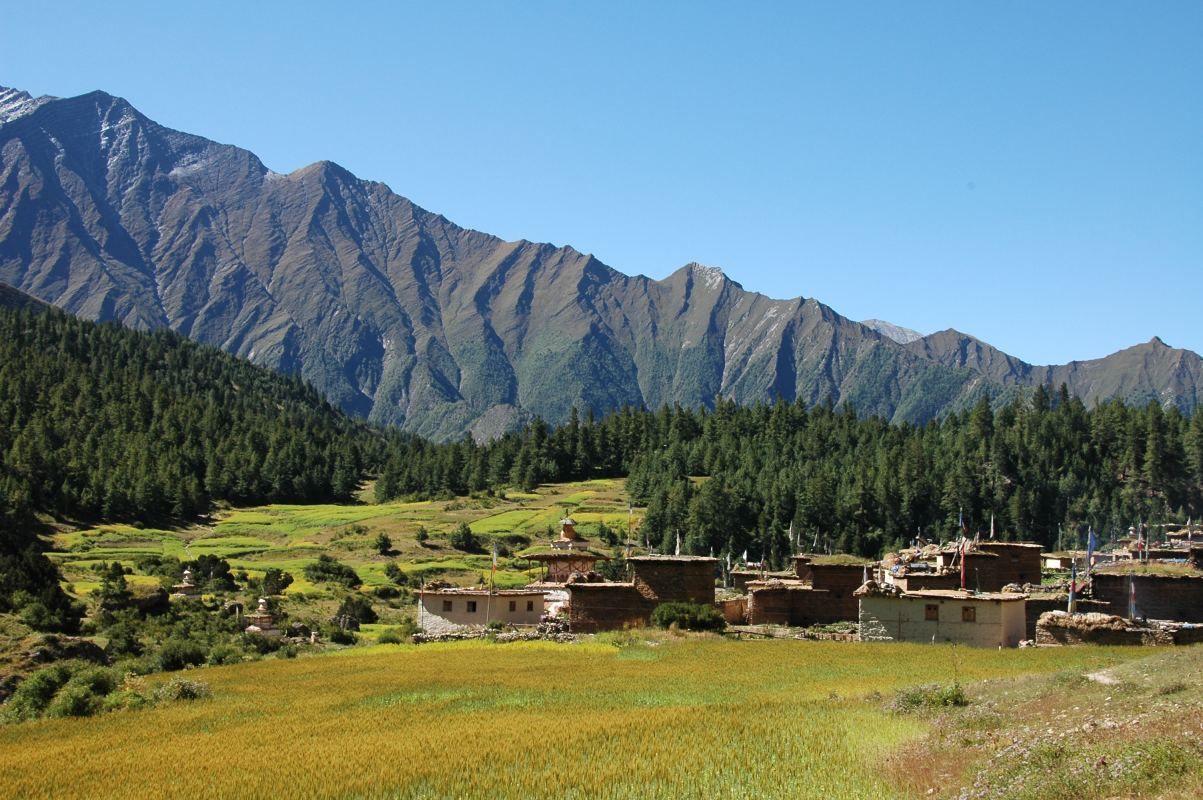
Specifically, Ringmo is a village located within the Shey Phoksundo National Park in the Dolpo region of Nepal. In the story, it is cited as the ancestral home of the main character, Don Anselmo, who is an elderly man of strong principles and traditional values. The village is depicted as a place where the community has a deep, spiritual connection to the land—a theme central to the narrative when Don Anselmo refuses to accept extra money for his property because he believes he does not own the trees, as they belong to the children of the village.
Overview
Travel is the movement of people between relatively distant geographical locations, and can involve travel by foot, bicycle, automobile, train, boat, bus, airplane, or other means, with or without luggage, and can be one way or round trip. Travel can also include relatively short stays between successive movements.
The origin of the word “travel” is most likely lost to history. The term “travel” may originate from the Old French word travail, which means ‘work’. According to the Merriam Webster dictionary, the first known use of the word travel was in the 14th century.
It also states that the word comes from Middle English travailen, travelen (which means to torment, labor, strive, journey) and earlier from Old French travailler (which means to work strenuously, toil). In English we still occasionally use the words “travail”, which means struggle. According to Simon Winchester in his book The Best Travelers’ Tales (2004), the words “travel” and “travail” both share an even more ancient root: a Roman instrument of torture called the tripalium (in Latin it means “three stakes”, as in to impale).