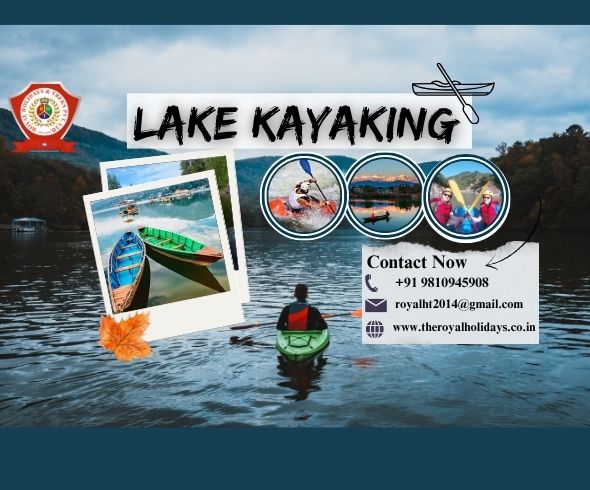
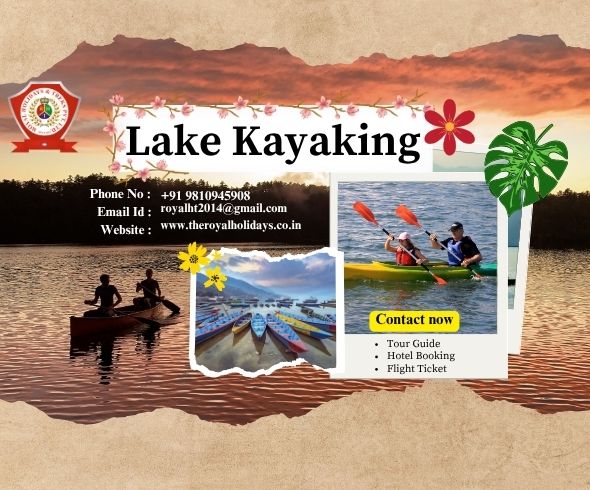
Kayaking on Nepal’s lakes offers a serene and picturesque alternative to the country’s fast-flowing whitewater rivers. It provides tourists with the opportunity to view the Himalayas from water level, offering a tranquil and soothing perspective. This activity is most popular in the emerald-green waters of Phewa and Begnas Lakes, both located in Pokhara. Here, kayakers can enjoy magnificent views of the Annapurna and Dhaulagiri mountain ranges, whose reflections are clearly visible on the lake’s surface. For those seeking greater adventure, kayaking at high-altitude locations—such as Rara Lake and She Phoksundo—presents a unique, once-in-a-lifetime opportunity to paddle in some of the world’s highest and clearest alpine waters. Whether you opt for a single or double kayak, the experience is generally very relaxing. Consequently, it is an accessible activity for both beginners and families—perfect for those wishing to explore hidden coves, visit lakeside temples situated on islands, or observe local birdlife in a peaceful environment, far removed from the noise of motorized boats.
Lake kayaking in Nepal is generally considered a very safe and low-risk activity, particularly for beginners and families. This is because the lakes here are typically calm and lack the dangerous currents often found in Nepal’s rivers. At popular destinations like Phewa and Begnas, the water remains steady and predictable, making it easy to navigate a boat even without any prior experience. To further ensure safety, wearing a life jacket is mandatory; these are readily available at all reputable rental shops. Furthermore, local boatmen and rescue teams are stationed nearby to maintain constant vigilance over the water.
Most Famous And Attractive Tourist Places In Lake Kayaking :
1. Begnas Lake (The Quiet Retreat)

Begnas Lake, located about 15 kilometres southeast of Pokhara, is known as “The Quiet Retreat” because it offers a peaceful, authentic atmosphere far away from the busy tourist crowds of Phewa Lake. It is the second-largest lake in the Pokhara Valley and is celebrated for its crystal-clear, emerald-green waters and the absence of motorized boats, ensuring a silent environment perfect for meditation and nature lovers. Surrounded by lush terraced farmlands and green hills, the lake provides a stunning backdrop where the Annapurna and Dhaulagiri mountain ranges are often reflected on its calm surface. Visitors can spend their day kayaking or rowing traditional wooden boats to explore hidden corners of the lake, or they can enjoy the local freshwater fish at small, quiet eateries along the shore. Because it remains relatively undeveloped, Begnas Lake is the ideal destination for those seeking a slow-paced, traditional Himalayan experience amidst pristine nature.
2. Rara Lake (The Queen of Lakes)

Rara Lake, known as the “Queen of Lakes,” is the largest and deepest freshwater lake in Nepal, perched at an altitude of 2,990 metres in the remote Mugu District. This stunning high-altitude jewel is famous for its shimmering blue waters that vividly change hues throughout the day, surrounded by the lush coniferous forests of Rara National Park. Because of its remote location in the far-west, the lake remains remarkably pristine and untouched by mass tourism, offering a sense of total solitude and peace that is hard to find elsewhere. While it is a trek to reach, visitors are rewarded with breathtaking views of snow-capped peaks reflected in the crystal-clear water and the chance to see rare wildlife like the red panda and Himalayan black bear in the surrounding woods.
3. Rupa Lake (Nature’s Mirror)

Rupa Lake, situated just a short distance from its more famous neighbour Begnas Lake, is affectionately known as “Nature’s Mirror” due to its exceptionally still and clear waters that perfectly reflect the surrounding lush greenery and steep hillsides. As the third-largest lake in the Pokhara Valley, it remains one of the most untouched and “raw” natural spots in the region, largely free from the commercial development seen in Pokhara’s main lakeside area. The lake is a haven for biodiversity, serving as a vital wetland for various species of migratory birds and supporting a thriving local community of traditional fishermen. For visitors, Rupa Lake offers a tranquil escape where one can enjoy gentle boating or kayaking in near-total solitude, providing a unique opportunity to witness the quiet, rural side of Nepal while being surrounded by the peaceful sounds of nature.
4. Shey Phoksundo Lake (The Deep Blue Gem)
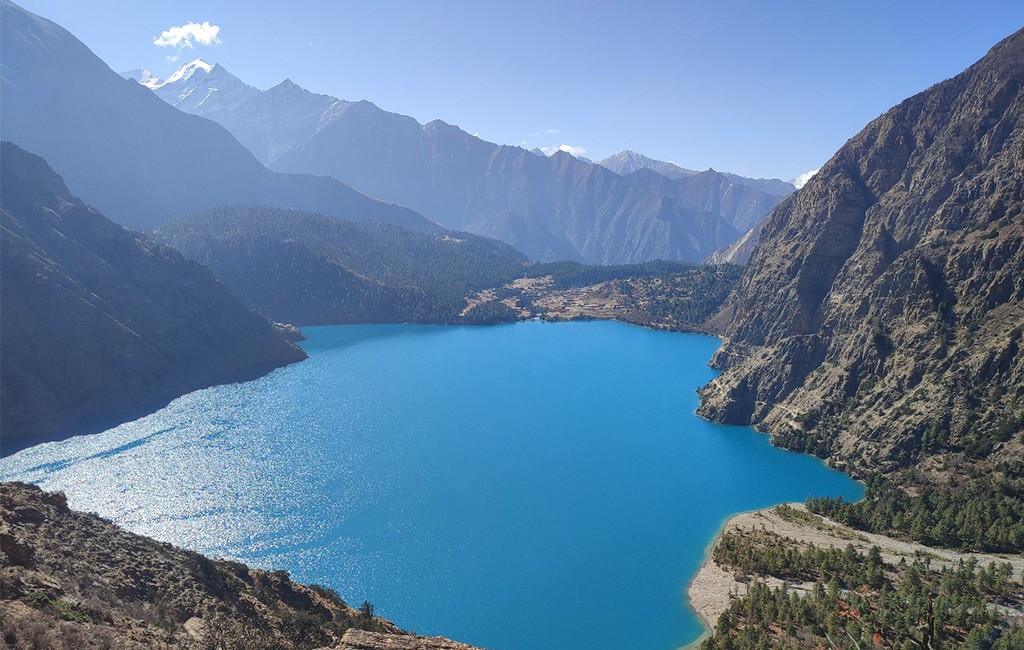
Shey Phoksundo Lake, located in the remote Dolpa district at an elevation of 3,611 metres (11,847 feet), is widely considered one of the most beautiful and serene alpine lakes in the world. Known as the “Deep Blue Gem,” it is famous for its extraordinary turquoise-blue colour and the fact that it is completely devoid of any aquatic life, which keeps the water incredibly clear. The lake is surrounded by dramatic, snow-capped peaks and sits within the Shey Phoksundo National Park, Nepal’s largest and only trans-Himalayan national park. Culturally, the area is deeply significant, as its shores are home to ancient Bon-po monasteries and traditional villages that have remained unchanged for centuries. Because the lake is sacred to the local people, swimming is strictly forbidden, allowing the “y-shaped” lake to remain a pristine, silent sanctuary that offers some of the most surreal mountain scenery in the entire Himalayan range.
5. Indrasarovar Lake (Kulekhani Reservoir)

Indrasarovar Lake, also known as the Kulekhani Reservoir, is a massive man-made lake located about 50 kilometres south of Kathmandu, nestled between the hills of the Makwanpur district. It is the only major reservoir in Nepal used for hydroelectric power, but it has transformed into a popular weekend getaway for locals and tourists due to its calm, deep waters and cool mountain air. Surrounded by steep, terraced green hills, the lake offers a refreshing landscape that feels worlds away from the city’s hustle, making it a prime spot for boating, kayaking, and fishing. The area is also famous for its local specialty—freshwater fish—which many visitors enjoy at the lakeside eateries in the nearby village of Markhu. Because it is easily accessible by a short drive from the capital, Indrasarovar serves as a perfect “micro-adventure” destination for those looking to enjoy water sports and peaceful scenery without traveling all the way to Pokhara.
Overview
Travel is the movement of people between relatively distant geographical locations, and can involve travel by foot, bicycle, automobile, train, boat, bus, airplane, or other means, with or without luggage, and can be one way or round trip. Travel can also include relatively short stays between successive movements.
The origin of the word “travel” is most likely lost to history. The term “travel” may originate from the Old French word travail, which means ‘work’. According to the Merriam Webster dictionary, the first known use of the word travel was in the 14th century.
It also states that the word comes from Middle English travailen, travelen (which means to torment, labor, strive, journey) and earlier from Old French travailler (which means to work strenuously, toil). In English we still occasionally use the words “travail”, which means struggle. According to Simon Winchester in his book The Best Travelers’ Tales (2004), the words “travel” and “travail” both share an even more ancient root: a Roman instrument of torture called the tripalium (in Latin it means “three stakes”, as in to impale).