
One is sure to be spoilt for a decision when shortlisting places to visit in South Korea, that offer an incredibly great scope for explorations of forgotten natural sites and metropolitan enjoyments. The stark contrasts of colorful landscapes allure tourists and captivate the minds of all.
From ancient Buddhist sanctuaries and royal residences to the old walls and innovative metropolitan cityscapes, there are many attractive tourist places in South Korea. There are custom society towns and stylish urban communities, beautiful islands and stunning natural vistas. This country is where tourists find both – tradition and technology co-exhibit. On one side, gigantic skyscrapers like the Seoul Tower are sure to fascinate you and on the other side, ancient temples like Bulguksa Temple – a UNESCO world heritage site.
Did you know? South Korea is known to be the home to the friendliest people on Earth! With this country in mind, most people only think of Seoul, the capital; when in reality…there is so much more to discover! If we drill down the most incredible South Korean places to visit, the list is sure to consist of Dadohaehaesang National Park, Bukchon Hanok Village, Namiseom Island and so many other places worthy of a visit!
1. Ggotji Beach

Located four kilometers southwest from Anmyeon-up, this cream-colored beach is the ideal place to go for a drive and watch the sun sink into the ocean between two large rock formations known as the Granny Rock and the Grandpa Rock. Legend has it that the wife of a base commanding officer in the Shilla Dynasty became the Granny Rock when she died after waiting faithfully for her husband.
2. Darangee Village
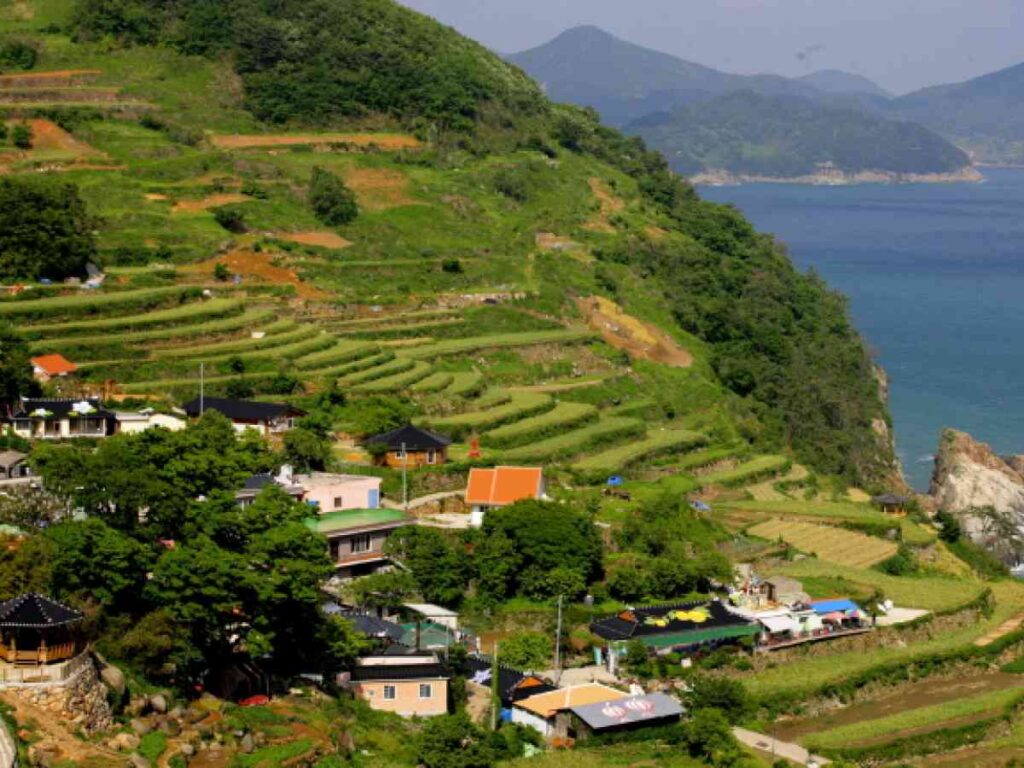
Darangee Village, a small well-preserved village in the southernmost area of west Namhae-gun, features an extraordinary sight of countless tiny fields (over 100 levels) on a steep mountain slope against the open sea.
3. Gwang-An Bridge
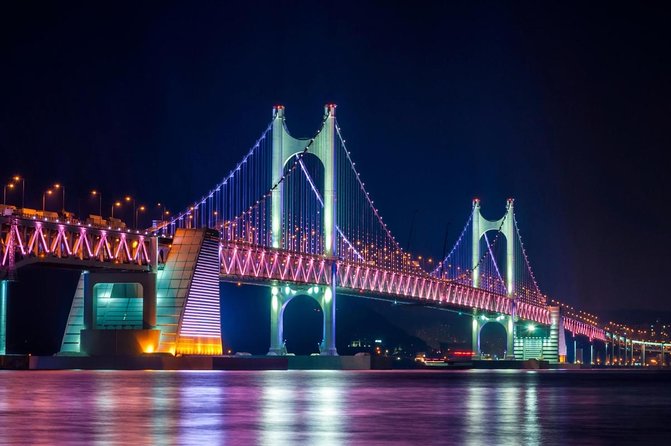
Also known as the Diamond Bridge, this two-story bridge connects Suyeong-gu and Haeundae-gu and offers an astonishing view of mountains, sandy beaches, hills and city lights. Gwang-An Bridge is not for pedestrians, but anyone can enjoy the spectacular night view of the bridge from afar; its state-of-the-art lighting system allows exterior lighting of over 100,000 colors.
4. Kyeong-Wha Station Jinhae
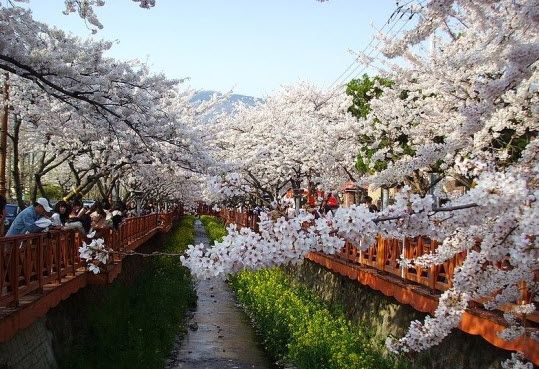
This small whistle-stop bustles with tourists and amateur photographers every spring. Cherry blossoms rain down on the train track and countless shutters click madly away as the train approaches the station under the cherry blossom tunnel. The cherry blossom road at Yeojwa Stream, (number 17 on this list) is also nearby for those who want more photo-ops.
5. Upo Marsh
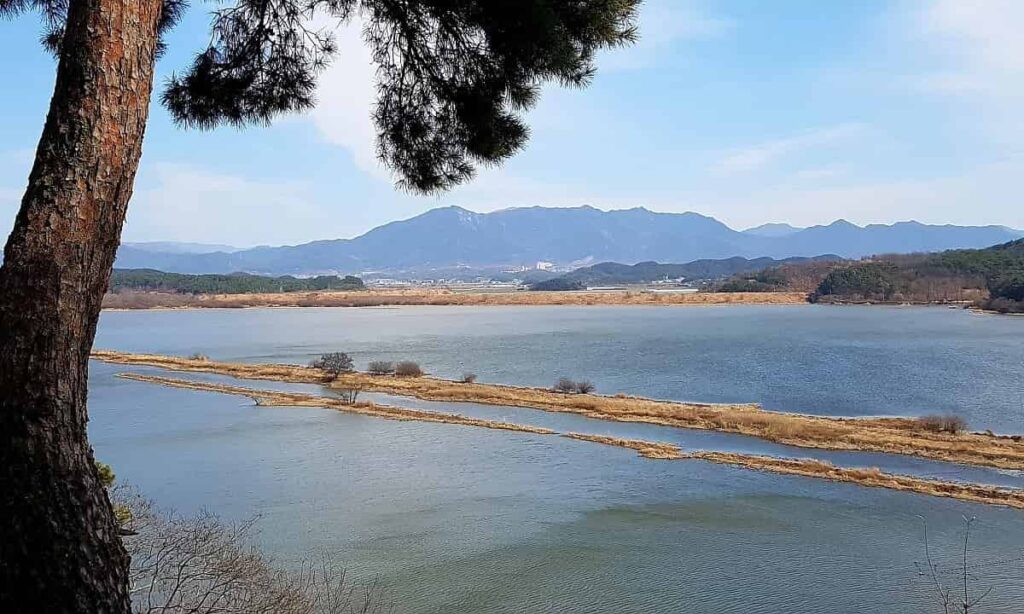
At 2,314 kilometers squared, Upo Marsh is the largest inland wetland in Korea and three times the size of Yeouido. Formed over 140 million years ago, the marsh is home to 1,500 plants and animals, some of which are endangered species. Visitors can bike or walk around this beautiful natural swamp, where migratory birds are known for flying low.
6. Jeungdo Salt Farm
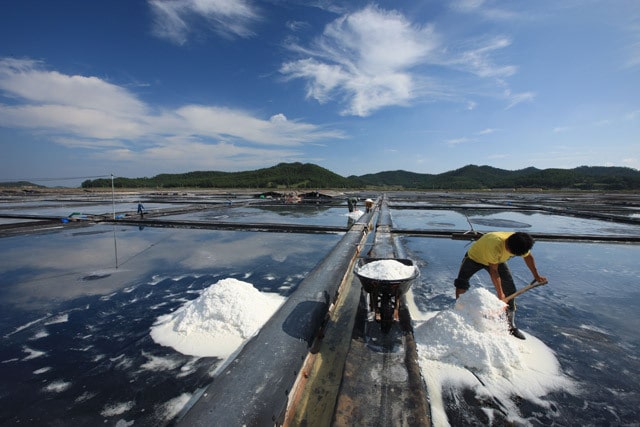
This treasure island (artifacts from the Song Dynasty have been found at the bottom of the sea) is famous for its clear seawater, soft beach, and salt farms. The magical sight of huge salt farms is not the only spectacle that can be found here; the mud flat leisure town allows tourists to experience and observe the marine life of the mud flat.
7. Gongryong Ridge, Seorak Mountain
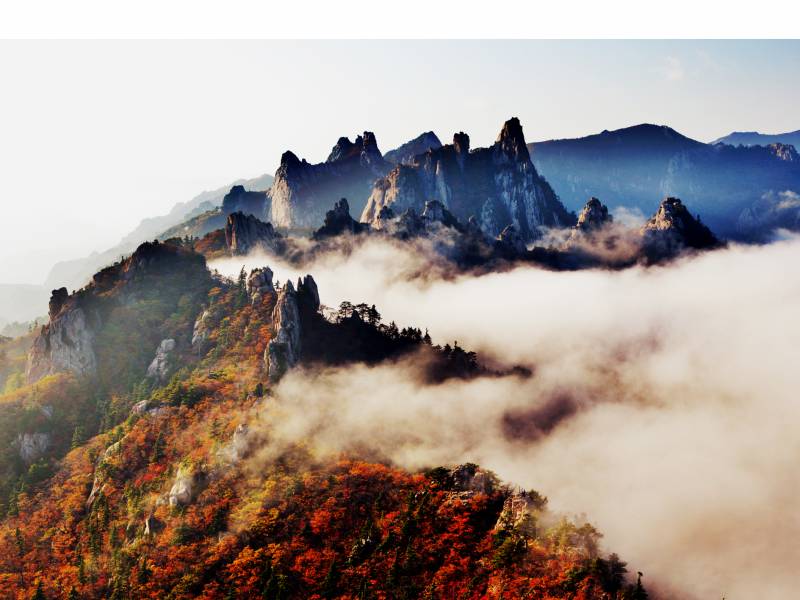
Physical fitness and mountain climbing experience are prerequisites to viewing these curious peaks in the Seorak mountain range. Thought to be shaped like the spine of a dinosaur (hence the name, “Dinosaur Ridge”), this rocky ridge offers spectacular views of both inner and outer Seorak. The climb is no picnic: the peak elevation of Gongryong Ridge, the most popular ridge route in the range, is approximately 1,200 meters.
8. Uleung Island Seaside Road

Uleung Island, nicknamed “Mysterious Island,” is a popular weekend getaway spot for Seoulites. Curious rock formations, shore cliffs and numerous waterfalls adorn the island’s Seaside Road. Anyone planning to walk or bike their way around Uleung Island should make sure they set aside enough time, as they will inevitably stop countless times to admire the glorious view.
9. Seopjikoji, Jeju Island

First-time visitors to Jeju Island need to plan their trip wisely, as the Jeju bucket list is long and varied. One of the musts on the list is Seopjikoji, a promontory on the coast famous for its serenity and romance. Yellow rape blossoms fill the field in the spring, creating a colorful contrast with the red soil and cerulean sky.
The best photographs of Sungsan Sunrise Peak (the first item on this list) can be taken here at Seopjikoji. The scenery of Seopjikoji has also been captured by several Korean films and dramas, including “All In,” one of the first Hallyu dramas starring Lee Byung-hun and Song Hye-kyo.
10. Bomun Pavilion, Gyeongju
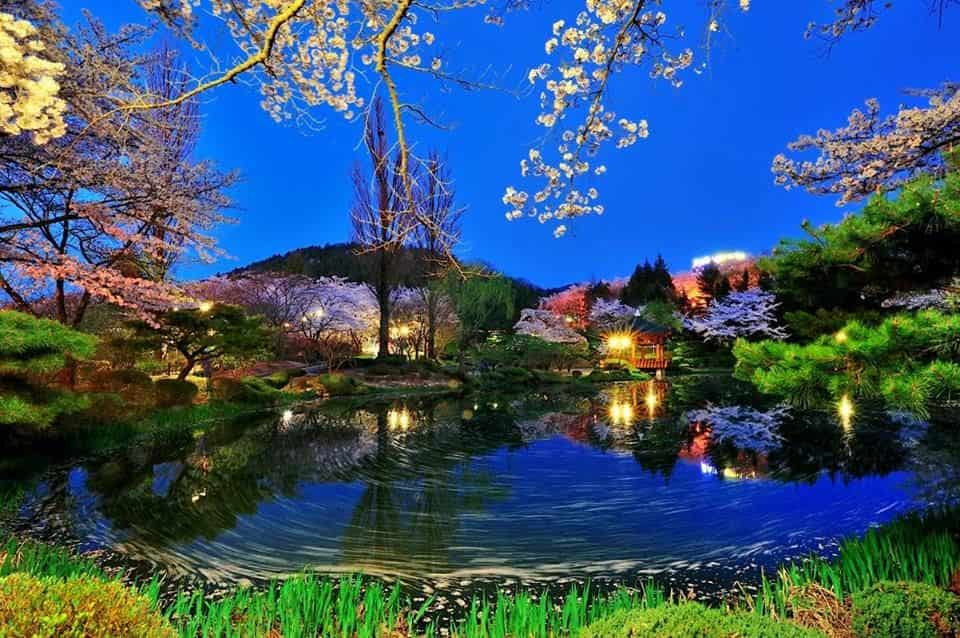
Gyeongju, an ancient capital of the Shilla Dynasty, boasts the nickname “a museum with no walls.” Bomun Pavilion, a small wooden gazebo standing over a quiet duck pond, is a great spot to experience Korea’s spring; the cherry blossoms fluttering over the pond provide an exquisite sight. It’s the perfect place to view all of Korea’s markedly different seasons: summer’s lush green leaves, fall’s scarlet and mustard foliage, and winter’s blankets of snow.
11. Udo

Just 15 minutes away from Jeju Island, Udo is another addition to Jeju’s bucket list. Visitors can hike on Olle Road, or opt for a scooter ride along the shore, a submarine excursion or sea fishing. Just don’t forget the sunblock.
12. Haeinsa Temple, Hapcheon
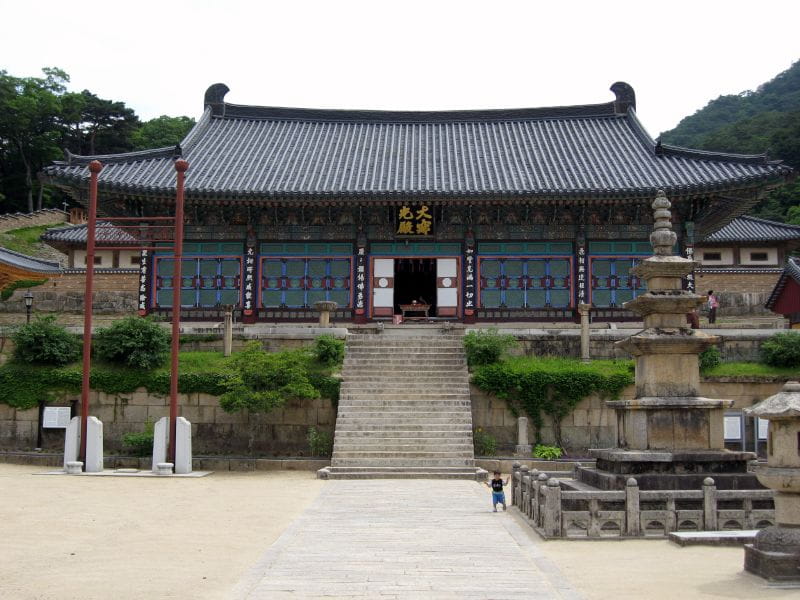
The world’s oldest intact Buddhist canon, the Tripitaka Korean, is carefully housed in the 1,200-year-old Haeinsa Temple. The temple’s other landmarks include the oldest wooden Buddha statue in Korea (the Haeinsa Vairocana) and a UNESCO World Heritage Janggyeong Panjeon ( a “storage hall of Buddhist Sutras”).
13. Chunwang Peak, Jiri Mountain
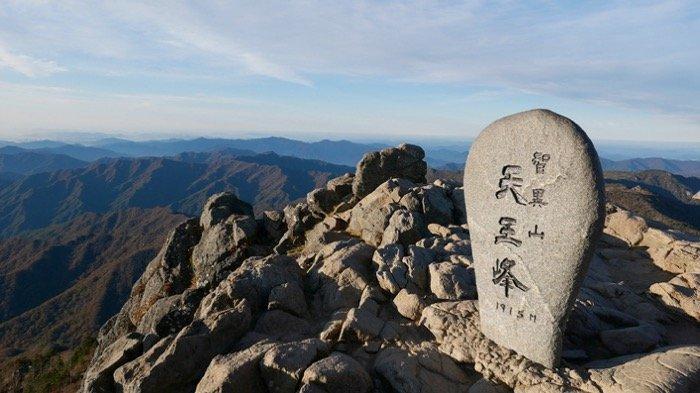
At 1,915 meters, Chunwang Peak on Jiri Mountain is the second-highest peak in South Korea and the beloved conquest of many a Korean mountain climber. The national park on Jiri Mountain stretches over five cities and three provinces and is home to quietly dazzling flora and fauna as well as seven national treasures and 26 treasures.
Many tread the trail to Chunwang Peak to watch the sunrise, some simply to enjoy the view from the top, and others for the pleasure of breathing in the crisp, clean mountain air and drinking the brain-freeze-inducing spring water of Chunwang Spring, which is located just 300 meters below Chunwang Peak.
14. Juknokwon, Damyang
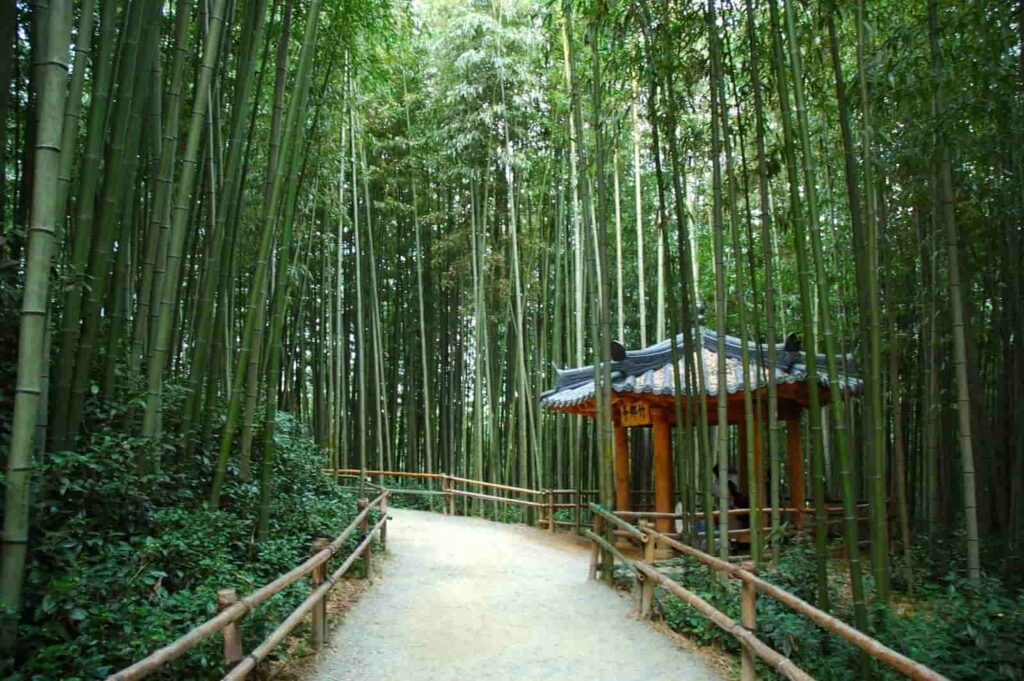
This dense bamboo thicket is located in Damyang, another “slow city” that welcomes all who are tired of hectic city life. Eight trails around the thicket offer eight different themes to saunter through. If you look carefully between the bamboo plants, you can spot the green tea shoots that grow from the dew that drips off the bamboo leaves, known as Jukro tea. The Juknokwon observatory in the middle of the thicket occasionally hosts Jukro tea-tasting events.
15. Naganeupseong Folk Village, Suncheon
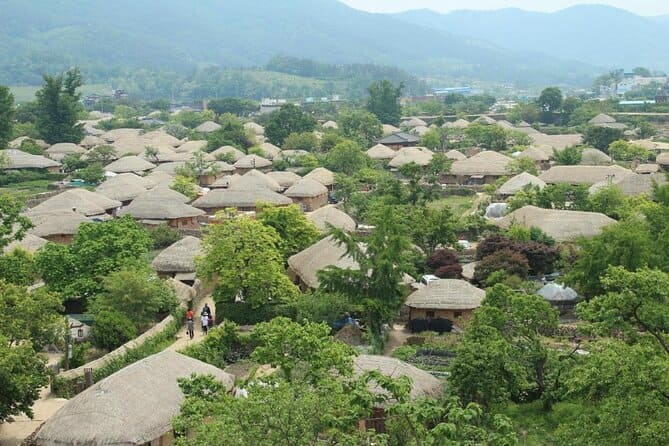
Straw-roofed houses, government offices, guesthouses and a castle, all from the Chosun Dynasty, remain perfectly preserved in their original forms in this 22 square kilometer historical site. No, it’s not an exterior set of a historical dram, people live in those houses and better yet, they offer overnight homestays.
16. Yeojwa Stream
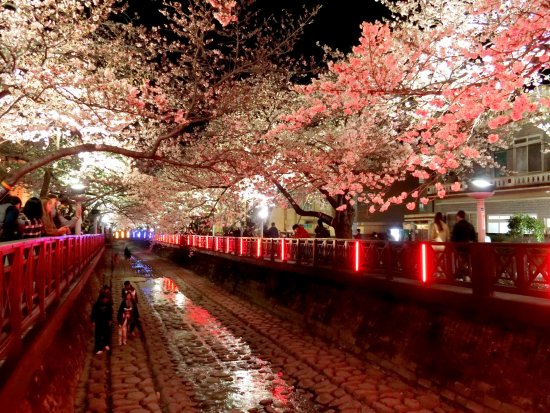
The fifth item on this list already touched on the festival of cherry blossoms in Jinhae, but the cherry blossom road at Yeojwa Stream is so strikingly beautiful that it deserves another mention (and another photo). Lovers visit this site to cross the Romance Bridge, which has been used as a shooting location for “Romance,” a drama starring Kim Ha-nul and Kim Jae-won. Bloggers say that these romantic blossoms can be most appreciated at night when there are fewer tourists and the pale pink flowers glow against the dark sky.
17. Boseong Green Tea Field

Almost half of Korea’s green tea is produced here. Korea Tourism Organization Approximately 40% of Korea’s tea is produced in the rolling fields of Boseong, which has also provided the backdrop of many Korean dramas and films.
Yes, green tea-related specialties (fresh green tea ice cream and green tea pork belly) are tasty treats, but the spectacular view of the seemingly endless tea fields is the real reason so many visitors stop by Boseong. A green tea festival is held every May while in the winter, the fields are decorated with tiny light bulbs.
18. Bulguksa Temple
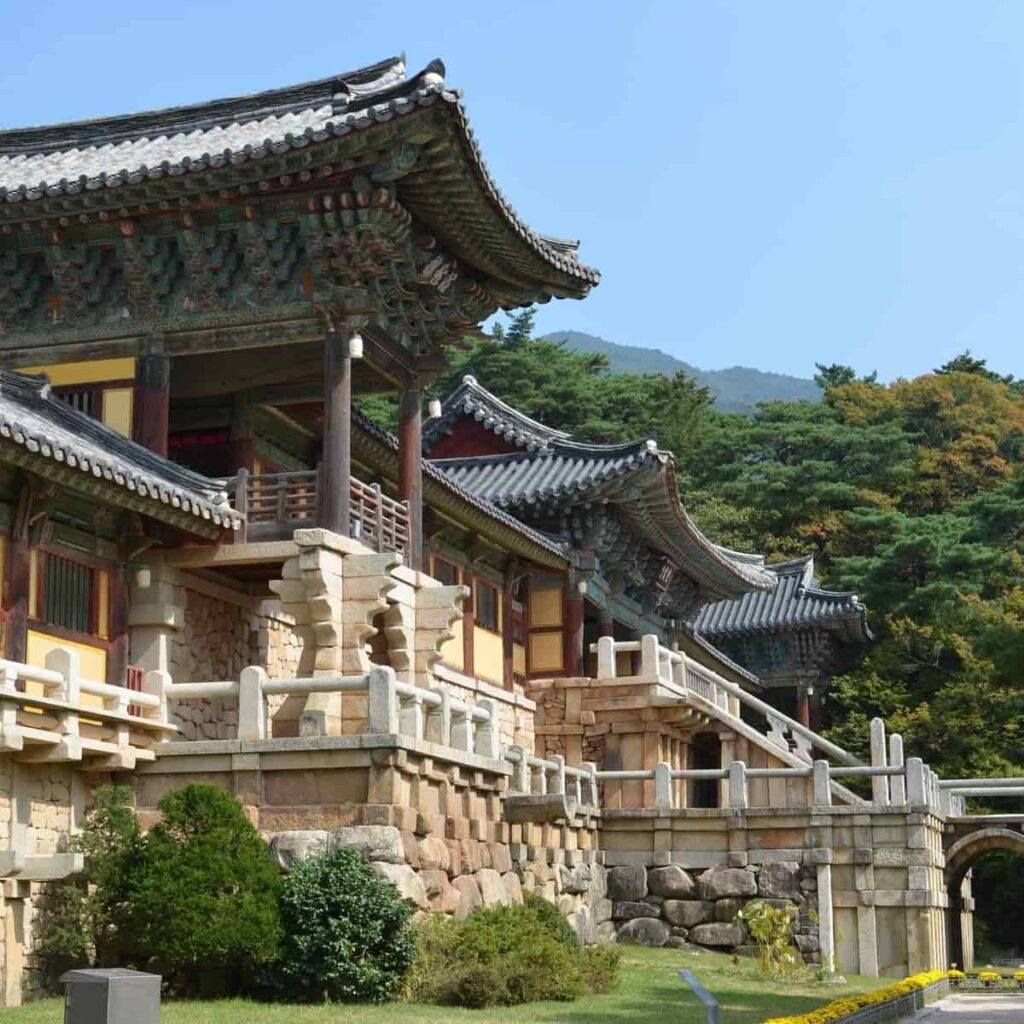
This UNESCO-listed site is perhaps the most famous historic site in Korea. Two granite pagodas on either side of the temple, Dabotap and Seokgatap, as well as Seokguram, a man-made grotto just above the temple, add to the splendid grandeur of this 1,500-year-old home of many important relics.
19. Daegwallyeong Ranch
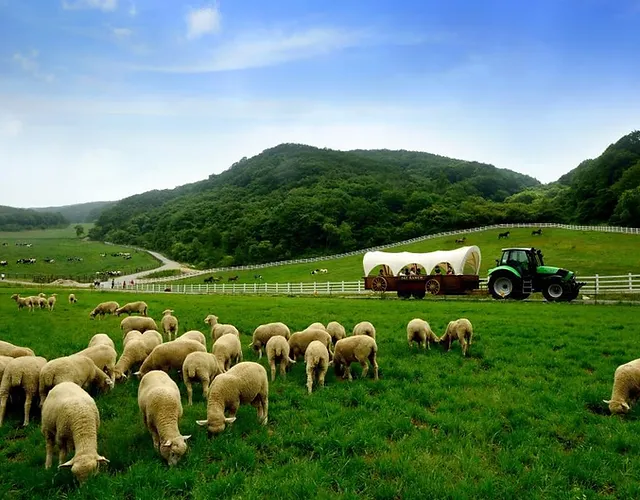
This only sheep ranch in Korea doubles as a natural sled park in winter. The dreaminess of the view is as heady as the mountain air. Meat lovers should stop by the restaurants in the ranch village for a taste of the highest grade lamb.
20. Cheongdo Bull Fighting Festival

As the biggest bullfighting festival in South Korea, Cheongdo Bull Fighting Festival attracts around half a million people every year. In addition to the big matches of 130 fighting bulls, there are art contests, cow-play exorcisms, rodeo experiences, and even magic shows to entertain the crowd. If the sights are a bit too violent for your taste, there are other Cheongdo attractions such as the Nakdae Waterfall and Unmun Temple.
21. Hyeopjae Beach, Jeju Island
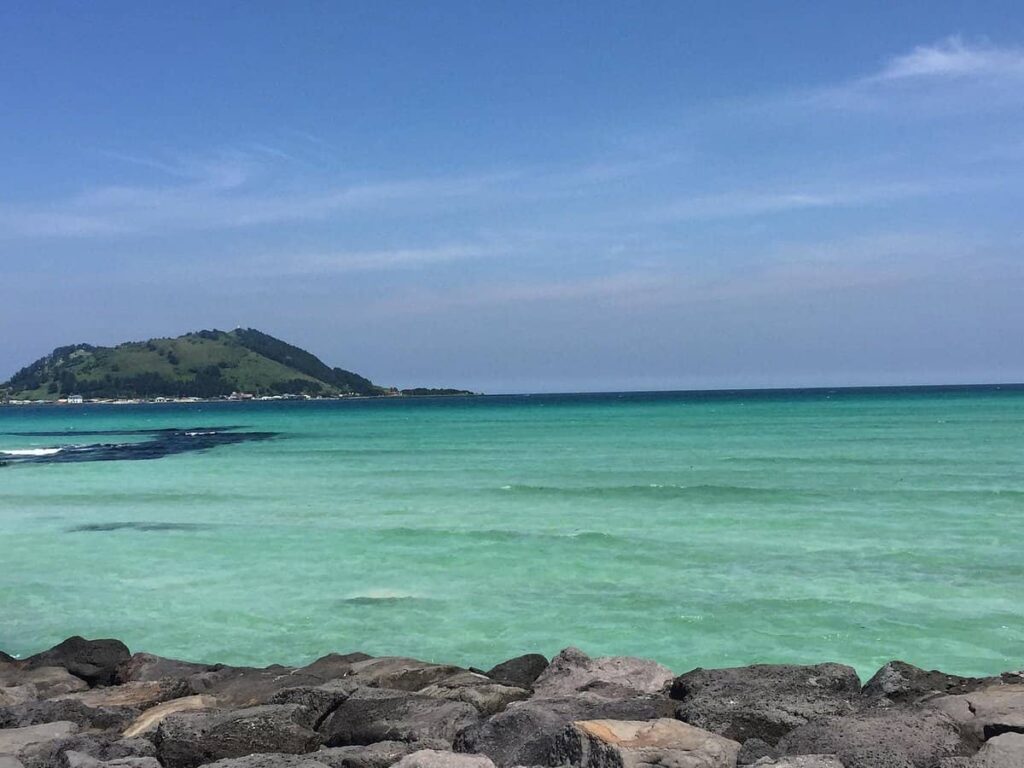
While in some sense the entire province is bordered by beaches (if not cliffs), the two model beaches are Hyeopjae Beach and Jungmun Beach. This white sandy beach is perfect for families with its shallow water (average depth of 1.2 meters), nearby amenities, and camping in the pine forest surrounding the beach. Hyeopjae is also particularly known for its delicious abalones and conches, served fresh in the seafood restaurants dotting the beach.
22. Anapji (Anap Pond)
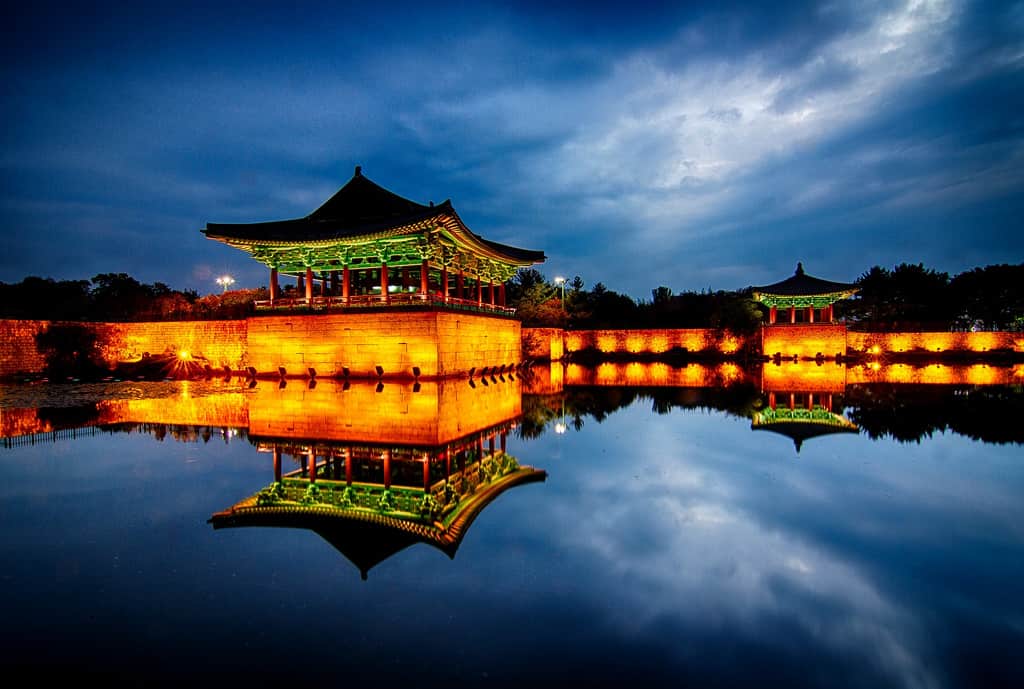
This man-made pond was created during the Shilla Dynasty approximately 1,500 years ago. Three buildings stand on three artificial islands while patches of lotus flowers frame the pond. Gorgeous exterior lighting that goes on after sunset creates a magical night view.
23. Seryang-Je
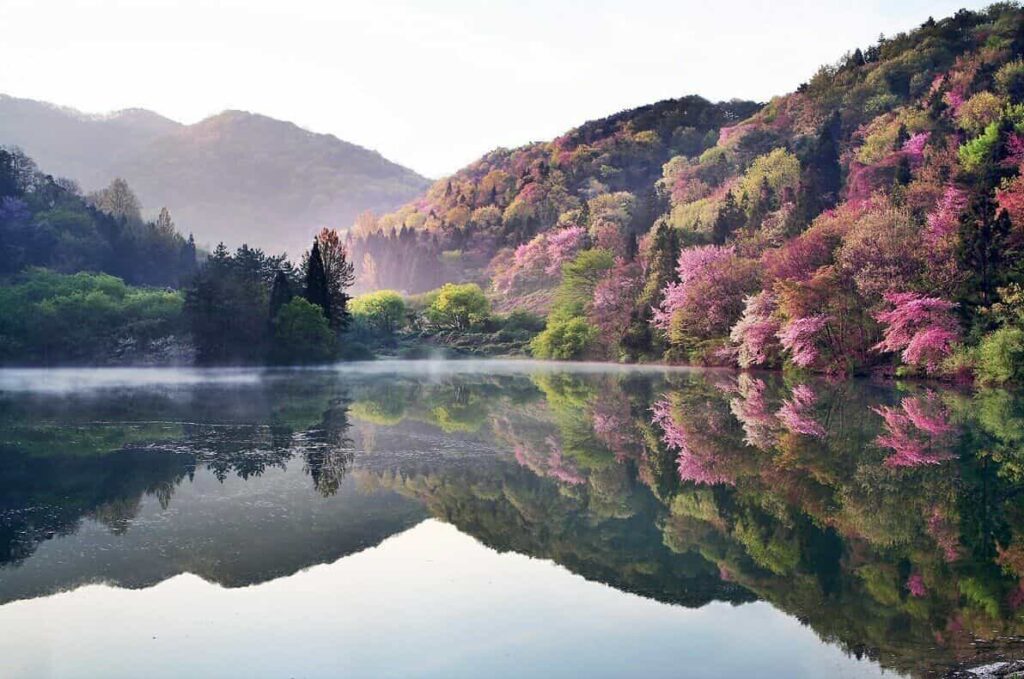
Seryang-Je, a reservoir built in 1969 in Hwasun, is another famous spot for both professional and amateur photographers for its ethereal mist and reflections of colorful blossoms and leaves.
24. Kwanghan Pavilion

Kwanghan Pavilion is the setting of Chunhyangjeon, one of Korea’s most famous folk tales. Chunhyang, the young, beautiful daughter of a kisaeng (Korean geisha), and Mongryong, the handsome son of the local governor, first met and fell in love in this beautifully designed pavilion, which was designated a treasure in 1963.
25. Seomjin River Train Village

Kudos to the Gokseong district office which has managed to create a lovely tourist attraction out of abandoned railroads. A brief steam train ride (they don’t make like this anymore, literally) is available for tourists, who can also enjoy a bike hike on a trail bike or a romantic walk beside the train track.
26. Cheongsando
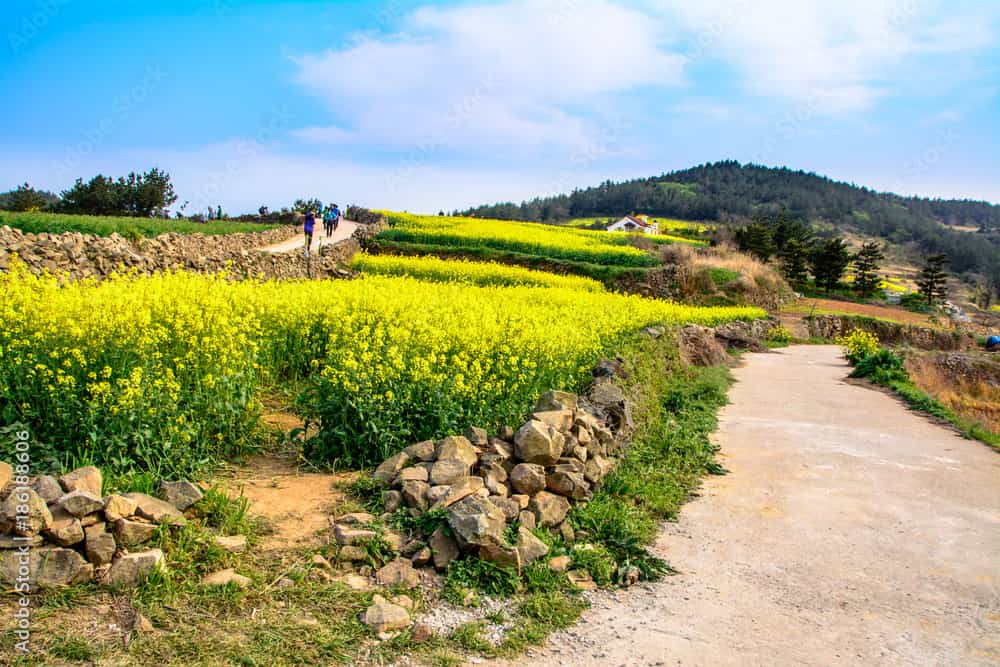
For a small country road, Cheongsando marks a lot of “firsts” – it is the world’s first “Slow Road” in Asia’s first “Slow City.” It doesn’t take long to realize why it is called “Slow Road” – one’s pace naturally slackens to fall in with the pace of the rest of the island. Rape blossoms (in spring) and Mexican Asters (in fall) in full bloom are bordered by simple stone walls.
27. Halla Mountain
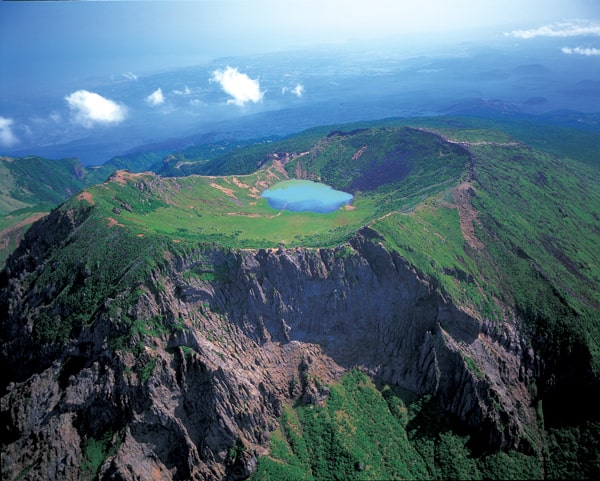
The highest mountain in South Korea is also Jeju Island’s most iconic landmark. Courtesy Kim Bong-Sun. This fairy-tale sight of snowflakes and icicles covering tree branches on Halla Mountain was the inspiration for the Halla Snow Festival that was held in late January/early February every year.
Unfortunately, the festival was halted a few years ago because whenever they set a date it would rain and people would get mad. But the snow-covered trees are still there, and you are welcome to go sledding, snow rafting and ice sliding on your own.
28. Terraced Fields, Hamyang
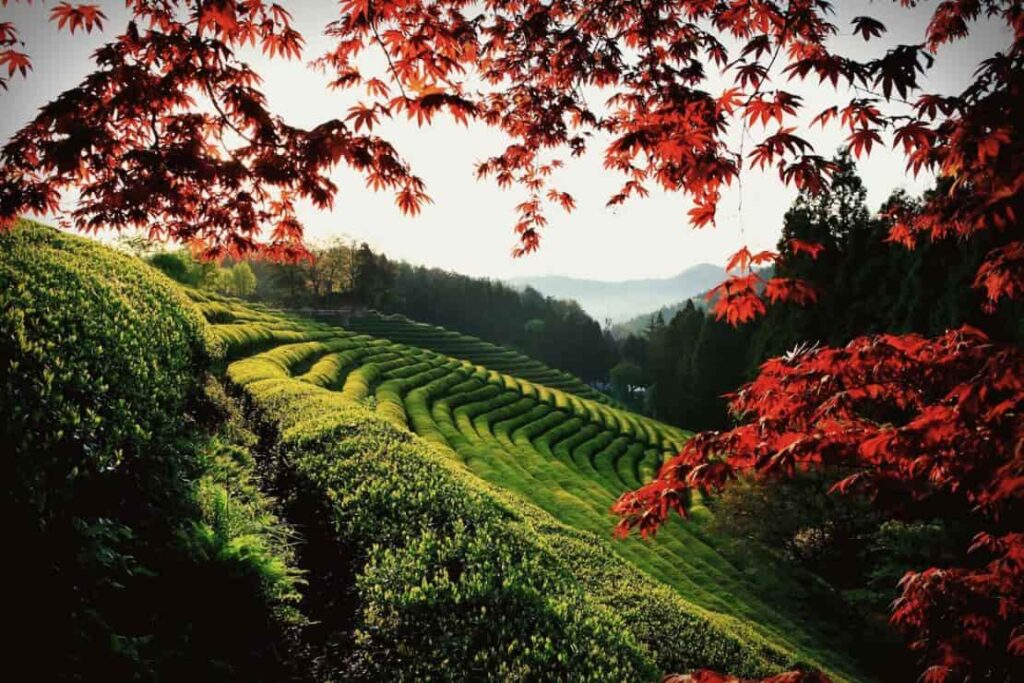
This small village at the foot of Jiri Mountain displays a curious sight of terraced rice paddies. In spring the water in the paddies reflects the sky, while in fall the paddies glow with golden grains.
29. Nuri Peace Park
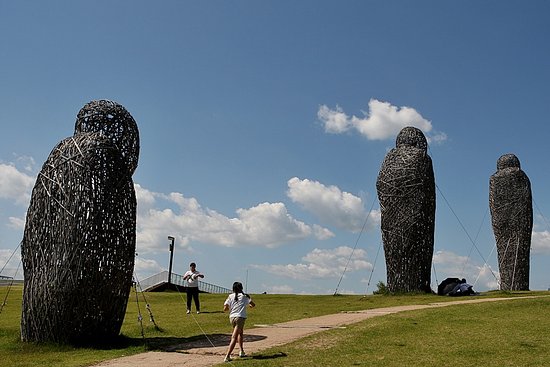
This artistic park located in Paju embodies South Koreans’ yearning and longing for peace in the Korean Peninsula. Yes, it’s a rather heavy subject, but even those who couldn’t care less about the death of Kim Jong Il can still enjoy the beauty of this park, which is well-known for its colorful display of pinwheels and the giant bamboo colossi.
30. Silk Fall, Jiri Mountain
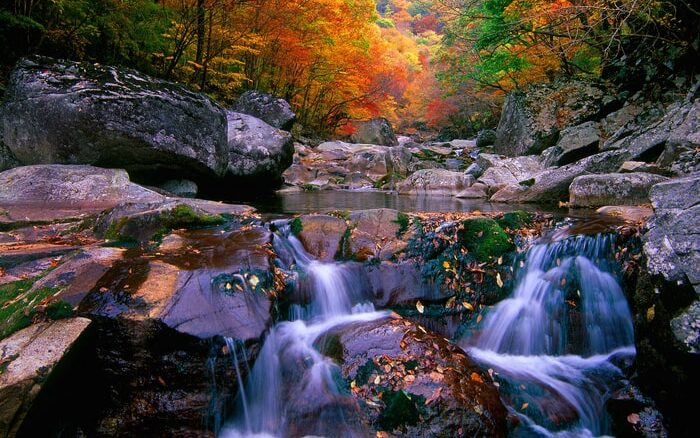
This mossy waterfall is in a now-restricted area of Jiri Mountain, which means a heavy fine for anyone caught venturing near here. Think of it as a long sabbatical for nature.