
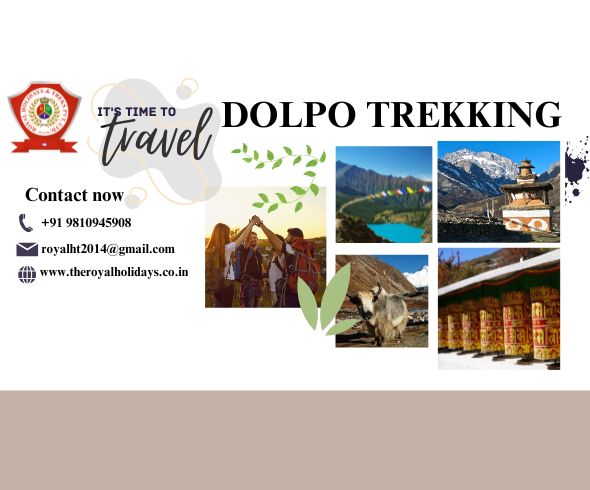
The Dolpo Trek is an unexplored, rugged, remote trekking route in Nepal. The beautiful scenery of snowcapped mountains and small villages makes this trek attractive. Lying on the far-western side of Nepal,
Only a few people have explored the beautiful landscapes of Upper Dolpa. The alpine freshwater oligotrophic lake of Phoksundo and the beautiful Shey Phoksundo National Park are the major highlights of this trek.
Dolpo is famous for long, challenging and strenuous adventure trek. Only a few people can imagine that there are also very interesting peaks and summits to climbing. Including an easiest climbing above 7000m peak and other several unclimbed and virgin summits are found in Dolpo.
Lower Dolpo trek is a less known trek route of Nepal compared to other trekking routes. But the adventure and thrills of walking on the off-beaten road are quite extreme in this trek. Lower Dolpo trek routes were opened for foreigners in the year of 1982.
Exciting Nepal has brought a 23 days Lower Dolpo Trek itinerary. It takes you through one of the remote areas of this country. You will see that these areas are still underdeveloped. But the friendly nature and warm hospitality will mesmerize you.
1. Phoksundo lake
This pristine lake is the crown jewel of Dolpa. Situated at an elevation of 3,612 meters, the turquoise blue lake is mystical on its own. There is a belief among locals that the lake is so pure that no organism lives there. People are not allowed to swim or boat in the lake, but they do not have to. If you stare long enough at the lake from the multiple viewpoints on the trail, you will definitely be mesmerized.
2. Shey Gompa
Another gem in the region is the Shey Gompa or the Crystal Monastery that was built in the 11th century just below the holy Crystal Mountain. Many consider this monastery the spiritual heart of the region and was made famous by Peter Matthiessen in the book the Snow Leopard.
It is also known for its 12-metre tall-breezed golden statue of Shakyamuni (Gautam) Buddha which covers three floors of the monastery. It lies in the trekking route to cross Kanga La pass (5,151 m), which is among the highest passes in the Himalayas, from where one can see the mesmerizing beauty of the mountains and panoramic landscapes.
3. Shey Phoksundo National Park
Dolpa is home to the Shey-Phoksundo National Park, arguably the prettiest national park in the country. The place is full of different species like the elusive snow leopard, blue sheep, grey wolf and musk deer among many others. Elevations in the park range from 2,130 m in Ankhe to 6,883 m at the summit of Kanji Roba Himal. Apart from Shey Gompa, the national park is home to multiple other monasteries along with different glaciers. Because this place is remote, many call this place a heaven on earth and a must visit place if you love trekking.
4. Bon religion
Dolpa is one of few places where the Bon religion is practiced. The Bon religion in Dolpo offers you its unique and primitive culture including monasteries and temples that are practicing and preserving the culture of Bonpo (followers of Bon) in different parts of this region. These places seek the attention of the world to preserve and flourish this ancient religion before it disappears.
5. Dho Tarap valley
The village of Dho Tarap is one of the highest settlements on earth. This used to be the capital of Dolpo before Prithvi Narayan Shah annexed it in the 18th century. This village, like others in the region, follows the Bon culture, and there are eight monasteries including a Bon monastery. Dho Tarap is located in a very strategic center and can be reached in a travel distance of one day from nine different villages of Dolpo.
6. Ringmo
Ringmo is another traditional village in Dolpo that preaches the Bon religion. The village is small and is by a lake. It sits on the landslide dam that formed the Phoksundo lake at about 3,660 m (12,000 ft.) above sea level. A Bon temple also named Ringmo can be found just outside the town, and the river that drains from Phoksundo plunges over an impressive 167 m (548 ft.) waterfall about half a kilometer south of the village.
7. Suligad waterfall
Near Ringmo is the Suligad waterfall, which is 167 meters long. The water comes straight from the Phoksundo lake and is a gem to look at. Not many people venture out to these places. The waterfall drops into the Bheri river forming Thulo Bheri and is quite a hike from Ringmo, but once there, you will surely feel that the hike is worth it.
Overview
Travel is the movement of people between relatively distant geographical locations, and can involve travel by foot, bicycle, automobile, train, boat, bus, airplane, or other means, with or without luggage, and can be one way or round trip. Travel can also include relatively short stays between successive movements.
The origin of the word “travel” is most likely lost to history. The term “travel” may originate from the Old French word travail, which means ‘work’. According to the Merriam Webster dictionary, the first known use of the word travel was in the 14th century.
It also states that the word comes from Middle English travailen, travelen (which means to torment, labor, strive, journey) and earlier from Old French travailler (which means to work strenuously, toil). In English we still occasionally use the words “travail”, which means struggle. According to Simon Winchester in his book The Best Travelers’ Tales (2004), the words “travel” and “travail” both share an even more ancient root: a Roman instrument of torture called the tripalium (in Latin it means “three stakes”, as in to impale).