
Tawang is a high-altitude town situated in the Indian state of Arunachal Pradesh, perched at an elevation of 10,000 feet and renowned for its profound spiritual significance and breathtaking views of the Himalayas. It is home to the 17th-century Tawang Monastery—India’s largest monastery—which serves as a magnificent citadel of Tibetan Buddhism and houses a colossal 28-foot-tall golden statue of the Buddha. The region is defined by its rugged natural beauty, featuring the snow-capped Sela Pass, the sacred Sela Lake, and the serene, earthquake-formed Madhuri Lake.
Historically, the town stands as a poignant site of the 1962 Sino-Indian War, commemorated by the Tawang War Memorial and Jaswant Garh. Beyond its monuments, Tawang offers a rich cultural experience through the vibrant traditions of the Monpa people, their unique handicrafts, and the dramatic beauty of sites like the Nuranang Falls; for these reasons, it remains a “bucket-list” destination for both pilgrims and adventure enthusiasts alike. Tawang’s economy is grounded in a blend of traditional livelihoods and a rapidly expanding modern service sector.
Today, tourism has emerged as the “backbone” of this economy, serving as a primary source of income—through hotels, homestays, transportation services, and restaurants—for the thousands of visitors who arrive each year. The economy is further bolstered by a rich tradition of handicrafts, wherein local artisans earn their livelihood by crafting intricate wood carvings, hand-woven carpets, and traditional handmade paper. Tawang is widely regarded as one of the safest destinations in Northeast India for both families and solo travelers, a reputation attributed to its exceptionally low crime rate and its helpful, welcoming local community. The region maintains a strong military presence that ensures high security, and the local people here are known for their exceptionally hospitable and respectful behavior towards visitors.
Most Famous And Attractive Tourist Places In Tawang :
1. Sela Pass
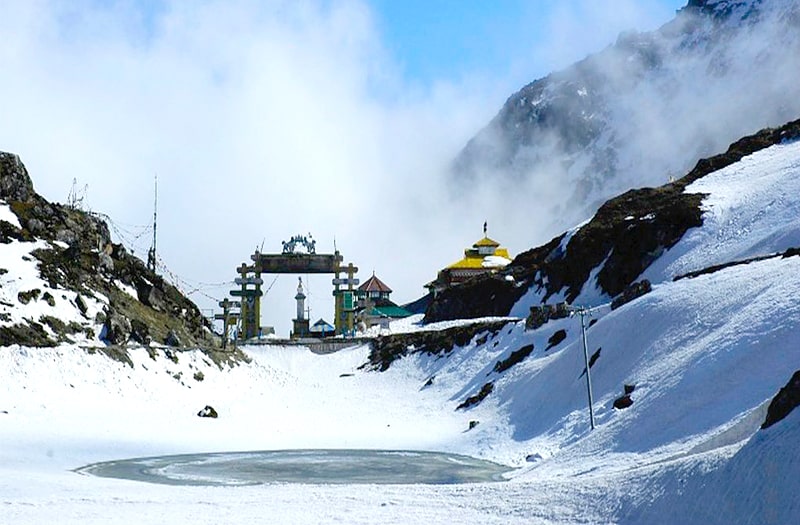
Sela Pass is the high-altitude gateway to Tawang, sitting at an elevation of about 13,700 feet. It is famous for its stunning views of the Himalayas and remains snow-covered for most of the year, making it look like a winter wonderland. The main highlight is the beautiful Sela Lake (or Paradise Lake), which sits right at the pass and often freezes over in winter. Because it is a sensitive border area, the pass is heavily maintained by the army to ensure the road stays open even during heavy snow. For travelers, it’s a breathtaking stop where you can feel the thin mountain air and see the colorful Buddhist prayer flags fluttering against the white snow.
2. Tawang Monastery

Tawang Monastery, also known as Gaden Namgyal Lhatse, is the largest monastery in India and the second largest in the world. Founded in the 17th century by Merak Lama Lodre Gyatso according to the wishes of the 5th Dalai Lama, it sits at an elevation of 10,000 feet and resembles a fortified hilltop city. The name “Tawang” literally means “Chosen by Horse,” originating from a legend where the founder’s horse supposedly chose the site. Inside the three-storey main assembly hall, you will find a massive 25-foot golden Buddha statue, which is the monastery’s most famous feature. The complex also includes a famous library housing ancient scriptures and residential buildings for over 300 monks. It remains the spiritual and cultural heart of the region, hosting major events like the Torgya Festival, where monks perform traditional masked dances.
3. Shonga Tser Lake
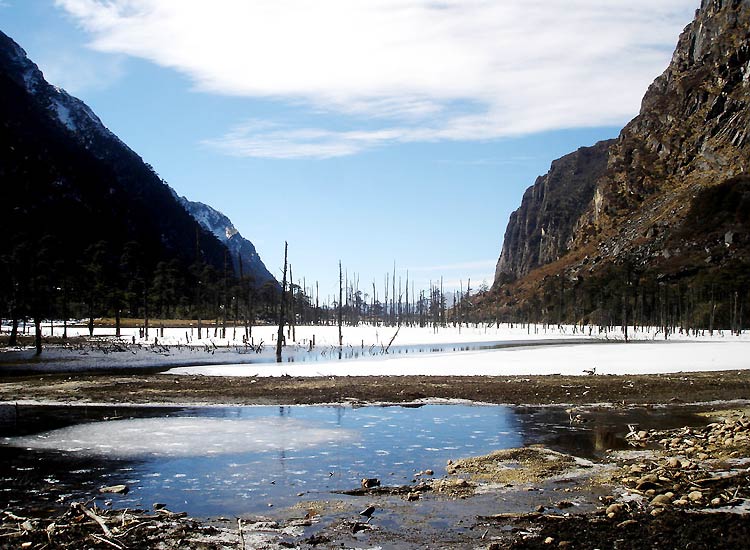
Shonga Tser Lake, also widely known as Sangetsar Tso or popularly as Madhuri Lake, is a breathtaking high-altitude lake located at an elevation of roughly 12,000 to 15,200 feet near Tawang. The lake has a unique and dramatic origin; it was formed after a massive earthquake (variously cited as occurring in 1950 or 1971) caused a flash flood that submerged a former grassland and village site. This event created its most striking feature: numerous dead tree trunks that still stand partially submerged in the crystal-clear water like bamboo poles. It earned the nickname “Madhuri Lake” after the Bollywood actress Madhuri Dixit filmed a song for the movie Koyla there in the 1990s, which made the spot a major tourist attraction. Beyond its cinematic fame, the lake is considered sacred by local Buddhist communities and is surrounded by stunning snow-capped Himalayan peaks, making it a favorite spot for photography and peaceful reflection.
4. Nuranang Falls
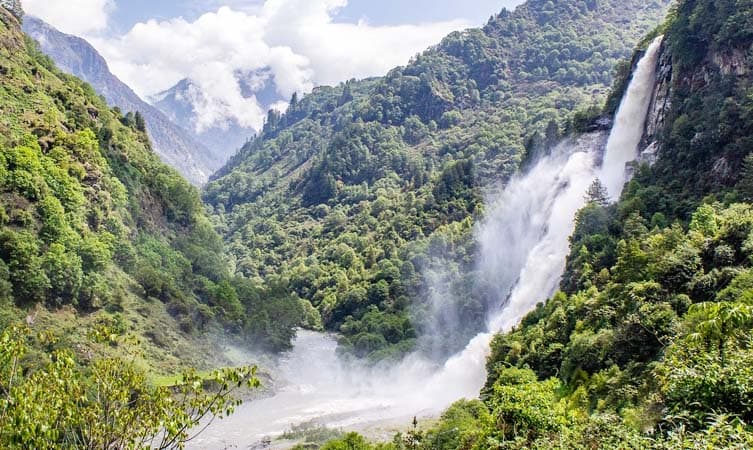
Nuranang Falls, also known as Jang Falls, is one of the most spectacular waterfalls in India, dropping from a height of about 100 metres. It is located near the town of Jang, roughly halfway between Dirang and Tawang. The falls are unique because the milky-white water cascades down in a powerful sheet against a backdrop of lush green mountains, eventually joining the Tawang River. According to local legend, the falls are named after a Monpa tribal girl named Nura, who helped an Indian soldier, Jaswant Singh Rawat, during the 1962 war. Interestingly, the base of the waterfall houses a small hydel power plant that generates electricity for the local area. Because of its incredible beauty, it has also been a popular filming location for Bollywood movies, most famously the film Koyla.
5. Gorichen Peak
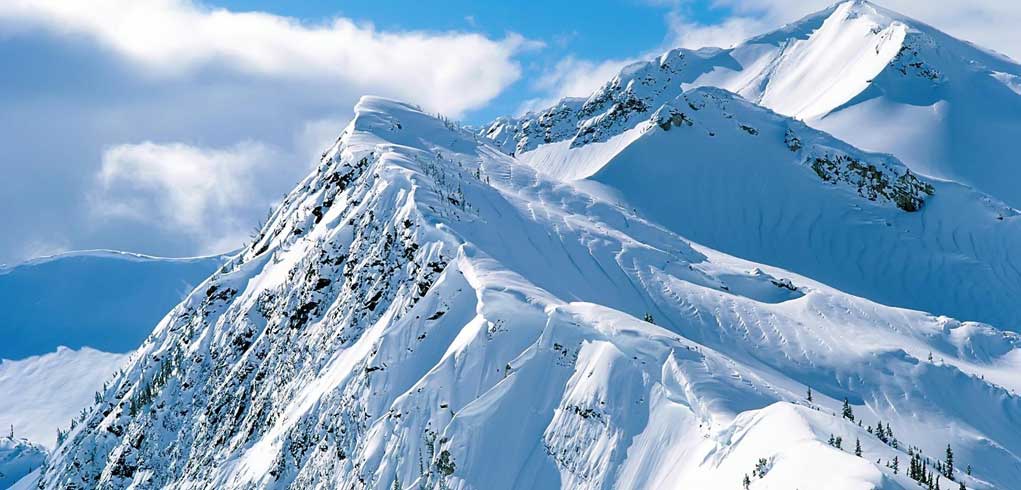
Gorichen Peak, standing at an elevation of approximately 22,500 feet (6,858 metres), is the highest peak in Arunachal Pradesh and a major landmark in the Eastern Himalayas. Located about 164 km from Tawang town, it remains snow-capped throughout the year, earning it the local nickname “The Giant White Elephant” due to its unmistakable bright white appearance. For the local Monpa tribe, the peak is deeply sacred; they refer to it as Sa-Nga Phu, which translates to the “Kingdom of the Deity,” and believe it protects the region from evil forces. While the summit is a formidable challenge reserved for seasoned mountaineers, regular tourists can enjoy magnificent views of the peak from the road between Bomdila and Tawang. The best time to catch clear views or trek in the surrounding foothills is during the pre-monsoon months of April to June or post-monsoon in September and October.
6. Urgelling Gompa
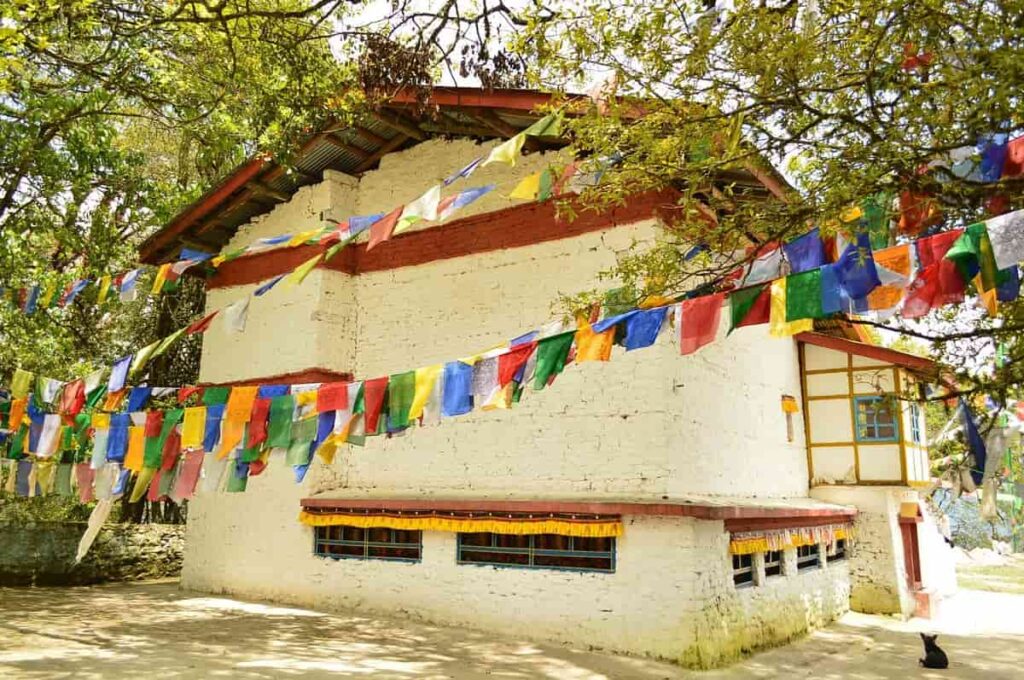
Urgelling Gompa, located about 3 to 5 kilometres from Tawang town, is a deeply sacred site renowned as the birthplace of the 6th Dalai Lama, Tsangyang Gyatso, in 1683. Established in the 15th century (around 1487 or 1489) by Urgen Sangpo, it is one of the oldest monasteries in the region—predating the famous Tawang Monastery by nearly 200 years. Though it is modest and smaller than its grander neighbour, it houses precious relics, including stone imprints of the 6th Dalai Lama’s foot and head, as well as a rare set of portraits of all 14 Dalai Lamas. A popular local legend tells of a holy oak tree standing at the entrance, which is said to have grown from a walking stick planted by the 6th Dalai Lama before he left for Tibet; he prophesied his return once its three trunks reached equal height, a sign many believe was fulfilled when the 14th Dalai Lama visited the site in 1959. Today, it remains a tranquil sanctuary of peace, offering a quieter, more intimate atmosphere for pilgrims and travelers seeking spiritual reflection.
7. Peng Teng Tso Lake
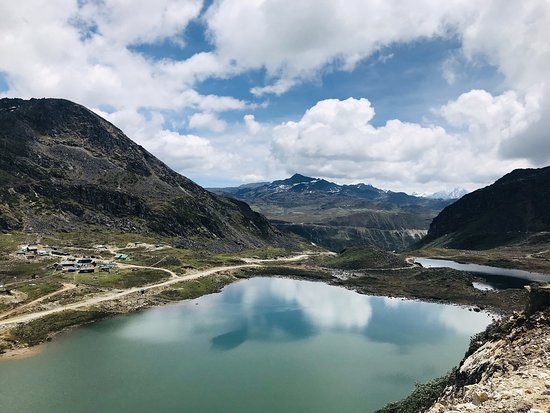
Peng Teng Tso Lake, widely known as P.T. Tso Lake or Pankang Teng Tso, is a breathtaking high-altitude glacial lake situated about 17–18 km from Tawang on the road to Bum La Pass. Located at an elevation of approximately 12,000 to 15,223 feet, the lake is renowned for its tranquil atmosphere and stunning natural beauty, with crystal-clear waters that reflect the surrounding snow-capped Himalayan peaks like a pristine mirror. The area offers two distinct seasonal experiences: in the winter, the lake and its surrounding fir forests are completely frozen and covered in a thick blanket of snow, while the summer months transform the landscape into a vibrant meadow carpeted with blue lapis flowers, yellow primulas, and radiant rhododendrons. For the local Monpa tribe, the lake holds deep spiritual significance; many believe it was formed by the footprint of a horse ridden by the 6th Dalai Lama, and it is considered a sacred site where benevolent spirits protect the region. Managed by the Indian Army due to its proximity to the border, the site features a well-maintained pathway for walking and small sheds where visitors can sit and soak in the silence of the Eastern Himalayas.
8. Jaswant Garh

Jaswant Garh is a revered war memorial located at an altitude of approximately 10,000 feet on the highway between Sela Pass and Tawang. It commemorates the extraordinary bravery of Rifleman Jaswant Singh Rawat of the 4th Garhwal Rifles, who single-handedly held off advancing Chinese forces for 72 hours during the 1962 Sino-Indian War. According to local legend, he was assisted by two local girls, Sela and Nura, and managed to kill over 300 enemy soldiers by moving between bunkers to create the illusion of a larger force. Today, the Indian Army treats him as a living hero; he has been posthumously promoted to the rank of Honorary Major General, and soldiers still maintain his room, polish his boots, and serve him regular meals as if he were still on duty. Visitors can explore the memorial’s temple-like structure, which houses his personal belongings and a bronze bust, and enjoy tea and snacks at the nearby army-run cafeteria while taking in the solemn atmosphere of the battlefield.
9. Taktsang Gompa
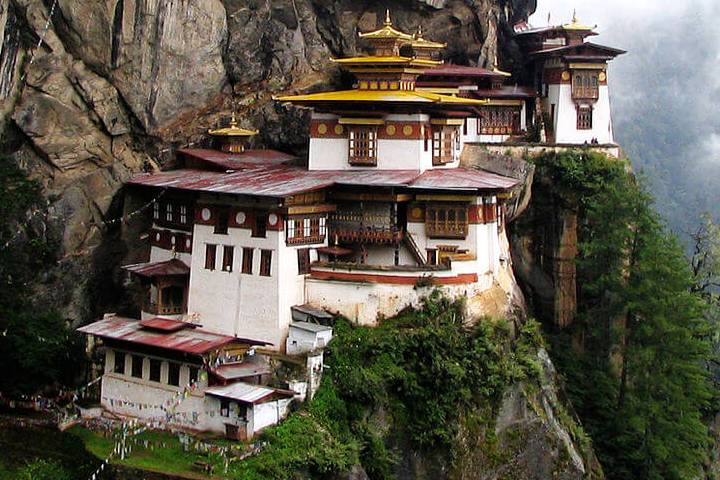
Taktsang Gompa, also known as the Tiger’s Den or T-Gompa, is a highly sacred Buddhist monastery perched on a steep cliff at an altitude of approximately 12,500 to 13,000 feet, about 45–50 km from Tawang. It is famously believed to be one of the sites where Guru Padmasambhava (also known as Guru Rinpoche), the legendary master who brought Buddhism to Tibet, meditated in a cave during the 8th century. The name “Taktsang” translates to “Tiger’s Lair” or “Tiger’s Abode,” originating from a legend that the Guru arrived at the cliffside flying on the back of a tigress to subdue local demons. The monastery consists of three tiers, each dedicated to a different Tibetan deity, and features a small cave where visitors can still see what are believed to be the footprints and hoof prints of the Guru and his horse imprinted on the rocky floor. Surrounded by dense coniferous forests and majestic snow-capped peaks, the Gompa offers an atmosphere of profound silence and spiritual energy. To reach this remote sanctuary, travelers typically drive to Sangetsar Lake (Madhuri Lake) and then undertake a short, steep trek of about 15 minutes to reach the monastery entrance.
10. Bumla Pass
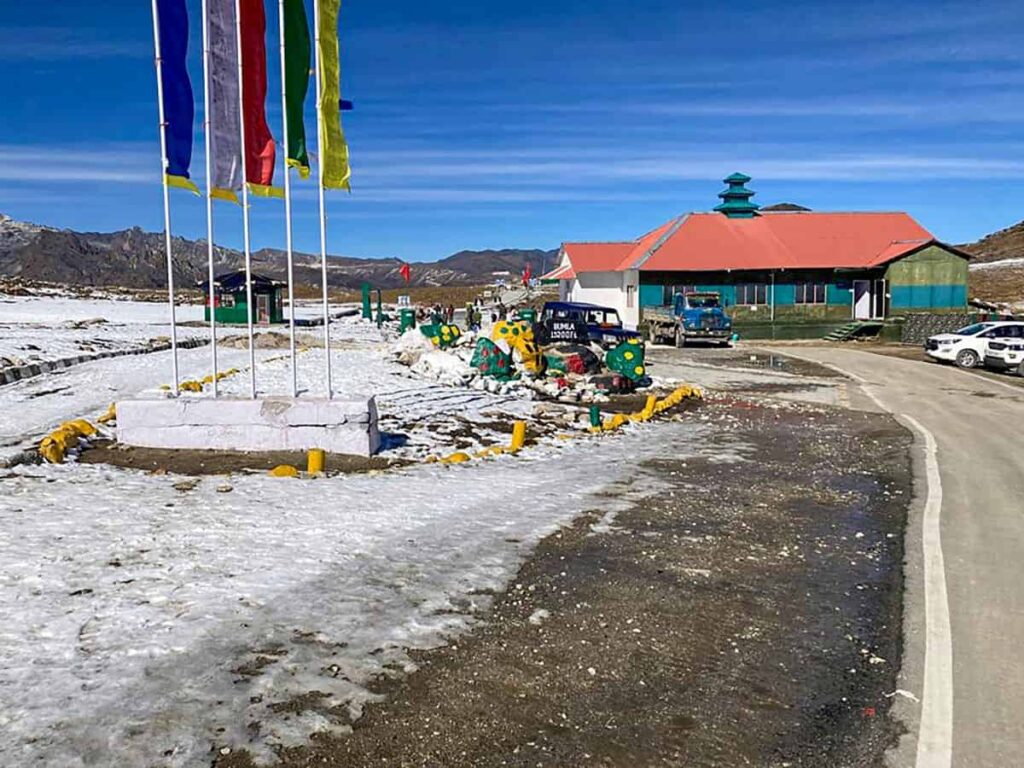
Bum La Pass is a high-altitude mountain pass located about 37 km from Tawang at a staggering elevation of 15,200 feet. It is famous for being the Indo-China border, where the Indian Army and the Chinese People’s Liberation Army stand face-to-face. Historically, this is the significant route used by the Dalai Lama to enter India in 1959 while fleeing Tibet. Today, it serves as one of the officially agreed-upon BPM (Border Personnel Meeting) points where soldiers from both sides meet for ceremonies and to maintain peace. Visiting the pass is a patriotic experience; you can see the “Hearth of Hope” monument, the “Heap of Stones” (where visitors place a pebble for good luck), and get a glimpse into Chinese territory through army binoculars. Because it is a sensitive military zone, the weather is extremely harsh with heavy snow and thin air, and all civilians must obtain a special permit from the Office of the Deputy Commissioner in Tawang, which must then be stamped by the Indian Army.
11. Geshila Peak

Geshila Peak, also known as Geshela Peak, is a prominent and sacred mountain situated approximately 25 km from Tawang. Standing as a towering landmark visible from throughout the Tawang township, it is revered by the local Monpa people as a “guardian angel” that protects the region from evil forces and natural disasters like earthquakes or landslides. It is common for community leaders and locals to trek to the summit to offer prayers and seek blessings for the well-being of the area. While not as high as the famous Gorichen Peak, Geshila is much more approachable for tourists and offers a magnificent 360-degree view of the entire Tawang district from its top. The route to the peak is exceptionally scenic, especially during spring when the slopes are covered in rhododendron forests and alpine meadows. Visitors often combine a trip here with a visit to the nearby Singsor Ani Gompa, a beautiful nunnery perched on the mountain’s ranges.
12. Nagula Lake
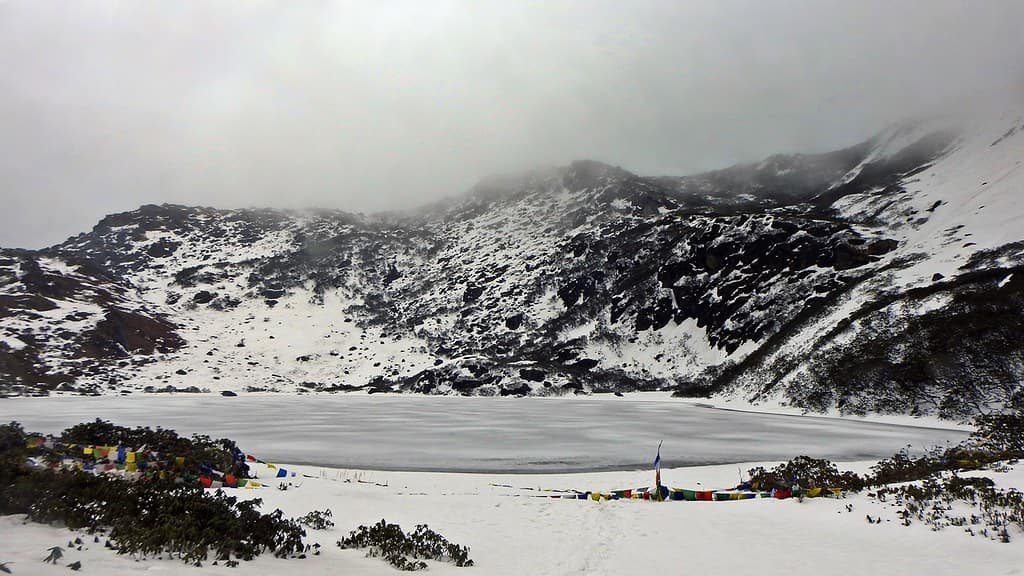
Nagula Lake, locally known as Gribtsang Tso, is a stunning high-altitude glacial lake situated at approximately 13,500 to 14,500 feet above sea level. It is located about 18–30 km from Tawang on the treacherous road leading to the Bum La Pass, making it a popular and scenic stopover for travelers. Known for its pristine, crystal-clear waters, the lake acts as a natural mirror, reflecting the surrounding snow-capped peaks and moving clouds with mesmerising clarity. While the lake remains partially or fully frozen for a significant part of the year, the summer months of April to May and the post-monsoon period in September and October offer the best views of its vibrant blue waters. The surrounding landscape is a haven for nature lovers, featuring lush meadows carpeted with yellow primulas and pink rhododendrons during the spring, and it is a common site to spot migratory Brahminy ducks swimming near its banks. Like many water bodies in the region, Nagula Lake is held in high spiritual regard by the local Monpa Buddhists and is considered a sacred site.
13. Tawang War Memorial
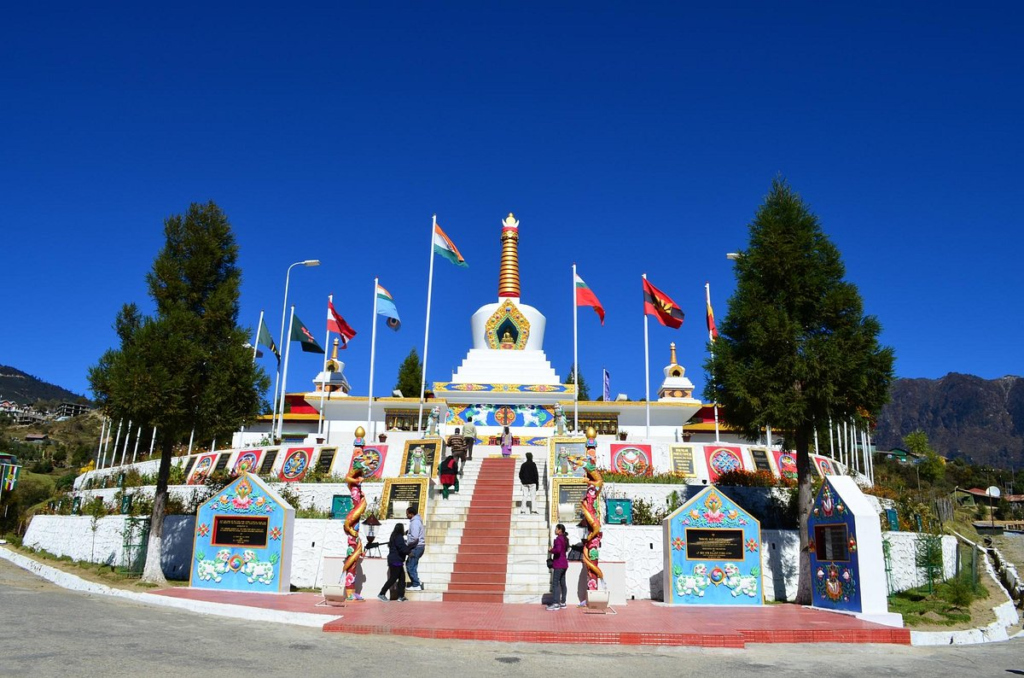
The Tawang War Memorial, also known as Namgyal Chorten, is a moving 40-foot-high stupa dedicated to the 2,420 Indian soldiers who sacrificed their lives during the 1962 Sino-Indian War. Located on a scenic hilltop overlooking the Tawang-Chu valley, its design blends traditional Buddhist architecture with military solemnity and was blessed by the 14th Dalai Lama. The names of the martyrs are etched in gold on 32 black granite plaques, serving as a permanent tribute to their courage. Visitors can explore two memorial halls: one acts as a museum housing personal artifacts, photographs, and weapons used in the war, while the other functions as an auditorium. A major highlight for tourists is the stirring evening light and sound show that narrates the heroic tales of the 1962 conflict, typically held around 5:00 PM or 6:30 PM depending on the season.
14. Giant Buddha Statue & Temple
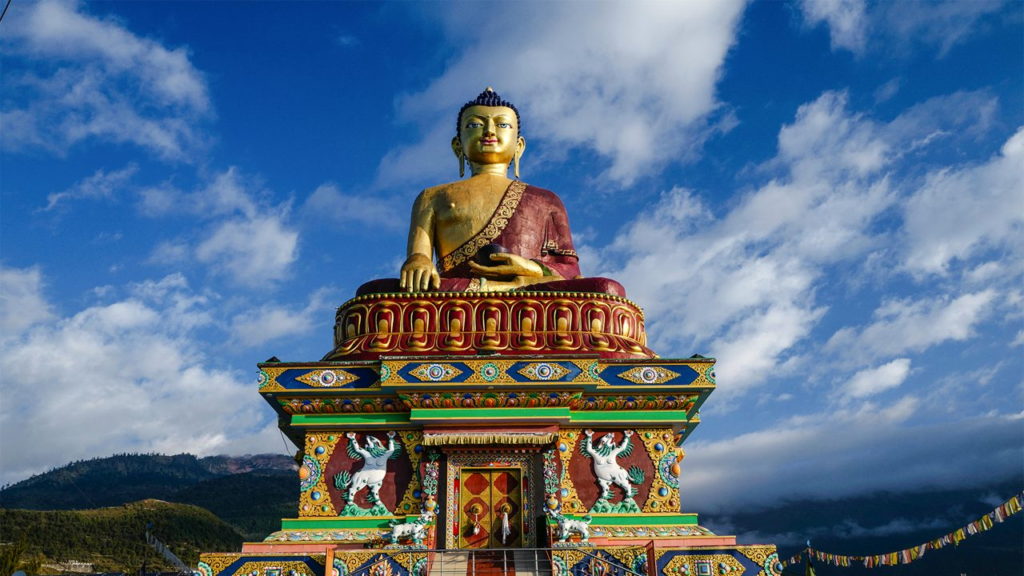
The Giant Buddha Statue (also known as the Shakyamuni Buddha Statue) is one of Tawang’s most iconic modern landmarks, situated on a peaceful hilltop overlooking the entire town. This majestic golden statue stands approximately 30 to 40 feet tall and depicts Lord Buddha in a seated meditative pose (Shakyamuni). Below the statue is a multi-level temple complex and prayer hall featuring vibrant Buddhist murals and traditional prayer wheels that visitors can spin for blessings. Because it is located at an elevation of 10,000 feet, the site offers breathtaking panoramic views of the Tawang Valley and the distant Tawang Monastery. It is a popular spot for both meditation and photography, especially during the early morning when the sunlight hits the gilded bronze, making it glow against the backdrop of snow-capped mountains.
15. khinmey-nyingma-monastery
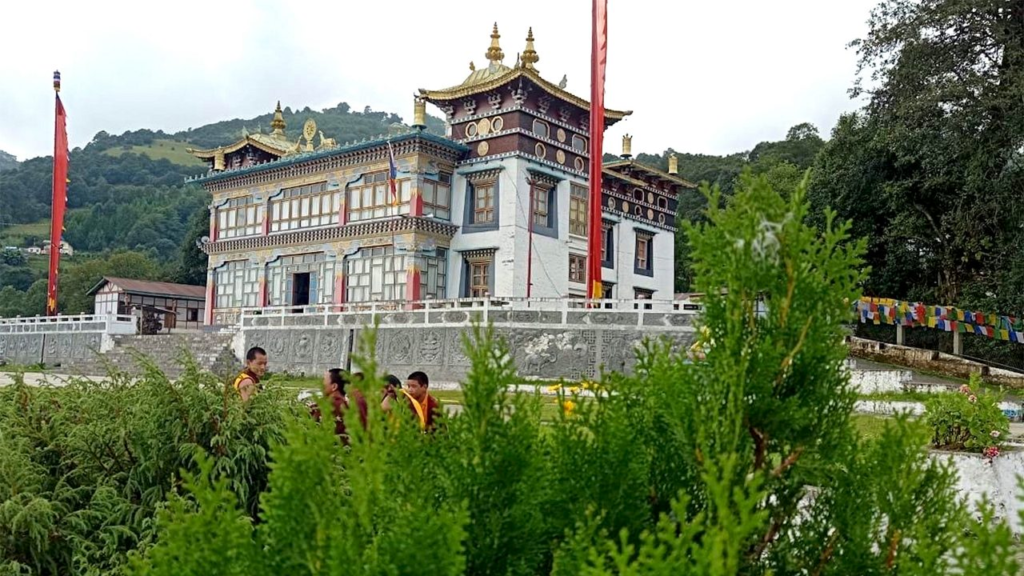
Khinmey Nyingma Monastery, also known as Sang-ngag-choekhorling, is a beautiful and culturally significant site located about 9 km from Tawang town in the quiet village of Khinmey. It is one of the oldest monasteries in the region, originally established in 1440 AD by Rev. Kundun Sange Yeshe, the first Thegtse Rinpoche. The name “Khinmey” is derived from the Monpa word Khi-Ket-Nyan-Mey, meaning “place for listening to the sound of barking dogs,” referring to a local legend where hunters followed their barking dogs into a thick forest only to encounter a meditating guru who eventually converted them to Buddhism. Unlike the larger Tawang Monastery which belongs to the Gelug school, this monastery belongs to the Nyingma tradition, the oldest school of Tibetan Buddhism. It is renowned for its vibrant architecture, featuring intricate murals, traditional wooden pillars, and a towering statue of Guru Padmasambhava (Guru Rinpoche). Visitors often find it to be a peaceful, less-crowded alternative to the main town’s sites, offering breathtaking views of the valley and mountains from its vantage point.