

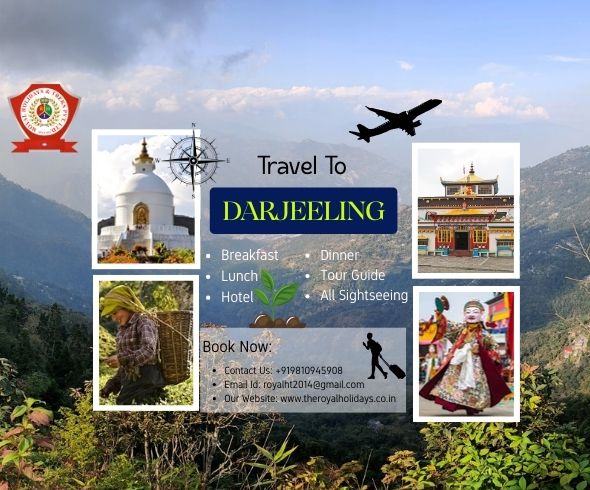
Darjeeling, famously known as the “Queen of the Hills,” is an exquisitely beautiful hill station nestled in the lower Himalayas of West Bengal at an average elevation of 6,700 feet. Today, Darjeeling is renowned globally for its lush green tea gardens, which produce a distinctively aromatic black tea that has been accorded ‘Geographical Indication’ (GI) status; it is also celebrated for its spectacular views of Mount Kanchenjunga, the world’s third-highest peak.
The town serves as a melting pot of diverse cultures, home to various communities such as the Gorkhas (Nepalis), Tibetans, Lepchas, and Bhutias. This diversity is vividly reflected in the region’s colorful festivals and varied culinary landscape, which features local specialties like momos and thukpa. A major attraction for tourists is the ‘Darjeeling Himalayan Railway’—a UNESCO World Heritage Site affectionately known as the “Toy Train.” Winding through mist-shrouded hills and tea gardens, this train offers a memorable journey imbued with a charming old-world allure. Other popular attractions include the sunrise viewpoint at Tiger Hill, the ‘Batasia Loop’ (considered a marvel of engineering), and the serene ‘Japanese Peace Pagoda.’ With its colonial-era architecture, renowned residential schools, and pleasant climate, Darjeeling remains a cherished destination for both nature enthusiasts and history buffs alike.
Darjeeling’s economy rests primarily on three pillars: tea, tourism, and education. The most celebrated component of its economy is its tea industry. Furthermore, Darjeeling serves as a significant educational hub, housing numerous renowned boarding schools that attract students and families from across the globe. Finally, local farmers here strengthen the economy by cultivating and selling oranges, ginger, and cardamom in the hill markets. Darjeeling is considered one of the safest places in India for families, solo travelers, and groups.
Most Famous And Attractive Tourist Places In Darjeeling :
1. Darjeeling Himalayan Railway
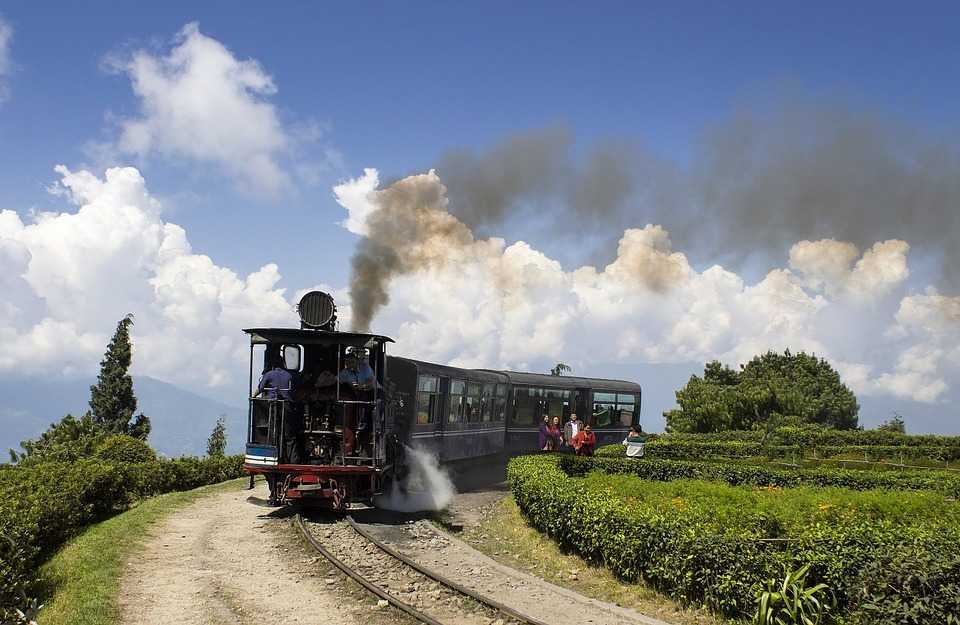
The Darjeeling Himalayan Railway (DHR), popularly known as the “Toy Train,” is a landmark of 19th-century engineering and a UNESCO World Heritage Site that has been operating since 1881. Stretching approximately 88 kilometres from the plains of New Jalpaiguri to the high-altitude town of Darjeeling, this 2-foot narrow-gauge railway was designed to overcome the steep gradients of the Eastern Himalayas. To navigate the difficult terrain without the need for expensive tunnels, engineers employed an ingenious system of loops—like the famous Batasia Loop—and zig-zags (reverses) where the train climbs by moving forward and backward. The journey passes through Ghum, which is India’s highest railway station at an elevation of 7,407 feet. Today, the railway is a major tourist attraction, offering “Joy Rides” pulled by vintage British-built steam locomotives that provide travellers with slow, scenic views of lush tea gardens, mountain forests, and the towering Kanchenjunga range.
2. Tiger Hill
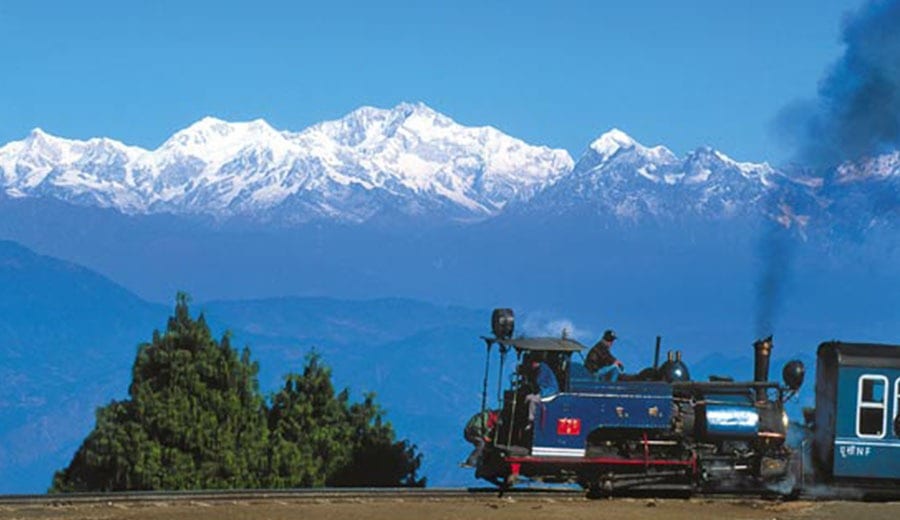
Tiger Hill, standing at an elevation of approximately 2,590 metres (8,500 feet), is internationally acclaimed as the ultimate sunrise viewpoint in Darjeeling. Located about 11 kilometres from the main town, it serves as the highest point in the region and offers a spectacular 360-degree panorama of the Eastern Himalayas. The primary attraction is the pre-dawn ritual where thousands of tourists gather to witness the first rays of the sun illuminating the snow-clad peaks of Mount Kanchenjunga, turning them from a pale grey to a brilliant golden hue. On exceptionally clear days, the world’s highest peak, Mount Everest, is also visible in the far distance, appearing slightly smaller than Kanchenjunga due to the Earth’s curvature. Managed by the Gorkhaland Territorial Administration, the area is part of the Senchal Wildlife Sanctuary, providing visitors with lush green surroundings and crisp mountain air. Beyond its natural beauty, Tiger Hill holds historical significance from the British colonial era, when it served as a strategic observation post.
3. Batasia Loop
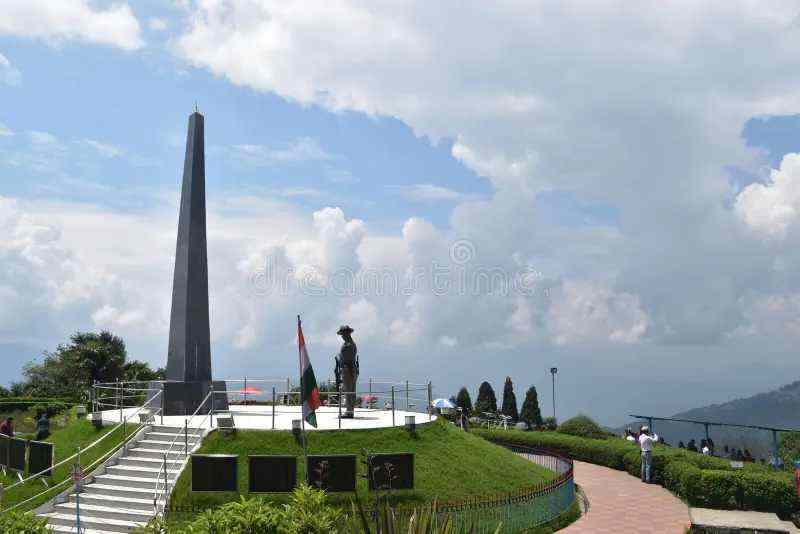
Batasia Loop is a spectacular railway engineering marvel located about 5 kilometres from Darjeeling, designed to help the Toy Train navigate a steep 140-foot drop in elevation. Created in 1919, the track wraps around itself in a giant spiral, allowing the train to descend gracefully through the lush greenery of the Himalayan foothills. At the centre of this loop lies a beautifully manicured garden and the Gorkha War Memorial, which was built in 1995 to honour the brave soldiers from the region who sacrificed their lives in various wars since Indian Independence. The site is famous for offering a breathtaking 360-degree panoramic view of Darjeeling town perched on the hillside, with the majestic, snow-capped peaks of Mount Kanchenjunga serving as a constant backdrop. Visitors often flock here to photograph the vintage steam engine as it whistles through the garden, making it one of the most iconic and photographed spots in all of Northeast India.
4. Darjeeling Ropeway
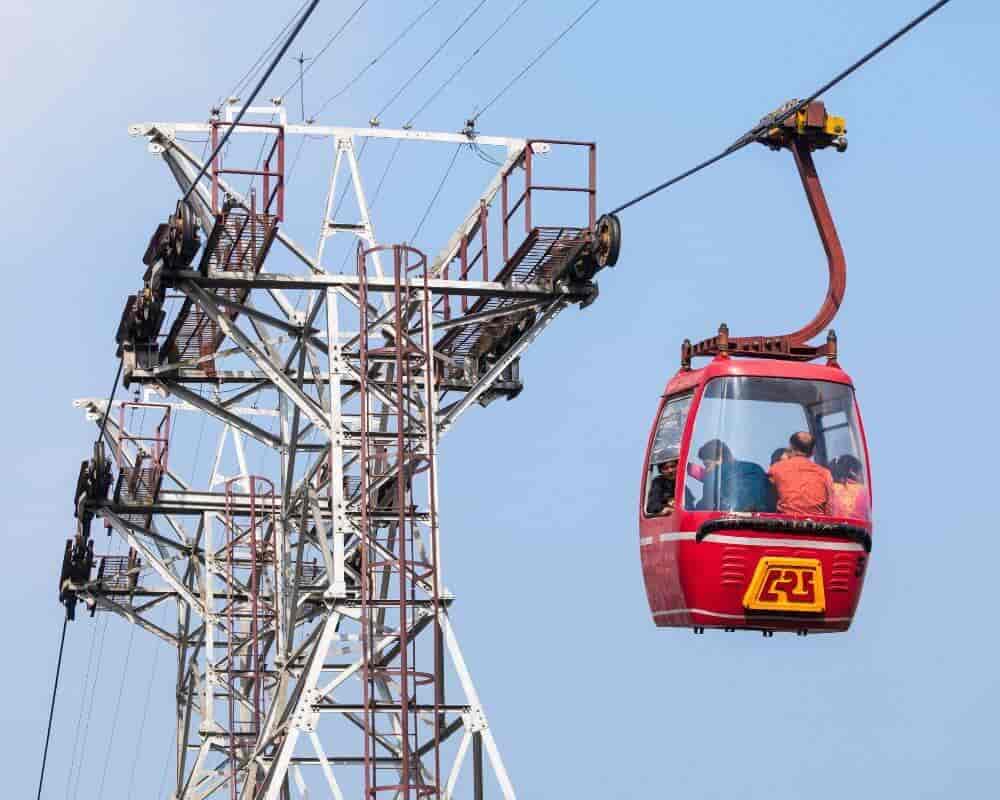
The Darjeeling Ropeway, also known as the Rangeet Valley Passenger Cable Car, is one of the oldest and most scenic cable car systems in Asia, having first started in 1968. The ride begins at Singamari, located about 3 km from Darjeeling town at an altitude of approximately 7,000 feet, and descends roughly 1,738 feet to the Tukvar station. As it glides slowly over the steep hillsides, the ropeway provides a breathtaking bird’s-eye view of lush, emerald-green tea gardens like Happy Valley Tea Estate, cascading waterfalls, and the flowing Little Rangeet River in the valley below. On clear days, passengers are treated to a magnificent panoramic view of the Mount Kanchenjunga range dominating the horizon. The entire round trip spans about 5 kilometres and takes approximately 45 minutes, offering a tranquil and unique perspective of the Eastern Himalayas that is widely considered a must-do activity for nature lovers and photographers visiting the “Queen of Hills.”
5. Darjeeling Rock Garden
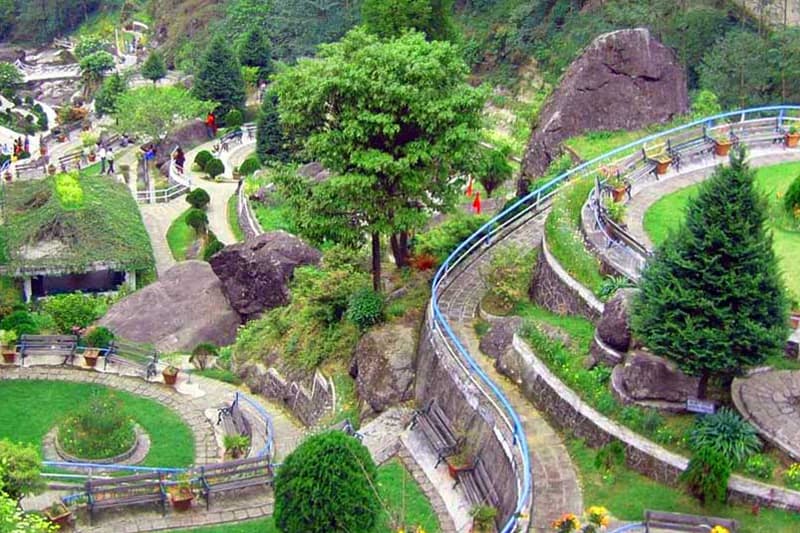
The Darjeeling Rock Garden, also known as the Barbotey Rock Garden, is a stunning man-made park situated about 10 kilometres from the main town, designed to showcase how rugged mountain terrain can be transformed into a lush sanctuary. Carved directly out of solid rock, the garden features multi-level terraces connected by winding paths and stairs, all adorned with a wide variety of seasonal flowers and local plants. The centrepiece of the garden is a beautiful natural waterfall that cascades over the rocky cliffs into a clear pool below, providing a serene soundtrack for visitors. Built by the Gorkhaland Territorial Administration to promote tourism after the political unrest of the 1980s, it offers a peaceful retreat away from the town’s hustle. Further down the road lies its companion, the Ganga Maya Park, which features a meandering stream, boating facilities, and traditional Gorkha folk dance performances, making the entire valley a popular spot for nature lovers and families.
6. Singalila National Park
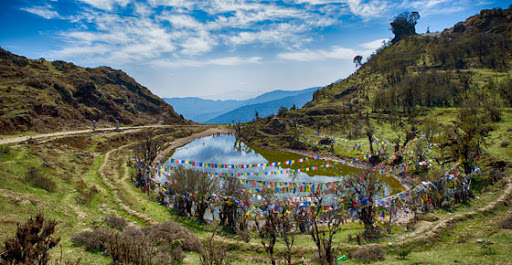
Singalila National Park, situated at an elevation of more than 7,000 feet along the Singalila Ridge, is the highest national park in West Bengal and a premier destination for both wildlife enthusiasts and trekkers. Covering an area of about 78.6 square kilometres, the park is world-renowned as one of the few remaining natural habitats for the endangered Red Panda, often called the “crown jewel” of the region. It is also home to other rare species like the Himalayan black bear, clouded leopard, and over 300 species of birds, including the exotic Satyr Tragopan and Blood Pheasant. The park’s landscape is a vibrant mix of thick bamboo, oak, and rhododendron forests, which erupt in a riot of red and pink blooms during the spring (March–May), while autumn (October–November) offers clear, azure skies and the largest concentration of wild orchids in the world. Most famously, the park hosts the trek route to Sandakphu and Phalut, the highest peaks in West Bengal, from which visitors can witness the “Sleeping Buddha” formation and a breathtaking panoramic view of four of the world’s five highest mountains: Everest, Kanchenjunga, Lhotse, and Makalu.
7. Nightingale Park
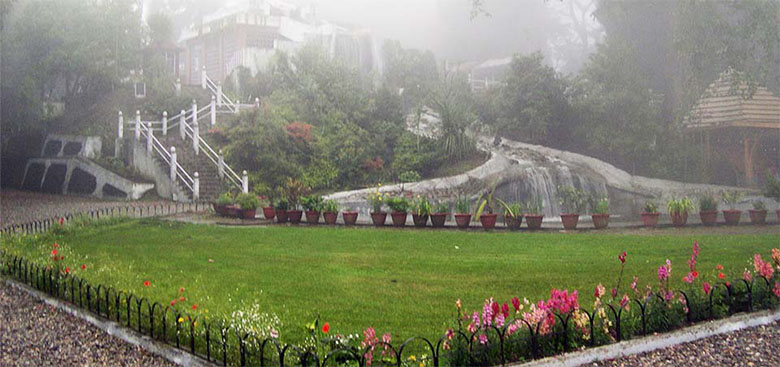
Nightingale Park, also known as Shrubbery Nightingale Park, is a beautiful public space located about a 10-minute walk from Chowrasta Mall, offering some of the most spectacular views of Mount Kanchenjunga. Originally the private courtyard of Sir Thomas Tartan’s bungalow during the British era, the park was destroyed by an earthquake in 1934 and was later redesigned and opened to the public. It features an oval-shaped landscape with manicured gardens, pebble-covered walkways, and a giant statue of Lord Shiva with an associated temple and a small artificial waterfall. A major highlight of the park is its large circular open-air stage, where local Gorkha cultural programs and traditional dances are performed daily during the peak tourist season (usually starting around 4:00 PM). The park is also equipped with a musical fountain and plenty of shaded benches, making it an ideal spot for visitors to relax and enjoy the serene Himalayan atmosphere as the sun sets over the valley.
8. Sandakphu Trek
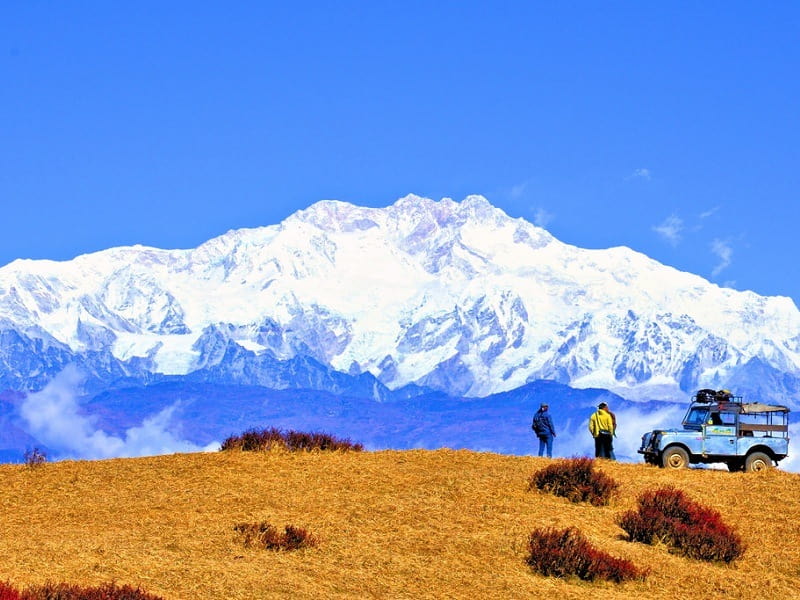
The Sandakphu Trek is the most popular high-altitude trek in West Bengal, leading to the state’s highest point at 11,930 feet (3,636 metres) on the Singalila Ridge. Often described as a “Trek Alongside the 5 Highest Summits,” it offers the rare opportunity to see four of the world’s five tallest peaks in a single panorama: Mount Everest, Lhotse, Makalu, and Kanchenjunga. The Kanchenjunga range is famously viewed from here as the “Sleeping Buddha” due to its unique silhouette. Starting typically from Manebhanjan or Sepi, the 50–65 km trail meanders through Singalila National Park, crossing the blurred Indo-Nepal border multiple times. Trekkers pass through vibrant rhododendron and magnolia forests in spring and crystal-clear, snow-capped vistas in autumn. Unlike many remote Himalayan treks, Sandakphu is unique for its tea-house culture, where hikers can stay in cozy local lodges and experience the warm hospitality and food of the Sherpa and Buddhist communities.
9. River Rafting in Teesta

River rafting on the Teesta River is the most exciting adventure activity for people visiting Darjeeling and Kalimpong. The river is famous for its bright green-blue water and thrilling “rapids” (parts of the river where the water moves very fast over rocks). For beginners and tourists, the most popular stretch is from Melli to Tarkhola, which has Grade 1 and 2 rapids—these are safe, fun, and perfect for families or first-timers. As you paddle through the water, you get a beautiful view of the surrounding dense forests and white sandy beaches along the riverbanks. Every rafting trip is led by a trained guide who provides life jackets and helmets, ensuring everyone stays safe while enjoying the splashes. It is best to go between March and May or October and November when the weather is pleasant and the water level is just right.
10. Padmaja Naidu Himalayan Zoological Park
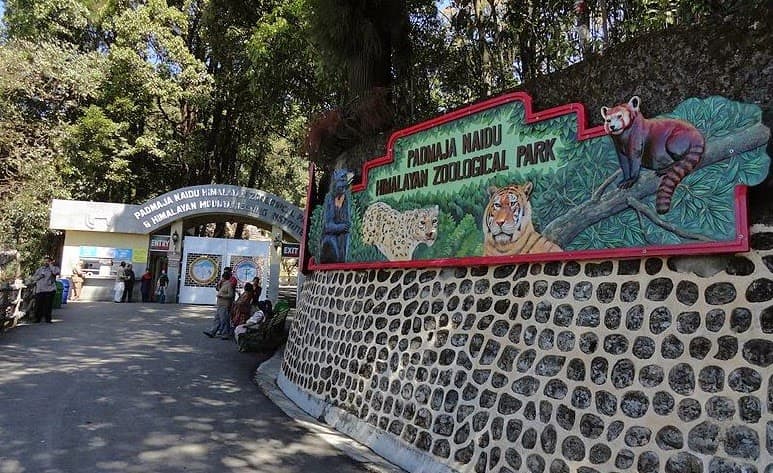
The Padmaja Naidu Himalayan Zoological Park, also known as the Darjeeling Zoo, is a world-class high-altitude zoo and the largest of its kind in India, situated at an elevation of about 7,000 feet. Established in 1958, it has gained international recognition for its highly successful conservation breeding programs for endangered Himalayan species, most notably the Red Panda and the Snow Leopard. Unlike traditional zoos, the enclosures here are designed to mimic the natural rocky and forested habitats of the Eastern Himalayas, housing rare animals like the Tibetan Wolf, Himalayan Black Bear, and Clouded Leopard. The park is named after Padmaja Naidu, the former Governor of West Bengal and daughter of Sarojini Naidu. Located within the same complex as the Himalayan Mountaineering Institute (HMI), it serves as a major centre for wildlife research and education, making it a must-visit destination for families and nature lovers.
11. Tinchuley
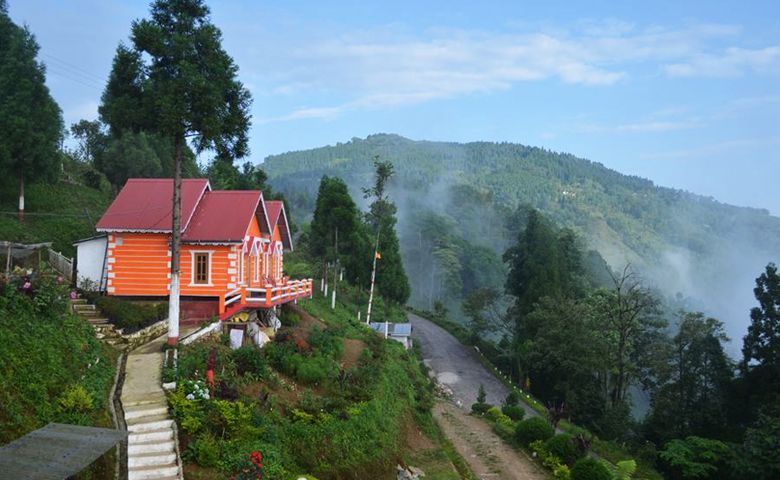
Tinchuley is a serene, offbeat mountain village located about 32 kilometres from Darjeeling at an altitude of approximately 5,800 feet. The name “Tinchuley” translates to “Three Ovens” (Tin Chullahs), referring to the three prominent hilltops surrounding the hamlet that resemble traditional mud ovens from a distance. Known for its tranquil environment and eco-tourism initiatives supported by the World Wildlife Fund (WWF), the village has transformed into a model organic destination famous for its orange orchards, lush pine forests, and magnificent views of the Mount Kanchenjunga range. Key attractions include the Tinchuley Sunrise Point, which offers sweeping vistas of the Teesta Valley and the Eastern Himalayas, and the peaceful Tinchuley Monastery. Visitors can also explore nearby sights like the Gumbadara Viewpoint, famous for its rock caves and tea garden views, or take nature walks through the virgin alpine forests that are a haven for birdwatchers. The best time to visit for clear mountain views is from October to April.
12. Happy Valley Tea Estate
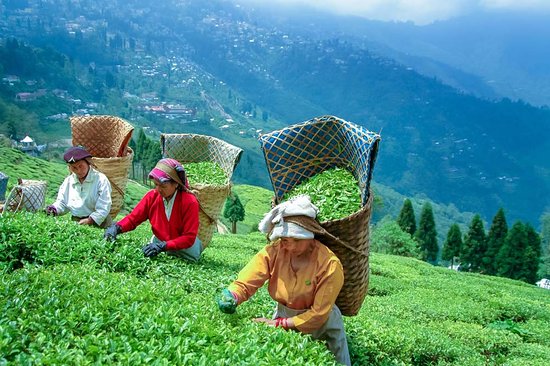
Happy Valley Tea Estate, established in 1854, is the second-oldest tea garden in Darjeeling and one of the highest in the world, sitting at an elevation of 2,100 metres (6,800 feet). Located just 3 kilometres north of the main town, it is the most accessible estate for tourists and offers a fascinating look into the production of the world-famous “Champagne of Teas”. The estate spans over 177 hectares and is home to tea bushes that are between 80 and 150 years old. Visitors can take guided tours through the factory to witness the traditional orthodox processing of tea leaves—including withering, rolling, fermenting, and drying—while learning about the various flushes produced throughout the year. As a fully organic garden, Happy Valley is renowned for its premium quality teas, such as the “Super Fine Tippy Golden Flowery Orange Pekoe,” which are exported to luxury retailers like Harrods in London.
13. Darjeeling Observatory Hill
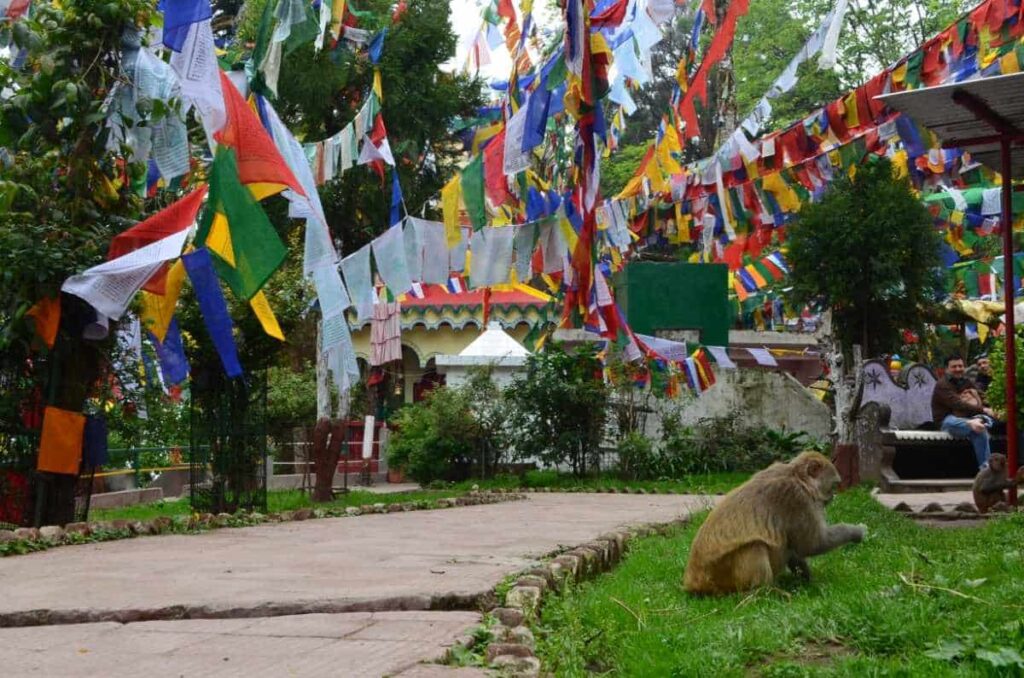
Observatory Hill is a sacred hilltop located just above Chowrasta Mall in Darjeeling, serving as a unique meeting point for both Hindu and Buddhist faiths. It is the site of the ancient Mahakal Temple, which is dedicated to Lord Shiva and sits where the original Dorje Ling Buddhist monastery once stood before it was destroyed in the 19th century. Today, the summit is a vibrant space filled with hundreds of colorful prayer flags fluttering in the breeze and the constant ringing of temple bells. Devotees and tourists climb the steep, winding path through a canopy of trees to reach the top, which offers a serene environment and stunning 360-degree views of the town and the snow-capped Kanchenjunga peaks. The hill is also home to a small cave sacred to worshippers and is famous for its large population of monkeys, which visitors are advised to watch carefully.
14. Trekking in Darjeeling
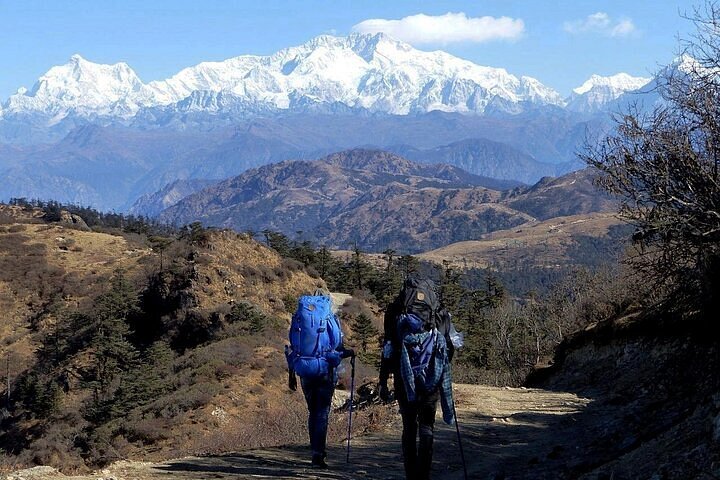
Trekking in Darjeeling is a world-class experience that offers some of the most spectacular high-altitude vistas in the Eastern Himalayas. The most famous route is the Sandakphu-Phalut trek, which traverses the Singalila Ridge and provides a rare panoramic view of four of the world’s five highest peaks: Everest, Kanchenjunga, Lhotse, and Makalu. Beyond the high ridges, Darjeeling offers various shorter and moderate trails, such as the trek to Tonglu or the scenic forest paths around Tinchuley and Takdah, which are perfect for those seeking shorter nature walks through rhododendron and oak forests. Many of these treks are “tea-house treks,” meaning hikers can stay in cozy local homestays and mountain lodges rather than camping, allowing for a deep immersion into the local Sherpa and Gorkha cultures. The best trekking seasons are spring (March to May) for blooming magnolias and rhododendrons, and autumn (October to November) for the clearest, crispest mountain views after the monsoon rains.
15. Lamahatta Eco Park
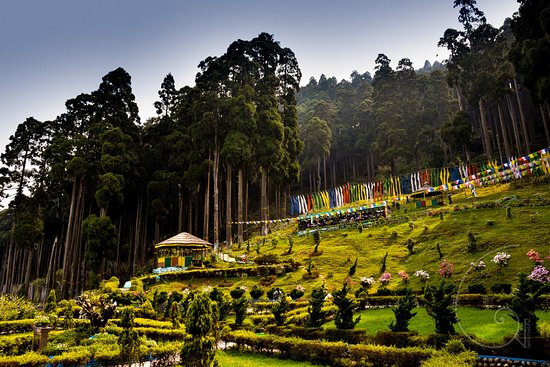
Lamahatta Eco Park is a serene mountain retreat located in the Darjeeling district of West Bengal, approximately 23 km from Darjeeling town. Situated at an altitude of about 5,700 to 6,800 feet, the park was developed in late 2012 as an eco-tourism destination to showcase the region’s natural beauty and provide sustainable livelihoods for the local tribal communities. The name “Lamahatta” translates to “Monk’s Hermitage,” reflecting the area’s spiritual history and peaceful atmosphere, which is further enhanced by thousands of colorful Buddhist prayer flags fluttering amidst the dense forests of pine and Dhupi trees.
Visitors to the park can explore the beautifully manicured “Roadside Garden,” which features vibrant seasonal flowers, rare orchids, and wooden gazebos that offer panoramic views of the Kanchenjunga range and the Teesta River. For those seeking adventure, a popular 1 km uphill trek through a shaded pine forest leads to “Jore Pokhari,” two small sacred ponds that are highly revered by the locals. The park also includes a watchtower for unobstructed mountain vistas and is a hub for nature photography and bird watching. Open daily from 6:00 AM to 6:00 PM, the park charges a nominal entry fee of around ₹15 to ₹20 and is best visited between October and May for the clearest views and blooming flora.