

South Korea, officially known as the ‘Republic of Korea,’ is a vibrant nation in East Asia. Situated in the southern part of the Korean Peninsula, it shares a border with North Korea, separated by a heavily fortified ‘Demilitarized Zone’ (DMZ). The country has undergone a remarkable transformation, famously dubbed the “Miracle on the Han River.” Evolving from an agrarian society devastated by war in the 1950s, it has emerged today as a high-income, technologically advanced global power and a leading democracy in Asia. Approximately half of the country’s total population of 51 million resides within its borders. Globally renowned for the “Korean Wave” (Hallyu), South Korea’s cultural exports—spanning music, cinema, and television—have reached unprecedented levels of influence; meanwhile, its economy is anchored by industrial giants such as Samsung, Hyundai, and LG. Despite its prosperity, the nation currently faces several significant challenges, including the world’s lowest fertility rate and an aging population; concurrently, it continues to drive global innovation in the fields of semiconductors, robotics, and green technology.
South Korea operates a highly developed, export-oriented mixed economy that, having risen from the ashes of war, has grown to become the world’s 14th-largest economy by 2026. This economy is primarily powered by its manufacturing prowess—particularly in high-tech sectors such as semiconductors—which alone contribute over 15% to the GDP and have recently experienced a significant “super-cycle” (boom period) driven by the surging global demand for AI infrastructure. As of early 2026, the country’s GDP growth rate had accelerated to 1.7% in the first quarter. This marked the fastest growth in approximately six years, driven by record-breaking chip exports and robust investments in infrastructure.
South Korea is consistently ranked as one of the safest places in the world; the country boasts an exceptionally low crime rate. In local cafes, it is a common sight to see patrons leaving their personal belongings—such as laptops or wallets—unattended without fear, as they have no apprehension of theft. Public spaces are well-lit and monitored by an extensive CCTV network, making it safe for solo travelers—including women—to walk alone, even late at night.
Most Famous And Attractive Tourist Places In South Korea :
1. Ggotji Beach

Ggotji Beach is one of the most famous and scenic beaches in South Korea, located on Anmyeondo Island in Taean. It is best known for its two massive rock formations that stand at the edge of the sea, called the Halmi and Harabi Rocks (Grandmother and Grandfather Rocks). According to a famous local legend, these rocks are a wife and husband who were turned to stone while waiting for each other. The beach is a paradise for photographers because of its stunning sunsets, where the sun drops perfectly between the two rocks, painting the sky in deep oranges and purples. It is a peaceful place where the wide sandy shore and the sound of the West Sea waves create a perfect getaway from the busy city.
2. Darangee Village
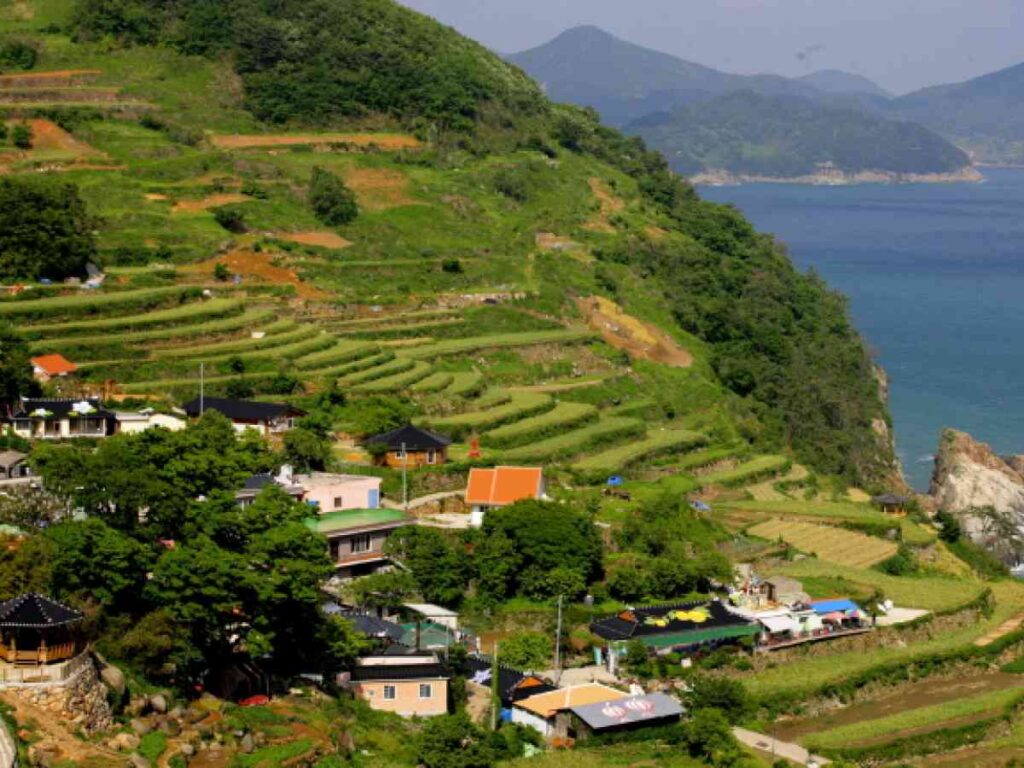
Darangee Village (officially Gacheon Daraengi Village) is a tranquil agricultural community nestled on a steep coastal cliff on Namhae Island, South Korea. It is internationally renowned for its 108 steps of terraced rice paddies that descend dramatically toward the West Sea. Because the terrain is too steep for modern machinery, farmers here still use traditional methods, including cattle-led plowing, to cultivate crops like rice, garlic, and spinach. The village is famous for its “picturesque neglect,” where colourful hand-painted murals on cottage roofs contrast with the lush green fields and deep blue ocean, creating a scene often compared to the terraced hills of Southeast Asia.
3. Gwang-An Bridge
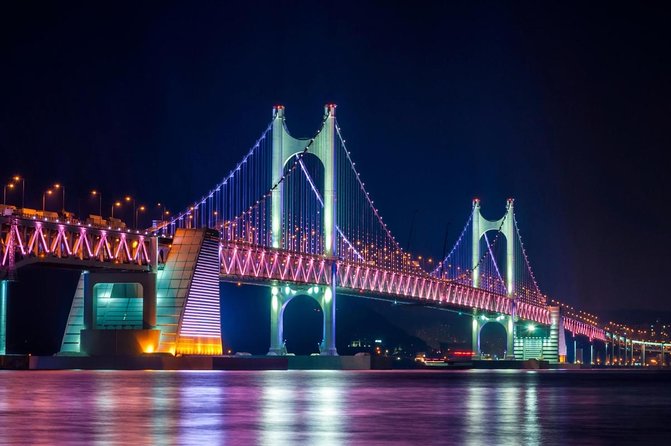
The Gwang-An Bridge (also known as the Diamond Bridge) is a stunning 7.42-kilometre suspension bridge that serves as a modern landmark of Busan, South Korea. Completed in 2002, it is the second-longest bridge in the country and is unique for its bi-level (double-deck) design, which carries traffic across two levels over the ocean. While it is a vital part of the city’s infrastructure connecting Haeundae to Suyeong, it is world-famous for its aesthetic beauty; by day, it offers panoramic views of Oryukdo Island and the Busan coastline, and by night, it transforms into a glowing masterpiece illuminated by over 13,000 LED lights.
4. Kyeong-Wha Station Jinhae
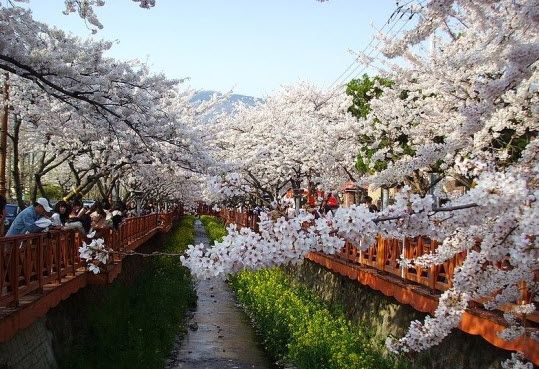
Kyeong-Wha Station is a small, picturesque railway station in Jinhae, South Korea, that has become world-famous as one of the most beautiful spots to celebrate spring. Although the station officially ceased passenger service in 2006, it remains an iconic landmark within the Jinhae Gunhangje Festival, the country’s largest cherry blossom celebration. The station features an 800-metre long stretch of railway tracks lined with hundreds of ancient Yewon cherry trees. When they reach full bloom, they create a stunning “cherry blossom tunnel,” where petals fall like pink snow onto the tracks. A retired train remains permanently parked on the tracks, providing a nostalgic and romantic backdrop for the millions of visitors who come to capture the perfect spring photograph.
5. Upo Marsh
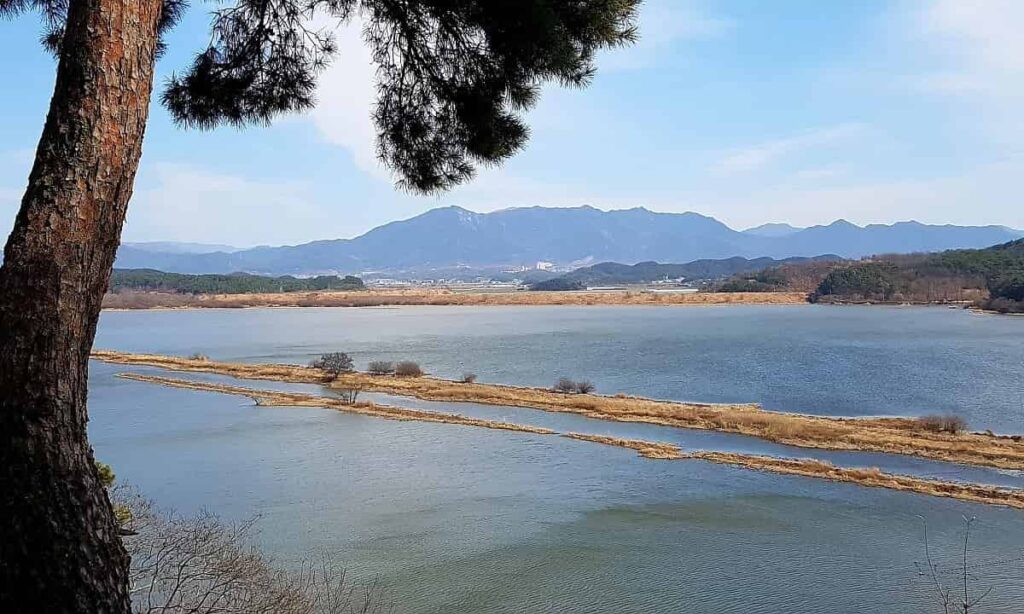
At 2,314 kilometers squared, Upo Marsh is the largest inland wetland in Korea and three times the size of Yeouido. Formed over 140 million years ago, the marsh is home to 1,500 plants and animals, some of which are endangered species. Visitors can bike or walk around this beautiful natural swamp, where migratory birds are known for flying low.
6. Jeungdo Salt Farm
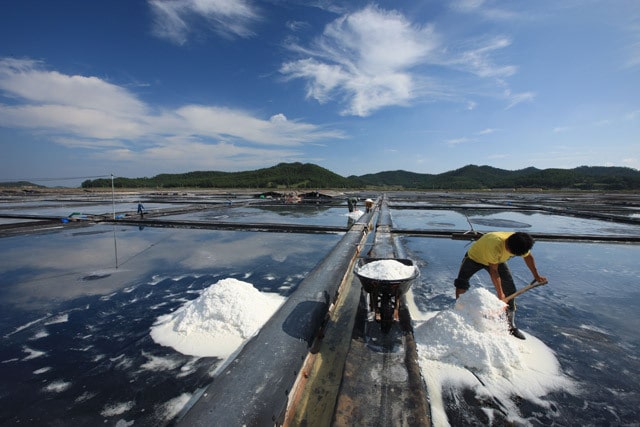
Jeungdo Salt Farm, located on the “slow city” island of Jeungdo in Sinan-gun, is home to the Taepyeong Salt Farm, the largest single sun-dried salt producer in South Korea. Established in 1953 to help refugees after the Korean War, this massive coastal wetland is a fascinating site where sea water is naturally evaporated in huge, shallow tiled squares to create high-quality, mineral-rich sea salt. The farm is famous for its vast, mirror-like salt ponds that reflect the sky and the iconic wooden salt storage sheds that line the horizon. Designated as a UNESCO Biosphere Reserve and a National Cultural Heritage site, it offers a peaceful, educational look at a traditional industry that still operates in harmony with nature today.
7. Gongryong Ridge, Seorak Mountain
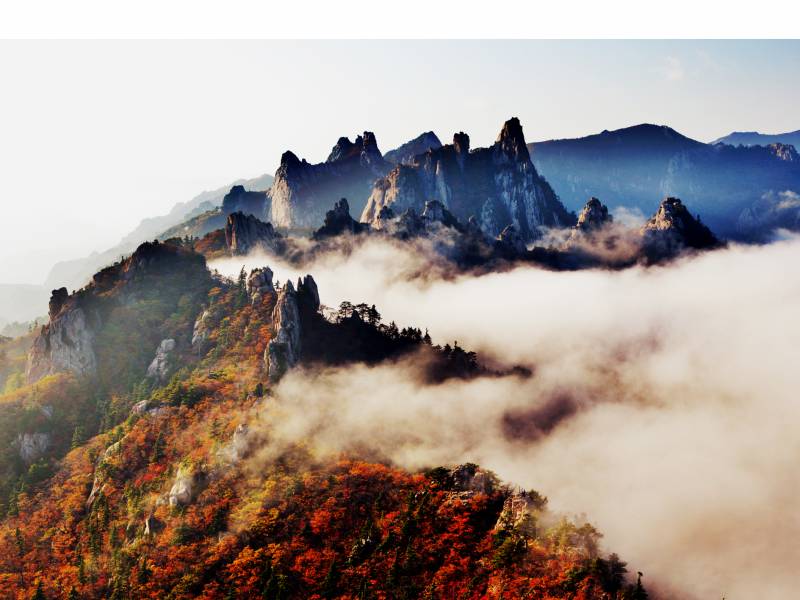
Gongryong Ridge (Dinosaur Ridge) is the most iconic and rugged mountain path in Seoraksan National Park, South Korea. It earned its name because its sharp, jagged rocky peaks resemble the bumpy spine of a dinosaur. This 5-kilometre stretch is widely considered the most difficult and dangerous hiking course in the country, but it is also the most rewarding due to its spectacular scenery. As you navigate the steep climbs and descents, you are surrounded by dramatic “stone forests” and towering granite cliffs that often peek through a sea of swirling clouds. It is the ultimate challenge for hikers, offering a 360-degree panoramic view that captures the raw, prehistoric beauty of the Seorak mountain range.
8. Uleung Island Seaside Road

The Ulleungdo Seaside Road, or the coastal ring road, is a spectacular route that encricles approximately 90% of South Korea’s “Mysterious Island,” following the dramatic volcanic coastline. This two-lane paved road spans about 44.2 km and is renowned for its narrow, winding path squeezed between towering rocky bluffs and the emerald waters of the East Sea. Along this journey, travelers pass through numerous tunnels and cross unique bridges that provide access to the island’s most iconic geological landmarks, including Candlestick Rock (Chotdaebawi), Elephant Rock (Gongam), and Turtle Rock (Geobuk Bawi). The road serves as the primary artery connecting the main port towns of Dodong and Jeodong to the more remote northern areas like the Nari Basin and Gwaneumdo Island, which is linked to the main road via a massive pedestrian suspension bridge. Visitors can explore this scenic route by renting cars—though an international driving permit is required—or by using the local bus system that circumambulates the island.
9. Seopjikoji, Jeju Island

Seopjikoji is a stunning coastal promontory located on the eastern tip of Jeju Island, renowned for its unique volcanic scenery and cultural significance as a filming location for popular Korean dramas like All In. The name “Seopji” is an old name for the area, while “Koji” is the Jeju dialect for a cape or sudden bump of land. Unlike other coasts on the island, Seopjikoji is composed of red volcanic ash called scoria, which creates a striking crimson contrast against the azure ocean and green meadows where native Jeju ponies graze freely. A well-paved coastal trail leads visitors past iconic landmarks such as Seonbawi Rock—a vertical sea stack that, according to local legend, is a dragon prince turned to stone—and the historic Hyeopja Beacon Fire Station. The path culminates at the Bangdupo Lighthouse atop the Bulgeunoreum Volcanic Cone, offering panoramic views that include the UNESCO World Heritage site Seongsan Ilchulbong (Sunrise Peak) rising across the bay. The cape is especially famous in April when vibrant yellow canola flowers blanket the hills, making it one of the most picturesque spots on the island.
10. Bomun Pavilion, Gyeongju
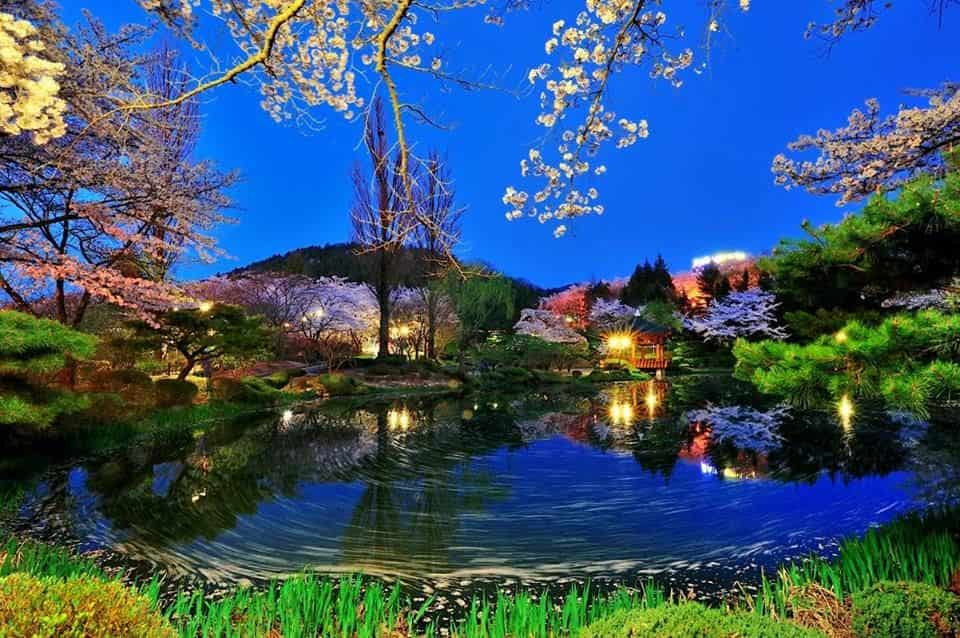
Bomunjeong Pavilion (also known as Bomun Pavilion) is a breathtaking octagonal structure tucked away in the Bomun Tourist Complex in Gyeongju, famously recognized by CNN as one of the “50 Beautiful Places to Visit in South Korea.” Nestled beside two serene ponds, the pavilion is a masterpiece of traditional Korean architecture that provides a tranquil retreat for photography enthusiasts and nature lovers alike. It is most iconic in spring (early April), when it is surrounded by delicate cherry blossoms—including rare, graceful weeping cherry trees—that create stunning reflections on the water’s surface. The landscape shifts dramatically with the seasons, featuring lush lotus flowers in summer, vibrant crimson and gold maple leaves in autumn, and a peaceful blanket of white snow in winter. Unlike the more bustling areas of the lake resort, this pavilion offers a “hidden landmark” atmosphere where visitors can enjoy the quiet beauty of Silla’s heritage harmonized with nature.
11. Udo

Just 15 minutes away from Jeju Island, Udo is another addition to Jeju’s bucket list. Visitors can hike on Olle Road, or opt for a scooter ride along the shore, a submarine excursion or sea fishing. Just don’t forget the sunblock.
12. Haeinsa Temple, Hapcheon
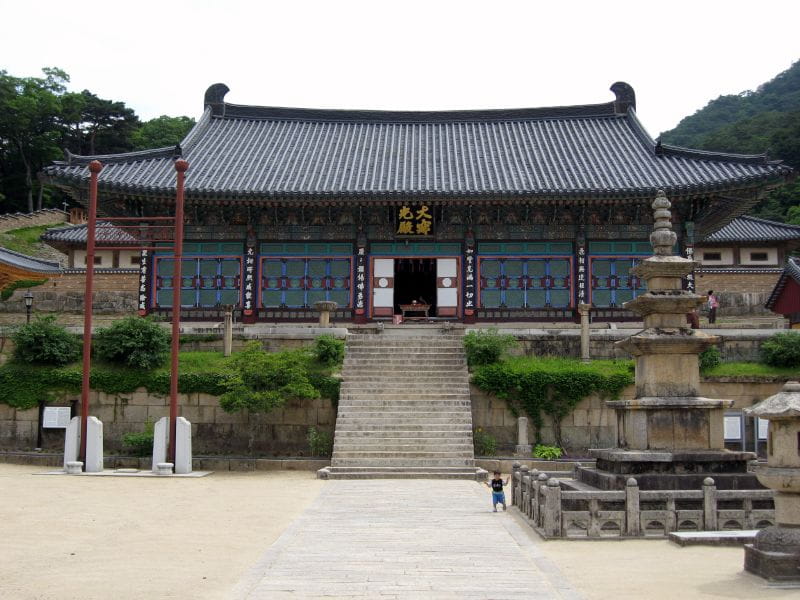
Haeinsa Temple, located on the slopes of Mount Gayasan in Hapcheon, is one of South Korea’s three “Jewel Temples,” representing the Dharma (the teachings of Buddha). Founded in 802 AD during the Silla Dynasty, it is most world-renowned for housing the Tripitaka Koreana, a staggering collection of over 81,000 wooden printing blocks engraved with the entire Buddhist canon. These blocks were carved in the 13th century as a religious appeal for protection against Mongol invasions and are recognized as the oldest and most comprehensive version of Buddhist scriptures in the world. The temple’s Janggyeong Panjeon depositories, where the blocks are kept, are themselves a UNESCO World Heritage site due to their ingenious 15th-century design that uses natural ventilation and moisture control to preserve the wood without any modern technology. Today, the temple remains an active center for Seon (Zen) Buddhism, offering a serene atmosphere of mountain vistas, ancient pine forests, and the rhythmic sound of chanting monks.
13. Chunwang Peak, Jiri Mountain
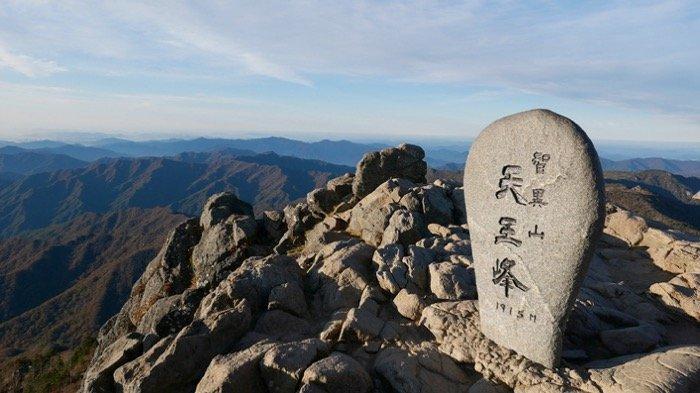
Cheonwangbong Peak, standing at 1,915 metres, is the majestic highest point of Jirisan Mountain and the second-highest peak in South Korea after Jeju Island’s Hallasan. As the centerpiece of the country’s first and largest national park, reaching the summit is considered a “rite of passage” for Korean hikers and nature enthusiasts. The peak is famously known for its dramatic granite cliffs and the stone pillar marking the summit, which translates to “Heavenly King Peak.” It is particularly legendary for its sunrise views; local lore suggests that one must perform good deeds for three generations to witness a clear sunrise from the top, as the peak is often shrouded in a sea of swirling clouds. The ascent is challenging, regardless of the route, with the Jungsan-ri course being the most direct but steepest, and the Baekmu-dong course offering a longer, scenic trek through ancient forests and past mountain springs. From the summit, hikers are rewarded with a breathtaking 360-degree panorama of the Sobaek mountain range and, on exceptionally clear days, a glimpse of the distant southern sea.
14. Juknokwon, Damyang
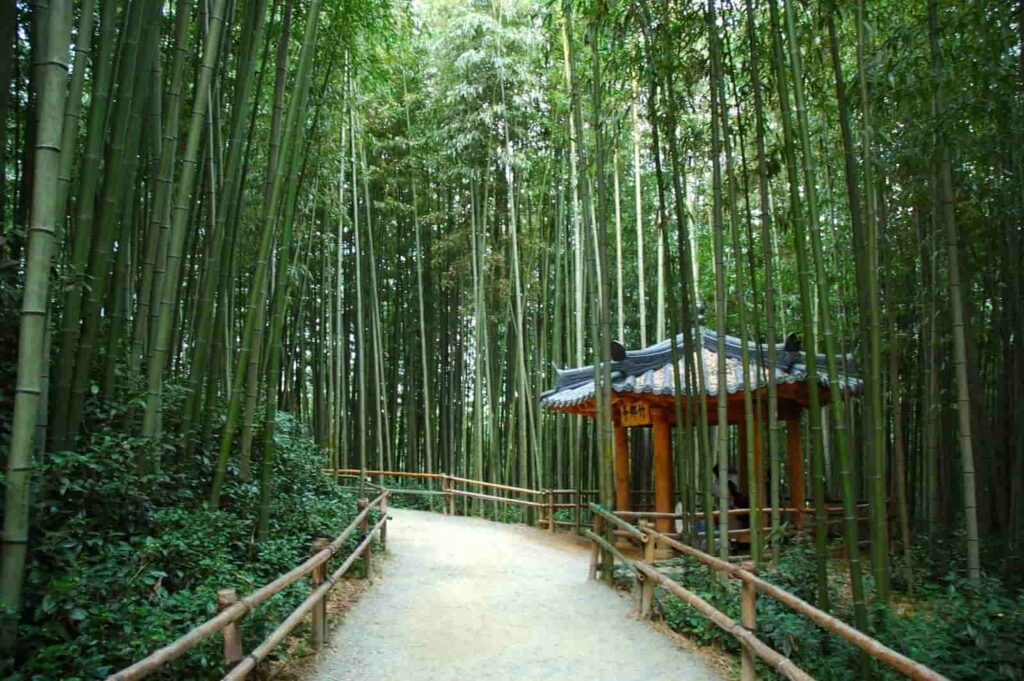
Juknokwon, located in Damyang, is a breathtaking bamboo garden that spans approximately 310,000 square metres, offering a serene “forest bath” experience. Established by the local municipality in 2003, this lush sanctuary features eight distinct walking trails—such as the Scholar’s Path and the Path of Eternal Love—that wind through towering stalks of green bamboo. The dense canopy creates a natural cooling effect, with temperatures inside the grove typically several degrees lower than the surrounding area, and the air is remarkably fresh due to the high oxygen production of the bamboo. Along the paths, visitors can discover traditional Korean pavilions, a small waterfall, and an art exhibition space. The forest is also famous for producing Jukro tea, a specialized green tea made from leaves that grow under the bamboo’s shade, nourished by the dew that drips from the stalks. Whether you are seeking the zen-like rustle of leaves or a scenic backdrop seen in famous films like R-Point, Juknokwon remains one of Korea’s most tranquil natural landmarks.
15. Naganeupseong Folk Village, Suncheon
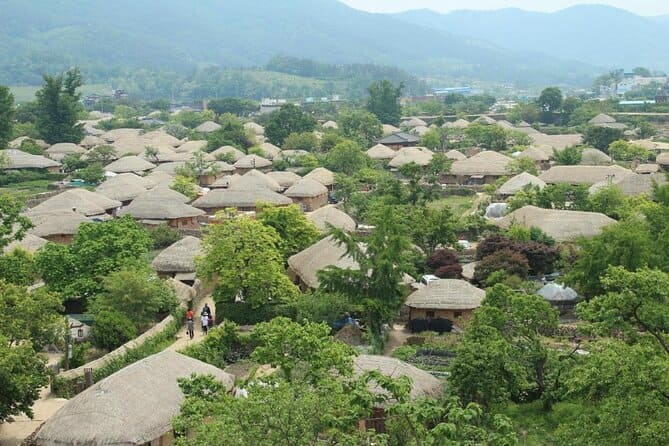
Naganeupseong Folk Village, located in Suncheon, is one of South Korea’s best-preserved fortress towns, offering a rare and authentic glimpse into life during the Joseon Dynasty. Unlike other folk villages that are purely museums, Naganeupseong is a living community where approximately 100 families still reside in traditional choga-jib (thatched-roof houses). The village is enclosed by a massive 1.4-kilometre stone fortress wall that remains remarkably intact; walking along the top of this wall provides a stunning panoramic view of the mushroom-shaped straw roofs nestled against a backdrop of rolling mountains. Inside, the village features historic government offices, a traditional guesthouse, and communal wells, all preserved in their original state without the intrusion of modern architecture. Visitors can participate in cultural experiences such as weaving, pottery, and traditional tea ceremonies, or watch performances of Pansori (traditional Korean musical storytelling), making it a deeply immersive cultural landmark that has earned a spot on the UNESCO World Heritage tentative list.
16. Yeojwa Stream
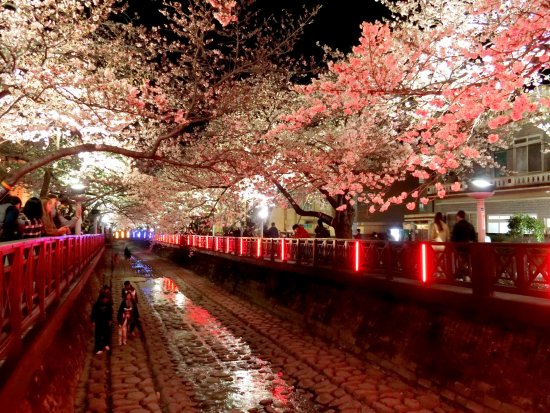
Yeojwa Stream, located in the Jinhae district of Changwon, is widely considered the most iconic cherry blossom viewing spot in South Korea. Spanning approximately 1.5 kilometres, the stream is lined with hundreds of ancient cherry trees that form a spectacular “tunnel” of pale pink petals that arch over the water. It is most famous for the Romance Bridge, which gained national fame as a filming location for the 2002 K-drama Romance. During the Jinhae Gunhangje Festival—the largest cherry blossom festival in the country—the stream is transformed into a magical landscape. By day, the wooden walkways and stone bridges are crowded with visitors capturing photos of the falling “cherry blossom snow.” By night, the area is illuminated by elaborate light installations, laser shows, and lanterns, creating a romantic and ethereal atmosphere. The combination of the babbling stream, the floral canopy above, and the yellow canola flowers often planted along the banks makes it a premier destination for photographers and couples.
17. Boseong Green Tea Field

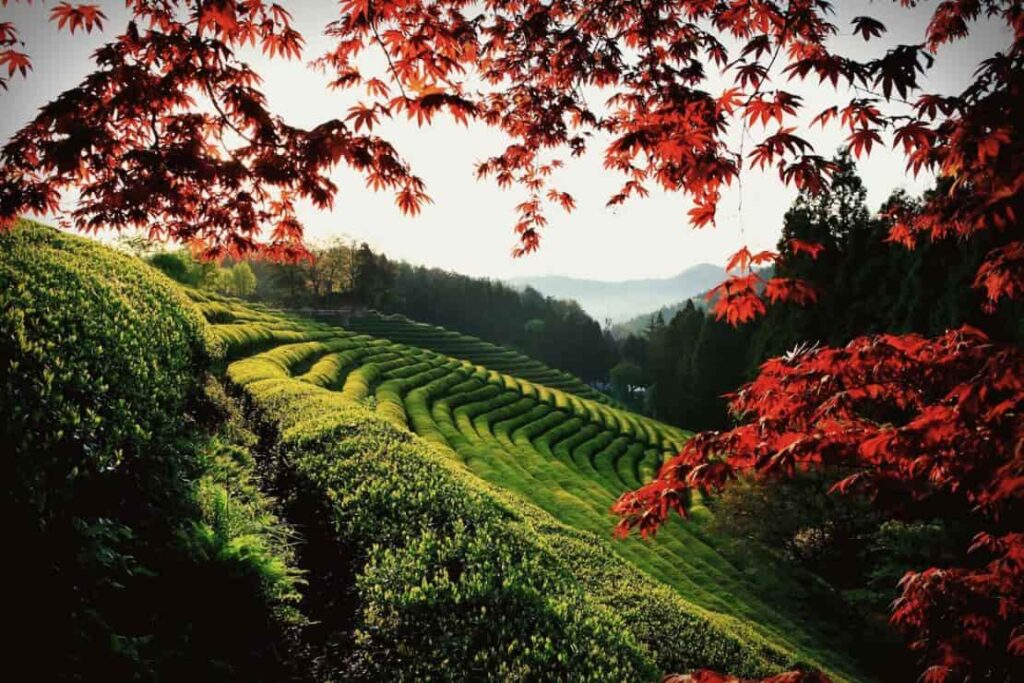
Boseong Green Tea Field, specifically the Daehan Dawon Tourist Tea Plantation, is South Korea’s largest and most iconic tea garden, renowned for its stunning terraced landscapes. Established in 1939, the plantation covers a vast hillside in Boseong, where rows of neatly trimmed tea bushes curve along the natural contours of the mountain like green waves. The site is famous for its “green staircase” effect and the majestic Cedar Forest path that leads visitors from the entrance to the heart of the fields. As you climb to the “Central Observatory” or the higher “Ocean View Observatory,” you are rewarded with a panoramic view of the emerald estate and, on clear days, the distant southern coastline. Beyond its visual beauty, the field is a major producer of high-quality organic green tea, benefiting from the region’s humid climate and sea breezes. It has served as a backdrop for numerous Korean dramas and commercials, making it a must-visit destination for those seeking tranquility and the perfect photograph of Korea’s agricultural heritage.
18. Bulguksa Temple
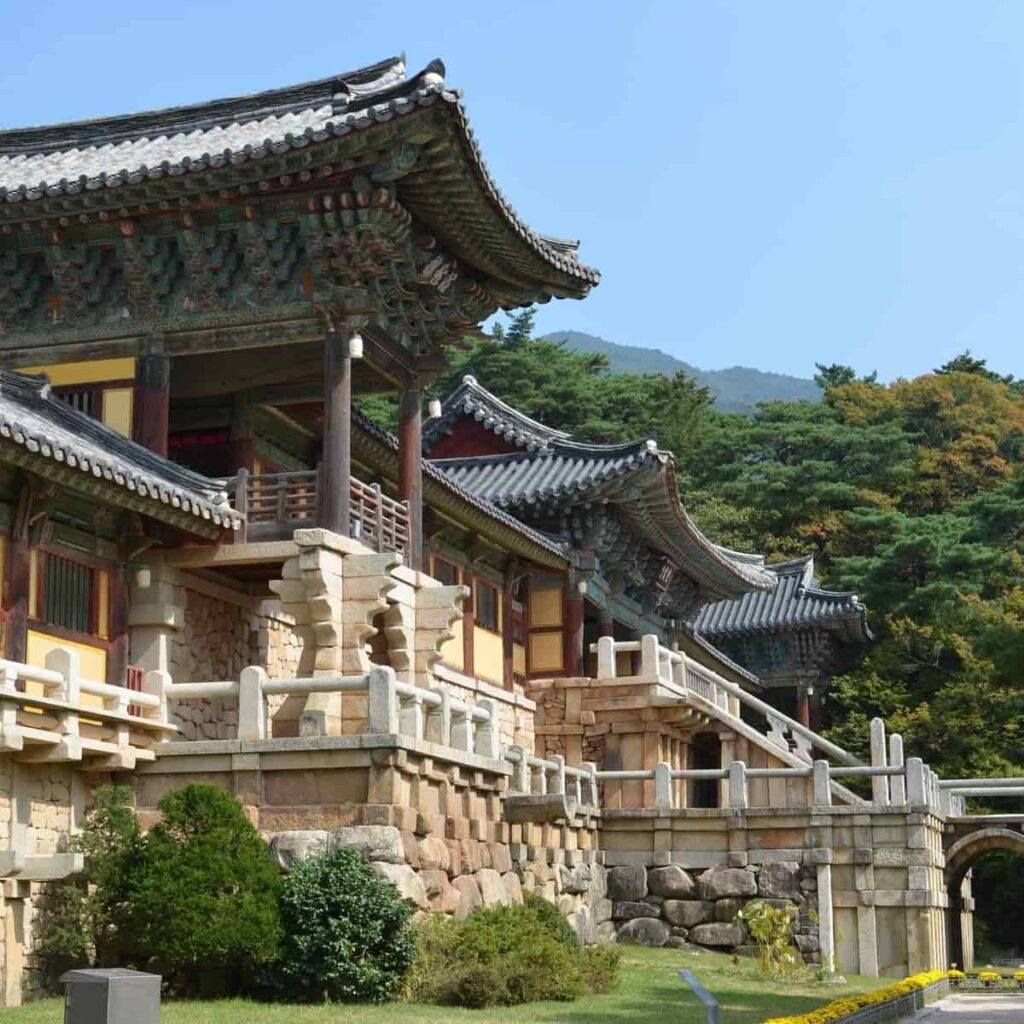
Bulguksa Temple, located on the slopes of Mount Tohamsan in Gyeongju, is the pinnacle of Buddhist architecture from the Silla Kingdom and a UNESCO World Heritage site. Built in the 8th century under the direction of Prime Minister Kim Dae-seong, the temple was designed to represent the Buddhist utopia on earth. It is celebrated for its masterful stone masonry, most notably the two iconic pagodas in the main courtyard: Dabotap, which is intricately ornate and appears on the South Korean 10-won coin, and Seokgatap, which is admired for its elegant, minimalist symmetry. The temple complex is divided into distinct courtyards representing different realms of the Buddhist universe, connected by grand stone staircases and bridges like the Blue Cloud and White Cloud bridges, which are national treasures. Beyond its architectural brilliance, the temple is surrounded by lush forests that turn vibrant shades of crimson in autumn, making it a spiritual and aesthetic landmark that symbolizes the golden age of Korean Buddhist art.
19. Daegwallyeong Ranch
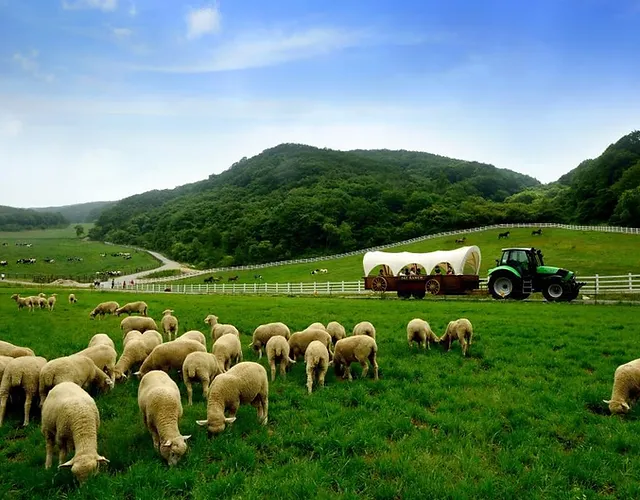
Daegwallyeong Sheep Ranch, often called the “Alps of Korea,” is a vast private ranch located on the rolling hills of the Daegwallyeong mountain pass in Pyeongchang. Situated over 800 metres above sea level, the ranch is famous for its picturesque landscape of verdant green meadows contrasted against the deep blue sky. Visitors can enjoy a peaceful 1.2-kilometre circular walking trail that winds through the pastures, offering panoramic views of the Baekdudaegan mountain range. The ranch is particularly beloved for its sheep-feeding experience, where visitors can get up close to the gentle animals in a rustic wooden shack. While the grass is a vibrant green in the summer, the ranch transforms into a stunning “winter wonderland” during the colder months, as it is one of the snowiest regions in South Korea. The iconic lone wooden shack in the middle of the field has become a legendary photo spot, appearing in numerous Korean films and commercials due to its romantic and serene atmosphere.
20. Cheongdo Bull Fighting Festival

The Cheongdo Bullfighting Festival is South Korea’s premier traditional bullfighting event, held annually in Cheongdo County to celebrate a custom that dates back to the Silla Dynasty. Unlike Spanish matador style, Korean bullfighting—known as Sossaum—is a test of strength and endurance between two massive bulls, with no humans directly involved in the fight and no intentional killing of the animals. The bulls compete in a circular sand arena, pushing head-to-head using horns and neck strength until one bull turns away or retreats, signaling defeat. The event has evolved from a local village pastime into a massive international festival featuring over 100 bulls categorized by weight, alongside cultural performances, agricultural exhibitions, and hands-on farm experiences. Held at the world’s first bullfighting stadium with a retractable roof, the festival offers a high-energy atmosphere where spectators can witness the raw power of these animals while learning about the deep-rooted importance of cattle in Korea’s traditional farming culture.
21. Hyeopjae Beach, Jeju Island
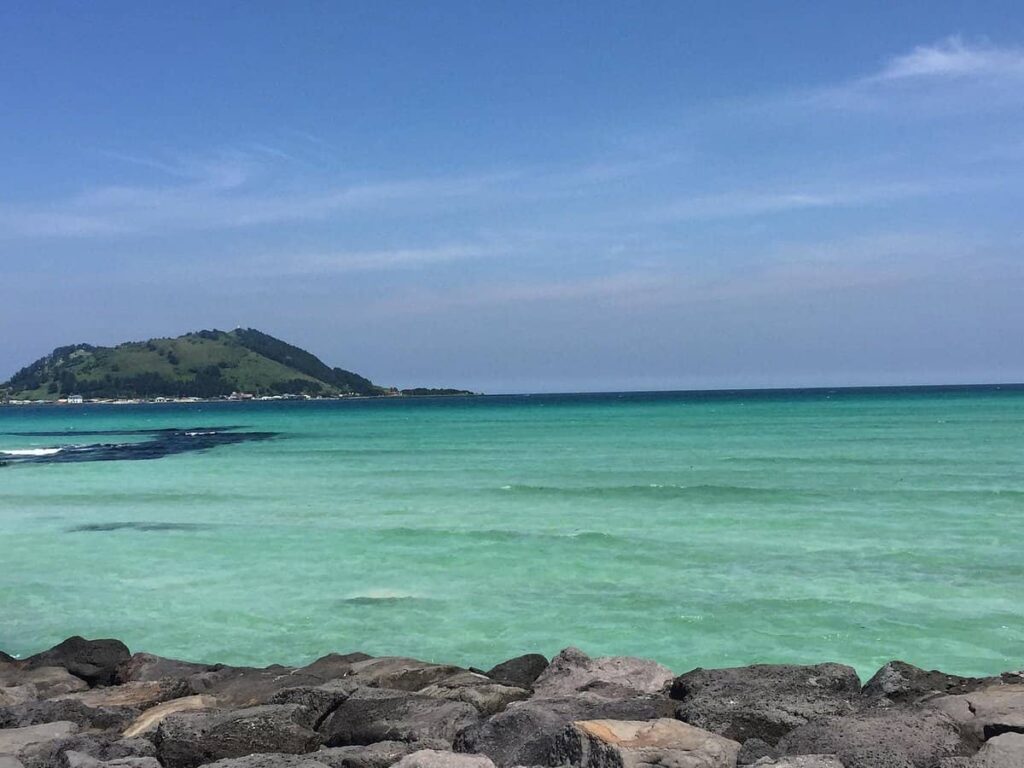
Hyeopjae Beach, located on the west side of Jeju Island in Hallim-eup, is widely considered one of the most beautiful beaches in South Korea due to its strikingly clear, turquoise waters and brilliant white sand. The sand is uniquely composed of crushed seashells mixed with volcanic elements, giving it a bright glow that contrasts beautifully with the dark black basalt rocks scattered along the shore. The beach is famous for its shallow, calm waters, making it an ideal spot for families and casual swimmers, as the tide recedes to reveal vast sandy flats. From the shoreline, visitors enjoy a perfect, unobstructed view of Biyangdo Island, a small volcanic cone that sits like a green gem on the horizon. Connected to its neighbor, Geumneung Beach, via a scenic coastal path, Hyeopjae is also a premier destination for witnessing Jeju’s legendary orange sunsets, which illuminate the emerald sea in spectacular hues.
22. Anapji (Anap Pond)
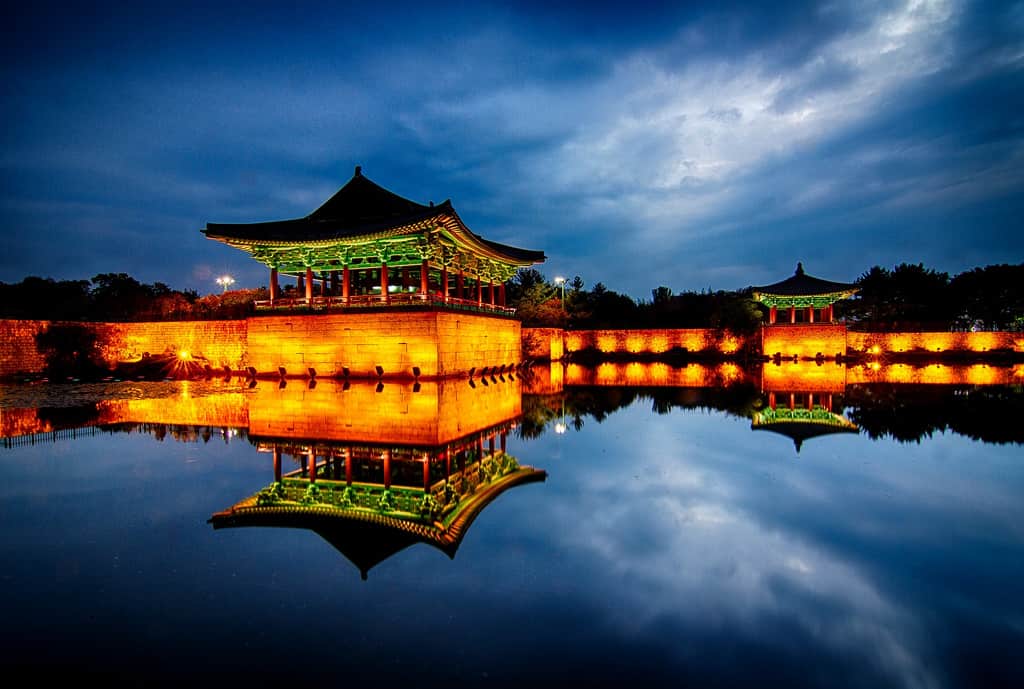
This man-made pond was created during the Shilla Dynasty approximately 1,500 years ago. Three buildings stand on three artificial islands while patches of lotus flowers frame the pond. Gorgeous exterior lighting that goes on after sunset creates a magical night view.
23. Seryang-Je
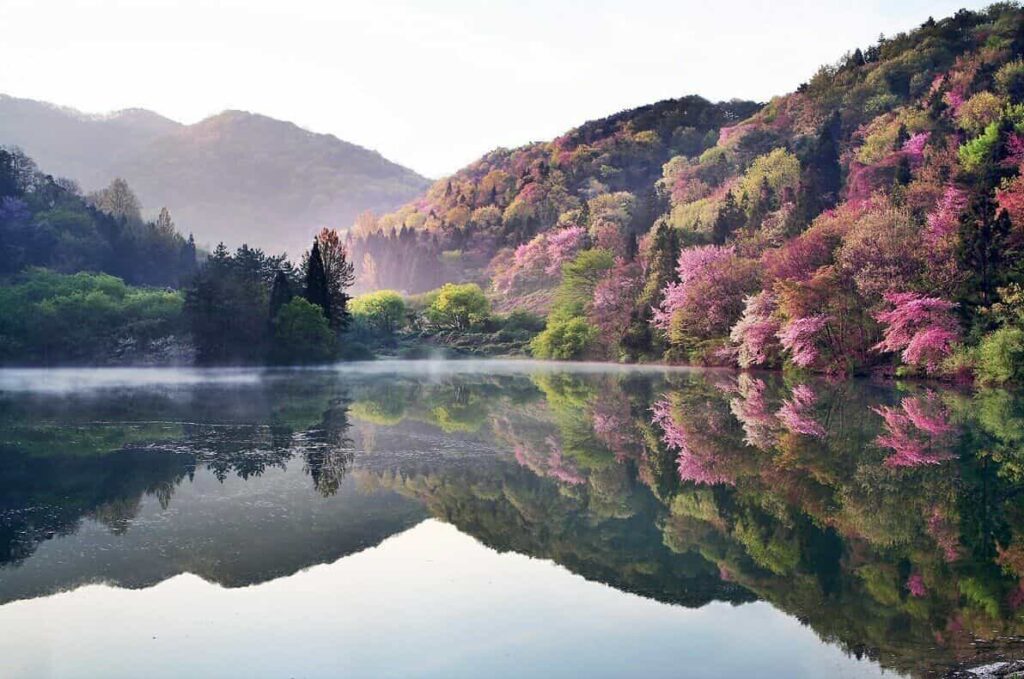
Seryang-Je, a reservoir built in 1969 in Hwasun, is another famous spot for both professional and amateur photographers for its ethereal mist and reflections of colorful blossoms and leaves.
24. Kwanghan Pavilion

Gwanghalluwon Pavilion (or Kwanghan Pavilion) in Namwon is widely considered one of South Korea’s four major pavilions and is the central landmark of a historic garden designed to represent a Taoist paradise. Originally built in 1419 by the exiled statesman Hwang Hui, it was later renamed by Governor Jeong In-ji, who compared its surreal beauty to the “Gwanghan Palace” on the moon. The pavilion is most famous as the legendary meeting place of Lee Mong-ryong and Seong Chunhyang, the protagonists of the classic Korean love story Chunhyangjeon. The surrounding garden features a man-made pond symbolizing the Milky Way, with the stone Ojakgyo Bridge (Magpie Bridge) crossing it to represent the annual reunion of mythical lovers Gyeonu and Jiknyeo. Inside the pond sit three small islands representing the holy mountains of Bongrae, Bangjang, and Yeongju. Today, the site remains the spiritual heart of Namwon and hosts the annual Chunhyang Festival every May, celebrating themes of fidelity and love.
25. Seomjin River Train Village

Seomjin River Train Village, located in Gokseong, is a unique nostalgic theme park built on the site of the old Gokseong Station, which was decommissioned when the Jeolla Line was straightened in 1999. The village is most famous for its Steam Locomotive, a faithfully restored 1960s-style train that takes visitors on a scenic 10-kilometre journey along the picturesque Seomjin River, offering a slow-paced look at the surrounding mountains and water. Another major draw is the Rail Bike experience, where visitors can pedal along the old tracks, either within the park or on a longer course that follows the river’s edge. The village also houses the 1004 Rose Garden, which features over 1,004 varieties of roses that bloom spectacularly in May, turning the park into a fragrant, colorful landscape. With its blend of vintage railway history, floral beauty, and the soothing natural backdrop of the Seomjin River, the village has become a premier destination for families and a popular filming location for movies like The Wailing.
26. Cheongsando
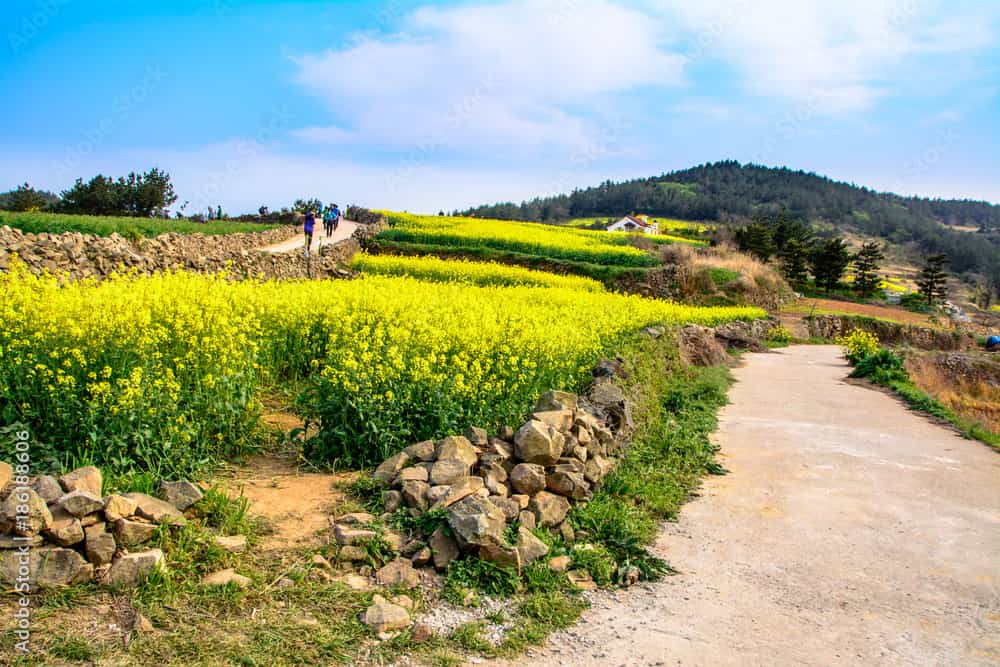
For a small country road, Cheongsando marks a lot of “firsts” – it is the world’s first “Slow Road” in Asia’s first “Slow City.” It doesn’t take long to realize why it is called “Slow Road” – one’s pace naturally slackens to fall in with the pace of the rest of the island. Rape blossoms (in spring) and Mexican Asters (in fall) in full bloom are bordered by simple stone walls.
27. Halla Mountain
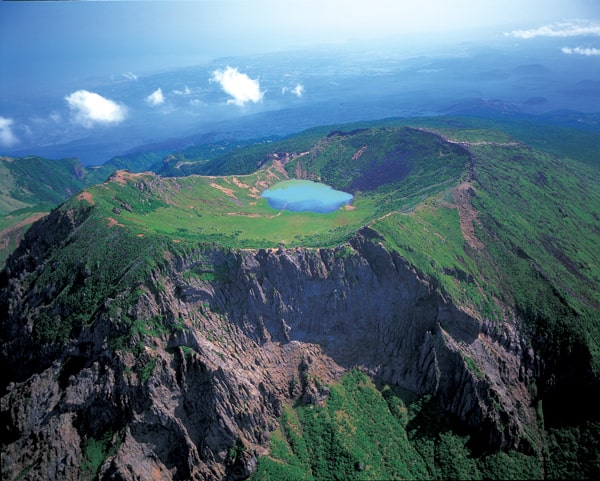
Hallasan, standing at 1,947 metres, is the highest mountain in South Korea and the central landmark of Jeju Island. Formed by volcanic activity, this shield volcano is a UNESCO World Heritage site and a Biosphere Reserve, celebrated for its unique ecosystem that ranges from subtropical plants at its base to alpine flora near the summit. The mountain’s most iconic feature is Baengnokdam, a massive crater lake at the peak whose name translates to “White Deer Lake,” according to local legends of immortals. Hikers can choose from several trails, but only the Seongpanak and Gwaneumsa courses lead directly to the summit, offering breathtaking views of the island’s “oreums” (secondary volcanic cones) and the surrounding East China Sea. Because the weather changes rapidly and the terrain is rocky, the ascent is considered a challenging but essential experience for any visitor to Jeju.
28. Terraced Fields, Hamyang
The Hamyang Terraced Fields, specifically located in the Macheon Region at the foot of Jirisan Mountain, are a testament to the thousands of years of ingenuity by local villagers who carved arable land out of the steep, rocky terrain. Known locally as ‘daraknon’, these approximately 300 terraced fields were constructed by stacking stone walls to create flat farming plots where natural flatland was insufficient. The most picturesque section stretches for about 1km along Jirisan Dulle-gil Course No. 4 (Geumgye-Donggang), where the curves of the stone-walled paddies follow the natural contours of the mountain. While beautiful year-round, the landscape is most stunning in early autumn (September to October), when the ripening rice turns the hillsides into a shimmering golden staircase, and in late spring (April to May), when the flooded paddies act as giant mirrors reflecting the sky and the surrounding peaks of Jirisan.
29. Nuri Peace Park
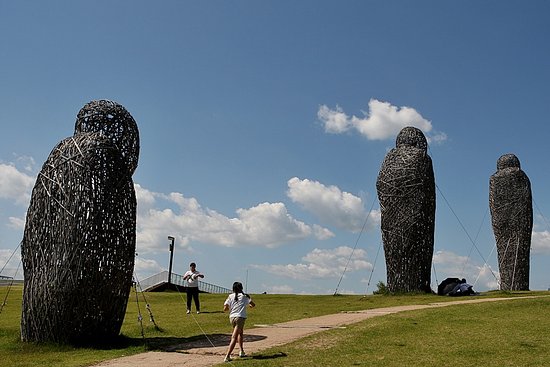
Imjingak Pyeonghwa Nuri Park (often called Nuri Peace Park) is a sprawling unification and security park located in Paju, just south of the Demilitarized Zone (DMZ) along the banks of the Imjin River. Established in 2005, the park was designed to transform a site once defined by conflict and division into a symbol of reconciliation, peace, and hope for reunification. The most iconic landmark within its vast 99,000-square-metre grassy field is Breeze Hill (or Windy Hill), which features over 3,000 colorful pinwheels that spin freely in the wind, representing a “song of peace” blowing across the peninsula. The park is dotted with meaningful art installations, such as Choi Pyeong-gon’s giant bamboo sculptures “Calling for Reunification,” which appear to rise out of the earth. While it serves as a peaceful venue for picnics, music festivals, and open-air performances, it is deeply connected to the adjacent Imjingak Resort, which houses somber relics like the Freedom Bridge, the bullet-riddled Steam Locomotive, and a memorial for families separated by the war.
30. Korean- Kpop culture and kdrama

Korean pop culture—commonly known as Hallyu or the “Korean Wave”—is a global cultural phenomenon encompassing music (K-pop), television dramas (K-dramas), fashion, and beauty. It has cemented its status as an enduring pillar of global mainstream media, with approximately 70% of international audiences holding a positive view of Korean content. K-pop is lauded for its highly sophisticated idol training system, synchronized choreography, and advanced fan engagement via digital platforms; groups such as BTS, SVT, TXT, TWICE, EXO, and Blackpink have broken countless records, while newer artists like KATSEYE and Stray Kids continue to dominate the Billboard charts. Complementing this is the K-drama industry, which has captivated the world with tightly woven, character-driven narratives such as Squid Game, Boys Over Flowers, I Am Not a Robot, and Crash Landing on You. In 2026, the industry has expanded further into diverse genres, ranging from political noir—exemplified by Climax—to supernatural legal dramas like Phantom Lawyer. This cultural engine serves not merely as a source of entertainment but also as a formidable economic force, contributing billions to South Korea’s GDP and influencing global retail trends in the realms of fashion (such as eco-futurism and modular tech-wear) and beauty (epitomized by the “glass skin” aesthetic).