

Italy, officially known as the ‘Italian Republic,’ is a sovereign nation situated in Southern Europe. Famous for its distinctive “boot-like” shape, it is primarily located on the Italian Peninsula. Its northern borders adjoin France, Switzerland, Austria, and Slovenia. Its territory encompasses two major islands in the Mediterranean Sea—Sicily and Sardinia—along with approximately 800 smaller islands. After centuries of being fragmented into independent city-states and empires, the country was unified in 1861. Today, it stands as a highly developed parliamentary republic and a global “cultural superpower.” It is home to the highest number of UNESCO World Heritage Sites in the world (61).
Economically, Italy possesses the world’s eighth-largest nominal GDP. Its economy relies primarily on high-end manufacturing industries—such as fashion (e.g., Gucci, Prada) and luxury automobiles (e.g., Ferrari)—as well as the export of diverse agricultural products, including wine and olive oil.
Italy is an extraordinary travel destination, offering a rare blend of ancient history, world-class art, and diverse natural beauty—ranging from the snow-capped Alps to turquoise-watered Mediterranean beaches, it has it all. It is particularly renowned for its warm, family-oriented hospitality and a “slow-paced” way of life, known as la dolce vita.
Generally speaking, Italy is a very safe country to visit; it boasts a very low rate of violent crime, and its atmosphere is stable and welcoming. Every year, millions of tourists visit the major cities here without any trouble, and many women traveling alone also find it to be a safe and hospitable destination.
Most Famous And Attractive Tourist Places In Italy :
1. Rome
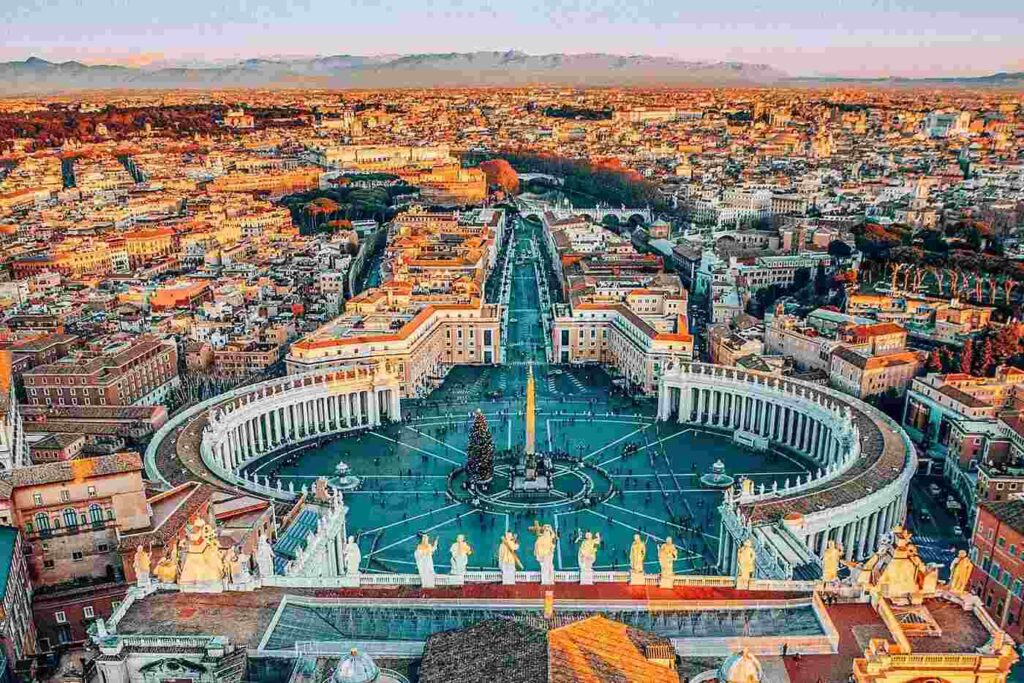
Both for its history as the capital of much of ancient Europe and for its present day role as one of Europe’s most vibrant cities, for most tourists traveling to Italy, Rome heads the list of places to visit. Relics of its ancient glories—the Colosseum, the Forum, the Pantheon, the Appian Way, and the Palatine Hill—vie with the vast riches of the Vatican as the top attractions.
But between the important sights like the Sistine Chapel and Michelangelo’s Pieta, take time to enjoy the city itself. Relax in the Borghese gardens; eat gelato on the Spanish Steps; explore the narrow streets of Trastevere; sip morning cappuccino in cafés; window-shop on the Via Veneto; and toss a coin in Trevi Fountain, so you can return again and again. It will take several trips to see it all.
2. Florence

Florence, the capital of Italy’s Tuscany region, is an unparalleled architectural and artistic masterpiece often described as the “Cradle of the Renaissance.” Between the 14th and 16th centuries, this city-state transformed the world by sparking a rebirth of classical philosophy, science, and art, largely funded by the immense wealth of the Medici banking family. The city’s skyline is dominated by the Cattedrale di Santa Maria del Fiore, whose massive red-brick dome, engineered by Filippo Brunelleschi, remains a miracle of architectural design. Florence functions as a massive open-air gallery, where every cobblestone street leads to a historic piazza or a world-class museum. It is home to the Uffizi Gallery, which holds the world’s most significant collection of Renaissance paintings, and the Accademia, where Michelangelo’s towering marble David stands as a symbol of human perfection. Beyond the art, Florence is defined by the Arno River and the medieval Ponte Vecchio, a bridge famously lined with glittering gold and jewelry shops. Today, it remains a vibrant center of Italian craftsmanship, world-famous for its high-quality leather goods, high fashion, and a culinary tradition rooted in rich Chianti wines and the legendary Bistecca alla Fiorentina.Venice
3. Venice
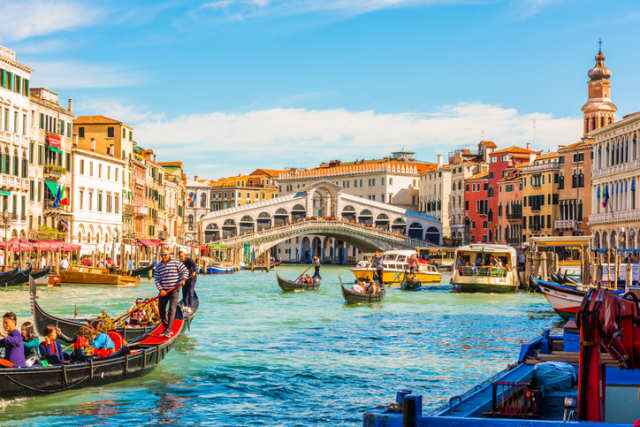
The hub of the city is the broad Piazza San Marco, St. Mark’s Square, surrounded by several of its top tourist attractions. The great Basilica of St. Mark stands beside the Doge’s Palace, and overlooking both is the tall Campanile.
Taking a gondola ride is one of the most romantic things to do in Italy. Gondolas congregate at the end of the plaza in the Grand Canal. In the other direction, a gate under the clock tower leads into a warren of narrow, winding passageways, where you’re sure to get lost on the way to Rialto Bridge. But getting lost is one of the greatest pleasures of Venice, where a postcard scene awaits around each corner.
4. Tuscany
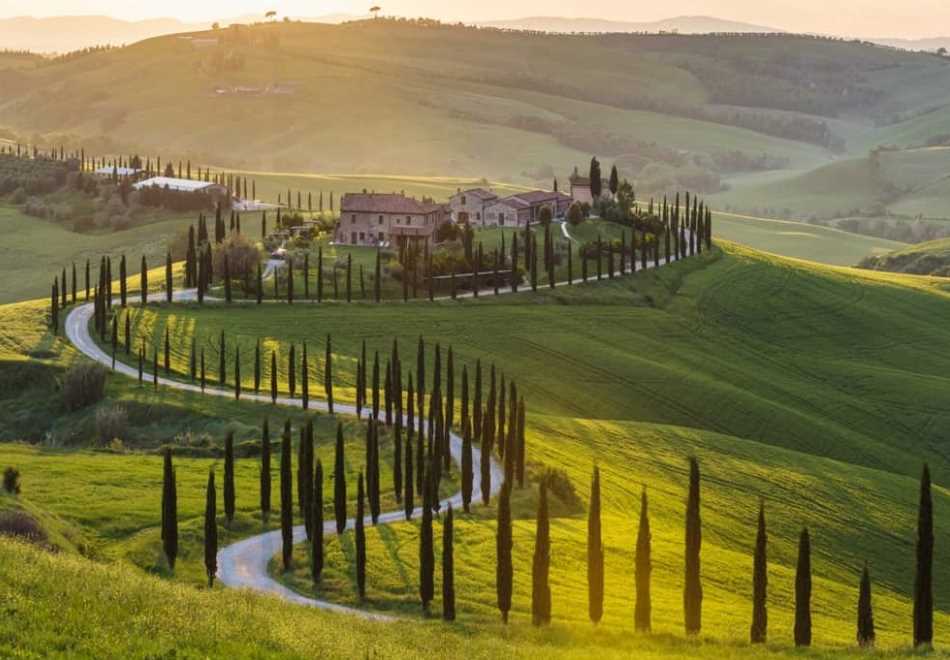
Tour the hill towns of Tuscany. Siena is one of the larger towns and, like Florence, makes a great home base for exploring this region. Top hill towns include San Gimignano, Pienza, Montalcino, Montepulciano, and Volterra.
You might enjoy biking between the wineries, depending on their age. We did this with Tyler and Kara in other wine regions in the world and they really enjoyed it. With one day you can day trip into Tuscany from Florence, visiting a few of the smaller towns.
5. Milan

Although Milan is a major entry point for tourists because of its airport, it’s often overlooked as a destination of its own. That’s a shame, because Milan has one of the highest concentrations of artistic and architectural attractions in all Italy. Milan has been the home and work place for luminaries in all these fields: Michelangelo, Leonardo da Vinci, Verdi, Enrico Caruso, Toscanini, and designer Giorgio Armani.
Il Duomo, Milan’s massive cathedral, is among the world’s most magnificent churches, and finest example of the Flamboyant Gothic style. La Scala is the world’s most prestigious opera house, Da Vinci’s The Last Supper fills the wall at a monastery, and throughout the city are museums and palaces filled with some of the world’s finest art. And no fashionista can resist a stroll through the famed Quadrilateral.
6. Lake Como
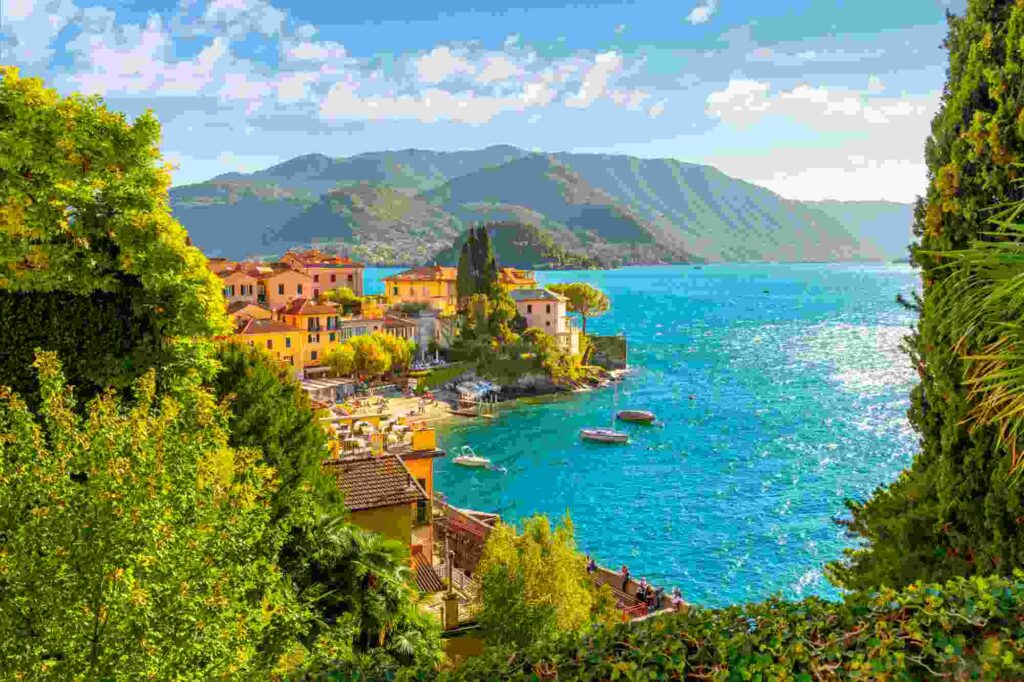
Italy’s most beautiful lake, Como has been the favorite summer retreat of the rich and famous since ancient Romans fled Milan’s summer heat to cool off in villas along its steep shores. Later villas decorate its tightly clustered towns, especially pretty Bellagio, artfully set on a point where the three narrow arms of the lake meet.
A microclimate makes Como’s western shore temperate even in winter, so the white peaks of the Alps just to the north can be viewed between palm trees and camellias. Don’t overlook the town of Como, on the southern shore, well worth a stop before boarding a steamer to explore the lake.
7. Amalfi Coast

The high, precipitous Amalfi Peninsula juts sharply into the Mediterranean just south of Naples, forming the southern rim of Naples Bay. It’s hard to imagine a more beautiful – or unlikely – setting for the towns that spill down its steep slopes.
Streets in most of these picturesque towns are stairways, and houses seem glued to the cliffs behind them. Flowers bloom everywhere, and below the towns are enticing beaches caught in coves of emerald water. High above the coast is the town of Ravello, where luxuriant gardens frame some of the coast’s finest views.
8. Sorrento

Located in South Italy on the Amalfi Coast overlooking the Bay of Naples, is this town bestowed with unbelievable beauty and charm. The beauty of Sorrento lies in the calm azure expanses of the water of the Bay of Naples. Sorrento is landmarked by charming colorful houses located on elevated cliffs looking onto the sparkling Mediterranean Sea and thick lush groves of lemon, orange, and olive.
Visitors can also enjoy water sports like scuba diving, swimming, snorkeling, or simply sunbathing. One of the most interesting things here is to go for a lemon farm trail. This is a great way to see the lush orchards on foot and try products made of Sorrento’s most famous food!
9. Siena
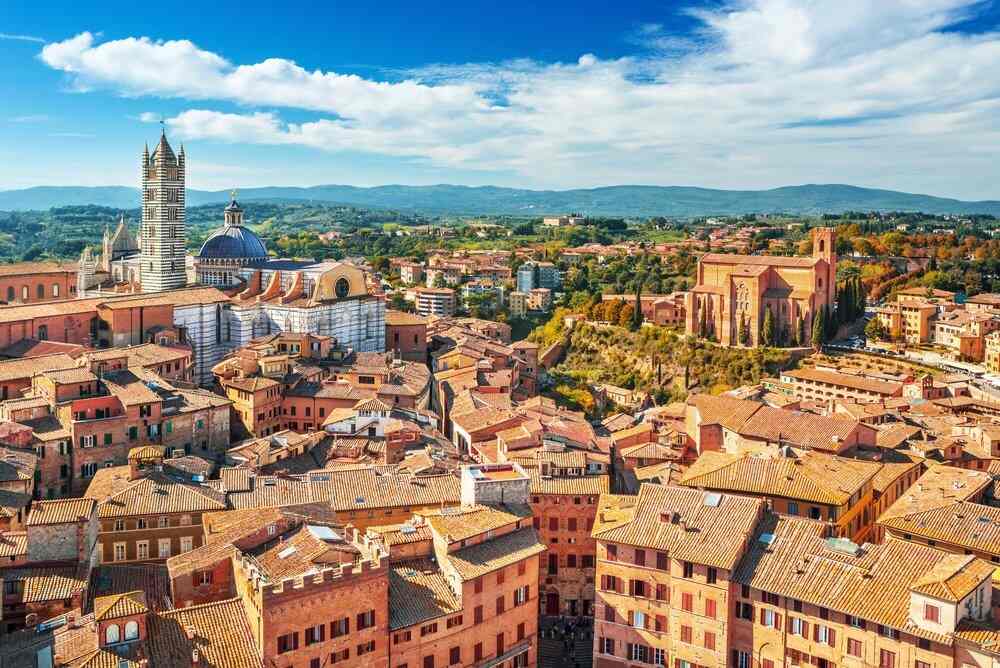
Its beautiful countryside, huge farm areas, thickets of cypress trees and wildflower, lush olive groves, and wave-like hill formations look straight out of a dream- only to be broken by the stunningly magnificent coastline and beaches. Visit the humongous black and white 12th-century Siena Chapel to see its Gothic walls, ornamented arches, and the famous dome designed by the great artist Bernini. The Civic Museum here is not only one of the best places to trace the Roman history of Siena but is an architectural marvel in itself. It has frescoed walls, arched ceilings, and stone structure that are absolutely amazing.
When in Siena, don’t miss to try traditional foods like Crostini Neri, Pici, Ribollita, local wines, and delectable desserts like Panforte, Cantucci, Ricciarelli, etc.
10. Verona
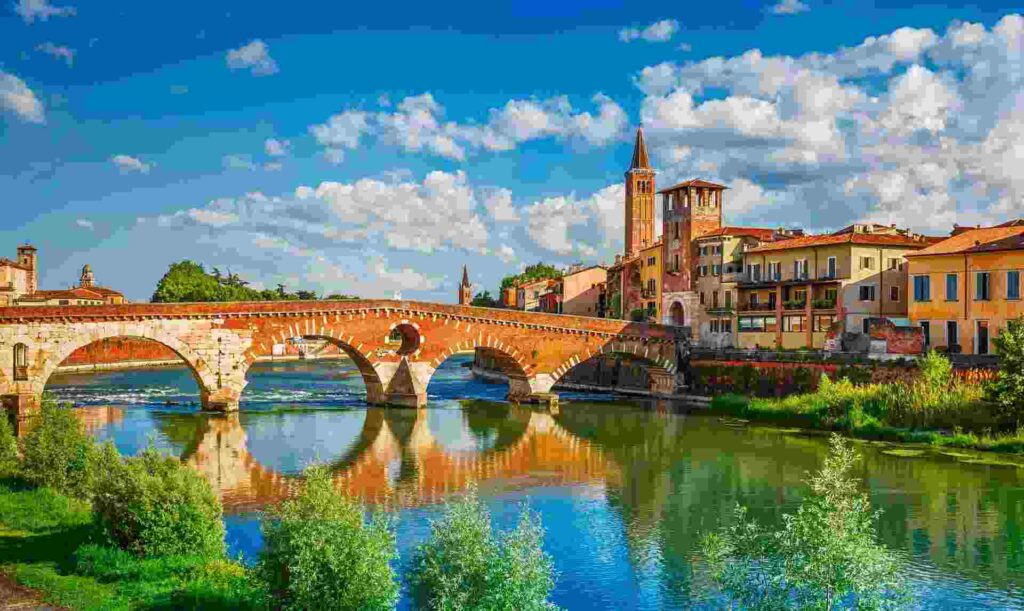
Verona lies encircled by River Adige at the foothills of the Lessini Mountains. One of the most famous attractions here is the first-century Arena di Verona. This spectacular pink and white stone structure, next only to the Colosseum, used to have numerous tunnels and was the site of gladiator games and concerts. Another great attraction is the Casa di Giulietta or Juliet’s House, the most famous Shakespeare character, the famous (but supposed) balcony, and Juliet’s statue.
One of the best things to do here is to spend serene time at the Verona Cathedral and soak in the grandeur of its beautiful stained glass windows, ornate walls, marble columns, and Renaissance-era frescos.
11. Capri
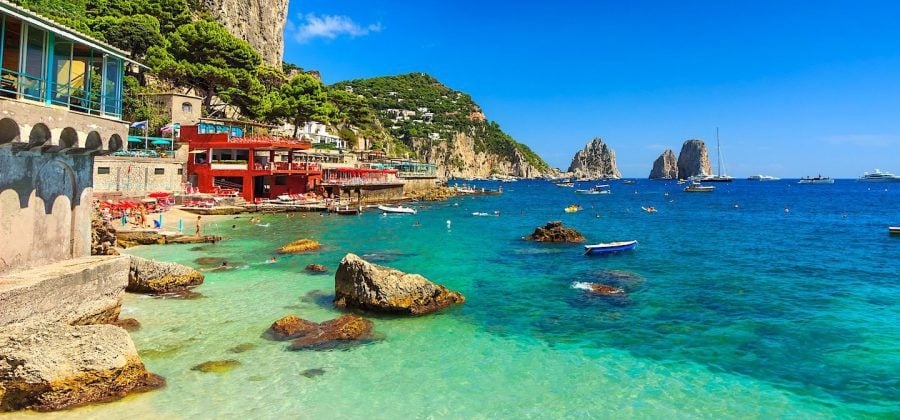
It was the bolt-hole for the Roman emperors Augustus and Tiberius and today attracts a steady stream of tourists arriving on the frequent ferries and hydrofoils from Sorrento and Naples. One of the top things to do on Capri is a trip to the Blue Grotto, a large flooded cave where reflected sunlight makes the water look as though it were lit from inside. At the other side of the island is the beautiful Marina Piccola, a tiny beach at the foot of the cliffs guarded by the craggy Faraglioni sea stacks.
The views, framed by candy-colored buildings and lemon trees, take in Naples and its bay, Mt. Vesuvius, and Capri. It’s a town for strolling, sitting in cafés, and taking day trips to Capri, the Amalfi Coast, or Pompeii and Herculaneum.
12. The Cinque Terre
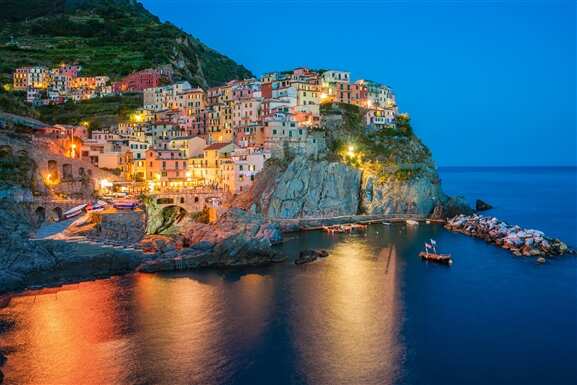
The five towns that cling to the steep, rocky Mediterranean coast north of La Spezia were almost impossible to reach by land until the railway connected them by tunneling through the headlands that separate them. Riomaggiore and Vernazza, with their narrow streets dropping down to tiny rock-bound harbors are the most filled with character, and despite its recent popularity with tourists, the Cinque Terre remains one of Italy’s most appealing attractions.
13. Pisa and Lucca
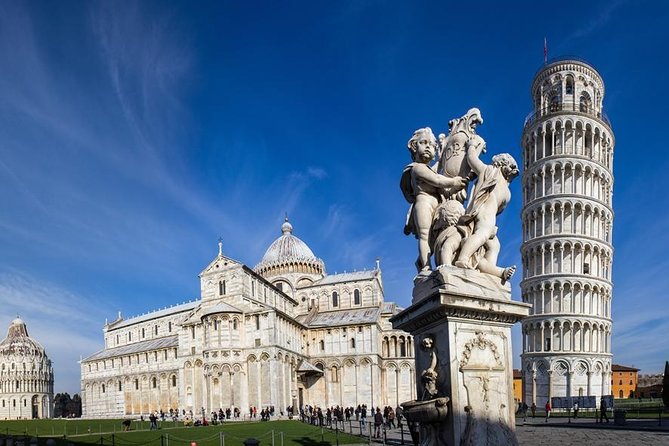
The Leaning Tower of Pisa, actually the campanile for the adjacent cathedral, is a well-known Italian icon, and forms the centerpiece of a UNESCO World Heritage site that also includes the cathedral, baptistery, and Campo Santo.
Nearby, Lucca is one of Europe’s most charming Towns to explore and enjoy, surrounded by wide walls whose top is a tree-lined park. Inside the walls are beautiful Romanesque and Tuscan Gothic churches, tower houses (one of which you can climb to the top), and a Roman arena that has been “fossilized” into an oval piazza.
14. Pompeii and Herculaneum
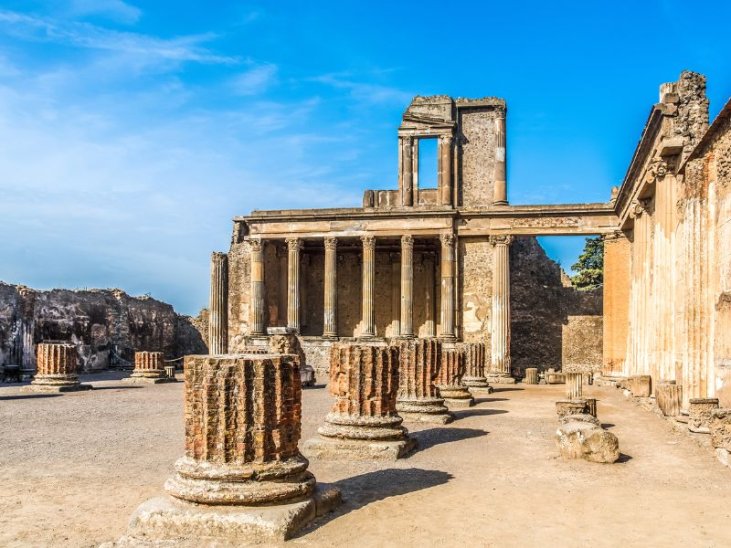
In AD 79, Mt. Vesuvius erupted violently and suddenly, engulfing the thriving Roman city of Pompeii and encasing it for more than a millennium in six meters of ash and pumice-stone. The city remained frozen in time until excavations that began in the 18th century uncovered more than half of its buildings and public spaces.
The same eruption also engulfed the city of Herculaneum, but this time in molten lava, not ash. So instead of raining down and crushing buildings with its weight, the lava flowed in and filled the city from the ground up, supporting walls and ceilings as it rose, and preserving them in place.
15. Bologna
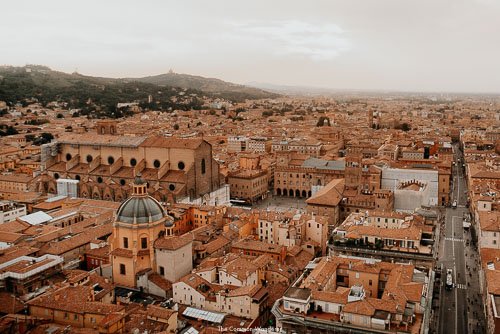
Renowned for its culinary skills and cuisine, as well as for its historic university. Life centers around the adjoining Piazza Maggiore and Piazza del Nettuno, where you’ll find the magnificent 16th-century Neptune Fountain and the still unfinished façade of the Basilica of San Petronius.
The other church to see is the atmospheric Santo Stefano, a complex of seven religious buildings built by the Benedictines from the 10th to 13th century. Its two leaning towers, Asinelli and Garisenda are tall thin pillars of brick and stone taller than the more famous one at Pisa.
16. Turin
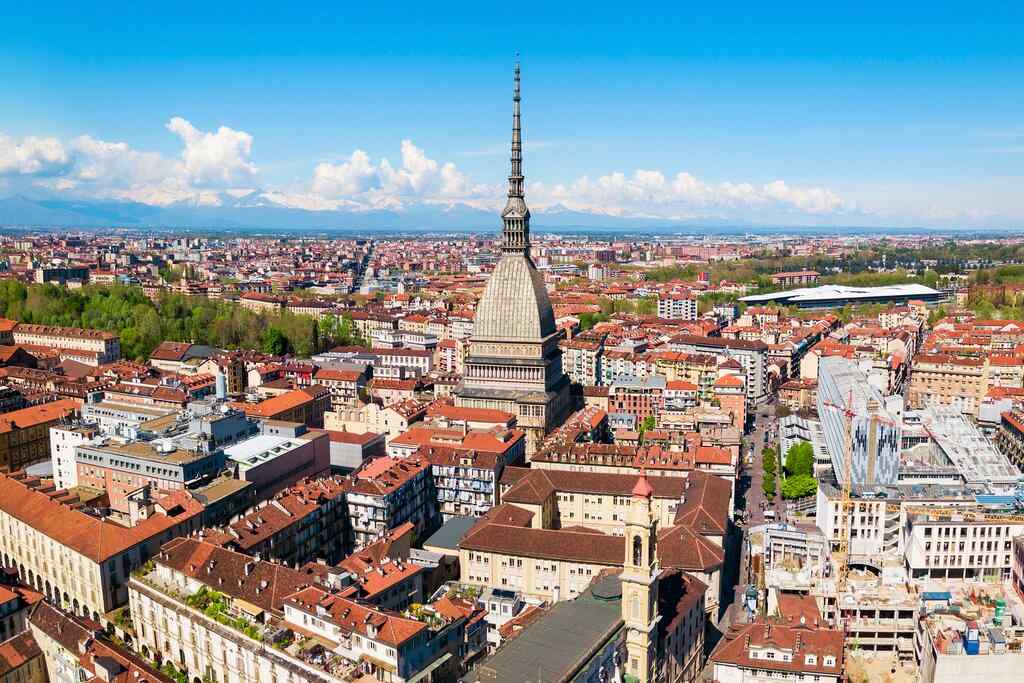
Visitors can also enjoy the city’s many cafes and restaurants, which offer a wide range of Italian cuisine. For a truly unique experience, visitors can take part in the city’s annual Chocolate Festival, where local chocolatiers showcase their wares. Turin Italy is also known for its traditional evening aperitif, served in its many bars and cafes. The city is a great destination for shopping, with a variety of boutiques, stores, markets and designer labels.
It is also home to a number of outdoor activities such as skiing, snowboarding, hiking, and mountain biking. The city is also known for its many parks and gardens, including the Parco del Valentino and the Giardini Reali, both of which feature stunning views of the city and its surroundings. A trip to the Mole Antonelliana, the iconic tower that is the symbol of the city.
17. The Grand Canal
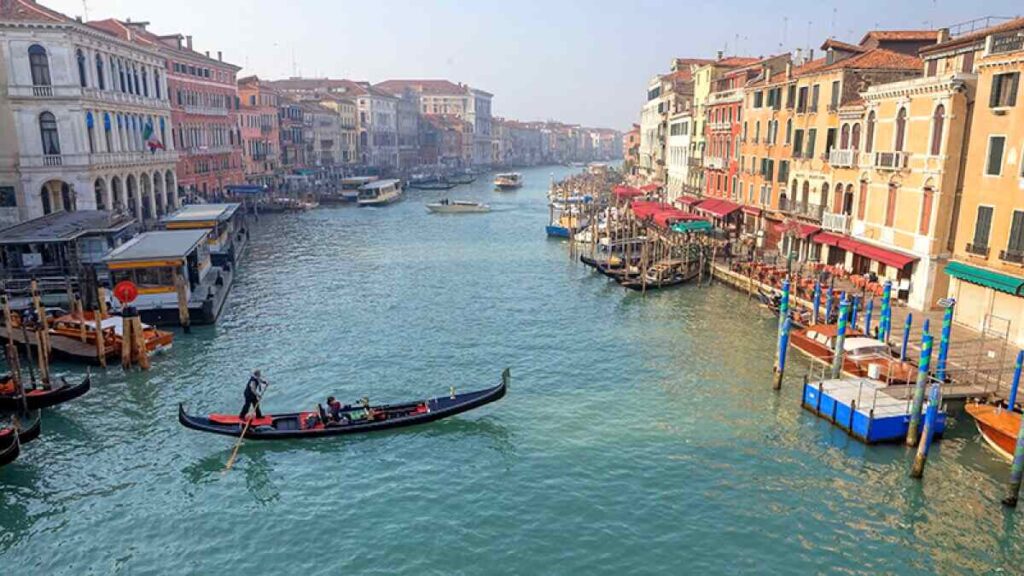
This splendid S-shaped canal flows through the center of the city and divides it into two parts while being considered as the most important waterway of the city. Through each side of the canal runs a number of artistically decorated buildings dating back from the 13th to the 18th century, constructed by the richest families of the city that signifies the culture of “Serenissima” republic.
The aesthetically erected buildings with classic Venetian architecture and designing that cannot be found anywhere else, century-old palaces, ancient churches and of course the glorious “Gondola Ride” are some of the known facets of the Grand Canal that can fill any sort of a traveler with the excitement.
18. Sicily

Some of the finest remaining examples of ancient structures are in Sicily: at Selinunte is one of the largest Greek temples; in Agrigento, at the Valley of Temples, is one of the three most perfect Greek temples anywhere; and the 3,500 square meters of mosaics at Villa Romana del Casale in Enna decorate one of the best-preserved villas in the entire Roman Empire. The capital of Palermo is a vibrant city full of color and fine buildings.
19. Ravenna
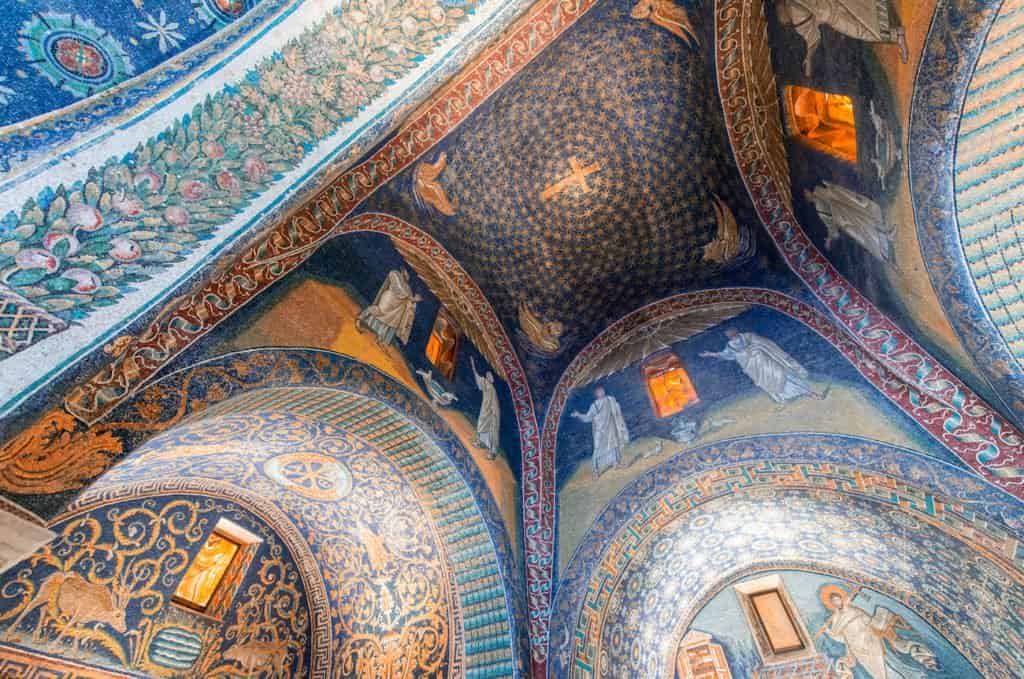
Ravenna’s artistic origins are almost entirely Byzantine, and here you’ll find Western Europe’s finest collection of Byzantine mosaics, all in nearly pristine condition.
Seven buildings decorated with some of the finest examples of mosaic art are included in a UNESCO World Heritage Site. See all of them, but above all don’t miss the early 5th-century Neonian Baptistery; the impressive interior of San Vitale; and the jewel-like Mausoleum of Galla Placidia, which UNESCO calls “one of the most artistically perfect” and best preserved of all mosaic monuments.
20. Puglia
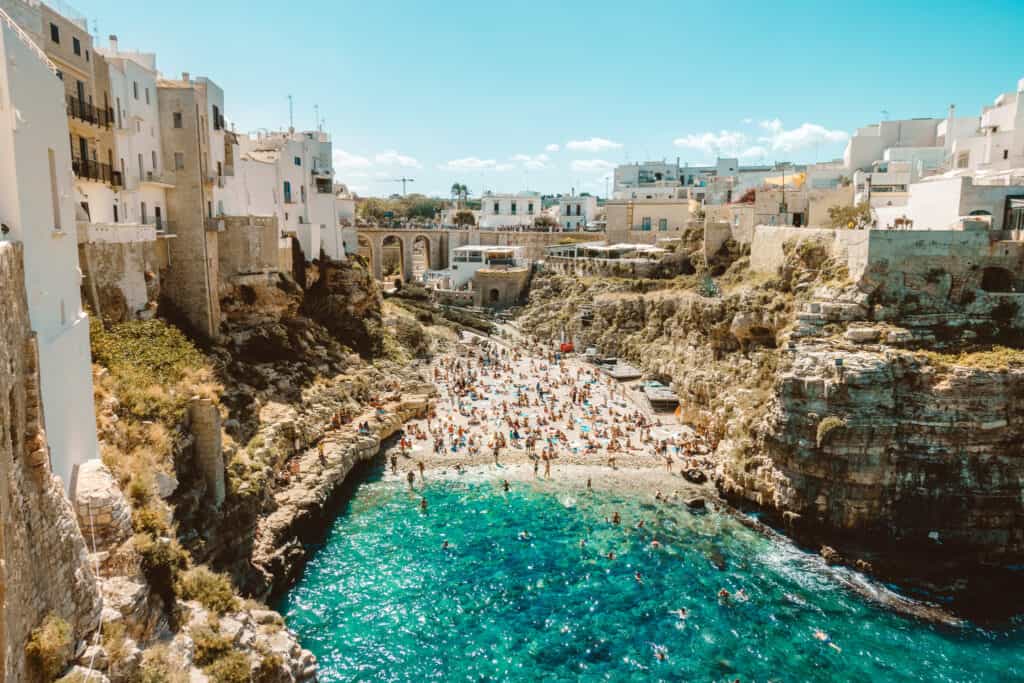
The capital of Lecce is filled with Baroque architecture, magnificent churches with facades intricately carved in local golden limestone. At the very tip of the heel is the Salento, a largely pristine coast of rocky cliffs, soaring headlands, and beaches in the deep coves between them. On the Salento’s western shore, some of Italy’s most beautiful beaches stretch in kilometers of golden sand.
The eastern shore is protected by the Parco Natural Regional Costa Otranto. Its picturesque village of Otranto (see the mosaics in its 12th-century church) is the gateway to the pristine blue-flag beaches on Baia dei Turchi. From the 15th-century castle, you can see across the Adriatic to the mountains of Albania.
21. Genoa
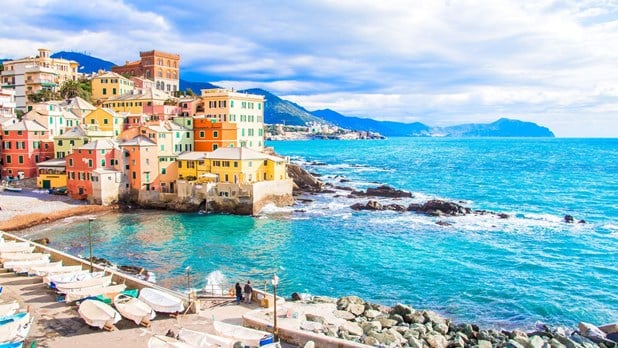
But don’t overlook the steep, atmospheric streets of the old sailors’ quarter above the Old Harbor, or the Aquarium and the Maritime Museum, both overlooking the harbor. One of Europe’s best aquariums, it holds more than 10,000 aquatic animals in a state-of-the-art facility that replicates their natural environments; the Maritime Museum is also a draw for families, as it brings the age of sail to life for children.
Take advantage of the numerous funiculars to navigate the city’s steep terrain, and don’t miss the chance to sample some of Italy’s finest cuisine.
22.Trulli of Alberobello
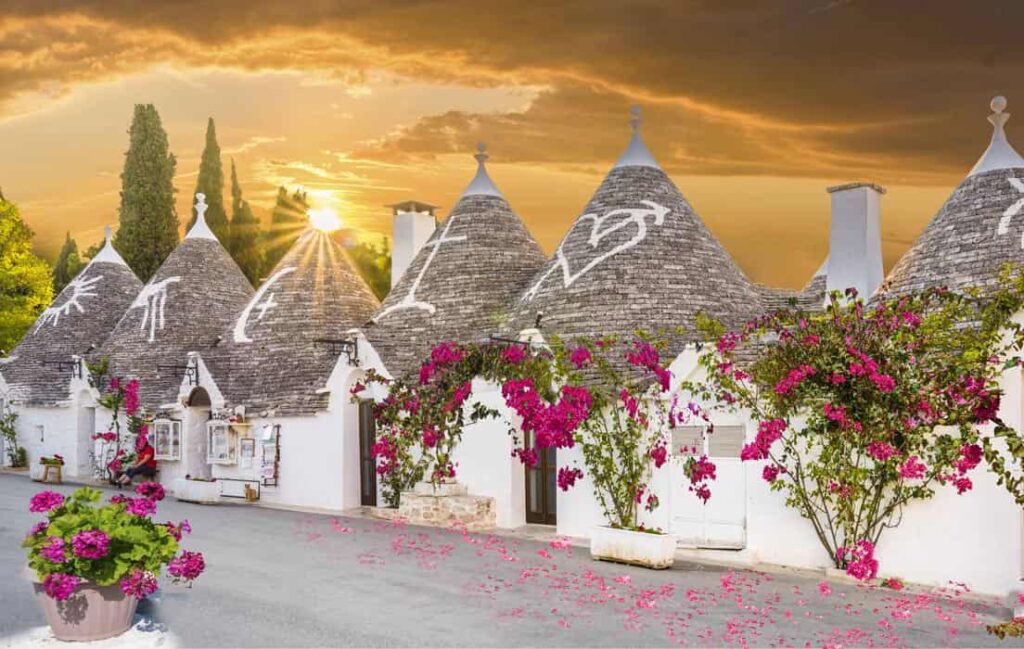
The Trulli of Alberobello is a group of conical-roofed houses located in the town of Alberobello, in the Puglia region of Italy. Built in the 14th century, the houses are made of stone and have a distinctive conical roof comprised of flat stones. Ingeniously they were put together without the use of mortar. Over the years, The Trulli of Alberobello has become a popular tourist destination, attracting scores of visitors interested in traditional architecture and local history.
23. Island of Procida
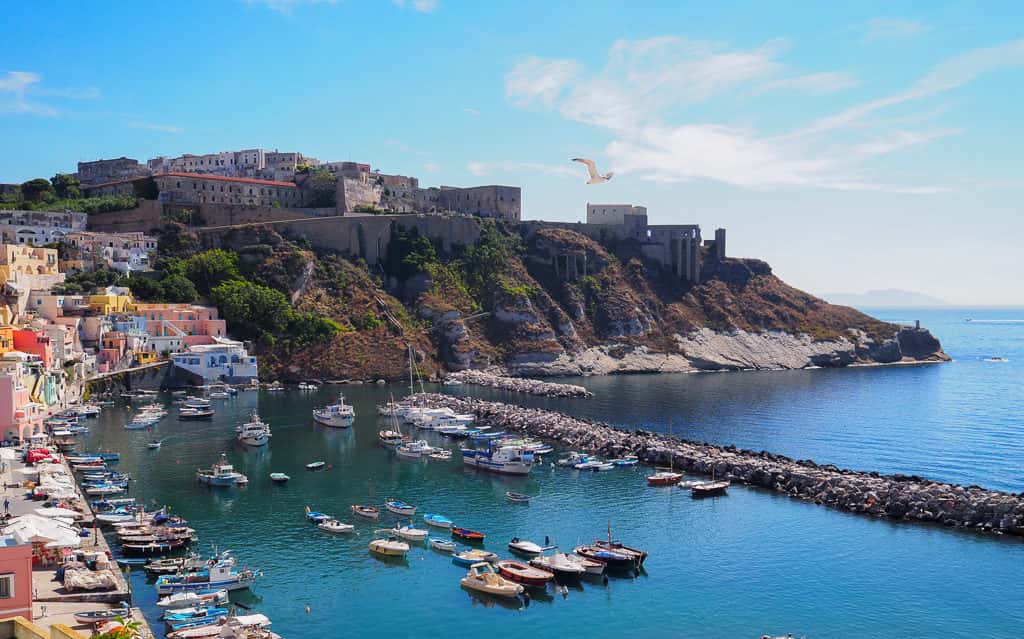
The island is known for its colorful houses, picturesque fishing villages, and charming streets.
Radiating a serene and unspoiled atmosphere, Procida is a popular destination for tourists who want to get away from the more crowded and touristy destinations of the nearby Amalfi Coast.
The island is famous for its incredible seafood cuisine. It also has a vibrant local culture that includes several festivals and events. Most notably, these include the Festa di Sant’Antonio Abate in January and the Festa di Santa Maria delle Grazie in September.
24. Verona Arena

The city of Verona is largely known for its role in the play Romeo and Juliet. It is still in use today as a performance venue, enjoying a status as one of the largest open-air opera venues in the world. Over the years, famous operas like Aida, La Traviata, and Romeo and Juliet have all been performed here. Surrounded by restaurants, cafes, and shops, the area around the venue is a popular spot for evening walks. Thus, making it a hub of cultural activity in Verona.
25. Herculaneum
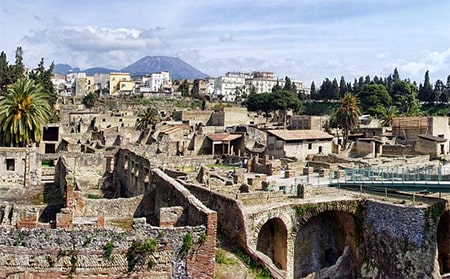
Herculaneum was an ancient Roman city destroyed, along with Pompeii, in the eruption of Mount Vesuvius in 79 AD. It was preserved for centuries under layers of ash and pumice before being discovered in the 18th century.
Since then, it has become a popular tourist destination and a key site for studying ancient Roman life and culture. The site is known for its well-preserved buildings and innovative use of concrete and waterproofing techniques. Visitors to Herculaneum can see a range of well-preserved ancient structures, including houses, thermal baths, and a theatre. Also visible are the remains of shops, public squares, and streets.