
London, the capital of the United Kingdom and one of the world’s oldest great cities, is a vast global metropolis. Its history dates back nearly 2,000 years, to the time when the Romans established it as ‘Londinium’. Situated along the banks of the River Thames in southeastern England, the city serves as a major international hub for finance, culture, fashion, and politics. With over 300 languages spoken within its borders and a population exceeding 9 million, London is a vibrant “melting pot.” London is renowned for its nearly 2,000-year history as a major global power; simultaneously, it stands as a world-leading center in the realms of finance, culture, and magnificent architecture. As a “cultural capital,” it is celebrated just as much for its free national museums—such as the British Museum and the National Gallery—as it is for its vibrant ‘West End’ theater district, which ranks as the largest theater district in the world.
London’s economy serves as a primary “engine room”—or driving force—for the United Kingdom. It is underpinned by a specialized ecosystem comprising professional services, financial institutions, and innovative technology clusters. The city remains a global economic powerhouse. It generates an annual output ranging from approximately £520 billion to £618 billion, accounting for roughly 22% to 25% of the United Kingdom’s total GDP.
The bedrock of this massive output is its highly productive service sector, which operates with an efficiency approximately 28.5% higher than the national average. London is widely regarded as one of the safest major cities in the world, offering a level of safety for tourists that is significantly higher than that found in many other Western capitals, such as New York or Berlin.
Most Famous And Attractive Tourist Places In London :
1. Buckingham Palace

Buckingham Palace is the famous home and office of the King of the United Kingdom. Located in the heart of London, it has been the official residence of British monarchs since 1837. The palace is massive, featuring 775 rooms, including grand halls for royal ceremonies, 92 offices for staff, and even its own post office and swimming pool! It is a place where the King meets with world leaders and hosts big celebrations like garden parties. One of the most popular things to see there is the Changing of the Guard, where soldiers in red uniforms and tall black hats march to music. Even though it is a working royal home, you can actually visit the beautiful State Rooms during the summer months to see incredible paintings and golden furniture. When the King is home, you’ll see the Royal Standard flag flying high on the roof; if he’s away, the Union Jack flag is flown instead.
2. London Eye

The London Eye, also known as the Millennium Wheel, is a giant, silver Ferris wheel standing on the South Bank of the River Thames. Standing at 135 metres tall, it was built to celebrate the year 2000 and is now one of the most famous landmarks in the world. The wheel has 32 glass capsules (one for each London borough), which are air-conditioned and large enough to walk around in. It moves very slowly—at about a walking pace—so you can easily step on and off while it is still moving. The London Eye The London Eye +4 A full ride, which is often called a “flight,” takes about 30 minutes to complete one circle. From the top, you get amazing 360-degree views of the entire city. On a clear day, you can see as far as 40 kilometres away, spotting famous places like Big Ben, Buckingham Palace, and even Windsor Castle. At night, the wheel lights up beautifully, often changing colours to celebrate special holidays or events.
3. Warner Bros. Studio Tour London
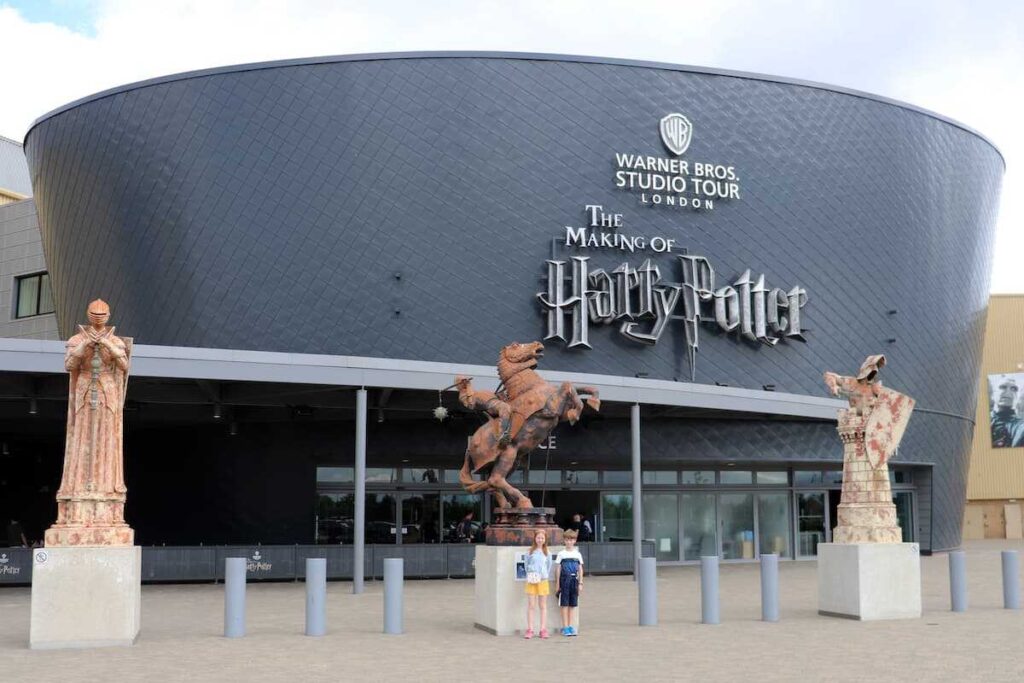
Warner Bros. Studio Tour London – The Making of Harry Potter is an award-winning attraction located in Leavesden, near Watford, that offers a behind-the-scenes look at the world’s most successful film series. Set in the actual studios where all eight movies were filmed, the tour is a massive “walk-through” exhibition featuring authentic sets, costumes, and props. You can step onto the stone floor of the Great Hall, wander down the cobbled streets of Diagon Alley, and even board the original Hogwarts Express at Platform 9 ¾. The experience is designed to showcase the incredible British craftsmanship and special effects that brought J.K. Rowling’s stories to life, from the mechanical Gringotts Bank to a breathtakingly detailed 1:24 scale model of Hogwarts Castle. A typical visit lasts between three to four hours, though there is no time limit once you are inside. Highlights include trying a frothy cup of Butterbeer in the Backlot Cafe, seeing the triple-decker Knight Bus, and exploring the eerie Forbidden Forest. For a more interactive experience, you can even “fly” a broomstick over London using green-screen technology. Because it is one of the most popular attractions in the UK, tickets from the official website must be booked well in advance, as they often sell out months ahead and cannot be purchased at the door.
4. Tower Bridge
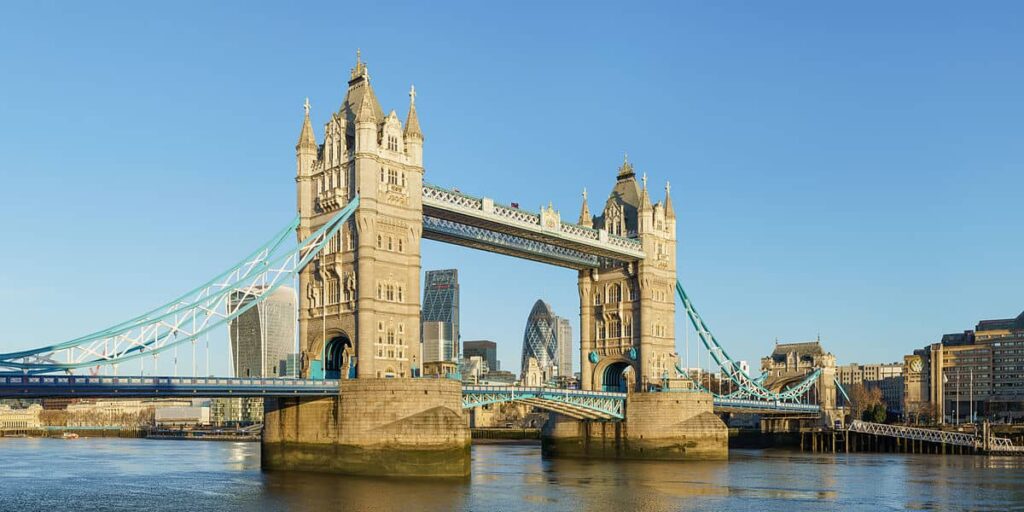
Tower Bridge is an iconic Grade I listed combined bascule and suspension bridge in London, often regarded as the city’s most defining landmark. Completed in 1894 after eight years of construction, it was designed by architect Sir Horace Jones and engineer Sir John Wolfe Barry to ease road congestion while allowing large ships to reach the busy Pool of London docks. Its most famous feature is the central bascule (from the French for “seesaw”) mechanism, consisting of two leaves that can rise to an angle of 86 degrees to let tall vessels pass. While the bridge’s majestic twin towers appear medieval, they are actually made of over 11,000 tons of Victorian steel clad in Cornish granite and Portland stone to harmonize with the nearby Tower of London. High-level horizontal walkways connect the towers 143 feet above the river, which today feature a popular glass floor for tourists. Originally powered by steam-driven hydraulic pumps, the lifting mechanism was modernized to an electro-hydraulic system in 1974, though the Victorian Engine Rooms remain open as a museum. Today, the bridge serves as a vital traffic artery for over 40,000 people daily and stands as a global symbol of London’s engineering heritage.
5. Madame Tussauds London
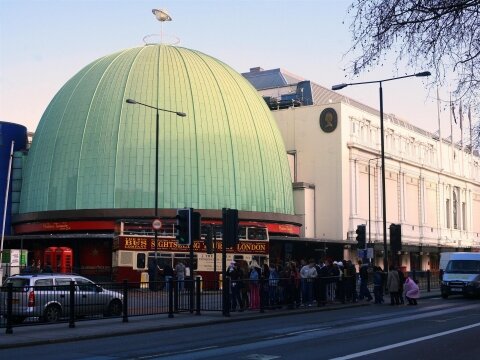
Madame Tussauds London is a world-renowned wax museum and one of the city’s most iconic tourist attractions, drawing millions of visitors annually. Founded in 1835 by French wax sculptor Marie Tussaud, it originally opened on Baker Street before moving to its current permanent location on Marylebone Road in 1884. The museum is famous for its collection of over 150 incredibly lifelike wax figures that span various fields, including British royalty, A-list Hollywood and Bollywood celebrities, world leaders, sports stars, and music legends. Each figure is an artistic masterpiece that takes a team of 20 skilled artists approximately four to six months and up to £250,000 to produce, involving over 250 precise measurements and the individual insertion of roughly 100,000 strands of real human hair.
6. British Museum
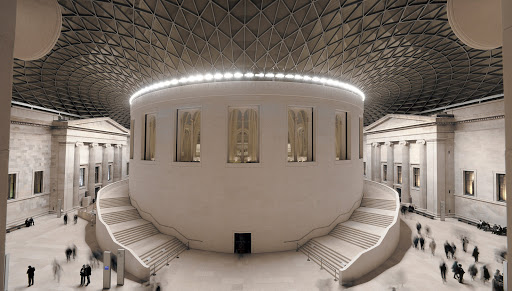
The British Museum, located in the Bloomsbury area of London, is the world’s first national public museum and one of the most comprehensive institutions dedicated to human history, art, and culture. Established in 1753 following the bequest of scientist Sir Hans Sloane, it opened its doors in 1759 and has since grown to house a staggering permanent collection of over eight million objects spanning two million years of global history. Its architecture is a landmark in itself, featuring the iconic Greek Revival façade with 43 Ionic columns designed by Sir Robert Smirke. At the heart of the building lies the Queen Elizabeth II Great Court, a two-acre space designed by Foster + Partners that opened in 2000; it is the largest covered public square in Europe, famous for its magnificent glass-and-steel tessellated roof that surrounds the historic circular Reading Room.
7. Kew Gardens
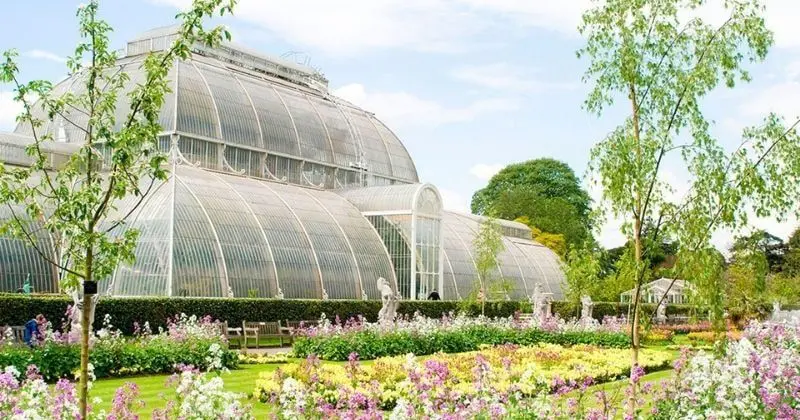
Kew Gardens, officially known as the Royal Botanic Gardens, Kew, is a world-leading scientific institution and a UNESCO World Heritage Site located in southwest London. Spanning 320 acres, it houses the largest and most diverse botanical and mycological collections in the world, featuring over 50,000 living plants and more than 8.5 million preserved specimens in its herbarium. Founded in 1759 by Princess Augusta, the gardens evolved from a royal retreat into a global center for plant research and conservation. Today, Kew is renowned for its iconic Victorian glasshouses, including the Palm House—a 19th-century iron and glass masterpiece housing a tropical rainforest—and the Temperate House, which is the world’s largest surviving Victorian glasshouse.
8. Westminster Abbey

Westminster Abbey, formally titled the Collegiate Church of Saint Peter at Westminster, is one of the United Kingdom’s most iconic religious and historical landmarks, serving as the traditional site for British coronations and royal burials since 1066. Located in the heart of London near the Palace of Westminster, the current structure is primarily a masterpiece of Gothic architecture, largely rebuilt starting in 1245 under the orders of King Henry III. The Abbey is technically a “Royal Peculiar,” meaning it is under the direct jurisdiction of the British monarch rather than a diocesan bishop. It serves as a national mausoleum, housing the remains of more than 3,300 people, including 17 monarchs and legendary figures such as Sir Isaac Newton, Charles Darwin, and the poets commemorated in the famous Poets’ Corner. Notable internal features include the 13th-century Cosmati Pavement, the ancient Coronation Chair, and the high-vaulted nave, which is the tallest of its kind in England. Today, it remains a working church with daily services, welcoming over a million tourists annually to witness its thousand-year legacy.
9. Hyde Park
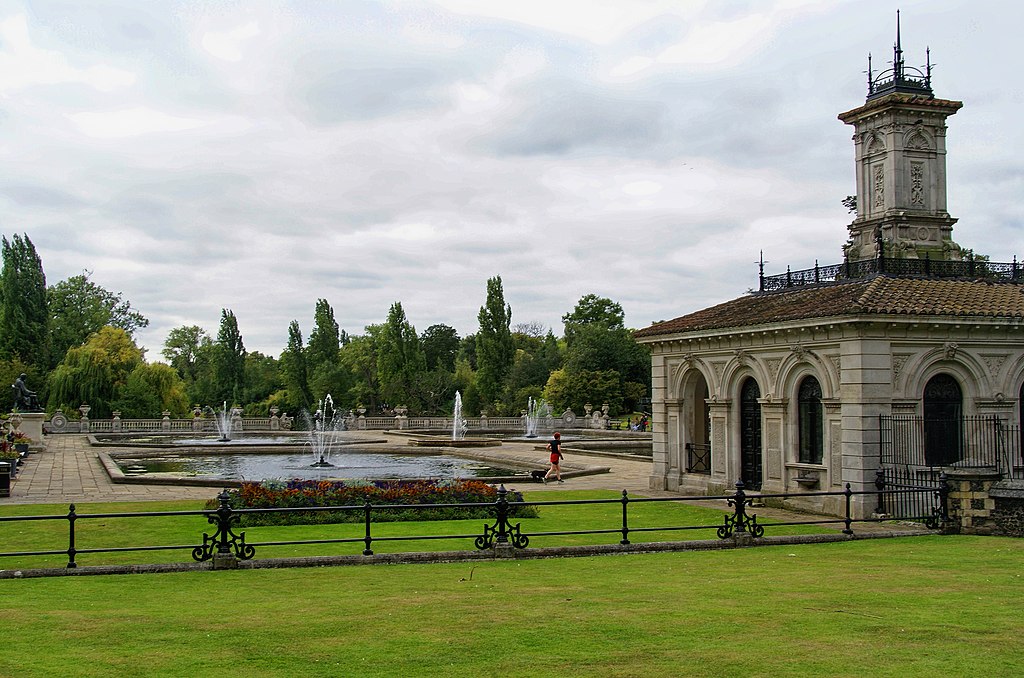
Hyde Park, established in 1536 by King Henry VIII as a royal hunting ground, is the largest of London’s eight Royal Parks, covering approximately 350 acres (142 hectares). Located in the heart of central London, it is famous for its historical significance and serving as a “People’s Park” for leisure, protest, and grand celebrations. It was opened to the general public in 1637 by King Charles I and has since hosted landmark events like the Great Exhibition of 1851 and legendary rock concerts by bands like the Rolling Stones. The park is uniquely divided by the Serpentine Lake, which offers boating and is home to the oldest swimming club in Britain. Notable landmarks within its boundaries include Speakers’ Corner, a global symbol of free speech, the historic Rotten Row riding track, and the Diana, Princess of Wales Memorial Fountain. Today, it remains a vibrant urban oasis, attracting millions annually for activities ranging from quiet strolls in the Rose Garden to the massive festive Winter Wonderland during the holidays.
10. Tower of London

The Tower of London is a complex fortress of 20 towers that has stood as a symbol of royal power for nearly a millennium. While its origins lie in the White Tower built by William the Conqueror, the site was expanded over centuries into a formidable concentric castle with double defensive walls and a moat. Beyond its reputation as a notorious prison, it served as the original home of the Royal Mint, the Public Record Office, and the Royal Observatory before it moved to Greenwich. The Tower’s history is deeply intertwined with the Tudor dynasty; it was the site of the executions of three English queens, including Anne Boleyn, whose ghost is one of many said to haunt the grounds. Today, the fortress is a bustling cultural site where Yeoman Warders—who must have served at least 22 years in the military—live with their families, maintaining centuries-old traditions like the Ceremony of the Keys.
11. London Dungeon
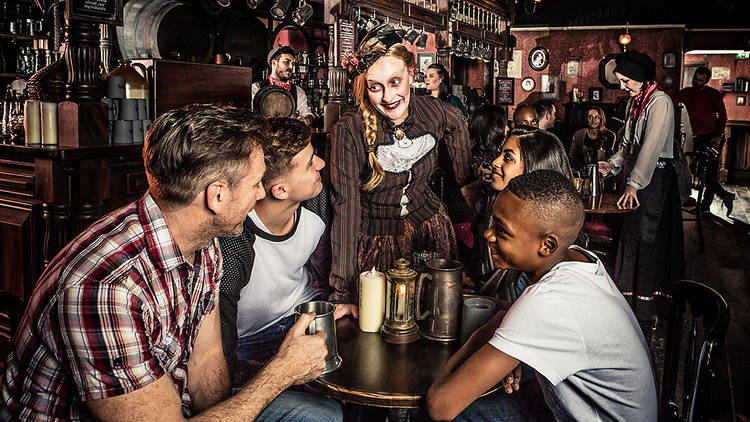
The London Dungeon, founded in 1974, is a uniquely thrilling tourist attraction located on London’s South Bank, directly opposite the Houses of Parliament. This immersive experience recreates various gory and macabre events from 1,000 years of London’s history using a mixture of live actors, detailed theatrical sets, special effects, and rides. Visitors journey through approximately 16 to 19 shows where they encounter infamous characters such as Jack the Ripper and Sweeney Todd, witness the horrors of the Great Plague, and participate in a mock trial before a “mad judge”. The attraction is designed with a style of gallows humour, ensuring that while the tales are dark and gruesome, they remain entertaining for a broad audience. Key features include the Tyrant Boat Ride, which simulates a journey to execution, and Drop Dead, a vertical drop ride themed around the public hangings at Newgate Prison. Owned by Merlin Entertainments, the Dungeon moved from its original Tooley Street location to its current home in County Hall in 2013, continuing its legacy as a top-tier “horror” attraction in the capital.
12. Alton Towers
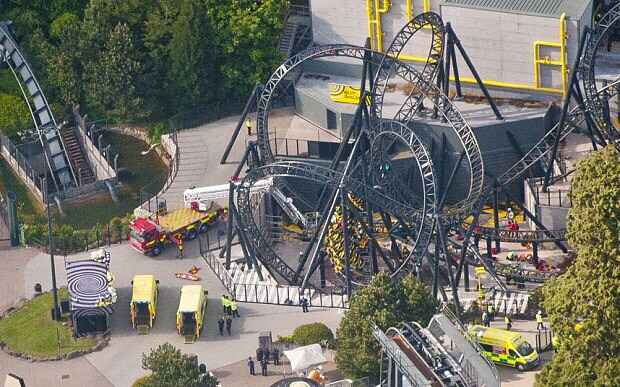
Alton Towers Resort, located in the Staffordshire countryside, is the largest and most popular theme park in the United Kingdom, spanning over 500 acres of a private estate. Originally a grand aristocratic residence, the site was transformed into a tourist attraction in 1860 before becoming a modern theme park in 1980 with the introduction of the Corkscrew roller coaster. The park is renowned for its world-class “Secret Weapon” (SW) roller coasters, including Oblivion, the world’s first vertical drop coaster, The Smiler, which holds the world record for the most inversions, and Nemesis Reborn, an iconic inverted coaster. Beyond the thrills, the resort features the CBeebies Land for younger children, a massive Waterpark, and the historic Grade II listed gardens and ruins of the original Gothic mansion. Today, owned by Merlin Entertainments, it operates as a full-scale resort with multiple themed hotels, woodland lodges, and a “stargazing” pod village.
13. Big Ben and Parliament
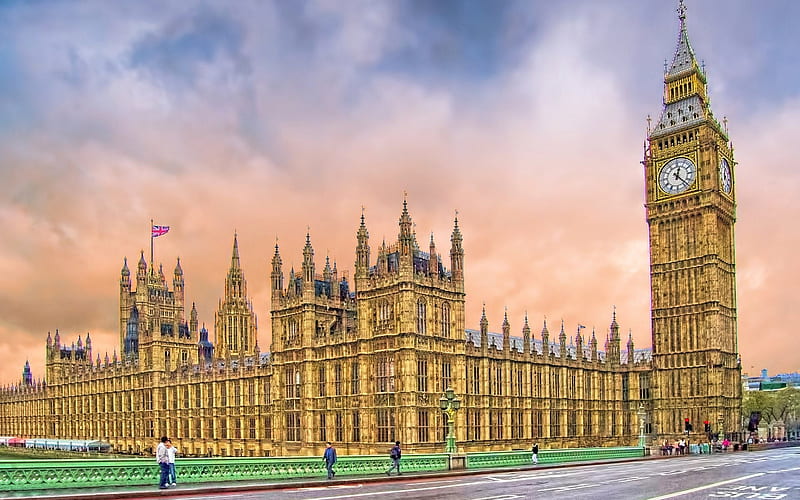
Big Ben and the Houses of Parliament, collectively known as the Palace of Westminster, serve as the iconic seat of the United Kingdom’s government and a premier symbol of British democracy. While many people use the name “Big Ben” to refer to the clock tower, it is technically the nickname for the Great Bell housed inside the tower, which was renamed the Elizabeth Tower in 2012 to honour Queen Elizabeth II’s Diamond Jubilee. The current Gothic Revival structure was designed by architects Charles Barry and Augustus Pugin after a devastating fire destroyed the medieval palace in 1834. The complex is home to the two houses of the UK Parliament: the House of Commons and the House of Lords, where laws are debated and passed. Situated on the north bank of the River Thames, this UNESCO World Heritage Site remains one of the most photographed and politically significant landmarks in the world.
14. Shoreditch

Shoreditch, located in the East End of London, is a vibrant and trend-setting district celebrated as the city’s primary hub for creativity, street art, and nightlife. Originally a working-class industrial area, it underwent a dramatic transformation in the 1990s into a tech and arts center, famously becoming the heart of London’s “Tech City” near Old Street. The neighborhood is world-renowned for its street art, featuring works by famous artists like Banksy and Stik, which decorate the brick walls of its narrow lanes. It is a major destination for food and shopping, centered around the historic Spitalfields Market and the innovative Boxpark Shoreditch, a pop-up mall made from shipping containers. Shoreditch’s unique atmosphere blends historic Victorian architecture with modern luxury lofts, making it a favorite for young professionals, artists, and tourists looking to experience the cutting edge of London’s urban culture.
15. Piccadilly Circus And Trafalgar Square
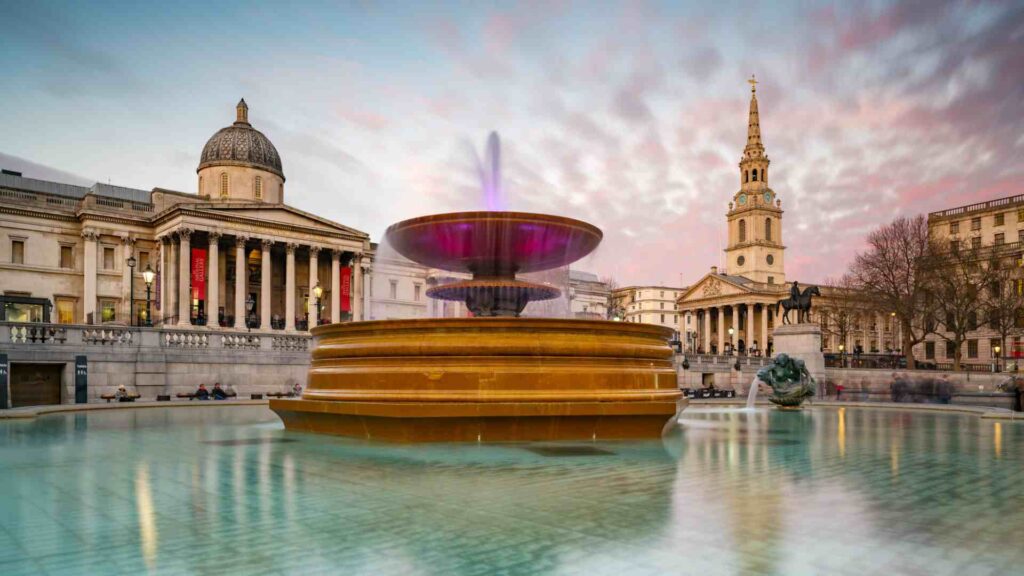
Piccadilly Circus and Trafalgar Square are two of London’s most famous public spaces, located in the heart of the West End and serving as the city’s primary social and cultural crossroads. Piccadilly Circus, often compared to New York’s Times Square, was created in 1819 to connect Regent Street with Piccadilly; it is world-famous for its massive neon advertising displays and the Shaftesbury Memorial Fountain, topped by the winged statue popularly known as Eros. Just a short walk away via Haymarket or Pall Mall lies Trafalgar Square, a grand ceremonial plaza designed by John Nash to commemorate the British naval victory at the Battle of Trafalgar in 1805. The square is dominated by the 169-foot Nelson’s Column, guarded by four massive bronze lions, and is flanked by the National Gallery, one of the world’s premier art museums. Together, these locations act as the gateway to London’s theatre district, major shopping streets, and government buildings, serving as central gathering points for everything from New Year’s Eve celebrations to political rallies.
16. Sea Life Centre
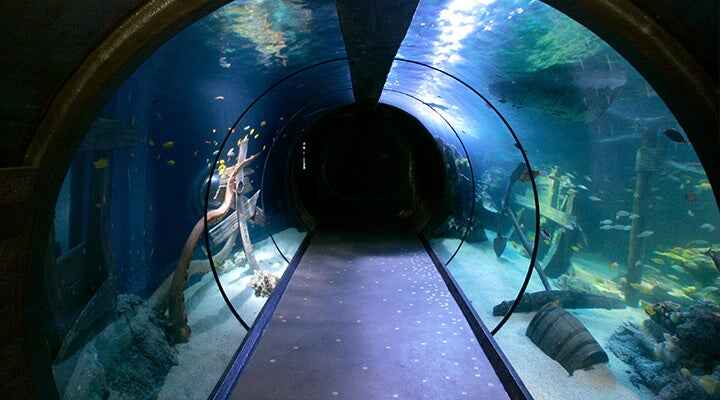
SEA LIFE London Aquarium, located in the historic County Hall on the South Bank, is one of Europe’s largest collections of global marine life and a premier destination for families and conservation enthusiasts. Positioned right next to the London Eye, the aquarium takes visitors on an immersive journey through themed zones such as Shark Walk, Ray Lagoon, and Ocean Tunnel, housing over 500 species in massive, high-tech tanks. Since opening in 1997, it has evolved into a major center for education and environmental advocacy, participating in global breeding programs for endangered species like seahorses and penguins. The experience is designed to be highly interactive, featuring “touch pools” where visitors can feel starfish and anemones, as well as dramatic glass walkways that allow you to walk directly over swimming sharks. As part of the SEA LIFE Trust, the center focuses heavily on the “Breed, Rescue, Protect” mission, making it both an entertaining attraction and a vital contributor to marine conservation.
17. The National Gallery
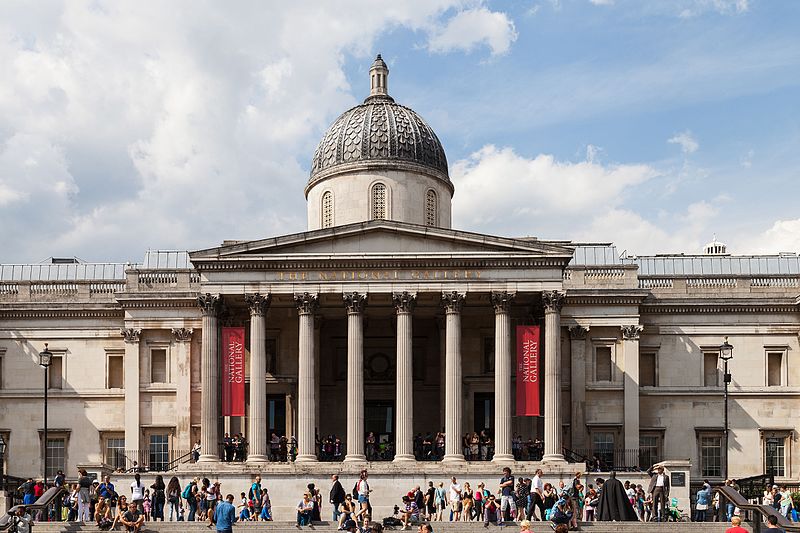
The National Gallery, located on the northern edge of Trafalgar Square, is one of the world’s most prestigious art museums, housing the United Kingdom’s national collection of paintings in the Western European tradition. Founded in 1824, the gallery holds a vast collection of over 2,300 masterpieces dating from the mid-13th century to 1900. Unlike many European national museums, the National Gallery was not formed by nationalising an existing royal collection; instead, it grew through private donations and strategic purchases intended to provide the public with free access to high-quality art. The iconic Neoclassical building, designed by William Wilkins and expanded over the years with additions like the modern Sainsbury Wing, contains world-famous works by artists such as Leonardo da Vinci, Vincent van Gogh, and Claude Monet. Today, it remains one of the most visited art museums globally, continuing its mission to make great art accessible to everyone through free admission and extensive educational programmes.
18. Royal Observatory Greenwich
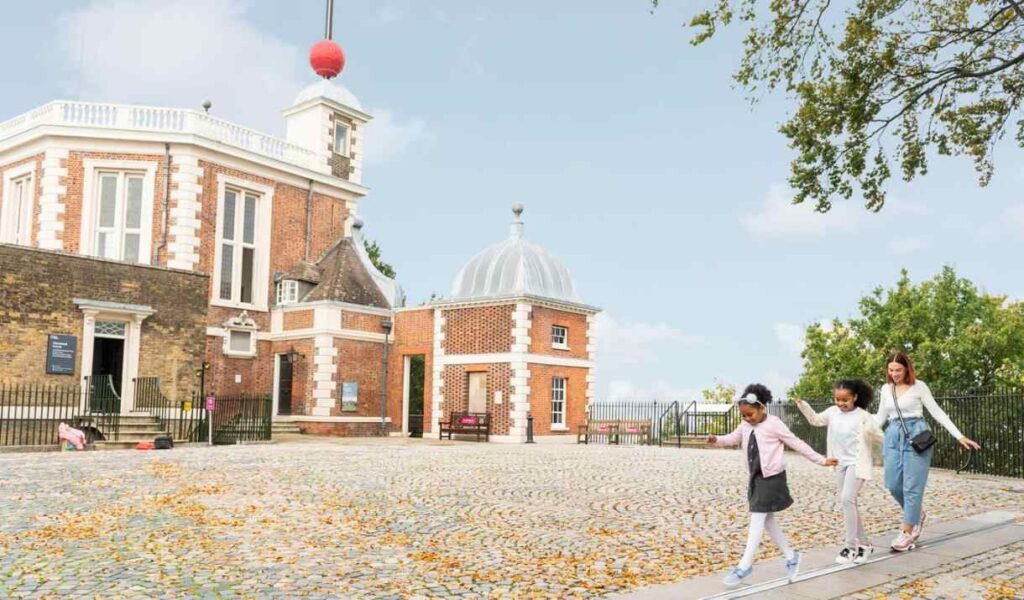
The Royal Observatory, Greenwich, is a historic institution located on a hilltop in Greenwich Park, overlooking the River Thames. Founded in 1675 by King Charles II, it was established to improve naval navigation and “find out the longitude of places” to prevent shipwrecks. It is world-famous as the home of the Prime Meridian (Longitude 0°), the line that divides the Eastern and Western Hemispheres and serves as the basis for Greenwich Mean Time (GMT). The observatory’s original building, Flamsteed House, was designed by the celebrated architect Sir Christopher Wren and housed the first Astronomer Royal, John Flamsteed. Today, it is part of the Royal Museums Greenwich and a UNESCO World Heritage Site, functioning as a museum that showcases historic astronomical instruments, the famous H4 marine chronometer by John Harrison, and London’s only planetarium.
19. Thames Cruise
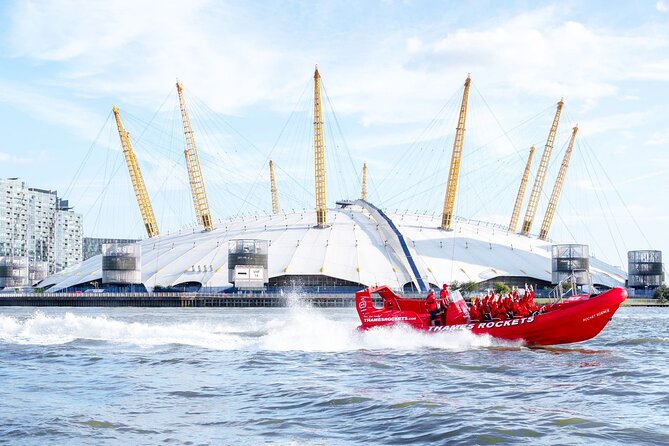
A Thames River Cruise is one of the most popular ways to experience London, offering a unique vantage point of the city’s world-famous skyline and historic landmarks. Operating primarily between Westminster, the London Eye, Tower Pier, and Greenwich, these cruises allow passengers to avoid the city’s congested streets while enjoying panoramic views. As you glide along the river, you can see a concentrated “greatest hits” of British architecture, including the Houses of Parliament, St. Paul’s Cathedral, the Shard, and the Tower of London. Many services offer live or recorded commentary, providing fascinating historical context about the river’s role as the lifeblood of London. Options range from flexible “hop-on, hop-off” sightseeing boats and high-speed Thames Clippers (the river bus) to luxury dining cruises featuring afternoon tea, lunch, or sunset jazz dinners.
20. ZSL London Zoo
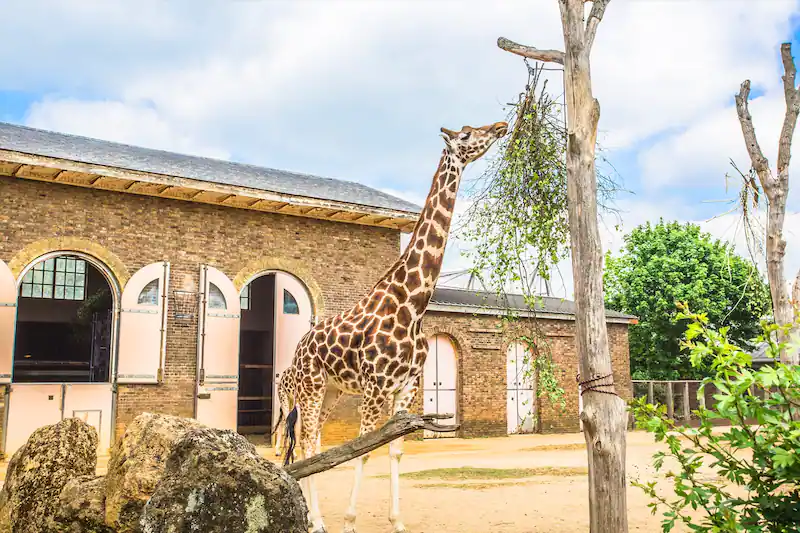
ZSL London Zoo, located at the northern edge of Regent’s Park, is the world’s oldest scientific zoo, having opened its doors to fellows of the Zoological Society of London in 1828 before opening to the public in 1847. Today, it is a global leader in wildlife conservation and education, housing a collection of nearly 15,000 animals across hundreds of species. The zoo is celebrated for its blend of historic architecture—including several Grade I and II listed buildings—and modern, immersive exhibits designed to mimic natural habitats. Key attractions include the Land of the Lions, which transports visitors to the Gir Forest of India, and Tiger Territory, a massive glass-walled enclosure for Sumatran tigers. As a charity-led institution, the zoo plays a critical role in international breeding programs for endangered species, making it much more than just a tourist attraction; it is a vital hub for protecting the planet’s biodiversity.
21. Osborne House
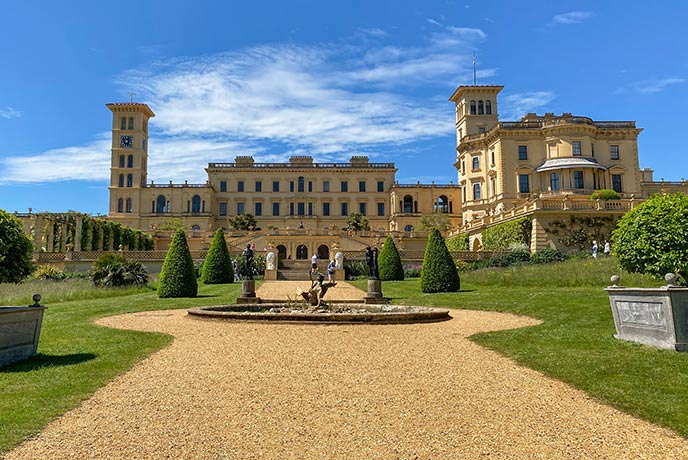
The house is built with many windows to provide proper ventilation. Witness the house that provides magnificent yet intimate insights into the life of the Royal family. Have a look at the birthday and Christmas presents the couple exchanged, explore their private family bedrooms, and gaze at the lavish royal apartments.
The Osborne House consists of three connecting buildings and various wings that are built around an open courtyard whose upper and lower terraces contain flowerbeds, statues, and a large elegant fountain. You can stroll on the huge pathway of the house which is filled with paintings and white marble sculptures which shows Victoria and Albert’s love for arts. Discover the history behind how Queen Victoria commissioned a new wing that features the Durbar room, hired Indian servants, and also learned Hindi.
22. Florence Nightingale

The Florence Nightingale museum was made to pay an ode to her for her contribution to nursing to celebrate her achievements. At the museum, you can see the famous lamp carried by Nightingale during the Crimean War which gave her the nickname ‘The Lady with the Lamp’. Furthermore, the museum houses a rare collection of personal items associated with Nightingale like her medicine chest, notes on medicines, and other nursing artifacts.
Some special exhibitions like the ‘Nightingale in 200 Objects, People & Places’ are also organized at the museum. These exhibitions throw light on the leadership and campaigning skills of the iconic female. Learning sessions which include school workshops, family visits, and free learning resources are conducted at various times to foster deeper knowledge about Nightingale’s contribution to the world of nursing. .
23. Soho
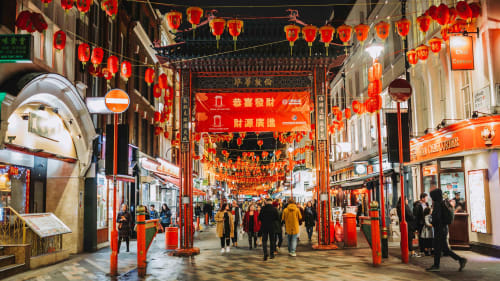
Nestled in Westminster, Soho is a go-to place in Central London to experience a mix of cultures and history along with food, music, leisure and extravaganza. A labyrinth of fashion streets, great eating joints and amazing nightlife.
The place has offices of Twentieth Century Fox, Paramount Pictures and Trident Studios, along with theatres, restaurants and clubs, making it a happening place for people to visit. Having been home to people like Mozart and Karl Marx, the place is also infamous for being a red-light area.
24. Millennium Bridge
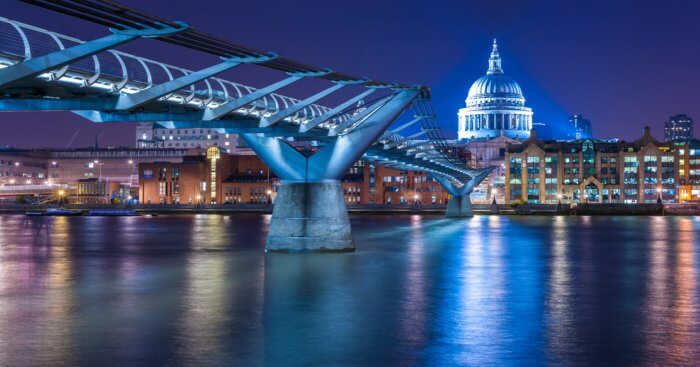
The Millennium Bridge, officially known as the London Millennium Footbridge, is a striking steel suspension bridge for pedestrians linking the City of London at St. Paul’s Cathedral with the South Bank near the Tate Modern. Designed by architect Norman Foster and sculptor Anthony Caro with engineers Arup, it opened in June 2000 as London’s first new Thames crossing in over a century. However, it famously gained the nickname “The Wobbly Bridge” after it was closed just two days after opening due to an unexpected lateral vibration caused by the synchronized footsteps of thousands of pedestrians. After significant modifications to include dampers that absorbed this sway, it reopened in 2002 and has since become one of London’s most photographed landmarks. Its sleek, “blade of light” design provides a perfectly framed view of St. Paul’s Cathedral’s dome, making it a favorite for filmmakers—most notably appearing in the opening scenes of Harry Potter and the Half-Blood Prince.
25. Kidzania London
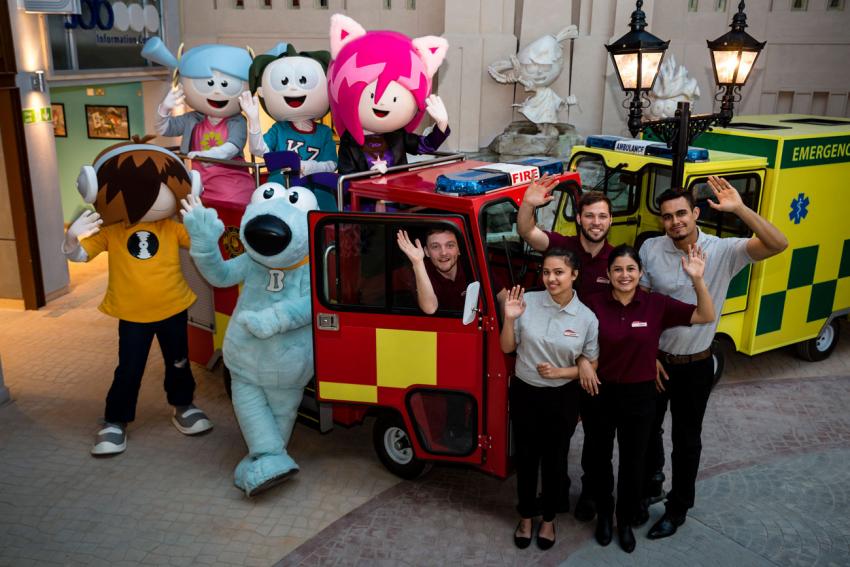
KidZania London, located within the Westfield London shopping centre in Shepherd’s Bush, is an innovative indoor “edutainment” theme park designed specifically for children aged 4 to 14. Spanning 75,000 square feet, it is built as a scaled-down city, complete with paved streets, buildings, and a functioning economy. Upon entry, children receive a sum of “kidZos” (the city’s currency) and can choose from over 60 real-life role-play activities, ranging from performing surgery as a doctor or flying an aircraft as a pilot to fighting fires as a firefighter or hosting a radio show. Each activity is designed to teach essential life skills such as financial literacy, teamwork, and independence, as children earn more kidZos for their “work,” which they can then save in the city bank or spend on leisure activities. This immersive environment, which uses branded partnerships with companies like British Airways and Nintendo to add realism, offers a unique safe space where children are in charge while parents watch from designated viewing areas or the parent lounge.
26. LEGOLAND Windsor Resort

The LEGOLAND Windsor Resort Hotel has an impressive dragon-guarded entrance, a pirate-themed splash pool, and a water play area. It has Pirate, Kingdom, Adventure, Lego Friends, and Ninjago rooms. Alternatively, the LEGOLAND Castle Hotel boasts magical Lego bricks, in-room treasure hunts, king-sized feasts at Tournament Tavern, and themed rooms such as Wizard and Knight. There is also an adventure playground with towers and an assault course.
In addition to the accommodations, visitors can visit LEGO® MYTHICAL to enjoy three amazing rides, including Flight of the Sky Lion. With a family staycation at LEGOLAND® Windsor Resort, visitors get several benefits, including 1-day access to the LEGOLAND Theme Park, a delicious hot breakfast, and access to the Pirate-themed indoor pool.
27. The Victoria and Albert Museum
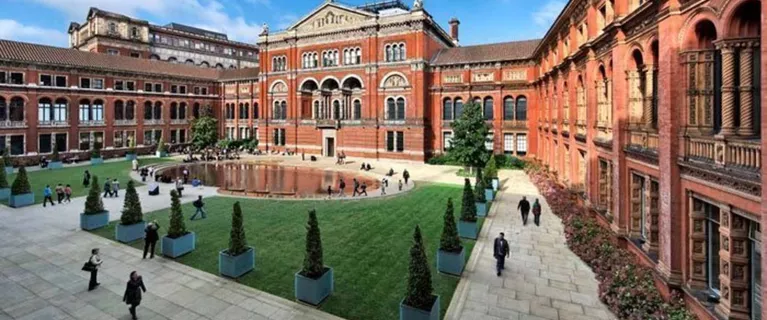
The Victoria and Albert Museum is amongst some of the most popular museums in London and is located in the Royal Borough of Kensington and Chelsea. Founded in the year 1852, it is the world’s largest applied and decorative arts and design museum with a permanent collection consisting of 2.27 million objects.
Covering an area of 12.5 acres, the museum has a total of 145 galleries, containing arts spanning 5,000 years of civilization. The museum has an enviable collection of glass, ceramics, prints, drawings, fashion ware, furniture, jewelry, musical instruments and paintings amongst other items.
28. The O2
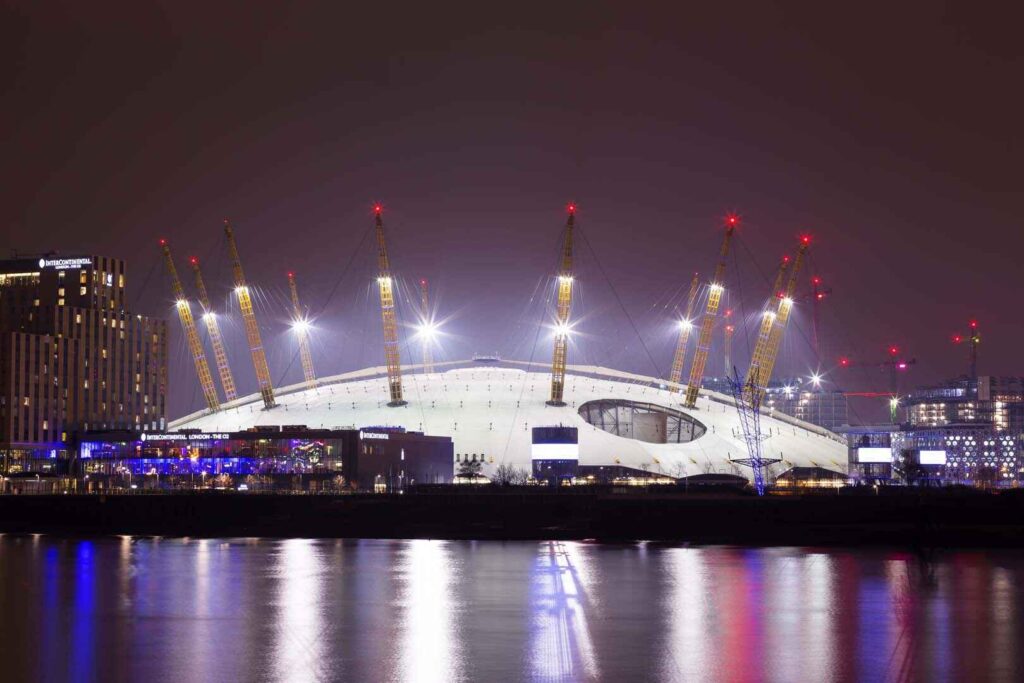
A total entertainment hub, the O2, located in the Southeast part of London is a large space with hosts of restaurants, exhibition spaces, a music club, and the United Kingdom’s second-largest indoor arena, the O2 Arena.
The rights were later given to Meridian Delta Ltd. to develop the Dome. As part of the development, a path from the O2 leading to the North Greenwich station was constructed with a glass roof above it to save people from getting wet in the rain. The Peninsula Square piazza was also built for special events.
29. The Imperial war museum
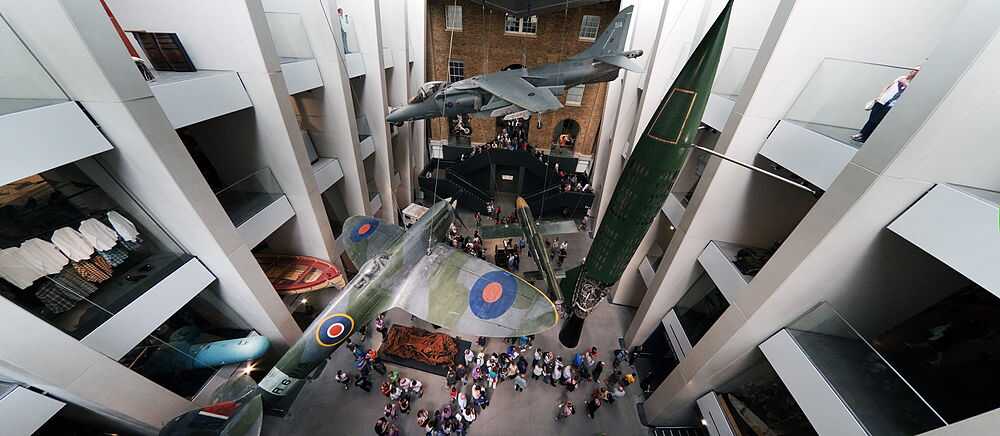
The Imperial war museum is one of the finest museums of the world. Possessing some of the prominent apparatus used in the course of the World Wars this museum is a must – visit. The museum throws light on the time of war and its influence on people. Along with war weapons used in the war, portraits of the time are exhibited reflecting on what the war did to the people living it.
The exhibit of the museum is spread across multiple floors in the building, the ground floor displays a collection of objects from World War I and II, along with a few war scene models. You also can find tanks, rockets etc. used during war.
30. The Shard
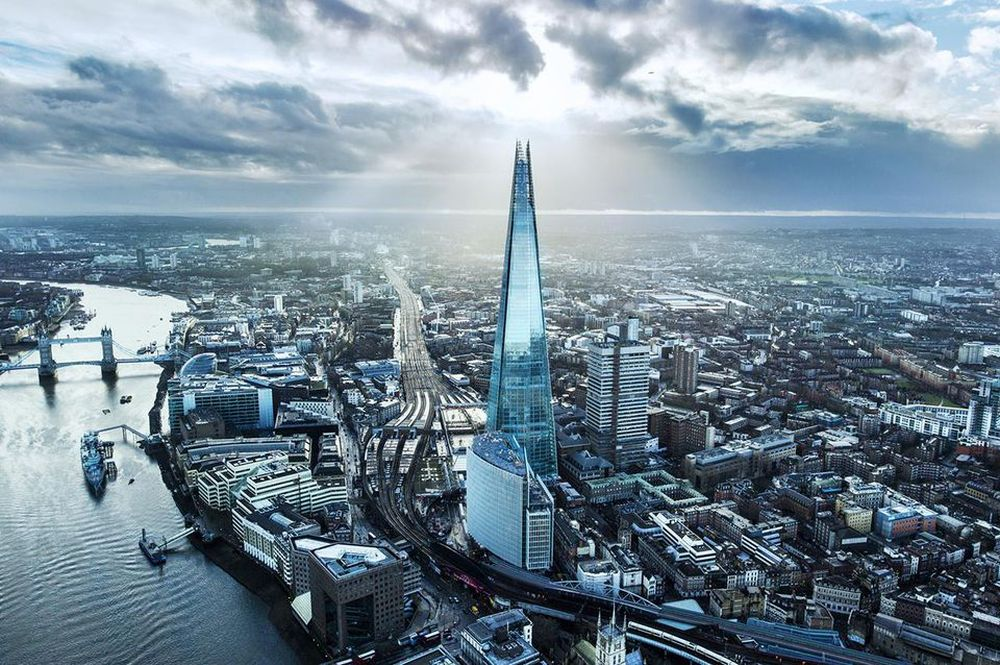
The Shard, also known as the Shard of Glass, is a breathtaking 72-storey skyscraper in Southwark, London, standing as the tallest building in Western Europe at 309.6 metres (1,016 feet). Designed by the renowned Italian architect Renzo Piano, the structure was completed in 2012 and is famous for its distinct neo-futuristic, pyramid-like shape clad in 11,000 panes of glass. It was designed as a “vertical city,” housing a mix of high-end offices, award-winning restaurants like Aqua Shard and Hutong, the five-star Shangri-La Hotel, and exclusive residential apartments. The building’s crown jewel is The View from The Shard, a premier tourist attraction featuring indoor and outdoor observation decks on floors 68, 69, and 72, offering unparalleled 360-degree views stretching up to 40 miles across London and beyond. Located directly above the busy London Bridge Station, it has become a defining icon of the city’s modern skyline and a symbol of London’s global architectural ambition.