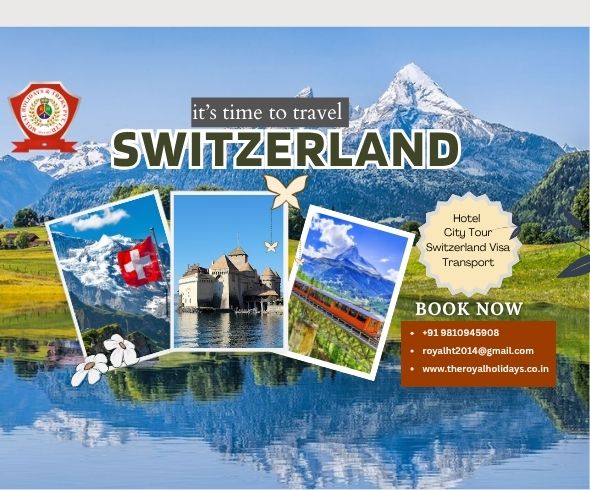
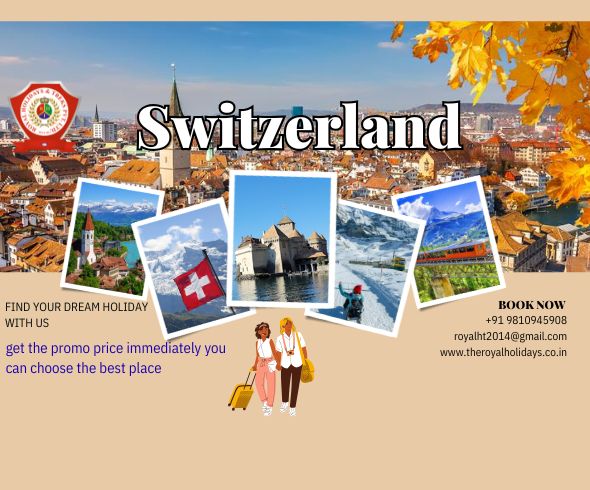
Switzerland is a small, landlocked country situated in the heart of Europe, renowned for its magnificent natural beauty and high quality of life. It is divided into three main geographical regions: the rugged Swiss Alps in the south, which cover approximately 60% of the country’s landmass; the smaller Jura Mountains in the northwest; and the central Swiss Plateau, where the majority of the population—along with major cities such as Zurich and Geneva—is located. Although Bern serves as the seat of government and functions as the capital, Zurich remains the largest and most cosmopolitan city. Switzerland is a multilingual society where four official languages are spoken—German, French, Italian, and Romansh—reflecting its diverse cultural heritage.
Economically, it is one of the most prosperous nations in the world, known for its precision watchmaking, high-quality pharmaceuticals, and, of course, its world-famous chocolate and cheese. Tourists flock to Switzerland year-round to enjoy its exceptionally efficient public transportation system, pristine lakes, and iconic mountain peaks such as the Matterhorn. Whether you are visiting for skiing in the winter or hiking in the summer, the country offers a unique blend of modern innovation and timeless tradition. The nation also derives a significant portion of its wealth from the service sector, which accounts for approximately 74% of its economy. This includes its world-renowned banking and insurance industries, which attract international investors due to Switzerland’s long history of political stability and neutrality. Additionally, tourism contributes billions of dollars annually, as millions of people visit the Alps and Switzerland’s major cities. By combining these high-tech exports with a robust financial services sector, Switzerland maintains one of the highest standards of living in the world.
Switzerland is consistently ranked as one of the safest countries in the world, making it an excellent destination for all types of travelers—whether they are visiting with family or traveling solo. Violent crime is extremely rare here, and one can roam freely and without hesitation, even late at night, in cities such as Zurich, Geneva, and Bern. The country’s security is bolstered by its political stability, high standard of living, and a highly reliable public transportation system that features excellent lighting and surveillance. While you should still remain vigilant against petty theft—such as pickpocketing in crowded train stations or tourist hotspots—the general atmosphere remains thoroughly orderly and secure.
Most Famous And Attractive Tourist Places In Switzerland :
1. Lucerne
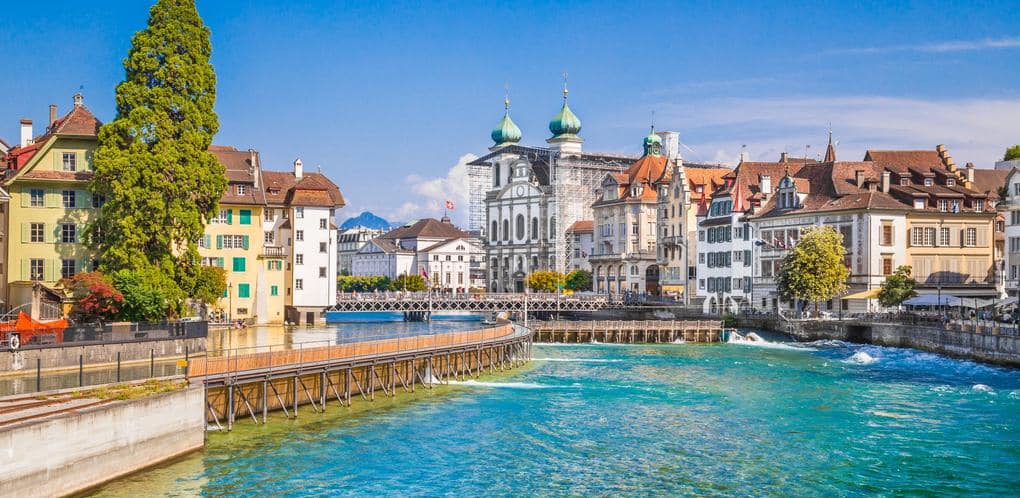
Lucerne, or Luzern, is a picturesque city in central Switzerland known as the “City of Lights” and serves as a gateway to the Swiss Alps. Nestled on the shores of Lake Lucerne at the outfall of the Reuss River, the city is famous for its well-preserved medieval architecture, including the 14th-century Chapel Bridge (Kapellbrücke)—the oldest covered wooden bridge in Europe—and its adjacent octagonal Water Tower. The traffic-free Old Town (Altstadt) features cobblestone streets and buildings adorned with colourful frescoes. Other significant landmarks include the poignant Lion Monument, which commemorates Swiss Guards from the French Revolution, and the Musegg Wall, a historic fortification with nine watchtowers. Surrounded by iconic peaks like Mount Pilatus and Mount Rigi, Lucerne is a major hub for tourism, culture, and transport, hosting world-class events like the Lucerne Festival for classical music and a vibrant traditional Carnival.
2.Lake Geneva
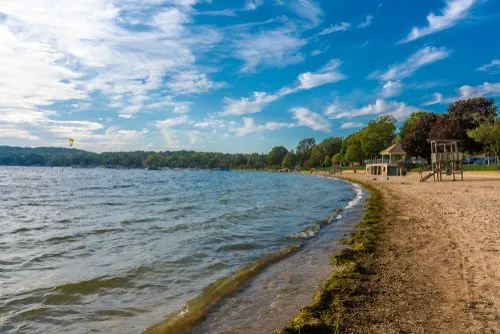
Lake Geneva, known locally as Lac Léman, is a vast, crescent-shaped glacial lake situated on the north side of the Alps and shared between Switzerland (approximately 60%) and France (40%). It is the largest body of water in Switzerland and one of the largest freshwater lakes in Western Europe, primarily fed and drained by the Rhône River. The lake’s stunning shores are home to cosmopolitan cities like Geneva—famous for its towering Jet d’Eau fountain—and Lausanne, as well as the elegant “Swiss Riviera” towns of Montreux and Vevey. Scenic highlights include the medieval Château de Chillon perched on a rocky island and the UNESCO-listed Lavaux vineyard terraces that cascade down to the water. The region offers a temperate micro-climate and a wealth of activities, from Belle Époque paddle steamer cruises to swimming, sailing, and mountain hiking with views of the Mont Blanc massif.
3. Zurich

Zurich is Switzerland’s largest city and a prominent global hub for finance, culture, and innovation. Located at the northern tip of Lake Zurich where the Limmat River begins, the city seamlessly blends its 2,000-year history with a highly modern, cosmopolitan atmosphere. Its historic heart, the Altstadt (Old Town), features narrow cobblestone streets and medieval architecture, including the iconic twin-towered Grossmünster and the Fraumünster, famous for its Marc Chagall stained-glass windows. Just steps away lies Bahnhofstrasse, one of the world’s most exclusive shopping avenues, leading to the main financial district. Beyond its reputation as a banking powerhouse, Zurich is a vibrant center for the arts, housing over 50 museums like the Swiss National Museum and the Kunsthaus Zürich, and serving as the birthplace of the avant-garde Dada movement. The city’s high quality of life is supported by an exceptionally efficient public transport network and a deep connection to nature. Residents and visitors alike enjoy “badi” culture—swimming in the pristine river and lake during summer—and easy access to the nearby Uetliberg mountain for panoramic Alpine views. Zurich is also a major educational center, home to the University of Zurich and the prestigious ETH Zurich, which has been associated with numerous Nobel laureates, including Albert Einstein. Whether through its traditional festivals like Sechseläuten or its modern, industrial-chic districts like Zurich West, the city offers a unique mix of historical preservation and forward-thinking sustainability.
4. Bellinzona

Bellinzona, the capital of Switzerland’s Italian-speaking canton of Ticino, is famously known as the “city of castles” due to its remarkably preserved medieval fortifications. Strategically nestled in a narrow valley at the foot of the Alps, the city historically served as a vital gateway between Northern Europe and Italy, controlling access to the St. Gotthard, San Bernardino, and Lukmanier passes. Its crown jewel is the Fortress of Bellinzona, a UNESCO World Heritage Site comprising three distinct castles—Castelgrande, Montebello, and Sasso Corbaro—along with a series of defensive walls known as the Murata that once blocked the entire valley. The city’s atmosphere is a unique blend of Swiss order and Mediterranean charm, characterized by Italianate architecture, lively piazzas, and a predominantly Italian-speaking population. Beyond its military heritage, Bellinzona offers a vibrant cultural scene anchored by its authentic Old Town and the centuries-old tradition of the Saturday market, where local artisans sell Ticinese specialties like cured meats and cheeses. Visitors can explore architectural gems such as the Teatro Sociale or the Church of Santa Maria delle Grazie, which houses a magnificent 15th-century Renaissance fresco. The city also hosts Rabadan, one of Switzerland’s largest and most famous carnival celebrations. Surrounded by the southern ranges of the Lepontine Alps, Bellinzona serves as an ideal base for outdoor activities like hiking and biking in the nearby Verzasca Valley or crossing the Carasc Tibetan Bridge.
5. Bern
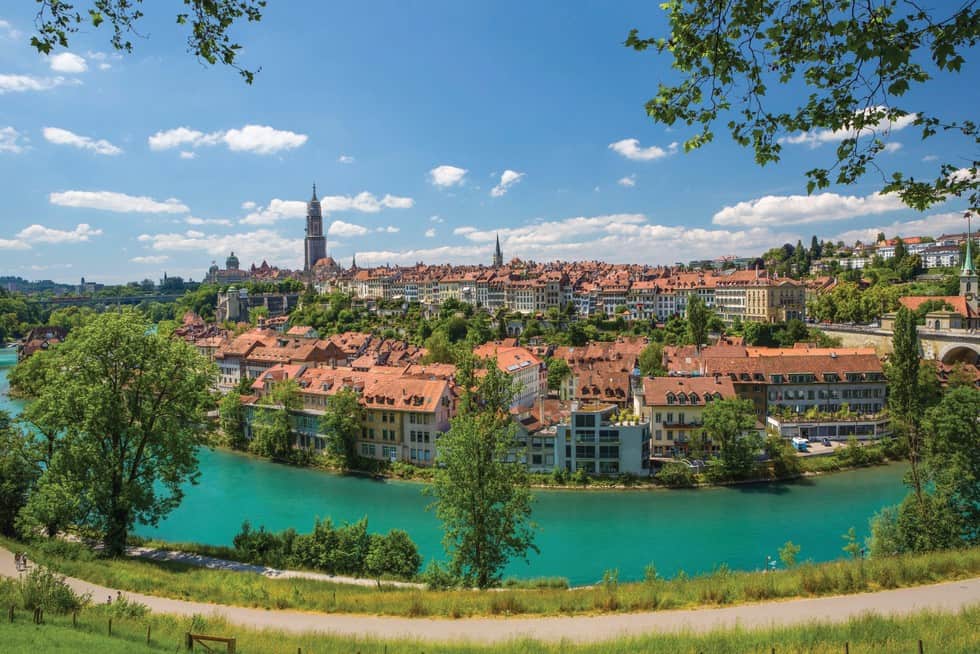
Bern, the de facto capital of Switzerland, is a picturesque city famously situated on a high peninsula surrounded on three sides by the turquoise Aare River. Its UNESCO World Heritage Old Town (Altstadt) is renowned for its remarkably well-preserved medieval architecture, constructed largely from local gray-green sandstone. The city’s unique urban layout features over six kilometres of arcades—the longest weather-protected shopping promenade in Europe—and a series of ornate 16th-century Renaissance fountains. Dominating the historic centre is the Zytglogge, a 13th-century clock tower with an astronomical clock and moving mechanical figures that perform every hour. Other major landmarks include the Federal Palace (Bundeshaus), which serves as the seat of the Swiss government and parliament, and the Bern Cathedral (Münster), featuring the tallest church spire in Switzerland. The city’s identity is deeply tied to its heraldic animal, the bear, which can be seen in the Bear Park (BärenPark) overlooking the river.
Bern is also a center of intellectual history, as it was here that Albert Einstein developed his Theory of Relativity while living in an apartment on Kramgasse. Cultural enthusiasts can explore world-class institutions like the Zentrum Paul Klee and the Bern Historical Museum. For panoramic views of the city’s red roofs and the distant Alps, visitors often head to the Rose Garden (Rosengarten). Known for its relaxed “Bernese pace,” the city offers a high quality of life, efficient public transport via red trams, and a vibrant local culture that includes the annual Zibelemärit (Onion Market) and summer swimming in the Aare.
6. Lake Lugano and Ticino

The canton of Ticino is often called the “Mediterranean of Switzerland” because it is the only part of the country where Italian is the official language and palm trees grow alongside snow-capped mountains. It is located in the sunny south, sharing a border with Italy, which gives the region a unique mix of Swiss order and Italian charm. The main highlight is Lake Lugano, a stunning blue lake with clear water that is shared by both Switzerland and Italy. The largest city, Lugano, sits right on the water and feels more like a coastal resort than a mountain town, featuring warm breezes, outdoor cafés in the Piazza della Riforma, and a beautiful flowery park called Parco Ciani.
Life in Ticino is simple and revolves around the water and the mountains. You can take a boat across the lake to visit quiet fishing villages like Gandria or see Morcote, which was once voted Switzerland’s most beautiful village. For the best views, you can ride a funicular (a small mountain train) to the top of Monte San Salvatore or Monte Brè to look down at the lake and the Alps. The food here is also a treat, featuring Italian-style pasta, risotto, and gelato. Because the weather is so mild, it is a perfect place for easy lakeside walks, swimming in the summer, or just relaxing with an espresso in a sunny square.
7. Swiss National Park
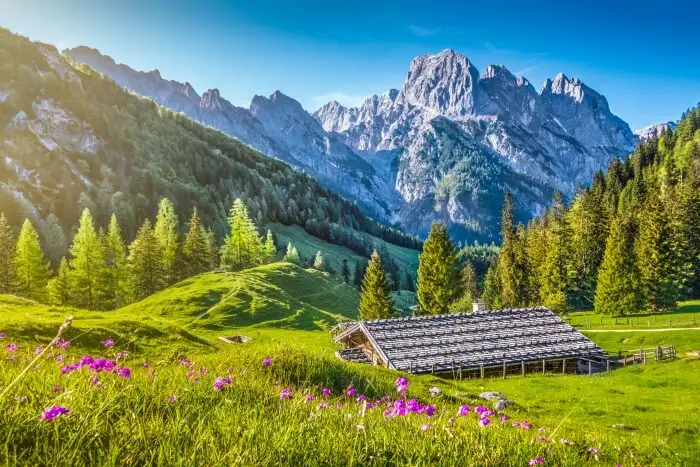
The Swiss National Park (Parc Naziunal Svizzer), located in the Engadin valley of the canton of Graubünden, is Switzerland’s only national park and the oldest in the Alps, founded in 1914. Spanning approximately 170 square kilometres, it is a strictly protected wilderness area (IUCN Category Ia) where nature is left entirely to its own devices. Human interference is prohibited: there is no hunting, fishing, or forestry, and even fallen trees are left to rot naturally. Visitors must follow extremely strict rules, including staying exclusively on the 80 kilometres of marked hiking trails; leaving the path, picking flowers, or bringing dogs (even on a leash) can result in heavy fines. This “open-air laboratory” offers an exceptional chance to observe Alpine wildlife in an undisturbed habitat. Characteristic residents include ibex, chamois, red deer, marmots, and rare birds like the bearded vulture and golden eagle. The park’s terrain varies from subalpine forests and meadows to rugged peaks reaching over 3,000 metres. The main gateway is the town of Zernez, which houses the modern National Park Centre. For those seeking an immersive experience, the park offers very limited accommodation, such as the remote Chamanna Cluozza mountain hut, as camping is strictly forbidden.
8. The Albula/ Bernina Railway Line
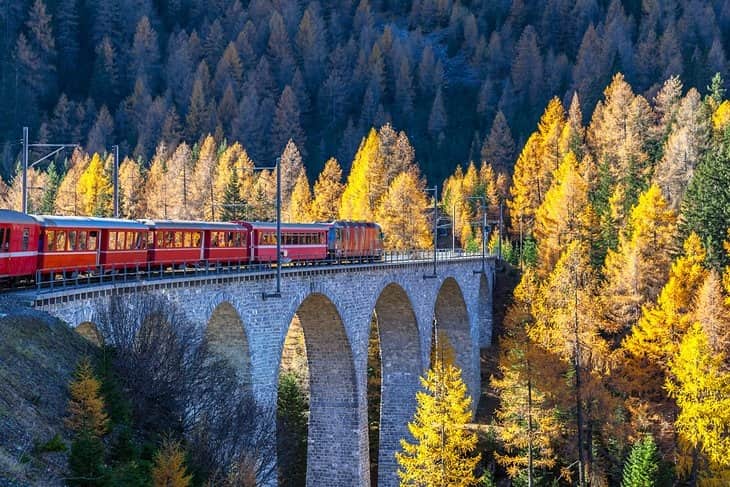
The Albula and Bernina Railway Line is a historic transalpine route operated by the Rhaetian Railway that was designated a UNESCO World Heritage Site in 2008 for its architectural and technical excellence. Spanning 122 kilometres from Thusis, Switzerland, to Tirano, Italy, the line serves as a masterpiece of early 20th-century engineering, having been built without the use of rack-and-pinion mechanisms despite the steep Alpine terrain. The northern Albula Line (67 km) is famous for its “screw” tunnels and monumental stone structures, most notably the 65-metre-high Landwasser Viaduct, which curves directly into a cliffside tunnel. The southern Bernina Line (61 km) is one of the highest railway crossings in Europe, reaching an altitude of 2,253 metres at Ospizio Bernina before descending dramatically toward the Mediterranean climate of Italy.
9. Wengen

Wengen is a quintessentially Swiss mountain village perched on a sheltered, sunny terrace 1,274 metres above the dramatic Lauterbrunnen Valley in the Bernese Oberland. Famous for being almost entirely car-free, the resort is accessible only by foot or via the historic Wengernalp Railway, a rack railway that has linked the village to the valley floor since 1893. This lack of traffic preserves a peaceful, nostalgic atmosphere characterized by traditional timber chalets, grand Belle Époque hotels, and the constant sound of distant cowbells or waterfalls. Positioned at the foot of the iconic “triple crown” of the Alps—the Eiger, Mönch, and Jungfrau peaks—Wengen serves as a premier year-round destination for nature lovers and outdoor enthusiasts. In winter, Wengen transforms into a world-class ski resort within the Jungfrau Ski Region, famously hosting the Lauberhorn World Cup downhill, the longest and one of the most challenging races on the international circuit. During the summer months, the village is a hiker’s paradise with over 500 kilometres of marked trails, including the popular Panorama Trail from the Männlichen cable car station to Kleine Scheidegg. Its central location also makes it an ideal starting point for excursions to the Jungfraujoch – Top of Europe, the highest railway station in the continent. Whether viewing the 300-metre-high Staubbach Falls from the village church or relaxing on a sunny hotel terrace, Wengen offers some of the most photographed and breathtaking panoramas in all of Switzerland.
10. Zermatt
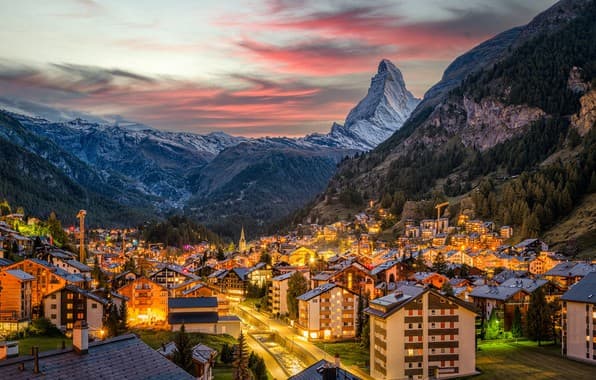
Zermatt is a world-renowned mountain resort nestled at the foot of the iconic Matterhorn in the southern Swiss canton of Valais. Famous for its strictly car-free status, the village maintains a peaceful, authentic Alpine atmosphere where visitors navigate the cobblestone streets on foot, by horse-drawn carriage, or via small electric taxis. Historically a remote farming community, Zermatt rose to global fame following the first ascent of the Matterhorn in 1865 and has since evolved into a premier year-round destination for skiing, climbing, and hiking. The village heart is the Bahnhofstrasse, a bustling main street lined with luxury boutiques, Swiss watch shops, and gourmet restaurants. Cultural landmarks like the Matterhorn Museum – Zermatlantis and the moving Mountaineers’ Cemetery tell the dramatic story of the region’s mountaineering heritage, while the Hinterdorf area showcases original wooden barns and houses dating back centuries.
Beyond the village, Zermatt offers some of the most spectacular high-altitude experiences in the Alps. The Gornergrat Railway, Europe’s highest open-air cogwheel train, whisks passengers to a panoramic observation deck at 3,089 metres, offering views of 29 peaks over 4,000 metres and the mirror-like Riffelsee lake. For even higher views, the Matterhorn Glacier Paradise on the Klein Matterhorn features Europe’s highest cable car station and the world’s highest glacier palace. During summer, hikers flock to the 5 Lakes Walk for stunning Matterhorn reflections, while winter visitors enjoy over 360 kilometres of ski runs that extend across the border into Breuil-Cervinia, Italy. Whether it’s catching the first light turn the Matterhorn’s peak a fiery orange from the Kirchbrücke bridge or dining in a Michelin-starred mountain lodge, Zermatt remains a definitive symbol of Swiss natural beauty and luxury.
11. Oberhofen Castle
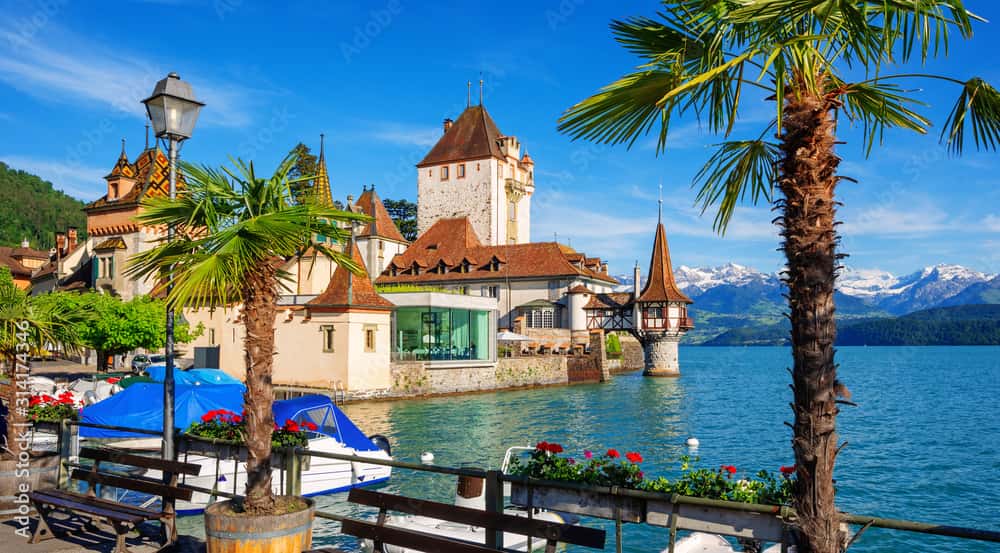
Oberhofen Castle (Schloss Oberhofen) is a stunning medieval fortress and palace located directly on the northern shore of Lake Thun in the Bernese Oberland. Originally built in the early 13th century as a defensive stronghold, its central medieval keep still features walls two metres thick. Over eight centuries, the castle evolved through various architectural styles—including Bernese Baroque and Romantic—as it passed through the hands of the Habsburgs, Bernese noble families like the von Erlachs, and later, the Prussian Count de Pourtalès in the 19th century. Today, it functions as a “living museum” under the Oberhofen Castle Foundation, showcasing authentic 16th to 19th-century interiors that illustrate the dual lives of the aristocratic residents and their domestic staff. The castle is perhaps most famous for its picturesque lake tower that sits directly in the water and its exotic Oriental smoking room at the top of the keep, which offers panoramic views of the lake and the Bernese Alps. Surrounding the palace is a 2.5-hectare English-style landscaped park, widely considered one of the most beautiful gardens in the Alpine region due to its collection of exotic redwoods, vibrant flower parterres, and a unique hornbeam pergola. Visitors often arrive by boat, as the Schiffländte landing stage is located just steps from the castle gates. Families can enjoy interactive “knight trails” and a historic children’s chalet, making it a versatile destination for history enthusiasts and casual travelers alike.
12. Swiss Grand Canyon
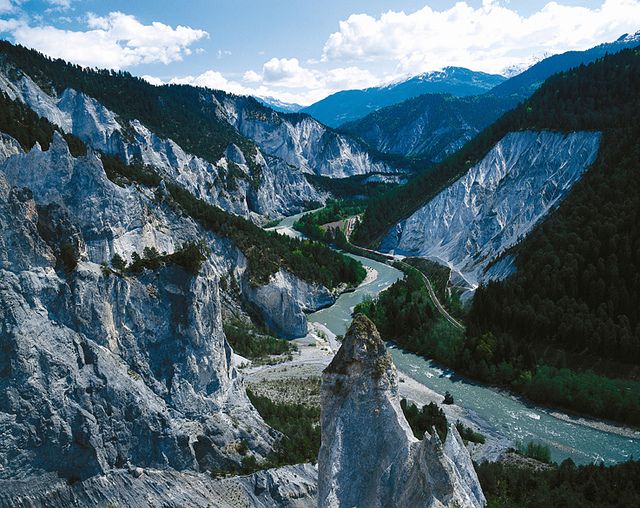
The Swiss Grand Canyon, known officially as the Rhine Gorge or Ruinaulta in Romansh, is a spectacular 14-kilometre-long ravine located in the canton of Graubünden. It was formed approximately 10,000 years ago following the Flims Landslide, the largest prehistoric landslide in the Alps, which buried the Anterior Rhine under nearly 100 billion cubic metres of rock debris. Over millennia, the river eroded through this massive “pile of rubble,” carving out deep canyons and leaving behind towering, 350-metre-high white limestone cliffs that contrast sharply with the turquoise waters of the Rhine. This unique landscape, which was one of the first in Switzerland to be placed under national protection in 1977, is now a part of the UNESCO World Heritage Site Tectonic Arena Sardona. The Ruinaulta is a sanctuary for biodiversity and adventure, serving as a habitat for rare bird species like the little ringed plover and various orchids. Unlike its American namesake, the Swiss Grand Canyon is best experienced from within; the Rhaetian Railway runs directly through the gorge, offering passengers panoramic views from their carriages. For those seeking more intimacy with the terrain, numerous hiking and biking trails wind through the floodplain forests, leading to dramatic observation decks like the Il Spir platform near Flims, which offers a 180-degree bird’s-eye view of the river’s loops. The gorge is also a premier destination for river rafting and kayaking, where paddlers can navigate through wild rapids and past quiet sandbanks in one of Europe’s most impressive natural settings.
13. Gruyères
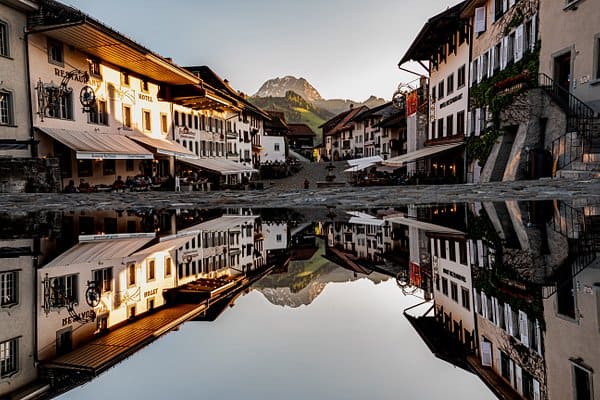
Gruyères is a quintessentially medieval hilltop town in the Fribourg Pre-Alps, famously recognized as one of the most beautiful villages in Switzerland. Its cobblestone main street is lined with traditional 15th-century houses and leads directly to the Château de Gruyères, a 13th-century fortress that served as the residence of the Counts of Gruyères for centuries. The town is globally synonymous with its namesake Gruyère AOP cheese, and visitors can watch the traditional cheesemaking process at La Maison du Gruyère dairy located just below the village. Beyond its culinary fame, the village offers a striking contrast of “two worlds”: the historical charm of its medieval ramparts and the dark, biomechanical surrealism of the HR Giger Museum, dedicated to the Oscar-winning creator of the Alien xenomorph. The town’s cultural richness is further enhanced by the Tibet Museum, which houses an extensive collection of Buddhist art in a former chapel. After exploring the castle’s French-style gardens and towers, visitors often stop at the HR Giger Bar, a work of art itself with bone-like architectural features. Gastronomy remains a primary draw, with local restaurants serving authentic Swiss fondue and the region’s signature dessert: meringues with double cream. Its location also makes it an ideal base for visiting the nearby Maison Cailler chocolate factory in Broc, completing a tour of Switzerland’s most iconic flavors.
14.Davos
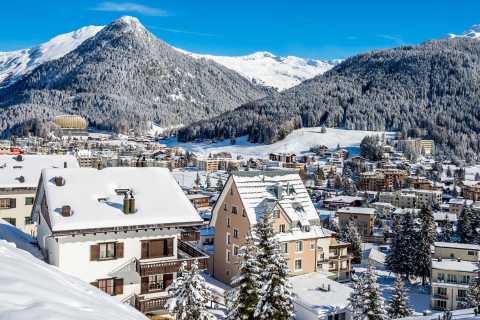
Davos is a high-altitude Alpine resort town in the canton of Graubünden, famous for being the highest town in Europe at 1,560 metres above sea level. While it gained prominence in the 19th century as a health resort for tuberculosis patients—a legacy immortalized in Thomas Mann’s novel The Magic Mountain—it is globally synonymous today with the World Economic Forum (WEF), an annual meeting of world leaders and business elites held every January. The town is split into two main hubs, Davos Platz and Davos Dorf, and offers a more modern, urban atmosphere than traditional Swiss chalet villages, featuring world-class infrastructure for international congresses and major sporting events like the Spengler Cup ice hockey tournament.
As a premier year-round destination, Davos boasts one of Switzerland’s largest ski areas, with over 300 kilometres of slopes across regions like Parsenn, known for its long descents, and Jakobshorn, a favorite for snowboarders. In summer, the landscape transforms into a hub for outdoor adventure with 700 kilometres of hiking trails and extensive mountain biking routes, such as the famous Alps Epic Trail. Visitors can enjoy the serene Lake Davos (Davosersee) for water sports or take a vintage funicular to the Schatzalp sunny plateau to visit the Alpinum botanical garden. Beyond recreation, the town remains a centre for scientific excellence, housing renowned institutes for Snow and Avalanche Research (SLF) and medical research in allergies and asthma.
15. Jungfrau
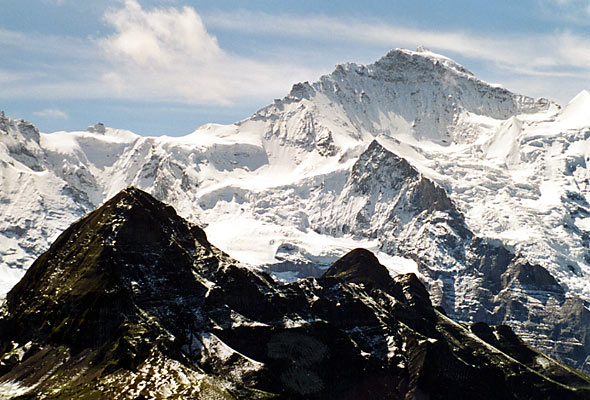
The Jungfrau, standing at 4,158 metres, is one of the most iconic summits in the Swiss Alps and the centerpiece of the “Big Three” alongside the Eiger and Mönch peaks. Located in the Bernese Oberland, this majestic mountain and the surrounding Aletsch Glacier form part of the first Alpine UNESCO World Heritage site. While the peak itself is a challenging climb for experienced mountaineers, the region is most famous for the Jungfraujoch, the “Top of Europe.” Accessible via the centennial Jungfrau Railway—a remarkable feat of engineering that tunnels directly through the Eiger and Mönch—the Jungfraujoch is home to Europe’s highest railway station at 3,454 metres.
At the summit complex, visitors can experience a world of perennial snow and ice, regardless of the season. Key attractions include the Sphinx Observatory, which offers 360-degree panoramic views extending as far as the Black Forest in Germany, and the Ice Palace, a series of tunnels and sculptures carved directly into the glacier. The area serves as a gateway to the Aletsch Glacier, the longest in Eurasia at 23 kilometres. Most visitors base themselves in the picturesque valleys of Lauterbrunnen or Grindelwald, using modern transport like the Eiger Express gondola to reach the high-altitude tracks at Kleine Scheidegg. From the world’s highest Lindt chocolate shop to snow sports in the Snow Fun Park, the Jungfrau offers a consolidated “Swiss starter pack” of Alpine experiences.
16. St. Moritz
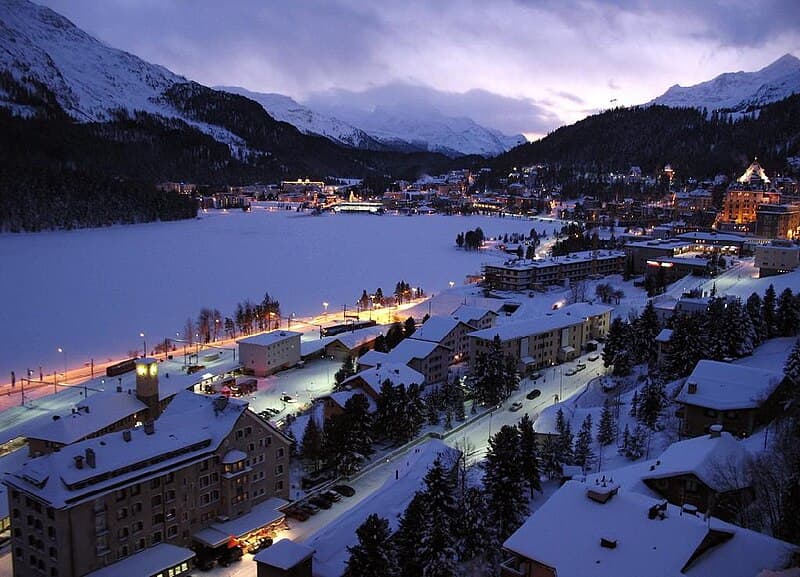
St. Moritz is one of the world’s most famous and glamorous luxury resorts, located at 1,856 metres in the sun-drenched Engadin valley of the canton of Graubünden. Often credited as the birthplace of Alpine winter tourism in 1864, the town has twice hosted the Winter Olympics and is renowned for its “Champagne climate”—a dry, sparkling air that accompanies its average of 322 days of sunshine per year. The town is divided into two parts: St. Moritz Dorf, which sits on a sunny terrace overlooking the lake and is home to high-end boutiques along the Via Serlas and legendary five-star hotels like Badrutt’s Palace; and St. Moritz Bad, located on the valley floor, which is known for its natural iron-rich mineral springs and spa tradition.
Beyond its reputation for glitz and social status, St. Moritz is a premier destination for world-class sports and unique events. It is home to the Cresta Run, a world-famous natural ice skeleton track, and the Olympia Bob Run, the world’s oldest bobsleigh track made of natural ice. During the winter, Lake St. Moritz becomes a frozen stage for exclusive events like White Turf horse racing and the Snow Polo World Cup. For outdoor enthusiasts, the Corviglia and Corvatsch mountains offer exceptional skiing and snowboarding in winter, and high-altitude hiking and mountain biking in summer. Cultural highlights include the Segantini Museum, dedicated to the painter Giovanni Segantini, and the town’s position as a major stop on the scenic Glacier Express and Bernina Express train lines.
17. Appenzell captures
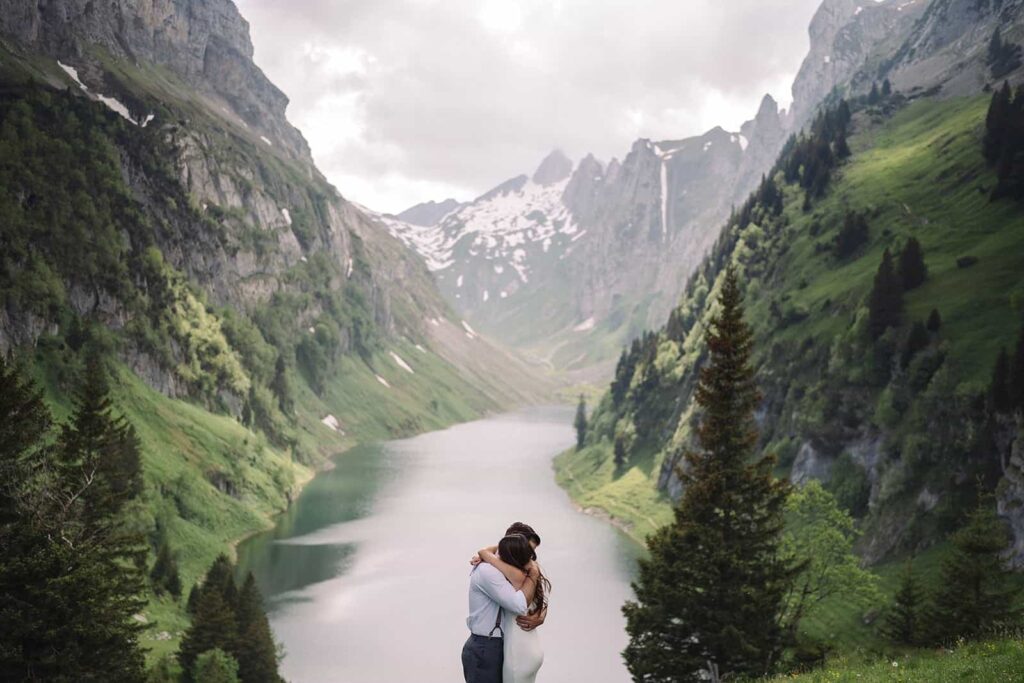
Appenzell is the cultural heart of northeastern Switzerland and the capital of Appenzell Innerrhoden, the country’s smallest canton. Located at the foot of the dramatic Alpstein mountains, the town is famous for its “fairytale” aesthetic, featuring a car-free center and streets like Hauptgasse lined with brightly painted wooden houses adorned with intricate frescoes and artistic signs. The region is a bastion of deep-rooted Swiss traditions, most notably the Landsgemeinde, an annual open-air assembly held in the town square where citizens vote on local laws by a show of hands. This strong sense of heritage extends to the local craftsmanship, such as hand-embroidery and woodcarving, and to its world-famous Appenzeller cheese, which has been produced with a secret herbal brine for over 700 years.
18. Engelberg
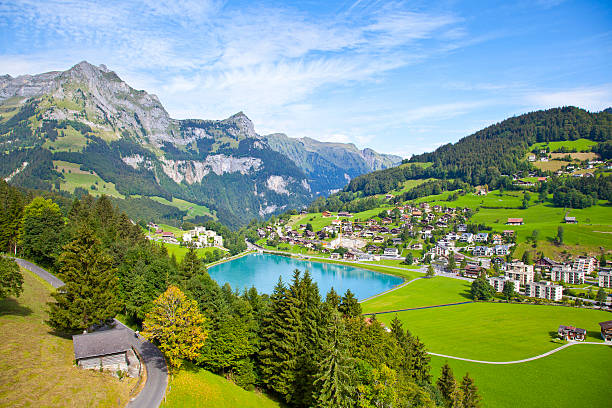
Engelberg is a major mountain resort and enclave in Central Switzerland, famously located at the foot of Mount Titlis, the highest peak in the region at 3,238 metres. The village’s name, meaning “Mountain of Angels,” is rooted in its 12th-century Benedictine monastery, Engelberg Abbey, which remains the town’s spiritual and cultural heart. To this day, a community of monks lives and works at the abbey, which is home to Switzerland’s largest pipe organ and a unique show dairy where visitors can watch traditional cheesemaking. Despite its deep historical roots, Engelberg has evolved into a modern, year-round adventure hub, offering a relaxed, sporting atmosphere that avoids the over-the-top ostentation found in some other elite Swiss resorts. The town’s primary draw is its world-class transport system to the high-alpine glacier. Visitors reach the summit of Titlis via the Titlis Rotair, the world’s first rotating cable car, which provides a 360-degree panoramic view during the final ascent. At the summit, the Titlis Cliff Walk—Europe’s highest suspension bridge—offers breathtaking views from over 3,000 metres above sea level. Other popular high-altitude attractions include the Glacier Cave, a 150-metre-long tunnel carved into 5,000-year-old ice, and the Ice Flyer chairlift. For families and casual hikers, the mid-station at Trübsee lake offers activities like rowing, ziplining, and themed adventure trails, while the sunny Brunni side of the valley features summer tobogganing and easier hiking paths with stunning views back toward the Titlis range.
19. Vevey

Vevey, often called the “Pearl of the Swiss Riviera,” is a charming town located on the northeastern shore of Lake Geneva in the French-speaking canton of Vaud. It is famous for its mild climate, stunning Alpine views, and its dual identity as both a global corporate hub—housing the world headquarters of Nestlé—and a peaceful sanctuary for artists. The town’s most famous resident was Charlie Chaplin, who spent the last 25 years of his life here; today, visitors can explore Chaplin’s World, a premier museum located in his former estate, the Manoir de Ban. Vevey is also recognized as the birthplace of milk chocolate, invented here in 1875 by Daniel Peter with the help of Henri Nestlé. The heart of Vevey is its vibrant lakeside promenade, where you’ll find the iconic Giant Fork (La Fourchette) rising 8 metres out of the water directly in front of the Alimentarium, the world’s first museum dedicated entirely to food and nutrition. Nearby stands a wistful bronze statue of Chaplin’s “Little Tramp”.
The town’s historic Old Town (Vieille Ville) is a maze of narrow streets filled with boutiques, galleries, and cafes. Vevey also serves as a gateway to the UNESCO-listed Lavaux Vineyard terraces, which can be reached in just 12 minutes via the “Train des Vignes”. Every 20 to 25 years, the town hosts the legendary Fête des Vignerons, a massive wine festival that is the only living tradition in Switzerland to be recognized by UNESCO.
20. Lake Constance

Lake Constance, known locally as Bodensee, is one of Europe’s largest freshwater lakes, uniquely situated at the junction of Switzerland, Germany, and Austria. Fed by the Rhine River, it is divided into two main basins—the larger Obersee (Upper Lake) and the smaller Untersee (Lower Lake)—connected by a short stretch of the river called the Seerhein. The lake is a premier travel destination famed for its “Champagne climate,” offering mild weather that supports lush vineyards, orchards, and even exotic palm trees in a near-Mediterranean setting. It is also politically unique as the precise international boundaries in the middle of the lake remain undefined, effectively making the central waters a shared territory between the three nations. The lake’s shores are lined with historic towns and cultural landmarks that highlight its 2,000-year history. On the Swiss side, the towns of Romanshorn, Arbon, and Kreuzlingen offer idyllic waterfronts and direct access to the UNESCO World Heritage Abbey of St. Gall just inland. The German northern shore features the medieval city of Konstanz, the Zeppelin industrial hub of Friedrichshafen, and the enchanting Flower Island of Mainau, a 110-acre botanical paradise with a Baroque palace. Austria anchors the eastern end with Bregenz, famous for its floating opera stage and the Pfänder mountain. Whether explored by the 260 km Bodensee-Radweg cycle path or via the extensive network of passenger ferries, Lake Constance offers a seamless blend of Alpine scenery, history, and modern leisure.
21. Rhine Falls
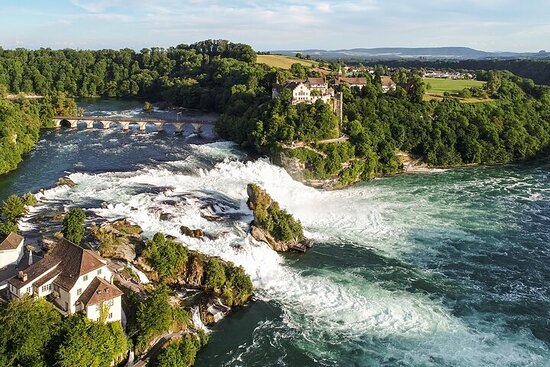
The Rhine Falls (Rheinfall), located in northern Switzerland near the town of Schaffhausen, is Europe’s largest and most powerful plain waterfall. Formed approximately 15,000 years ago during the last Ice Age, the falls span a massive 150 metres in width and drop 23 metres into a deep basin. The sheer volume of water is staggering, with an average of 600,000 litres per second cascading over the rocks during the peak summer months. Perched dramatically on a cliff overlooking the thundering white water is the 1,000-year-old Schloss Laufen, which offers multiple viewing terraces and a panoramic glass elevator that brings visitors within arm’s reach of the spray. The best way to experience the raw power of the falls is by taking a boat trip into the basin. Popular excursions include the “Rock Ride,” which allows daring visitors to disembark on the Rheinfallfelsen, a towering limestone rock in the center of the falls, and climb a steep staircase to a 360-degree observation deck. On the opposite bank sits Schlössli Wörth, a small castle on an island that now serves as a restaurant with prime views. For those who prefer a land-based perspective, a well-maintained circular walking trail and a railway bridge with a pedestrian path allow visitors to view the spectacle from every possible angle. At night, the falls are often illuminated, creating a mystical atmosphere that has inspired artists and writers like J.M.W. Turner and Mary Shelley for centuries.
22. Château de Chillon
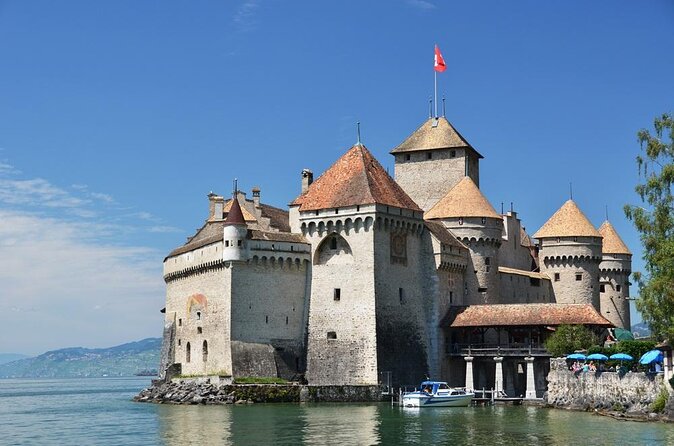
The Château de Chillon is a remarkably preserved medieval island fortress situated on a rocky islet in Lake Geneva, just outside the town of Montreux. Recognized as Switzerland’s most visited historical monument, its architectural layout is unique because it was designed to follow the natural oval shape of the island it occupies. For centuries, the castle served as a strategic toll and customs station guarding the narrow passage between the Alps and the lake. It was successively owned by the House of Savoy, who transformed it into a magnificent royal residence, and the Bernese, who utilized it primarily as a military base and granary. Today, the castle consists of a complex of 25 buildings and three courtyards, housing a museum filled with medieval furnishings, armour, and archaeological finds.
23. The Matterhorn
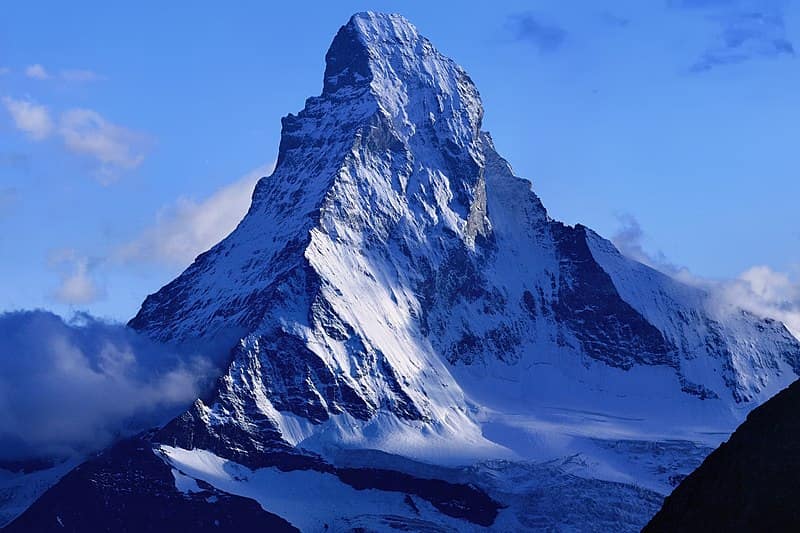
This pyramid-shaped giant is one of the world’s most photographed mountains, which means it’s a top place to visit in Switzerland. Standing at an impressive 4,478 meters, thrill-seeking mountaineers from around the globe descend on Switzerland to attempt the summit. If you’re not feeling quite so energetic, why not stick to the cable car? The mountain is home to the highest cable car station in the Alps, which offers some excellent views of the mountain peak and beyond. It doesn’t get much more Swiss than a trip to the Matterhorn.
24. Lauterbrunnen
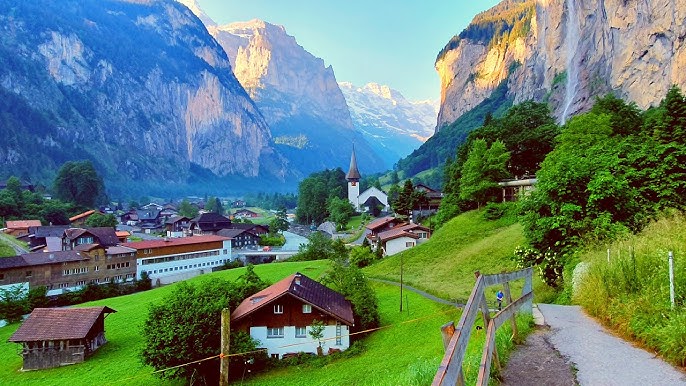
Lauterbrunnen is the gateway to the Jungfrau Region and is referred to as the Valley of 72 Waterfalls. The high rock walls and many waterfalls serve the small town as a transit town to Mürren, Wengen, Jungfraujoch, and the Schilthorn, keeping it busy and buzzing with tourists year-round. It’s also car-free, offering a highly-walkable experience as you traverse through the stunning waterfalls, hiking trails, and quaint villages alike.
25. Interlaken
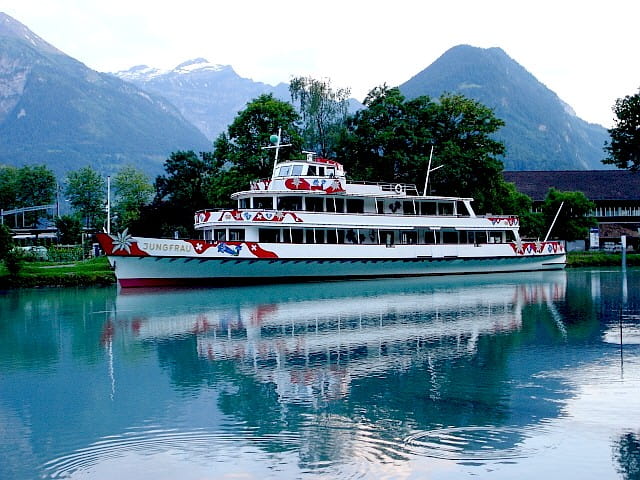
Interlaken is a world-renowned resort town located in the heart of the Bernese Oberland, famously positioned on a flat alluvial plain called the Bödeli between the turquoise waters of Lake Brienz and the deep blue Lake Thun. Its name literally means “between lakes” (from the Latin inter lacus), and the Aare River flows gracefully through the town to connect the two bodies of water. As the primary transport gateway to the Jungfrau Region, Interlaken serves as an ideal base for exploring famous Alpine peaks like the Eiger, Mönch, and Jungfrau. The town is anchored by its main boulevard, the Höheweg, which stretches between the two major rail stations (Interlaken Ost and Interlaken West) and is lined with luxury watch boutiques, souvenir shops, and the 150-year-old Victoria Jungfrau Grand Hotel.
Known as the “Adventure Capital of Switzerland,” Interlaken attracts thrill-seekers from around the globe for activities such as paragliding (often landing in the central Höhematte Park), skydiving, canyoning, and river rafting. For a more relaxed experience, visitors can take a nostalgic 10-minute funicular ride to Harder Kulm, known as the “Top of Interlaken,” which features a glass-floored viewing platform and panoramic views of both lakes and the high Alps. The town also offers cultural depth through the historic Interlaken Abbey and Castle complex and the nearby St. Beatus Caves, where waterfalls thunder through prehistoric limestone passages.
26. Spiez
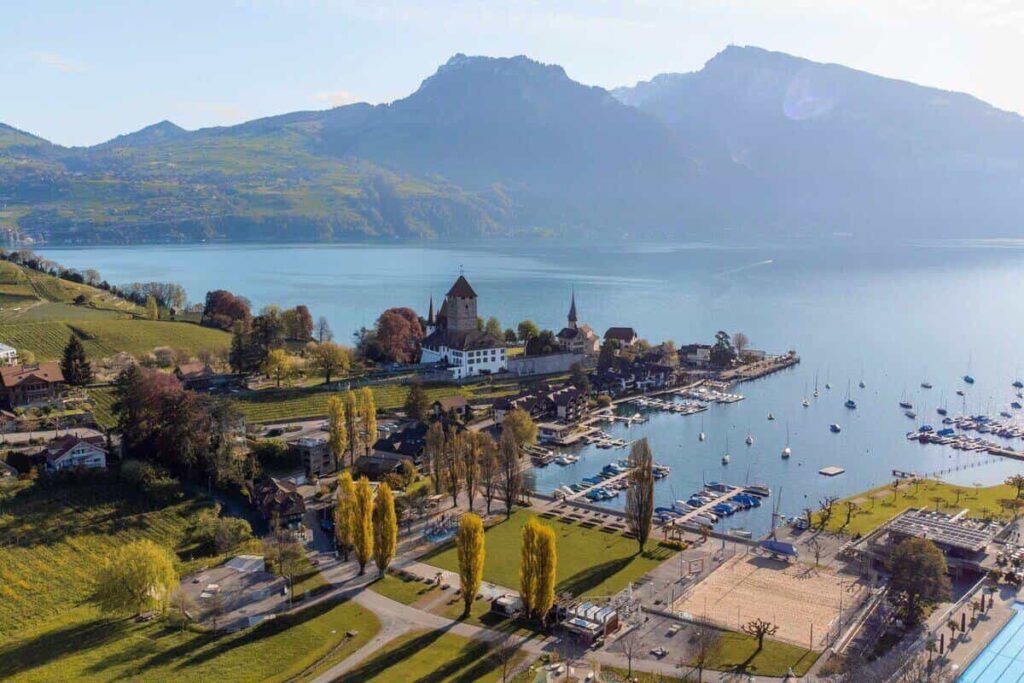
Spiez is a charming town and major transport hub situated on the southern shore of Lake Thun in the Bernese Oberland. Often described as having the “most beautiful bay in Europe,” the town is defined by its mild climate and a picturesque landscape where turquoise waters meet rolling vineyards and snow-capped Alpine peaks. Its primary landmark is the Spiez Castle (Schloss Spiez), a medieval fortress with a 1,000-year-old Romanesque church and a massive 39-metre-high keep that offers panoramic views of the lake and the nearby pyramid-shaped Niesen mountain. The castle’s gardens and interactive museum tell the story of its former noble residents, transforming from a defensive stronghold into a refined patrician residence over nearly seven centuries.
Beyond its historical sites, Spiez is a vibrant center for viticulture, boasting some of the highest vineyards north of the Alps. Visitors can explore the “Spiezer Alpine Wine Culture” through a dedicated discovery trail that winds through the vines, followed by tastings of local award-winning Riesling-Sylvaner and Pinot Noir at the castle café or local wine caves. As a gateway to the region, the town offers extensive leisure activities, including scenic boat cruises on the historic paddle steamer Blümlisalp, swimming at the lakeside lido, and a 14-kilometre circular hiking trail to the village of Faulensee. Its central railway station makes it an essential starting point for excursions to nearby Interlaken, Thun, and the high-altitude ski and hiking areas of the Bernese Alps.
27. Montreux

Montreux is a peaceful and sunny resort town on the shores of Lake Geneva in French-speaking Switzerland. Often called the “Pearl of the Swiss Riviera,” it is famous for its very mild weather, which allows exotic plants like palm trees and bright flowers to grow along its beautiful lakeside promenade. The town is a dream for music lovers; it hosts the world-famous Montreux Jazz Festival every July and was a favourite home for rock legend Freddie Mercury, who is honoured with a famous bronze statue by the water. Visitors can also explore the Queen Studio Experience at the Casino Barrière Montreux to see where the band recorded their music.
Just a short walk or boat ride away sits the Château de Chillon, a stunning medieval castle built on a tiny island that looks like something out of a fairytale. For the best views, you can ride a cogwheel train up to the mountain peak of Rochers-de-Naye, or wander through the nearby Lavaux vineyards, which are a UNESCO World Heritage site known for their steep, sun-soaked terraces. Whether you are strolling through the quiet Old Town or taking a scenic boat cruise on the lake, Montreux offers a perfect mix of natural beauty, history, and a relaxed, artistic vibe.
28. Basel

Basel is widely recognized as the cultural capital of Switzerland, famously situated at the “Three Country Corner” (Dreiländereck) where the borders of Switzerland, France, and Germany converge. Bisected by the Rhine River, the city is divided into Grossbasel, the historic and wealthy “Old Town” on the left bank, and Kleinbasel, the traditionally working-class heart on the right bank. The city’s silhouette is defined by the Basel Minster (Münster), a striking red sandstone cathedral with colorful roof tiles, and the nearby Rathaus (Town Hall) on Marktplatz, a Renaissance masterpiece with a vibrant red façade. Basel is home to the oldest university in Switzerland (founded in 1460) and has long been a sanctuary for humanism and the arts, a legacy that continues with Art Basel, the world’s most prestigious international art fair. With the highest concentration of museums in the country—roughly 40 institutions in a small area—Basel is a global destination for art lovers.
The Kunstmuseum Basel houses the oldest public art collection in the world, while the Fondation Beyeler, designed by Renzo Piano, is renowned for its modern masterpieces. Beyond its museums, the city is a hub for world-class architecture, featuring visionary works by Herzog & de Meuron and Mario Botta. Residents embrace a high quality of life centered on the river, where swimming in the Rhine using waterproof “Wickelfisch” bags is a popular summer tradition. From the haunting drums of the Basel Carnival (Fasnacht) to its role as a global pharmaceutical powerhouse (hosting Roche and Novartis), Basel remains a unique intersection of history, industry, and avant-garde culture.
29. St. Gallen
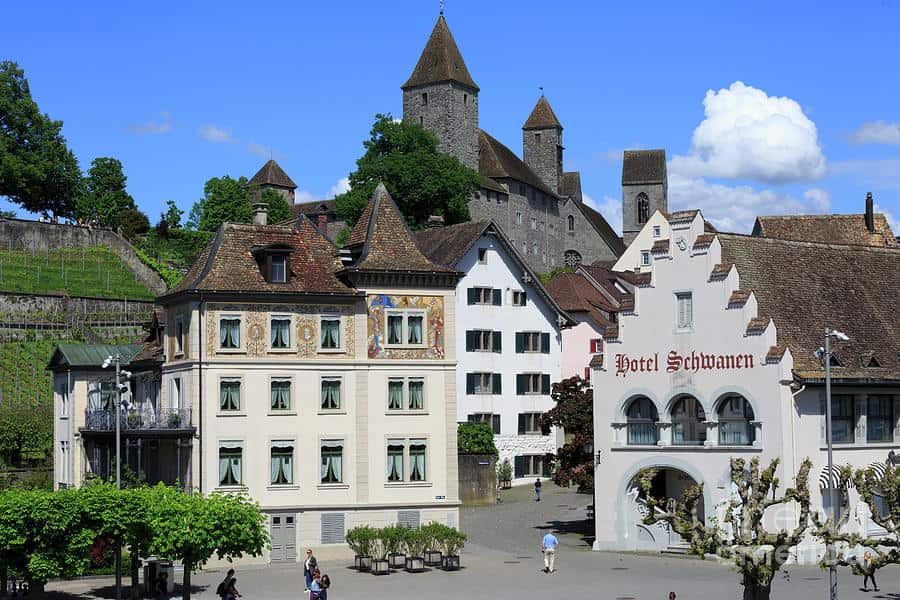
St. Gallen is a historic city in northeastern Switzerland, located between Lake Constance and the Appenzell Alps, and is best known for its prestigious Abbey District, a UNESCO World Heritage Site. The city’s heart is the magnificent Baroque Cathedral and the world-famous Abbey Library, one of the oldest and most beautiful libraries in the world, which houses priceless medieval manuscripts in a stunning wood-carved hall. The city originally grew around the hermitage of the Irish monk Gallus in the 7th century, eventually becoming a powerful center of learning and a global leader in the textile and embroidery industry.
This history of wealth is still visible in the Old Town, which features 111 richly decorated oriel windows (ornate bay windows) on the houses of former textile merchants. Today, St. Gallen is a vibrant university city, home to the University of St. Gallen (HSG), which is one of Europe’s top business schools. It offers a unique mix of high culture and tradition, such as the Textile Museum, which showcases the city’s lace-making heritage, and the annual Olma Fair, a major agricultural festival. The city is also famous for its culinary tradition, specifically the St. Gallen Bratwurst, which is traditionally eaten without mustard. With its “city of stairs” layout and proximity to the mountains, St. Gallen serves as a perfect cultural gateway for travelers exploring eastern Switzerland.
30. Thun
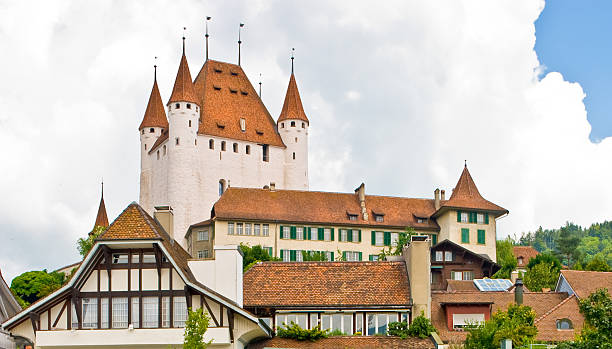
Thun is a picturesque town often called the “Gateway to the Bernese Oberland,” located at the northwestern end of Lake Thun where the Aare River flows out toward Bern. The city’s skyline is dominated by the Thun Castle (Schloss Thun), a 12th-century fortress featuring four iconic white towers that offer panoramic views of the lake and the “Triple Crown” peaks: the Eiger, Mönch, and Jungfrau. Its historic Old Town (Altstadt) is renowned for the Obere Hauptgasse, a unique split-level street with elevated pavements where you can walk on the roofs of ground-floor shops to reach boutiques and cafés. This area leads to the Rathausplatz (Town Hall Square), a late-medieval center built around 1500 that hosts vibrant weekly markets. The town’s geography is shaped by the Aare River, which divides into two arms to form an island in the center of the city.
Visitors can cross historic wooden lock bridges, such as the Untere and Obere Schleuse, where urban surfers often ride the standing river waves generated by the sluices. Just outside the city center lies Schadau Park, home to the neo-Gothic Schadau Castle and the Thun-Panorama, the world’s oldest surviving circular painting. Whether enjoyed via a nostalgic paddle steamer cruise on the lake or a stroll through its flowered riverside promenades, Thun offers a relaxed, local alternative to more touristy hubs like Interlaken.