

Cambodia is a beautiful country in Southeast Asia, renowned for its magnificent history, resilient people, and captivating landscapes. Most famous for being home to the world’s largest religious monument—Angkor Wat—the country offers a unique blend of ancient wonders and modern vibrancy. Its geography is dominated by the mighty Mekong River and Tonle Sap Lake; the latter is a vast lake whose size fluctuates with the changing seasons. While its capital, Phnom Penh, serves as a bustling hub of commerce and culture, the rest of the country is characterized by tranquil rice paddies, lush forests, and—in the south near Sihanoukville—pristine white-sand beaches. Known as the “Land of Smiles,” Cambodia is a place where deeply rooted Buddhist traditions intersect with a rapidly evolving future, making it one of Asia’s most intriguing tourist destinations.
Cambodia’s economy rests upon four main “pillars” that have fueled its rapid growth over the past two decades: garment manufacturing, tourism, agriculture, and construction. The country operates under an open-market system, meaning it actively encourages foreign investment and international trade. In recent times, the economy has demonstrated robust strength.
Cambodia is generally a safe and welcoming destination for international travelers. Most visitors enjoy a trouble-free experience, characterized by warm Khmer hospitality and a peaceful atmosphere. Although the country’s history has been marked by conflict, it now enjoys stability, and violent crimes against tourists are extremely rare. Major tourist hubs such as Siem Reap, Phnom Penh, and Kampot are well-developed and feature robust security measures—particularly in popular nightlife zones like Pub Street.
Most Famous And Attractive Tourist Places In Cambodia :
1. Koh Tonsay: The Rabbit Island
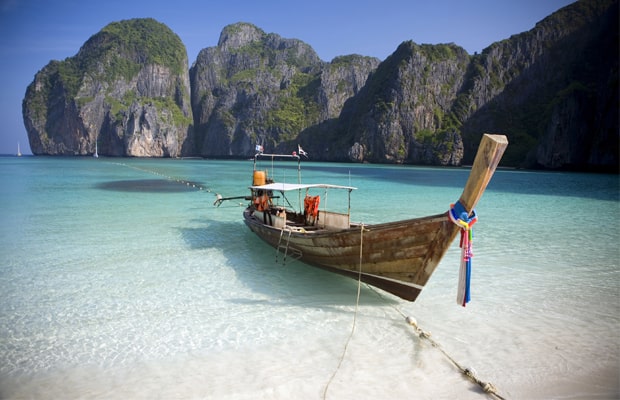
Koh Tonsay, popularly known as Rabbit Island, is a serene and rustic getaway located approximately 4.5 kilometres off the coast of Kep in southern Cambodia. Spanning roughly 2 square kilometres, the island is named for its distinctive shape, which some say resembles a rabbit reclining on the sea. It is celebrated for its untouched natural beauty, featuring long stretches of white sand beaches lined with swaying coconut palms and a dense, lush jungle interior. Visitors typically reach the island via a 20-minute boat ride from Kep’s main pier. The atmosphere on Koh Tonsay is defined by its slow-paced, simple lifestyle; there are no motor vehicles, and electricity and Wi-Fi are often limited to a few hours in the evening (typically 6:00 PM to 10:00 PM). This makes it a premier destination for those seeking a “digital detox” or a peaceful escape from urban hustle.
2. Mondulkiri: The Most Beautiful Province

Mondulkiri, which translates to “Meeting of the Hills,” is often hailed as Cambodia’s most beautiful province due to its unique, rolling highland landscapes and lush, untouched wilderness. Unlike the flat rice paddies typical of the rest of the country, this northeastern region features a dramatic mix of emerald-green hills, thick pine forests, and powerful cascades. It is the largest yet most sparsely populated province, often referred to as the “Switzerland of Cambodia” for its cool climate and mist-covered peaks. The province is a premier destination for eco-tourism, home to several ethical elephant sanctuaries like the Elephant Valley Project and the Mondulkiri Project, where visitors can observe rescued giants in their natural habitat without riding them. The capital city, Sen Monorom, serves as a peaceful gateway to the province’s natural wonders, most notably the majestic Bousra Waterfall, a two-tier cascade that is widely considered the most impressive in Cambodia. Beyond its natural beauty, Mondulkiri is culturally distinct as the ancestral home of the Bunong (Phnong) indigenous people. Visitors can experience their rich traditions by visiting traditional villages, observing their unique “turtle shell” houses, and learning about their deep spiritual connection to the forest. The region’s fertile soil also supports a burgeoning agricultural scene, where you can tour organic coffee, pepper, and rubber plantations.
3. Tonle Sap Lake: The Serene Freshwater Body
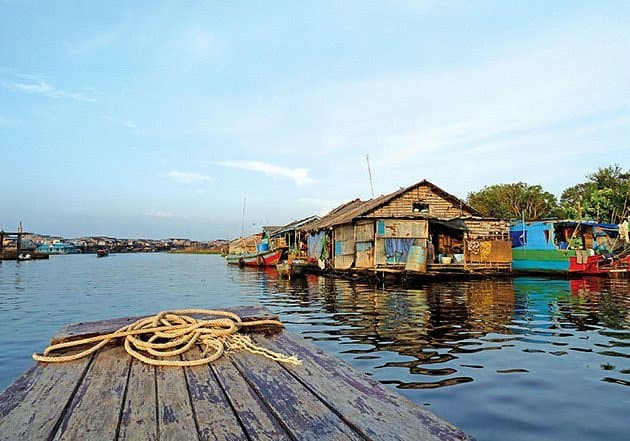
Tonle Sap Lake, often referred to as the “beating heart of Cambodia,” is the largest freshwater lake in Southeast Asia and a unique ecological marvel. It is famous for its remarkable seasonal pulse system; during the rainy season (May to October), the swelling Mekong River forces the Tonle Sap River to reverse its flow, causing the lake to expand up to five or six times its dry-season size—from roughly 2,500 square kilometres to over 16,000 square kilometres. This annual flood enriches the surrounding floodplains with nutrient-rich silt, supporting one of the world’s most productive inland fisheries and providing over 60% of Cambodia’s protein intake. Designated as a UNESCO Biosphere Reserve in 1997, the lake is a biodiversity hotspot home to rare bird species, such as the spot-billed pelican and black-headed ibis, particularly within the Prek Toal Bird Sanctuary.
4. Poipet: The Land Of Casinos

Poipet, situated in Banteay Meanchey province at the primary border crossing between Cambodia and Thailand, has earned its moniker as the “Land of Casinos” due to its unique position as a gambling oasis. Because most forms of gambling are strictly prohibited in Thailand, a massive industry has flourished in Poipet, particularly within a “no-man’s land” strip of territory located between the Thai and Cambodian immigration checkpoints. This strategic placement allows Thai nationals and foreign tourists to enter the casino zone without officially clearing Cambodian customs, provided they do not plan to travel further into the country. The skyline is dominated by large-scale resorts such as DNA Star Vegas, Grand Diamond City, and Holiday Palace, which offer a mix of baccarat, slot machines, and luxury accommodations primarily tailored to a Thai clientele. Beyond the neon lights and 24-hour gaming floors, Poipet is a bustling, high-energy transit hub that serves as the fourth most populous city in Cambodia. While often described as a “gritty” frontier town, it is currently undergoing significant transformation into an industrial boomtown, with the development of special economic zones and the restoration of railway links connecting Phnom Penh and Bangkok.
5. Battambang: The Lush Countryside

Battambang, often referred to as the “Rice Bowl of Cambodia,” is a charming provincial capital that offers a tranquil window into the country’s rural heartland. Situated along the winding Sangkae River, the city is renowned for its well-preserved French colonial architecture, particularly the bright yellow shophouses and administrative buildings clustered around the Art Deco Phsar Nat market. Unlike the fast-paced energy of Phnom Penh or the tourist density of Siem Reap, Battambang maintains a laid-back, “big country town” atmosphere. In 2023, it became the first Cambodian city to join the UNESCO Creative Cities Network for its exceptional gastronomy, celebrating local delicacies like dried bananas, rice wine, and the award-winning phka rumduol jasmine rice.
6. Kampot: The Scenic Riverside City
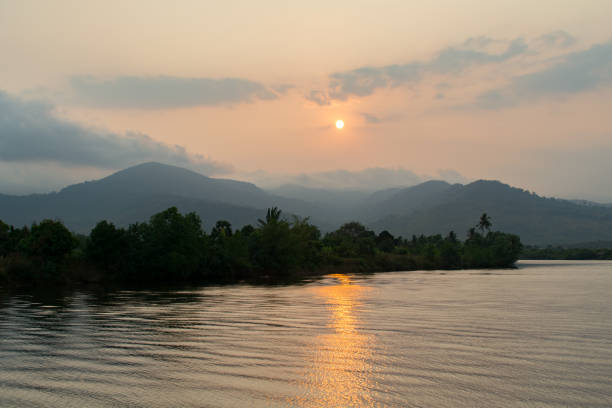
Kampot is a charming, riverside city in southern Cambodia that has become a favorite for travelers seeking a relaxed, bohemian atmosphere amidst stunning natural scenery. Situated on the banks of the Preaek Tuek Chhu River and set against the backdrop of the Elephant Mountains, the city is famous for its well-preserved French colonial architecture, characterized by ochre-colored shophouses and quiet, leafy streets. Unlike its more developed neighbor Sihanoukville, Kampot maintains a slow pace of life where the main activities revolve around the water—sunset firefly cruises, kayaking through “Green Cathedral” mangroves, and riverside dining. The city’s quirky identity is perfectly captured by the giant Durian Roundabout at its center, a tribute to the region’s famous fruit. The province is internationally renowned for producing Kampot Pepper, widely considered the best pepper in the world due to the unique quartz-rich soil and sea air. A visit to an organic pepper farm like La Plantation is a highlight, offering insight into traditional cultivation. Just a short drive from the city is Bokor National Park, where travelers can ride through clouds to reach a 1920s French hill station featuring an eerie abandoned casino, a Catholic church, and breathtaking views over the Gulf of Thailand. With its mix of high-quality international cafes, a thriving arts scene, and proximity to the Kep crab market, Kampot offers a perfect balance of heritage, nature, and gastronomy.
7. Sihanoukville: The Snorkeling Spot
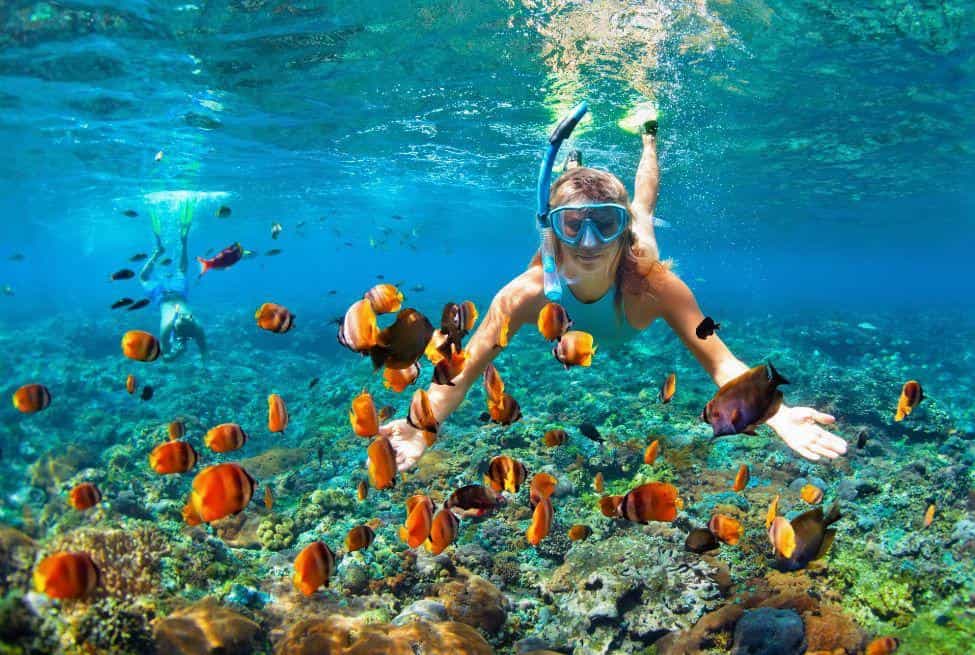
Sihanoukville serves as Cambodia’s premier gateway to an underwater world of vibrant coral reefs and diverse marine life. While the mainland beaches are popular for sunbathing, the best snorkeling and diving spots are found around the nearby archipelago, particularly Koh Rong and Koh Rong Samloem. These islands are known for their crystal-clear turquoise waters and shallow rocky reefs that support a healthy mix of hard and soft corals, sponges, and anemones. Snorkelers can expect to encounter tropical fish species such as butterflyfish, angelfish, clownfish, and parrotfish.
8. Koh Ker: The Temple With A Legend
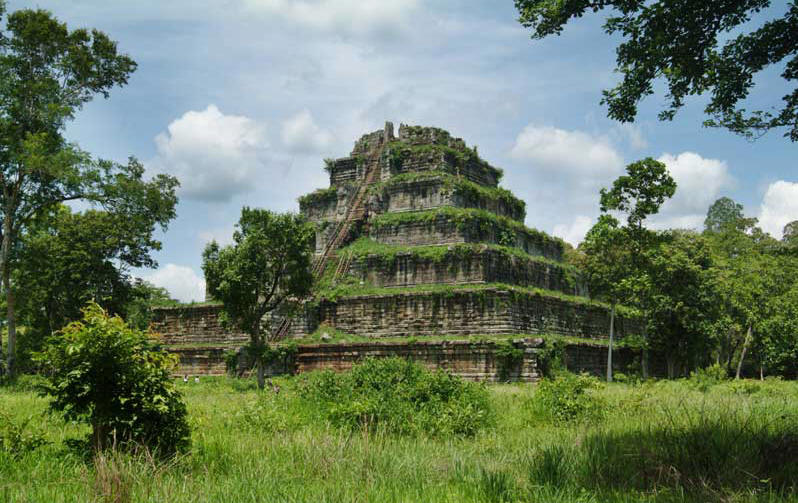
Koh Ker is a 10th-century archaeological site and UNESCO World Heritage Site that briefly served as the capital of the Khmer Empire under King Jayavarman IV. It is most famous for its stunning seven-tiered pyramid, Prasat Thom, which stands 36 metres tall and resembles Mayan architecture more than traditional Khmer styles. The site is shrouded in local legends, most notably surrounding Prasat Neang Khmau (Temple of the Black Lady), where myth tells of an exiled princess or the presence of the goddess Kali. Another central mystery is the Tomb of the White Elephant, a large artificial hill behind the pyramid that folklore claims is the burial site of a sacred royal elephant, though historians suspect it may be the king’s own tomb. The city was originally known as Lingapura (City of Lingas), and inscriptions suggest it was a site of immense spiritual ambition. At the peak of the great pyramid once stood a massive, four-metre-tall golden lingam—a symbol of the god Shiva—representing the king’s supreme power. Because Koh Ker was abandoned after only 20 years to return the capital to Angkor, it remains an enigmatic, jungle-clad time capsule. Today, visitors can climb the modern wooden staircase to the top of the pyramid for a breathtaking view of the forest, which hides nearly 200 smaller, moss-covered shrines like Prasat Pram, famous for being swallowed by the roots of giant fig trees.
9. Phnom Penh: The City Of The Brahma’s Faces
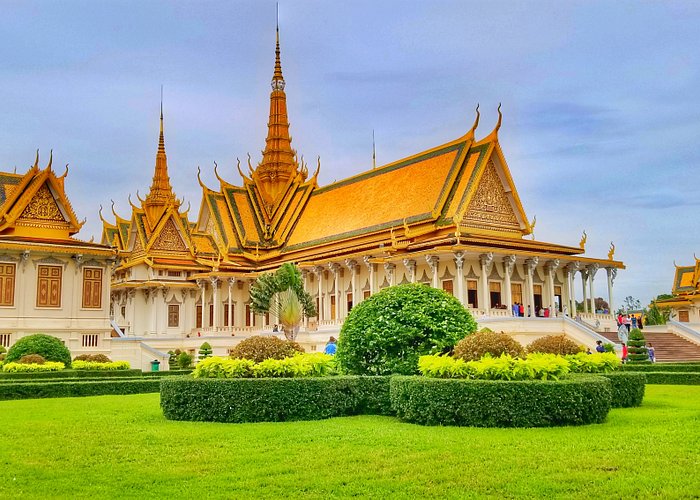
Phnom Penh, the energetic capital of Cambodia, carries the poetic title of the “City of the Brahma’s Faces” due to its formal name, Krong Chaktomuk. The word Chaktomuk translates to “Four Faces,” referring to the Hindu god Brahma, who looks in all four cardinal directions. Geographically, this represents the city’s unique location at the confluence of four river branches: the Upper Mekong, the Lower Mekong, the Tonle Sap, and the Bassac. These rivers meet in a perfect “X” shape right in front of the Royal Palace, a site believed to be a source of great spiritual energy and prosperity for the kingdom. Beyond geography, the “four faces” hold deep symbolic meaning in Cambodian culture, representing the Four Sublime States of Mind in Buddhism: loving-kindness, compassion, joy, and equanimity. This divine imagery is woven into the city’s architecture, most notably in the spires of the Royal Palace and the monuments at Wat Phnom, the hilltop temple where the city was founded. Today, this “four-faced” identity makes Phnom Penh a unique blend of ancient spiritual heritage and a bustling modern metropolis, where the riverside remains the heart of social and religious life.
10. Angkor: The UNESCO World Heritage Site

Angkor Archaeological Park, recognized as a UNESCO World Heritage Site since 1992, is one of the most important archaeological treasures in Southeast Asia. Stretching across roughly 400 square kilometres near Siem Reap, it contains the magnificent remains of various capitals of the Khmer Empire from the 9th to the 15th centuries. The most famous temple, Angkor Wat, is the largest religious monument in the world and was built in the early 12th century by King Suryavarman II as a Hindu temple dedicated to the god Vishnu. The entire site is an engineering marvel, featuring a sophisticated water management system of massive reservoirs (barays) and canals that once supported one of the largest pre-industrial cities on Earth. The park is a living heritage site where nature and ancient stone architecture intertwine beautifully, as seen in temples like Ta Prohm, which is famously covered in giant tree roots. Visitors can also explore Angkor Thom, a great walled city housing the Bayon Temple, known for its 216 colossal smiling stone faces. Because of its immense historical value and its role as a powerful symbol of Cambodian identity—appearing on the national flag—UNESCO and international teams work continuously to protect and restore these fragile monuments from the tropical environment and high numbers of visitors.
11. Krong Ta Khmau: The Best Of Cambodia
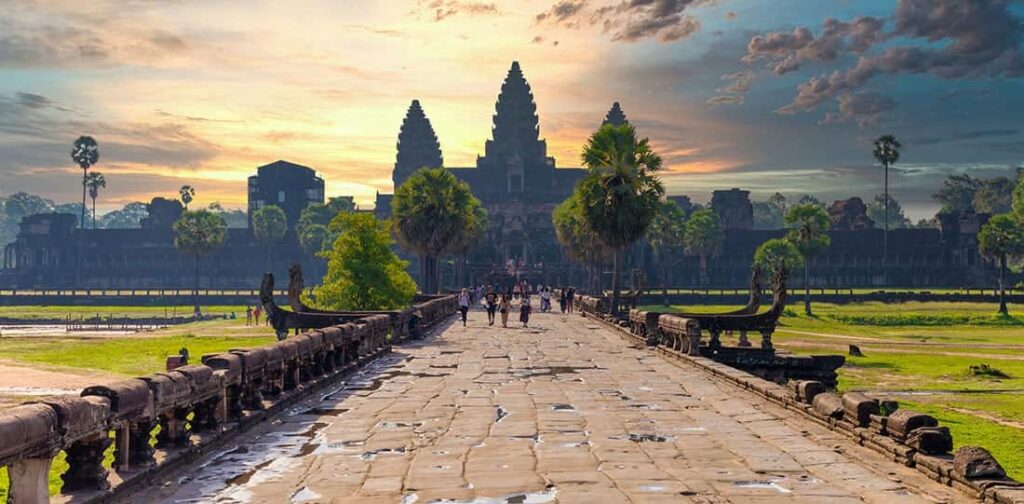
Krong Ta Khmau, the capital of Kandal Province, is often described as the “Best of Cambodia” for travelers seeking a perfect balance between vibrant city life and peaceful rural charm. Located just 11 kilometres south of Phnom Penh, it serves as a quieter alternative to the bustling capital, offering a window into the authentic Cambodian lifestyle. Its name, meaning “Black Grandfather” in Khmer, is rooted in local folklore. The city has recently gained international significance as the home of the new Techo International Airport, making it an emerging global gateway for the country.
12. Koh Rong: The Paradisaical Island

Koh Rong is widely celebrated as Cambodia’s most paradisaical island, famous for its stunning stretches of powdery white sand and crystal-clear turquoise waters. Located about 25 kilometres off the coast of Sihanoukville, it is the country’s second-largest island and remains largely undeveloped, with no paved roads and many areas still covered in dense tropical jungle. Visitors often describe it as a “untouched paradise” that offers a range of experiences, from the vibrant party atmosphere and budget guesthouses of Koh Toch village to the extreme serenity of isolated shores like Lonely Beach and Sok San Beach. The island’s geography is diverse, featuring rolling hills, seasonal waterfalls, and 23 individual beaches that span nearly 70% of its coastline.
13. National Museum of Cambodia: For A Unique Collection
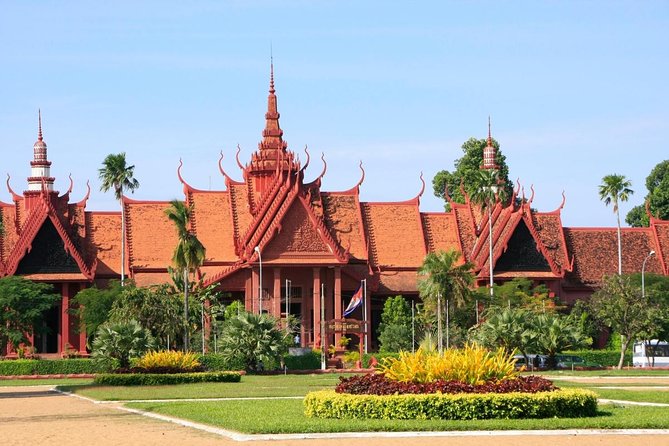
The National Museum of Cambodia, located in the heart of Phnom Penh, is the country’s leading cultural institution and houses the world’s most extensive collection of Khmer art. Inaugurated in 1920, the museum’s striking red terracotta building is a masterpiece itself, blending traditional Khmer temple design with French colonial influence. It holds over 14,000 artifacts that span more than a millennium of history, from prehistoric times through the glorious Angkorian Empire to the post-Angkorian era. The collection is uniquely arranged in a clockwise chronological order across four main galleries, allowing visitors to follow the evolution of Cambodian artistic talent through stone, bronze, wood, and ceramics.
14. War Museum: The Civil War Memorial
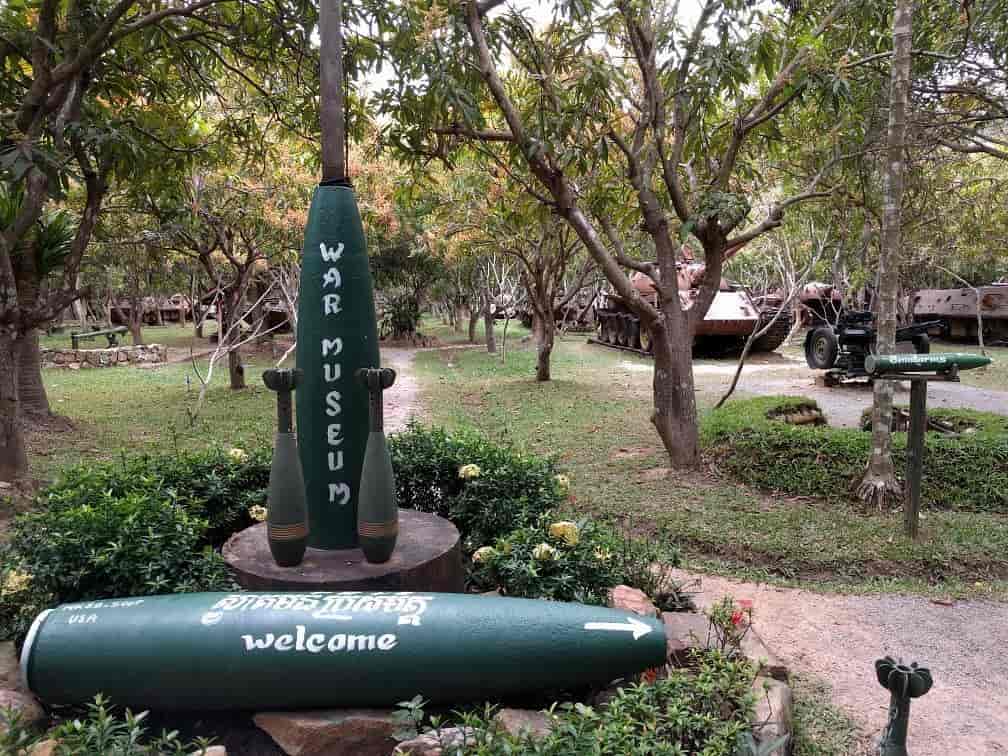
The War Museum Cambodia, located just outside the city centre of Siem Reap, is the country’s largest museum dedicated to preserving the memory of the civil war that ravaged the nation from the 1970s through the late 1990s. Unlike traditional indoor museums, much of its collection is an open-air display of authentic war remnants found on Cambodian battlefields, including rusting Soviet-era T-54 tanks, MiG-19 jet fighters, and Mil Mi-8 helicopters. It serves as a somber and educational memorial, providing a deep insight into the “war years” and the incredible resilience of the Cambodian people who endured decades of conflict. The museum is uniquely personal because many of its guides are war veterans who lived through the conflicts themselves; their first-hand stories and lived experiences transform the cold steel of the machinery into a powerful human narrative.
15. Bamboo Island: The Busiest Island
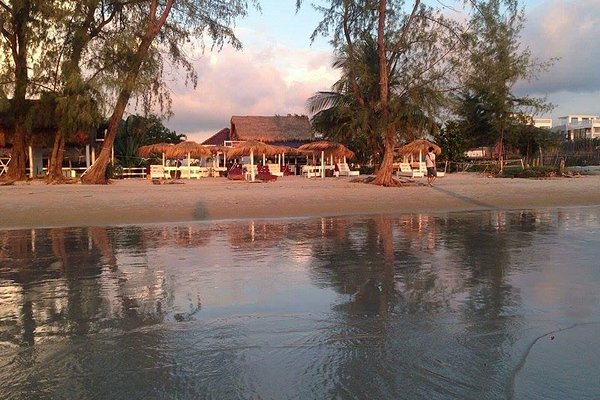
Bamboo Island, locally known as Koh Russey, is often called the “busiest” island in a relative sense—while it remains a tranquil paradise compared to the mainland, it is the most popular day-trip destination from Sihanoukville for those seeking a quick tropical escape. Located just 4.5 kilometres offshore, it is much closer and more accessible than the larger islands like Koh Rong, making it a bustling hub for speedboats and long-tail boats arriving daily with tourists. Despite its small size, the island is part of the Ream National Park and is famous for its fine golden sands, clear turquoise waters, and lush jungle interior. In recent years, the island has transformed from a quiet naval outpost into a sophisticated retreat. While it maintains a “laid-back” vibe, the presence of upscale developments like the Koh Russey Resort has made it a busy spot for luxury travelers and day-trippers alike.
16. Bayon Temple: The Ancient Architecture Marvel

The Bayon Temple is a massive stone masterpiece built in the late 12th or early 13th century at the heart of the ancient city of Angkor Thom in Cambodia. Constructed by King Jayavarman VII, it served as the state temple and is famous for its “Gothic” style, which looks like a mountain of stone from a distance. What makes it truly unique are the over 200 giant smiling faces carved into its 54 towers, which gaze out in every direction with a serene, mysterious expression known as the “Smile of Angkor”. These faces are believed to represent either the Buddhist deity of compassion, Avalokiteshvara, or the king himself, symbolising his divine watch over the empire. Unlike other temples, Bayon is built on three levels and contains a labyrinth of narrow corridors and steep stairs that lead to a circular upper terrace. Its walls are covered in over 1.2 kilometres of detailed carvings (bas-reliefs) that show vivid scenes of everyday life—like markets, fishing, and festivals—alongside grand historical battles and religious myths.
17. Bokor Hill Station: The Quaint Resort Town
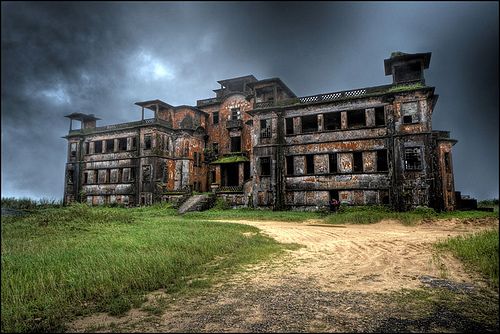
Bokor Hill Station is an atmospheric mountaintop retreat in southern Cambodia, originally built by French settlers in the 1920s to escape the heat of the plains. Perched over 1,000 metres high within Preah Monivong National Park, it is famous for its “ghost town” feel, as it was abandoned three separate times due to wars and political shifts. The centerpiece of the site is the grand Bokor Palace Hotel, a restored Art Deco masterpiece that once hosted the elite and now operates as a luxury hotel. Visitors are drawn to its eerie, mist-shrouded ruins—including an old stone Catholic church and the “Black Palace” of King Sihanouk—which offer a hauntingly beautiful glimpse into Cambodia’s colonial and recent history. On clear days, the summit provides breathtaking panoramic views stretching across the Gulf of Thailand to Vietnam’s Phu Quoc Island.
18. Silver Pagoda: The Temple Of The Emerald Buddha
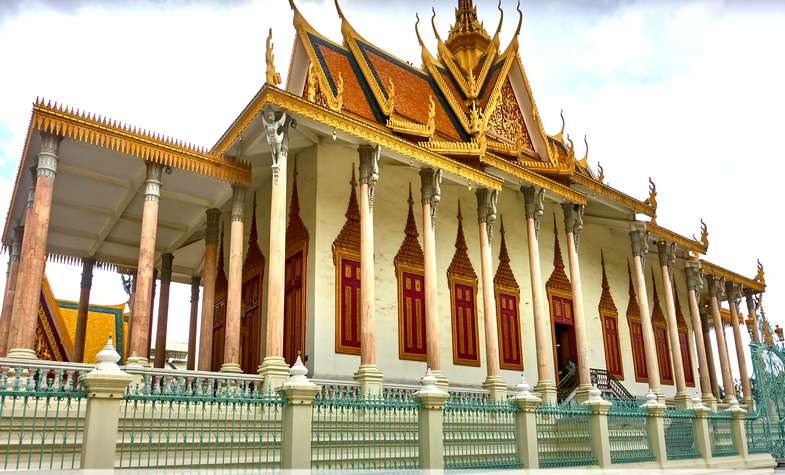
The Silver Pagoda, officially known as Wat Preah Keo Morokat, is a dazzling royal temple located within the southern compound of the Royal Palace in Phnom Penh. It is nicknamed the “Silver Pagoda” because its floor is covered with over 5,000 solid silver tiles, each weighing about one kilogram. The temple serves as a sacred space where the King of Cambodia meets with monks and performs royal ceremonies. Inside, it houses some of the country’s most priceless national treasures, including the famous Emerald Buddha—a small, green crystal statue that sits high on a gilded pedestal. Another breathtaking highlight is a life-sized Golden Buddha that weighs 90kg and is encrusted with nearly 10,000 diamonds, the largest of which is a staggering 25 carats.
19. Ta Prohm: The Temple With Unexplored Ruins
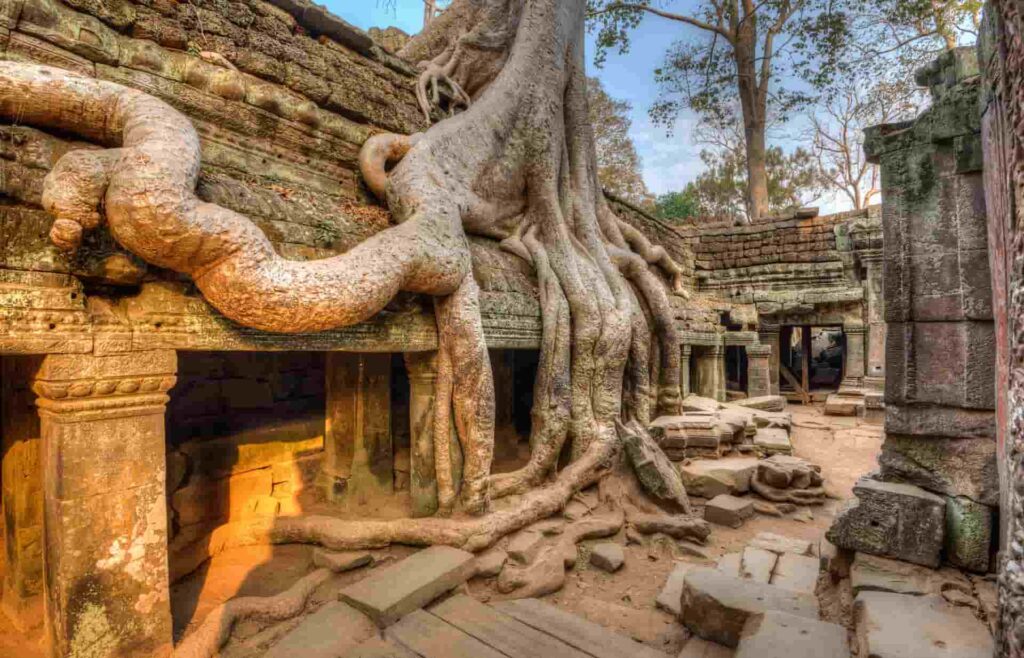
Ta Prohm is one of the most popular temples in the Angkor Archaeological Park, famous for its mesmerizing and “unexplored” appearance where ancient stone architecture is literally being swallowed by the jungle. Built in 1186 by King Jayavarman VII as a Buddhist monastery and university dedicated to his mother, it was originally a bustling city housing over 12,000 people and 600 dancers. Unlike other major temples that were heavily restored, Ta Prohm was intentionally left in a semi-ruined state with massive silk-cotton and strangler fig trees growing directly out of the walls and roofs. Their giant, winding roots wrap around the structures like “rivers of wood,” creating a hauntingly beautiful scene that famously served as a filming location for the movie Lara Croft: Tomb Raider.
20. Ream National Park: The Land Of Endangered Species

Ream National Park, established in 1993, is a stunning coastal wilderness near Sihanoukville that protects over 21,000 hectares of diverse ecosystems, including primary forests, mangrove swamps, and coral reefs. It is famously known as a sanctuary for endangered species, providing a home to rare animals like the sun bear, fishing cat, and the critically endangered pangolin. The park’s varied landscape also supports over 155 bird species and serves as a vital breeding ground for the Irrawaddy dolphin, which can occasionally be spotted in the estuary. Visitors are drawn to its untouched beauty, where they can take boat trips through the winding mangrove forests, hike to secluded white-sand beaches like Koh Thmei, and experience the quiet harmony of a landscape where the jungle meets the sea.
21. Killing Fields: The Massive Graveyards!

The Killing Fields, specifically Choeung Ek just outside of Phnom Penh, are a somber and powerful site that serves as a memorial to the millions of people who suffered during the Khmer Rouge regime in the late 1970s. Originally an orchard, this location became one of many massive graveyards where thousands of innocent people were executed and buried in mass graves. Today, it is a place of deep reflection and education, featuring a tall Buddhist Stupa filled with more than 8,000 human skulls, organized by age and gender to honor those who lost their lives. Visitors can walk along the quiet paths of the former burial grounds, where many mass graves are still visible, often marked with colorful ribbons and bracelets left by people from all over the world as a sign of respect and peace.
22. Battambang Bat Caves: The Scariest Tourist Attraction
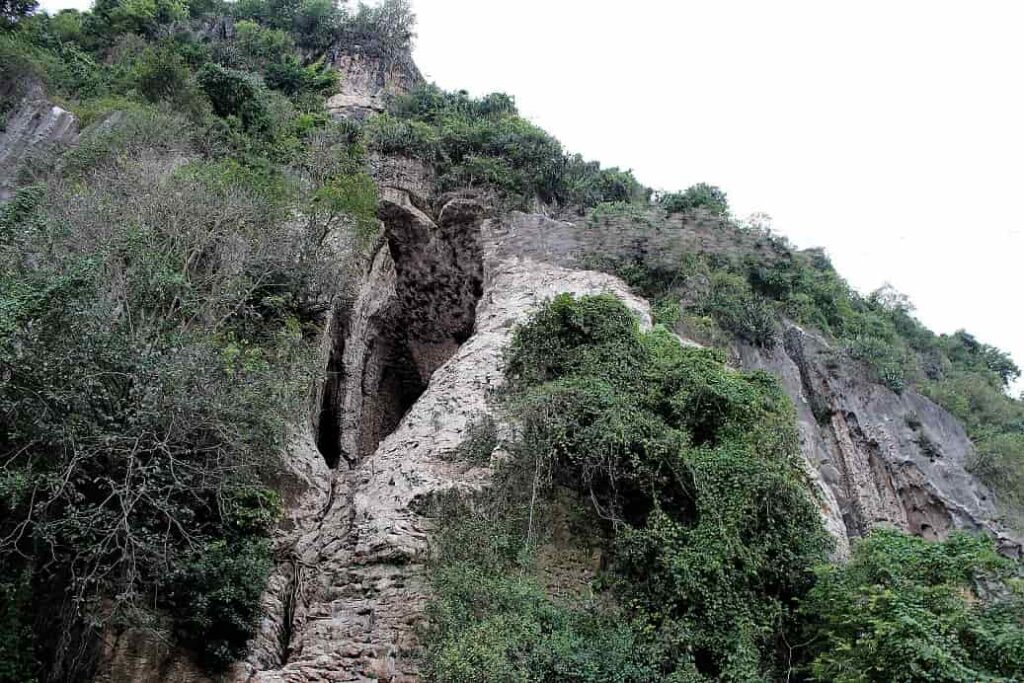
The Battambang Bat Caves, located at the base of Phnom Sampeau, offer one of nature’s most incredible spectacles—often called “scary” because of the sheer, overwhelming volume of bats. Every evening at sunset, millions of wrinkle-lipped bats emerge from the narrow cave openings in a massive, dark stream that looks like black smoke twisting through the sky. This endless “bat river” can last for over 45 minutes as the colony heads out to the nearby rice fields to hunt for insects. While the sight of millions of bats flying overhead is a bit eerie, it is actually a vital part of the local ecosystem, as these bats eat tons of pests every single night, helping local farmers protect their crops.
23. Kratie

Kratie (pronounced Kra-chay) is a peaceful riverside town in eastern Cambodia, famous for its relaxed atmosphere and beautiful sunsets over the Mekong River. It is most famous as the best place in the country to see the rare and endangered Irrawaddy dolphins. These friendly, snub-nosed dolphins live in the river near the village of Kampi, just a short drive from the town center. Unlike the busy cities of Phnom Penh or Siem Reap, Kratie has a quiet, charming feel with old French colonial buildings and wide riverfront paths where locals and travelers gather in the evenings to eat street food and watch the sun go down.
24. Chrey

Cambodian travel, Chrey typically refers to Chrey Commune in the Battambang province or the Chrey Thom Waterfall in Mondulkiri. Chrey Commune is a peaceful rural area located about 12 kilometres from Battambang city, serving as a gateway to major attractions like the Phnom Sampeau Bat Caves and the Killing Caves. It is characterized by vast, vivid green rice paddies and traditional stilted houses, offering a glimpse into the authentic “rice bowl” lifestyle of Cambodia. Alternatively, Chrey Thom Waterfall is a natural wonder in the remote Sen Monorom district, surrounded by a lush forest of Srolao and Chrey trees. This multi-tiered waterfall changes dramatically with the seasons—becoming a powerful 8-metre wide torrent during the rainy season—and offers a quiet, off-the-beaten-path experience for nature lovers.
25.Russian Market
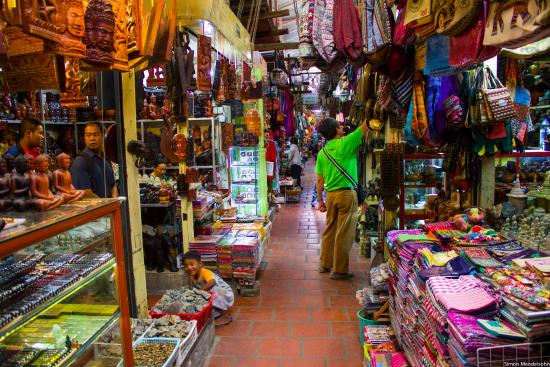
The Russian Market, known locally as Phsar Tuol Tom Poung, is one of the most famous and vibrant shopping spots in Phnom Penh. It earned its name in the 1980s when it was the go-to place for Soviet expatriates living in the city. Today, it is a maze of narrow, bustling alleys where you can find almost anything—from discounted branded clothing and handcrafted silk to intricate wood carvings and traditional musical instruments. It is also a treasure trove for souvenir hunters, offering everything from “I Love Cambodia” t-shirts to beautiful silver jewellery and antique coins. At the heart of the market is a lively food section where you can try local delicacies like iced coffee with condensed milk or Khmer noodles in an authentic, high-energy atmosphere.
26. Psar Thmei
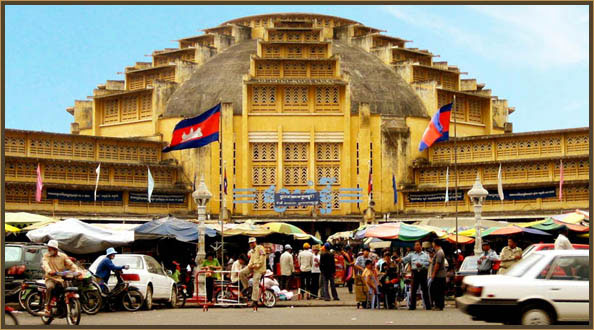
Often known by the name Central Market, Psar Thmei is one of the landmark places in Cambodia. Psar Thmei consists of four wings filled with stalls selling gold and silver ornaments, dodgy watches, clothing, antiques, and a lot more. You can click photographs near the food section.
Shopping in the market is a must for those who want to take back memories of their visit to the Asian land. There are plenty of food stalls located on the western side of the market for local lunch.
27. Royal Palace Park
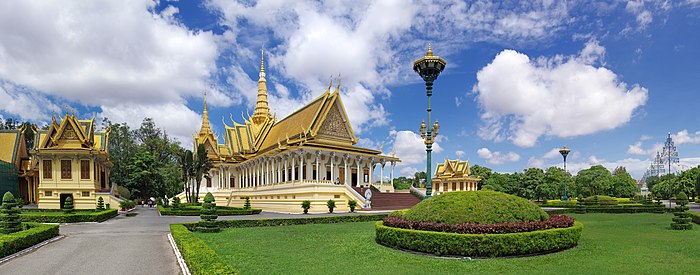
Royal Palace Park is a rectangular green space where local people of Cambodia come for picnics around the edge of the park. It is in very close proximity to the Tonlé Sap River. You can purchase food from the nearby Sisowath Quay and have quality time with yourself in the park.