
The Annapurna mountain range is a massive, 55-kilometer (34-mile) long extension of the Himalayas in north-central Nepal, renowned for its spectacular rugged terrain and diverse ecosystems. It is home to Annapurna I Main—the world’s tenth-highest mountain at an elevation of 8,091 meters (26,545 feet)—which is known as one of the most dangerous peaks for mountaineers due to the extreme risks of avalanches. The range is flanked by the Kali Gandaki Gorge—one of the deepest river gorges on Earth—to the west, and the Marshyangdi River to the east.
In addition to towering peaks like Annapurna II and the iconic, sacred “Fishtail” summit of Machhapuchhre, this region serves as a global hub for trekking. The Annapurna Conservation Area protects this land, offering routes such as the Annapurna Circuit and the Annapurna Sanctuary; these trails lead hikers through every type of terrain, ranging from subtropical forests and terraced fields to high-alpine glaciers and arid plateaus. Culturally, the name “Annapurna” translates from Sanskrit as the “Goddess of the Harvest,” reflecting the mountain’s role in providing water and life to the valleys below.
The Annapurna region is a very safe and welcoming destination, provided that you stick to the popular trekking routes rather than attempting to climb the dangerous peaks. The locals here are renowned for their hospitality, and the most important safety guidelines for travelers are: to trek with a guide, to drink plenty of water to prevent altitude sickness, and to visit during the sunny spring or autumn months to avoid adverse weather conditions. While high mountain peaks are meant only for professional mountaineers, trekking trails are well-marked and are used by thousands of ordinary people every year.
Most Famous And Attractive Tourist Places In Annapurna Mountain Range :
1. Annapurna Base Camp

Annapurna Base Camp, also known as the Annapurna Sanctuary, is a high-altitude glacial basin located at 4,130 metres (13,550 feet) in the heart of the Annapurna Mountain Range. Surrounded by a ring of massive peaks—including Annapurna I (8,091m), Annapurna South, and the sacred Machapuchare (Fishtail)—the camp serves as a natural amphitheatre offering spectacular 360-degree mountain views. The journey to ABC typically takes 7 to 12 days and is famous for its diverse landscapes, starting from subtropical forests and terraced farmland before climbing into alpine tundra and bamboo thickets. Along the trail, trekkers experience the rich cultural traditions of the Gurung and Magar communities and stay in locally run teahouses, making it one of the most popular and accessible high-altitude treks in Nepal. A unique highlight of the return journey is the village of Jhinu Danda, where hikers can soak in natural hot springs to soothe their muscles after the trek.
2. Poon Hill (The Sunrise Gateway)
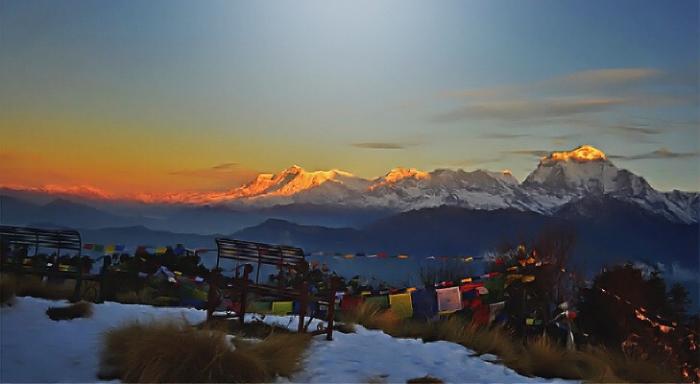
Poon Hill, standing at an elevation of 3,210 metres (10,531 feet), is widely considered the ultimate sunrise viewpoint in the Annapurna region and one of the most famous photographic spots in the Himalayas. Often called the “Sunrise Gateway,” it provides a breathtaking panoramic view that includes the Dhaulagiri (8,167m) and Annapurna (8,091m) massifs, as well as the iconic, pointed peak of Machapuchare (Fishtail). The trek to Poon Hill is part of the “Ghorepani Poon Hill Trek,” a relatively short and moderate route that typically takes 3 to 5 days, making it an ideal choice for families, beginners, or those with limited time. Most hikers begin their ascent from the village of Ghorepani in the pre-dawn darkness to reach the summit just as the sun begins to hit the snow-capped peaks, turning them brilliant shades of gold and orange. Beyond the views, the journey passes through lush rhododendron forests—which bloom in vibrant pinks and reds during the spring—and offers a close look at the traditional culture of the Gurung and Magar ethnic groups.
3. Thorong La Pass

Thorong La Pass is the highest point of the world-famous Annapurna Circuit trek, standing at a formidable elevation of 5,416 metres (17,769 feet) above sea level. It serves as a vital mountain pass connecting the village of Manang in the east to the sacred temple site of Muktinath in the Mustang district to the west. Crossing the pass is widely considered the most challenging and rewarding part of the circuit, requiring trekkers to endure extreme altitudes, thinning oxygen, and often freezing temperatures. Most hikers begin their ascent from Thorong Phedi or High Camp in the very early hours of the morning to avoid the fierce winds that typically pick up after midday. Reaching the summit is marked by a flurry of colorful Buddhist prayer flags and offers an unparalleled view of the Great Himalaya Range and the arid, Tibetan-like landscape of the Kali Gandaki valley. Because of the risk of Acute Mountain Sickness (AMS), it is essential for trekkers to spend several days acclimating in Manang before attempting the crossing.
4. Tilicho Lake
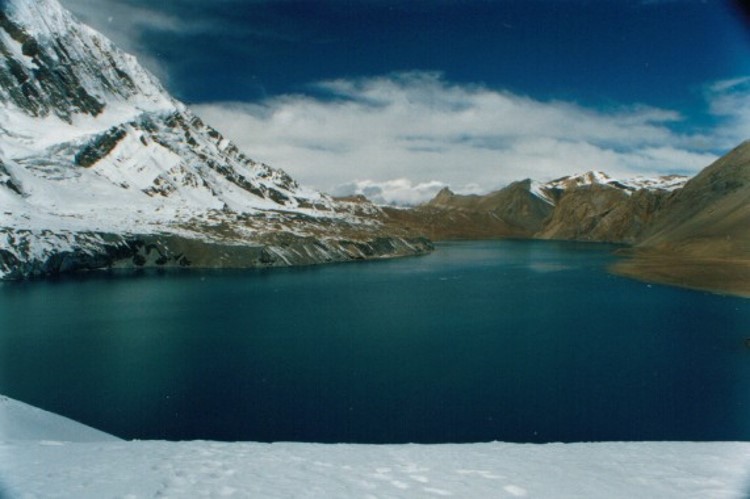
Tilicho Lake is one of the highest altitude lakes in the world, situated at an elevation of 4,919 metres (16,138 feet) in the Manang district of the Annapurna range. Often visited as a spectacular side-trip on the Annapurna Circuit, the lake is famous for its striking turquoise waters and the dramatic backdrop of the “Great Barrier,” a massive vertical wall of ice and rock that connects Tilicho Peak to the Annapurna massif. Reaching the lake is considered a strenuous trek, requiring hikers to navigate narrow, steep trails through “scree” fields (loose rock slopes) and endure very thin air. There is no permanent accommodation at the lake itself, so trekkers typically stay at Tilicho Base Camp and make a long, steep climb to the shore and back in a single day. The lake also holds religious significance for Hindus, who believe it is the ancient “Kak Bhusundi Lake” mentioned in the Ramayana, making it a place of both extreme natural beauty and deep spiritual importance.
5. Muktinath Temple
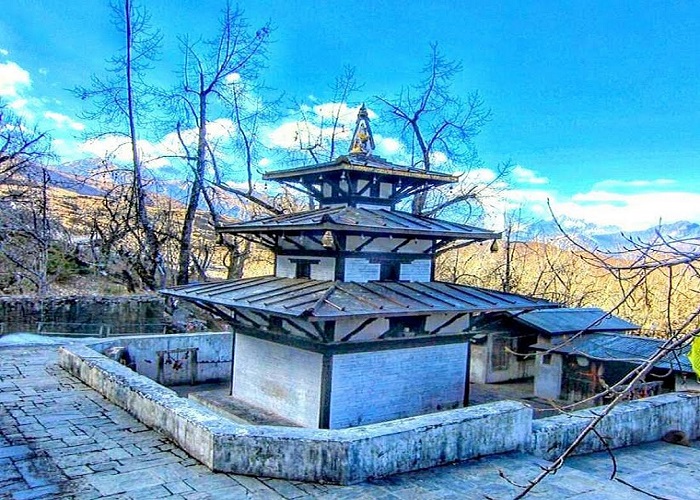
Muktinath Temple is a sacred high-altitude pilgrimage site situated at 3,710 metres (12,171 feet) at the base of the Thorong La Pass in the Mustang district. It holds immense spiritual significance as a “Mukti Kshetra,” or a place of liberation, for both Hindus and Buddhists, symbolizing the harmonious coexistence of the two religions. The main temple is a small, three-tier pagoda-style structure dedicated to Lord Vishnu, surrounded by an outer courtyard featuring 108 brass water sprouts shaped like bullheads, where pilgrims bathe to purify themselves. Another major highlight is the Jwala Mai (Goddess of Fire) Temple, where a natural gas jet produces a “miraculous” eternal flame that burns atop water. For trekkers on the Annapurna Circuit, the temple serves as a vital resting point and a spiritual reward after the grueling crossing of the Thorong La Pass, offering a unique blend of ancient architecture, desert-like landscapes, and deep religious devotion.
Overview
Travel is the movement of people between relatively distant geographical locations, and can involve travel by foot, bicycle, automobile, train, boat, bus, airplane, or other means, with or without luggage, and can be one way or round trip. Travel can also include relatively short stays between successive movements.
The origin of the word “travel” is most likely lost to history. The term “travel” may originate from the Old French word travail, which means ‘work’. According to the Merriam Webster dictionary, the first known use of the word travel was in the 14th century.
It also states that the word comes from Middle English travailen, travelen (which means to torment, labor, strive, journey) and earlier from Old French travailler (which means to work strenuously, toil). In English we still occasionally use the words “travail”, which means struggle. According to Simon Winchester in his book The Best Travelers’ Tales (2004), the words “travel” and “travail” both share an even more ancient root: a Roman instrument of torture called the tripalium (in Latin it means “three stakes”, as in to impale).