


Nainital is an exquisitely beautiful hill station nestled in the Kumaon foothills of the Outer Himalayas, centered around the emerald-green, eye-shaped Naini Lake. Established by the British in 1841 as a retreat, the town is uniquely situated in a valley encircled by seven lush green peaks; it offers a delightful blend of colonial charm and spiritual significance. The sacred Naina Devi Temple—one of the 51 Shakti Peethas—stands proudly on the northern banks of the lake.
Tourists are drawn to the town’s vibrant Mall Road, its Victorian-era architecture (such as the Raj Bhavan), and scenic viewpoints like Tiffin Top and Snow View—spots that offer magnificent vistas of the snow-capped Himalayan ranges. Beyond its natural beauty, Nainital also serves as a gateway for observing high-altitude wildlife through its unique zoo and nearby bird sanctuaries; this makes it an ideal destination for nature lovers, honeymooners, and adventure enthusiasts alike.
Nainital’s economy relies primarily on tourism, as thousands of visitors flock here annually to admire the lake and mountains, thereby providing employment opportunities for hotel staff, shopkeepers, and tour guides. In addition to tourism, the region is renowned for its agriculture—specifically the cultivation of fruits such as apples, peaches, and plums, as well as fresh vegetables—which are then sold in neighboring cities.
The town is also a recognized educational hub, home to several prestigious boarding schools that consistently generate business and employment opportunities within the area. Finally, local handicrafts—such as the crafting of beautiful decorative candles and woolen garments—serve as a source of supplementary income for many families in the region. Nainital is widely regarded as a very safe and tourist-friendly destination, making it an excellent choice for families, solo travelers, and couples alike. The locals here are known for their friendly and helpful nature; furthermore, as this is a popular hill station, there is a strong police presence, and the Mall Road and the areas surrounding the lake remain well-lit.
Most Famous And Attractive Tourist Places In Nainital :
1. Naini Lake
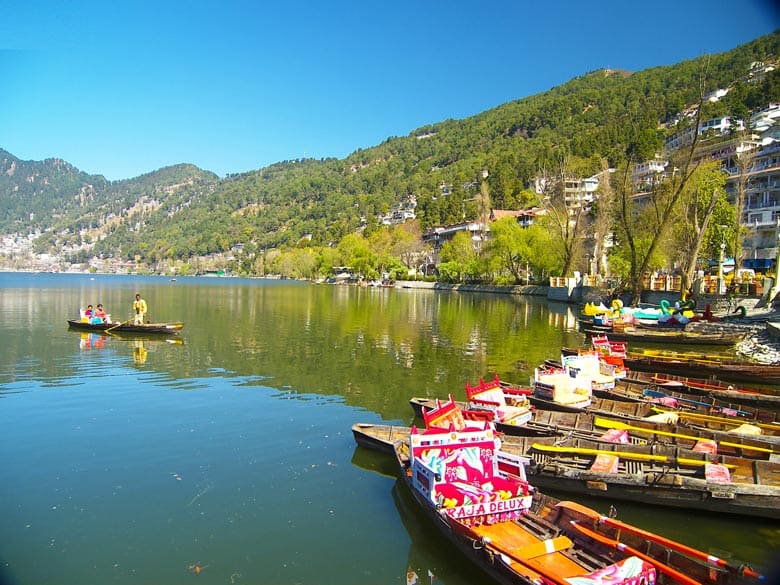
Naini Lake, the centerpiece of the hill station Nainital, is a breathtaking natural freshwater body situated at an altitude of approximately 1,938 metres. Geologically, it is a tectonic lake surrounded by seven majestic peaks, while in Hindu mythology, it is revered as the spot where the left eye (Nain) of Goddess Sati fell, leading to its crescent or eye-like shape. The lake is divided into two distinct sections: Mallital at the northern end and Tallital at the southern end, connected by the bustling Mall Road. It serves as the lifeline of the town, offering tourists a variety of recreational activities such as yachting, rowing, and paddle boating. The emerald-green waters provide a stunning reflection of the surrounding pine and oak-covered hills, and at night, the glimmering lights of the hillside cottages create a spectacular “necklace” effect on the water’s surface, making it one of the most photographed spots in Northern India.
2. Snow View Point
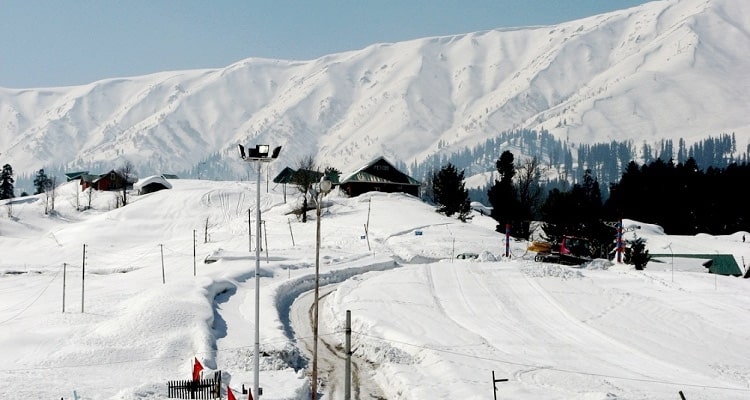
Snow View Point is one of the most famous and highly visited tourist spots in Nainital, situated at a majestic altitude of 2,270 metres (7,448 ft). As the name suggests, it offers a stunning, unobstructed panoramic view of the snow-clad Himalayan peaks, including the mighty Nanda Devi, Trishul, and Nanda Kot. The peak is most commonly reached via a thrilling aerial ropeway (cable car) from Mallital, which provides a bird’s-eye view of the crescent-shaped Naini Lake during the climb. At the summit, visitors can use large, mounted binoculars to get a closer look at the mountain ranges or explore the small park and temple located there. The area is well-equipped with tea stalls, souvenir shops, and photography points, making it an ideal location for families and nature lovers to spend a few hours soaking in the crisp mountain air and the breathtaking white horizon.
3. Tiffin Top
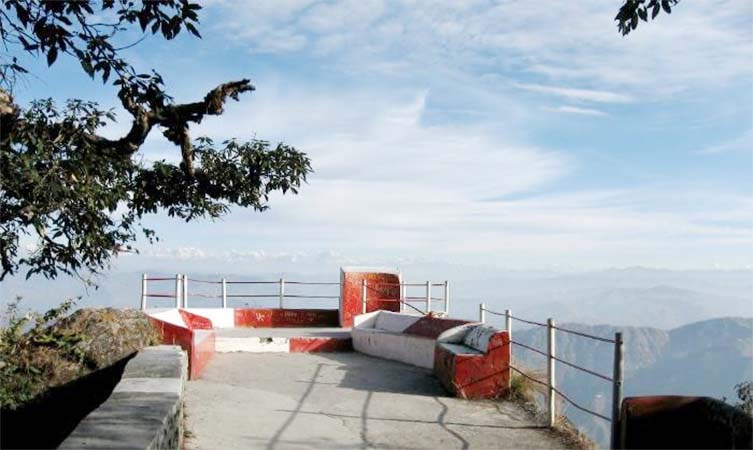
Tiffin Top, also popularly known as Dorothy’s Seat, is a breathtaking picnic spot located on Ayarpatta Hill at an altitude of 2,292 metres in Nainital. The name “Tiffin Top” comes from the tradition of locals and tourists hiking up the hill to enjoy their “tiffin” (lunch) while taking in the stunning views. The stone bench at the summit, called Dorothy’s Seat, was built by British Army officer Col. J.P. Kellett in memory of his wife, Dorothy Kellett, who passed away in a plane crash. It offers a spectacular 360-degree view of the Nainital town, the sparkling Naini Lake, and the majestic snow-capped Himalayan peaks in the distance. Surrounded by dense forests of oak, pine, and deodar, the peak is accessible via a scenic 4-kilometre trek or a popular pony ride from the Mall Road, making it a favourite destination for nature lovers, photographers, and adventure seekers alike.
4. Eco Cave Gardens
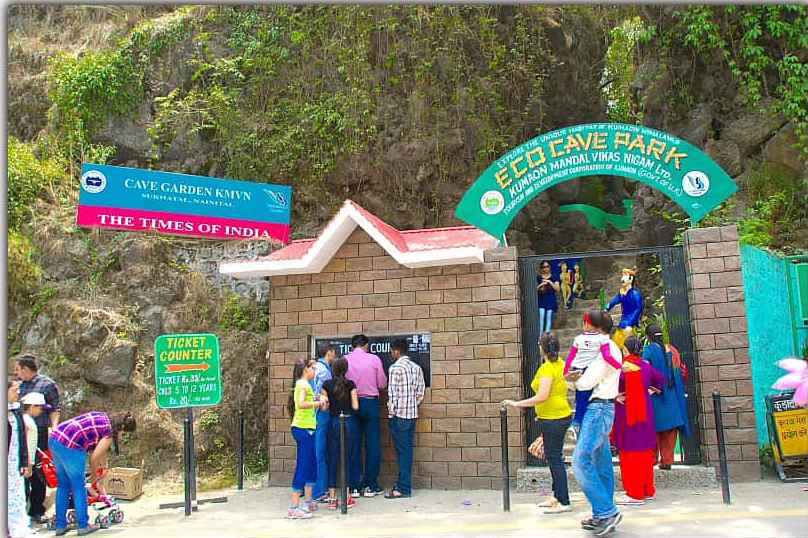
Eco Cave Gardens is a popular and unique tourist attraction located in Mallital, Nainital, featuring a cluster of interconnected natural rocky caves and hanging gardens. The park is designed to give visitors a glimpse into the natural habitat of various wild animals through its six primary caves: the Tiger Cave, Panther Cave, Apes Cave, Bat Cave, Porcupine Cave, and Flying Fox Cave. These caves vary in difficulty, with some requiring visitors to crawl or squeeze through narrow, low-ceilinged openings, making it an adventurous experience for both children and adults. The gardens are beautifully maintained with musical fountains (active during the peak season) and traditional Himalayan lamps that light up the pathways at night. It serves as an excellent educational and recreational spot, offering a rugged, “off-road” feel within the safety of a managed park, all while being surrounded by the lush greenery of the hilly terrain.
5. High Altitude Zoo

The Pt. G.B. Pant High Altitude Zoo, commonly known as the Nainital Zoo, is one of the most unique wildlife parks in India, situated at a staggering altitude of 2,100 metres on the Sher Ka Danda hill. Established in 1984 and opened to the public in 1995, it is one of only three high-altitude zoos in the country, specifically designed to house and conserve Himalayan flora and fauna. The zoo is home to several rare and endangered species that thrive in cold climates, including the Siberian Tiger, Snow Leopard, Red Panda, Himalayan Black Bear, and the Tibetan Wolf, as well as various high-altitude birds like the Kalij Pheasant and Golden Pheasant. Because of its steep location, the zoo offers breathtaking views of the Naini Lake and the surrounding mountains as you walk along its well-maintained, uphill forest trails. To protect the environment, the zoo is a plastic-free zone, and visitors can easily reach it by taking a dedicated shuttle service from the Mall Road.
6. Nainital Ropeway
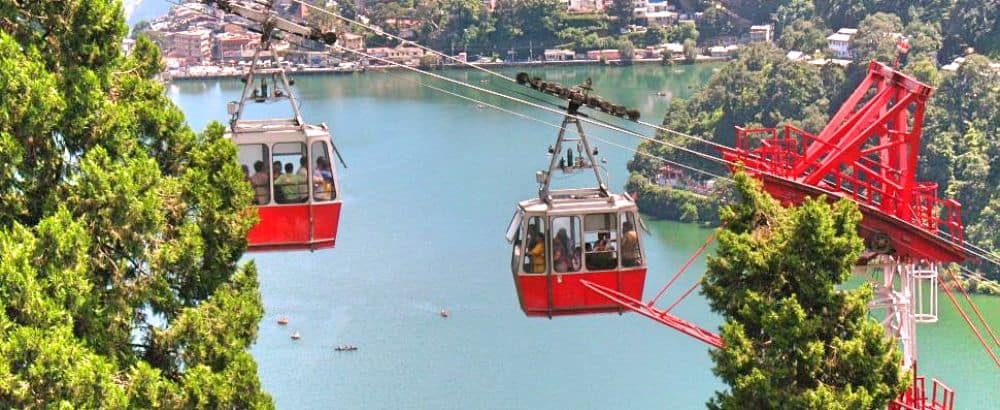
The Nainital Ropeway, also known as the Aerial Expressway, is one of the town’s most popular attractions, connecting Mallital to the famous Snow View Point. As one of the most advanced ropeways in India, it features two sleek cable cars that glide over the lush hillsides, ascending to a height of approximately 2,270 metres. The three-minute journey offers a spectacular bird’s-eye view of the crescent-shaped Naini Lake and the entire town nestled within the valley. It is built using Swiss technology and has a high load capacity, ensuring a smooth and safe ride for tourists. For many, the ropeway is more than just transport; it is a thrilling experience that provides some of the best photographic angles of the Himalayan peaks and the green landscape of the Kumaon region.
7. Naina Peak
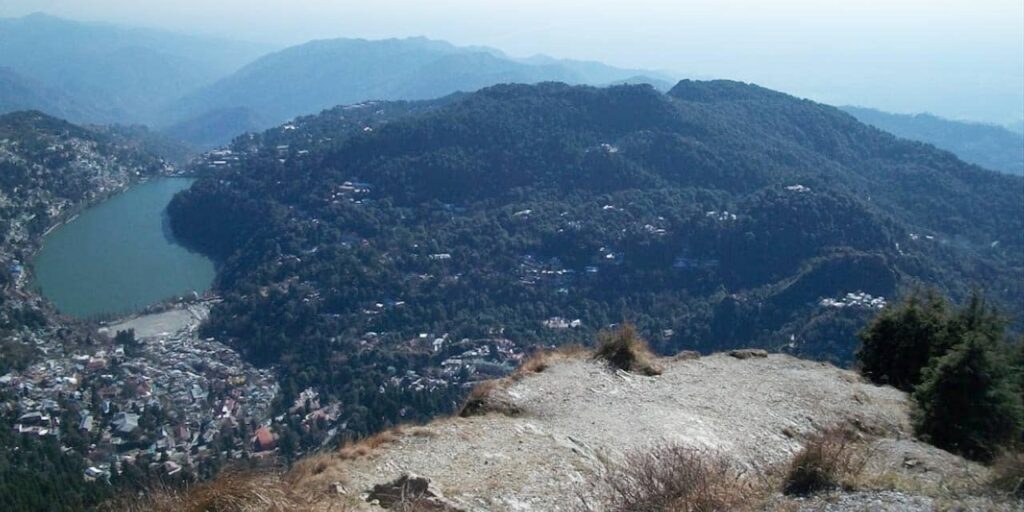
Naina Peak, formerly known as China Peak or Cheena Peak, is the highest mountain peak in the Nainital district of Uttarakhand, standing at a majestic elevation of 2,615 metres (8,579 feet). It was renamed after the 1962 Indo-China war to better reflect the local identity of the town, which centers on the goddess Naina Devi. The peak is a prime destination for adventure enthusiasts and nature lovers, accessible via a moderately challenging 6 km trek through a lush landscape of dense cypress, oak, and pine forests punctuated by vibrant red rhododendrons. Upon reaching the summit, visitors are rewarded with an unparalleled 360-degree panoramic view that includes a bird’s-eye perspective of the kidney-shaped Naini Lake on one side and a staggering line-up of snow-capped Himalayan giants—such as Nanda Devi, Trishul, and Nanda Kot—on the other. Because there are no permanent shops at the summit, it remains a tranquil, secluded spot perfect for quiet reflection or photography, though it is recommended to start the hike early in the morning to avoid the afternoon clouds that often obscure the mountain views.
8. Land’s End
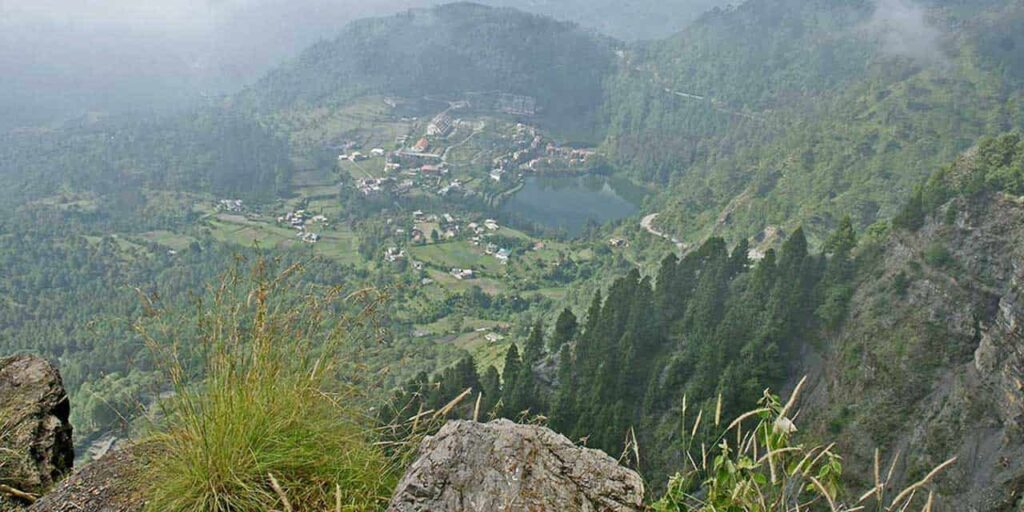
Land’s End is a stunning cliffside viewpoint in Nainital, positioned at an altitude of 2,118 metres (6,948 feet). True to its name, the spot marks a dramatic point where the mountain seems to come to an abrupt, 90-degree vertical halt, creating the illusion that the land has simply finished. It is most famous for offering an unobstructed, bird’s-eye view of the emerald-green, mango-shaped Khurpa Tal lake nestled in the valley below, along with the sprawling Kumaon mountain ranges and terraced farms. Located about 4 km from the main town, it is easily accessible by taking a taxi to Barapathar and then completing a short, scenic 1 km trek or a horse ride through lush pine and deodar forests. Because the area is unfenced and features sheer drops, it is highly recommended for photography and peaceful picnics, but visitors—especially those with children—are urged to exercise extreme caution near the edges.
9. Bhimtal Lake
Bhimtal Lake is the largest lake in the Kumaon region and the second largest in Uttarakhand, situated about 22 km from Nainital at an altitude of 1,370 metres. Named after the legendary figure Bhima from the Mahabharata, who is said to have created the lake with a blow of his mace to quench his brothers’ thirst, it serves as a more tranquil and spacious alternative to the bustling Naini Lake. A unique highlight of Bhimtal is the small island at its center, which houses a popular public aquarium and a scenic cafe accessible only by boat. The lake is also home to the Victoria Dam, built in 1883, and the 17th-century Bhimeshwar Mahadev Temple. Visitors can enjoy various activities such as paddle boating, kayaking, and birdwatching, as the surrounding oak and pine forests attract several migratory species during the winter months.
10. Sattal
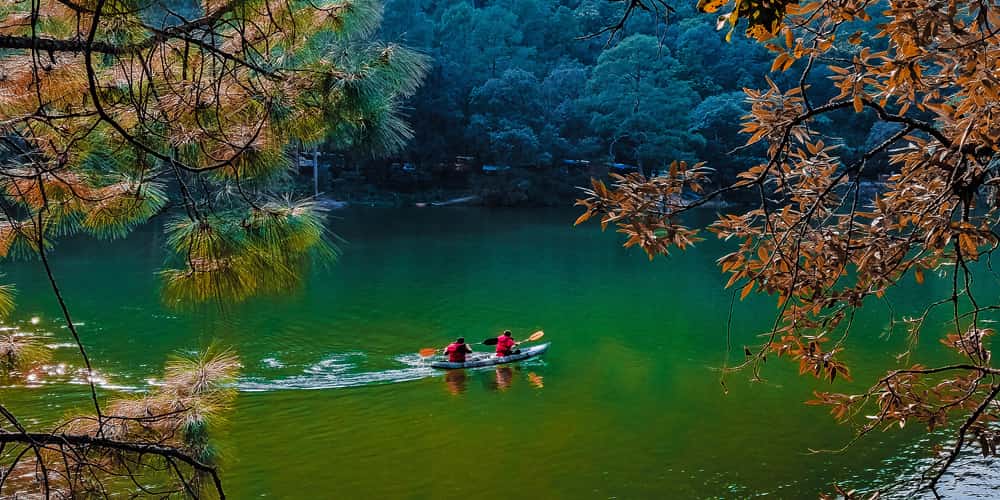
Sattal, which literally translates to “Seven Lakes,” is a stunning cluster of interconnected freshwater lakes located near Bhimtal in the Kumaon region of Uttarakhand. Situated at an altitude of 1,370 metres, it is widely considered one of the most pristine and unpolluted natural biomes in India, as it remains largely untouched by heavy commercialisation. The group consists of seven lakes—Panna (Garud Tal), Nal-Damyanti Tal, Purna Tal, Sita Tal, Ram Tal, Laxman Tal, and Sukha Tal—all set against a backdrop of dense, lush forests of oak and pine. Sattal is a paradise for nature lovers and birdwatchers, home to over 500 species of resident and migratory birds, including kingfishers, woodpeckers, and barbets. Beyond its ecological significance, the area offers a peaceful retreat for kayaking, boating, and trekking, while history buffs can visit the nearby Sattal Christian Ashram or the Butterfly Research Centre, which houses an extensive collection of rare Himalayan butterflies.
11. Pangot
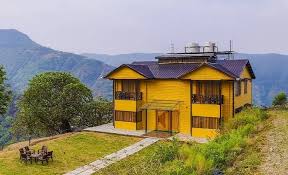
Pangot is a picturesque hamlet situated about 13 km from Nainital, perched at an altitude of 1,983 metres. It is internationally renowned as a birdwatcher’s paradise, as the surrounding dense forests of oak, pine, and rhododendron are home to over 250 species of birds, including rare Himalayan varieties like the Lammergeier, Cheer Pheasant, and Koklass Pheasant. The drive from Nainital to Pangot is equally famous, passing through the scenic Cheena Peak Range and Kilbury, which are known for their vibrant flora and quiet trails. Unlike the busy streets of Nainital town, Pangot offers a secluded, tranquil atmosphere perfect for nature photography, trekking, and eco-tourism. During the winter months, the village often transforms into a snowy wonderland, while the spring season sees the hillsides covered in bright red rhododendron blooms, making it a year-round destination for those seeking solitude in the lap of the Himalayas.
12. Himalayan View Point
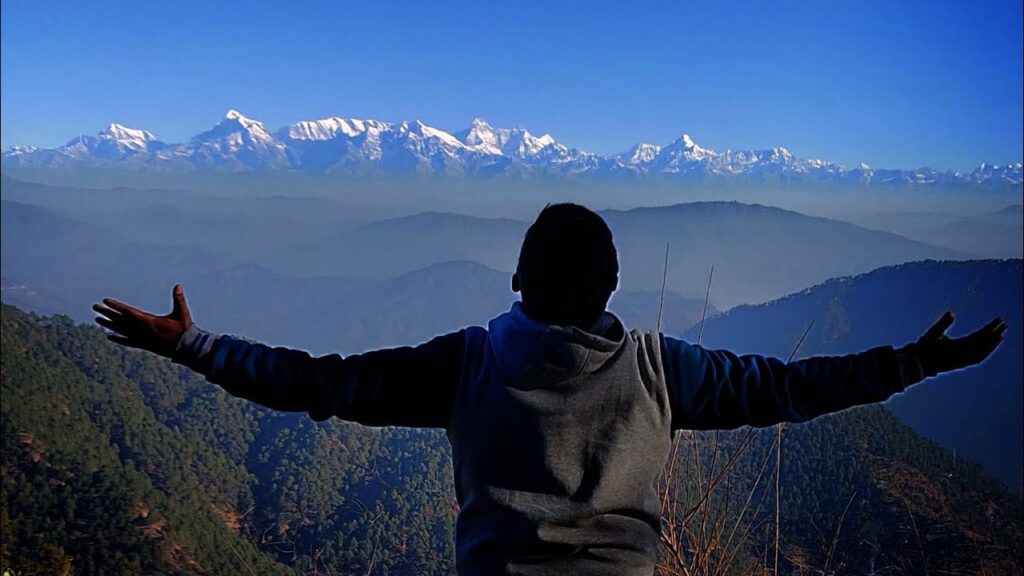
Himalayan View Point, often referred to locally as Himalaya Darshan, is a premier vantage point located approximately 5 km from Nainital on the road toward Pangot. Situated at a high altitude of about 2,300 metres, it serves as a natural balcony providing a spectacular, wide-angle view of the Great Himalayan range. On clear days, visitors are treated to the awe-inspiring sight of several of India’s highest peaks, most notably the majestic Nanda Devi, Trishul, and Nanda Kot, their snow-clad summits glistening against the blue sky. The point is equipped with telescope facilities operated by locals, allowing tourists to get a detailed look at the rugged mountain topography and distant glaciers. Beyond the views, the spot is cherished for its tranquil atmosphere and refreshing mountain breeze, making it a favorite for photographers and nature enthusiasts who wish to experience the grandeur of the Himalayas without a strenuous trek.
13. Jeolikot
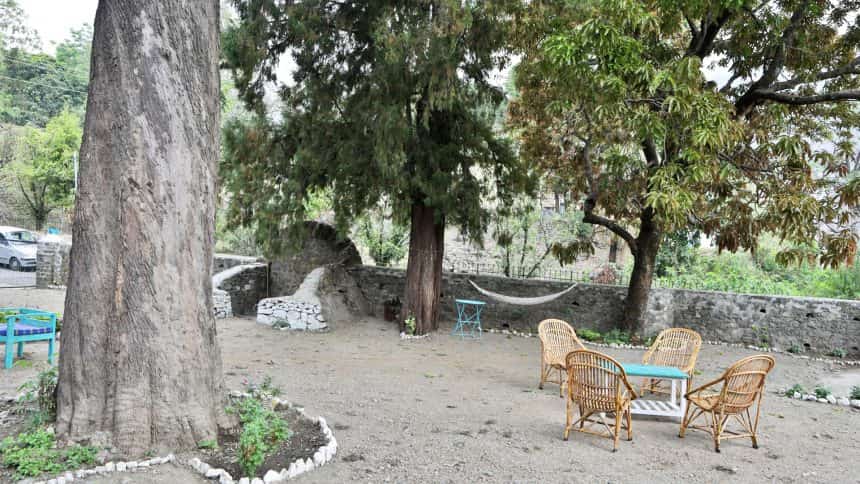
Jeolikot, popularly known as the “Gateway to Nainital,” is a charming and serene hill station nestled in the Kumaon foothills at an altitude of 1,219 metres. It is ideally located on the highway to Nainital, offering a mild and pleasant climate that serves as a perfect transition between the heat of the plains and the cold of the high Himalayas. Historically, the village is noted for its spiritual significance, having been a meditation retreat for famous figures like Swami Vivekananda and Sri Aurobindo. Today, Jeolikot is most famous for its thriving floriculture and its government-run honeybee breeding centre, where visitors can observe the honey-making process and buy pure Himalayan honey. Surrounded by lush forests, fruit orchards, and colonial-era cottages, it is a haven for butterflies and birdwatchers, providing a quiet, old-world atmosphere for those who want to avoid the busier crowds of the main town.
14. Khurpa Taal

Khurpa Tal is a hidden gem located about 10–12 km from Nainital, nestled at an altitude of 1,635 metres. The lake gets its unique name from its shape, which resembles a “Khurpa” (a traditional trowel or hoe used in gardening). Surrounded by dense forests of cedar and pine, the lake is famous for its crystal-clear, emerald-green waters that often appear to change shades depending on the sunlight. Historically, it was a popular spot for the British as a fishing retreat, and today it remains a peaceful paradise for anglers and photographers who want to escape the crowded Mall Road. The village surrounding the lake is known for its terraced farming and vibrant vegetable gardens, adding to the rustic charm of the landscape. Because it is situated at a lower elevation than Nainital, the climate here is slightly warmer, making it an ideal spot for a quiet day trip or a peaceful lakeside walk.
15. Ranikhet
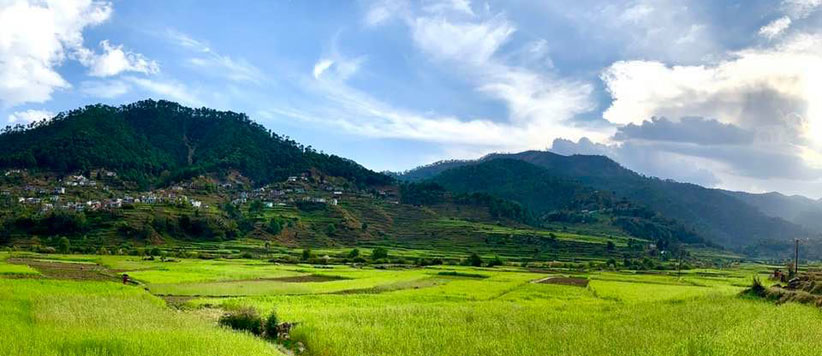
Ranikhet, which translates to “Queen’s Meadow,” is a majestic hill station and cantonment town in the Almora district, situated about 60 km from Nainital at an altitude of 1,869 metres. According to local legend, the town got its name when a beautiful Queen, Padmini, fell in love with the lush green glades of the area and decided to build her residence there. Today, it serves as the headquarters of the Kumaon Regiment of the Indian Army, which maintains the town’s impeccable cleanliness, discipline, and colonial-era charm. Ranikhet is world-renowned for its lush golf course—one of the highest 9-hole courses in Asia—and its breathtaking, unobstructed views of the Nanda Devi mountain range. The town is a perfect blend of nature and heritage, featuring ancient temples like Jhula Devi (famous for its thousands of bells), the serene Chaubatia Orchards known for apples and apricots, and quiet, pine-scented forest trails that make it a premier destination for those seeking solitude and natural beauty.
16. Naukuchiatal
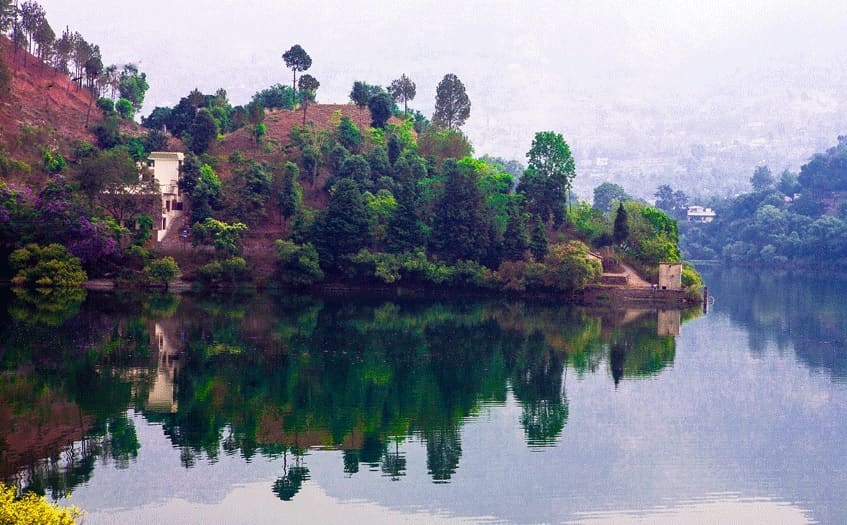
Naukuchiatal, literally translated as the “Lake of Nine Corners,” is a stunning perennial lake situated about 26 km from Nainital at an altitude of 1,220 metres. It is the deepest lake in the region and is famously known for its unique nine-cornered shape, which, according to local legend, holds a mystical secret: anyone who manages to see all nine corners at once from the ground will achieve Nirvana or spiritual enlightenment. Surrounded by a thick canopy of oak and pine forests and terraced fields, the lake provides a much quieter and more secluded atmosphere compared to the bustling Naini Lake. It has emerged as a major hub for adventure sports, particularly paragliding, as well as rowing, paddling, and birdwatching. The lake is fed by an underground perennial spring, ensuring its emerald-green waters remain pristine year-round, making it a perfect retreat for nature lovers and soul-seekers.
17. Sariyatal

Sariyatal is a small yet incredibly picturesque lake located about 5 km from Nainital on the road leading to Kaladungi. Situated at an altitude of approximately 1,635 metres, this jade-green lake is fed by a natural mountain stream, making its waters exceptionally cold and clear. While the lake itself is relatively small compared to Naini Lake, it is a major attraction because it houses the Himalayan Botanical Garden, which features a butterfly park, a fernery, and an herbarium showcasing rare Himalayan flora. The area is particularly loved by families and photographers for its tranquil environment and the beautiful waterfalls located nearby. It serves as an ideal spot for a quick peaceful retreat, offering a refreshing atmosphere where visitors can enjoy the crisp mountain air and the lush greenery of the Kumaon hills away from the main city’s hustle.
18. Jim Corbett National Park

Jim Corbett National Park, established in 1936 as Hailey National Park, is India’s oldest and most prestigious national park, located in the foothills of the Himalayas in the Nainital district. It was the first to come under the Project Tiger initiative and is world-renowned for its significant population of Royal Bengal Tigers. Spanning over 520 square kilometres, the park features a diverse landscape of hills, marshy depressions, riverine belts, and vast grasslands known as “chaurs.” It is a paradise for wildlife enthusiasts, housing not only tigers but also leopards, Asiatic elephants, sloth bears, and over 600 species of birds. The park is divided into several safari zones—such as Dhikala, Bijrani, and Jhirna—where visitors can enjoy jeep or canter safaris. Named after the legendary hunter-turned-conservationist Jim Corbett, the park offers a unique blend of adventure and history, making it a premier destination for nature lovers seeking to experience the raw wilderness of the Kumaon region.
19. Sitabani
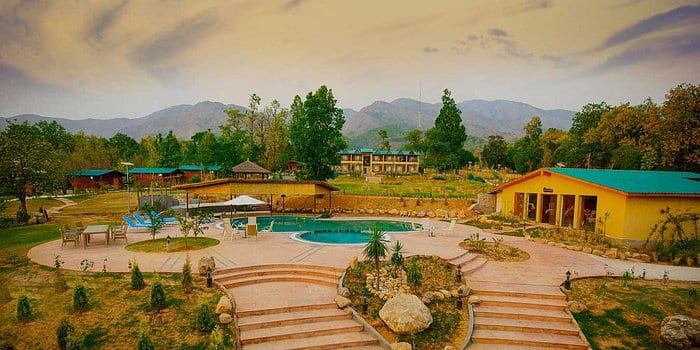
Sitabani is a serene forest area located in the Ramnagar region near Jim Corbett National Park, famously known as the only forest in the area where visitors can walk on foot or take a safari without a prior permit. While it is not part of the core tiger reserve, it is a significant buffer zone that shares the same rich biodiversity, including tigers, leopards, elephants, and over 350 species of birds. According to Hindu mythology, this is the place where Goddess Sita stayed during her exile and where she gave birth to her sons, Luv and Kush; the ancient Sitabani Temple located deep within the forest is dedicated to her and attracts many pilgrims. The area is a favorite for nature lovers and birdwatchers because of its dense leafy canopies and the Sitabani River, providing a more flexible and tranquil wildlife experience compared to the strictly regulated zones of the main national park.
20. Bhowali
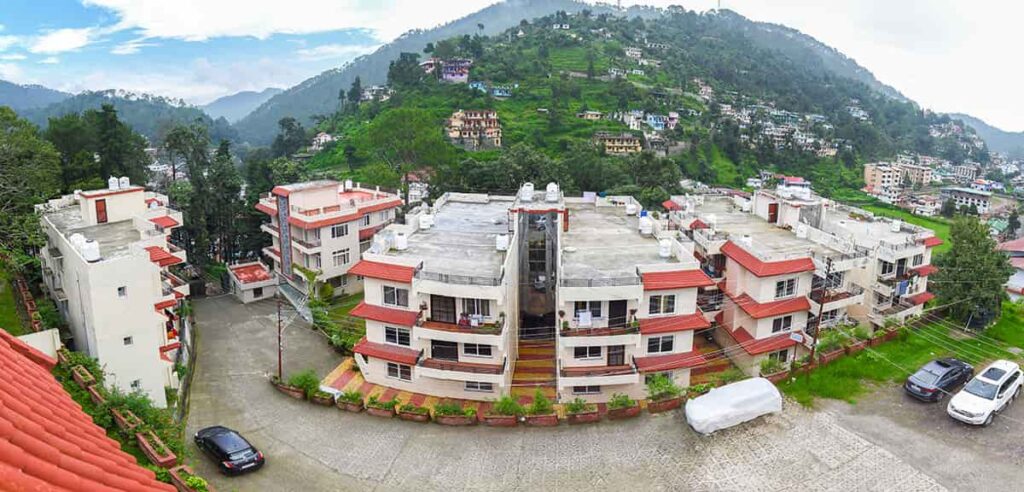
Bhowali is a strategic town and a major hill station in the Kumaon region, situated at an elevation of 1,706 metres and about 11 km from Nainital. Often called the “Gateway to the Kumaon Hills,” it serves as a central junction connecting major tourist spots like Almora, Ranikhet, and Mukteshwar. Bhowali is world-famous for its thriving fruit market, acting as a hub for the region’s finest apples, peaches, plums, and apricots. Historically, the town was renowned for its exceptionally clean and health-restoring air, leading to the establishment of the famous T.B. Sanatorium in 1912. Today, it remains a preferred destination for those seeking a peaceful, pollution-free environment with a moderate climate. The town is also close to the revered Ghorakhal Golu Devta Temple, known as the “God of Justice,” and is surrounded by lush forests that make it a quiet and scenic alternative to the busier hill stations nearby.
21. Peora
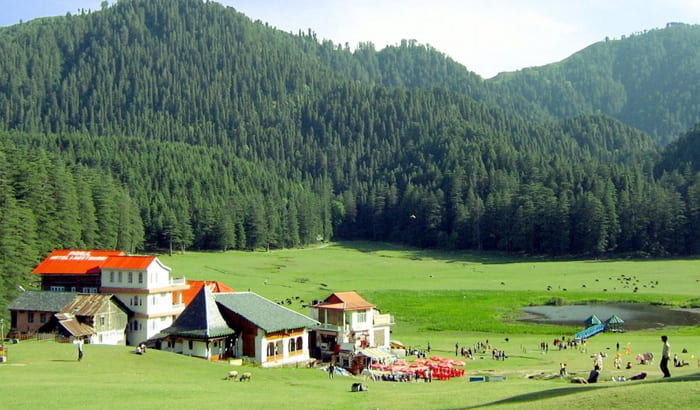
Peora is a hidden gem and an idyllic eco-tourism destination nestled in the Kumaon hills at an elevation of about 1,997 metres. Often described as the “Fruit Bowl of Kumaon,” this tiny, picturesque hamlet is surrounded by dense blankets of pine and oak forests and is famous for its sprawling orchards of apples, plums, peaches, and apricots. Unlike the busy tourist hubs like Nainital, Peora offers an untouched, “off-the-beaten-path” experience where the primary attraction is the absolute silence and the breathtaking, unobstructed view of the snow-capped Himalayan peaks. The village is also known for its traditional Kumaoni architecture and its commitment to sustainable living. It is a sanctuary for writers, artists, and birdwatchers who come to enjoy the slow pace of life, crisp mountain air, and scenic forest trails that lead to nearby spots like Sitalakhet.
22. Mall Road Nainital

The Mall Road in Nainital is the town’s most famous and vibrant thoroughfare, stretching along the northern and southern banks of the crescent-shaped Naini Lake. Originally constructed during the British colonial era, it officially connects the two ends of the town—Mallital (the upper end) and Tallital (the lower end). Today, it serves as the primary hub for shopping, dining, and socializing, lined with an array of boutiques, local handicraft stores, colonial-style hotels, and multi-cuisine restaurants. In the evenings, the road is closed to heavy vehicles, transforming into a bustling pedestrian promenade where tourists and locals alike enjoy leisurely strolls amidst the cool mountain breeze and shimmering lake views. It is the best place to buy local specialties like handcrafted candles, woollen shawls, and wooden artifacts, making it the undeniable heart of Nainital’s social and commercial life.
23. Binayak – A Thrilling Spot
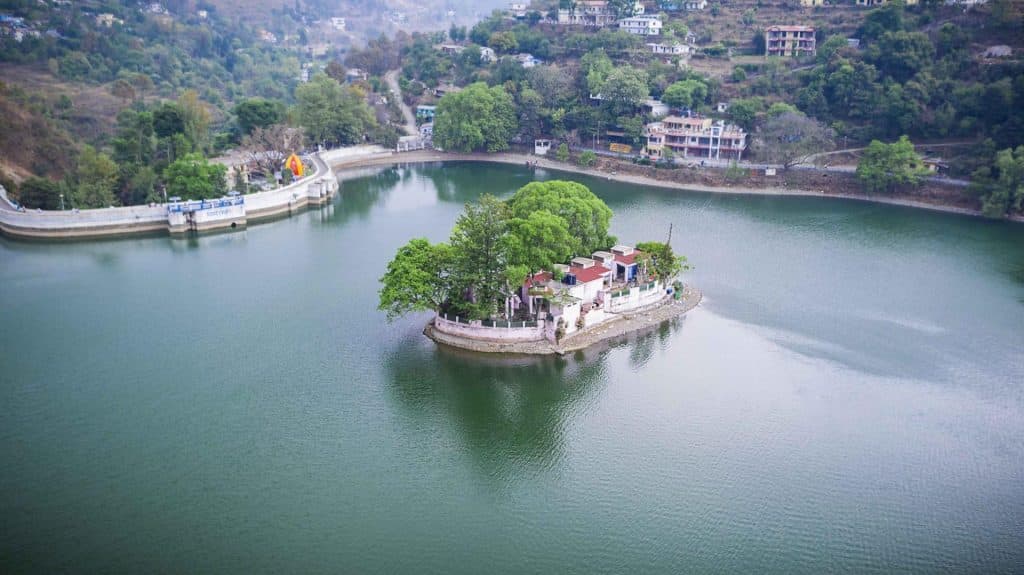
Binayak is a hidden treasure and a premier adventure spot located about 16 km from Nainital, perched at an elevation of approximately 2,225 metres. It is widely regarded as one of the most thrilling trekking destinations in the region, serving as a key waypoint for those hiking toward the Kunjkharak trail. What makes Binayak truly exhilarating is its rugged terrain and the dense, misty forests of ancient oak and cedar that surround it, providing a sense of wild isolation rarely found in the main town. The spot is a favorite for hikers and birdwatchers, offering a peaceful environment where one can spot rare Himalayan bird species against the backdrop of the towering peaks. Whether you are looking for a challenging mountain walk or a quiet place to set up a campsite under the stars, Binayak offers a raw, untouched experience of the Kumaon wilderness that is both adventurous and deeply serene.
24. Pangot & Kilbury Bird Sanctuary – A Bird Watcher’s Paradise
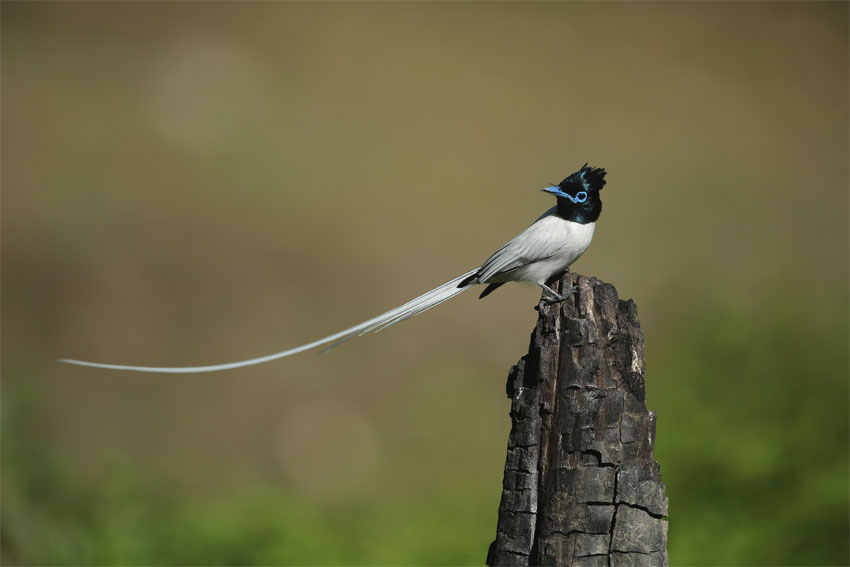
Pangot and Kilbury Bird Sanctuary, located about 15 km from Nainital, is widely celebrated as a “Bird Watcher’s Paradise” due to its incredible biodiversity and serene, high-altitude landscape. Perched at an elevation of 2,528 metres, the sanctuary is part of a protected forest range consisting of dense oak, pine, and rhododendron trees, which provide a natural habitat for over 580 species of birds. Visitors can spot rare and exotic Himalayan varieties such as the Lammergeier, Cheer Pheasant, Koklass Pheasant, Himalayan Griffon, and various species of Woodpeckers and Laughingthrushes. The tranquil environment, coupled with the crisp mountain air, makes it a premier destination for nature photographers and wildlife enthusiasts who wish to observe birds in their natural, undisturbed setting. Beyond birding, the area offers breathtaking views of the snow-capped Himalayan peaks and several quiet forest trails that are perfect for soul-soothing walks and eco-tourism.
25. Lover’s Point – A Vantage Point With Scenic Views
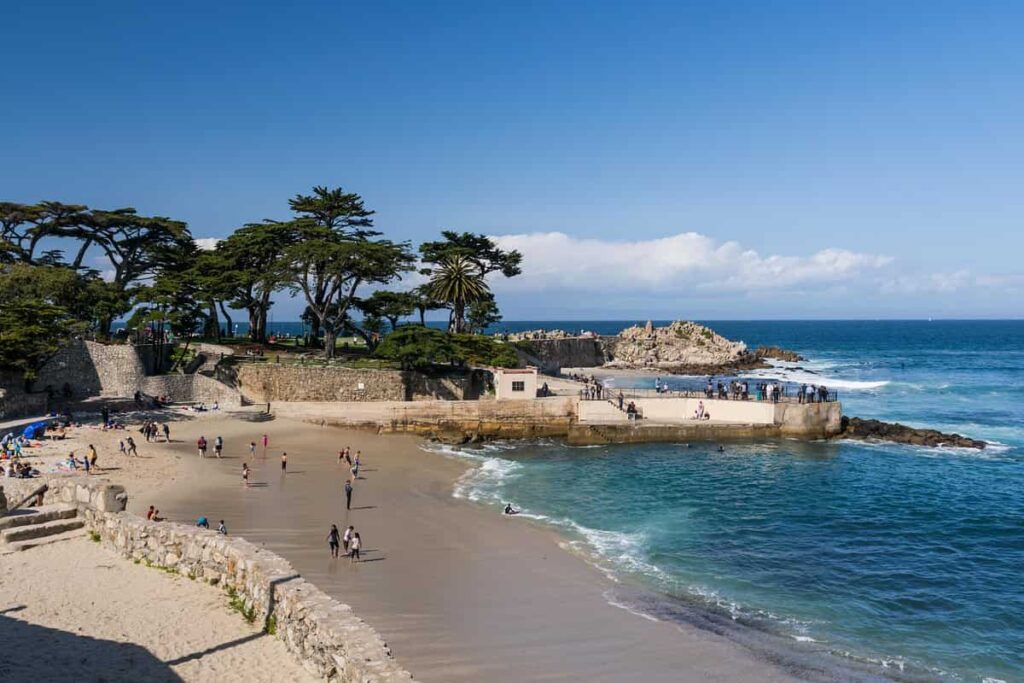
Lover’s Point is a popular and romantic vantage point in Nainital, located near June Estate on the way to Land’s End. True to its name, it is a favorite spot for couples and tourists due to the breathtaking, panoramic views it offers of the lush green valleys and the surrounding Kumaon mountain ranges. The point is famous for its serene atmosphere and the cool, refreshing breeze that sweeps across the cliffs. While it is easily accessible by a short taxi ride or a scenic walk from the main town, many visitors choose to reach the spot via a horse or pony ride from the nearby Barapathar area. Right next to it lies Suicide Point, which, despite its daunting name, is equally famous for its dramatic beauty and sheer vertical drops. Together, these spots provide some of the best photography opportunities in Nainital, especially during the golden hours of sunrise and sunset when the valley below is bathed in soft, glowing light.