

Tirupati is a world-renowned spiritual destination located in the Indian state of Andhra Pradesh, known primarily as the home of the Sri Venkateswara Swami Temple. Situated atop the seven peaks of the Seshachalam Hills in Tirumala, this temple is dedicated to Lord Vishnu and stands as the wealthiest and most visited religious site on Earth. Pilgrims from across the globe flock here to experience “Vaikuntha on Earth”; they often participate in traditions such as tonsuring (shaving their heads) as a symbol of devotion or offering donations into the “Hundi.” Nestled at the foothills of the hills, the city serves as the gateway to the hills and is managed by the ‘Tirumala Tirupati Devasthanams’ (TTD). The TTD oversees the temple’s vast operations, including the distribution of the famous and GI-tagged ‘Tirupati Laddu’ prasadam.
Tirupati is considered one of the safest cities in India for visitors. As it is a major pilgrimage site, there is a heavy police presence, and thousands of security cameras are installed to ensure 24/7 surveillance of the streets, the railway station, and the temple complex. Whether you are traveling with your family or alone, you can roam freely even at night, as the city is always bustling with pilgrims. Beyond its religious significance, Tirupati is also a hub of culture and education, home to several prominent universities and historical sites such as the ‘Chandragiri Fort.’ The surrounding landscape is rich in biodiversity, featuring natural wonders like the ‘Sri Venkateswara National Park’ and ‘Silathoranam’ (a rare geological arch). Whether you arrive via the bustling Tirupati Railway Station or the international airport, this city presents a unique confluence of ancient Vedic traditions and modern infrastructure—all of which revolves around the rhythmic chanting of the mantra “Om Namo Venkateshaya.”
Tirupati’s economy is primarily driven by “temple tourism,” which has fostered a vast ecosystem providing livelihoods to thousands of families and businesses. As millions of pilgrims visit the Sri Venkateswara Swami Temple annually, there remains a constant demand for services such as hotels, restaurants, and transportation; this generates a steady income for local taxi drivers, lodge owners, and shopkeepers.
Most Famous And Attractive Tourist Places In Tirupati :
1. ISKCON Tirupati: Learn The Teachings From Geeta
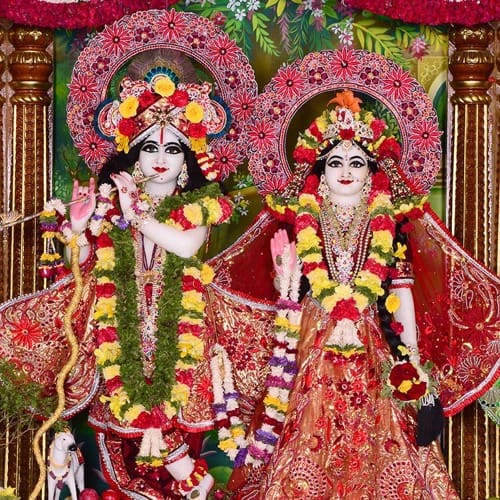
At ISKCON Tirupati, the teachings of the Bhagavad Gita are presented as a practical “success manual” for modern life, focusing on the transformation of the individual through divine wisdom. The temple emphasizes five basic truths: Ishvara (the Supreme Lord Krishna), Jiva (the eternal soul), Prakruti (material nature), Kala (eternal time), and Karma (activities). Visitors learn that they are not their temporary material bodies but eternal spiritual souls, a realization intended to dissolve fear, stress, and anxiety. The core practice taught is Bhakti Yoga, or loving devotion, which encourages surrendering one’s results to the Supreme to achieve inner peace and liberation from the cycle of birth and death. Through daily spiritual classes and multimedia presentations, the temple guides devotees in Nishkama Karma—performing one’s prescribed duties with integrity and excellence without being attached to the rewards. Ultimately, these teachings aim to align human intelligence with divine purpose, fostering qualities like humility, compassion, and self-discipline to navigate life’s “battlefields” with clarity and grace.
2. Chandragiri Palace & Fort: Fine Example Of Ancient Architecture
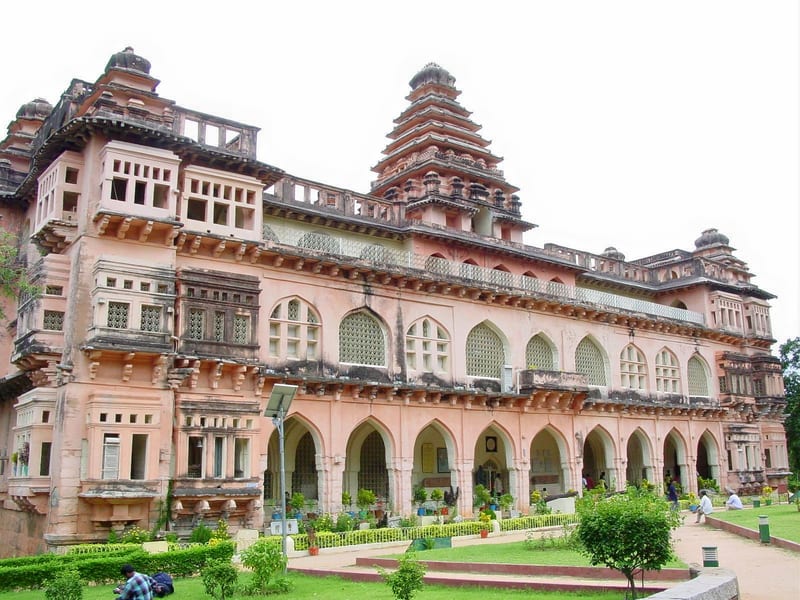
Chandragiri Palace and Fort stand as a masterpiece of Indo-Saracenic architecture, famously constructed in the 11th century using only stone, brick, and lime mortar, completely devoid of timber. The most prominent structure, the Raja Mahal (King’s Palace), is a three-storied edifice featuring a central Durbar Hall that rises through two levels, adorned with pointed arches and majestic pyramidal towers that resemble Hindu temple shikharas. These arches were a calculated engineering choice to provide natural ventilation and light, helping to quell the intense heat of the region. Nearby, the Rani Mahal (Queen’s Palace) mirrors this aesthetic with decorative stucco work and ornamental balconies, though epigraphical evidence suggests it likely served as a commander’s quarters rather than a royal residence. The fort’s defensive ingenuity is further evidenced by its massive cyclopean stone walls, steep moats once filled with crocodiles, and a sophisticated rainwater harvesting system that made the citadel self-sufficient during sieges. Today, the Raja Mahal serves as an Archaeological Museum, housing life-size metal replicas of Vijayanagara rulers and a rich collection of bronzes, while the surrounding gardens provide a serene setting to witness the nightly sound and light show that narrates the fort’s royal legacy.
3. Sri Bedi Anjaneya swami Temple: Home To Lord Hanuman
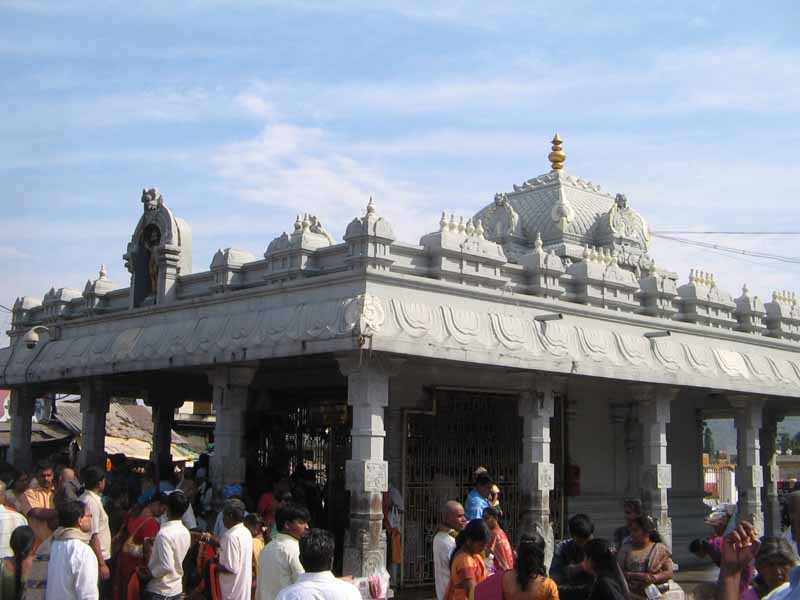
The Sri Bedi Anjaneyaswami Temple, situated directly opposite the main entrance (Mahadwaram) of the Sri Venkateswara Swamy Temple in Tirumala, is uniquely dedicated to Lord Hanuman in a “handcuffed” posture. According to local legend, a young and mischievous Hanuman once attempted to leave the Tirumala hills in search of a camel; to prevent his departure, his mother, Anjana Devi, tied his hands with Bedi (cuffs or fetters) and commanded him to stay until she returned. While she eventually settled near the Akasa Ganga area and never came back, Hanuman remained obediently at his post. This temple holds a high priority in Tirumala’s rituals; every day, after the sacred food offering (Naivedyam) is presented to Lord Venkateswara and Lord Bhu Varaha Swamy, it is immediately brought to this shrine for Hanuman. Devotees often visit this temple to mark the completion of their pilgrimage, frequently breaking coconuts at the Akhilandam (an unending flame) located directly in front of the shrine as a final vow.
4. Sri Veda Narayanaswami Temple: Seek Blessing From Lord Vishnu
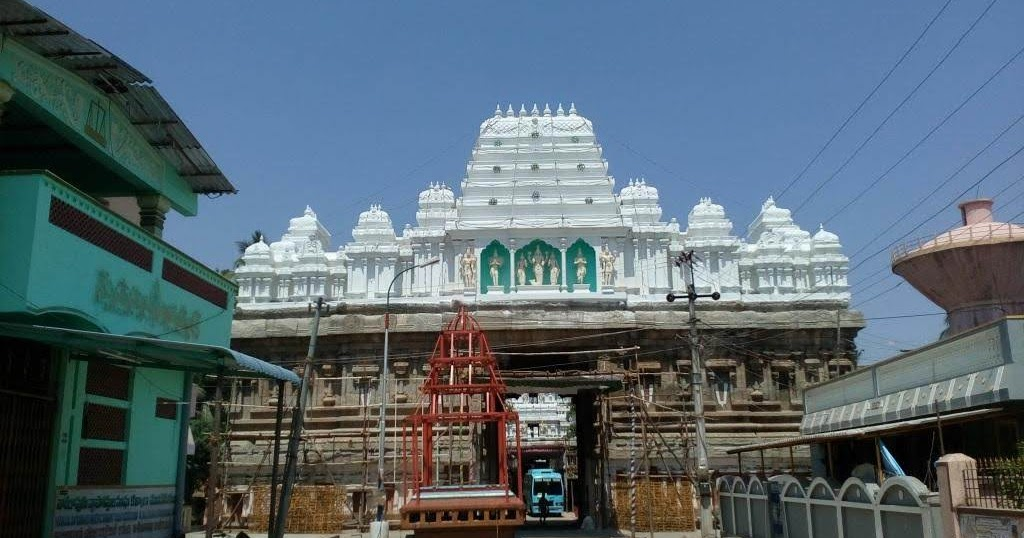
The Sri Veda Narayanaswami Temple in Nagalapuram is a unique architectural and spiritual landmark, primarily famous for being one of the rare shrines dedicated to the Matsya Avatar (the fish incarnation), which is the first of Lord Vishnu’s ten avatars. According to legend, Lord Vishnu took this form to defeat the demon Somakudu (or Somaka), who had stolen the holy Vedas from Lord Brahma and hidden them in the depths of the ocean. The temple’s presiding deity, Lord Veda Narayana, is depicted in an extraordinary posture: the upper half is a four-armed human form holding the Sudarshana Chakra in a prayoga (ready-to-release) position, while the lower half is that of a fish. Built in the grand Vijayanagara style by Emperor Sri Krishnadevaraya in memory of his mother, Nagala Devi, the temple is an astronomical marvel designed so that for three days every year (usually in late March), the rays of the setting sun travel over 600 feet through the temple entrances to fall directly on the deity—touching the feet on the first day, the navel on the second, and the forehead on the third.
5. Teppotsavam: A Grand Instituion
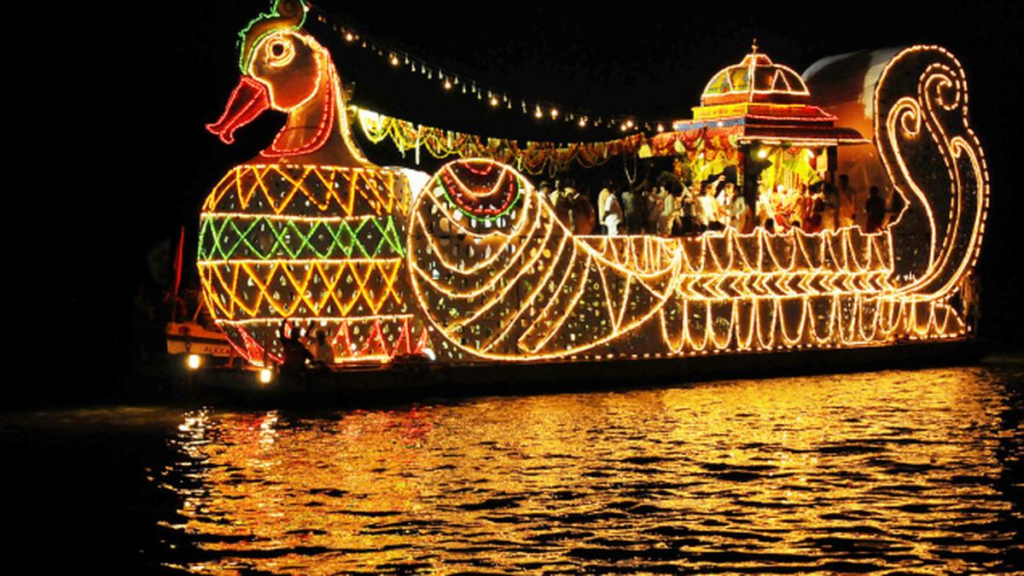
The Teppotsavam, popularly known as the Float Festival, is a spectacular five-day annual event held in the sacred Swami Pushkarini (temple tank) of Tirumala during the month of Phalguna (typically March). This “grand institution” of worship dates back to 1468 AD, when King Saluva Narasimha Raya constructed the Neerali Mandapam in the center of the tank to facilitate these celestial cruises. Each day, processional deities are placed on a beautifully decorated, illuminated float that glides across the water amidst Vedic chants and traditional Nadaswaram music. The festival is deeply symbolic, representing divine grace that helps devotees cross the “ocean of worldly existence” (Samsara Sagara). The number of ceremonial rounds increases daily, culminating on the final day of the full moon (Pournami), when the main processional deity, Sri Malayappa Swami, and his consorts take seven majestic rounds, creating a visual experience often described by pilgrims as “heaven on earth”.