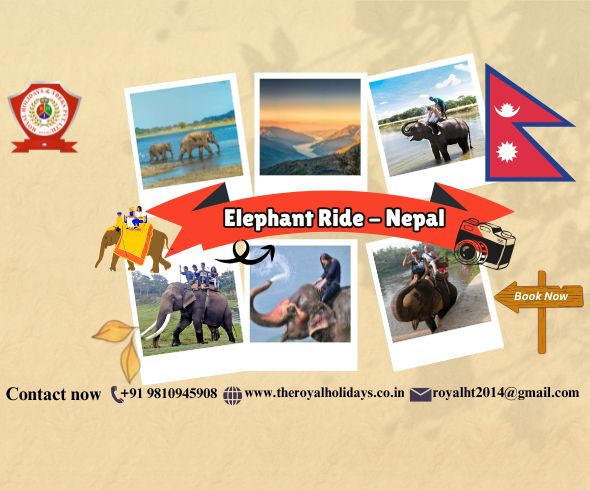
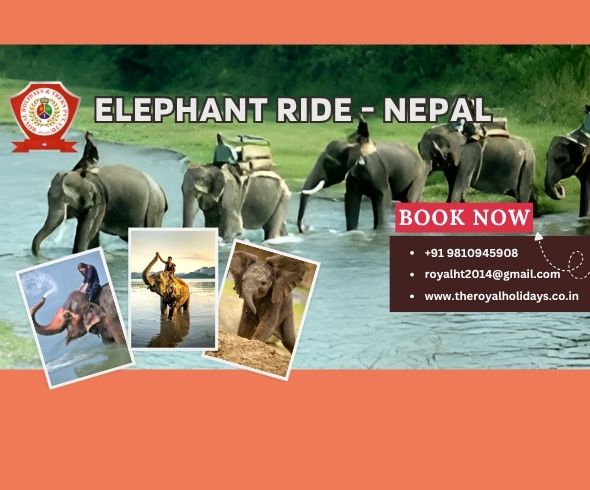
Elephant riding in Nepal is a traditional safari activity found primarily in Chitwan National Park and Bardiya National Park. It offers a unique way to traverse through the dense, tall “elephant grass” that grows in the subtropical lowlands of the Terai region. Since elephants are massive in size and move with great stealth, they are able to bring tourists into very close proximity with dangerous wildlife—such as the one-horned rhinoceros and the Bengal tiger—in a way that is not possible during walking safaris or jeep safaris. Typically, three to four people sit on a wooden platform known as a ‘howdah,’ which is securely fastened to the elephant’s back. The ride is guided by a skilled *mahout* (elephant handler), who communicates with the elephant through touch and voice commands. Although this method of exploring the hidden recesses of the jungle remains quite popular today, growing global concerns regarding animal welfare and the ethical issues associated with elephant riding have led many tourists to increasingly prioritize jeep safaris or guided jungle walks alongside elephants.
Elephant riding in Nepal is generally considered physically safe for tourists, as you are seated at a considerable height above the ground on a sturdy wooden platform (the howdah). This elevation proves to be a significant safety advantage during a jungle safari, as the likelihood of wild animals—such as one-horned rhinoceroses and Bengal tigers—approaching or attacking an elephant is extremely low. For this reason, elephant riding is considered a far safer option compared to walking safaris. Each ride is led by a professional *mahout* (elephant handler) who possesses years of experience in controlling elephants and navigating the jungle trails.
Most Famous And Attractive Tourist Places In Elephant Ride :
1. Sauraha (Chitwan National Park)

Sauraha is the vibrant gateway to Chitwan National Park and the main hub for tourism in the southern Terai plains of Nepal. Originally a small village, it has grown into a lively riverside town filled with hotels, restaurants, and shops that cater to wildlife enthusiasts from around the world. The town sits on the banks of the Rapti River, which serves as a natural boundary between human settlement and the wild jungle, making it a popular spot for visitors to sit and watch the sunset while spotting crocodiles and rhinos across the water. Sauraha is the starting point for almost all jungle adventures, including elephant safaris, jeep tours, and canoe rides, and it is particularly famous for the daily “elephant bathing” ritual in the river. Culturally, the town offers a deep look into the lives of the indigenous Tharu people, with community museums and evening dance performances that showcase their unique history and relationship with the forest.
2. Elephant Breeding Centre (Khorsor)
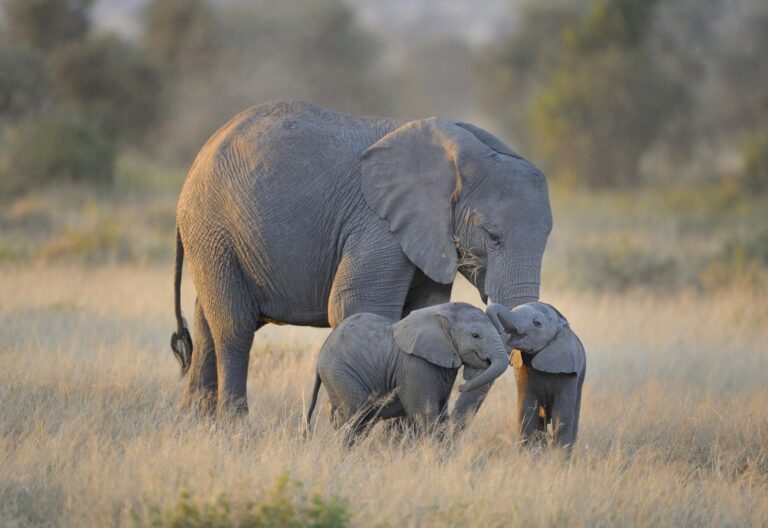
The Elephant Breeding Centre in Khorsor, located just a short distance from Sauraha in Chitwan, was established in 1985 to protect and increase the population of the endangered Asian elephant. As one of only two such centers in the world, it plays a critical role in conservation by providing a safe environment for breeding and the care of young calves. Visitors to the center have the rare opportunity to see mother elephants with their babies, often watching the playful calves interact in their natural surroundings. The facility also serves as an educational hub where guests can learn about the elephants’ specialized diets, the complex bond they share with their mahouts (handlers), and the ongoing efforts to mitigate human-wildlife conflict in Nepal. While the center is a popular tourist spot, its primary mission remains the long-term survival of these majestic creatures through careful management and veterinary care.
3. Bardia National Park

Bardia National Park is the largest and most undisturbed wilderness area in Nepal’s Terai region, offering a much more rugged and “wild” experience compared to its eastern counterpart, Chitwan. Located in the remote far-west, the park is famous for its high success rate in Bengal tiger sightings, as its dense forests and the branches of the Karnali River provide an ideal habitat for these apex predators. The park is also home to the one-horned rhinoceros, wild Asian elephants, and the rare Gangetic dolphin found in its river waters. Because it is less accessible from Kathmandu, Bardia sees far fewer tourists, allowing for a peaceful, authentic jungle experience where visitors can enjoy quiet jeep safaris and guided jungle walks. The area is also culturally rich, surrounded by the traditional villages of the Dangaura Tharu people, who have lived in harmony with the park’s wildlife for generations.
4. Tiger Tops Elephant Camp

Tiger Tops Elephant Camp, located in the lush surroundings of Chitwan, is a world-renowned pioneer in ethical elephant tourism and conservation. Moving away from traditional riding safaris, the camp established Nepal’s first “chain-free” environment, where elephants live in large, naturalistic enclosures and are treated with the highest standards of animal welfare. Instead of riding on their backs, guests participate in the “Elephant Encounter” program, which allows them to walk alongside these gentle giants through the forest, observing their natural grazing habits and social behaviours. The experience focuses on education and immersion, offering visitors the chance to help prepare the elephants’ food—known as kuchis—and watch them bathe in the river without human interference. By prioritising the dignity and health of the animals, Tiger Tops provides a respectful and deeply moving way for travellers to connect with nature while supporting a sustainable model for wildlife tourism in Nepal.
5. Banke National Park

Banke National Park, established in 2010 as Nepal’s tenth national park, is often referred to as a “Gift to the Earth” for its vital role in expanding the habitat for endangered Bengal tigers. Spanning 550 square kilometres in the mid-western region, it serves as a crucial wildlife corridor connecting Bardia National Park in Nepal to the Suhelwa Wildlife Sanctuary in India, allowing large mammals to roam freely across borders. The park is dominated by beautiful Sal forests and the Churia hills, providing a sanctuary not only for tigers but also for four-horned antelopes, striped hyenas, and over 300 species of birds. Because it is one of Nepal’s newest parks, it remains relatively untouched by mass tourism, offering a raw and authentic wilderness experience for those who enjoy quiet jeep safaris and exploring “off-the-beaten-path” nature trails.
Overview
Travel is the movement of people between relatively distant geographical locations, and can involve travel by foot, bicycle, automobile, train, boat, bus, airplane, or other means, with or without luggage, and can be one way or round trip. Travel can also include relatively short stays between successive movements.
The origin of the word “travel” is most likely lost to history. The term “travel” may originate from the Old French word travail, which means ‘work’. According to the Merriam Webster dictionary, the first known use of the word travel was in the 14th century.
It also states that the word comes from Middle English travailen, travelen (which means to torment, labor, strive, journey) and earlier from Old French travailler (which means to work strenuously, toil). In English we still occasionally use the words “travail”, which means struggle. According to Simon Winchester in his book The Best Travelers’ Tales (2004), the words “travel” and “travail” both share an even more ancient root: a Roman instrument of torture called the tripalium (in Latin it means “three stakes”, as in to impale).