


Puri, often referred to as the spiritual capital of Odisha, is one of India’s most ancient and revered coastal cities, renowned for its unique blend of religious sanctity and natural beauty. Situated on the Bay of Bengal, it is internationally recognized as one of the four sacred ‘Char Dham’ pilgrimage sites for Hindus. At its heart lies the 12th-century Jagannath Temple, where the annual ‘Rath Yatra’ (Chariot Festival) attracts millions of devotees from across the globe. Beyond its temples, Puri is also a premier beach resort destination, home to the ‘Blue Flag’ certified ‘Golden Beach.’ This beach is celebrated for its golden sands, spectacular sunrise views, and the world-renowned sand art of Sudarsan Pattnaik. The city also serves as a gateway to other major attractions, such as the UNESCO-listed Konark Sun Temple and the biodiversity-rich Chilika Lake. Thus, it presents a vibrant microcosm of Odisha’s heritage, where centuries-old traditions—such as ‘Pattachitra’ paintings and ‘Odissi’ dance—flourish alongside a modern tourism industry.
Puri’s economy is anchored in a ‘temple-town’ model, wherein almost every aspect revolves around religious tourism. The Jagannath Temple stands as the epicenter of this ecosystem; attracting millions of visitors annually, it generates employment opportunities for thousands of people across the hospitality, transportation, and local retail sectors. When pilgrims arrive for festivals like the Rath Yatra, their spending on food, accommodation, and travel sustains a continuous flow of revenue into the city.
Another major pillar of Puri’s economy is its traditional arts and handicrafts. Nearby regions—such as Pipili and Raghurajpur (renowned for its paintings)—sell their handcrafted wares to tourists and also export them to international markets. This provides a stable source of income for local artisan families. Furthermore, since Puri is situated on the coast, fishing is a major occupation here. Many people earn their livelihood by catching and selling fish from the sea and Chilika Lake.
Most Famous And Attractive Tourist Places In Puri :
1. Golden Beach
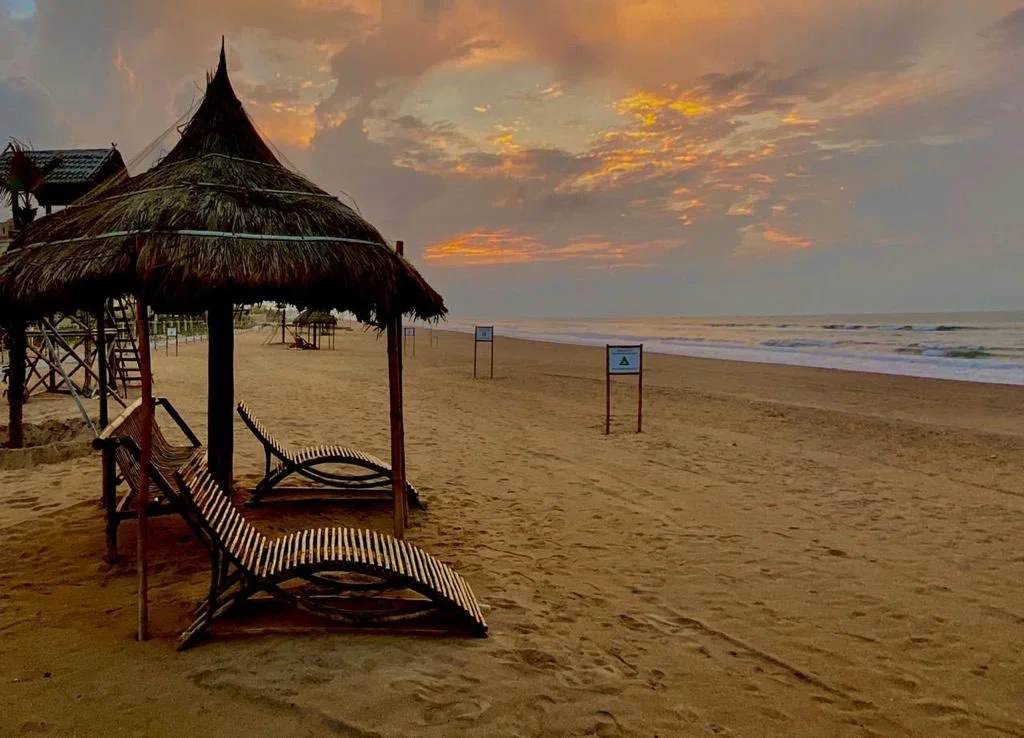
Golden Beach, also known as Puri Beach, is a world-class coastline in Odisha famous for its shimmering golden sands and its recent recognition as a Blue Flag certified eco-friendly destination. Located along the Bay of Bengal, it serves as a unique meeting point for spiritual pilgrims and leisure seekers; many devotees of the nearby Jagannath Temple visit the shore for a ritualistic holy dip before entering the shrine. The beach is a hub for Odia culture, famously hosting the annual Puri Beach Festival and serving as a natural gallery for the world-renowned sand sculptures of Sudarshan Pattnaik. Visitors can enjoy a wide array of activities, from high-energy water sports like jet skiing and surfing to traditional camel and horse rides along the promenade. Because it adheres to strict international standards for cleanliness and safety, the beach features modern amenities including eco-friendly toilets, solar lighting, and dedicated safe-swimming zones monitored by professional lifeguards.
2. Sonar Gouranga Mandir
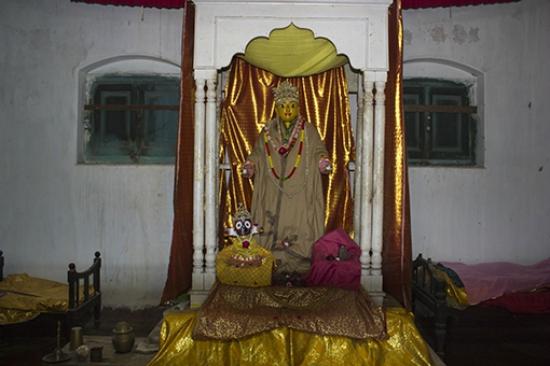
Sonar Gouranga Mandir is a revered Hindu shrine in Puri, located on Chakratirtha Road, approximately 3 km from the Jagannath Temple. Dedicated to Sri Chaitanya Mahaprabhu (also known as Lord Gouranga), the 15th-century saint and founder of Gaudiya Vaishnavism, the temple’s name literally translates to “Golden Gouranga”. This refers to the main deity—a stunning golden-coloured idol of Mahaprabhu, who is considered by devotees to be a joint incarnation of Lord Krishna and Radha. The temple serves as a spiritual confluence, housing additional shrines for Lord Jagannath, Balabhadra, Subhadra, and Lord Rama. Known for its serene and tranquil atmosphere, the mandir provides a peaceful retreat from the city’s more crowded pilgrimage sites, though it maintains strict rules such as prohibiting photography and mobile phones inside the main sanctum to preserve its meditative ambiance.
3. Daya River
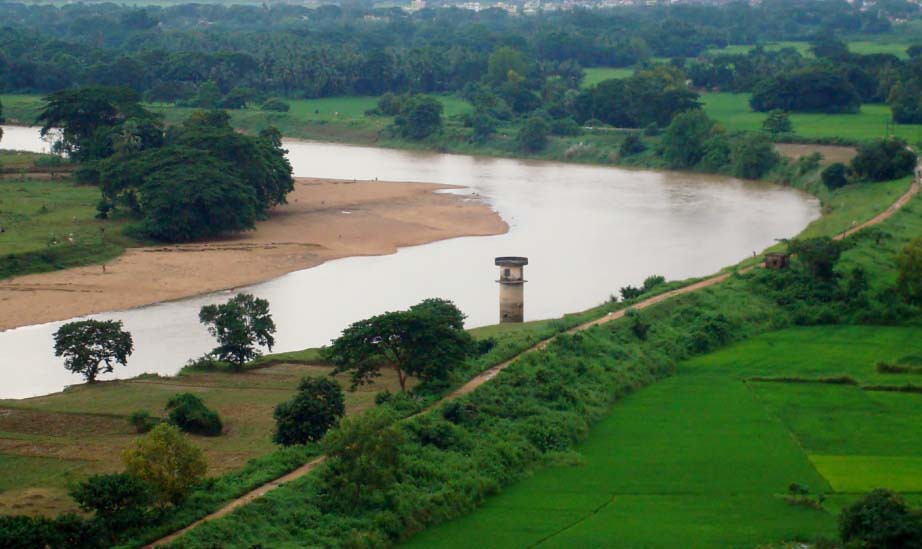
The Daya River, a significant distributary of the Kuakhai River, flows through the Khordha and Puri districts of Odisha before finally emptying into the north-eastern corner of Chilika Lake. It is most famous for its profound historical significance as the site of the Kalinga War in 261 BCE—a brutal conflict between the Mauryan Emperor Ashoka and the Kingdom of Kalinga. Legend states that the battle was so fierce that the river’s waters turned red with the blood of thousands of fallen soldiers, a sight that so deeply moved Ashoka that he renounced violence and embraced Buddhism. Today, travelers can visit the Dhauli Shanti Stupa (Peace Pagoda) on the Dhauligiri Hills overlooking the river, which serves as a monument to peace and houses ancient rock edicts of Ashoka. Geographically, the 37 km long river continues to be a vital ecological corridor that supports local agriculture and maintains the delicate salinity balance of the Chilika lagoon.
4. Sakshi Gopal Temple
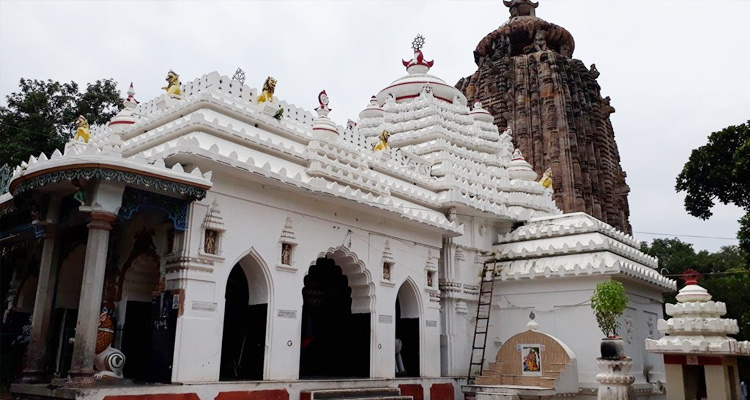
Sakshi Gopal Temple, also known as the Satyabadi Gopinatha Temple, is a medieval shrine located about 20 km from Puri on the Puri-Bhubaneswar highway. Built in the Kalinga architectural style, this temple is dedicated to Lord Krishna (Gopal) and his consort, Radha, and is traditionally considered a mandatory stop to complete a pilgrimage to Puri. The temple is central to a famous legend involving two Brahmins: an elder one promised his daughter’s hand to a younger one after receiving his selfless service during a pilgrimage to Vrindavan, but later reneged on the promise due to social pressure. At the young man’s fervent prayer, Lord Gopal himself walked from Vrindavan to Odisha to act as a witness (Sakshi) to the vow. The Lord followed the young man on the condition that he never look back, but when the boy turned around near the village, the Lord transformed into a stone statue, rooting himself to the spot. Uniquely, the primary offering here is wheat-based food rather than the typical rice, and the temple is most famous for the Amla Navami festival, the only day of the year when devotees are permitted to see and touch the feet of Goddess Radha.
5. Ganesh Temple
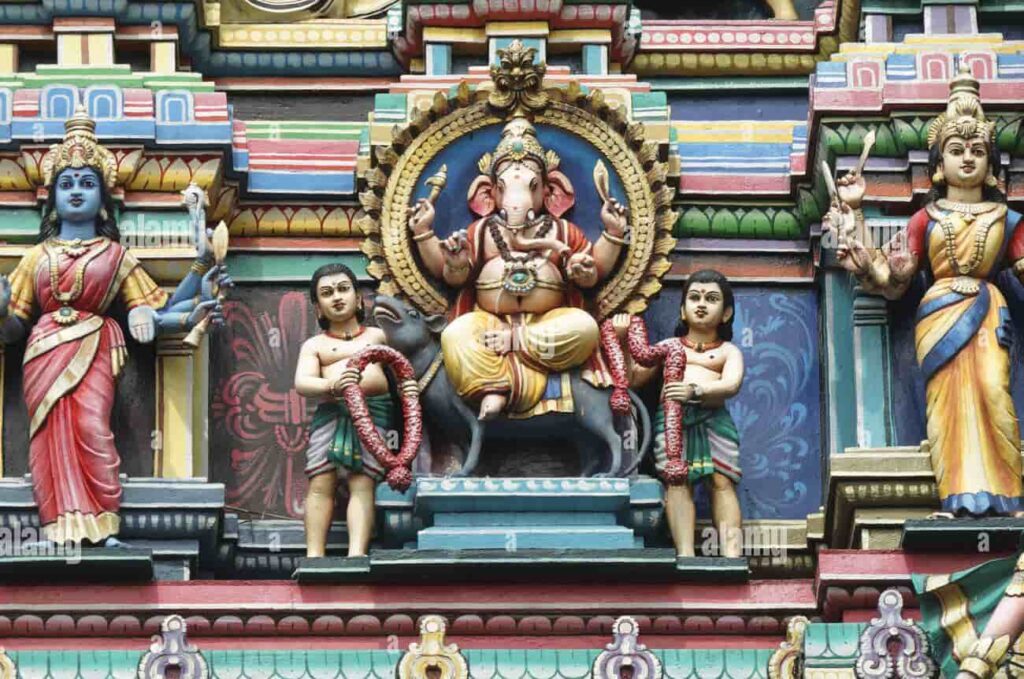
The Ganesh Temple in Puri, most commonly referred to as the Kanchi Ganesha Temple, is a historically significant shrine located within the inner enclosure of the Jagannath Temple complex. This small but revered temple is situated behind the main Jagannath temple on the western side, near the Vimala Temple. It is famously known for its unique Uchchista Ganapati form, a black granite idol that was brought to Puri by King Purushottam Deva after his victorious campaign against the kingdom of Kanchi. Legend says that the Lord Ganesha initially supported the King of Kanchi, but after realizing Lord Jagannath was fighting for the Odisha king, He withdrew His support, leading to the Kanchi king gifting the idol as a token of marriage to Princess Padmavati. Architecturally, the temple features a four-armed deity holding a broken tusk and sweets, and it is a key site for the Ganapatya tradition in Puri, where Ganesha is invoked to remove obstacles before any major temple rituals. Another notable Ganesha figure in the vicinity is Bata Ganesha, located near the sacred Kalpabata banyan tree, where devotees pray for the fulfillment of their deepest desires.
6. Raghurajpur Artist Village
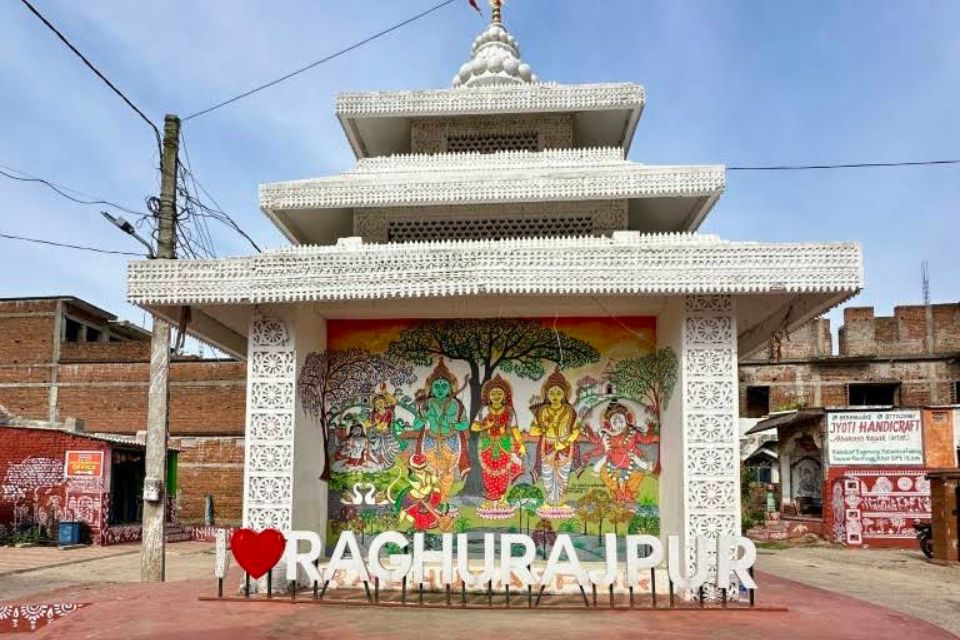
Raghurajpur Artist Village is a renowned heritage crafts village in Odisha, located about 14 km from Puri, where every household is an art studio and every resident is an artisan. Declared Odisha’s first heritage village by INTACH in 2000, it is the global hub for Pattachitra, an ancient art form involving intricate mythological paintings on cloth or dried palm leaves using all-natural pigments derived from minerals and plants. Beyond visual arts like palm leaf engraving, stone carving, and papier-mâché masks, the village is a vital center for performing arts as the birthplace of Gotipua dance, the traditional precursor to the classical Odissi dance. It is also famously the birthplace of the legendary Odissi exponent Guru Kelucharan Mohapatra. Visitors can walk through the lanes to see vibrant murals on house walls, watch artists at work, and purchase authentic, award-winning handicrafts directly from the creators.
7. Swargadwar Beach
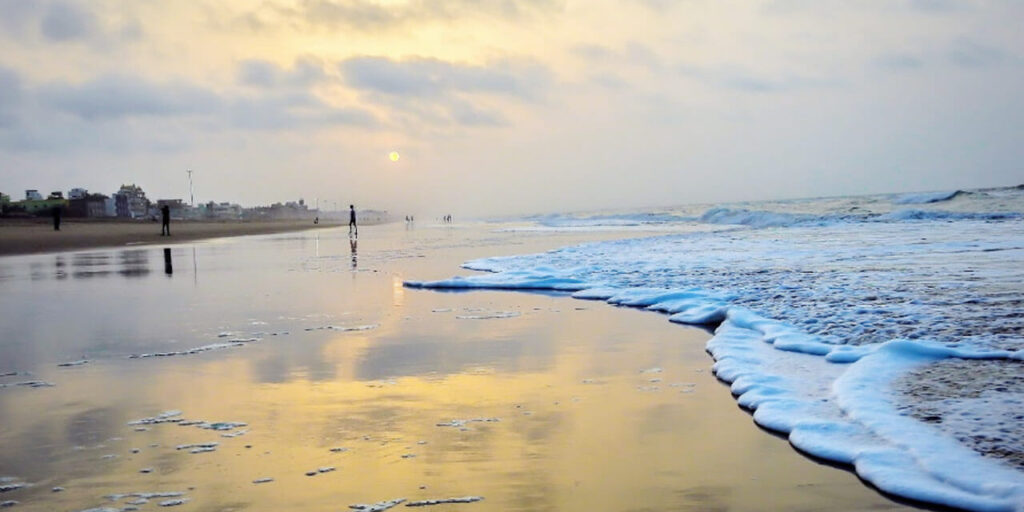
Swargadwar Beach, which translates to the “Door to Heaven,” is one of the most spiritually significant and bustling stretches of coastline in Puri. Located at the heart of the city’s beach promenade, it is deeply rooted in Hindu mythology; it is believed that the soul of a devotee cremated at the nearby Swargadwar Crematorium attains salvation (Moksha) and passes directly to heaven. This sacred association makes it a vital site for pilgrims who come to take a holy dip in the Mahodadhi (the great ocean) to wash away their sins. Despite its solemn religious importance, the beach is a vibrant hub of activity, famous for its energetic night market where visitors can shop for local handicrafts, seashells, and handloom sarees. It is also the best place to sample authentic Odia street food, especially the famous Khaja and fresh seafood, while enjoying the dramatic views of the Bay of Bengal’s powerful waves.
8. Lokanath Temple
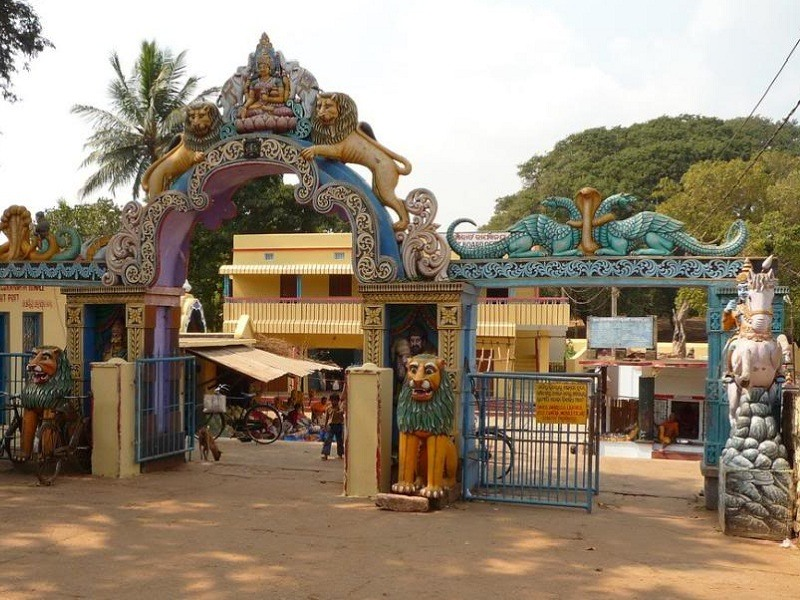
Lokanath Temple, situated about 3 km west of the Jagannath Temple, is the most important shrine dedicated to Lord Shiva in Puri and is considered the guardian deity of the city’s treasures. The temple is unique because the main Shiva Lingam remains submerged in a vat of natural spring water throughout the year, representing the goddess Ganga flowing over the Lord. Devotees can only see the Lingam once a year during Pankudar Ekadashi (three days before Shivaratri), when the water is traditionally baled out, allowing thousands to catch a rare glimpse of the deity. According to legend, the temple was established by Lord Rama during his search for Sita; he vowed to worship Shiva here, but when no Lingam was available, he fashioned one out of a bottle gourd (Lau), giving the deity the name “Lokanath.” The temple is famous for its Saranti Somavar rituals and the belief that the Prasad (curd rice) offered here has miraculous healing powers for various ailments.
9. Pratyush Ocean World

Pratyush Ocean World is a popular amusement and water park located on the Puri-Konark Marine Drive, roughly 6 km from the main Puri city. Designed as a complete family entertainment destination, it offers a wide range of attractions, including thrilling water slides, large swimming pools, and a dedicated Rain Dance floor with high-quality sound systems. The park is well-known for its Wave Pool, which mimics the motion of sea waves in a safe, controlled environment, making it a favorite for children and adults alike. Beyond water activities, the facility includes land-based rides, lush green gardens for lounging, and an in-house restaurant serving local and multi-cuisine snacks. It is a perfect spot for travelers looking to take a break from temple visits and enjoy a full day of recreation near the scenic coastline.
10. Blue Splash Water Park
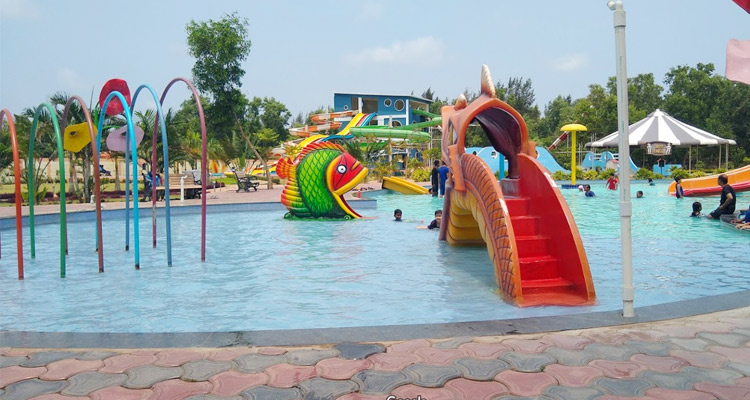
Blue Splash Water Park, often cited as the largest water theme park in Odisha, is a sprawling 8-acre recreational facility located on the scenic Puri-Konark Marine Drive. It offers a dynamic blend of high-energy water activities and a full-scale amusement park, making it a premier destination for families and thrill-seekers. The water park section features over seven major water rides, including high-speed attractions like the Aqua Tube, Black Hole, and the gravity-defying Pendulum, alongside a massive Wave Pool and a relaxing Lazy River. Younger visitors can enjoy a dedicated Kids Cove and Rainbow Slide, while the adjacent amusement park offers dry rides like the Columbus, Octopus, and Bungee Injection. A notable landmark on the premises is a large, golden-coloured statue of the Laughing Buddha, adding a unique touch to the park’s lush, tree-lined landscape. For convenience, the facility provides comprehensive amenities including lockers, changing rooms, and a restaurant serving both vegetarian and non-vegetarian options.
11. Mausima Temple
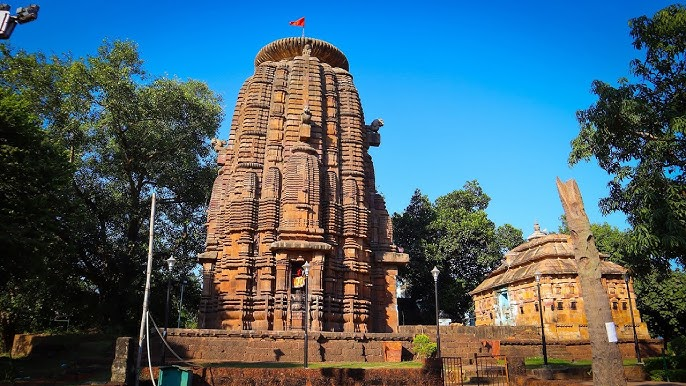
The Mausima Temple, also known as the Ardhashosini Temple, is a small yet spiritually vital shrine located midway on the Grand Road (Bada Danda) in Puri, between the Jagannath and Gundicha temples. Dedicated to Goddess Ardhashosini, who is revered as the maternal aunt (Mausi Maa) of Lord Jagannath, the temple is central to a famous legend from the Skanda Purana stating that the Goddess saved Puri from a catastrophic flood by drinking half of the seawater. The temple plays a starring role during the annual Ratha Yatra festival, specifically during the return journey known as Bahuda Yatra; it is a mandatory ritual for Lord Jagannath’s chariot to halt here so the deity can be offered Poda Pitha, a traditional baked rice and lentil cake said to be his favorite treat from his aunt. Beyond the festival, the temple is regarded as a guardian of Puri alongside Kapalamochana Shiva, offering a peaceful atmosphere for devotees who visit daily to seek protection and blessings.
12. Pipili
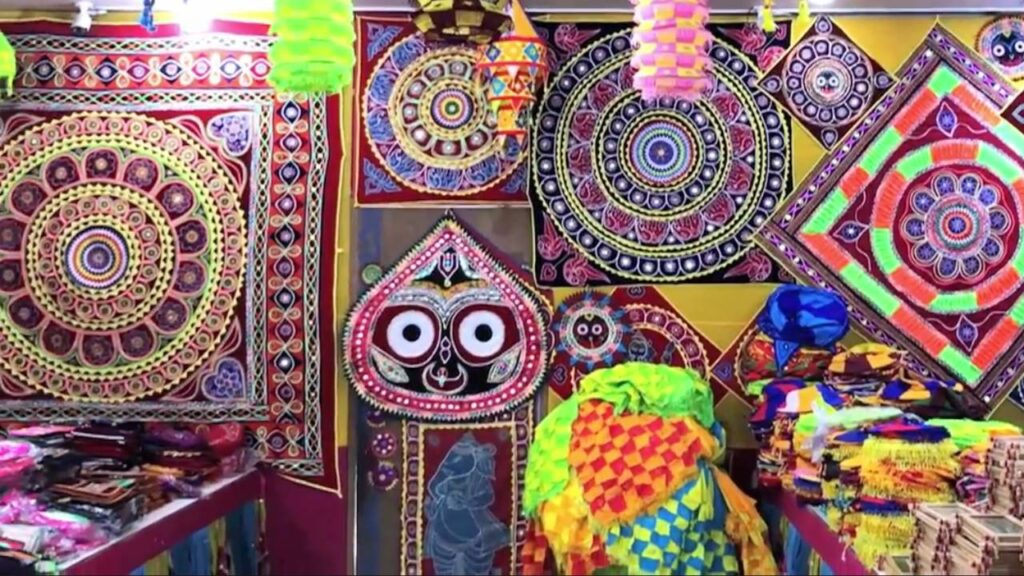
Pipili, a vibrant town located approximately 40 km from Puri, is globally renowned as the home of India’s most iconic appliqué work, locally known as Chandua. Established in the 12th century by the King of Odisha to accommodate the artisan community of ‘Darjis’, the town’s heritage is deeply intertwined with the Jagannath Temple; Pipili artisans are responsible for creating the massive, colourful cloth covers for the three chariots used in the annual Rath Yatra. The craft involves meticulously stitching brightly coloured fabric pieces into intricate shapes—such as elephants, peacocks, lotuses, and the sun—onto a base cloth, often enhanced with mirror work and embroidery. As a Geographical Indication (GI) tagged hub, Pipili’s main street is a kaleidoscopic tunnel of shops selling a diverse range of items including garden umbrellas, wall hangings, handbags, and lanterns, making it a mandatory stop for anyone traveling between Bhubaneswar and Puri.
13. Alarnatha Temple
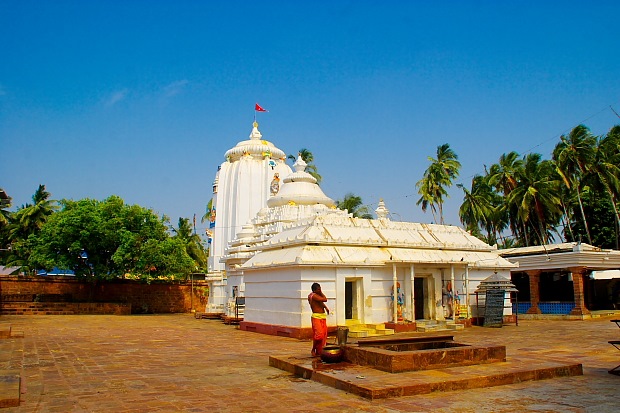
Alarnatha Temple, located in Brahmagiri about 25 km from Puri, is a 12th-century shrine of immense spiritual importance, especially for devotees of Lord Jagannath. The temple is dedicated to Lord Vishnu, worshipped here as Alarnatha—a four-armed deity carved from black chlorite stone holding a conch, wheel, club, and lotus. It becomes the primary pilgrimage destination during the Anasara period, the 15-day interval after the Snana Yatra when Lord Jagannath is said to fall ill and remains in seclusion. Devotees believe that during this time, Lord Jagannath manifests as Lord Alarnatha, and viewing the deity here is considered equivalent to a darshan at the main Puri temple. The temple is also deeply connected to the 16th-century saint Chaitanya Mahaprabhu, who visited here when he could not bear the separation from Lord Jagannath; a famous legend states that the stone slab he prostrated upon melted under his intense devotion, leaving behind impressions of his body that are still visible today as the Prema-shila. Architecturally, the temple is a classic example of Kalinga architecture, featuring a 60-foot Vimana (tower) and a Natamandap (dance hall) adorned with intricate carvings. Visitors to the temple also seek out the sacred Kheer Bhog (sweet rice porridge), which is the most famous offering during the Anasara period.
14. Astaranga Beach
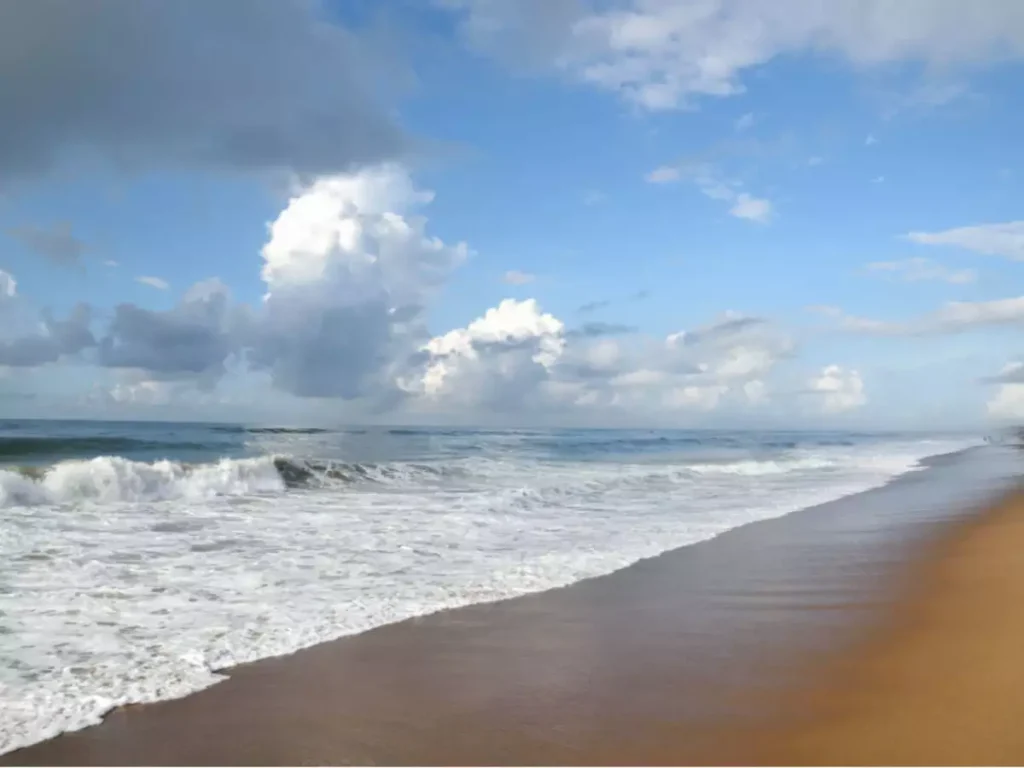
Astaranga Beach, located about 91 km from Puri and 19 km from Konark, is a breathtaking coastal gem whose name literally means “Colourful Sunset”—a combination of the Odia words Asta (sunset) and Ranga (colour). Renowned as a photographer’s delight, the beach offers an uncommonly vivid panoramic view of the horizon as the sun dips below the Bay of Bengal, painting the sky in intense hues of orange and crimson. Beyond its scenic beauty, Astaranga is a significant fishing and salt trade centre; every morning, the shoreline transforms into a vibrant market where local fishermen auction their fresh catches. The beach is also an ecological sanctuary, serving as a nesting ground for Olive Ridley turtles during the winter months and featuring a nearby mangrove trail at the mouth of the Devi River. Its serene, less-crowded atmosphere makes it an ideal spot for peaceful retreats, family picnics, and visiting the nearby Pir Jahania shrine, which is revered by both Hindus and Muslims.
15. Sudarshan Crafts Museum
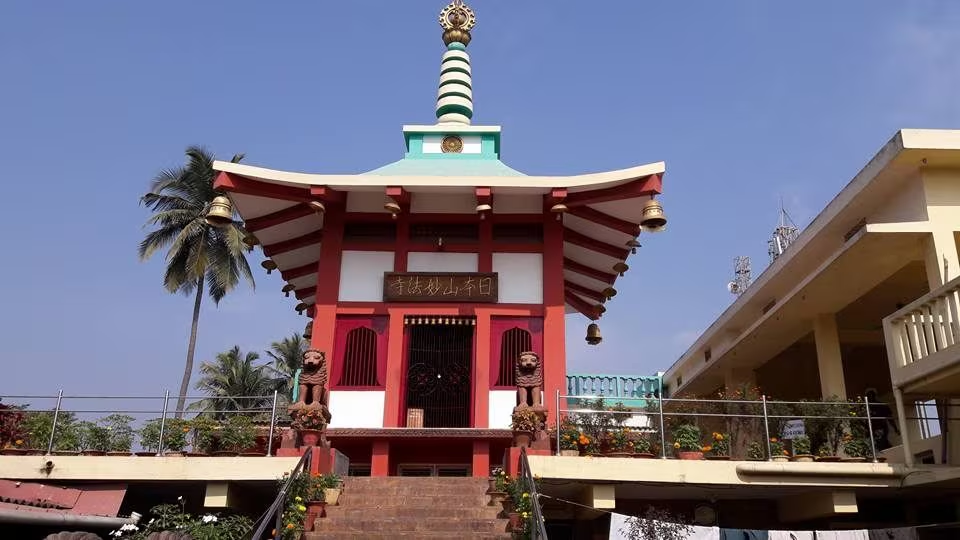
The Sudarshan Crafts Museum, located near the Puri Railway Station, is a premier artistic hub established in 1977 by the world-renowned sculptor Shri Sudarshan Sahoo, a recipient of the Padma Vibhushan. This museum is much more than a gallery; it is a living workshop where visitors can watch master artisans and students practice traditional Odia techniques such as stone and wood carving, bronze casting, and intricate paintings. A unique architectural highlight within the premises is a beautiful Buddhist temple built in Japanese style, reflecting the founder’s diverse artistic inspirations. The museum complex also features a library, a showroom for purchasing authentic handicrafts, and residential facilities for trainee artists, making it a critical center for the preservation and evolution of Odisha’s cultural heritage.
16. Sri Jagannath Puri Temple
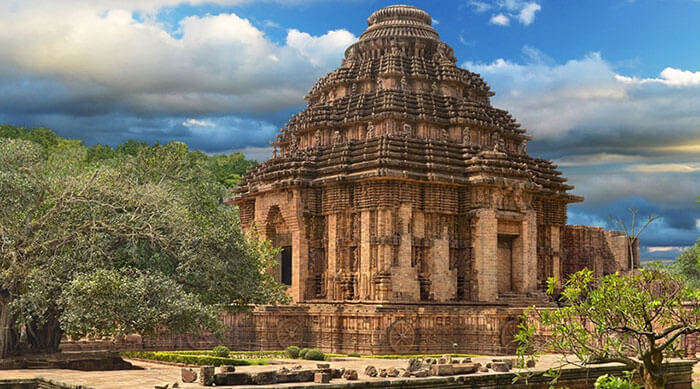
The Sri Jagannath Puri Temple is a monumental 12th-century Hindu shrine and one of the four most sacred Char Dham pilgrimage sites in India. Dedicated to Lord Jagannath (Lord of the Universe), his brother Balabhadra, and sister Subhadra, the temple is a masterpiece of Kalinga architecture with its main tower rising 214 feet high. It is unique because the deities are carved from sacred neem wood (Daru) rather than stone or metal, and they are replaced every 12 to 19 years in a grand ritual called Nabakalebara. The temple is the heart of the world-famous Ratha Yatra (Chariot Festival), where the three gods travel in massive, hand-pulled chariots to visit their aunt’s home. The temple is also shrouded in mysterious phenomena that baffle scientists and devotees alike: the flag at the top always flutters against the wind direction, no birds or planes ever fly over the dome, and the structure casts no shadow on the ground at any hour
17. Markandeshwar Temple
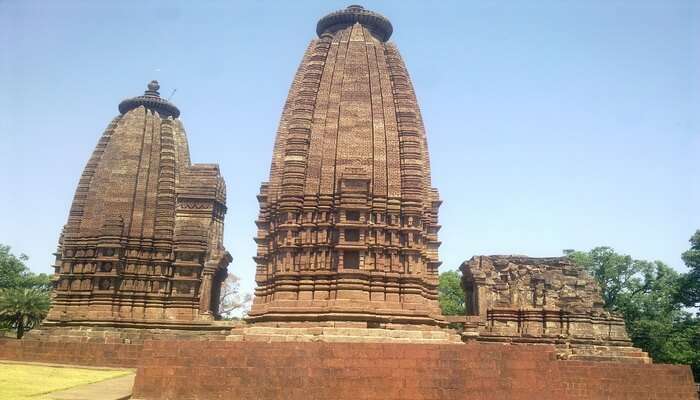
Markandeshwar Temple, located to the north of the Jagannath Temple on Markandeshwar Street, is one of the oldest Shaiva shrines in Puri and a key site in the city’s spiritual geography. Dedicated to Lord Shiva, the temple is named after Sage Markandeya, who, according to legend, performed intense penance here and was saved from a catastrophic flood by Lord Shiva. The current stone structure dates back to the 12th-century Ganga Dynasty and is built in the classic Kalinga architectural style, featuring a white-coloured exterior with a 60-foot spire and a ten-armed figure of Nataraja at the entrance. The temple is situated adjacent to the Markandeya Sarovar, a large rectangular tank that is one of the Pancha Tirthas (five sacred bathing spots) of Puri. Pilgrims traditionally begin their journey by bathing in this tank, which is used for major rituals like Pinda Dana and Mundan, as well as festivals associated with the Jagannath Temple, such as Chandan Yatra and Sital Sasthi.
18. Khandagiri Caves
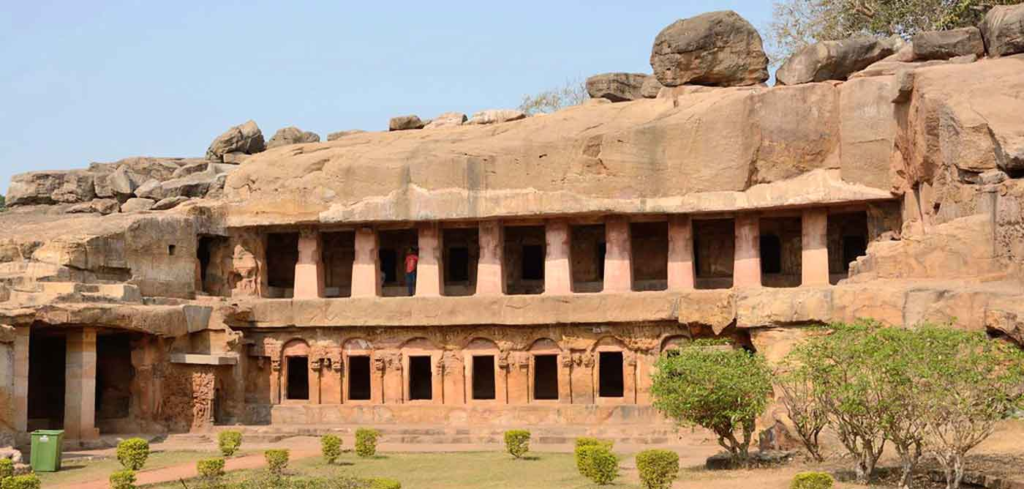
Khandagiri Caves, located on the twin hills of Udayagiri and Khandagiri in Bhubaneswar, are ancient rock-cut shelters dating back to the 2nd century BCE. Commissioned by the powerful Jain King Kharavela of the Mahameghavahana dynasty, these 15 caves served as secluded residential cells for Jain monks to meditate and live. Unlike its twin hill Udayagiri (which has 18 caves), Khandagiri is situated at a higher elevation and is famous for its intricate carvings of the 24 Tirthankaras, celestial figures, and mythological animals. The most notable caves here include Ananta Gumpha, which features stunning reliefs of elephants and Goddess Lakshmi, and Tatowa Gumpha, known for its guardian figures and “parrot” motifs. At the very summit of the hill sits a modern Jain Temple built in the 18th century, offering a spectacular panoramic view of the capital city. The caves are a masterpiece of early Kalinga architecture and are unique for their “lean-to” design, where the natural rock formations were hollowed out to create functional living spaces while preserving the mountain’s structure.
19. Sun Temple
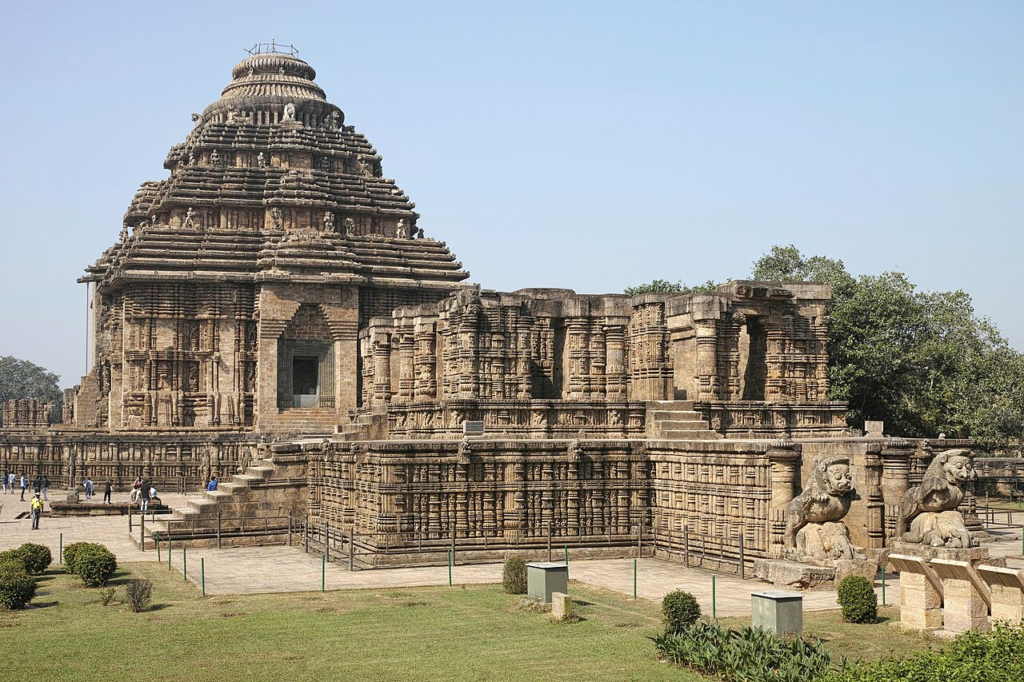
The Konark Sun Temple, a 13th-century UNESCO World Heritage Site in Odisha, is a monumental architectural masterpiece dedicated to the Hindu Sun God, Surya. Commissioned by King Narasimhadeva I of the Eastern Ganga Dynasty around 1250 CE, it was designed as a colossal stone chariot with 24 intricately carved wheels and seven galloping horses, representing the Sun God’s celestial journey across the sky. The temple is a pinnacle of Kalinga architecture, famous for its astronomical precision—the first rays of the rising sun strike the main entrance, and the giant wheels function as accurate sundials that can tell time to the minute based on the shadows of their spokes. Historically known as the “Black Pagoda” by European sailors, the temple was built using chlorite, laterite, and khondalite rocks, featuring detailed carvings that cover every inch of its surface, depicting everything from daily life and musicians to mythological and erotic scenes. Although much of the original 229-foot main sanctum is now in ruins, the surviving Jagamohana (audience hall) and Nata Mandira (dance hall) continue to attract millions of visitors and host the annual Konark Dance Festival.
20. Chilika Lake
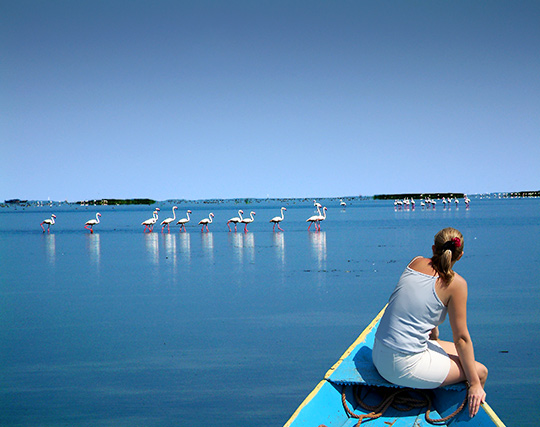
Chilika Lake, the largest brackish water lagoon in Asia and the second largest in the world, is a sprawling natural wonder located along the eastern coast of Odisha. Spreading across the Puri, Khurda, and Ganjam districts, it is a vital ecological hub and India’s first Ramsar site, recognized for its immense biodiversity. The lake is famously divided into four zones, with the Satapada region being the primary destination for tourists to spot the endangered Irrawaddy dolphins in their natural habitat. During the winter months (October to March), Chilika transforms into the largest wintering ground for migratory birds on the Indian subcontinent, hosting over a million avian visitors from as far as Siberia, Russia, and Central Asia at the Nalaban Bird Sanctuary. Beyond its wildlife, the lagoon is dotted with picturesque islands like Kalijai, home to a revered temple, and Honeymoon Island, offering serene boating experiences and a glimpse into the lives of the over 200,000 fisherfolk whose livelihoods depend on its fertile waters.