

The Lower Mustang Trek is a captivating journey into the “Forbidden Kingdom” of Mustang, offering a unique blend of arid, desert-like landscapes and deeply rooted Tibetan culture. In contrast to the lush forests of the southern Annapurna region, this trek traverses the Himalayan ‘rain-shadow’ zone—an area untouched by monsoon rains. Here, one encounters wind-sculpted rock formations, ancient caves, and whitewashed villages such as Marpha—renowned for its apple orchards and local brandy. The route primarily follows the valley of the Kali Gandaki River—the deepest gorge in the world—offering trekkers spectacular views of the Dhaulagiri and Nilgiri mountain ranges. A major highlight of this trek is the spiritual sanctuary of Muktinath, where pilgrims from across the globe come to pay homage to the 108 sacred water spouts. Given the region’s arid climate and its well-developed road network, this trek serves as an excellent option for those seeking a moderate-level adventure—one that can be comfortably undertaken even during the monsoon season—and which offers a fascinating transition from lush hilly terrain to the high Himalayan plateau.
The Lower Mustang Trek is exceptionally safe and ranks among the easiest mountain journeys available in Nepal. Its trails are wide and clearly defined, and unlike many other treks, they do not involve excessive elevation changes or steep ascents; this makes it an ideal choice for beginners or families. Furthermore, as roads run in close proximity to the trail, assistance is always readily available; should you feel fatigued or unwell, you can easily catch a jeep. You will stay in comfortable guesthouses located in friendly villages like Marpha and Jomsom, where the locals are accustomed to tourists and the food is entirely safe to eat. The most important thing to keep in mind is that strong winds blow through the valley during the afternoon; therefore, simply wearing a good jacket and sunglasses will ensure you feel comfortable and safe.
Most Famous And Attractive Tourist Places In Lower Mustang Trek :
1. Muktinath Temple (The High Point)
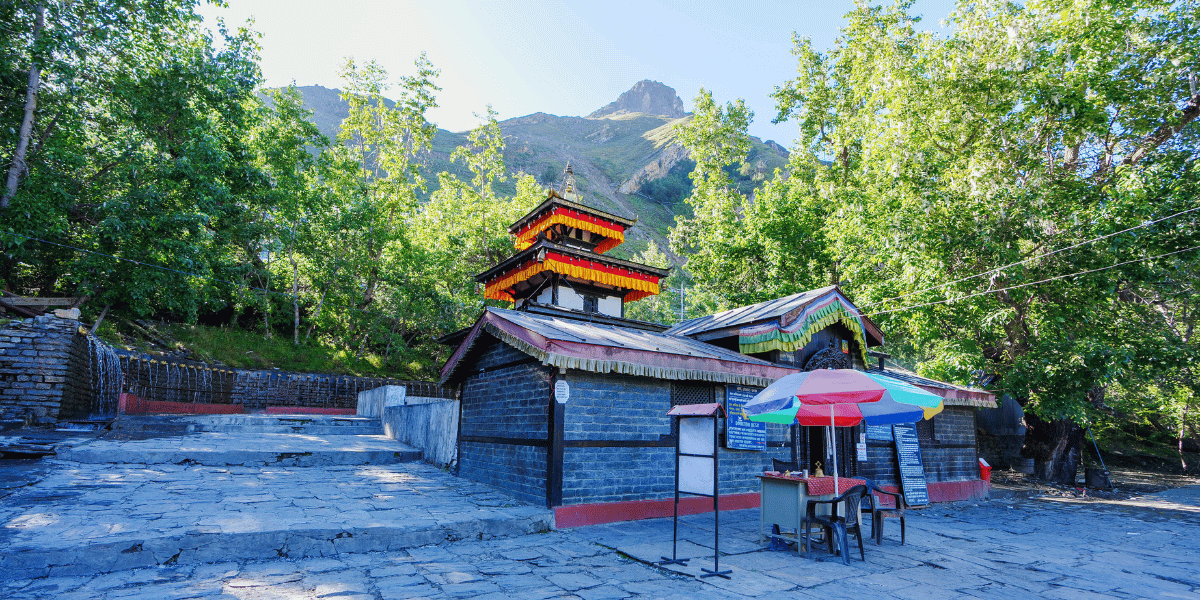
Muktinath Temple, standing at an elevation of 3,710 metres (12,171 feet), is a world-renowned pilgrimage site located at the base of the Thorong La Pass in Nepal’s Mustang district. Known as a “place of liberation” or Mukti Kshetra, it is unique because it is considered sacred by both Hindus and Buddhists, who have worshipped together here for centuries. The main temple is a small, golden pagoda dedicated to Lord Vishnu, but the most famous feature is the outer courtyard containing 108 brass water sprouts shaped like bullheads, where pilgrims bathe in the freezing mountain water to seek spiritual purification. Nearby, the Jwala Mai Temple houses a “miraculous” eternal flame fueled by natural gas that appears to burn on top of water. For trekkers on the Annapurna Circuit, reaching Muktinath is a major milestone and a “high point” of the journey, providing a spiritual sanctuary and a transition into the dramatic, desert-like landscapes of the Lower Mustang region.
2. Kagbeni Village (Gateway to Upper Mustang)

Kagbeni Village, situated at an elevation of 2,804 metres (9,200 feet), is one of the most unique and historically significant settlements in the Himalayas, serving as the official “Gateway to Upper Mustang.” Located at the junction of the Kali Gandaki River and the Jhong Khola, this medieval village is famous for its fortress-like architecture, featuring narrow, winding stone alleys and mud-brick houses that protect residents from the valley’s fierce afternoon winds. As the northernmost point tourists can visit with a standard trekking permit, it marks the dramatic boundary where the green landscapes of the lower valley transform into the arid, high-altitude desert of the Tibetan plateau. Visitors can explore the Kag Chode Thupten Samphel Ling Monastery, founded in 1429, and see the ancient “spirit catcher” statues that guard the village entrances, reflecting a fascinating blend of Buddhist and pre-Buddhist Bon traditions.
3. Marpha Village (The Apple Capital)

Marpha Village, situated at an elevation of 2,670 metres (8,760 feet), is famously known as the “Apple Capital of Nepal” and is widely considered one of the most beautiful villages in the Annapurna region. Tucked away in the Kali Gandaki Valley, Marpha is distinguished by its unique Thakali architecture, featuring whitewashed stone houses, flat roofs used for drying wood and crops, and narrow, paved alleys that provide shelter from the valley’s strong winds. The village is surrounded by vast apple orchards, and it is world-renowned for its local apple products, including dried apple rings, fresh cider, and the potent Marpha Brandy. Beyond its agriculture, Marpha is home to the ancient Samten Ling Monastery, which offers a peaceful atmosphere and stunning views over the village. For trekkers, Marpha is a favorite resting spot because of its cleanliness, its famous Thakali cuisine, and the warm hospitality of the local community.
4. Kali Gandaki Gorge (World’s Deepest)
![Kali Gandaki: The Deepest Gorge Trek [Trekking In Nepal]](https://pristinenepal.com/wp-content/uploads/2018/08/Kali-Gandaki.webp)
The Kali Gandaki Gorge, or Andha Galchi, is recognized as one of the world’s deepest canyons, carved by the Kali Gandaki River as it flows between two of the highest mountains on Earth: Annapurna I (8,091m) and Dhaulagiri (8,167m). Because the riverbed sits at an elevation of approximately 2,527 metres while the towering peaks on either side rise over 8,000 metres, the gorge creates a staggering vertical drop of over 5,500 metres (roughly 18,000 feet). Historically, this massive chasm served as a vital trade route between Tibet and India for salt and grain, and it remains a geological marvel where travelers can find Saligrams—ancient black ammonite fossils that are millions of years old and sacred to Hindus. The gorge also acts as a dramatic climate divider, transitioning from the lush, green forests of the lower Himalayas to the arid, high-altitude desert of the Mustang plateau, often accompanied by the powerful “Kali Gandaki wind” that roars through the canyon every afternoon.
5. Dhumba Lake (The Emerald Gem)
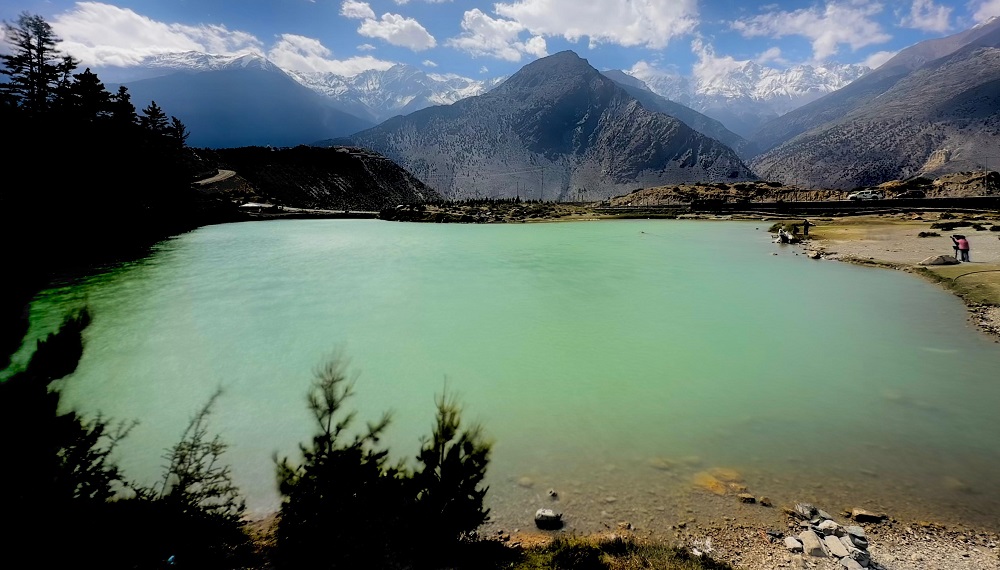
Dhumba Lake, situated at an elevation of approximately 2,830 metres (9,285 feet) near the village of Jomsom, is a stunning high-altitude lake known as the “Emerald Gem” of the Mustang region. Nestled at the base of Mount Nilgiri, the lake is famous for its striking deep green water, which creates a sharp, beautiful contrast against the surrounding arid, desert-like hills. It is considered a sacred lake by local Buddhists; legend says the water once turned red, and only after religious ceremonies were performed did it return to its clear emerald hue. Because of its spiritual importance, swimming and fishing are strictly forbidden, which helps maintain its pristine and peaceful atmosphere. For trekkers, a short hike to Dhumba Lake offers a quiet escape from the main trails and provides one of the best spots in the valley to see the towering white peaks of the Himalayas reflected in the calm, green water.
Overview
Travel is the movement of people between relatively distant geographical locations, and can involve travel by foot, bicycle, automobile, train, boat, bus, airplane, or other means, with or without luggage, and can be one way or round trip. Travel can also include relatively short stays between successive movements.
The origin of the word “travel” is most likely lost to history. The term “travel” may originate from the Old French word travail, which means ‘work’. According to the Merriam Webster dictionary, the first known use of the word travel was in the 14th century.
It also states that the word comes from Middle English travailen, travelen (which means to torment, labor, strive, journey) and earlier from Old French travailler (which means to work strenuously, toil). In English we still occasionally use the words “travail”, which means struggle. According to Simon Winchester in his book The Best Travelers’ Tales (2004), the words “travel” and “travail” both share an even more ancient root: a Roman instrument of torture called the tripalium (in Latin it means “three stakes”, as in to impale).