

Bundi is an enchanting historical town situated in the Hadoti region of Rajasthan, widely renowned as the “City of Stepwells” and the “Blue City” of Eastern Rajasthan. Established in the 14th century, this town served as the capital of the Hada Chauhan kingdom and remains, to this day, one of the select places in India where a pure, traditional Rajput atmosphere remains vibrantly alive; the place has remained largely untouched by heavy modernization or the influence of Mughal architecture. The town is dominated by the magnificent Taragarh Fort and the tiered Garh Palace; housed within the Garh Palace itself is a museum dedicated to the world-famous ‘Bundi School of Miniature Painting,’ characterized primarily by its vivid turquoise-blue hues and captivating nature-based themes. Beyond its palaces, Bundi is also celebrated for its remarkable water-management architecture. With its narrow, winding lanes lined with blue-painted houses, serene lakes such as ‘Jait Sagar,’ and the nearby ‘Ramgarh Vishdhari Tiger Reserve,’ Bundi offers a unique confluence of medieval history, fine arts, and rugged natural beauty—a combination that continues to inspire both artists and travelers alike.
Bundi’s economy is anchored in a robust and multi-sectoral system, driven primarily by agriculture, mineral-based industries, and heritage tourism; collectively, these three sectors form the basis of livelihood for over 65% of the district’s population. As a leading agricultural hub within Rajasthan’s Hadoti region, Bundi is a major producer of soybeans and Basmati rice; the agricultural sector here benefits significantly from the region’s fertile black soil and extensive irrigation facilities provided by the Chambal and Mej rivers. Bundi is widely regarded as one of the safest and most hospitable tourist destinations in Rajasthan—particularly for solo travelers and families who prioritize a quiet and more authentic atmosphere over the crowded tourist hubs like Jaipur or Jodhpur. Even today, the town offers the experience of a small, close-knit community, where locals are generally helpful and welcoming, and the crime rate against tourists remains extremely low.
PLACES TO VISIT AND EXPLORE IN BUNDI :
1.SHIKAR BURJ
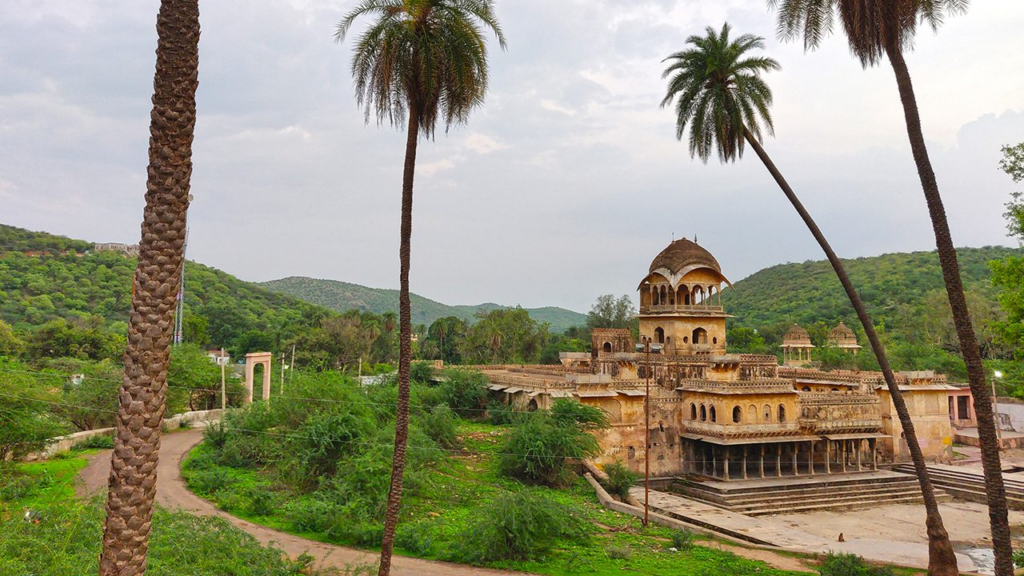
Shikar Burj, also known as Dhaval Mahal, is a historic 18th-century monument in Bundi, originally constructed in 1770 AD by Maharao Raja Ummed Singh. Located in a secluded, sun-dappled forest near Sukh Mahal and Jait Sagar Lake, it served a dual purpose: initially as a royal hunting lodge where kings would observe tigers at a nearby pond, and later as a spiritual retreat. Its historical significance is deeply tied to Ummed Singh, who abdicated his throne in 1770 to lead a life of asceticism and retirement at this very site. Architecturally, the structure is a fusion of Rajput and Mughal styles, featuring intricately carved stone walls, arches, and traditional jharokhas (overhanging balconies). The sprawling grounds include a temple garden, a central irrigation well known as a Char Bagh, and even a memorial (Deoli) dedicated to Ummed Singh’s favorite horse, Hay Bahadur. Today, while parts of the site face neglect, it remains a popular spot for nature lovers and picnickers who come to enjoy the panoramic hilltop views and the resident troops of monkeys.
2.CHHATR PALACE
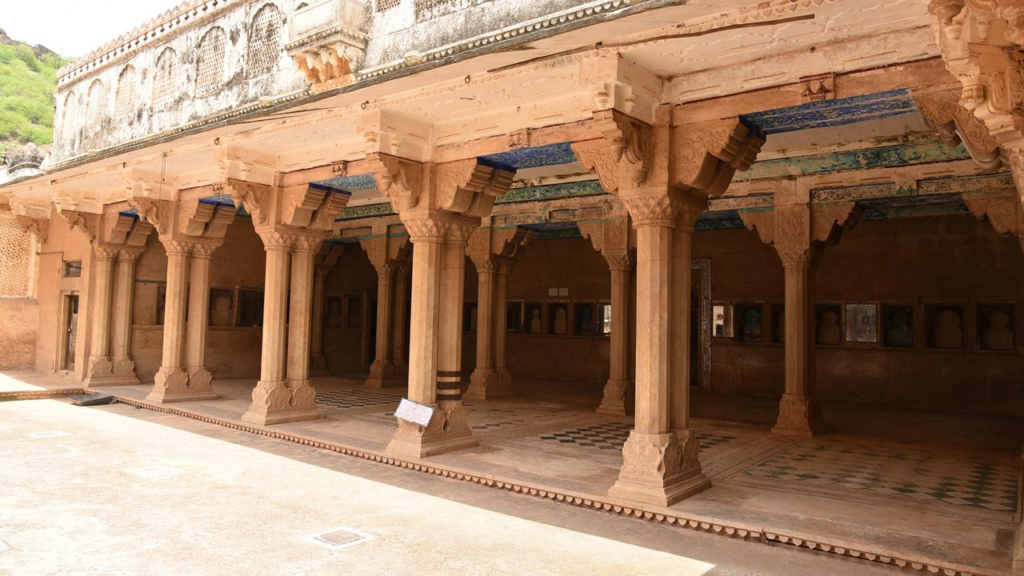
Chhatra Palace, commonly known as Chhatra Mahal, is a stunning 17th-century addition to the Garh Palace complex in Bundi, built in 1660 by Rao Raja Chhatrasal. It is celebrated as one of the most refined artistic spaces in the region, featuring a harmonious blend of Rajput and Mughal architectural styles that utilize local stone rather than the red sandstone common in Mughal structures. The palace earned the nickname “Palace of the Winds” due to its elegantly designed balconies and windows that provide natural ventilation and light, while its rooftop is adorned with umbrella-shaped pavilions called chhatris, from which it takes its name. Historically, it served as a private residential area and royal reception space, featuring the Diwan-e-Aam for entertaining state guests. The interior is world-renowned for its Bundi miniature paintings and frescoes that depict vivid scenes of Hindu mythology—particularly the life of Krishna—alongside royal processions and battle scenes in rich palettes of red, gold, and indigo. One of its most distinctive features is the ivory and glass inlay work on its gates and a beautiful hanging garden that offers panoramic views of Taragarh Fort and the blue-painted houses of the town below.
3.HATHI POLE
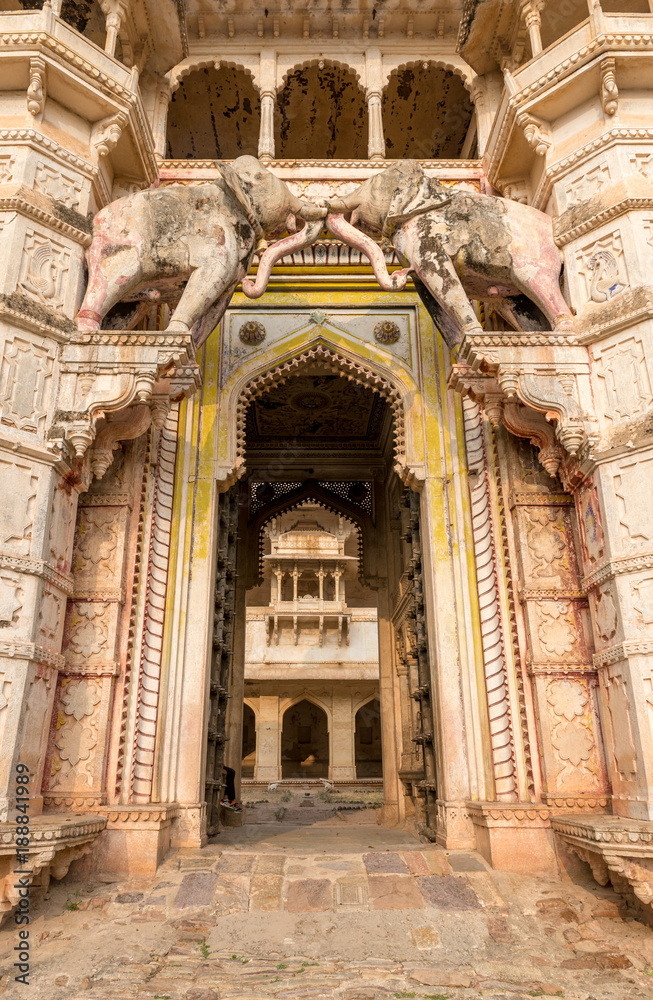
Hathi Pol, also known as Hathia Pol or the Elephant Gate, is the grand ceremonial entrance to the Garh Palace complex in Bundi. Built in the early 17th century by Rao Raja Ratan Singh, it is famous for the two massive stone elephants that face each other and form an arc over the gateway with their raised, trumpeting trunks. This architectural feature was originally intended to evoke a sense of regal power and welcome royal guests with a symbolic fanfare. Approached via a steep, cobbled ramp designed to slow down invading forces, the gate itself is a sturdy example of Rajput military architecture, featuring heavy wooden doors occasionally adorned with iron spikes to prevent enemy elephants from battering them down. Beyond its defensive utility, the Hathi Pol is admired for its artistic details, including carved pillars, bracketed balconies, and turquoise-and-blue frescoes on the interior walls that provide a stunning first impression of the “painted city” within.
4.GARH PALACE BUNDI
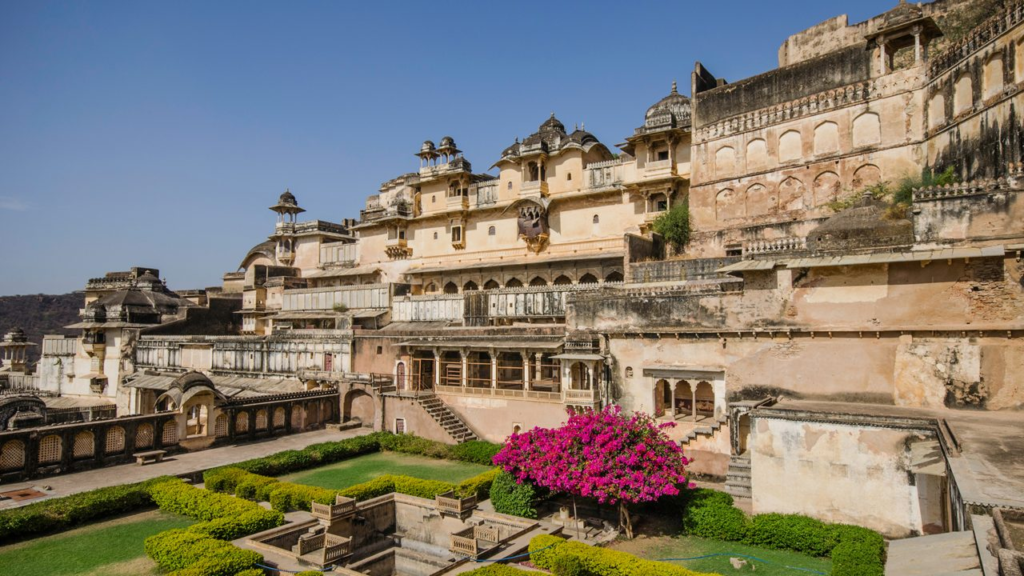
The Garh Palace in Bundi is a sprawling hilltop complex and a masterpiece of Rajput architecture, famous for what Rudyard Kipling described as a “work of goblins” rather than men. Construction began in the late 16th century under Rao Raja Ratan Singh and continued for over three centuries, resulting in a unique cascading effect of separate but interconnected structures built on various terraces. Unlike many other Rajasthani palaces, it remained largely untouched by Mughal architectural influence, preserving a pristine traditional Rajputana style characterized by ornate jharokhas (balconies), arched gateways like the iconic Hathi Pol, and pillars featuring stone elephant carvings. The palace’s crowning glory is its Bundi frescoes, world-renowned miniature murals that adorn rooms like the Badal Mahal and the Chitrashala. These paintings, which utilize natural minerals and even ground lapis lazuli for a distinct cobalt blue, depict vibrant scenes of Hindu mythology, royal life, and nature with incredible detail. While parts of the palace have faced neglect over time, a high-profile restoration project led by descendants of the royal family is currently underway to preserve its delicate artworks and structural integrity for future generations.
5.BADAL MAHAL
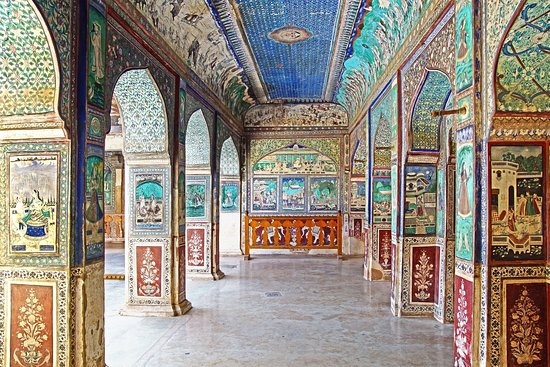
Badal Mahal, aptly named the “Palace of Clouds,” is the highest and most visually spectacular chamber within the Garh Palace complex in Bundi. Built during the early 17th century, likely commissioned by Rao Raja Bhoj Singh or his son Rao Ratan Singh, it was designed as a private imperial retreat for the royal family. Its name derives from its lofty position atop the Aravalli hills, where monsoon clouds often drift through its open courtyards, creating a dreamlike atmosphere. Architecturally, it is a freestanding structure with three levels: the ground-level Hatyasar (audience hall), the middle Phool Mahal, and the topmost Badal Mahal. The palace is world-renowned for its “Sistine Chapel of India”—a vaulted ceiling covered in exquisite Bundi miniature frescoes. These murals, vibrant with natural pigments like red oxide and lapis lazuli blue, depict the Ras Leela (cosmic dance of Lord Krishna), the ten incarnations of Vishnu, and scenes of royal life such as elephant fights and polo matches. Many of these paintings feature unique stylistic influences, including Chinese and Mongolian facial features and mythical flying dragons, reflecting the diverse cultural exchanges of the era.
6.RAMGARH VISHDHARI SANCTUARY
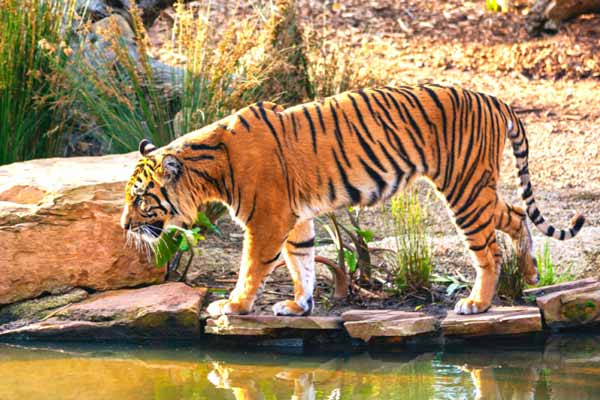
The Ramgarh Vishdhari Sanctuary, located in the Bundi district of Rajasthan, is a critical ecological landscape that was officially designated as India’s 52nd Tiger Reserve in May 2022. Spanning approximately 1,501.89 square kilometres, the reserve serves as a vital wildlife corridor connecting the Ranthambore Tiger Reserve to the northeast with the Mukundara Hills Tiger Reserve to the south, facilitating the natural dispersal of tigers. Its terrain is a rugged blend of the Aravalli and Vindhya mountain ranges, characterized by dry deciduous forests dominated by Dhok trees, alongside Khair and Amaltas. Beyond its role in tiger conservation—with recent successful translocations and the birth of new cubs—the sanctuary is home to a rich variety of fauna, including leopards, sloth bears, striped hyenas, chinkaras, and over 150 species of birds. The Mez River, a tributary of the Chambal, meanders through the heart of the reserve, supporting local biodiversity and making it a significant destination for eco-tourism and nature enthusiasts.
7.PHOOL SAGAR
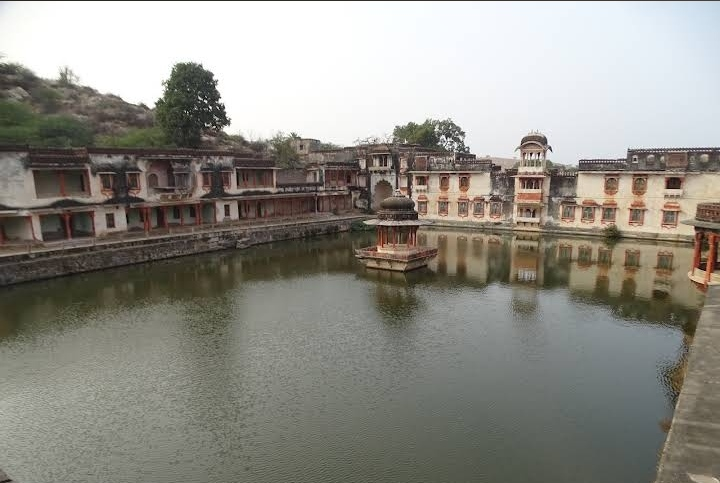
Phool Sagar, or the “Flower Garden Palace,” is an exquisite lakeside residence located about 6 km from the main Bundi town. Originally commissioned in 1945 by Maharao Raja Bahadur Singh, it was designed by a French architect, resulting in a unique fusion of European Art Deco and traditional Rajput architectural styles. The palace takes its name from the large artificial lake, Phool Sagar, on whose banks it stands. Unlike the older, more rugged forts of Bundi, this palace was built as a modern royal residence and is surrounded by meticulously landscaped Italian-style gardens featuring tiered water channels, fountains, and a variety of exotic flora. The interior of the palace is private and still serves as a residence for the descendants of the Bundi royal family; however, visitors are often allowed to explore the sprawling gardens with prior permission. The site is particularly famous for its collection of Bundi school paintings and historical weaponry housed within its private museum, as well as the serene atmosphere that makes it a popular spot for migratory birds during the winter months.
8.LAKE KANAK SAGAR, DUGARI
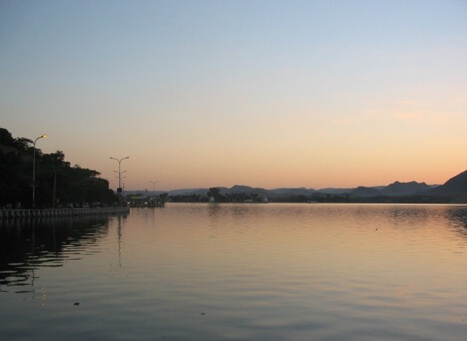
Lake Kanak Sagar, located in the Dugari village about 67 km from Bundi, is a sprawling artificial reservoir renowned for its historical legacy and ecological richness. Covering a vast circumference of nearly 36 km and touching nine villages, the lake was constructed in the 10th century and is locally believed to be dedicated to the memory of Rani Karnavati, a princess of Bundi and the grandmother of the legendary Maharana Pratap. On the banks of the lake stands the Dugari Fort, an 18th-century structure famous for its pristine Bundi style wall paintings that depict mythological scenes of the Ramayana and Krishna Rasleela, as well as vibrant wildlife such as elephants and peacocks. For nature enthusiasts, the lake is a premier bird-watching destination, serving as a vital habitat for numerous migratory birds during the winter months, including Bar-headed Geese and Demoiselle Cranes. The serene environment, combined with the reflection of the ancient fort and the surrounding Aravalli hills, makes Kanak Sagar a tranquil retreat away from the more crowded tourist spots in the region.
9. 84 PILLARED CENOTAPH
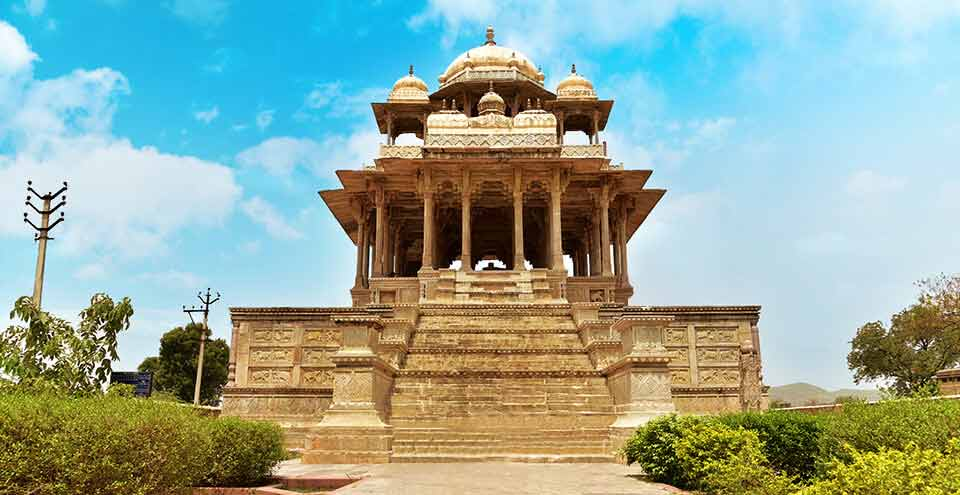
The 84 Pillared Cenotaph, locally known as Chaurasi Khambon ki Chhatri, is a magnificent 17th-century memorial located on the outskirts of Bundi. Built in 1683 by Rao Raja Anirudh Singh, the structure was dedicated to his foster brother and wet nurse’s son, Deva, reflecting the deep bonds of loyalty and gratitude often celebrated in Rajput culture. The monument is a double-storied pavilion set upon a high plinth, uniquely supported by precisely 84 ornate pillars. It is a masterpiece of Indo-Islamic and Rajput architecture, featuring a large central dome surrounded by four smaller domes at the corners. The pillars and ceilings are intricately carved with images of animals, floral patterns, and scenes from the Kamasutra and Rajput history. At its heart lies a large Shivling, making it a place of both historical tribute and religious worship. When illuminated at night, the cenotaph stands as one of Bundi’s most graceful silhouettes against the sky.
10.LAKE JAIT SAGAR
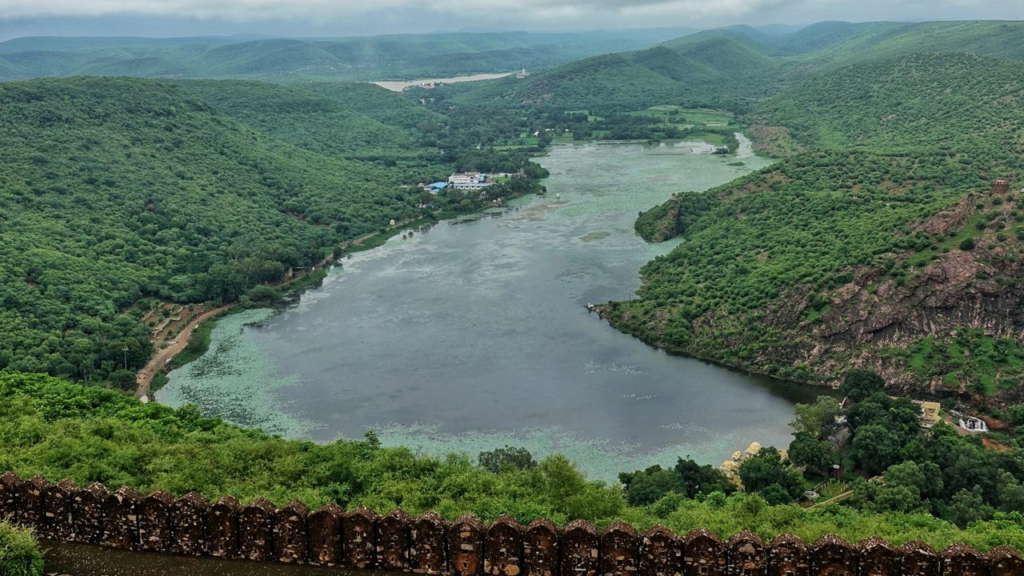
Lake Jait Sagar is a picturesque 1.5 km long reservoir nestled at the foot of the Aravalli hills, approximately 3 km from the heart of Bundi. Originally commissioned in the 14th century by Jaita Meena, the last Meena ruler of the region, the lake was later enhanced with masonry work by Gehlotni Jayvanti, mother of Rao Raja Surjan Singh. It is famously known as the “Lotus Lake” because its surface becomes almost entirely covered with pink lotus blooms during the monsoon and winter months, a sight that often draws nature photographers and birdwatchers. The lake’s edge is graced by the elegant Sukh Mahal, a 1776 summer palace where British author Rudyard Kipling stayed and reportedly found inspiration for his novel Kim. Surrounded by towering walls with four ornamented gateways, the area also features the Kshar Bag cenotaphs, which are notable for their intricate stone carvings of elephants and horses. While it has faced environmental challenges like siltation and invasive lotus roots, recent joint efforts by local authorities and the Tiger Reserve management aim to restore its pristine beauty for eco-tourism.
11. NAGAR SAGAR KUND
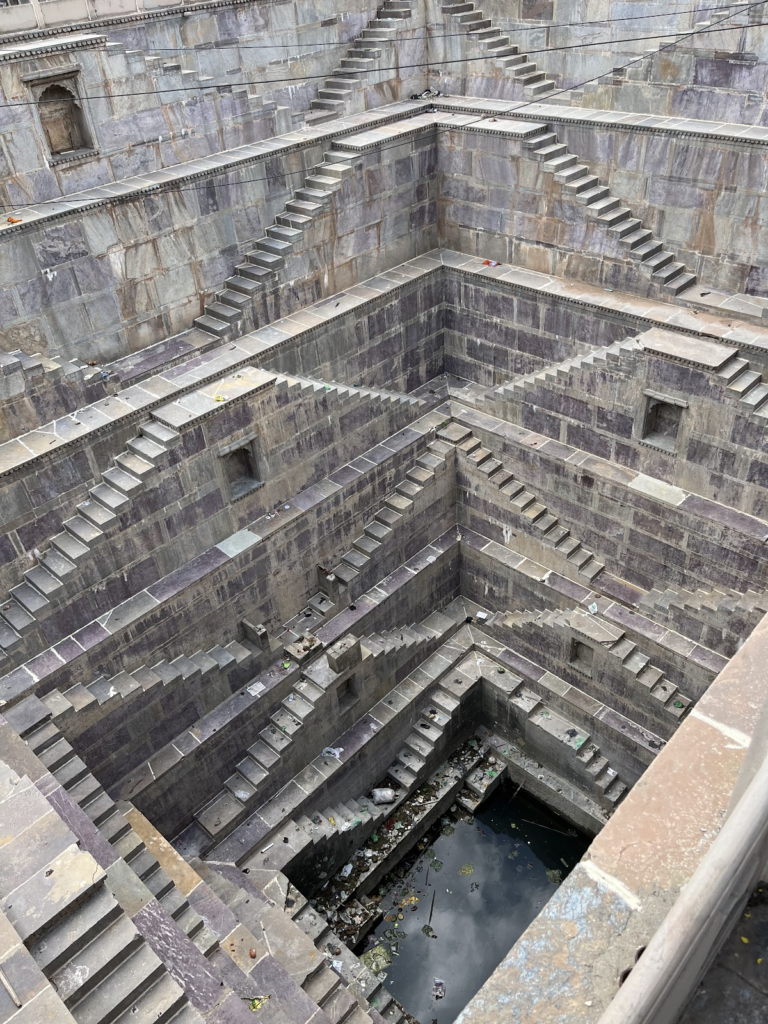
Nagar Sagar Kund is a pair of identical stepwells (twin baoris) located just outside the Hathi Pol in the heart of Bundi town. Constructed during the 19th century, these twin structures were built to provide a reliable water source for the local community and weary travelers, showcasing the sophisticated water management systems of ancient Rajasthan. Architecturally, they are designed in a traditional square stepped style, with multiple tiers of symmetrical stone stairs descending to the water level. Each kund is adorned with intricate masonry, arched alcoves, and small shrines, though they are generally simpler and more functional in design compared to the highly decorative Raniji ki Baori. Historically, they served as a vital social gathering spot where locals would collect water and perform religious rituals. Today, while the water levels fluctuate with the seasons, the “twin kunds” remain an important architectural landmark, representing the “City of Stepwells” and offering a serene, geometric beauty that is a favorite for photographers.
12. TARAGARH FORT
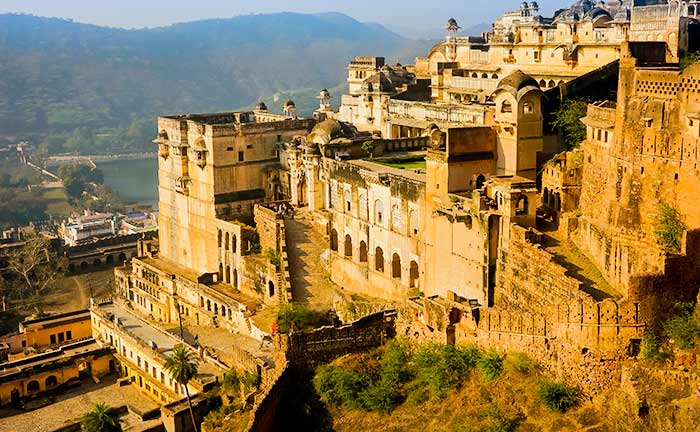
Taragarh Fort, also known as the Star Fort, is a massive 14th-century fortress perched atop a steep hill overlooking the city of Bundi. Built in 1354 AD by Rao Deva, it is considered one of the oldest and most imposing forts in Rajasthan, designed primarily for military defense rather than royal comfort. Unlike many other Indian forts that exhibit Mughal influence, Taragarh remains a pure example of Rajput military architecture, featuring high, thick walls, giant bastions, and a labyrinthine layout. The fort is famous for its three massive gateways—Lakshmi Pol, Phuta Pol, and Gagudi ki Phatak—and the “Bhim Burj,” a giant tower that once housed the legendary Garbh Gunjam (Thunder from the Womb) cannon. Inside, you’ll find the ruins of palaces and several massive stone water reservoirs (baoris) carved directly into the rock to ensure a steady water supply during sieges. Although parts of the fort are now overgrown with vegetation, it offers the most spectacular panoramic view of the “Blue City” and remains a must-visit for its rugged, untouched historical atmosphere.
13. RANIJI KI BAORI
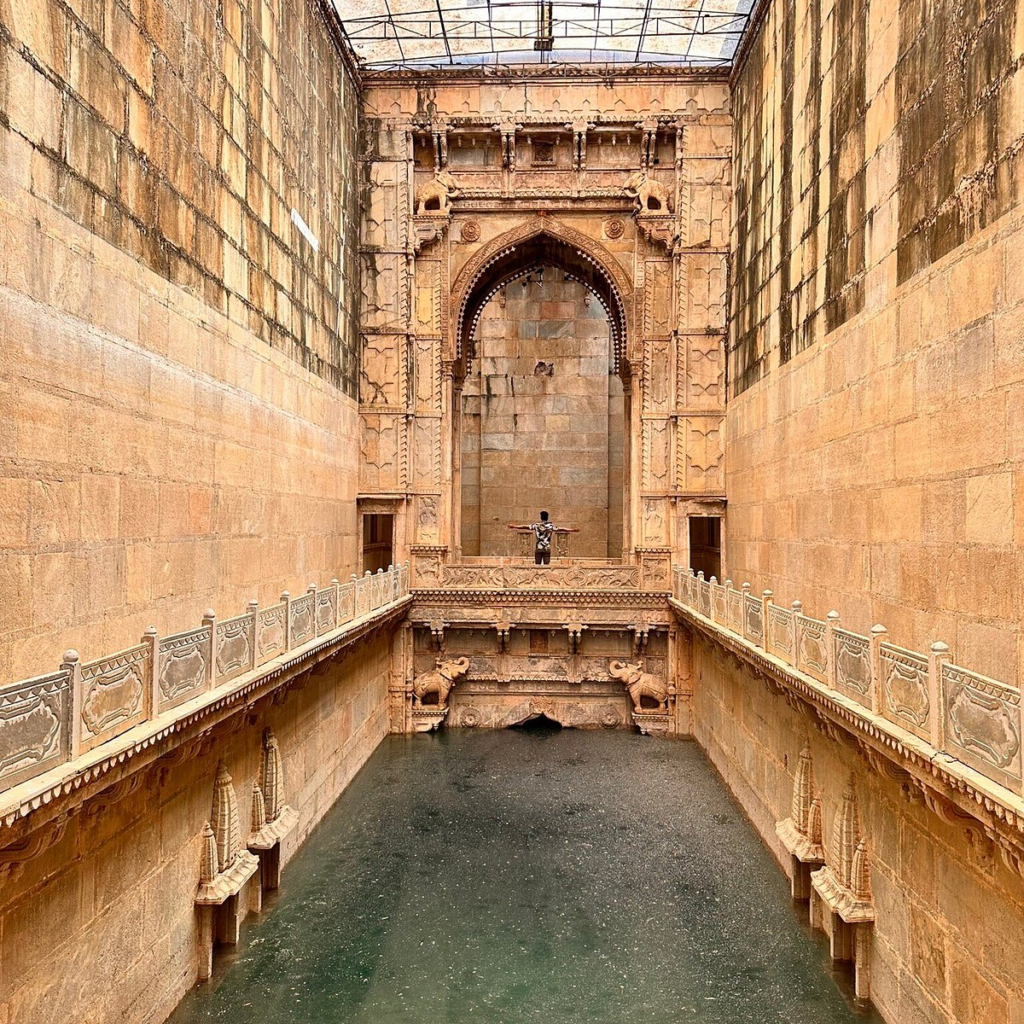
Raniji ki Baori, also known as the “Queen’s Stepwell,” is the grandest and most celebrated of the 50-plus stepwells in Bundi. Built in 1699 AD by Rani Nathavati, the younger queen of Maharao Raja Anirudh Singh, it is a masterwork of medieval Indian water architecture. Reaching a depth of nearly 46 metres, the structure features a narrow, multi-storeyed entrance marked by a majestic arched torana and stone pillars decorated with intricate carvings of elephants, floral patterns, and Hindu deities. Unlike simpler wells, this baori served as a sophisticated social hub and spiritual retreat, with deep galleries and cooling shaded platforms that provided relief from the desert heat. Its walls are adorned with beautifully detailed sculptures of the ten incarnations of Lord Vishnu, showcasing the high level of Rajput stone craftsmanship. Today, as a protected site under the Archaeological Survey of India (ASI), it remains the primary landmark of the “City of Stepwells,” representing both the architectural ingenuity and the public-service legacy of the Rajput queens.
14. DABHAI KUND
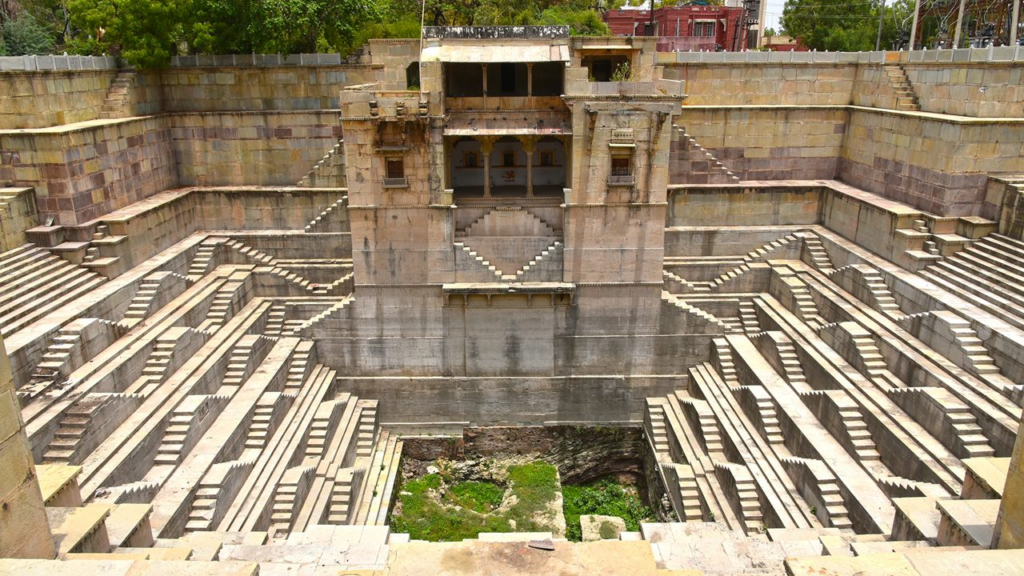
Dabhai Kund, also known as the Jail Kund, is the largest and arguably the most geometrically impressive stepwell in Bundi. Constructed in the 18th century, it was built by the “Dabhai” (royal foster brothers) to honor their service to the Bundi royalty, particularly during the reign of Rao Raja Anirudh Singh. What sets this kund apart is its immense scale and the mesmerizing, symmetrical pattern of its stone stairs that descend deep into the earth, creating an almost hypnotic visual effect similar to the famous Chand Baori in Abhaneri. Unlike the more ornately carved Raniji ki Baori, Dabhai Kund focuses on grand, clean Rajput architectural lines and massive proportions. Historically, it served as a vital reservoir for the city’s water needs and a social space for the community. Although it sits slightly off the main tourist trail near the city’s old jail, its sheer size and the rhythmic repetition of its 700+ steps make it a premier destination for photographers and architecture enthusiasts seeking the “M.C. Escher” aesthetic of ancient India.
15. SUKH MAHAL
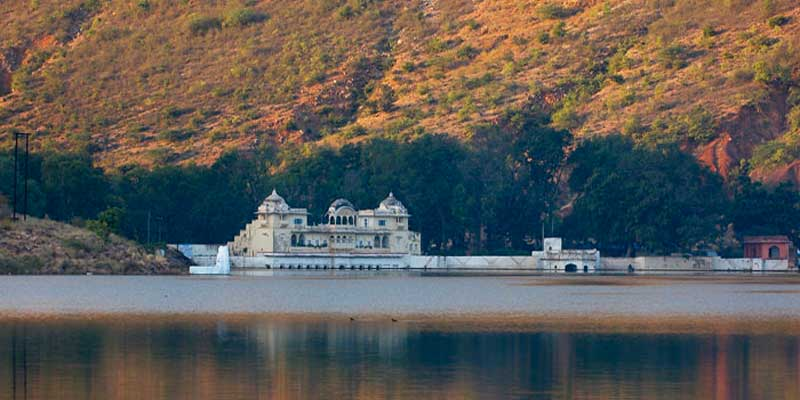
Sukh Mahal, or the “Palace of Bliss,” is an elegant late 18th-century royal summer retreat situated on the northern banks of the lotus-filled Jait Sagar Lake in Bundi. Built in 1773 during the reign of Rao Raja Vishnu Singh, the palace was designed as a cooling escape from the desert heat, featuring a unique ancient air-conditioning system where water from the lake was circulated through pipes in the walls to keep the interiors chilled. It is most famous internationally as the place where the British author Rudyard Kipling stayed in the late 19th century and found the creative inspiration for his classic novel, Kim. Architecturally, the two-story structure is a fine example of Rajput style, characterized by its multiple domes, umbrella-shaped chhatris, and a white marble umbrella (chhatri) on the second floor. Today, the palace houses a government museum displaying a rich collection of Bundi school miniature paintings, stone sculptures from the 8th to 12th centuries, and historical weapons, all while offering serene, panoramic views of the water and the surrounding Aravalli hills.
16. KSHAR BAG
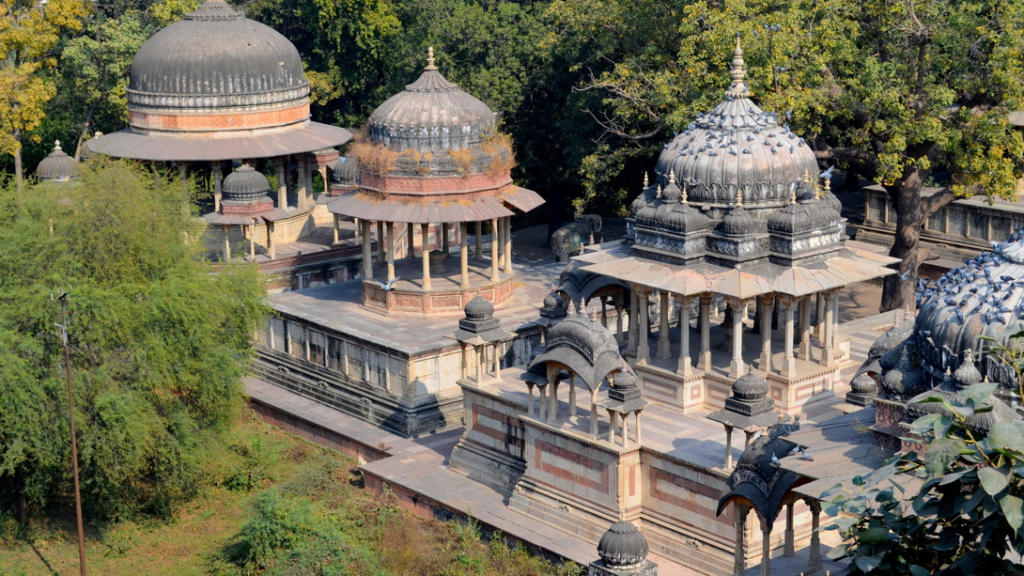
Kshar Bag, also known as Sarbag, is the historic royal crematorium of the Bundi rulers, located near the banks of Jait Sagar Lake. This sacred garden houses an impressive collection of 66 royal cenotaphs (chhatris), which serve as memorials for the kings, queens, and princes of the Hada Rajput dynasty. Spanning from the late 16th to the 19th centuries, the cenotaphs showcase the evolution of Rajput funerary architecture, with each structure featuring a dome supported by intricately carved pillars. The most striking features of these memorials are the detailed stone carvings found on the ceilings and bases, depicting deities, floral motifs, and scenes of royal life. Notably, many cenotaphs include small statues of the rulers alongside figures of their queens, symbolizing the ancient practice of Sati. Surrounded by lush greenery and the rugged Aravalli hills, Kshar Bag offers a peaceful, contemplative atmosphere, though it remains one of the more “hidden” heritage sites in Bundi, often visited by those exploring the nearby Sukh Mahal.