
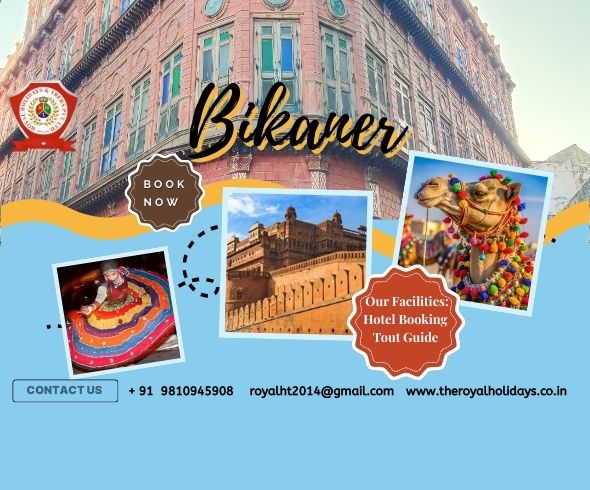
Bikaner is a vibrant desert city in northern Rajasthan, founded in 1488 by Rao Bika. The city offers a magnificent showcase of Rajput heritage and the culture of the Thar Desert. Renowned globally as the “Land of Camels,” this city is home to the world’s largest camel research center. Furthermore, a famous festival is celebrated here annually, dedicated to these “ships of the desert.” The city is distinguished by its magnificent red sandstone architecture. Most notable among these is the unconquered Junagarh Fort, which houses some of India’s most grand and opulent palaces. Bikaner is equally famous for its culinary heritage—particularly its savory ‘Bikaneri Bhujia’ and sweet ‘Rasgullas’—which have become celebrated snacks across the entire country.
Beyond its forts, Bikaner offers unique cultural experiences, such as the Karni Mata Temple and the artistic Rampuri Havelis, where some of the world’s most intricate and delicate stone carvings can be admired. The city’s old quarters form a labyrinth of narrow lanes, teeming with colorful markets and ancient Jain temples. Whether you are exploring the vast sand dunes, visiting the tranquil Gajner Wildlife Sanctuary, or shopping for exquisite handicrafts made from camel hide—Bikaner offers a more authentic and serene experience compared to Rajasthan’s larger and more bustling tourist hubs.
Bikaner’s economy is powered by a mix of traditional desert industries and modern manufacturing. The city is world-famous for its food processing industry, particularly the production of Bikaneri Bhujia and sweets, which are exported globally and provide jobs to thousands of local families. It also serves as Asia’s largest wool market, handling the majority of India’s wool trade for carpets and clothing. Beyond food and wool, Bikaner is rich in minerals like gypsum and lignite, making it a major hub for ceramics and energy production. Additionally, the Indira Gandhi Canal has boosted agriculture, allowing farmers to grow large crops of groundnuts and mustard, while a growing solar energy sector and vibrant tourism continue to bring new money and jobs into the region. Bikaner is considered one of the safest cities for tourists in Rajasthan; it is known for its tranquil atmosphere and extremely friendly locals. Compared to larger cities like Jaipur, it experiences less commercialization and overcrowding; consequently, visitors find the environment here to be more peaceful and respectful.
Places to Visit in Bikaner :
1.Laxmi Niwas Palace
The Laxmi Niwas Palace is a grand historical building in Bikaner, Rajasthan, that was built in 1904. It was originally the home of Maharajah Ganga Singh and is famous for its beautiful “Indo-Saracenic” style, which combines Indian and European designs. The entire palace is made of hand-carved red sandstone and features stunning courtyards, gold-painted ceilings, and marble floors. Because of its incredible beauty, it is often called one of the most majestic palaces in India.
Today, the palace serves as a luxury heritage hotel where you can stay and feel like royalty. Every room is filled with antique furniture and royal decorations, making it feel like a living museum. People visit from all over the world to enjoy its famous Rajasthani food, watch traditional folk dances in the courtyard, and see the beautiful artwork on the walls. It is a perfect place to experience the rich history and warm hospitality of Rajasthan.
2.Desert Camping
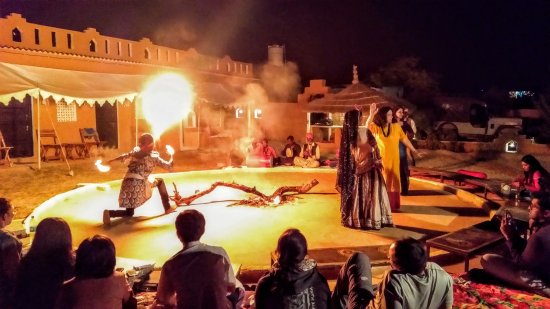
Desert camping is a fun way to experience the vast, sandy landscapes of the Thar Desert near Bikaner. Usually, the adventure starts with a camel or jeep safari that takes you deep into the golden sand dunes to watch a beautiful sunset. Once you arrive at the campsite, you are welcomed with traditional Rajasthani music and folk dances around a warm bonfire. Most camps provide comfortable “Swiss tents” that have real beds and attached bathrooms, so you get the feeling of camping without giving up modern comforts.
In the evening, you get to eat a delicious, authentic Rajasthani dinner under the open sky. Because the desert is away from city lights, the star-gazing at night is incredible, and the atmosphere is very peaceful and quiet. It is best to visit between October and March when the weather is cool, but remember to pack a jacket because the desert gets quite cold after the sun goes down.
3.Nagaur
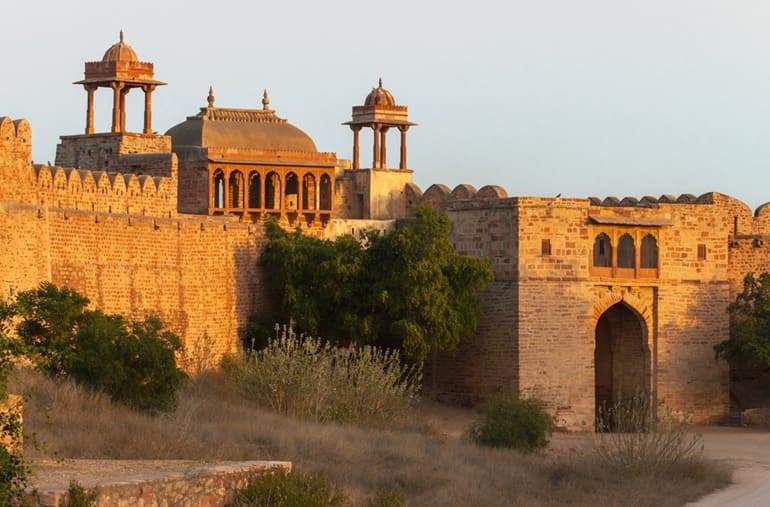
Nagaur is located right in the heart of Rajasthan, roughly halfway between Jodhpur and Bikaner. It is famous for its massive red sandstone fort called Ahichhatragarh (or Nagaur Fort), which is a masterpiece of Rajput-Mughal architecture and was one of the first Muslim strongholds in northern India. The city has a deep history reaching back to the Mahabharata era, when it was known as the capital of Jangladesh. Today, Nagaur is best known for hosting the Nagaur Cattle Fair, which is the second-largest animal fair in Rajasthan, drawing thousands of traders with camels, horses, and bullocks. Visitors also love the city for its beautiful marble from Makrana, its famous red chilies, and its peaceful Sufi heritage.
4.Khimsar
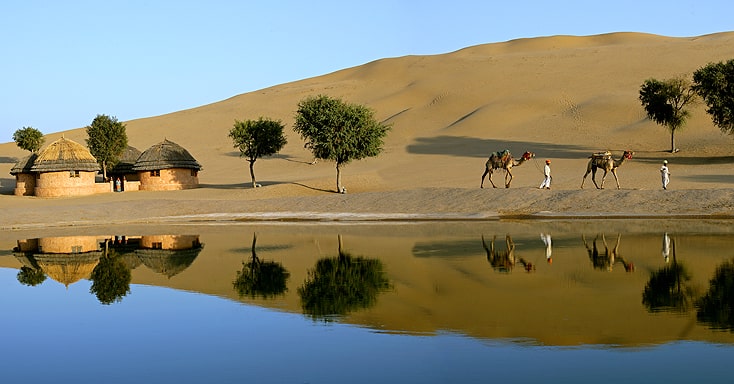
Khimsar is a picturesque, offbeat village in the Nagaur district of Rajasthan, positioned on the eastern edge of the Thar Desert between Jodhpur and Bikaner. Founded in 1523 by Rao Karamsji, it is most famous for the majestic Khimsar Fort, a 16th-century stronghold that remains the ancestral home of the royal family and has been partially converted into a world-class heritage hotel. Beyond its royal history, the village is celebrated for the Khimsar Sand Dunes Village, a tranquil desert oasis located about 6–8 km from the fort. This “village within a village” features eco-friendly thatched huts (dhanis) clustered around a man-made lake, accessible primarily by jeep or camel. Visitors flock here for authentic Rajasthani experiences, such as witnessing golden desert sunsets, taking jeep safaris to the Panchala Black Buck Reserve to spot rare wildlife like chinkaras and blue bulls, and attending the vibrant Nagaur Cattle Fair in the winter.
5.Khichan
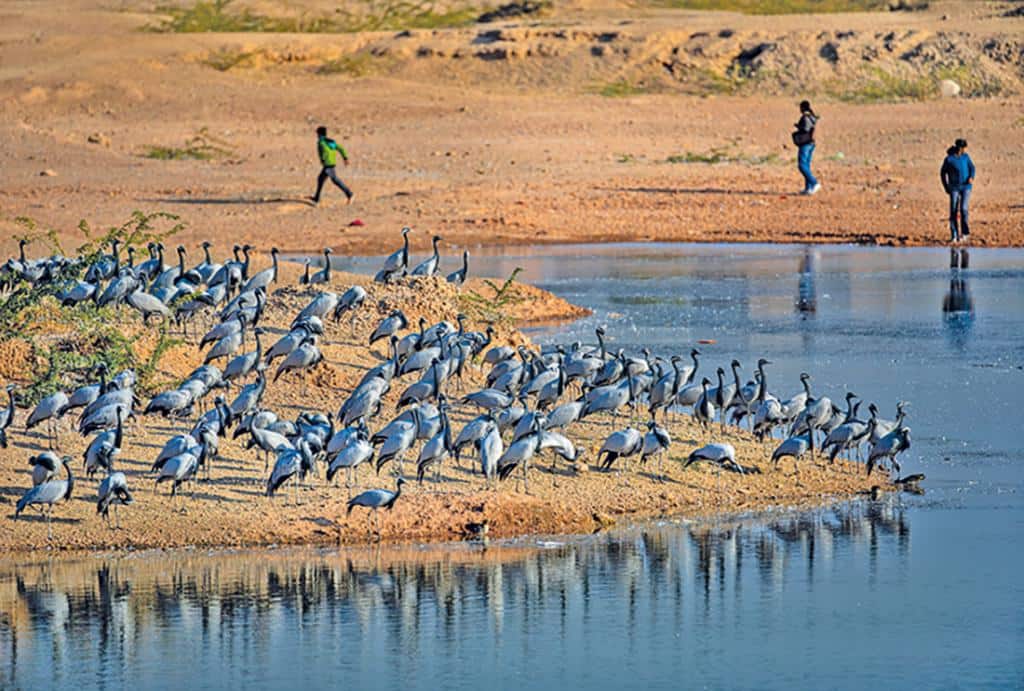
Khichan is a serene desert village in the Phalodi district of Rajasthan, world-renowned for its heartwarming and unique story of human-wildlife coexistence. Every winter, between August and March, this remote settlement becomes a temporary home to over 20,000 Demoiselle Cranes (locally called Kurja) that migrate thousands of kilometres from Mongolia and Central Asia to escape the harsh northern winters. What makes Khichan extraordinary is the local tradition of feeding these birds; villagers, primarily from the Jain and Rajpurohit communities, gather over 500 kilograms of grain daily to feed the cranes in a designated enclosure called the Chugga Ghar. This centuries-old legacy of compassion has earned the village global recognition, including its recent designation as a Ramsar Site in 2025 and the establishment of India’s first conservation reserve dedicated to the Demoiselle Crane. Visitors can witness a spectacular natural theatre at dawn and dusk as massive flocks of grey and black cranes fill the desert sky, gathering at the village ponds or performing their elegant, dance-like movements across the dunes.
6.Shekhawati
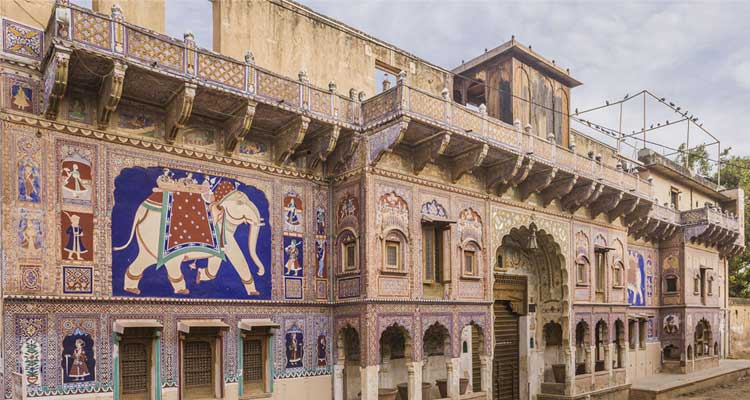
Shekhawati is a historic, semi-arid region in northeastern Rajasthan—comprising the districts of Sikar, Jhunjhunu, and Churu—that is famously celebrated as the “Open-Air Art Gallery of the World.” Once a major trading post on the Silk Route, it became home to wealthy Marwari merchants who expressed their success by building thousands of grand, multi-storey mansions called havelis. What makes this region truly unique is that almost every inch of these havelis—both inside and out—is covered in vibrant fresco paintings. These artworks range from traditional scenes of Hindu mythology (like the life of Lord Krishna) to surprising 19th-century depictions of modern inventions like steam engines, motorcars, and gramophones.
7.Pokharan Fort
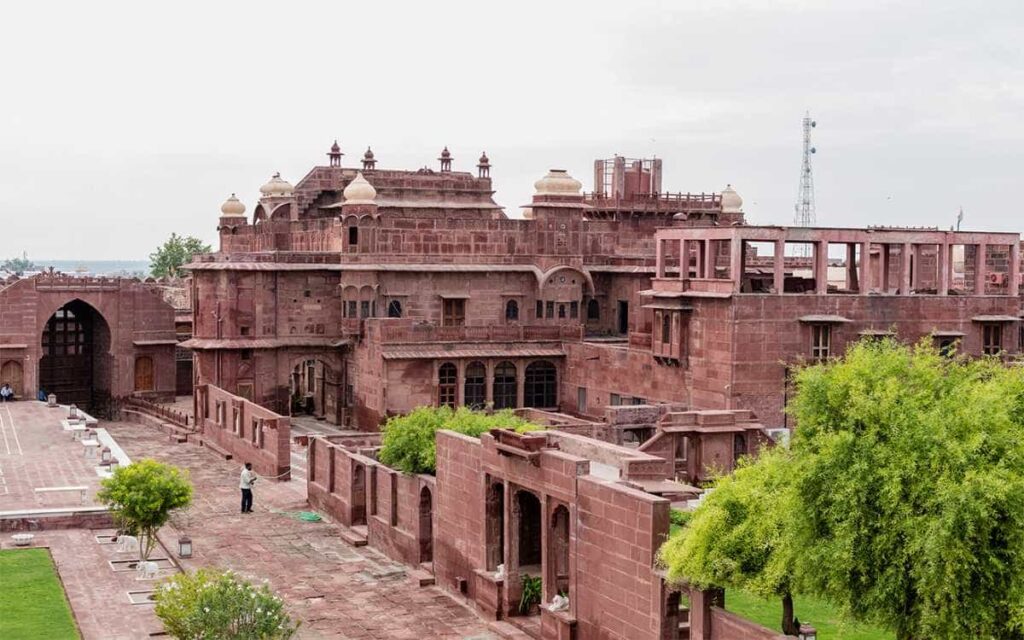
Pokhran Fort, also known as Balagarh, is a 14th-century citadel located in the heart of the Thar Desert, situated between Jodhpur and Jaisalmer. Built by the Marwar Thakur Rao Maldeo, the fort is constructed from distinct golden-yellow and red sandstone, showcasing the classic Rajput style of architecture. While it is a military stronghold with massive fortified walls and bastions, it is equally famous for its artistic interiors, particularly the Mangal Niwas (the coronation hall) and the beautiful balconies overlooking the desert landscape. Today, a significant part of the fort has been converted into a luxurious heritage hotel managed by the royal family, allowing guests to stay in authentic royal suites. The fort also houses a museum that displays a private collection of weapons, royal costumes, and traditional local crafts.
8.Sikar
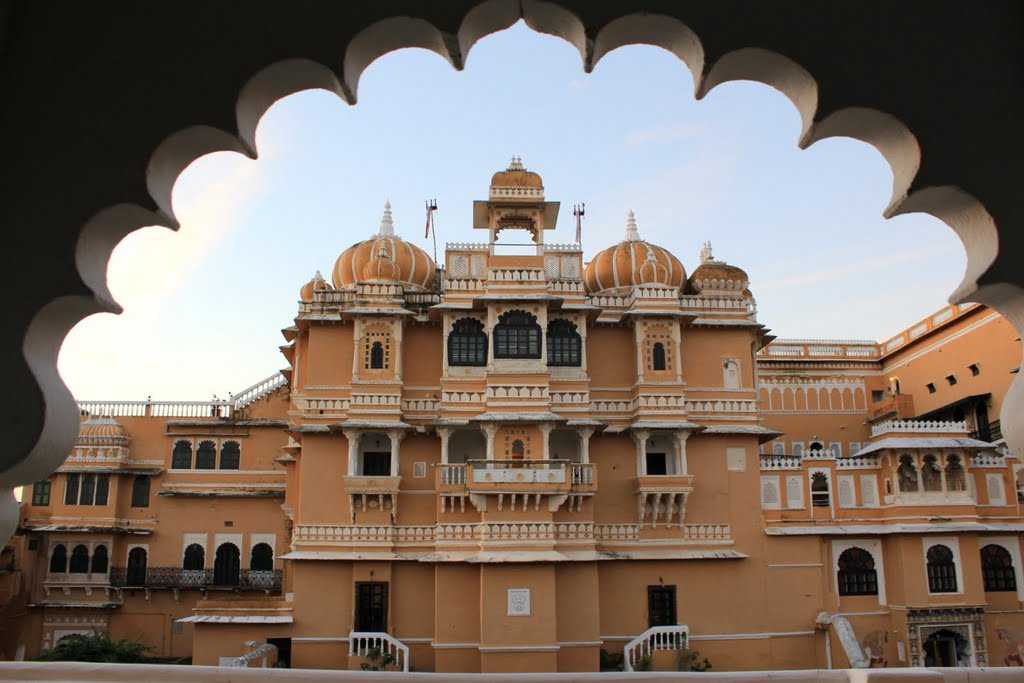
Sikar is a famous historical city in the Shekhawati region of Rajasthan, located about 115 km from Jaipur. It was once the largest estate under the Jaipur Kingdom and is known for its beautiful “Pols” (massive gates) that lead into the city. Today, it is a bustling hub that perfectly blends old-world charm with modern education and business. The city is world-renowned for its stunning painted havelis, where the walls are covered in colorful frescoes (paintings) that tell stories of ancient kings, gods, and even early inventions like trains and cars.
Beyond its art, Sikar is a major destination for spiritual travelers. It is home to the highly revered Khatu Shyam Ji Temple, which attracts millions of devotees every year. Nature and history lovers often visit Harshnath Temple, an ancient 10th-century site located on top of a high hill that offers a breathtaking view of the surrounding desert and mountains. Whether you are interested in exploring grand forts like Laxmangarh, shopping for traditional Rajasthani handicrafts in the local bazaars, or visiting peaceful temples, Sikar offers a true taste of Rajasthan’s royal and cultural heritage.
9.Sursagar Lake
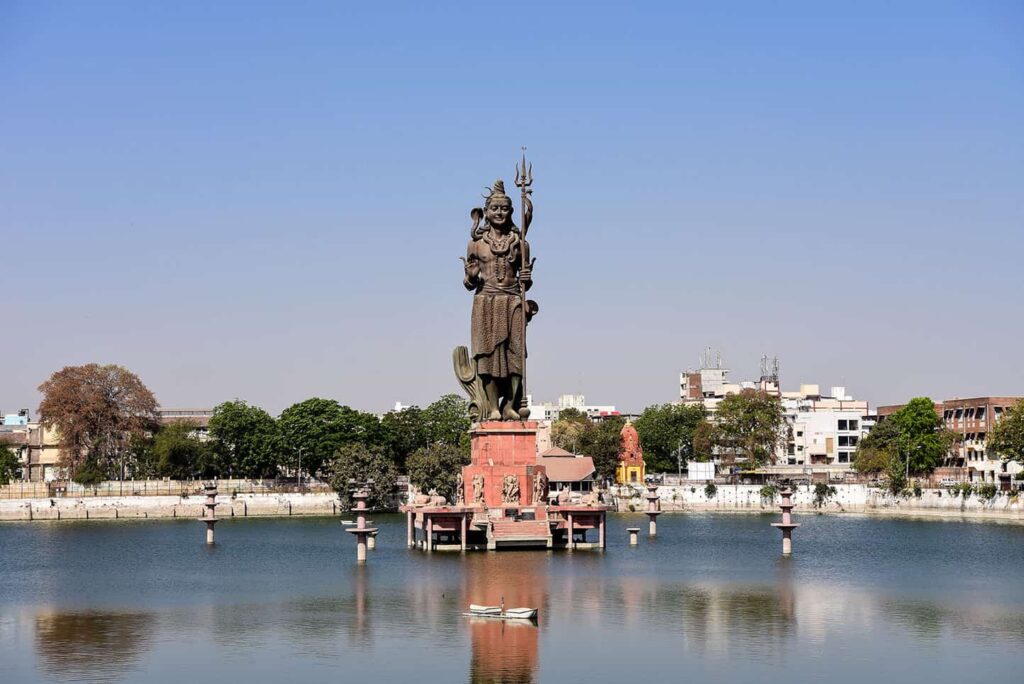
Sursagar Lake is a beautiful, man-made lake located right in front of the famous Junagarh Fort in Bikaner, Rajasthan. It was built in the 16th century by Maharaja Sur Singh to help solve the city’s water problems by collecting rainwater. Later, Maharaja Ganga Singh renovated it to make it stronger and more beautiful. Today, it is no longer used for drinking water but has become a popular hangout spot for locals and tourists. You can enjoy boating on the lake, take a walk along its paved edges, or simply sit and enjoy the view of the fort reflecting in the water, which looks especially stunning when lit up at night.
10.Prachina Museum
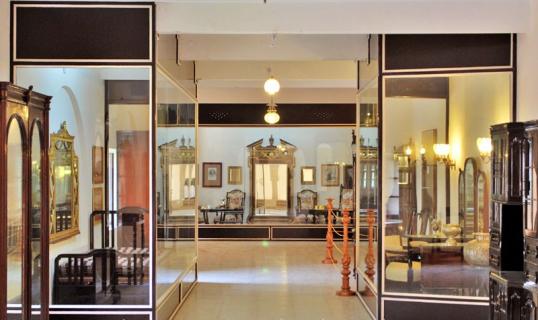
The Prachina Museum is a distinctive cultural centre located within the quiet corner of the Junagarh Fort complex in Bikaner, Rajasthan. Established in 2000 by Princess Siddhi Kumari (daughter of the late Maharaja Narendra Singhji), the museum serves as a “labour of love” to preserve and showcase the city’s unique monolithic identity and the refined lifestyle of its royal families. Unlike larger state museums, Prachina is housed in a former karkhana (royal workshop) and focuses heavily on the evolution of Bikaner’s culture, particularly the Western influence on the local royalty during the late 19th and early 20th centuries. Visitors can explore a rich collection of royal paraphernalia, including intricate Poshaks (traditional ladies’ costumes), aristocratic furniture, European wine glasses, and family portraits that narrate the story of changing cultural landscapes.
11.MG Road

MG Road (Mahatma Gandhi Road) in Bikaner is the city’s most vibrant and busiest commercial artery, serving as the primary hub for shopping, dining, and local business. It stretches through the heart of the city, connecting the modern residential areas with the historic old city gates. This bustling street is famous for its dense concentration of shops selling Bikaner’s legendary snacks, particularly Bikaneri Bhujia, papads, and traditional sweets like Rasgulla and Ghevar from iconic outlets like Haldiram’s and Bhikharam Chandmal. Beyond food, MG Road is a go-to destination for Rajasthani textiles, intricate jewelry, and leather goods made from camel hide. During the evenings, the road transforms into a lively social space where locals and tourists alike enjoy street food and the energetic atmosphere of the desert city.
12.Sadul Singh Museum
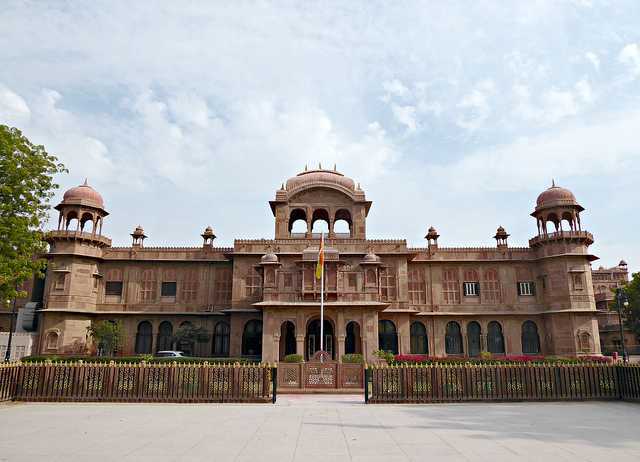
The Sadul Singh Museum (also known as Sri Sadul Museum) is a fascinating heritage site located on the first floor of the Lalgarh Palace in Bikaner, Rajasthan. Established in 1972 (some sources say 1976), the museum is a memorial dedicated to three successive, progressive kings of Bikaner: Maharaja Ganga Singh, Maharaja Sadul Singh, and Maharaja Karni Singh. Across more than 20 rooms, the museum provides a rare, intimate look at the royal lifestyle through an extensive collection of personal belongings, Georgian paintings, hunting trophies, and rare manuscripts. Unlike general history museums, this site focuses on the individual passions and administrative achievements of these rulers, showcasing everything from their medals and uniforms to their massive library books and rare miniature paintings.
13.Gajner Wildlife Sanctuary
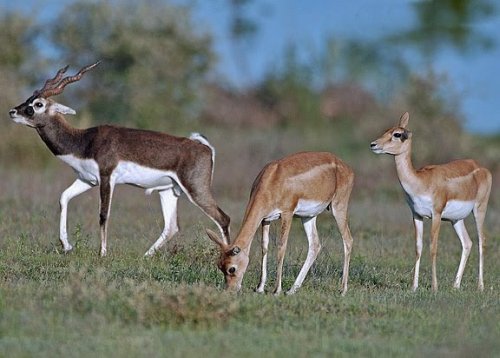
The Gajner Wildlife Sanctuary is a unique desert oasis located about 32 km from Bikaner, spread across the former private hunting grounds of the Maharajas. Unlike the sparse vegetation usually found in the Thar Desert, this sanctuary features lush greenery and a beautiful lake that serves as a vital lifeline for local wildlife. It is one of the best places in the region to spot animals like the Blackbuck, Nilgai (Blue Bull), Chinkara, and wild boar roaming freely. During the winter, the sanctuary becomes a birdwatcher’s paradise as thousands of migratory birds, including the rare Imperial Sandgrouse, settle around the lake.
14.Royal Cenotaphs, Devikund Sagar
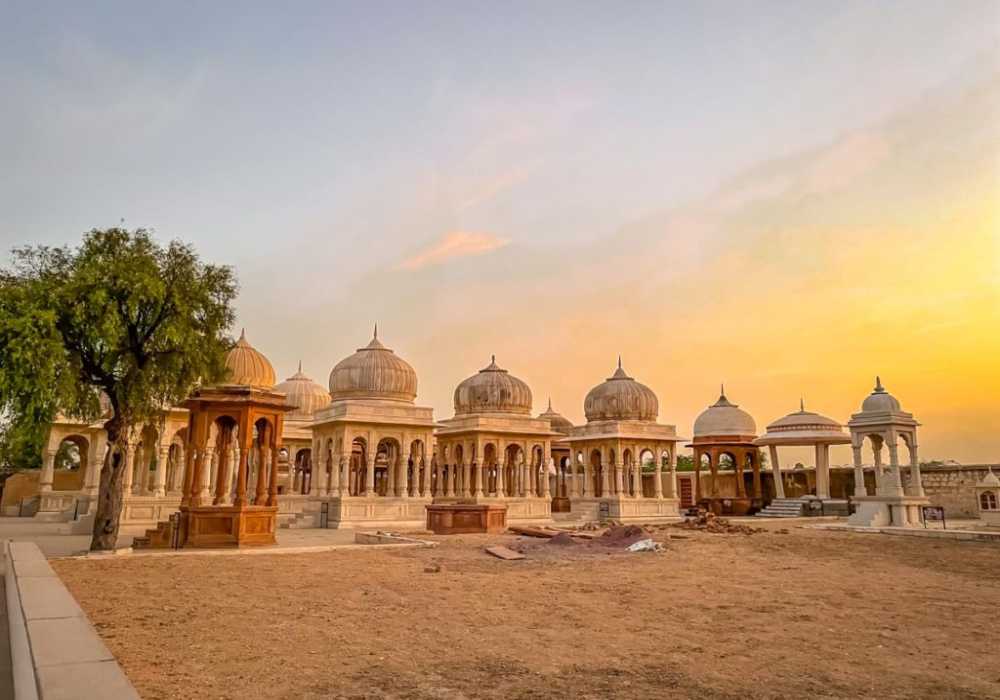
The Royal Cenotaphs at Devi Kund Sagar, located about 8 km from Bikaner, serve as the traditional cremation ground for the royal family of the Bikaner dynasty. This historic site is a stunning collection of Chhatris (dome-shaped pavilions) built in memory of the various Maharajas and Maharanis of the Rathore clan, starting from Rao Jet Singhji, the fourth ruler of Bikaner. The architecture of these cenotaphs tells a story of evolving styles; the earlier structures are made of red sandstone with traditional Rajput carvings, while the later ones, such as the grand cenotaph of Maharaja Surat Singh, are crafted from gleaming white marble.
15.Bikaner Camel Festival

The Bikaner Camel Festival is a vibrant two-day annual event held in January, organized by the Department of Tourism to celebrate the “Ship of the Desert.” The festival kicks off with a grand procession of beautifully decorated camels—adorned with colorful bridles, neckpieces, and bells—starting from the Junagarh Fort and moving toward the Dr. Karni Singh Stadium. This event showcases Bikaner’s deep-rooted camel culture through unique competitions, such as camel hair-cutting (where intricate patterns are shaved into the fur), camel dancing, and even a “best-decorated camel” contest. Beyond the animals, the festival is a massive cultural gala featuring Rajasthani folk music, spectacular fire dances, and traditional sports like tug-of-war. The nights conclude with a dazzling display of fireworks that light up the desert sky, making it one of the most photographed festivals in India.
16.Shri Laxminath Temple
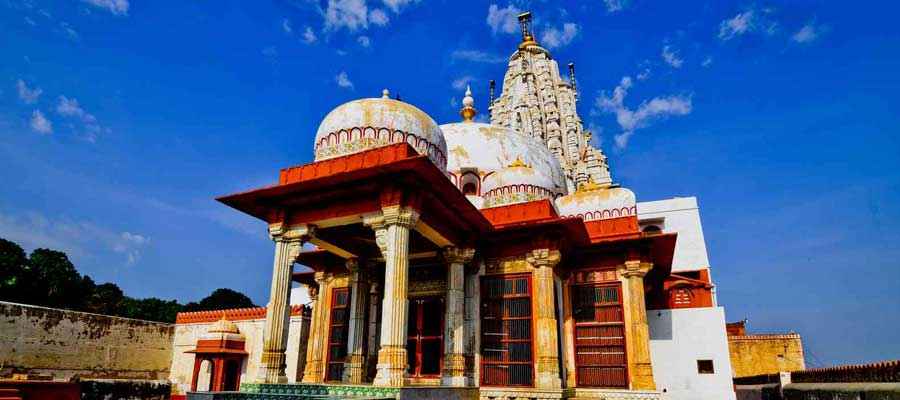
The Shri Laxminath Temple is one of the oldest and most historically significant temples in Bikaner, located near the Junagarh Fort. Built in the 14th century by Maharaja Lunkaran, it is dedicated to Lord Vishnu and his consort, Goddess Lakshmi. As the primary deity of the Bikaner royal family, Lord Laxminath is considered the true “ruler” of the city, with the Maharajas traditionally serving as his ministers. The temple is a masterpiece of Rajasthani architecture, constructed primarily of red sandstone and white marble, featuring a majestic silver-plated entrance and a sanctum adorned with intricate gold and silver artwork. It serves as the spiritual heart of the city, especially during festivals like Janmashtami, Diwali, and Nirjala Ekadashi, when the entire complex is beautifully illuminated and filled with thousands of devotees.
17.Rampuria Haveli
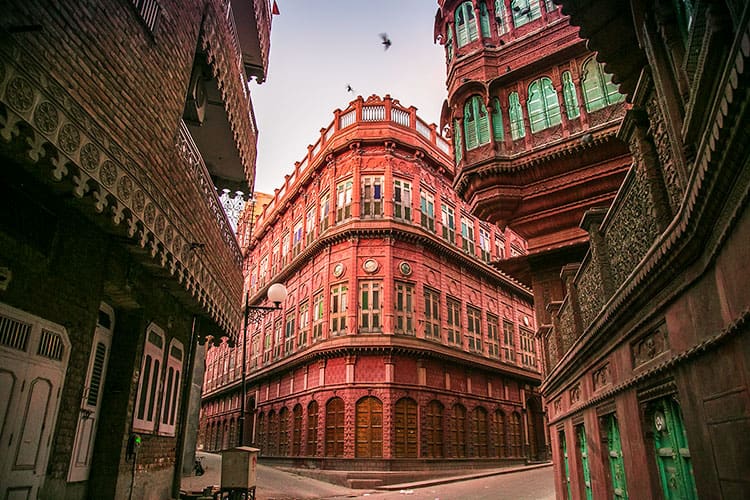
The Rampuria Haveli is often called the “Pride of Bikaner” because it is the most famous and beautiful group of merchant mansions in the city. Built more than 400 years ago by the wealthy Rampuria family, these massive houses are made entirely of red sandstone, which gives them a stunning, deep-purple glow. What makes them so special is the incredible stone carving on the walls—you will see delicate patterns that look like lace, but they are actually carved out of hard rock. These havelis are a perfect mix of Indian and European styles. While the outside looks like a traditional Rajasthani palace with overhanging balconies (jharokhas), the inside often features Victorian-style furniture, colourful glass windows, and grand paintings. Even though most of them are private homes or heritage hotels today, you can still walk through the narrow, winding lanes of the “Old City” to see them from the outside. They are especially popular with photographers during sunrise and sunset when the sunlight makes the red stone look even more magical.
18.Lallgarh Palace
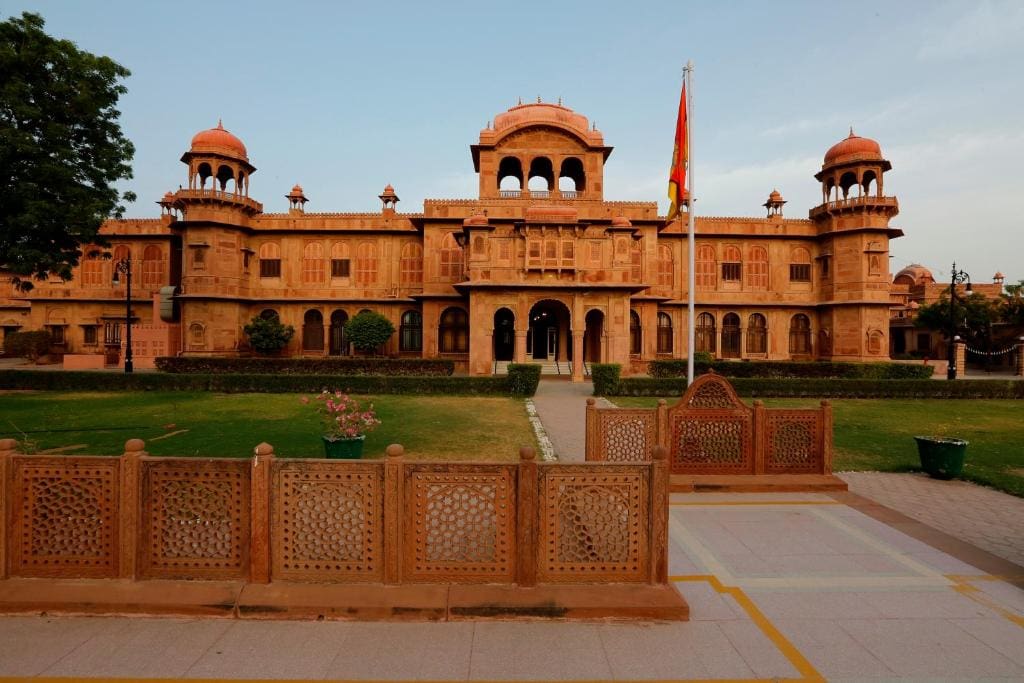
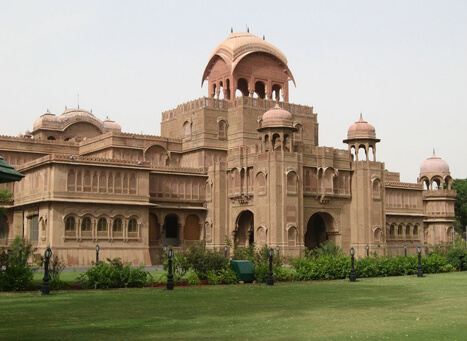
The Lallgarh Palace is a majestic red sandstone structure in Bikaner, commissioned between 1902 and 1926 by Maharaja Ganga Singh in memory of his father, Maharaja Lall Singh. Designed by the British architect Sir Samuel Swinton Jacob, it is a premier example of Indo-Saracenic architecture, masterfully blending Rajput, Mughal, and European styles. The palace’s exterior is renowned for its intricate stone carvings and delicate latticework that give the solid sandstone a lace-like appearance, while the interiors feature grand halls, marble floors, and British-inspired billiard and smoking rooms.
19.Gajner Palace

Gajner Palace is a stunning red sandstone architectural marvel situated on the banks of Gajner Lake, about 32 km from Bikaner. Often called an “oasis in the desert,” it was built by Maharaja Ganga Singh as a royal hunting lodge and a summer retreat to host grand parties for British dignitaries and Indian royalty. The palace is a masterpiece of craftsmanship, featuring intricate stone carvings, sprawling courtyards, and expansive jharokhas (balconies) that offer serene views of the water. Today, it has been converted into a world-class heritage hotel by HRH Group of Hotels, allowing guests to experience the opulence of the bygone era while surrounded by the dense forest of the Gajner Wildlife Sanctuary.
20.Karni Mata Temple

The Karni Mata Temple, located in Deshnoke (about 30 km from Bikaner), is world-famous as the “Temple of Rats.” It is dedicated to Karni Mata, a 14th-century mystic believed to be an incarnation of Goddess Durga. The temple is home to approximately 25,000 black rats, known as kabbas, which are considered sacred and are protected and fed by devotees. According to local legend, the rats are the reincarnated family members and followers of Karni Mata. It is considered extremely auspicious if a rat runs over your feet or if you spot one of the few white rats, which are believed to be the Goddess herself or her direct sons.
Architecturally, the temple is a beautiful structure featuring a grand facade of solid white marble and silver doors donated by Maharaja Ganga Singh. Despite the thousands of rats, the temple is remarkably clean, and there has never been an outbreak of disease reported here. Devotees travel from across the globe to offer milk and sweets to the rats, and eating food that has been nibbled on by them is seen as a high blessing. The temple is especially crowded during the Navratri festivals when thousands of pilgrims visit to seek the Goddess’s protection.
21.Junagarh Fort
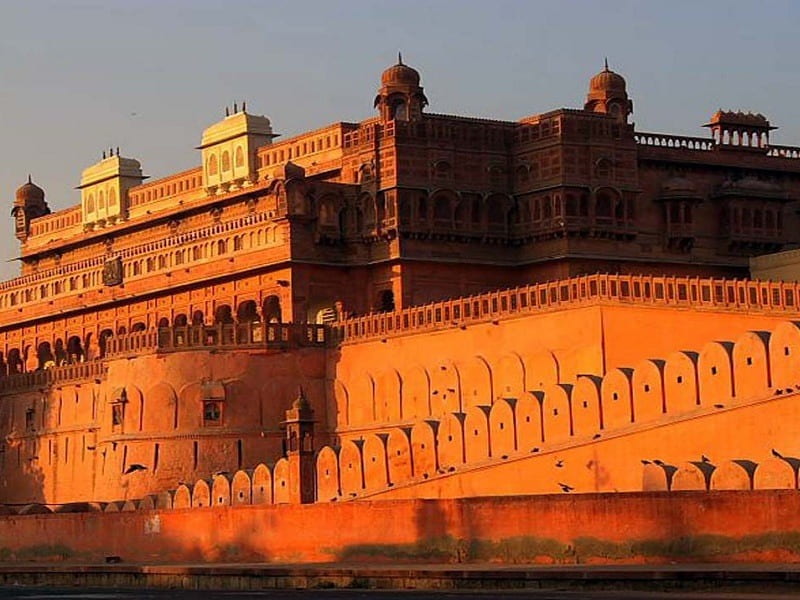
Junagarh Fort is one of the most impressive and well-preserved fortresses in India, uniquely built on the flat plains of Bikaner rather than a hilltop. Originally called Chintamani, it was built between 1589 and 1593 by Raja Rai Singh, a distinguished general in the army of Mughal Emperor Akbar. Constructed from vibrant red sandstone and marble, the fort is surrounded by a deep moat and features a 986-metre long wall with 37 massive bastions. It is famously known as an unconquered fort, having never been captured in its long history, except for a brief one-day occupation by a Mughal prince. Inside, the fort is a treasure trove of luxurious palaces, including the Anup Mahal with its gold-leaf walls, the Phool Mahal (Flower Palace) decorated with glass and mirrors, and the Ganga Mahal, which houses a real World War I.
22. National Research Centre on Camel
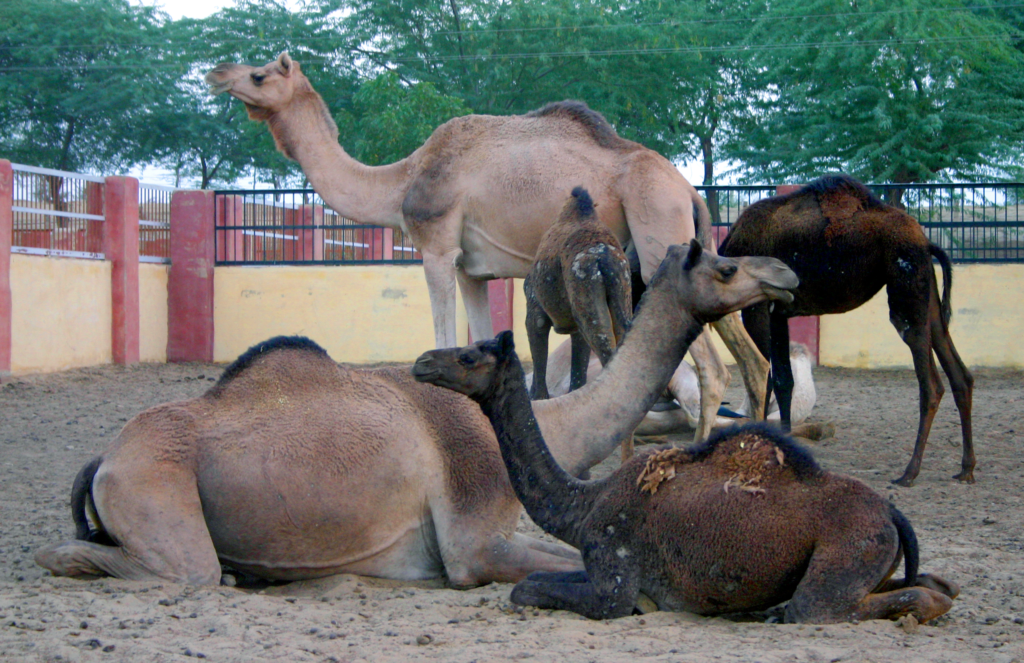
The National Research Centre on Camel in Bikaner is a one-of-a-kind place, often called the only camel research farm in Asia. Established in 1984, it spreads across a large desert area and is home to hundreds of camels of different breeds, like the Bikaneri, Jaisalmeri, and Kachchhi. The centre is famous because it isn’t just a farm; it’s a place where scientists study how camels live and how their milk can help humans. For tourists, it is an exciting place to visit in the afternoon. You can see baby camels playing, watch the herd come back from the desert at sunset, and even enjoy a camel ride. The biggest highlight for many is the Camel Milk Parlour, where you can try unique treats like camel milk lassi, coffee, and even camel milk ice cream, which is known for being very healthy. There is also a small museum that explains the history of camels in Rajasthan and how they became the “Ship of the Desert.”
23. Seth Bhandasar Jain Temple
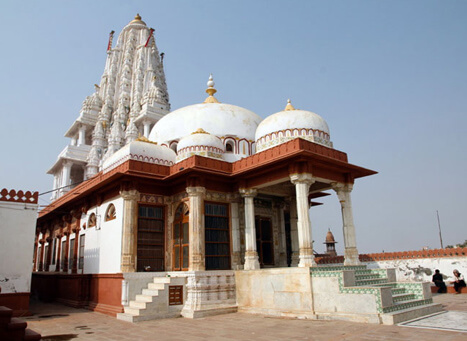
The Seth Bhandasar Jain Temple is a 15th-century architectural masterpiece in Bikaner, famous for its incredible beauty and a legendary story about its construction. Dedicated to the 5th Jain Tirthankara, Lord Sumatinath, it was built by a wealthy merchant named Bhandasa Oswal. The most fascinating legend is that the foundation of the temple was made using 40,000 kilograms of desi ghee (clarified butter) instead of water; locals claim that even today, the floors become oily and give off a faint smell of ghee during the hot summer months.
Architecturally, the temple is a three-storey wonder made of red sandstone and white marble. It is world-renowned for its stunning interior frescoes, gold leaf work, and mirror mosaics that cover the walls and ceilings. From the top floor, visitors are rewarded with a breathtaking panoramic view of the Bikaner old city. The intricate carvings of dancing damsels and floral patterns make it one of the most artistic Jain temples in India, often compared to the famous Dilwara Temples of Mount Abu.