


Bhuj is the vibrant and historic capital of the Kutch district in Gujarat. It is renowned for its deep cultural roots and the immense resilience demonstrated by its people in the aftermath of the 2001 earthquake. Often regarded as the gateway to the world-famous ‘White Desert’ (the Rann of Kutch), the city itself is a treasure trove of heritage. It is home to magnificent structures such as the ‘Aina Mahal’ (Palace of Mirrors) and the grand ‘Prag Mahal’. Visitors to the city enjoy strolling through its colorful markets and shopping for famous Kutchi handicrafts, such as ‘Bandhani’ tie-dye textiles and intricate embroidery. The city is built around the serene ‘Hamirsar Lake’ and is watched over by the historic ‘Bhujia Fort’, perched atop a nearby hill. With delicious local delicacies like ‘Kutchi Dabeli’ and its warm, friendly atmosphere, Bhuj offers an authentic and unadulterated glimpse into the soul of Gujarat.
Bhuj is considered one of the safest and most hospitable destinations for travelers in India. The city is known for its peaceful community, low crime rate, and deep-rooted culture of hospitality, where locals often go out of their way to assist visitors. Bhuj is particularly safe for solo travelers and women; its streets remain bustling until late in the evening, and the local environment is characterized by respect and a family-oriented ethos. As a strategic gateway situated near the international border, Bhuj features a visible and highly disciplined presence of police and military forces, which further reinforces the sense of security throughout the entire Kutch district.
Most Famous And Attractive Tourist Places In Bhuj :
1.The Aaina Mahal

The Aaina Mahal, or the “Palace of Mirrors,” is a magnificent 18th-century royal residence located within the Darbargadh walled complex in Bhuj, Gujarat. Built around 1750 during the reign of Maharao Lakhpatji, the palace is a rare and spectacular fusion of Indian and European architectural styles. It was designed by the legendary master craftsman Ram Singh Malam, who spent 17 years in the Netherlands mastering European arts such as glassmaking, clock-making, and tile-work before returning to Kutch to create this masterpiece. The interiors are a lavish display of Venetian glass, intricate mirrors, and gilded ornaments, featuring a famous Fuvara Mahal (Hall of Fountains) where water once circulated around the king’s platform to keep the room cool. Despite suffering significant damage during the 2001 earthquake, the lower floor has been meticulously restored as a museum, showcasing royal artefacts, an ivory door, and a solid gold-legged bed.
2. Kutch Museum

The Kutch Museum, located in Bhuj, holds the distinction of being the oldest museum in Gujarat, established in 1877 by Maharao Khengarji III of the Kutch State. Originally founded as a part of the School of Arts and known as the Fergusson Museum, the current two-story structure was built in 1884 to display the Maharao’s vast collection of wedding gifts and is celebrated for its striking Italian Gothic architecture. The museum is divided into 11 specialized galleries, including sections for archaeology, anthropology, textiles, weapons, and shipping. One of its most prized exhibits is the “Airavat,” a magnificently carved 18th-century wooden white elephant with seven tusks, which was even commemorated on an Indian postal stamp in 1978. Additionally, the museum houses the largest existing collection of Kshatrapa inscriptions dating back to the 1st century CE, examples of the now-extinct Kutchi script, and a comprehensive numismatic collection featuring local “Kori” coins used until 1948.
3. Shree Swaminarayan Temple
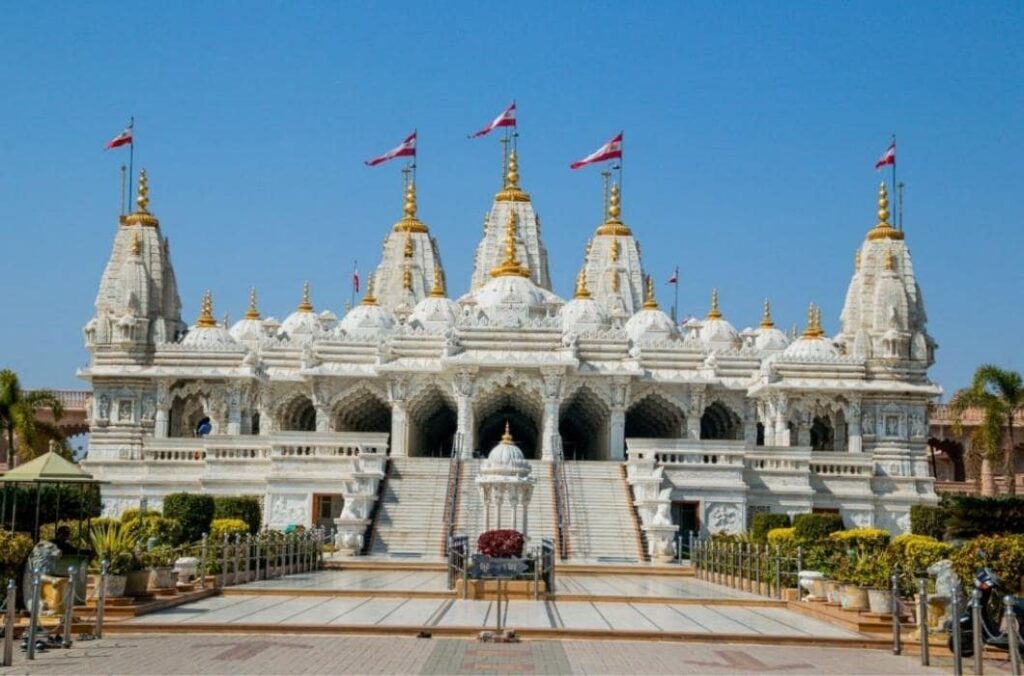
Shree Swaminarayan Mandir in Bhuj is a majestic spiritual landmark and architectural masterpiece, originally established in May 1823 by Swaminarayan himself, making it one of the earliest and most significant temples of the Swaminarayan Sampraday. While the original structure was severely damaged during the devastating 2001 Bhuj earthquake, the divine idols inside miraculously remained unharmed. The current temple, a grand reconstruction inaugurated in 2010, is a breathtaking vision of pure white Makrana and Ambaji marble adorned with shimmering gold. Spread over five acres, the structure features seven towering pinnacles (shikhars), 25 minor domes, and 258 intricately carved pillars depicting various deities and sacred motifs. Notably, the temple was built according to ancient Hindu shastras without the use of steel or iron, relying entirely on traditional craftsmanship. It serves as a vibrant cultural hub, housing the main deities Nar-Narayan Dev and Hari-Krishna Maharaj, and even offers modern spiritual education through a captivating 3D film on the life of Lord Swaminarayan.
4.Hamirsar Lake
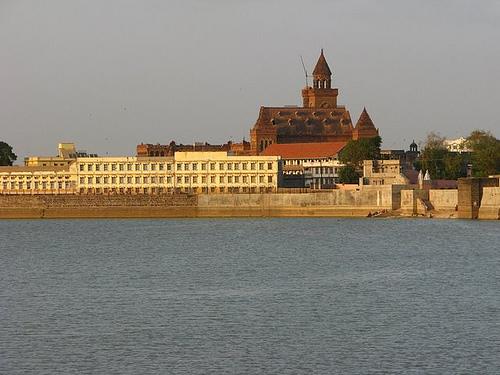
Hamirsar Lake is a 450-year-old man-made lake that serves as the “heart” and primary lifeline of Bhuj, Gujarat. Named after Rao Hamir, the founder of the Jadeja dynasty, this sprawling 28-acre lake was designed as a sophisticated water management system to store rainwater and recharge the town’s groundwater in an otherwise arid region. The lake is more than just a water body; it is a cultural landmark where locals gather on its circular walking path, surrounded by significant historical sites like the Aina Mahal, Prag Mahal, and the Kutch Museum. A unique tradition involves the “Laddu” ceremony: when the lake overflows during a good monsoon, it is a cause for town-wide celebration, and the King of Kutch (or currently the local government) offers a special “Megh Laddu” to the water as a gesture of thanksgiving. Despite suffering damage during the 2001 earthquake, the lake and its surrounding gardens, like Sharad Bagh, were beautifully restored, maintaining its status as a serene spot for bird watching, evening strolls, and witnessing the vibrant local life of Kutch.
5. Hill Garden
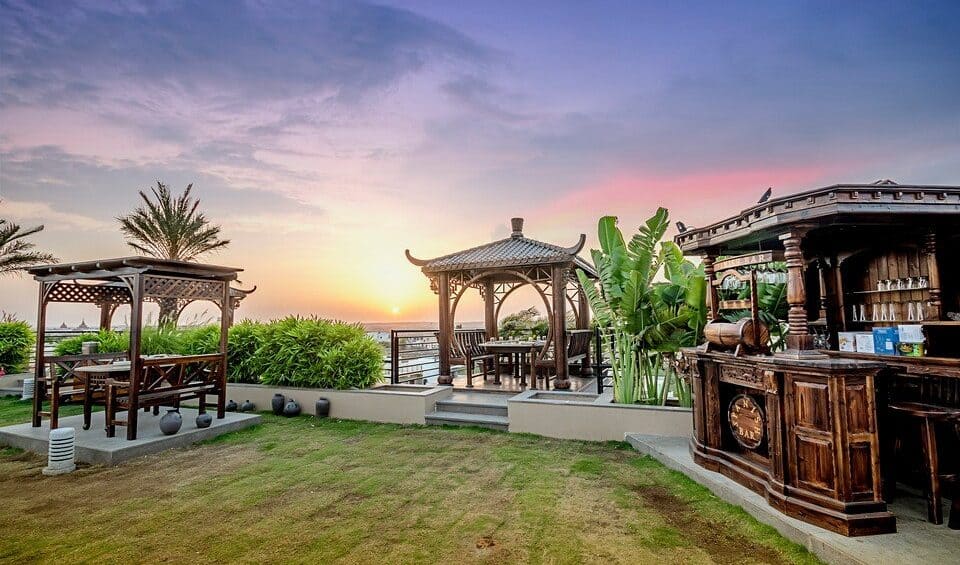
Hill Garden in Bhuj is a multi-faceted hilltop recreational space and amusement park spanning approximately 22 acres, designed to provide a serene escape and entertainment for both locals and tourists. Developed under a Public Private Partnership (PPP) model initiated by the Bhuj Area Development Authority (BHADA) and managed by the Rotary Club of Bhuj, the garden was conceptualised to bring positivity to the region following the 2001 earthquake. Its elevated location on the Airport Ring Road offers a panoramic view of the entire Bhuj city and the nearby Trimandir, making it a popular spot for watching sunsets. One of its most unique and famous attractions is the 85-foot-long skeleton of a Blue Whale, which was found at the Diu seashore and has been preserved in a dedicated pavilion.
6. Bhuj Haat Market

Bhuj Haat is a vibrant, government-supported traditional craft village and marketplace designed to promote the exquisite handiwork of Kutch’s rural artisans. Built in a style that mimics a traditional village layout with circular Bhungas (mud huts) and brick-paved pathways, it provides a dedicated space where local craftsmen can sell their products directly to tourists without middlemen. The market is a treasure trove for authentic Kutchi handicrafts, featuring world-famous items like Ajrakh block prints, intricate Bandhani tie-dye, copper bells, leather goods, and various styles of local embroidery such as Rabari and Ahir. Beyond shopping, Bhuj Haat serves as a cultural centre, often hosting live folk music performances and traditional dance during peak tourist seasons. Located conveniently near the Town Hall, it offers a more organized and peaceful shopping experience compared to the narrow, bustling lanes of the main Bhuj city market.
Beyond the main museum, the complex is home to the Hira Laxmi Memorial Craft Park, which provides a platform for local artisans to showcase and sell world-famous Kutchi handicrafts like embroidery and woodcarving. The sprawling campus also features beautifully manicured gardens, a massive national flag, and a popular Light and Sound show held in the evenings that narrates the history of the Indian flag and the song ‘Vande Mataram.’ It is a must-visit destination for families and history enthusiasts, offering a rare combination of educational storytelling and architectural beauty.
7. Vande Mataram Memorial
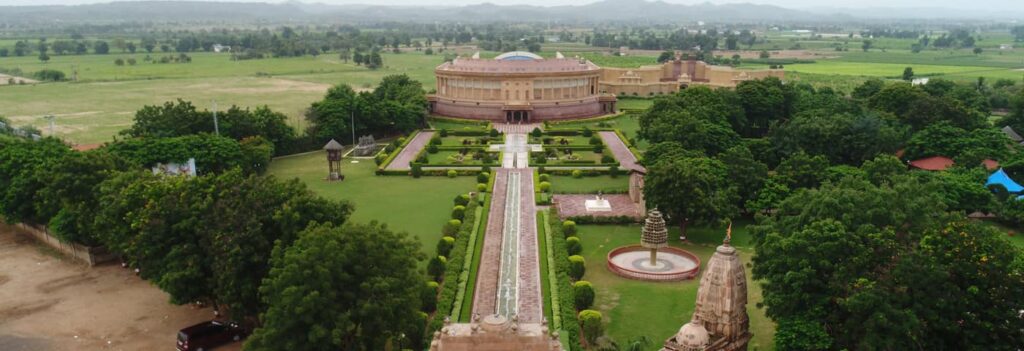
The Vande Mataram Memorial, located in Bhujodi near Bhuj, is a unique national monument and India’s first 4D museum dedicated to the Indian Independence movement. Managed by the Ashapura Foundation, the memorial’s primary structure is a stunning, full-scale replica of the Sansad Bhavan (Parliament House) in New Delhi, built to honor the journey of India’s freedom fighters. The museum uses state-of-the-art technology, including animatronics, 3D mapping, and immersive light and sound, to guide visitors through 17 pivotal episodes of history—from the 1857 uprising to the 1947 independence. This 12-acre complex also houses the Hira Laxmi Memorial Craft Park, where local Kutchi artisans demonstrate and sell traditional crafts, ensuring that the site celebrates both India’s political history and its rich cultural heritage.
8. Hiralaxmi Memorial Craft Park
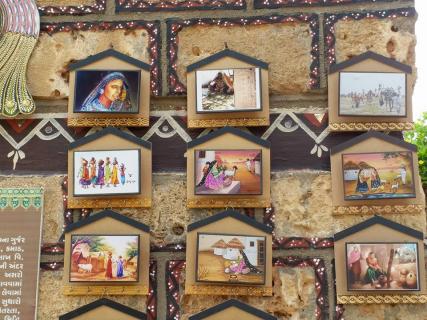
The Hiralaxmi Memorial Craft Park, situated in Bhujodi village near Bhuj, is a unique non-profit initiative established by the Ashapura Foundation to preserve and promote the traditional arts of Kutch. Spanning 10 acres, the park serves as a sustainable platform for local artisans, providing them with a well-organized space to demonstrate their skills and sell their products directly to visitors without any middlemen or commissions. The park is aesthetically designed to resemble a rural village, featuring paved walkways and traditional-style stalls that showcase the incredible diversity of Kutchi heritage, including Ajrakh block printing, Mashru weaving, wood carving, and the world-renowned Bhujodi handloom weaving.
Beyond its role as a marketplace, the park is an educational hub where tourists can witness live demonstrations of intricate craft techniques, fostering a deeper appreciation for the time-intensive labor involved. The complex is beautifully landscaped and features a grand Radha-Krishna temple at its center, along with a library and a cafeteria serving local refreshments. Because it is located on the same campus as the Vande Mataram Memorial, it has become a major cultural destination that successfully blends patriotic history with the living traditions of the Kutchi people.
9. The White Desert
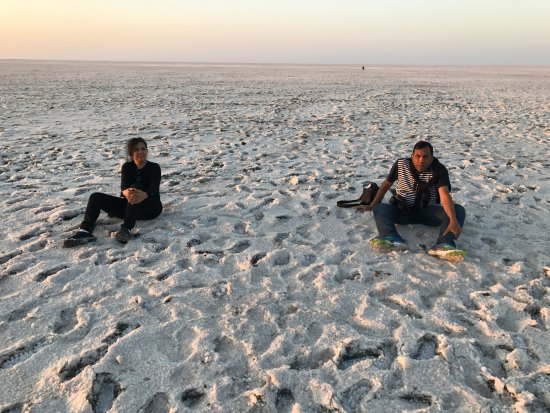
The White Desert, also known as the Great Rann of Kutch in Gujarat, is one of the largest salt deserts in the world, stretching across approximately 7,500 square kilometres. This seasonal salt marsh is submerged under seawater during the monsoon months, but as the water evaporates toward winter, it leaves behind a thick, dazzling crust of pure white salt crystals that resemble a vast field of snow. The landscape is famously flat and ethereal, reaching its peak beauty during full moon nights when the moonlight reflects off the salt, creating a surreal, glowing silver horizon. The region comes alive between November and February during the Rann Utsav, a cultural festival where a massive “Tent City” is erected near the village of Dhordo. Visitors can experience the local Kutchi culture through traditional folk music, dance, and intricate handicrafts like Ajrakh block printing and Rogan art. Beyond the salt flats, the area is home to the Kala Dungar (Black Hill), which offers a panoramic view of the entire Rann, and the ancient ruins of Dholavira, a significant Harappan excavation site. Because of its proximity to the international border, the White Desert is a high-security zone requiring a permit to visit, adding to its sense of being a remote, otherworldly destination.
10. Prag Mahal
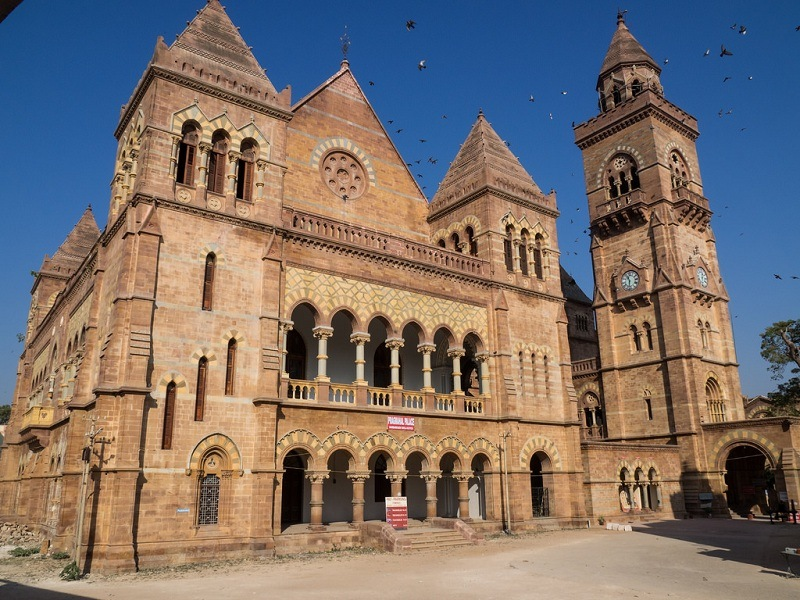
Prag Mahal, located in the heart of Bhuj, Gujarat, is a magnificent 19th-century palace renowned for its unique Italian Gothic architecture. Commissioned in 1865 by Maharao Pragmalji II and designed by British architect Colonel Henry Saint Wilkins, the palace was constructed using local red sandstone and Italian marble, with artisans famously being paid in gold coins for their intricate craftsmanship. Its most striking feature is a 150-foot tall clock tower that offers panoramic views of Bhuj city; visitors can climb its narrow spiral staircase to see the hourly gong system and the surrounding landscape. Inside, the grand Durbar Hall showcases a blend of European and Indian influences, featuring Corinthian pillars, sparkling chandeliers, gold-skirted statues, and a collection of royal taxidermy. Although the palace suffered significant damage during the devastating 2001 earthquake, it remains a major cultural landmark and has served as a filming location for several Bollywood blockbusters, including Lagaan and Hum Dil De Chuke Sanam.