

Situated at the western tip of Gujarat’s Saurashtra peninsula, Dwarka is one of India’s most sacred and ancient cities, renowned as the “Kingdom of Lord Krishna.” In Hinduism, it holds the unique distinction of being one of the ‘Char Dham’ pilgrimage sites and one of the seven holy cities (Sapt Puri). The city’s greatest attraction is the Dwarkadhish Temple—a magnificent five-story structure constructed from limestone and sandstone. It is believed that this temple was originally built by Vajranabha, the great-grandson of Lord Krishna, on the very spot where the Lord’s actual palace once stood. The city is steeped in mystery; local legends and modern underwater archaeological evidence suggest that an ancient and far more magnificent incarnation of this city sank beneath the Arabian Sea thousands of years ago, following Lord Krishna’s departure from Earth.
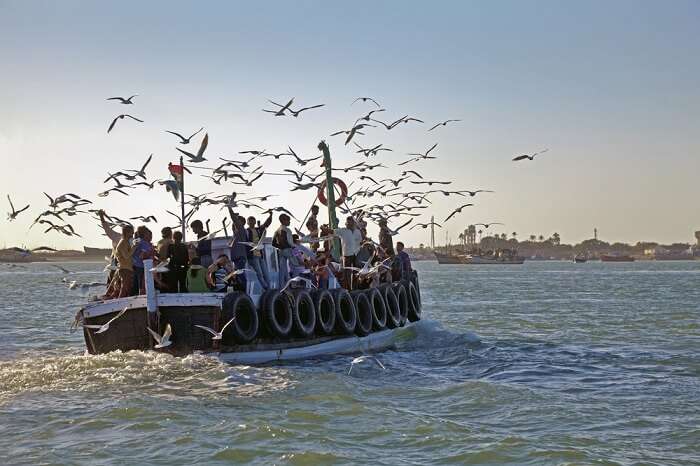
Even today, it remains a bustling spiritual hub where pilgrims gather to take a holy dip at the Gomti Ghat, stroll across the picturesque Sudama Setu bridge, or take a boat (ferry) to Bet Dwarka—an island believed to be the actual abode of Lord Krishna. Dwarka is considered a very safe and peaceful destination for travelers. As a major spiritual center, the city offers a welcoming atmosphere; the local community is renowned for its hospitality and deep reverence for pilgrims. The state of Gujarat is often regarded as one of India’s safest states—for all types of visitors, including women traveling alone—a distinction attributed to its very low crime rate and significant police presence, particularly in crowded areas such as the Dwarkadhish Temple complex. Tourism serves as the primary source of revenue here, supporting thousands of local businesses—such as hotels, guesthouses, and restaurants—that cater to the needs of the millions of devotees who visit the city each year.
Most Famous And Attractive Tourist Places In Dwarka :
1. Dwarkadheesh Temple
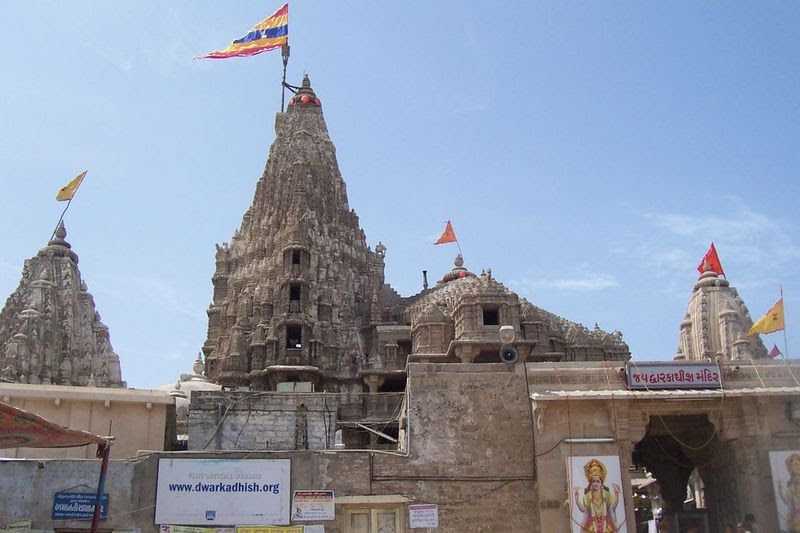
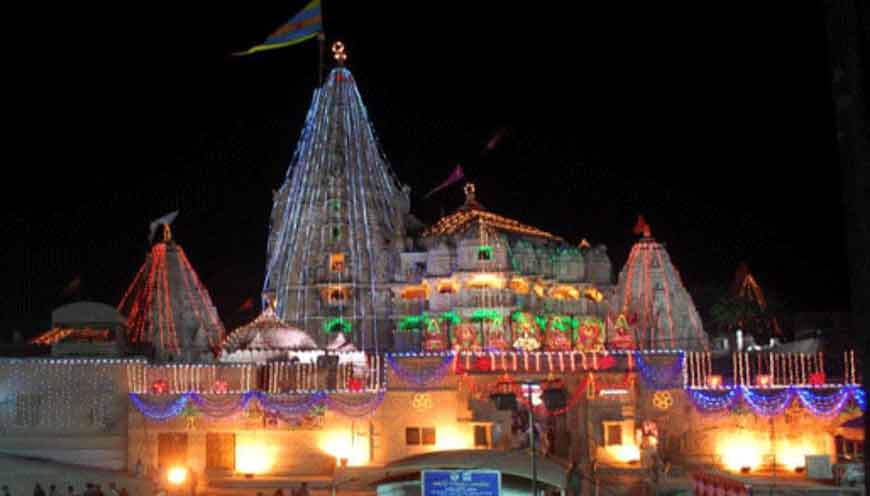
The Dwarkadhish Temple, famously known as Jagat Mandir (Universal Shrine), is a majestic 2,500-year-old Hindu temple in Dwarka, Gujarat, dedicated to Lord Krishna in his role as the “King of Dwarka”. As a cornerstone of the Char Dham pilgrimage circuit and one of the seven holiest cities (Sapta Puris) in India, it holds immense spiritual significance, with its current five-story limestone structure primarily dating back to the 16th century following historical reconstructions. The temple’s architecture is a marvel of the Chaulkyan style, featuring an intricately carved 78-metre-high spire supported by 72 pillars and crowned by a massive 52-yard flag that depicts the sun and moon, symbolising Krishna’s eternal presence. Situated at the confluence of the Gomti River and the Arabian Sea, the complex is accessed via the Swarga Dwara (Gate to Heaven) after climbing 56 steps from the riverbank, and features a striking four-armed idol of Krishna sculpted from black marble. Beyond its physical grandeur, the temple is home to the Sharada Peeth, one of the four cardinal monasteries established by Adi Shankaracharya in the 8th century, making it a vital centre for Hindu theology and devotion.
2. Nageshwar Jyotirlinga

The Nageshwar Jyotirlinga, situated on the coast of Saurashtra between Dwarka city and Beyt Dwarka Island, is revered as one of the twelve self-existent (swayambhu) Jyotirlingas in the world and is often considered the first of its kind according to the Shiva Purana. Known as the “Lord of Serpents,” the temple is located in an area historically called Darukavana (the forest of Daruka), where, according to legend, Lord Shiva vanquished the demon Daruka to protect his devotee Supriya. The temple complex is most famous for its towering 25-metre (approx. 80-foot) tall statue of a seated Lord Shiva that dominates the skyline and can be seen from a distance. Inside, the sacred Jyotirlinga is enshrined in an underground sanctum, and unusually for Shiva temples, the Shivalinga faces South. Devotees believe that worshipping here provides protection from all forms of “poison,” including physical toxins and spiritual negativity. The modern structure, which includes a large hall and a serene garden with a pond, was significantly renovated through the efforts of Late Gulshan Kumar and remains a vital spiritual stop for pilgrims visiting the Dwarka region.
3. Beyt Dwarka: The Abode Of Krishna
Beyt Dwarka, also known as Shankhodhar, is a sacred island situated in the Gulf of Kutch, approximately 30 km from the main city of Dwarka. Revered as the actual residence of Lord Krishna, it is believed to be the place where he lived with his family and queens during his reign. The island’s name, derived from the word ‘bet’ meaning ‘gift’, commemorates the legendary meeting where Krishna’s childhood friend Sudama presented him with a humble offering of parched rice. The main Dwarkadhish Temple on the island is a 500-year-old structure believed to have been established by Vallabhacharya over the site of Krishna’s original palace. Unlike the administrative hub of mainland Dwarka, Beyt Dwarka is considered a more personal, domestic abode. Beyond its spiritual significance, the island is an archaeological treasure trove, with underwater excavations revealing Harappan-era ruins that suggest the ancient city was partially submerged thousands of years ago.
4. Rukshmani Devi Temple: An Architectural Masterpiece
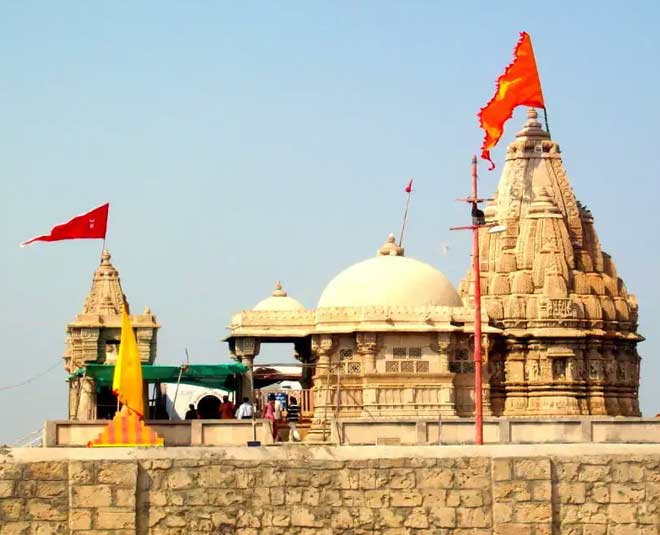
The Rukmini Devi Temple, located about 2 km from the Dwarkadhish Temple, is a 12th-century architectural masterpiece dedicated to Lord Krishna’s chief queen and an incarnation of Goddess Lakshmi. Built in the Nagara style, the temple is renowned for its artistic richness, featuring a tall vertical spire (Shikhara) and exterior walls covered in intricate carvings of gods, goddesses, and celestial beings. A distinctive feature of its design is the base of the tower, which is adorned with panels depicting naratharas (human figures) and gajatharas (elephants). Inside the sanctum, a beautiful marble idol of Rukmini Devi is housed, depicting her with four hands holding a Shanka, Chakra, Gada, and Padma. The temple’s physical separation from Krishna’s main shrine is rooted in a famous legend: while pulling a chariot for the short-tempered Sage Durvasa, Rukmini drank water provided by Krishna to quench her thirst without first offering it to the sage. Offended, Durvasa cursed the couple to live apart, which is why her temple stands on the outskirts of the city. A unique tradition here is Jal Daan, where devotees are encouraged to donate water, symbolizing the very act that led to the curse.
5. Gomti Ghat
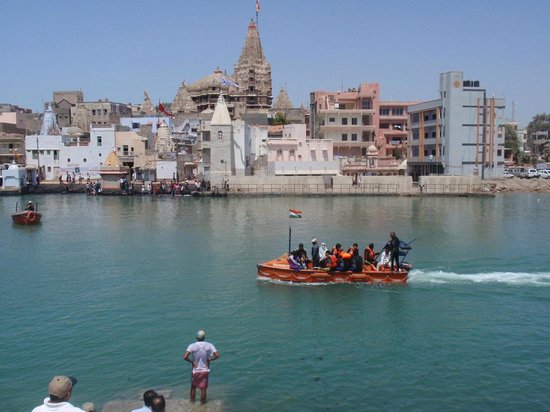
The Gomti Ghat is a sacred riverside area located at the mouth of the Gomti River, right where it meets the Arabian Sea in Dwarka. Considered a spiritual gateway, it is the primary spot where pilgrims take a holy dip to “cleanse their souls” before entering the main Dwarkadhish Temple. The ghat is steeped in mythology; the river is believed to be the daughter of Sage Vashistha and a celestial tributary of the Ganges that descended to Earth to purify Lord Rama. The riverbank is lined with numerous shrines dedicated to various deities, including Gomti Mataji, Lord Shiva, Lord Rama, and Krishna’s friend Sudama. Architecturally, the ghat features broad stone steps leading into the water, and its spiritual ambiance is enhanced during the evening Gomti Aarti, when the river lights up with floating lamps. Visitors can also enjoy panoramic views of the city by hiring a boat or crossing the Sudama Setu bridge, which connects the ghat to Panchkui Island.
6. Bhadkeshwar Mahadev Temple: For Peace And Tranquility
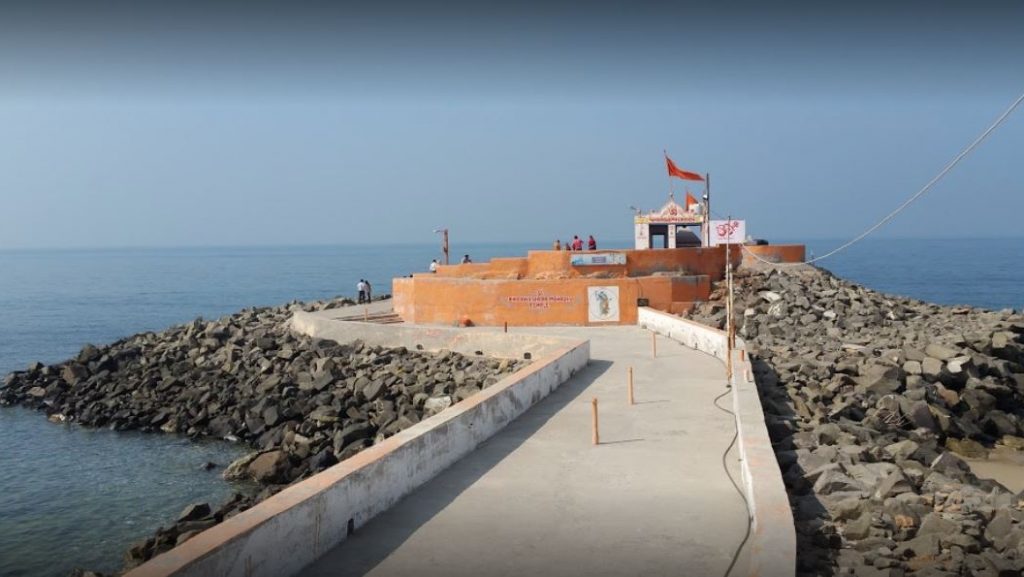
The Bhadkeshwar Mahadev Temple is a serene sanctuary dedicated to Lord Shiva, located on a small hillock jutting into the Arabian Sea at the western edge of Dwarka. Known for its profound peace and tranquility, the temple enshrines a Swayambhu (self-manifested) Shivalinga that was reportedly discovered at the confluence of the Gomti and the Arabian Sea by Jagadguru Adi Shankaracharya over 5,000 years ago. The temple’s unique location makes it an island during high tide, while a concrete walkway allows pilgrims to reach it during low tide. A remarkable natural phenomenon occurs annually in June or July when the sea levels rise to submerge the temple, an event devotees view as the ocean itself performing the sacred Jal Abhishekam (water ritual) for Lord Shiva. Beyond its spiritual energy, the temple serves as one of Dwarka’s premier sunset viewpoints, offering a breathtaking 180-degree view of the coastline that makes it an ideal spot for meditation and reflection away from the city’s hustle.
7. Sudama Setu: For Panoramic Views Of The City

The Sudama Setu is a magnificent suspension bridge that spans the Gomti River, connecting the mainland of Dwarka to the Panchanada (Panchkui) Island. Named after Lord Krishna’s devoted childhood friend, Sudama, the bridge was inaugurated in 2016 and serves as both a functional pedestrian walkway and a premier tourist attraction. It offers visitors spectacular panoramic views of the Gomti Ghat, the confluence of the river and the Arabian Sea, and the towering spire of the Dwarkadhish Temple. Walking across the bridge provides a unique perspective of the city’s spiritual landscape, especially during sunset when the water reflects the golden sky. On the other side of the bridge, the island features the Panchkui Tirtha, which houses five sweet-water wells believed to have been created by the Pandavas, offering a stark and fascinating contrast to the surrounding salty seawater.
8. Dwarka Beach & Lighthouse
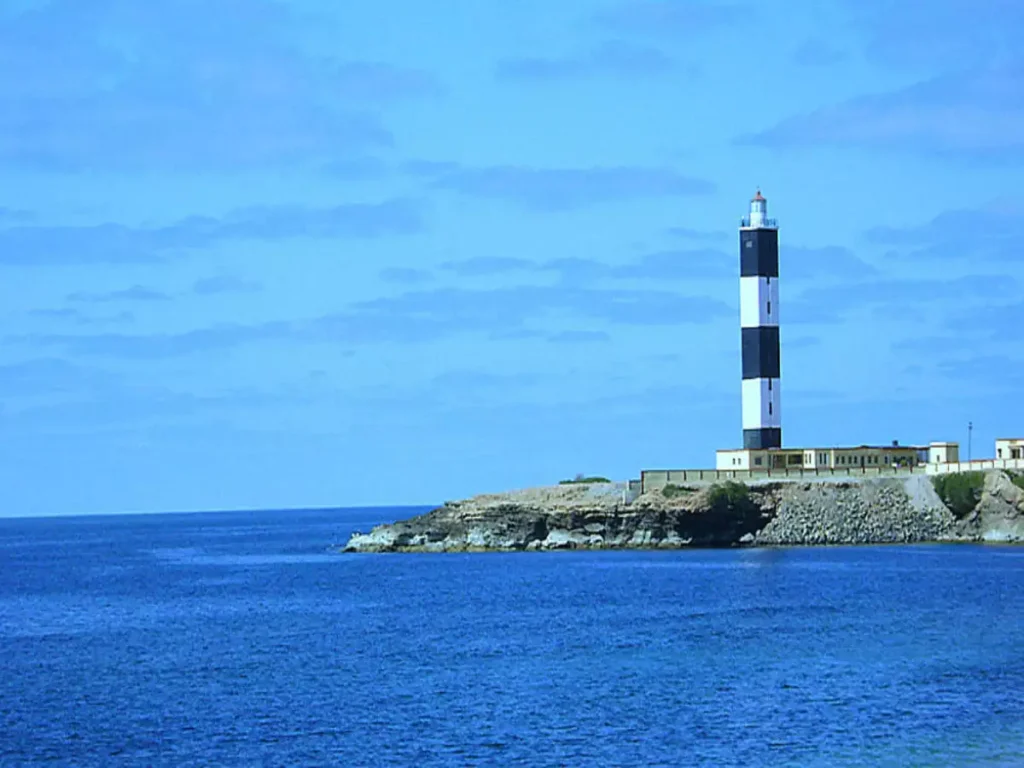
The Dwarka Beach and Lighthouse offer a refreshing natural escape on the edge of the Arabian Sea, blending coastal beauty with historical maritime charm. The beach, located just a short walk from the Bhadkeshwar Mahadev Temple, is known for its rocky shores, clear blue waters, and golden sands, making it a popular spot for morning strolls and watching spectacular sunsets. Dominating the shoreline is the Dwarka Lighthouse, a 43-metre-high square tower constructed in the early 1960s to guide sailors through the treacherous coastal waters. Visitors can climb to the top of the lighthouse during specific afternoon hours to witness an unparalleled bird’s-eye view of the entire Dwarka city, the Dwarkadhish Temple spire, and the vast expanse of the ocean. The area is also home to a nearby marine national park where, during low tide, one can often spot various marine life like octopuses, sea urchins, and colourful corals in the shallow tide pools.
9. Dunny Point
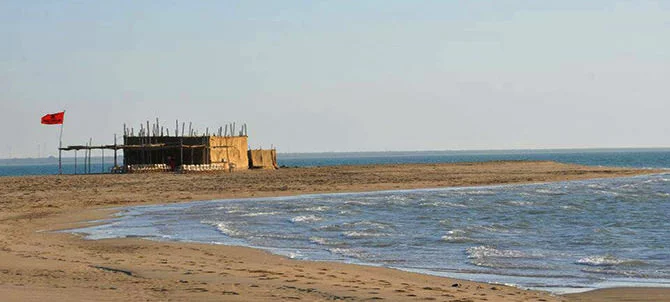
Dunny Point, located at the southeastern tip of Beyt Dwarka Island, is celebrated as Gujarat’s first eco-tourism site and a pristine haven for nature lovers. Surrounded by the Arabian Sea on three sides, this “tail-shaped” destination is part of the only marine sanctuary in Gujarat, offering an untouched landscape completely free from commercialization, electricity, and mobile networks. It is a premier spot for observing diverse marine life, including dolphins, turtles, octopuses, and vibrant coral reefs, which are often visible during low tide. Visitors can engage in eco-friendly activities such as bird watching, sunbathing, swimming, and even overnight camping in basic tents under a star-studded sky. The point is particularly famous for its breathtaking, unobstructed views of both sunrise and sunset over the vast blue ocean. Managed as a conservation area, it provides a rare opportunity for travelers to experience “zero-pollution” nature while participating in adventurous activities like kayaking or beach volleyball.
10. Gita Mandir

The Gita Mandir, situated on the western coast of Dwarka near the Bhadkeshwar Mahadev Temple, is a striking marble shrine dedicated to the Bhagavad Gita, the sacred dialogue between Lord Krishna and Arjuna. Built in 1970 by the industrialist Birla family, the temple is an architectural and literary marvel, as its interior walls are meticulously engraved with all 700 verses of the Gita, allowing pilgrims to read and contemplate the scripture while circumambulating the sanctum. The temple’s pristine white marble structure reflects the purity of the teachings within, and the main sanctum houses a beautiful idol of Lord Krishna. Designed with exceptional acoustics, the temple is built such that any sound made inside echoes clearly, a feature often used to enhance the chanting of hymns. Beyond its spiritual atmosphere, the temple complex offers a peaceful retreat with its well-maintained gardens and its location overlooking the Arabian Sea, making it a perfect spot for meditation on the eternal philosophy of “Dharma” and selfless action.