

Jaipur, the capital of Rajasthan, is a world-renowned city celebrated for its unique 18th-century urban planning, vibrant culture, and its status as a UNESCO World Heritage Site. Founded in 1727 by Maharaja Sawai Jai Singh II, it was India’s first planned city, designed by architect Vidyadhar Bhattacharya using the principles of Vastu Shastra and a distinct grid-iron model. The city is famously known as the “Pink City” because of the terracotta-pink hue of its historic buildings—a tradition that began in 1876 when Maharaja Sawai Ram Singh II ordered the city painted to welcome Prince Albert of Wales, as pink was a symbol of hospitality. Today, Jaipur is a cornerstone of the Golden Triangle tourist circuit, drawing millions of visitors to iconic landmarks like the honeycomb-faced Hawa Mahal, the sprawling City Palace, the ancient Jantar Mantar observatory, and the massive hill forts of Amer, Nahargarh, and Jaigarh. Beyond its history, the city is a thriving hub for traditional handicrafts, gemstones, and textiles, and it is globally recognized for its rich culinary heritage, featuring signature dishes like Dal Baati Churma.
The economy of Jaipur is built on a mix of old traditions and modern business, making it one of India’s fastest-growing cities. A huge part of its income comes from tourism, as millions of people visit every year to see its famous forts and palaces, which supports local hotels, restaurants, and shops. The city is also a world-famous hub for gems and jewellery, especially for cutting and polishing precious stones, and for textiles like block-printed fabrics. Jaipur is a very safe place for tourists and is often considered one of the friendliest cities in India. Since tourism is so important to the city, the local government works hard to keep visitors protected. There is a special Tourist Police force available at all famous spots to help you if you have any questions or trouble.
Best Places To Visit In Jaipur :
1. Nahargarh Fort
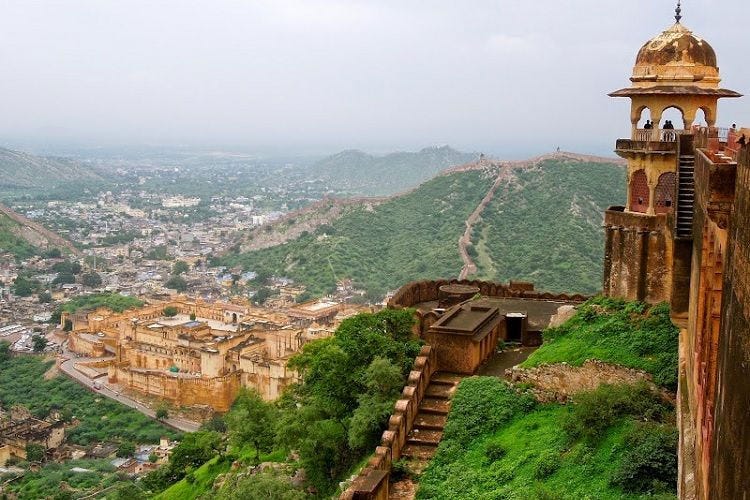
Nahargarh Fort, perched on the rugged Aravalli Hills, is a majestic 18th-century citadel that stands as a silent sentinel overlooking the Pink City of Jaipur. Built in 1734 by Maharaja Sawai Jai Singh II, the founder of Jaipur, it was originally named Sudarshangarh but became famously known as Nahargarh, meaning “Abode of Tigers”. Legend suggests the fort was haunted by the spirit of a Rathore prince, Nahar Singh Bhomia, whose restless soul obstructed construction until a temple was built within the walls to pacify him. While primarily designed as a defensive retreat and hunting residence, the fort never faced a direct military siege; however, it served as a crucial sanctuary for European residents during the Indian Rebellion of 1857. Architecturally, the fort is celebrated for the Madhavendra Bhawan, a two-story palace built by Sawai Madho Singh II featuring nine identical suites for his queens, all interconnected by corridors and adorned with vibrant frescoes and traditional Minakari work. Today, it is a premier tourist destination, offering breathtaking panoramic views of Jaipur—especially when floodlit at night—and housing attractions like the Jaipur Wax Museum and a sculpture park.
2. Kanak Vrindavan Garden

Kanak Vrindavan Garden, also known as Kanak Ghati, is a lush, landscaped retreat nestled in a picturesque valley at the foothills of Nahargarh Hills, on the way to the Amer Fort. Built approximately 280 years ago by Maharaja Sawai Jai Singh II, the founder of Jaipur, the garden was conceptualised as a serene recreational spot for the royal family. Its name is a tribute to its divine inspiration: “Kanak” refers to one of the Maharaja’s queens, Kanakde, while “Vrindavan” signifies its resemblance to the mythological land where Lord Krishna performed the Maha Raas Leela. Architecturally, the garden is a masterclass in the fusion of Mughal and Rajput styles, geometrically divided into eight distinct sections featuring tiered lawns, marble pavilions known as chhatris, and a central marble fountain named Parikrama, which is remarkably carved from a single slab of stone. The complex also houses the sacred Govind Deoji Temple, adorned with intricate mirror work, lattice windows, and delicate panni gold leaf decorations on its walls. Beyond its spiritual and historical significance, the garden is a popular location for Bollywood film shoots and offers stunning panoramic views of the Jal Mahal and the surrounding Aravalli Range.
3. Chokhi Dhani
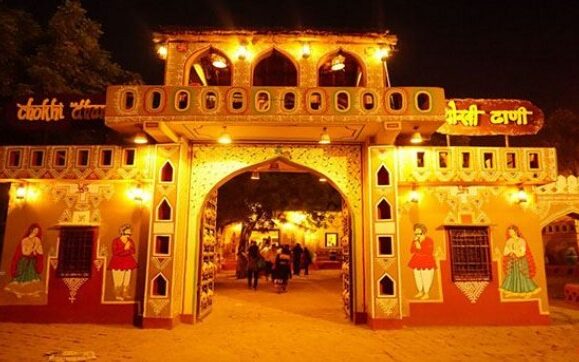
Chokhi Dhani, which translates to “Fine Village,” is a world-renowned luxury heritage resort and cultural hub located on the outskirts of Jaipur that offers an authentic immersion into the rural soul of Rajasthan. Established in 1989, it is designed as a traditional Rajasthani village spread across several acres, aiming to preserve and showcase the state’s vibrant folk art, heritage, and hospitality. As evening falls, the village comes alive with a festive atmosphere featuring folk dancers (Ghoomar and Kalbeliya), fire acts, acrobatics, puppet shows, and camel or elephant rides. The experience is centered around the concept of “Manuhaar,” a traditional Rajasthani style of serving guests with deep respect, culminating in a lavish vegetarian feast of Dal Baati Churma served on leaf platters. Beyond the entertainment, the resort features recreated village huts, a museum of Rajasthani culture, and an artificial lake, making it a “must-visit” destination for those wanting to experience the “Land of Kings” in a single evening.
4. Albert Hall
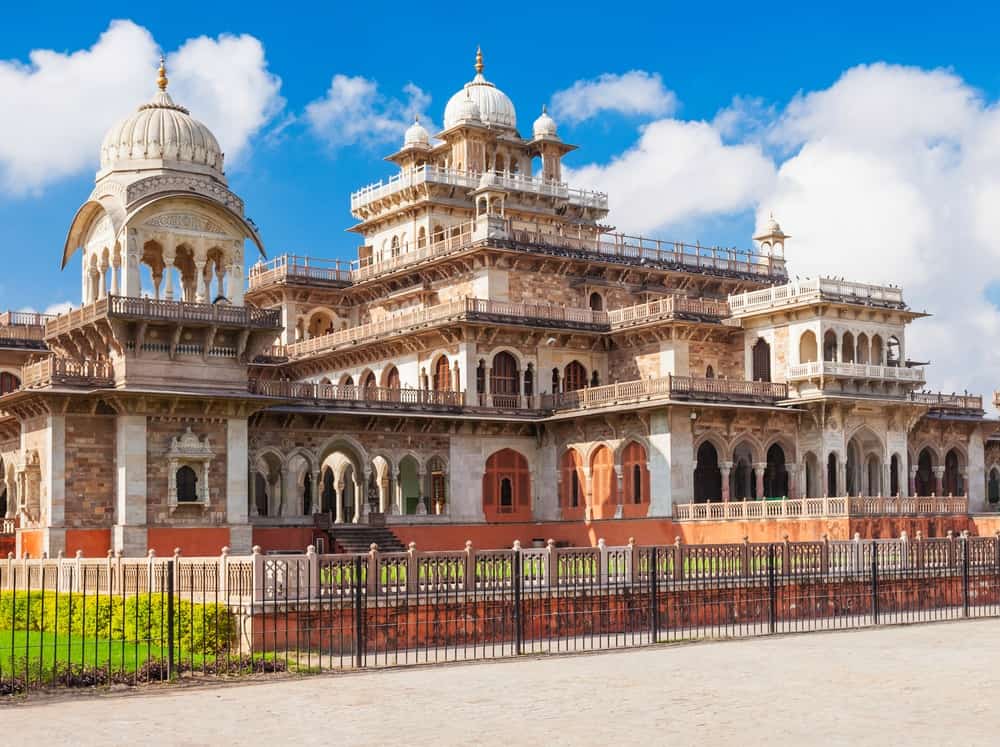
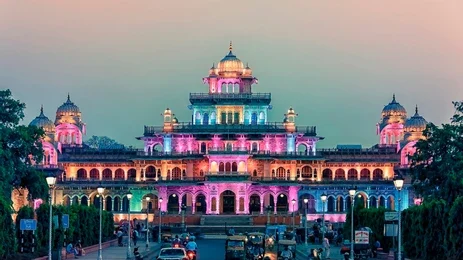
The Albert Hall Museum, also known as the Government Central Museum, is the oldest museum in Rajasthan and stands as a magnificent sentinel within the Ram Niwas Garden in Jaipur. Its foundation stone was laid in 1876 by the Prince of Wales, Albert Edward, during his visit to the city, and it was eventually opened to the public in 1887. Designed by the British architect Sir Samuel Swinton Jacob, the building is a masterpiece of Indo-Saracenic architecture, seamlessly blending Mughal and Rajput elements with Victorian Gothic influences, such as ornate stone carvings, tiered domes, and elegant arches. Originally intended to be a town hall, it was repurposed by Maharaja Sawai Madho Singh II into a museum to promote local craftsmanship and global cultural exchange. Inside, its 16 galleries house a staggering collection of over 20,000 artefacts, including a famous 2,300-year-old Egyptian mummy, a rare 17th-century Persian garden carpet, and an extensive array of miniature paintings, metal art, and antique weaponry. Today, the museum is equally famous for its “Night Tourism,” where it is brilliantly illuminated with colourful floodlights, transforming the historic structure into a glowing jewel of the Pink City.
5. Hawa Mahal

The Hawa Mahal, or “Palace of Winds,” is Jaipur’s most iconic landmark, built in 1799 by Maharaja Sawai Pratap Singh, the grandson of the city’s founder. Designed by architect Lal Chand Ustad, this five-story structure is unique because it resembles the crown of Lord Krishna, to whom the Maharaja was deeply devoted. Its most striking feature is the honeycombed exterior made of red and pink sandstone, featuring 953 small windows known as Jharokhas. These windows were intricately carved with fine latticework to allow royal ladies of the court to observe everyday life and festivals in the street below without being seen from the outside, strictly adhering to the “purdah” system. Architecturally, the palace is a marvel of natural cooling; the venturi effect created by the window design allowed cool air to circulate throughout the chambers, making it a perfect summer retreat. Despite its grand appearance from the front, the palace is surprisingly thin, and there are no stairs to reach the upper floors—only ramps were used so that palanquins carrying the royal ladies could be easily pushed up.
6. Jantar Mantar
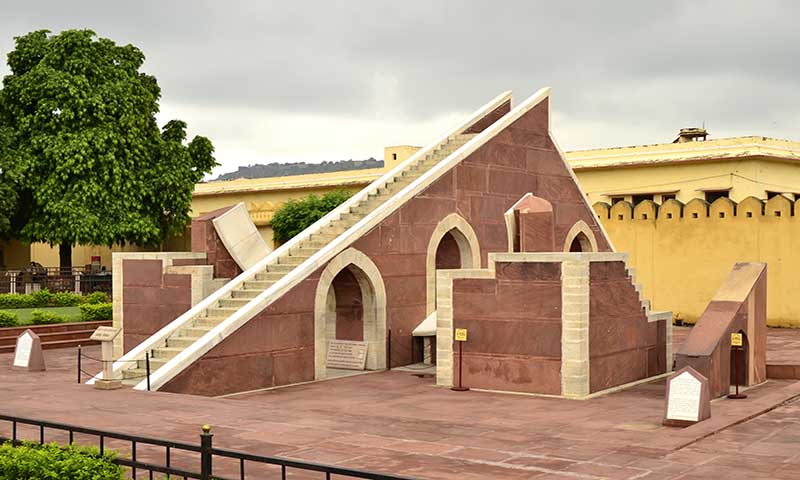
The Jantar Mantar in Jaipur is a UNESCO World Heritage site and the largest of five astronomical observatories built by Maharaja Sawai Jai Singh II between 1724 and 1738. It is a collection of 19 fixed architectural astronomical instruments designed to measure time, predict eclipses, and track the location of stars with extraordinary accuracy. The name itself is derived from the Sanskrit words “Yantra” (instrument) and “Mantra” (calculation), reflecting its purpose as a “Calculating Instrument.” The site is home to the Vrihat Samrat Yantra, the world’s largest stone sundial, which stands 27 metres tall and can tell the time with a precision of two seconds. These massive stone and marble structures were chosen over metal instruments to ensure they remained stable against weather and vibration, allowing the Maharaja to refine the Indian calendar and astronomical tables. Today, it remains a testament to the scientific prowess of 18th-century India, blending architectural beauty with mathematical genius.
7. Amer Fort
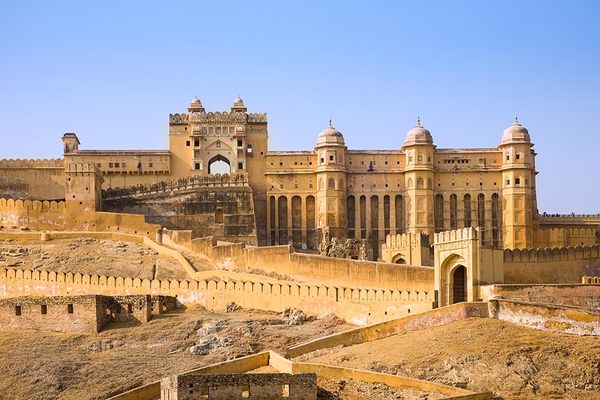
Amer Fort (or Amber Fort), a UNESCO World Heritage site, is a magnificent 16th-century fortress-palace located on a hilltop in Amer, about 11 kilometres from Jaipur. Built primarily by Raja Man Singh I and later expanded by Maharaja Sawai Jai Singh, the fort is a brilliant fusion of Rajput and Mughal architecture, constructed from shimmering red sandstone and white marble. It is divided into four main courtyard sections, each with its own grand entry gate; the most famous is the Ganesh Pol, adorned with exquisite frescoes and mosaic work. The fort’s interior is a labyrinth of luxury, featuring the Sheesh Mahal (Mirror Palace), where the walls are inlaid with thousands of tiny mirror shards that can light up the entire hall with a single candle, and the Sukh Niwas, which used an early form of “air conditioning” created by water flowing through open channels. Overlooking the Maota Lake, the fort is not only a defensive powerhouse with its massive ramparts but also a testament to royal opulence, famously accessible to tourists via a scenic elephant ride or a winding jeep trek up the cobblestone path.
8. Jal Mahal
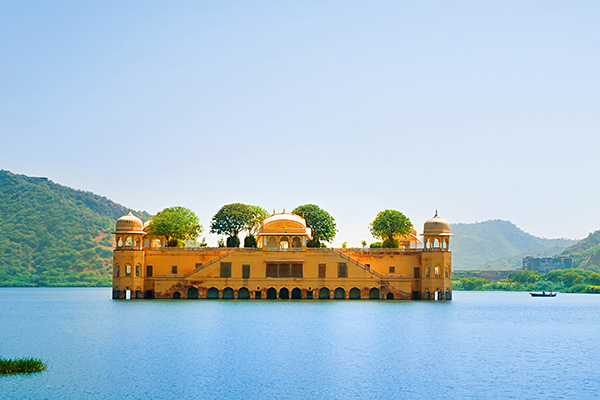
Jal Mahal, or the “Water Palace,” is a mesmerizing architectural marvel floating in the center of Man Sagar Lake in Jaipur. Built in the 18th century by Maharaja Sawai Pratap Singh, the palace served as a summer retreat and a royal duck-hunting lodge. The structure is a masterpiece of the Rajput style of architecture, constructed using red sandstone with beautifully carved chhatris (cenotaphs) on its roof. What makes Jal Mahal truly extraordinary is its design; while it appears to have only one story above the water, it is actually a five-story building, with four of its levels submerged when the lake is full. The solid stone walls are specially designed to prevent water seepage, and the palace offers a stunning contrast against the blue waters of the lake and the green Nahargarh Hills. Although visitors are currently not allowed to enter the palace itself, it remains one of the most photographed spots in India, especially at night when the golden lights reflect off the water, creating a magical, dreamlike atmosphere.
9. Achrol Fort
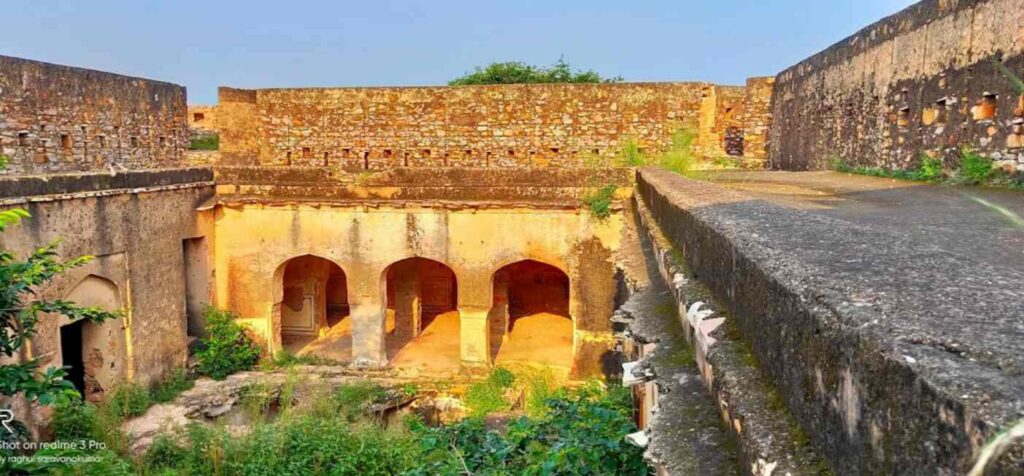
Achrol Fort, located on the outskirts of Jaipur near the village of Achrol, is a rugged and largely unrestored 16th-century fortress that served as the strategic stronghold for the Achrol Thikana family. Unlike the manicured palaces of the main city, this fort offers a raw, adventurous experience, perched atop a steep hill that requires a moderate trek to reach. Architecturally, it showcases traditional Rajput military design with massive ramparts, arched gateways, and ruins of residential quarters that still feature faded frescoes and intricate stonework. One of the fort’s most unique highlights is the nearby “Achrol Vichitra”, a natural rock formation often used for rappelling and rock climbing by adventure enthusiasts. From its highest battlements, the fort provides a breathtaking 360-degree view of the surrounding Aravalli Range and the rural landscape, making it a favorite spot for trekkers and photographers seeking a quiet escape from the tourist crowds of Jaipur.
10. City Palace

The City Palace of Jaipur is a sprawling complex that serves as the historic seat of the Maharaja of Jaipur and remains a residence for the royal family today. Established by Maharaja Sawai Jai Singh II in 1727, the palace is a magnificent blend of Rajput, Mughal, and European architecture, reflecting the city’s planned layout with its grid-like structure and grand courtyards. The complex houses several iconic structures, including the Chandra Mahal, a seven-story building where the royal family still resides, and the Mubarak Mahal, which was built as a reception center and now functions as a museum displaying royal textiles and costumes. A major highlight is the Pritam Niwas Chowk, an inner courtyard featuring four beautifully decorated gates representing the four seasons and Hindu gods. Visitors are also drawn to the Diwan-i-Khas, which holds two massive sterling silver vessels—the largest in the world—used by Maharaja Madho Singh II to carry Ganga water on his voyage to England. With its ornate marble carvings, intricate mirror work, and vast armory, the City Palace offers a vivid glimpse into the opulent lifestyle and administrative heritage of the Jaipur royals.
11. Rambagh Palace
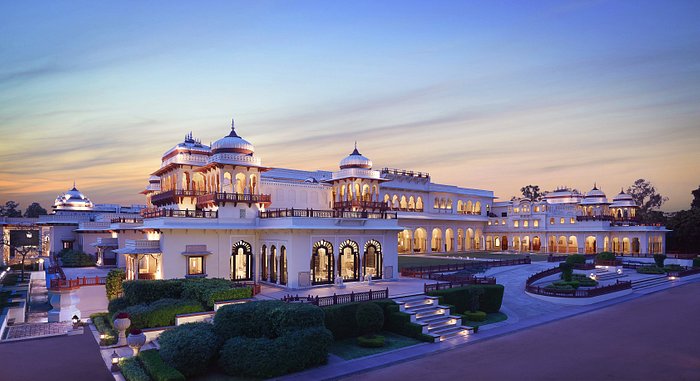
Rambagh Palace, often called the “Jewel of Jaipur,” is a masterpiece of architectural heritage that transitioned from a royal residence to one of the world’s most luxurious hotels. Originally built in 1835 as a modest garden house for the queen’s favorite handmaiden, it was later converted into a royal hunting lodge before becoming the principal residence of Maharaja Sawai Man Singh II and his legendary queen, Maharani Gayatri Devi, in the early 20th century. The palace is an exquisite example of Indo-Saracenic architecture, boasting hand-carved marble latticework, sandstone balustrades, and sprawling Mughal-style gardens. In 1957, it made history by becoming the first palace in India to be converted into a luxury hotel, now managed by the Taj Group. Today, it retains its regal opulence with grand high-ceilinged suites, antique furniture, and the famous Polo Bar, which celebrates the royal family’s association with the sport. Guests can still experience the “Gilded Age” of the Raj through traditional welcome ceremonies, peacock-filled lawns, and fine dining in the Suvarna Mahal, the palace’s former grand ballroom.
12. Birla Mandir
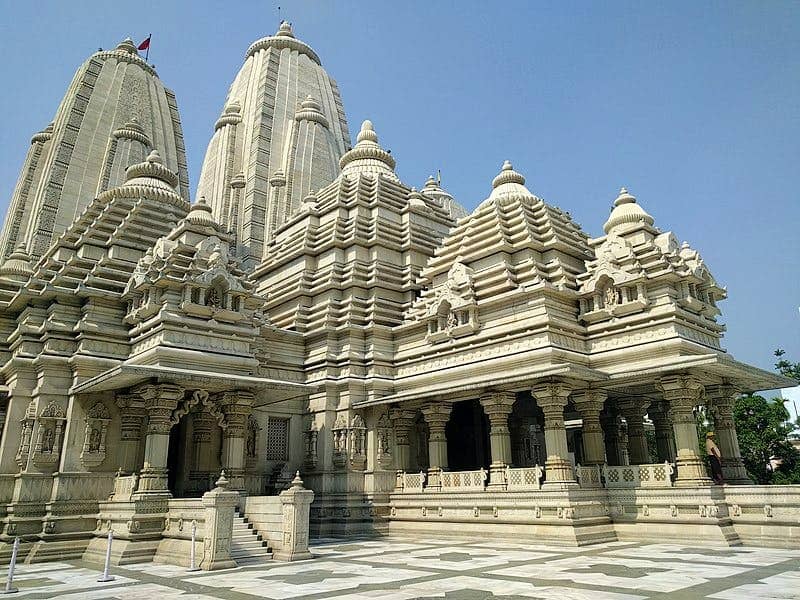
Birla Mandir, also known as the Laxmi Narayan Temple, is a stunning landmark in Jaipur situated at the base of the Moti Dungri Hill. Built by the renowned Birla family in 1988, this modern architectural marvel is constructed entirely from high-quality white marble, making it a stark and beautiful contrast to the traditional pink sandstone structures of the city. The temple is dedicated to Lord Vishnu (the Preserver) and his consort Goddess Laxmi (the Goddess of Wealth), and it is celebrated for its intricate carvings that depict not only Hindu deities but also scenes from ancient scriptures. Uniquely, the temple’s exterior features stained glass windows and carvings of great historical figures and philosophers like Socrates, Christ, Buddha, and Confucius, reflecting a philosophy of religious tolerance and universal peace. At night, the temple is bathed in soft yellow light, causing the white marble to glow against the dark sky, creating a peaceful and ethereal atmosphere for devotees and tourists alike.
13. Galtaji Temple

Galtaji Temple, often referred to as the “Monkey Temple,” is an ancient Hindu pilgrimage site nestled in a narrow mountain pass within the Aravalli Hills, about 10 kilometres from Jaipur. Built in the 18th century by Diwan Rao Kriparam, the temple complex is uniquely constructed to resemble a palace, featuring carved pillars, painted ceilings, and pavilions rather than traditional temple spires. It is most famous for its seven natural water springs and “Kunds” (water tanks) where pilgrims bathe to wash away sins, with the Galta Kund being the most sacred as it is believed to never go dry. The site is dedicated to Saint Galav, who performed penance here, and it houses temples for Lord Ram, Lord Krishna, and the Sun God (Surya Mandir). The complex has earned its nickname due to the large tribes of Rhesus macaques and Langurs that inhabit the area and are considered sacred. Beyond its spiritual significance, Galtaji offers a stunning landscape of rugged cliffs and lush greenery, providing a tranquil escape and a panoramic view of Jaipur from the top of the ridge.
14. Moti Dungri Temple
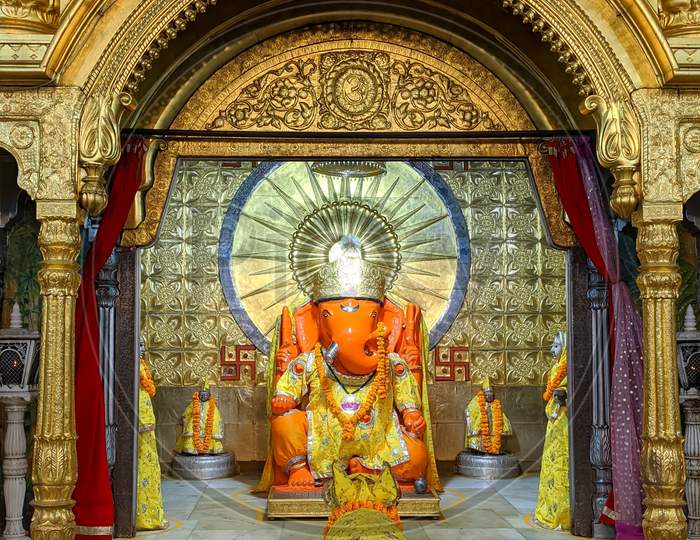
Moti Dungri Temple is a highly revered Hindu shrine dedicated to Lord Ganesha, situated atop a small hillock—resembling a “Pearl Hill”—in the heart of Jaipur. Built in 1761 under the supervision of Seth Jai Ram Pallival, the temple’s architecture is a unique blend of Scottish castle styles and traditional Indian design, featuring three grand domes and intricate stone carvings. The idol of Lord Ganesha housed here is particularly significant; it is a massive, vermilion-coated statue brought from Gujarat by Maharaja Madho Singh I, and it is depicted without a trunk, which is considered an auspicious and rare form. The temple is surrounded by the private Moti Dungri Fort, a structure modeled after a French castle, though the fort remains closed to the public. Every Wednesday, the temple attracts thousands of devotees who come to offer prayers and “Modaks” to the deity, making it one of the most vibrant spiritual hubs in the city, especially during the festival of Ganesh Chaturthi.
15. Akshardham Temple
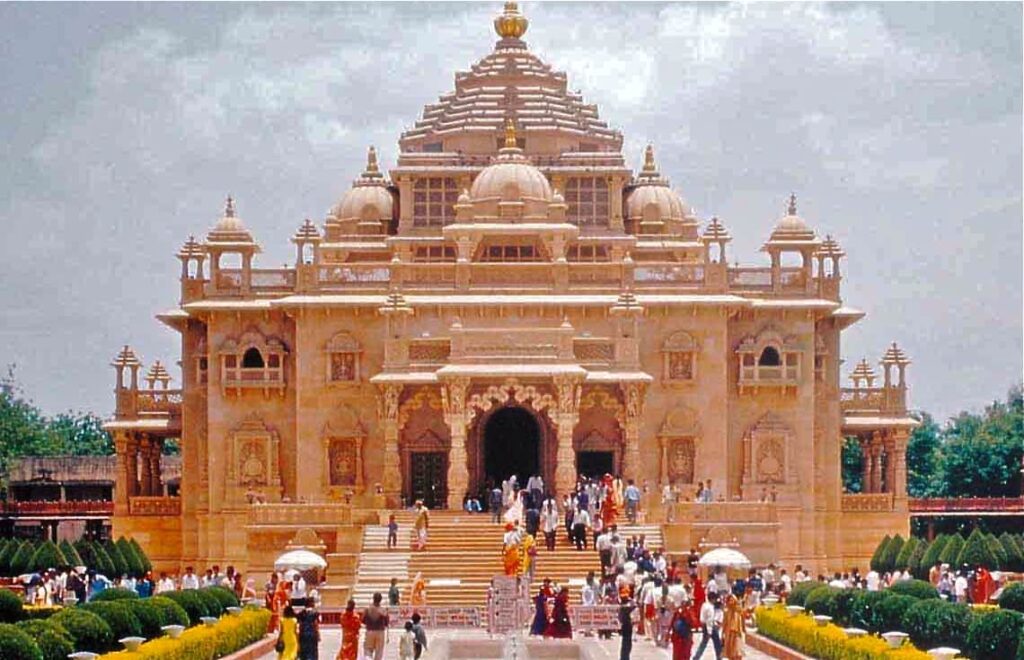
The Akshardham Temple in Jaipur, also known as the Swaminarayan Temple, is a majestic spiritual and cultural complex dedicated to Lord Swaminarayan. Located in the Vaishali Nagar area, it is part of a global lineage of temples known for their grand scale and intricate craftsmanship. Unlike many of Jaipur’s historical sandstone structures, this temple is modern, yet it strictly follows ancient Vedic architectural principles. The main shrine is built using white marble and pink stone, featuring massive pillars, domes, and walls adorned with exquisite carvings of Hindu deities, celestial dancers, and floral motifs. The temple is surrounded by beautifully manicured gardens and fountains, creating a peaceful sanctuary in the middle of the bustling city. Visitors are often captivated by the architectural symmetry and the serene atmosphere, which is particularly enchanting in the evening when the entire complex is illuminated with soft golden lights.
16. Digamber Jain Mandir Sanghiji
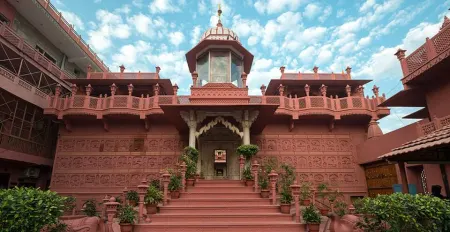
Digamber Jain Mandir Sanghiji, located in the historic town of Sanganer about 16 km from Jaipur, is a magnificent 10th-century temple and a significant pilgrimage site for the Jain community. Built of red sandstone, the temple is an architectural marvel that rivals the Dilwara Temples of Mount Abu in its intricate beauty, featuring a grand gateway and towering shikharas adorned with fine carvings of lotuses, creepers, and celestial figures. The main shrine is dedicated to the first Tirthankara, Lord Adinath (Rishabh Dev), but the temple’s most mysterious and revered feature is its ancient underground shrine. This hidden sanctum, which has seven underground floors, is said to be protected by a divine serpent and is only accessible to a high-ranking ascetic under strict spiritual conditions to retrieve ancient idols for public viewing. The temple complex is also known for its sprawling courtyards and the stone carvings that depict various scenes from Jain mythology, standing as a testament to the artistic and spiritual heritage of the Digamber sect in Rajasthan.
17. Khole Ke Hanuman Ji Temple
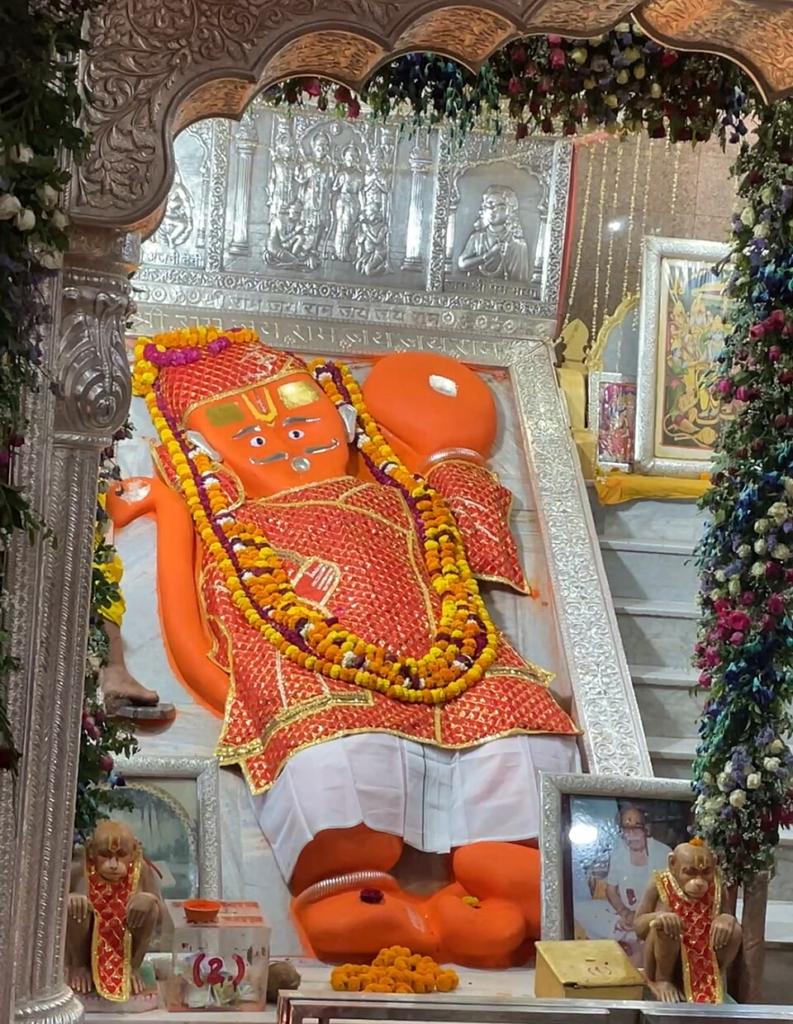
Khole Ke Hanuman Ji Temple is a prominent devotional landmark situated on a hilltop along the Jaipur-Delhi Highway, dedicated to Lord Hanuman. Established in the 1960s by Pandit Radhey Shyam Chaubey, the temple began as a small shrine in a deep “Khol” (valley) and has since transformed into a sprawling multi-level complex built with Dholpur sandstone and marble. Architecturally, it is unique for its tiered structure that climbs the hillside, offering several spacious prayer halls and smaller shrines dedicated to Lord Ram, Ganesha, and Shiva. The temple is especially famous for its traditional “Sawamani” feasts, where devotees offer 50 kg of food to the deity and distribute it among pilgrims in the large communal dining halls. Beyond its religious importance, the temple’s elevated position provides a serene, panoramic view of the Aravalli hills, making it a peaceful retreat for both locals and tourists seeking spiritual solace away from the city’s noise.
18. Sisodia Rani Garden
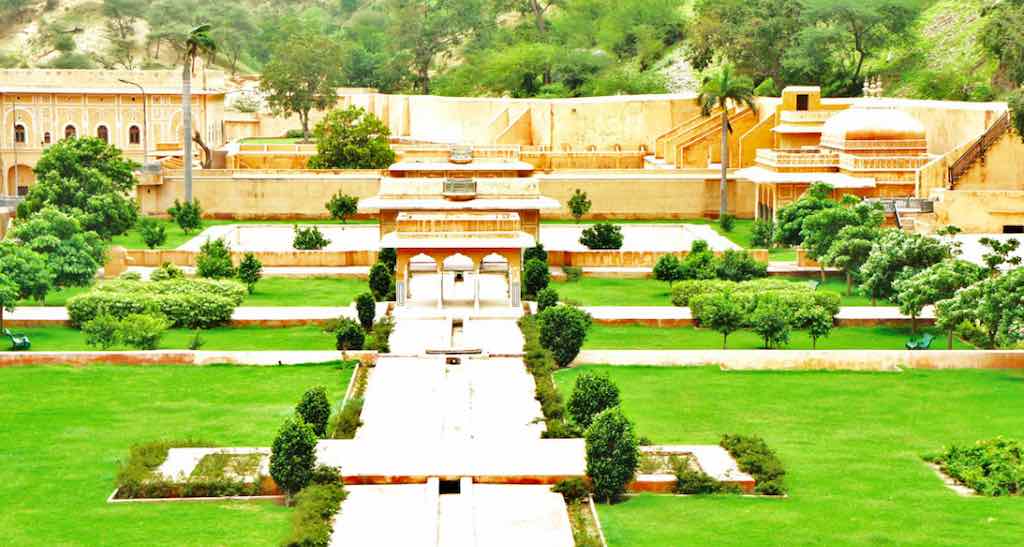
Sisodia Rani Garden and Palace, located about 10 kilometres from Jaipur, is a beautiful symbol of royal love built in 1728 by Maharaja Sawai Jai Singh II for his second queen, a princess of the Sisodia clan from Udaipur. The garden was designed as a private retreat for the queen to escape the courtly life of the City Palace and find solace in the lush Aravalli hills. Architecturally, it is a magnificent blend of Mughal and Rajput styles, featuring a multi-tiered layout with cascading water channels, fountains, and painted pavilions known as chhatris. The walls of the palace and the garden are decorated with vibrant frescoes depicting scenes from the life of Lord Krishna and Radha, symbolizing the eternal bond of love between the King and his Queen. Surrounded by dense greenery and away from the city’s hustle, the garden offers a tranquil atmosphere, making it a popular spot for nature lovers and couples seeking a glimpse into the romantic history of Rajasthan.
19. Ram Niwas Garden
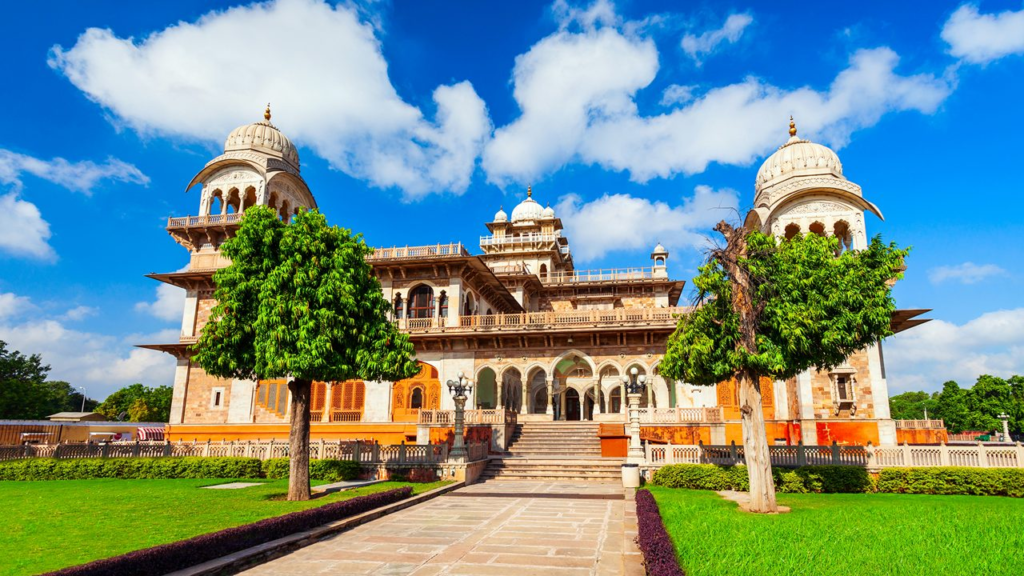
Ram Niwas Garden is a historic and sprawling verdant park in the heart of Jaipur, established in 1868 by Maharaja Sawai Ram Singh II. Spread across over 30 acres, it was originally conceived as a famine relief project to provide employment to the local population while creating a world-class lung for the city. The garden is an exquisite example of the Indo-Saracenic landscape style, housing the magnificent Albert Hall Museum at its centre, along with a bird park, a zoo, and a lush herbarium. Beyond its greenery, the complex serves as a cultural hub, featuring an auditorium (Ravindra Manch), an art gallery, and several sports grounds. The garden’s beautifully landscaped pathways, shaded by ancient trees and dotted with fountains, make it a favourite evening retreat for locals and tourists alike. Whether you are visiting for a picnic, a morning walk, or to admire the Victorian-era architecture, the garden remains a peaceful oasis that bridges the gap between Jaipur’s royal past and its vibrant present.
20. Johari Bazaar
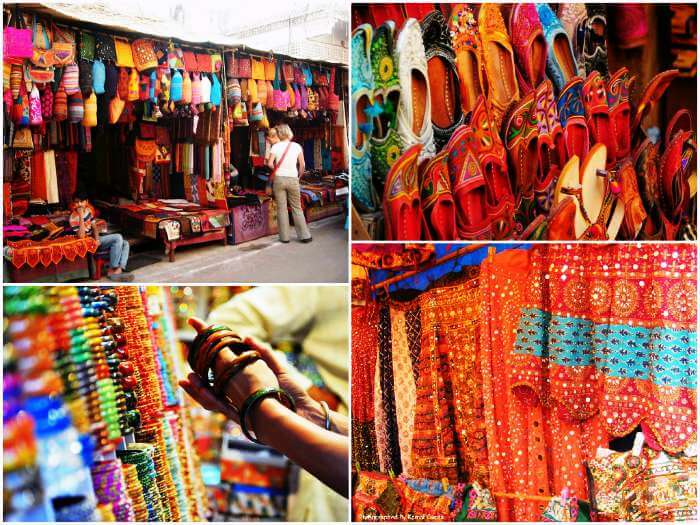
Johari Bazaar, situated in the heart of the Old City, is Jaipur’s oldest and most dazzling marketplace, world-renowned for its exquisite jewellery and gemstones. The name “Johari” literally translates to “Jeweller,” reflecting its status as a global hub for precious and semi-precious stones, particularly the traditional Rajasthani Kundan and Meenakari work. Beyond the glittering gold and silver, the bazaar is a vibrant sensory experience characterized by the city’s signature pink-colored architecture and uniform symmetrical shopfronts. It is also the premier destination for high-quality Bandhani (tie-dye) textiles, intricate Leheriya sarees, and handmade bridal wear. As you navigate the bustling lanes, you’ll find iconic eateries like Laxmi Mishthan Bhandar (LMB), famous for its Rajasthani sweets and snacks. The market perfectly captures the essence of Jaipur’s heritage, blending royal craftsmanship with a lively, traditional street-shopping atmosphere.
21. Chandpole
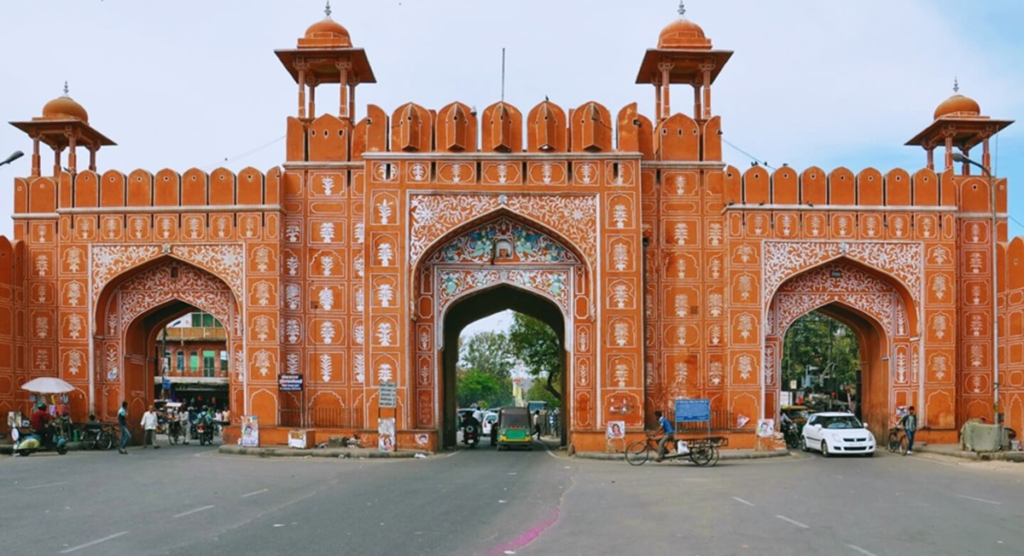
Chandpole is one of the seven original magnificent gateways of the walled city of Jaipur, marking its western entrance and named after the Moon (Chand), as it faces the direction of the setting moon. Built in the early 18th century by Maharaja Sawai Jai Singh II, the gate is a grand example of Rajput military architecture, featuring massive fortified walls, high arches, and a crenellated top designed for defense. The area surrounding the gate, known as Chandpole Bazaar, is a bustling commercial hub famous for its traditional marble carvings, intricate stone sculptures, and wholesale grains. A unique landmark within this precinct is the ancient Chandpole Hanuman Ji Temple, which houses a colossal idol of the deity and is believed to be one of the city’s guardian shrines. Walking through the gate offers a true sense of “Old Jaipur,” where the vibrant pink facades, rhythmic sounds of stone-cutters, and the constant flow of local life provide a timeless glimpse into the city’s living heritage.
22.Jhalana Leopard Conservation Reserve
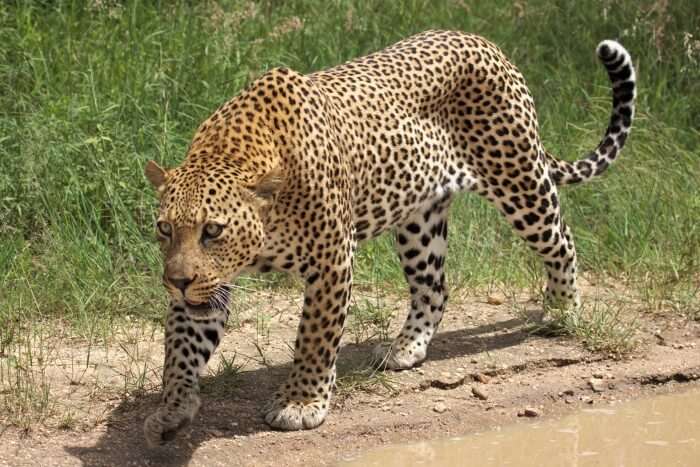
The Jhalana Leopard Conservation Reserve, established in 2017, is India’s first dedicated leopard reserve and a unique example of an “urban forest” located right within the city limits of Jaipur. Spread across approximately 20 square kilometres of the ancient Aravalli Hills, the reserve was historically a royal hunting ground where the last resident tiger was recorded in 1948. Today, it is home to a thriving population of over 40 leopards, who have become the apex predators of this dry deciduous landscape. The reserve is famous for its exceptionally high sighting rates, often because the leopards here have become accustomed to safari vehicles and are frequently seen during the day. Beyond leopards, the park shelters striped hyenas, desert foxes, blue bulls (Nilgai), and diverse birdlife such as the Indian Pitta and Dusky Eagle. A key historical attraction within the forest is the Shikar Audi, a three-story hunting lodge formerly used by the Jaipur royals, which now serves as a scenic watchtower for visitors to enjoy sunrises and sunsets during their safari.
23.Pink City
The Pink City refers to the historic walled core of Jaipur, which earned its world-famous moniker in 1876 when Maharaja Sawai Ram Singh II ordered the entire city to be painted in a terracotta-pink hue to welcome Prince Albert of Wales. Pink was chosen because it was traditionally considered the color of hospitality, and the Maharaja wanted to impress the British royalty during their grand tour. Founded in 1727 by Maharaja Sawai Jai Singh II, the Pink City is recognized as India’s first planned city, designed according to the principles of Shilpa Shastra (ancient Indian architecture) and Vastu Shastra, featuring a grid system of wide streets and symmetrical shopfronts. Its architecture is characterized by magnificent gateways, ornate jharokhas (balconies), and the uniform use of local sandstone. In 2019, the Pink City was designated a UNESCO World Heritage Site, acknowledging its unique urban planning and its role as a living monument where century-old traditional markets, like Johari Bazaar and Bapu Bazaar, continue to thrive amidst stunning landmarks like the Hawa Mahal and City Palace.
24. World Trade Park
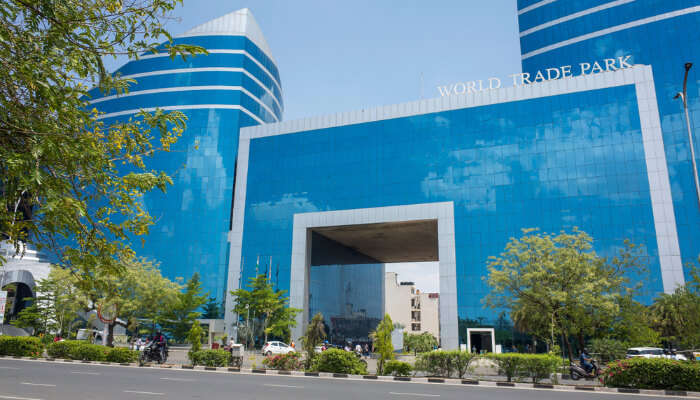
World Trade Park (WTP), located in the Malviya Nagar area, is an architectural landmark and one of the largest luxury shopping malls in India. Inaugurated in 2012 by Bollywood star Shah Rukh Khan, the mall is famous for its futuristic design, consisting of two massive blue-glass buildings—the North Block and South Block—connected by a grand bridge that spans across the main road. Unlike traditional malls, WTP is divided into unique “streets” based on global themes, such as the English Street, Roman Street, and Dubai Bazaar, offering an upscale shopping experience with international brands and high-end boutiques. The mall is also home to a state-of-the-art 11-screen multiplex, a massive food court with a wide variety of cuisines, and an automated parking system. Its striking blue facade and evening lighting make it a popular spot for photography, representing the modern, cosmopolitan side of Jaipur that contrasts beautifully with its historic “Pink City” heritage.
25. Jawahar Circle
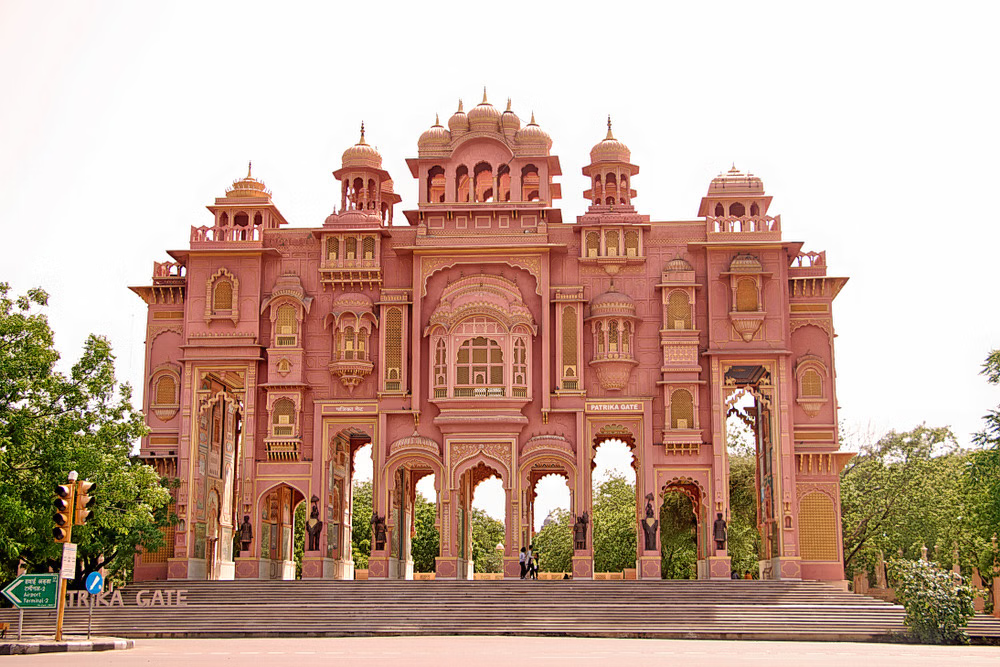
Jawahar Circle, located near the Jaipur International Airport, is Asia’s largest circular park developed within a highway traffic circle. Established in 2009 by the Jaipur Development Authority, it serves as a sprawling green lung for the city, featuring a diameter of 452 metres and meticulously landscaped gardens, jogging tracks, and play areas. The park’s most stunning architectural highlight is the Patrika Gate, a vibrant and multi-coloured entryway adorned with hand-painted murals that depict the culture, heritage, and history of different regions of Rajasthan. In the evenings, the park transforms into a popular family destination with its musical fountain show, which features 270 different effects and water jets reaching up to 25 feet, synchronized with music and colourful lights. Whether for a peaceful morning walk or a lively evening outing, Jawahar Circle stands as a modern symbol of Jaipur’s urban beauty and artistic pride.