

Udaipur, popularly known as the “City of Lakes” and the “Venice of the East,” is a historic and enchanting city situated in the southern part of Rajasthan, nestled amidst the lush green hills of the Aravalli Range. Founded in 1559 by Maharana Udai Singh II as the new capital of the Mewar Kingdom, the city was strategically built in the fertile Girwa Valley to provide a more secure location following the fall of Chittorgarh. Udaipur is world-renowned for its sophisticated lake system, which comprises seven main lakes, including Lake Pichola and Fateh Sagar Lake; these lakes are interconnected to facilitate the city’s water management and to enhance its natural beauty. Today, the city stands as a major global tourist destination, celebrated for its romantic ambiance, Rajput-era grandeur, and vibrant local culture; it is home to iconic landmarks such as the City Palace, the floating Lake Palace, and the hilltop Monsoon Palace.
Udaipur’s economy is primarily based on three pillars: tourism, mining, and traditional handicrafts. Driven by its famous lakes and palaces, tourism serves as the largest source of revenue here, providing employment to nearly half of the city’s population through hotels, restaurants, and tour guides. The city also generates significant wealth from mineral resources extracted from the earth, while many locals earn their livelihood as artisans, crafting exquisite paintings and jewelry; these artworks are sold to tourists visiting from all corners of the globe. Udaipur is recognized as one of India’s safest and most hospitable cities, making it an exceptionally welcoming destination for all types of travelers—including families and solo female travelers. The city boasts a very low crime rate, and its locals are generally highly respectful and helpful, taking great pride in their culture of hospitality.
Most Famous And Attractive Tourist Places In Udaipur :
1. CITY PALACE

The City Palace in Udaipur is equally renowned as the largest palace complex in Rajasthan, perched on a hill overlooking the scenic Lake Pichola. Its construction began in 1553 under Maharana Udai Singh II and continued over nearly 400 years with contributions from successive Mewar rulers. Known for its flamboyant style and defensive zigzag corridors, the complex features delicate mirror-work, marble interiors, and the famous Mor Chowk (Peacock Courtyard) with its vibrant glass mosaics. Like its Jaipur counterpart, it is divided into sections for the royal family, luxury heritage hotels, and the City Palace Museum, which showcases the valor and history of the Mewar dynasty.
2. LAKE PALACE

The Lake Palace, originally known as Jag Niwas, is an architectural masterpiece located on a natural four-acre island in the middle of Lake Pichola in Udaipur, Rajasthan. Built between 1743 and 1746 by Maharana Jagat Singh II, the 62nd ruler of the Mewar dynasty, it was designed as a summer retreat and pleasure palace where the royal family could escape the heat of the mainland. The structure is built entirely of shimmering white marble, featuring intricate carvings, scalloped arches, and inland courtyards filled with lush gardens and fountains. Its unique placement gives it the appearance of “floating” on the water, especially when the lake is full. In 1963, it was converted into India’s first luxury heritage hotel and is now managed by Taj Hotels, consistently ranked among the most romantic hotels in the world.
3. JAG MANDIR
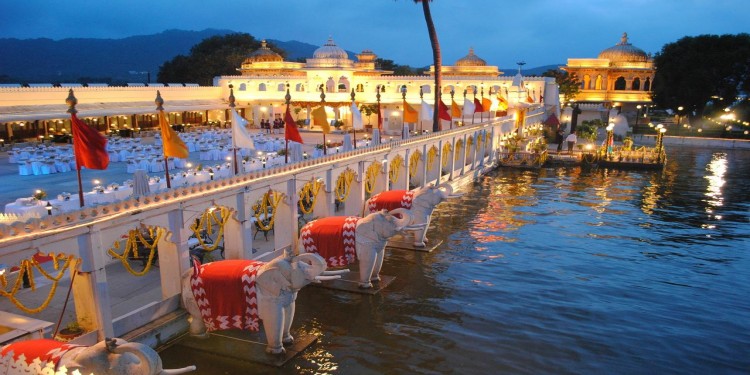
Jag Mandir is a beautiful island palace built in the middle of Lake Pichola in Udaipur. It was started in 1551 and took many years to finish, eventually named after Maharana Jagat Singh I. The palace is famous for its eight stone elephants that look like they are guarding the entrance at the water’s edge. It is made of yellow sandstone and white marble, with a big domed building called the Gul Mahal. A very cool fact is that the Mughal Emperor Shah Jahan once stayed here as a prince, and many people believe the design of Jag Mandir helped inspire him to build the Taj Mahal. Today, it is a popular spot for tourists to visit by boat to see its gardens, museum, and amazing views of the lake.
4. The Monsoon Palace

The Monsoon Palace, also called Sajjan Garh, is a beautiful white marble palace sitting high up on a hill overlooking the city of Udaipur. Built in 1884 by Maharana Sajjan Singh, it was originally intended to be a center for studying stars and watching for monsoon clouds as they rolled in. Because it is so high up, it offers the most famous sunset views in the city, where you can look down at all the lakes and the “White City” below. The palace is surrounded by a large wildlife sanctuary and is well-known for appearing in the James Bond movie Octopussy. Today, people love to take a winding jeep ride up the mountain just to see the glowing lights of the city at night.
5. Ahar Cenotaphs
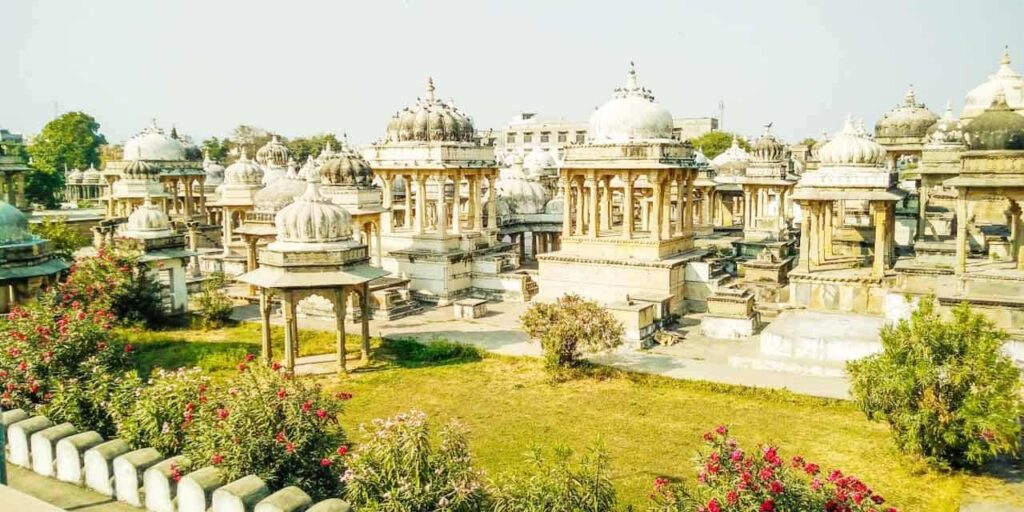
The Ahar Cenotaphs are a group of impressive royal memorials located about 2 kilometers east of Udaipur, serving as the cremation ground for the Maharanas of Mewar. This historic site contains over 250 cenotaphs (known as chhatris) built over 350 years, with the most striking being the one dedicated to Maharana Amar Singh I. These structures are famous for their unique Indo-Aryan architecture, featuring beautiful vaulted domes, many-pillared porches, and intricate carvings on white marble and sandstone. Unlike the lively palaces in the city center, the Ahar Cenotaphs offer a quiet, spiritual atmosphere that highlights the bravery and heritage of the Mewar rulers. Nearby, you can also find the Ahar Archaeological Museum, which houses rare pottery and artifacts dating back over 5,000 years, showing that this area was a settled civilization long before Udaipur was founded.
6. Fateh Sagar Lake
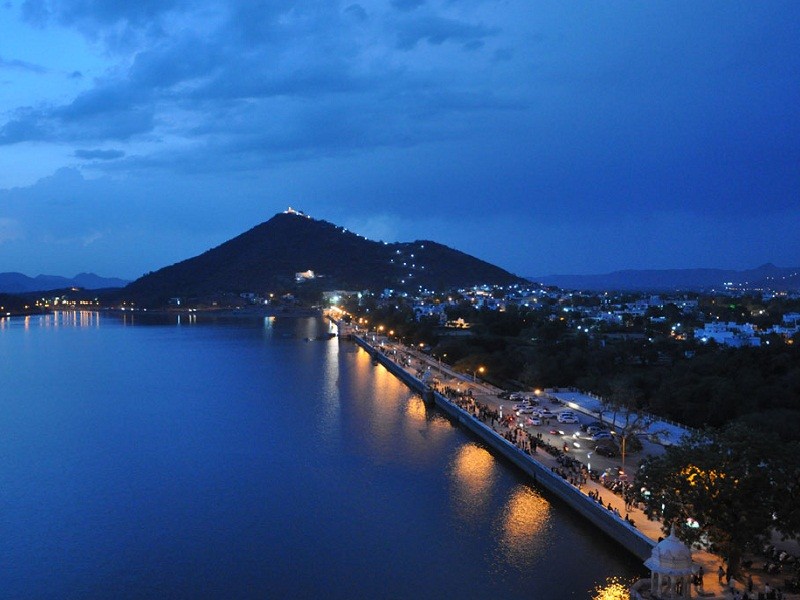
Fateh Sagar Lake is an enchanting artificial lake located to the north of Lake Pichola and is often considered the pride of Udaipur. Originally built in 1678 by Maharana Jai Singh, it was later reconstructed and enlarged by Maharana Fateh Singh in 1888 after heavy rains destroyed the initial dam. The pear-shaped lake is connected to Lake Pichola by a canal and is surrounded by the scenic Aravalli Hills on three sides. It is unique for housing three distinct islands: the largest is Nehru Park, a popular tourist spot with a boat-shaped restaurant; the second houses a public park with water-jet fountains; and the third is home to the Udaipur Solar Observatory, which is considered one of the best solar observation sites in Asia. The lake’s promenade, known as Connaught Place, is a favorite hangout for locals and travelers alike, offering a vibrant atmosphere with street food stalls and stunning views of the calm, blue waters.
7. Kumbhalgarh Fort
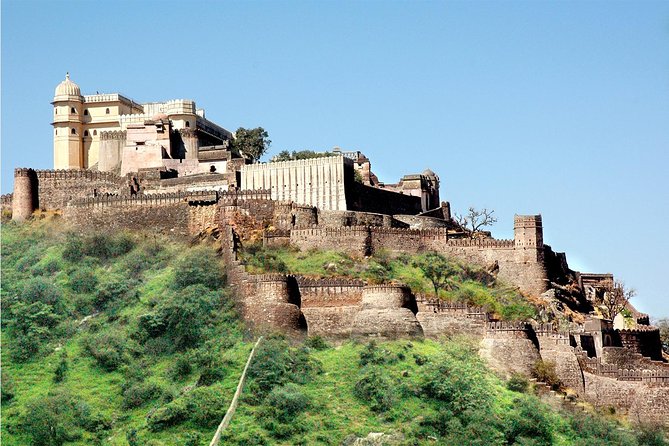
Kumbhalgarh Fort is a massive Mewar fortress built during the 15th century by Rana Kumbha and is a UNESCO World Heritage Site located about 82 km from Udaipur. It is most famous for its incredible perimeter wall, which stretches over 36 kilometres, making it the second-longest continuous wall in the world after the Great Wall of China. Perched high in the Aravalli Range, the fort remained virtually impregnable throughout history due to its strategic location and thick walls that are wide enough for eight horses to walk abreast. Inside the complex, there are over 360 temples, as well as the beautiful “Badal Mahal” or Palace of Clouds at the highest point, offering breathtaking views of the surrounding wilderness. The fort also holds great historical pride as the birthplace of Maharana Pratap, the legendary Rajput king.
8. Saheliyon Ki Bari

Saheliyon Ki Bari, which translates to the “Garden of the Maidens,” is one of the most beautiful and popular green spaces in Udaipur, built by Maharana Sangram Singh in the early 18th century. Legend has it that the king designed this garden specifically for his queen and the 48 young ladies-in-waiting who accompanied her as part of her dowry, providing them a private place to relax away from the royal court. The garden is famous for its lush lawns, marble elephants, and beautiful fountains that operate entirely through natural water pressure from the nearby Fateh Sagar Lake, requiring no electricity. It features four main pools decorated with delicate kiosks and carved pavilions that showcase a perfect blend of English and Indian landscaping. Today, it remains a serene retreat where visitors can walk through the lotus pools and enjoy the cool spray of the fountains, making it a favorite spot for photography and peaceful strolls.
9. Bagore ki Haveli
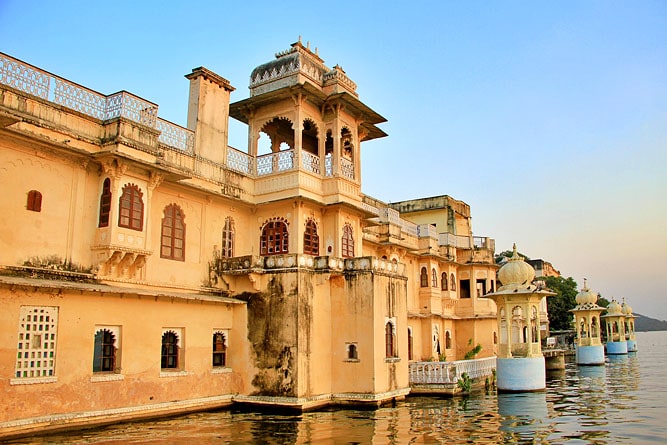
Bagore ki Haveli is an 18th-century mansion situated right on the waterfront of Gangaur Ghat at Lake Pichola in Udaipur. It was built by Amar Chand Badwa, who was the Prime Minister of Mewar, and features over 100 rooms filled with intricate mirror work, paintings, and traditional haveli architecture. After years of neglect, it was restored by the West Zone Cultural Centre and now serves as a vibrant museum that showcases the royal lifestyle through displays of jewelry boxes, copper vessels, and even the world’s largest turban. The haveli is most famous today for its evening Dharohar Folk Dance show, where artists perform traditional Rajasthani dances like Ghoomar and Chari under the starlit courtyard. Its location offers a perfect blend of historical exploration and a peaceful view of the lake’s ghats at sunset.
10. Bhartiya Lok Kala Museum
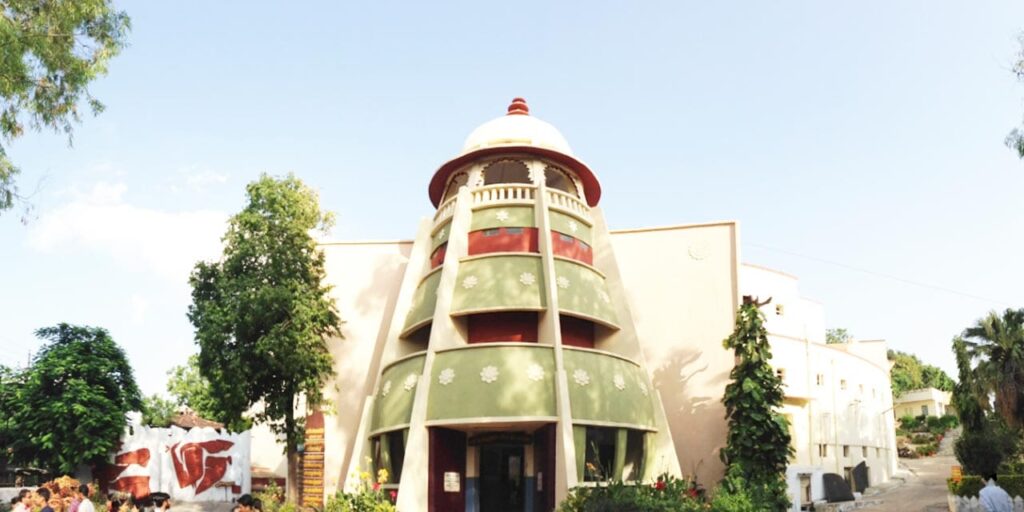
The Bhartiya Lok Kala Museum is a renowned cultural institution in Udaipur, founded in 1952 by Padma Shri Devi Lal Samar to preserve and promote the folk heritage of Rajasthan, Gujarat, and Madhya Pradesh. Located near Chetak Circle, this “living museum” houses a rare and extensive collection of traditional artefacts, including rural costumes, tribal jewellery, masks, dolls, and folk musical instruments collected over six decades. It is particularly famous for its Govind Puppet Theatre, which features daily live puppet shows (Kathputli) and vibrant folk dance performances like Ghoomar and Terah Taal. Beyond its exhibits, the Bhartiya Lok Kala Mandal serves as a research and training centre, offering workshops in puppetry and traditional crafts to ensure these ancient art forms continue to thrive for future generations.
11. Lake Pichola
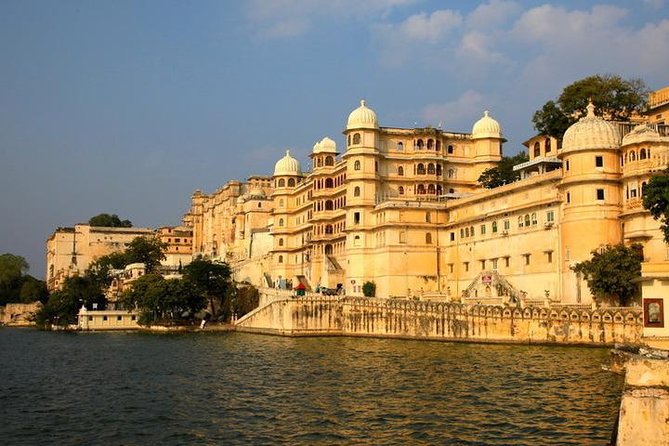
Lake Pichola is the oldest and one of the largest lakes in Udaipur, widely considered the crown jewel of the “City of Lakes.” This artificial fresh-water lake was created in 1362 AD by a local tribesman named Pichhu Banjara, who built a dam to allow his grain carts to cross during the monsoon; it was later enlarged by Maharana Udai Singh II when he founded the city. The lake is world-famous for its stunning beauty, surrounded by majestic palaces, ancient temples, and white-washed ghats that glow at sunset. Within its waters lie several islands, most notably housing the Lake Palace (Jag Niwas) and Jag Mandir, which appear to float on the surface. A boat ride on Lake Pichola, especially during the “golden hour,” is a quintessential Udaipur experience, offering breathtaking panoramic views of the City Palace complex towering over the eastern bank and the rugged Aravalli Hills in the distance.
12. Karni Mata Temple
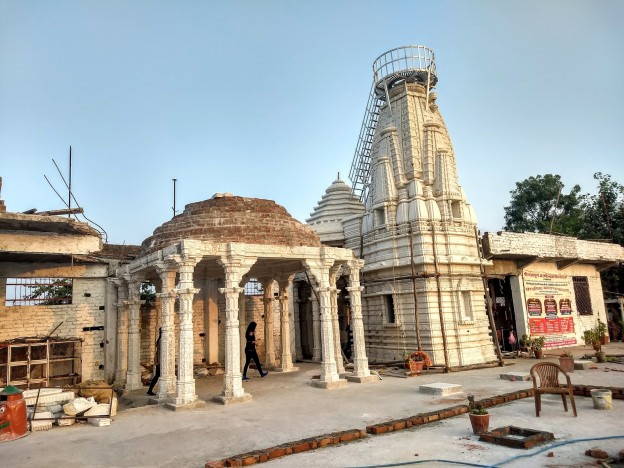
The Karni Mata Temple in Udaipur is a famous hilltop temple dedicated to a goddess who is believed to grant people’s wishes. It sits high up on the Machla Magra Hill, right next to Doodh Talai Lake. People love visiting this temple not just for prayer, but for the incredible view; from the top, you can see all of Udaipur, including Lake Pichola and the City Palace, stretched out below you. To get to the temple, you can either walk up a long stone staircase or take a fun ropeway (cable car) ride, which is a favorite for tourists because it’s quick and offers a bird’s-eye view of the city. It is especially popular during sunset, when the whole “White City” begins to glow and the lights of the palaces turn on.
13. Jagat Niwas
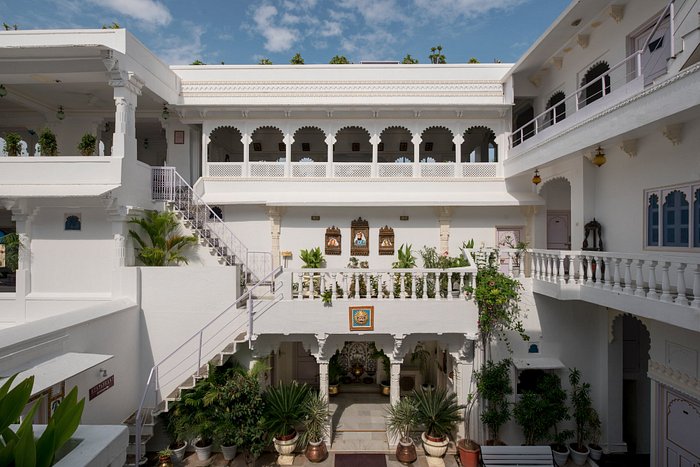
Jagat Niwas is an early 17th-century royal haveli (mansion) located on the eastern banks of Lake Pichola in the heart of Udaipur’s old city. It was originally built to serve as a residence for the nobility and is a classic example of Mewar architecture, featuring whitewashed walls, intricate jharokhas (overhanging balconies), and open-to-sky courtyards. In the late 20th century, it was restored and converted into the Jagat Niwas Palace Hotel, a popular heritage boutique stay. The haveli is most famous for its stunning lakeside location, where its “floating” jharokhas provide some of the best views in the city of the Lake Palace and Jag Mandir. Its rooftop restaurant is a favorite for travelers seeking a romantic atmosphere and traditional Rajasthani cuisine while overlooking the calm waters of the lake.
14. Hathi Pol Bazaar
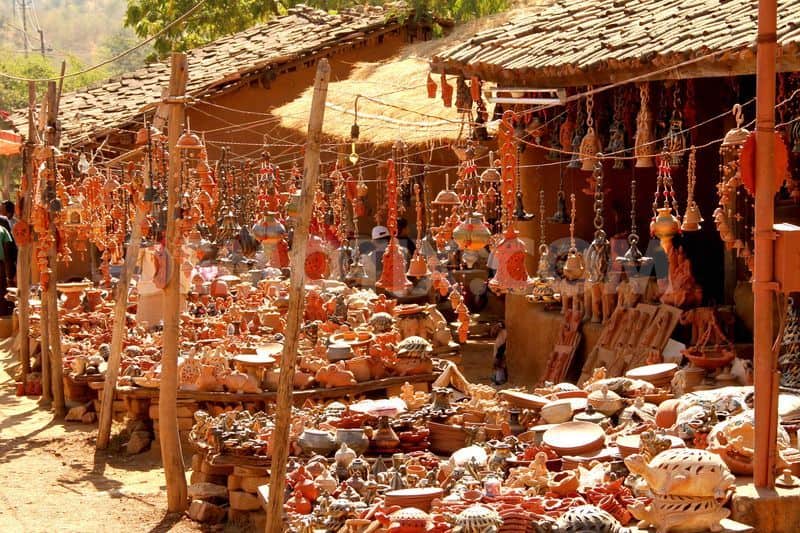
Hathi Pol Bazaar is one of the most vibrant and popular shopping destinations in Udaipur, located near the City Palace complex. It is best known as a treasure trove for traditional Rajasthani art, particularly the world-famous Pichwai and Phad paintings, as well as intricate miniature paintings created by talented local artists. The market is a favorite for tourists looking to buy authentic local handicrafts, including embroidered leather footwear (Jutis), colorful block-printed textiles, and handmade wooden items. Unlike some of the more expensive tourist shops, Hathi Pol is where the locals shop, offering a more authentic atmosphere and fair prices, though bargaining is still a common part of the experience. The bazaar’s narrow, bustling lanes are a sensory delight, filled with the sights and sounds of Udaipur’s rich artistic heritage, making it a “must-visit” for anyone wanting to take a piece of Mewar culture home.
15 Ambrai Amet Haveli
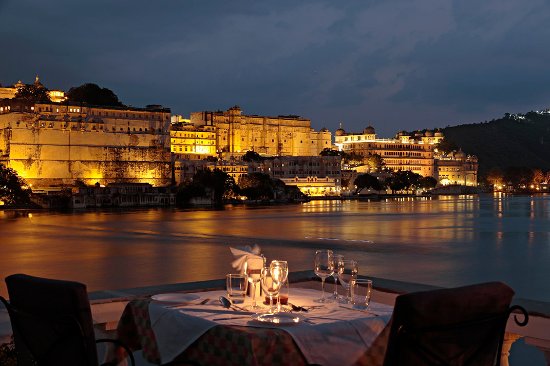
Ambrai Amet Haveli is a magnificent 18th-century mansion situated on the western banks of Lake Pichola in an area known as Hanuman Ghat. Originally built during the reign of Maharana Jagat Singh II, it served as the townhouse for the Rawat of Amet, a prominent noble of the Mewar court. The haveli is a prime example of traditional Rajput architecture, featuring thick stone walls, delicate jharokhas (balconies), and peaceful courtyards that capture the essence of old Udaipur. Today, it is most famous for housing the Ambrai Restaurant, widely considered one of the most romantic dining spots in the world because it sits exactly at water level, offering an unobstructed, “front-row” view of the glowing City Palace and Lake Palace. Whether you are staying in its heritage rooms or just visiting for a meal, the haveli provides a perfect vantage point to experience the architectural grandeur and serene waters that define the “Venice of the East.”
16. Tribute
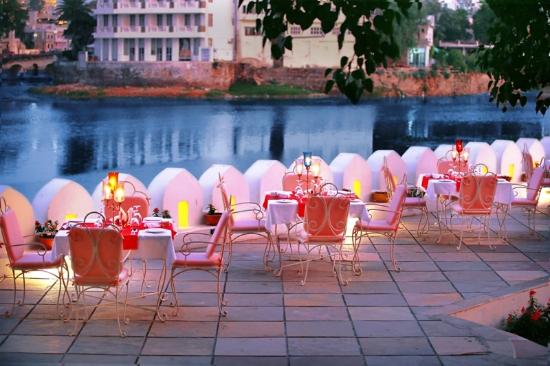
Tribute is a highly-rated waterfront restaurant in Udaipur, located on the banks of Fateh Sagar Lake near the statue of Chetak at Haathi Pole. More than just a dining spot, the restaurant was established as a tribute to Chetak, the legendary horse of Maharana Pratap, symbolizing loyalty and bravery in Mewar history. The decor reflects this theme with elegant equestrian art and traditional Rajasthani elements. It is famous for its fine dining atmosphere, offering a blend of North Indian, Continental, and authentic ethnic Rajasthani cuisine, with their Lal Maas being a particular favorite among guests. With its beautiful outdoor seating providing a calm view of the lake and the surrounding greenery, it is a popular choice for travelers who want a peaceful, high-quality meal away from the more crowded tourist hubs of the old city.
17. Kabab Mistri
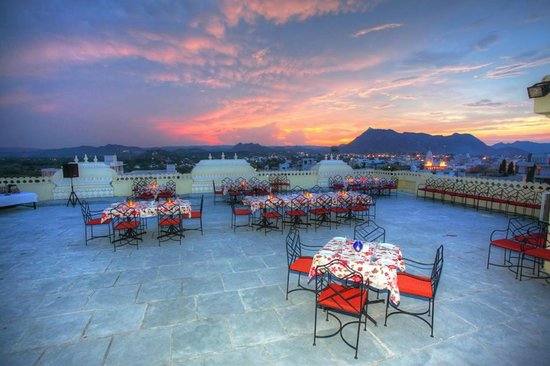
Kabab Mistri is a popular fine-dining restaurant in Udaipur, located on Mulla Talai Drive near the scenic Lake Pichola. As the name suggests, it is a specialist in North Indian and Mughlai cuisine, renowned for its “mastery” over grilled meats and traditional clay-oven cooking. The restaurant features a sophisticated, contemporary ambiance with both indoor seating and a charming outdoor garden area, often accompanied by live Ghazal music in the evenings to enhance the royal dining experience. While it is famous for its succulent variety of kababs and signature curries like Murg Khurchan, it also offers a great selection of vegetarian dishes and Chinese options. It is a go-to spot for food lovers who want an upscale, flavorful meal in a relaxed setting just a short distance from the city’s major monuments.
18. Jaiwana Haveli
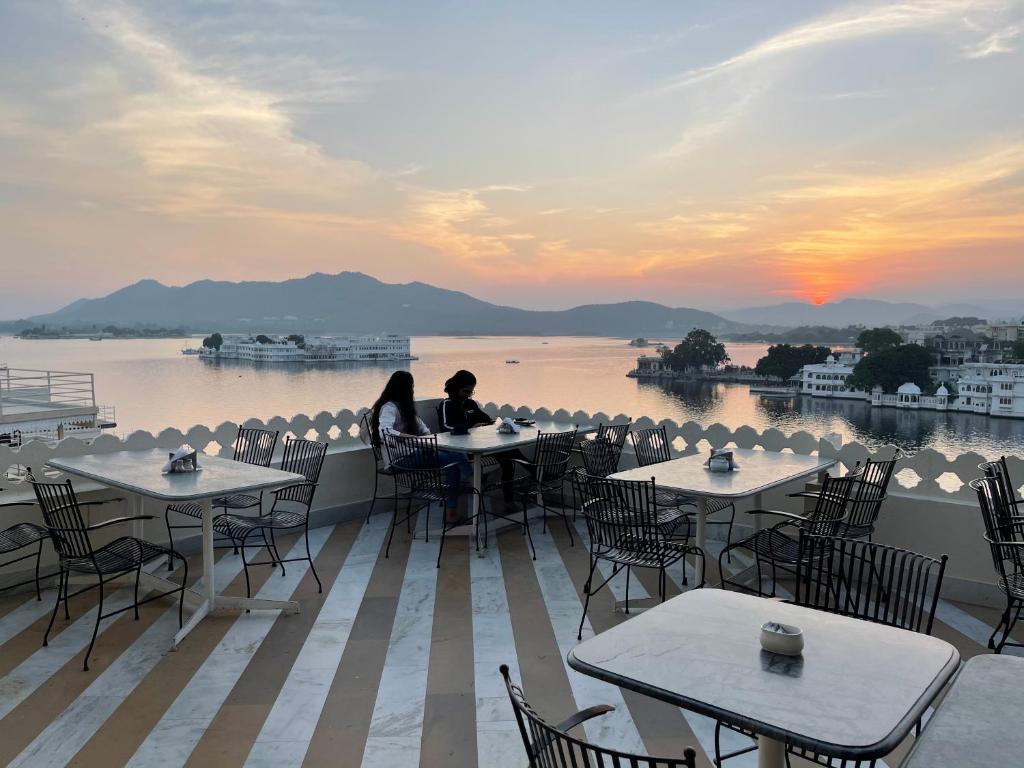
Jaiwana Haveli was once the private residence of the Thakur of Jaiwana, one of the noble jagirdars of the Mewar court, and has since been converted into a charming heritage hotel. Located on the eastern bank of Lake Pichola, this haveli is a classic example of traditional Udaipur architecture, featuring whitewashed walls, narrow stairways, and cozy alcoves. It is most famous for its rooftop restaurant, which is widely regarded as one of the best in the city for its panoramic views of the Lake Palace, Jag Mandir, and the Aravalli Hills. The hotel manages to preserve an old-world, “homestay” feel while being right in the middle of the bustling old city, making it a favorite for travelers who want an authentic experience of Udaipur’s royal history combined with famous Rajasthani hospitality.
19. Raas Leela
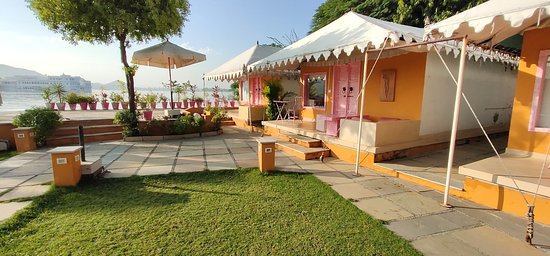
Raas Leela is a charming luxury boutique resort situated right on the banks of Lake Pichola in Udaipur, offering a peaceful and intimate getaway from the city’s busier areas. The name “Raas Leela” refers to the traditional Indian “Dance of Divine Love,” and the property reflects this romantic spirit through its beautiful lakeside location and lush gardens. Unlike the tall stone havelis of the old city, this resort is known for its eco-friendly luxury tents and cottages that provide a unique “glamping” experience with modern comforts and private lake views. It is especially famous for its waterfront restaurant, which sits so close to the lake that you can hear the gentle ripples of the water while you dine. With its stunning views of the City Palace and Jag Mandir glowing across the water, it is a top choice for couples and travelers looking for a serene, nature-focused stay in the heart of the “City of Lakes.”
20. Doodh Talai Musical Garden

Doodh Talai Musical Garden, also known as the Pandit Deendayal Upadhyay Park, is a beautifully landscaped rock garden located on the banks of the small and serene Doodh Talai Lake in Udaipur. This garden is a popular tourist spot because it offers a stunning panoramic view of the larger Lake Pichola, the City Palace, and the Jag Mandir island. Its main attraction is the musical fountain, which is the first of its kind in Rajasthan; in the evenings, visitors gather to watch the fountains “dance” to synchronized music and colorful lights. The garden is strategically located on a hillock, making it a perfect spot for sunset photography. It also serves as the base for the Mansapurna Karni Mata Ropeway, which carries passengers to the temple above, making Doodh Talai a central hub for relaxation, entertainment, and sightseeing.
21. Eklingji Temple
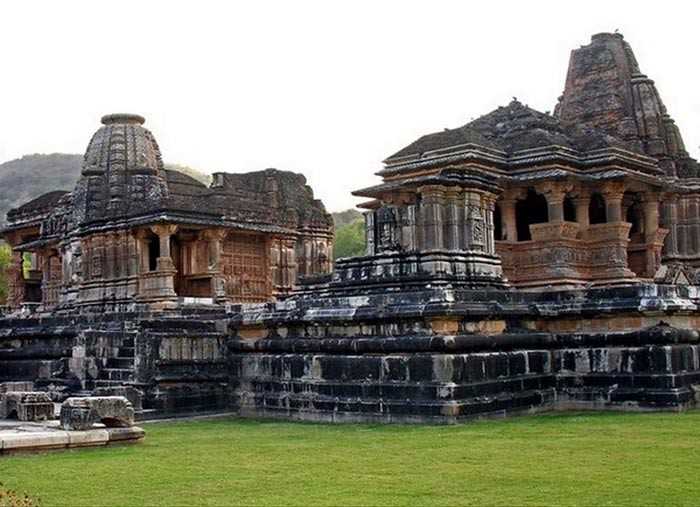
Eklingji Temple is one of the most significant and ancient spiritual sites in Rajasthan, located about 22 km north of Udaipur in the town of Kailashpuri. Dedicated to Lord Shiva, the family deity of the Mewar rulers, the temple was originally built in 734 AD by Bappa Rawal and has been a central place of worship for the Maharanas of Mewar for over 1,200 years. The magnificent double-story temple is made of sandstone and marble, featuring a pyramid-style roof and a stunning four-faced idol of Lord Shiva carved out of black marble, representing his four different forms. The temple complex is vast, housing 108 smaller shrines within its high walls and featuring a large silver statue of Nandi the Bull at the entrance. It is a “living temple” where the royal family still frequently visits, and it becomes a massive center of celebration during the festival of Maha Shivratri.
22. Chittorgarh Fort
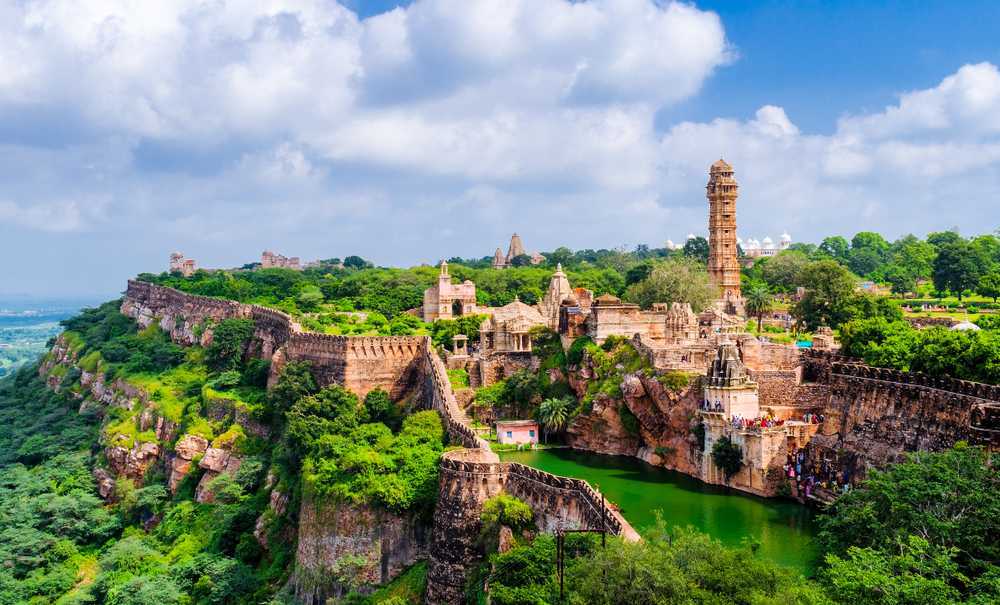
Chittorgarh Fort is the largest fort in India and a UNESCO World Heritage Site, sprawling across a 700-acre hilltop that rises dramatically above the plains of Rajasthan. Known as the “Pride of Rajasthan,” it was the capital of the Mewar Kingdom for over 800 years and is world-famous for its history of unmatched valor, sacrifice, and the three legendary instances of Jauhar (self-immolation) by Rajput women. The fort is shaped like a giant fish and is home to iconic structures like the Vijay Stambha (Tower of Victory), the Kirti Stambha (Tower of Fame), and the grand Padmini Palace set amidst water tanks. Often called the “Water Fort,” it once contained 84 water bodies, including stepped wells and reservoirs, many of which still exist today. The fort’s massive gates, ancient temples, and ruined palaces stand as a powerful monument to the defiant spirit of the Rajput warriors who chose death over surrender.
23. Aravali Nature View
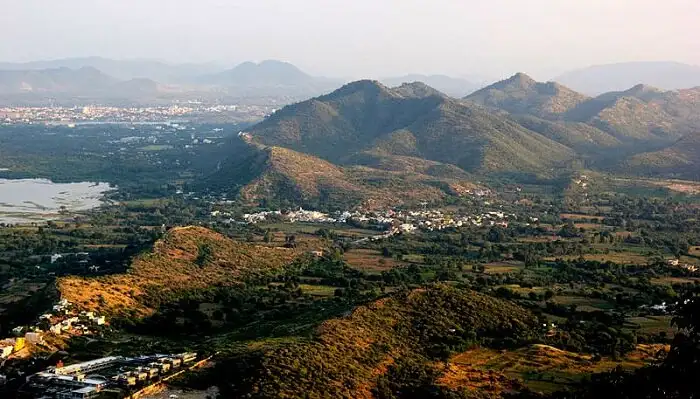
Aravali Nature View refers to the stunning natural landscape created by the Aravalli Range, which is one of the world’s oldest mountain systems surrounding the city of Udaipur. These ancient hills act as a majestic backdrop, providing the city with its unique “mountain-and-lake” charm and offering a cool, green escape, especially during the monsoon when the peaks are covered in mist. Many visitors seek out “Aravali Nature Views” from specific vantage points like the Monsoon Palace (Sajjangarh) or Bahubali Hill, where you can see the rugged ridges stretching toward the horizon. Because of this beauty, many luxury hotels and rooftop restaurants, such as those at the Taj Aravali or Radisson Blu, are specially designed with open terraces to give guests a panoramic look at the hills reflecting in the blue waters of Udaipur’s lakes.
24. Shilpgram
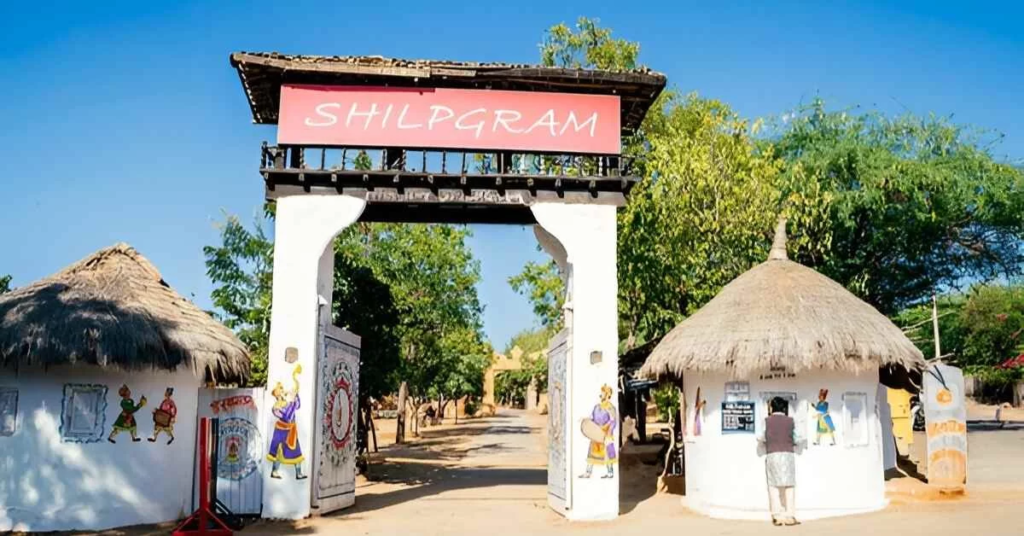
Shilpgram, which translates to “Craftsmen’s Village,” is a sprawling 70-acre rural arts and crafts complex located in the foothills of the Aravalli Mountains, about 3 km west of Udaipur. Inaugurated by Rajiv Gandhi in 1989, it functions as a “living ethnographic museum” dedicated to preserving the diverse lifestyles, architecture, and traditions of folk and tribal communities from the West Zone of India, including Rajasthan, Gujarat, Maharashtra, and Goa. The complex features 26 to 31 authentic huts built using traditional regional materials like mud, bamboo, and thatch, each showcasing the unique occupational tools, household articles, and decorative arts of its specific ethnic group. Visitors can interact directly with artisans as they demonstrate skills like pottery, weaving, and embroidery, or enjoy daily puppet shows and folk dance performances in an 8,000-seat open-air amphitheatre.
25. Jagdish Temple
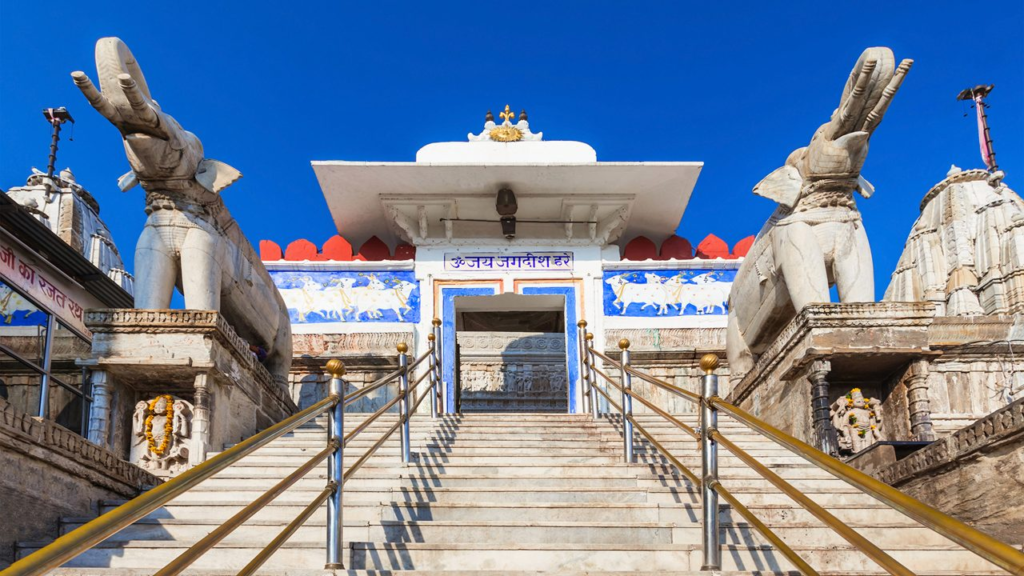
Jagdish Temple is a major monument and a spiritual heart of Udaipur, located just outside the main gate of the City Palace. Built in 1651 by Maharana Jagat Singh I, this large Hindu temple is dedicated to Lord Vishnu (the preserver of the universe) and is a masterpiece of Indo-Aryan architecture. It is built on a high terrace and features a towering 79-foot shikhara (spire) decorated with beautiful carvings of dancers, musicians, elephants, and horsemen. To reach the main shrine, visitors climb a steep flight of marble stairs, at the top of which sits a brass statue of Garuda, the mythical bird-man and vehicle of Lord Vishnu. The main sanctuary houses a stunning four-armed image of Lord Vishnu carved out of a single piece of black stone, radiating a sense of peace and power. The temple is not just a historical site but a vibrant place of worship where the sounds of bells and morning hymns create a deeply spiritual atmosphere in the middle of the city’s busy streets.