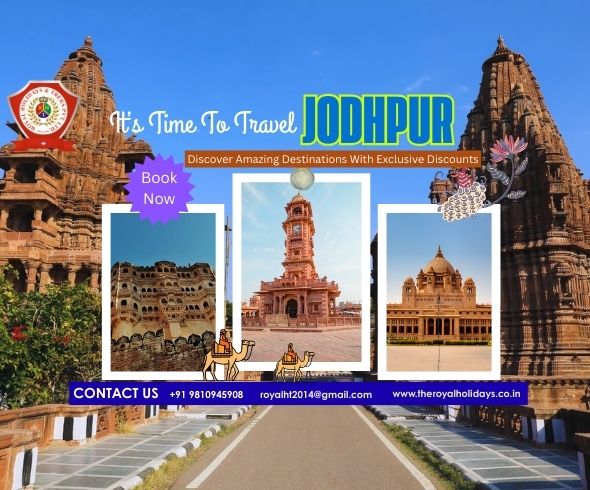
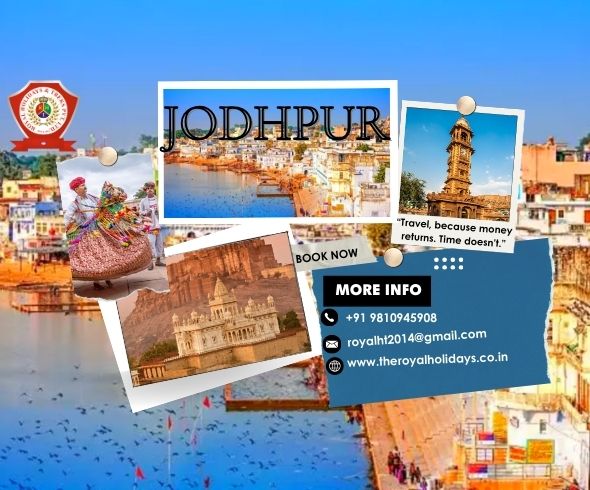
Jodhpur, known as the “Blue City” and the “Sun City,” is Rajasthan’s second-largest city and a captivating gateway to the Thar Desert. Founded in 1459 by Rao Jodha of the Rathore dynasty, the city is defined by the colossal Mehrangarh Fort, which stands 410 feet above a sea of blue-hued houses in the old city. These blue houses—traditionally used to signify the residences of Brahmins and to keep interiors cool during the scorching summers—have now become an iconic symbol of the city’s identity. Beyond its monuments, the city also thrives as a hub of culture and gastronomy; it is renowned for its vibrant Sardar Market, world-class handicrafts, and local delicacies such as Makhaniya Lassi and Pyaaz Kachori.
Jodhpur’s economy remains robust, driven by four primary sectors: handicrafts, tourism, agriculture, and a growing industrial base. Often dubbed “India’s Handicrafts Capital,” the city has garnered global acclaim for its wooden furniture and iron handicrafts; these products account for approximately 60% of India’s total furniture exports and provide employment to over 300,000 people. Tourism serves as the second-largest pillar of this economy, with millions of visitors flocking annually to explore historical sites like the Mehrangarh Fort, thereby providing economic sustenance to local hotels, restaurants, and shops.
Most Famous And Attractive Tourist Places In Jodhpur :
1. Mehrangarh Fort

Mehrangarh Fort, standing 410 feet above the “Blue City” of Jodhpur, is one of the largest and most magnificent fortifications in India. Built around 1459 by Rao Jodha, the founder of Jodhpur, the fort is carved directly out of the rocky hill it sits upon, making it appear as a natural extension of the landscape. Its massive walls house some of the most beautiful palaces in Rajasthan, such as Moti Mahal (Pearl Palace) and Phool Mahal (Flower Palace), which are famous for their intricate gold work and stained glass. The fort is also a living history book, featuring seven massive gates, including Jayapol (Victory Gate), which still bears the marks of cannonball hits from historic battles. Today, it serves as a world-class museum showcasing royal palanquins, weaponry, and costumes, while the ramparts offer a breathtaking panoramic view of the indigo-hued houses of the old city below.
2. Umaid Bhavan Palace
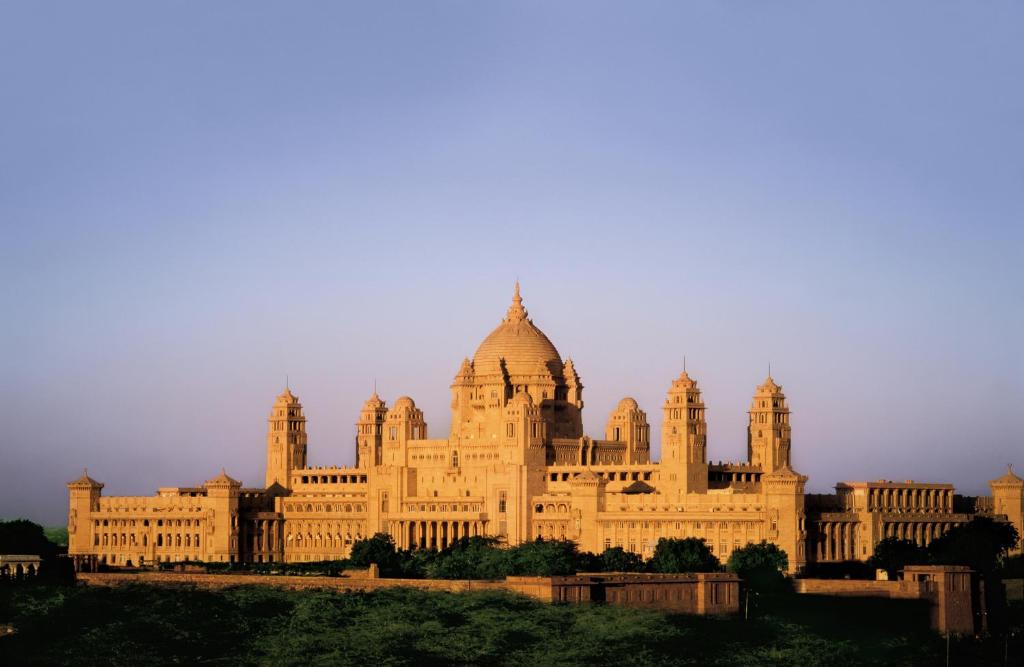
The Umaid Bhawan Palace in Jodhpur is one of the world’s largest private residences and a magnificent example of Indo-Saracenic architecture. Built between 1928 and 1943, it was commissioned by Maharaja Umaid Singh primarily as a famine relief project to provide employment to thousands of local people during a period of severe drought. The palace is constructed using “Chittar” sandstone, which gives it a distinct golden-yellow hue, and was uniquely built without the use of mortar, using a sophisticated interlocking stone system instead. Today, the massive property is divided into three functional parts: the royal residence where the former Jodhpur royal family still lives, a luxury Taj Hotel, and a public museum. The museum is a major tourist draw, showcasing an impressive collection of royal clocks, photographs, classic cars, and porcelain, all set within 26 acres of lush gardens featuring wandering peacocks.
3. Balsamand Lake and Garden

Balsamand Lake is a stunning artificial reservoir located about 5 km from Jodhpur on the Mandore Road, originally constructed in 1159 AD by the Gurjara-Pratihara rulers to serve as a vital water source for the city. The lake is surrounded by a sprawling, 300-acre luxurious garden filled with manicured lawns and groves of pomegranate, guava, plum, and mango trees, providing a lush green escape from the desert heat. Perched on its banks is the majestic Balsamand Lake Palace, a 16th-century red sandstone summer retreat built by Maharaja Sur Singh, which has now been converted into a high-end heritage hotel. Visitors can enjoy a peaceful walk along the lake’s stone-carved embankment, spot local wildlife like peacocks and jackals in the garden, or simply admire the Rajput-style architecture and the serene reflection of the palace in the water.
4. Raas Haveli
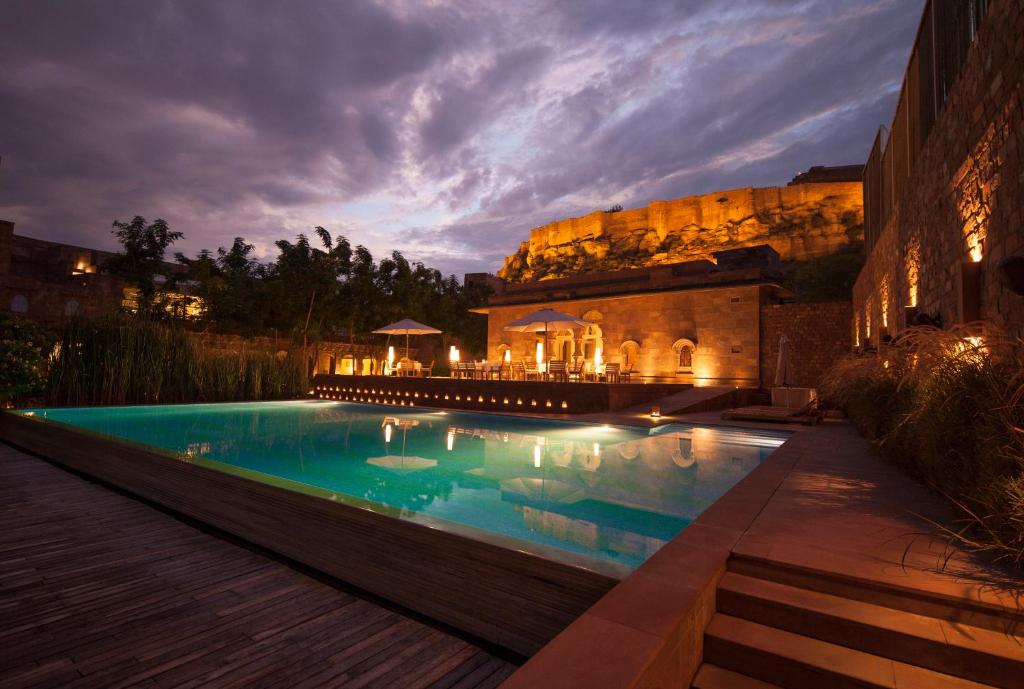
RAAS Jodhpur is a stunning boutique hotel and a masterpiece of architectural restoration located in the heart of the “Blue City,” right at the foot of the Mehrangarh Fort. The property is centered around an original 18th-century Thakur haveli (nobleman’s mansion) made of signature Jodhpur red sandstone, which has been seamlessly blended with modern, minimalist structures. It is famous for its “urban luxury” vibe, where traditional Rajputana stone carvings meet contemporary design. The haveli is widely considered the best spot in Jodhpur for dining, as its flagship restaurant, Darikhana, offers an unobstructed, towering view of the illuminated fort at night. With its serene central pool, lush courtyards, and rooms featuring private terraces that look directly up at the fort walls, RAAS provides a tranquil, high-end escape while being just steps away from the bustling Sardar Market and Stepwell.
5. Dechu
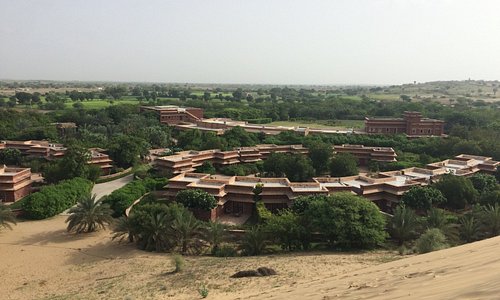
Dechu is a small but popular village located right in the middle of the Thar Desert, about halfway between the cities of Jodhpur and Jaisalmer. It has become a favorite stop for travelers because it offers a true “desert experience” without being as crowded as the larger tourist hubs. The area is famous for its golden sand dunes, where you can enjoy fun activities like camel safaris and jeep rides to watch the sunset. Because of its peaceful atmosphere, Dechu is home to several beautiful desert resorts and luxury camps that let you stay in traditional-style huts or tents while enjoying modern comforts. It is the perfect place for anyone who wants to experience the quiet beauty of rural Rajasthan, see the bright stars at night, and enjoy traditional folk music and dance by a bonfire.
6. Fun World Water Park
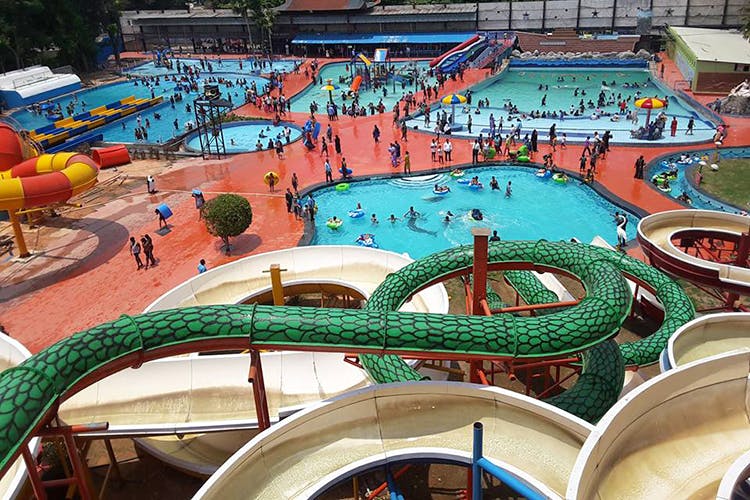
Fun World Water Park (part of Funworld Resort) in Jodhpur is a premier family entertainment destination and the first of its kind in the city, offering a refreshing escape from the Rajasthan heat. Spread over roughly 7 to 12 acres on Chopasni Road, this resort-cum-waterpark features a wide variety of aquatic attractions, including giant water slides, a large wave pool, and a dedicated kids’ zone designed with shallower water for younger children. Beyond the slides, visitors can enjoy a high-energy rain dance floor with music, a crystal-clear swimming pool, and lush green spaces like the Mughal Garden for relaxation. The facility is well-equipped for day picnics, providing essential amenities such as separate changing rooms for men and women, secure locker rentals, and an on-site canteen serving various cuisines.
7. Umed Garden Zoo
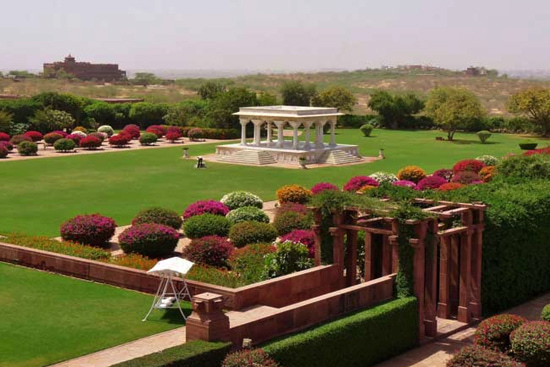
The Umed Garden Zoo (also known as Umaid Garden Zoo) is a historic zoological park located within the 82-acre Umed Garden in the heart of Jodhpur. Built by Maharaja Umed Singh and inaugurated by Viceroy Willingdon, the zoo has traditionally been a popular recreational spot for families, featuring animals like lions, tigers, zebras, and ostriches. A major highlight of the facility is its “Walk-in Aviary” constructed in 1978, which houses a diverse range of local, African, and Australian birds, including parrots and ducks. While much of the primary wildlife has recently been shifted to the newer Machiya Biological Park to provide them with more space and better facilities, the garden remains a favorite for morning walks and peaceful outings. In addition to the animal enclosures, the garden complex houses the Sardar Government Museum, a public library, and beautiful fountains, all surrounded by lush lawns and seasonal flowers.
8. Machiya Safari Park

Machiya Biological Park, often called the Machiya Safari Park, is a modern wildlife conservation and recreation hub located about 9 km from Jodhpur city center on the way to Jaisalmer. Spread across a vast hilly terrain near the scenic Kaylana Lake, it was established as a more spacious and natural alternative to the older Umed Garden Zoo. The park is a haven for desert wildlife, housing animals in large, open-moated enclosures that mimic their natural habitats; visitors can spot Asiatic lions, tigers, leopards, desert foxes, and blue bulls (Nilgai). It is also a paradise for birdwatchers, as its proximity to the lake attracts numerous migratory birds during the winter months. For visitors, the park offers a well-laid-out walking path and a battery-operated vehicle service for a more comfortable tour, along with an interpretation center and a sunset point that provides a stunning view of the Jodhpur skyline and the Mehrangarh Fort in the distance.
9. Masuriya Hill Garden
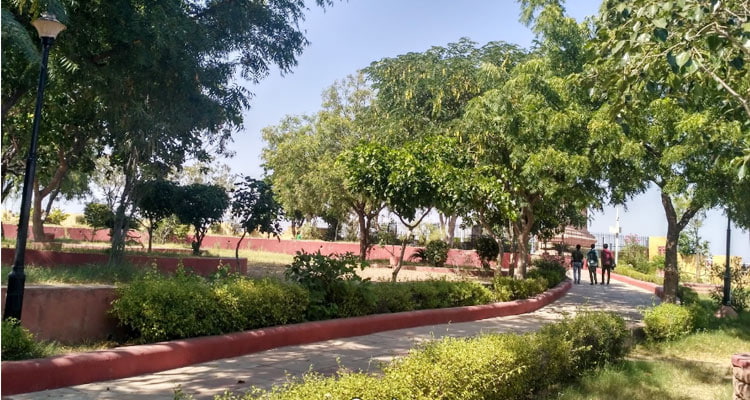
Masuriya Hill Garden, also known as Veer Durgadas Rathore Park, is a scenic hilltop destination in Jodhpur that provides a spectacular 360-degree panoramic view of the “Blue City”. Located on the western side of Jodhpur atop the Masuriya Hills, this garden is a tranquil oasis featuring lush greenery, colorful flower beds, and tranquil fountains. It is named after the celebrated Marwari folk hero Veer Durgadas Rathore, whose grand equestrian statue serves as the garden’s primary landmark. The site is particularly famous for its stunning sunset views, where the golden desert light reflects off the blue houses of the old city, with Mehrangarh Fort and Umaid Bhawan Palace clearly visible on the opposing horizon. Additionally, the garden complex houses one of Asia’s largest TV towers and a centuries-old temple dedicated to the local deity Baba Ramdev.
10. Flying fox
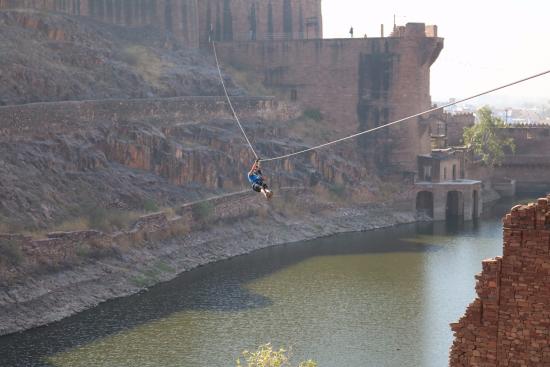
Flying Fox in Jodhpur is an exhilarating zip-line adventure located within the majestic Mehrangarh Fort, offering a unique aerial perspective of the “Blue City.” This guided tour consists of six separate zip lines that glide over the fort’s massive battlements, deep bastions, and the serene Chokelao Lake. Participants are securely harnessed to high-tension steel cables and “fly” between rocky ridges, providing a bird’s-eye view of the indigo-hued houses of the old city and the intricate architecture of the fort walls. The entire circuit takes approximately 45 to 90 minutes to complete and is designed with international safety standards, making it suitable for both beginners and thrill-seekers.
11. Rao Jodha Desert Rock Park
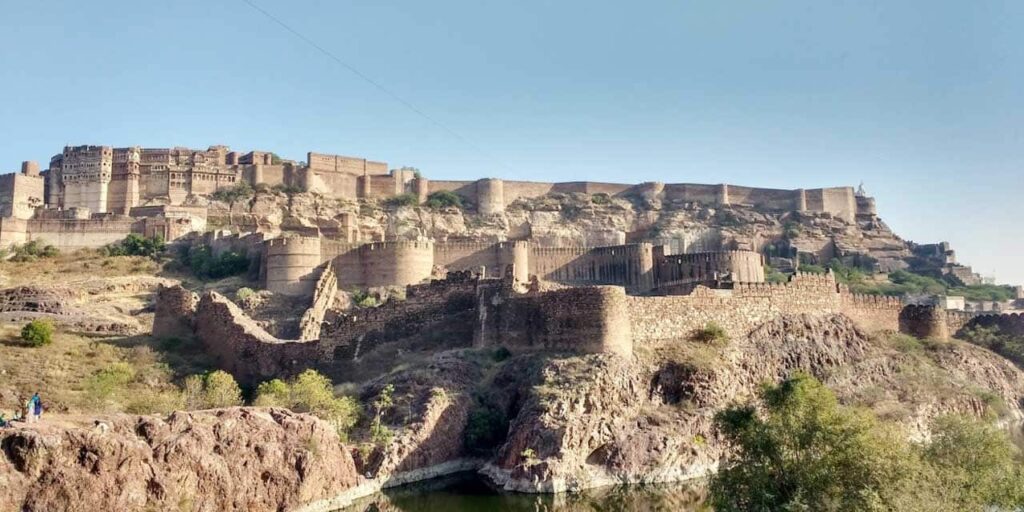
Rao Jodha Desert Rock Park is a sprawling 170-acre ecological preserve located at the foot of the massive Mehrangarh Fort in Jodhpur. Created in 2006, the park was a pioneering project to restore the natural ecology of a rocky wasteland that had been overtaken by invasive species. It is famous for its unique landscape of volcanic rhyolite rock formations that date back over 600 million years. Visitors can explore several well-curated walking trails that wind through deep canyons, past ancient aqueducts, and along the historic city walls, offering some of the most peaceful and scenic views of the “Blue City” and the fort. The park is a haven for desert-adapted flora and fauna, featuring over 250 species of native plants, as well as local wildlife like desert foxes, lizards, and numerous migratory birds.
12. Mandore Gardens, Jodhpur
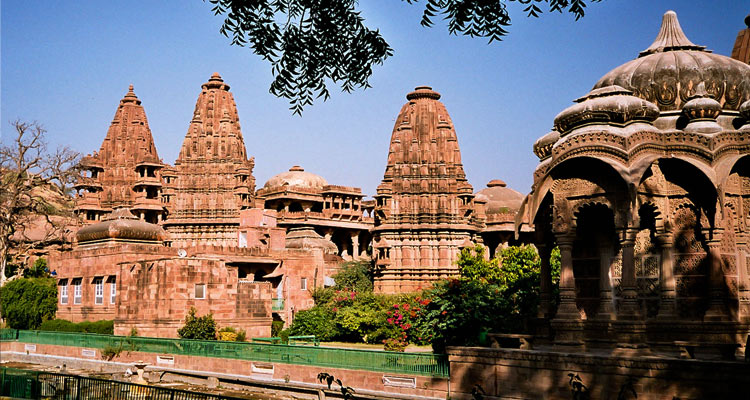
Mandore Gardens, located approximately 9 km north of Jodhpur, is a historically significant site that served as the ancient capital of the Marwar Kingdom before the founding of Jodhpur city in 1459. The garden is famous for its collection of royal cenotaphs (dewals) belonging to the Rathore rulers; unlike the typical umbrella-shaped chhatris found elsewhere in Rajasthan, these red sandstone monuments are designed to resemble four-story Hindu temples with intricate spires and carved columns. Spread across a lush landscape, the park also houses the Hall of Heroes, featuring 16 statues of Rajput warriors and deities carved from a single rock, and the Shrine of 33 Crore Gods, a unique temple dedicated to the vast multitude of Hindu deities. Today, it is a popular spot for both history enthusiasts and local families, offering a peaceful environment filled with green lawns, ancient ruins of the original Mandore Fort, and a government museum housing relics from the region’s royal past.
13. Jaswant Thada

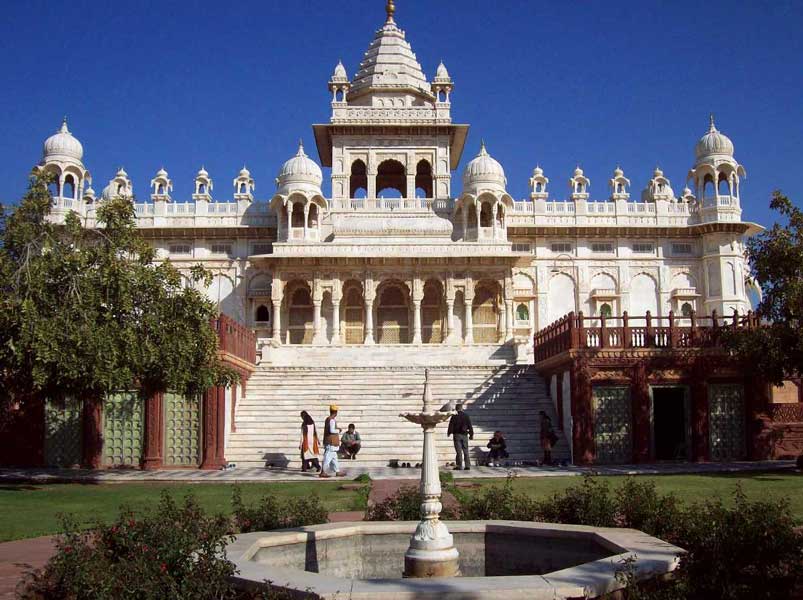
The Jaswant Thada is a magnificent white marble memorial located in Jodhpur, often referred to as the “Taj Mahal of Marwar.” Built in 1899 by Maharaja Sardar Singh in memory of his father, Maharaja Jaswant Singh II, this cenotaph is a masterpiece of Rajput architecture known for its ethereal beauty and intricate craftsmanship. The main structure is built with extremely thin, polished sheets of marble that emit a warm, golden glow when sunlight filters through them. The complex features a peaceful multi-level garden, a serene lake, and carved gazebos, all serving as a royal cremation ground for the Marwar rulers. Inside, the memorial houses rare portraits of the Rathore maharajas and delicate lattice-work (jali) screens that offer stunning views of the nearby Mehrangarh Fort and the Blue City.
14. Kaylana Lake

Kaylana Lake is a vast, picturesque artificial lake located about 8 km west of Jodhpur on the road to Jaisalmer. Constructed in 1872 by Pratap Singh, it serves as the primary source of drinking water for Jodhpur city and the surrounding areas. The lake is set against a rugged backdrop of igneous rock formations and is surrounded by lush greenery, making it one of the most popular picnic spots in the region. It is a haven for nature enthusiasts and birdwatchers, especially during the winter months when migratory birds like Siberian cranes visit its shores. The lake is particularly famous for its spectacular sunset views, where the sky turns vibrant shades of orange and pink, reflecting beautifully on the calm blue water.
15. Rai Ka Bag Palace
Rai Ka Bag Palace is a historic 17th-century royal residence in Jodhpur, constructed in 1663 by Hadiji, the queen of Maharaja Jaswant Singh I. Often referred to by locals as “Raj Bagh Haveli,” the palace is distinguished by its unique octagonal shape and elaborate Rajput-style architecture featuring intricate stone carvings, frescoes, and ornate balconies. It was a favourite residence of Maharaja Jaswant Singh II, and it notably served as the venue where the social reformer Swami Dayanand Saraswati delivered his spiritual sermons to the public and the royal family in 1883. While the interior is currently utilized as a government building housing the Income Tax Department and is generally not open for public tours, visitors can still admire its grand exterior and explore the surrounding lush gardens, which are home to a variety of birds and peacocks.
16. Khejarla Fort
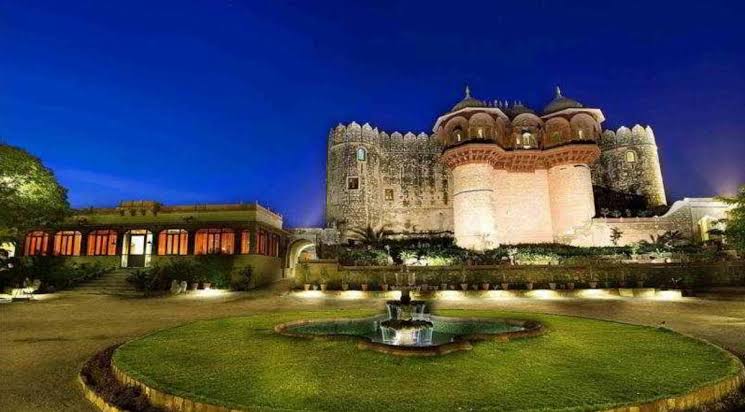
Fort Khejarla is a stunning 400-year-old red sandstone monument located approximately 85 km east of Jodhpur, perched atop granite boulders in a serene rural setting. Constructed in 1611 AD for Maharaja Gopal Das Ji to honour his bravery in battles against the Mughal Empire, the fort was rebuilt three times after being destroyed during major attacks. Its name is derived from the Khejdi tree, which is abundant in the village and believed to have protected the fort from Mughal cannons. Architecturally, it is a magnificent blend of Rajput and Mughal styles, featuring rugged stone exteriors that contrast with an inner paradise of intricate latticework, carved balconies (jharokhas), and beautiful courtyards. Today, the fort has been intricately restored into a luxury heritage hotel, where the royal family still resides alongside guests, offering a unique experience of Rajput hospitality through traditional Rajasthani cuisine, folk performances, and modern amenities like a spa and swimming pool.
17. Toorji ka Jhalra

Toorji Ka Jhalra is a stunning 18th-century stepwell located in the heart of Jodhpur’s old city, serving as a masterpiece of traditional Rajasthani water management and architecture. Built in 1740 by Queen Tanwar Ji, the consort of Maharaja Abhay Singh, it continued a long-standing tradition where royal women oversaw the construction of public water works. Carved from Jodhpur’s signature rose-red sandstone, the structure plunges over 200 feet deep and features a complex network of symmetrical, zigzagging stairs that descend to the water level. The stepwell is adorned with intricate carvings of dancing elephants, medieval lions, and cow-shaped waterspouts, which were only fully revealed after a major urban restoration project recently cleared decades of debris. Today, it has transformed into a vibrant cultural hub where locals frequently gather to swim and dive to beat the desert heat, while the surrounding area—now part of an urban regeneration project—is filled with trendy cafes, boutique shops, and upscale hotels like RAAS Jodhpur.
18. Nirali Dhani
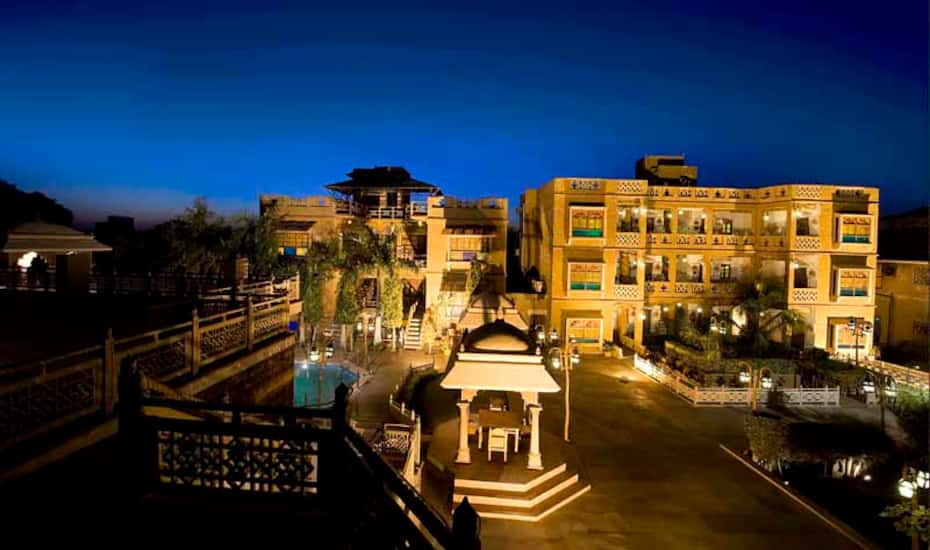
Nirali Dhani is a popular ethnic heritage resort and restaurant in Jodhpur designed to give visitors a complete experience of traditional Rajasthani village life. Located on Chopasni Road, it is built with a rustic charm featuring mud-style walls, thatched roofs, and intricate folk art that reflects the vibrant culture of Marwar. The resort is most famous for its authentic Rajasthani thali, served in a traditional sit-down style where guests enjoy local delicacies like Dal Baati Churma, Ker Sangri, and Gatte ki Sabzi. Beyond dining, Nirali Dhani serves as a cultural hub where evenings come alive with folk dance performances, puppet shows, and live music, alongside fun activities like camel rides and pottery making. It is a preferred destination for families, large groups, and destination weddings, offering a mix of luxury ethnic stay options and extensive banquet lawns, all within a setting that feels like a peaceful getaway from the city’s hustle.
19. Padamsar Lake
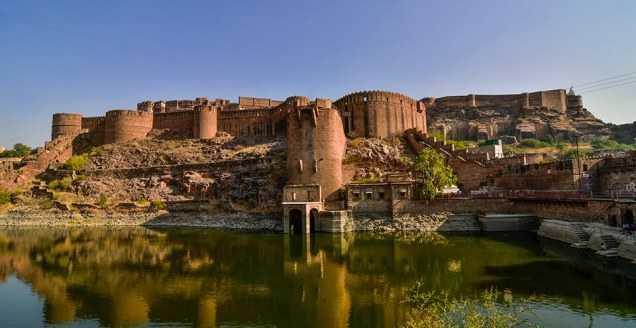
Padamsar Lake is a serene, centuries-old artificial reservoir tucked away behind the Mehrangarh Fort in Jodhpur. Commissioned in the 15th century by Queen Padmini, the daughter of Rana Sanga of Mewar, this lake is an architectural testament to the ancient Rajasthani tradition where royal women managed critical public water systems. Built alongside its twin, Ranisar Lake, Padamsar was designed specifically for water conservation in the parched Thar Desert, ensuring a consistent supply for the fort and surrounding settlements even during severe droughts. Today, it is a picturesque destination known for its tranquil atmosphere and the near-perfect mirror-like reflection of the grand fort on its clear surface. Visitors often frequent the stone ghats at sunrise or sunset to enjoy the contrast between the still water and the rugged desert landscape, making it a favorite for both history enthusiasts and photography lovers.
20. Sardar Samand Lake
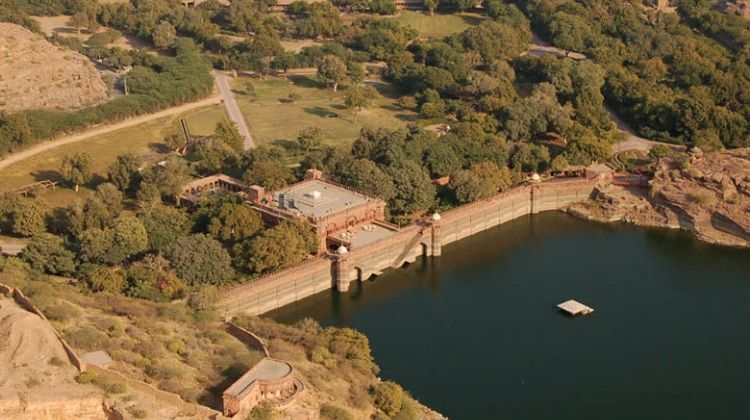
Sardar Samand Lake is a serene man-made reservoir located about 60 km southeast of Jodhpur on the road toward Pali. Constructed between 1899 and 1906 by Maharaja Sardar Singh, the lake was formed by dams built across the Sukri River and Guhiya Nala to provide vital irrigation for over 18,000 acres of land. Perched on a hill overlooking the water is the magnificent Sardar Samand Lake Palace, a 1933 Art Deco hunting lodge designed by George Goldstraw, the same architect behind Jodhpur’s Umaid Bhawan Palace. Today, the area is a renowned birdwatcher’s paradise, attracting migratory species like flamingos, pelicans, and Dalmatian cranes, while the surrounding wildlife zone offers glimpses of blackbucks, neelgai, and chinkara. Managed by the WelcomHeritage group, the palace serves as a luxury heritage hotel where guests can enjoy boat rides, squash courts, and views of spectacular sunsets against the backdrop of the Aravalli range.
21. Khimsar
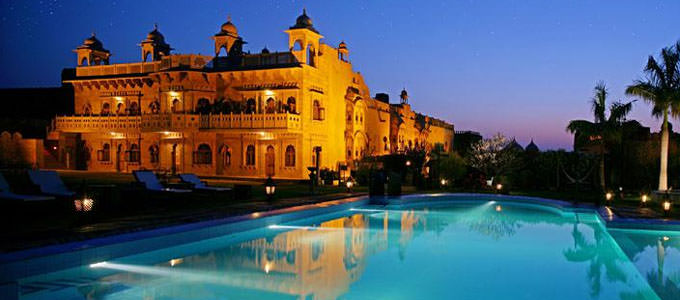
Khimsar is a unique desert destination in Rajasthan, located roughly halfway between Jodhpur and Nagaur, famous for its perfect blend of royal history and tranquil desert life. The village is dominated by the Khimsar Fort, a massive 16th-century stronghold built in 1523 by Rao Karamsji that features battle-scarred walls, grand courtyards, and a portion that still serves as a residence for the royal family. A few kilometres away lies the Khimsar Sand Dunes Village, a remote eco-resort designed like a “mirage” around a man-made oasis, where guests stay in luxury huts accessible only by jeep or camel. This dual experience allows visitors to enjoy regal heritage within the fort walls and a peaceful, star-lit desert escape on the golden dunes, complete with camel safaris, folk music, and wildlife sightings at the nearby Panchala Black Buck Reserve.
22. Rohetgarh
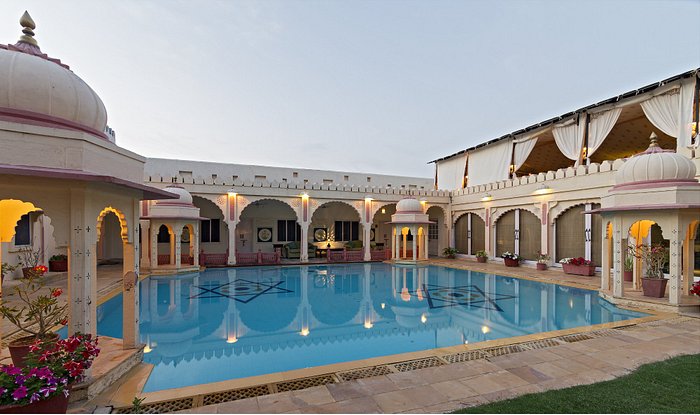
Rohetgarh, located about 40 km south of Jodhpur, is a magnificent 17th-century fortified estate that serves as the ancestral home of the Champawat clan of the Rathores. Unlike the massive military forts of the region, Rohetgarh is celebrated as a “fortified heritage house” that offers a deeply personal and intimate experience of Rajput hospitality. The property gained international fame as a literary sanctuary where authors like William Dalrymple and Bruce Chatwin penned their famous works, drawn by its tranquil courtyards, lush gardens, and the serene lake that borders the fort. Today, it is a world-class heritage hotel known for its beautifully appointed rooms decorated with traditional frescoes and its “Village Safaris,” which allow guests to interact with the local Bishnoi community and witness their sacred commitment to nature and wildlife.
23. Clock Tower and Sardar Market
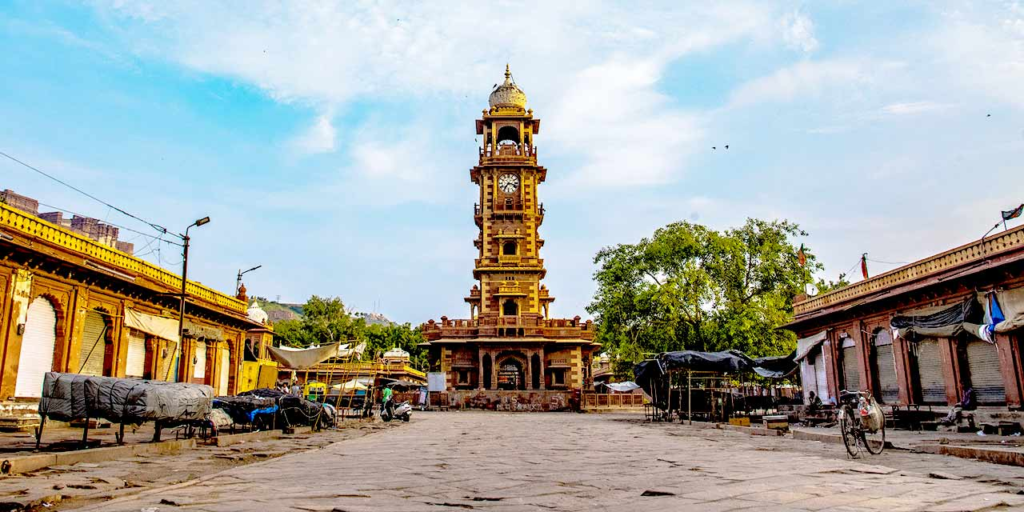
The Clock Tower, locally known as Ghanta Ghar, is a magnificent historical landmark in the heart of Jodhpur, built by Maharaja Sardar Singh between 1880 and 1911. Standing tall with its intricate stone carvings and a colossal clock imported from London, it serves as the majestic centerpiece of Sardar Market, one of Rajasthan’s oldest and most vibrant marketplaces. The market is a sensory explosion of sights, sounds, and smells, featuring a sprawling labyrinth of narrow lanes where hundreds of local vendors sell everything from hand-woven handicrafts and silver jewellery to world-famous Mathania red chillies and traditional “Mishrilal” lassi. Beyond its commercial buzz, the area offers the most authentic glimpse into the daily life of Jodhpur, with the towering Mehrangarh Fort providing a dramatic backdrop that becomes particularly magical when the tower and fort are illuminated at night.
24. Ajit Bhawan
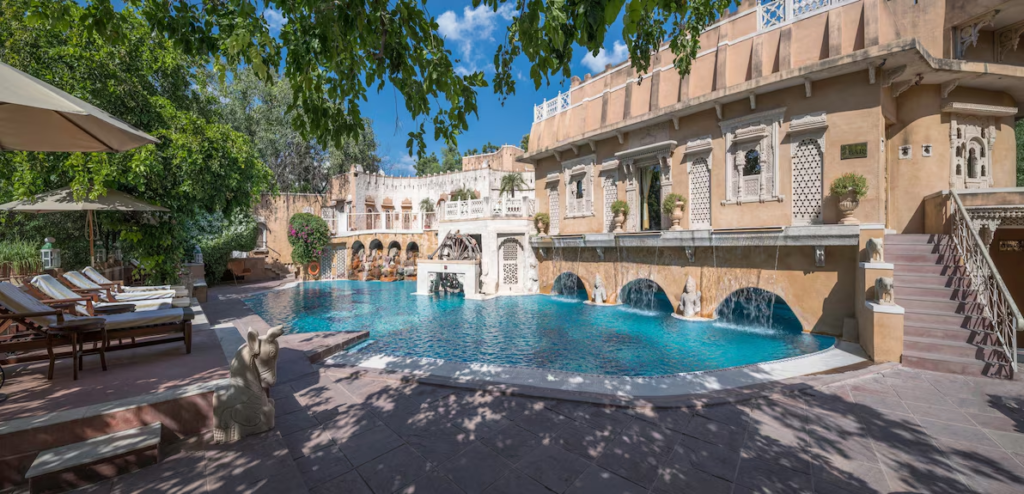
Ajit Bhawan in Jodhpur holds the prestigious title of being India’s first heritage hotel, originally built in 1927 for Major General Maharajadhiraj Sir Ajit Singhji, the younger brother of Maharaja Umaid Singh. This palace was a pioneer in the “home-stay” concept for royalty, opening its doors to guests in the 1970s to share the grandeur of Rajput lifestyle. The property is a sprawling oasis of luxury, featuring a blend of traditional stone architecture and lush gardens, with accommodations ranging from regal suites to charming ancestral walk-in cottages. Known for its “Royal Rajput” hospitality, the hotel offers a curated experience that includes vintage car drives, desert safaris, and fine dining at its famous restaurants like The Jodhpur Cafe and Dhani, which serves authentic Rajasthani thalis in a rustic village setting.
25. Pukhraj Garh
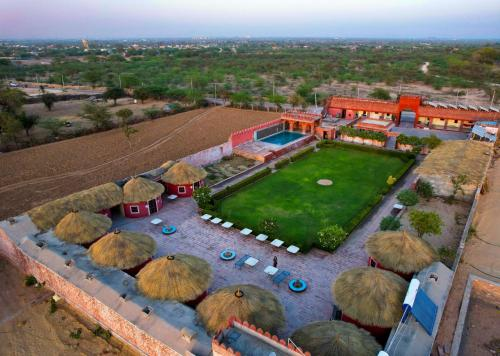
Pukhraj Garh is a boutique heritage resort located in the village of Salawas, about 20 km from Jodhpur, offering an authentic and immersive experience of rural Rajasthani culture. Designed to look like a traditional fortified “Garh” (small fort), the resort is built using local red sandstone and features rustic, mud-finished rooms and cottages that are decorated with ethnic tribal motifs. It is owned and managed by a local family of master weavers, making it a central hub for witnessing the famous Salawas Durry (rug) weaving craft. Guests at Pukhraj Garh can enjoy a peaceful stay away from city noise, complete with home-cooked Marwari meals, folk music performances by the bonfire, and “Village Safaris” that allow for interactions with local artisans and sightings of desert wildlife like Blackbucks and Chinkaras.
Overview
Travel is the movement of people between relatively distant geographical locations, and can involve travel by foot, bicycle, automobile, train, boat, bus, airplane, or other means, with or without luggage, and can be one way or round trip. Travel can also include relatively short stays between successive movements.
The origin of the word “travel” is most likely lost to history. The term “travel” may originate from the Old French word travail, which means ‘work’. According to the Merriam Webster dictionary, the first known use of the word travel was in the 14th century.
It also states that the word comes from Middle English travailen, travelen (which means to torment, labor, strive, journey) and earlier from Old French travailler (which means to work strenuously, toil). In English we still occasionally use the words “travail”, which means struggle. According to Simon Winchester in his book The Best Travelers’ Tales (2004), the words “travel” and “travail” both share an even more ancient root: a Roman instrument of torture called the tripalium (in Latin it means “three stakes”, as in to impale).